seamus dubhghaill

Promoting Irish Culture and History from Little Rock, Arkansas, USA


3 Comments

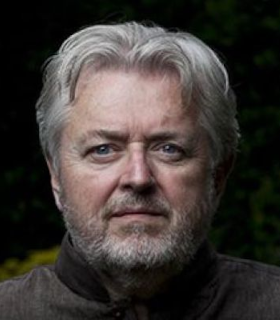
Death of Donal Donnelly, Irish Theatre & Film Actor

Donal Donnelly, Irish theatre and film actor, dies in Chicago, Illinois, on January 4, 2010. Perhaps best known for his work in the plays of Brian Friel, he has a long and varied career in film, on television and in the theatre. He lives in Ireland, the United Kingdom and the United States at various times, and his travels lead him to describe himself as “an itinerant Irish actor.”

Donnelly is born to Irish parents in Bradford, West Yorkshire, England, on July 6, 1931. His father James is a doctor from County Tyrone, and his mother Nora O’Connor is a teacher from County Kerry.

Donnelly is raised in Dublin where he attends Synge Street CBS, where he acts in school plays with Milo O’Shea, Eamonn Andrews, Jack MacGowran, Bernard Frawley (Seattle Repertory Co.) and Jimmy Fitzsimons (brother of Maureen O’Hara), under the direction of elocution teacher, Ena Burke.

Donnelly gets his start in an amateur group calling itself the Globe Theatre Players. It is organised and run by Jim Fitzgerald and Monica Brophy. He then later tours with Anew McMaster‘s Irish repertory company before moving to England where he stars with Rita Tushingham in the film The Knack …and How to Get It.

Donnelly’s breakthrough role comes when he is cast as Gar Private in the world premiere of Brian Friel’s Philadelphia, Here I Come! directed by Hilton Edwards for the Gate Theatre at the Dublin Theatre Festival in 1964. The production subsequently transfers to Broadway where it plays for over 300 performances and establishes Donnelly and Patrick Bedford, who plays his alter-ego Gar Public, as formidable new talents to be reckoned with. They are jointly nominated for the Tony Award for Best Performance by a Leading Actor in a Play in 1966.

Donnelly returns to Broadway a number of times, replacing Albert Finney in A Day in the Death of Joe Egg in 1968, playing Milo Tindle in Anthony Shaffer‘s Sleuth and appearing as Frederick Treves opposite David Bowie as The Elephant Man. He also renews his relationship with Brian Friel, appearing in the world premieres of Volunteers at the Abbey Theatre in 1975 and Faith Healer with James Mason at the Longacre Theatre in New York City in 1979, as well as the Broadway premieres of Dancing at Lughnasa in 1991 and Translations in 1995.

For many years, Donnelly tours a one-man performance of the writings of George Bernard Shaw, adapted and directed by Michael Voysey and entitled My Astonishing Self.

Donnelly’s film roles include Archbishop Gilday in The Godfather Part III and as Freddy Malins in John Huston‘s final work, The Dead, based on the short story by James Joyce, where he gains particular acclaim for his performance.

On television, Donnelly plays the lead role of Matthew Browne in the 1970s ITV sitcom Yes, Honestly, opposite Liza Goddard. But from the late 1950s onwards, he often appears in such British TV programs as The Avengers, Z-Cars and The Wednesday Play.

Donnelly is an acclaimed audiobook reader whose catalogue includes Pinocchio, Peter Pan, Voltaire‘s Philosophical Dictionary, and several audio versions of the works of James Joyce.

In 1968, Donnelly records an album of Irish songs, Take the Name of Donnelly, which is arranged, produced and conducted by Tony Meehan formerly of the Shadows.

Donnelly, who is a heavy smoker all his life, dies from cancer at the age of 78 in Chicago, Illinois, on January 4, 2010. He is survived by his wife, Patricia ‘Patsy’ Porter, a former dancer he met working on Finian’s Rainbow, and two sons, Jonathan and Damian. Their only daughter, Maryanne, predeceases him after being killed in a riding accident. A brother, Michael Donnelly, is a Fianna Fáil senator and councillor, and Lord Mayor of Dublin (1990–91).
Leave a comment

Birth of Novelist & Poet Annie M. P. Smithson

Annie Mary Patricia Smithson, Irish novelist, poet and Nationalist, is born into a Protestant family in Sandymount, Dublin, on September 26, 1873.

Smithson is christened Margaret Anne Jane but takes the names Anne Mary Patricia on her conversion to Catholicism. Her mother and father are first cousins, and her father dies when she is young. About 1881 her mother marries her second husband, Peter Longshaw, who owns a chemical factory in Warrington, Lancashire, England. She dislikes her stepfather and refers to him always as Mr. Longshaw. There are five children of the second marriage.

Smithson abandons her ambition to become a journalist in order to train as a nurse and a midwife. She trains in London and Edinburgh, before returning to Dublin in 1900. In 1901 she takes up a post as district nurse in Millton, County Down. There she falls in love with her colleague Dr. James Manton, a married man. Deciding that a relationship is impossible, she leaves Millton in 1906. They keep up a correspondence until her conversion, when she burns his letters.

Smithson converts to Catholicism in March 1907 and becomes a fervent Republican and Nationalist. She becomes a member of Cumann na mBan and campaigns for Sinn Féin in the 1918 Irish general election.

Smithson takes the Republican side in the Irish Civil War and nurses participants in the siege at Moran’s Hotel. In 1922 she is imprisoned by Irish Free State forces and is rescued from Mullingar prison by Linda Kearns McWhinney and Muriel MacSwiney, posing as a Red Cross delegation. Her political views lead to her resignation from the Queen’s Nurses Committee and a move into private nursing. In 1924 she writes a series of articles on child welfare work for the Evening Mail newspaper, based on her work in tenements in the Dublin Liberties, one of the poorest areas of the city, where she continues to work until 1929.

Smithson is Secretary and Organiser of the Irish Nurse Organisation from 1929 to 1942. She writes for the Irish Nurses’ Magazine and edits the Irish Nurses Union Gazette.

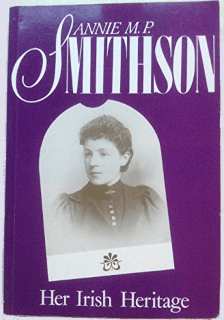
In 1917 Smithson publishes her first novel, Her Irish Heritage, which becomes a best-seller. It is dedicated to those who died in the Easter Rising of 1916. In all, she publishes twenty novels and two short story collections. Other successful novels include By Strange Paths and The Walk of a Queen. Many of her works are highly romantic and draw on her own life experiences, with nationalism and Catholicism featured as recurrent themes. In 1944 she publishes her autobiography, Myself – and Others.

From 1932 onwards Smithson shares a house in Rathmines, Dublin, with her stepsister and her stepsister’s family. She dies of heart failure on February 21, 1948, at 12 Richmond Hill, Dublin, and is buried in Whitechurch, Dublin.

Smithson’s novels are featured in Brian Friel‘s 1990 play Dancing at Lughnasa. Between 1989 and 1990 the Mercier Press reprints several of her works.


Leave a comment

Birth of Bill Whelan, Musician & Composer of “Riverdance”

Bill Whelan, composer and musician, is born in Limerick, County Limerick, on May 22, 1950. He is best known for composing a piece for the interval of the 1994 Eurovision Song Contest. The result, Riverdance, is a seven-minute display of traditional Irish dancing that becomes a full-length stage production and spawns a worldwide craze for Irish dancing and Celtic music. It also wins him a Grammy. Riverdance is released as a single in the UK in 1994, credited to “Bill Whelan and Anúna featuring the RTÉ Concert Orchestra.” It reaches number 9 and stays on the charts for 16 weeks. The album of the same title reaches number 31 in the album charts in 1995.

Whelan also composes a symphonic suite version of Riverdance, with its premiere performed by the Ulster Orchestra on BBC Radio 3 in August 2014.

Whelan is educated at Crescent College, University College Dublin and the King’s Inns. While he is best known for his Riverdance composition, he has been involved in many ground-breaking projects in Ireland since the 1970s. As a producer he works with U2 on their War album, Van Morrison, Kate Bush, The Dubliners, Planxty, Andy Irvine & Davy Spillane, Patrick Street, Stockton’s Wing and fellow Limerickman Richard Harris.

As an arranger and composer, Whelan’s credits include:

  • The Spirit of Mayo, performed by an 85-piece orchestra in Dublin‘s National Concert Hall and featuring a powerful Celtic drum corps and a 200 strong choir and choral group Anúna.

In theatre, Whelan receives a Laurence Olivier Awards nomination for his adaption of Gilbert and Sullivan‘s H.M.S. Pinafore. He writes original music for fifteen of W. B. Yeats‘s plays for Dublin’s Abbey Theatre and his film credits include Dancing at Lughnasa (starring Meryl Streep), Some Mother’s Son, Lamb (starring Liam Neeson) and the award-winning At the Cinema Palace.


Leave a comment

Birth of Rosaleen Linehan, Stage, Screen & Television Actress

rosaleen-linehan

Rosaleen Linehan, Irish stage, screen and television actress born Rosaleen Philomena McMenamin, is born in Dublin on June 1, 1937.

Linehan has appeared in many comedy revues written by her husband Fergus. She has appeared onstage in, among other plays, Blithe Spirit, House of Bernarda Alba and Twelfth Night. She is nominated for Best Featured Actress in a Play for her role as Kate in Brian Friel‘s Dancing at Lughnasa at the 1992 Tony Awards. She stars as Winnie in Samuel Beckett‘s Happy Days on stage and on screen as part of the Beckett on Film project, having already played the role in a 1996 production at the Gate Theatre opposite Barry McGovern.

In 1972, Linehan wins a Jacob’s Award for her RTÉ Radio comedy series Get an Earful of This. She is the recipient of the Lifetime Achievement Award at the Irish Theatre Awards in 2008.

In film, Linehan appears as Nurse Callan in Ulysses, May Dedalus in A Portrait of the Artist as a Young Man (1977), Aunt Fitzeustace in Fools of Fortune, Mrs. Canning in The Butcher Boy, Peggy Owens in About Adam, Mrs. Matson in The Hi-Lo Country and Millie O’Dowd in The Matchmaker. In television, she is a voice artist on the Irish language children’s TV series Inis Cúil in 2005 and appears in Hugh Leonard‘s BBC sitcom Me Mammy. More recently, she plays Deirdre O Kane’s mother in Bitter Sweet.

Linehan and her husband live in Dublin and have four children and eight grandchildren. Her father Daniel McMenamin was a Teachta Dála for Donegal from 1927 to 1961.


Leave a comment

Bill Whelan Receives IMRO Lifetime Achievement Award

bill-whelan

Taoiseach Bertie Ahern presents Irish composer and musician Bill Whelan with the IMRO Lifetime Achievement Award at Dublin Castle on March 2, 2001. Such big names as The Corrs, Brian Kennedy, Jean Butler, Jim Sheridan, Paul McGuinness and Moya Doherty join him to celebrate the award.

Whelan is best known for composing a piece for the interval of the 1994 Eurovision Song Contest. The result, Riverdance, is a seven-minute display of traditional Irish dancing that becomes a full-length stage production and spawns a worldwide craze for Irish dancing and Celtic music and also wins him a Grammy Award. It is released as a single in the United Kingdom in 1994, credited to “Bill Whelan and Anúna featuring the RTÉ Concert Orchestra.” It reaches number 9 and stays in the charts for 16 weeks. The album of the same title reaches number 31 in the album charts in 1995. He also composes a symphonic suite version of Riverdance, with its premiere performed by the Ulster Orchestra on BBC Radio 3 in August 2014.

Whelan is a native of Limerick and is educated at Crescent College, University College Dublin and the King’s Inns. While he is best known for his Riverdance composition, he has been involved in many ground-breaking projects in Ireland since the 1970s. As a producer he has worked with U2 (on their War album), Van Morrison, Kate Bush, The Dubliners, Planxty, Andy Irvine & Davy Spillane, Patrick Street, Stockton’s Wing and fellow Limerickman Richard Harris.

In theatre, Whelan receives a Laurence Olivier Award nomination for his adaption of Gilbert and Sullivan‘s H.M.S. Pinafore. He writes original music for fifteen of William Butler Yeats‘s plays for Dublin‘s Abbey Theatre and his film credits include Dancing at Lughnasa (starring Meryl Streep), Some Mother’s Son, Lamb (starring Liam Neeson) and the award-winning At the Cinema Palace.


Leave a comment

Death of Playwright Brian Friel

Brian Patrick Friel, Irish playwright, short story writer and founder of the Field Day Theatre Company, dies on October 2, 2015, in Greencastle, County Donegal. He has been considered one of the greatest living English-language dramatists. He has been likened to an “Irish Chekhov” and described as “the universally accented voice of Ireland.” His plays have been compared favourably to those of contemporaries such as Samuel Beckett, Arthur Miller, Harold Pinter and Tennessee Williams.

Friel is born in Knockmoyle, close to Omagh, County Tyrone, Northern Ireland. The family moves to Derry when Friel is ten years old. There, he attends St. Columb’s College, the same school attended by Seamus Heaney, John Hume, Seamus Deane, Phil Coulter, Eamonn McCann and Paul Brady. He receives his B.A. from St. Patrick’s College, Maynooth (1945–48).

Recognised for early works such as Philadelphia, Here I Come! and Faith Healer, Friel has 24 plays published in a career of more than a half-century. He is elected to the honorary position of Saoi of Aosdána. His plays are commonly produced on Broadway in New York City throughout this time, as well as in Ireland and the United Kingdom. In 1980 Friel co-founds Field Day Theatre Company, and his play Translations is the company’s first production. With Field Day, Friel collaborates with Seamus Heaney, 1995 recipient of the Nobel Prize in Literature. Heaney and Friel first become friends after Friel sends the young poet a letter following publication of his book Death of a Naturalist. Friel’s play Dancing at Lughnasa wins three Tony Awards in 1992.

Friel is a member of the American Academy of Arts and Letters, the British Royal Society of Literature and the Irish Academy of Letters. He is appointed to Seanad Éireann in 1987 and serves until 1989. In later years, Dancing at Lughnasa reinvigorates Friel’s oeuvre, bringing him Tony Awards, including Best Play, the Laurence Olivier Award for Best New Play and the New York Drama Critics Circle Award for Best Play. It is also adapted into a film, starring Meryl Streep, directed by Pat O’Connor, script by Frank McGuinness.

After a long illness Friel dies at the age of 86 in the early morning of Friday, October 2, 2015, in Greencastle, County Donegal. He is survived by his wife Anne and children Mary, Judy, Sally and David. A daughter, Patricia, predeceases him in 2012.


Leave a comment

Birth of Frank McGuinness, Playwright & Poet

Frank McGuinness, award-winning Irish playwright and poet, is born in Buncrana, a town located on the Inishowen peninsula of County Donegal on July 29, 1953. As well as his own works, which include The Factory Girls, Observe the Sons of Ulster Marching Towards the Somme, Someone Who’ll Watch Over Me and Dolly West’s Kitchen, he is recognised for a “strong record of adapting literary classics, having translated the plays of Jean Racine, Sophocles, Henrik Ibsen, Federico García Lorca, and August Strindberg to critical acclaim.”

McGuinness is educated locally and at University College Dublin, where he studies Pure English and medieval studies to postgraduate level.

He first comes to prominence with his play The Factory Girls but establishes his reputation with his play about World War I, Observe the Sons of Ulster Marching Towards the Somme, which is staged in Dublin‘s Abbey Theatre and internationally. The play makes a name for him when it is performed at Hampstead Theatre, drawing comments about McGuinness’s Irish Catholic background. It wins numerous awards including the London Evening Standard Award for Most Promising Playwright for McGuinness and the Christopher Ewart-Biggs Memorial Prize. He has also written new versions of classic dramas, including works by Henrik Ibsen, Anton Chekhov, and Euripides, adapting the literal translations of others. In addition, he writes the screenplay for the film Dancing at Lughnasa, adapting the stage play by fellow Ulsterman Brian Friel.

McGuinness’s first poetry anthology, Booterstown, is published in 1994. Several of his poems have been recorded by Marianne Faithfull, including Electra, After the Ceasefire and The Wedding.

McGuinness previously lectured in Linguistics and Drama at the University of Ulster, Medieval Studies at University College, Dublin and English at the National University of Ireland, Maynooth. Then he is a writer-in-residence lecturing at University College Dublin before being appointed Professor of Creative Writing in the School of English, Drama and Film there in 2007.


Leave a comment

Birth of Irish Playwright Brian Patrick Friel

brian-patrick-friel

Brian Patrick Friel, Irish playwright, short story writer, and founder of the Field Day Theatre Company, is born on January 9, 1929, at Knockmoyle, near Omagh, County Tyrone. Prior to his death, he had been considered one of the greatest living English-language dramatists and referred to as an “Irish Chekhov” and “the universally accented voice of Ireland.” His plays have been compared favourably to those of contemporaries such as Samuel Beckett, Arthur Miller, Harold Pinter, and Tennessee Williams.

Friel is the son of Patrick “Paddy” Friel, a primary school teacher and councillor on Londonderry Corporation, the local city council in Derry. Friel’s mother, Mary McLoone, is postmistress of Glenties, County Donegal. The family moves to Derry when Friel is ten years old. There, he attends St. Columb’s College, the same school attended by Seamus Heaney, John Hume, Seamus Deane, Phil Coulter, Eamonn McCann, and Paul Brady.

Friel receives his B.A. from St. Patrick’s College, Maynooth (1945–48), and qualifies as a teacher at St. Joseph’s Training College in Belfast. He marries Anne Morrison in 1954, with whom he has four daughters and one son. Between 1950 and 1960, he works as a math teacher in the Derry primary and intermediate school system, taking leave in 1960 to pursue a career as a writer, living off his savings. In the late 1960s, the Friels move from 13 Malborough Street, Derry to Muff, County Donegal, eventually settling outside Greencastle, County Donegal.

Recognised for early works such as Philadelphia, Here I Come! and Faith Healer, Friel has 24 plays published in a more than half-century spanning career that culminates in his election to the position of Saoi of Aosdána. His plays are commonly featured on Broadway throughout this time. In 1980, Friel co-founds Field Day Theatre Company, and his play Translations is the company’s first production. With Field Day, Friel collaborates with Seamus Heaney, 1995 recipient of the Nobel Prize in Literature. Heaney and Friel first become friends after Friel sends the young poet a letter following the publication of Death of a Naturalist.

Friel is a member of the American Academy of Arts and Letters, the British Royal Society of Literature, and the Irish Academy of Letters. He is appointed to Seanad Éireann in 1987 and serves until 1989. In later years, Dancing at Lughnasa reinvigorates Friel’s oeuvre, bringing him Tony Awards, including Best Play, the Laurence Olivier Award for Best New Play, and the New York Drama Critics Circle Award for Best Play. It is also adapted into a film, starring Meryl Streep, directed by Pat O’Connor, script by Frank McGuinness.

After a long illness Friel dies at the age of 86 in the early morning of Friday, October 2, 2015, in Greencastle, County Donegal.