seamus dubhghaill

Promoting Irish Culture and History from Little Rock, Arkansas, USA


Leave a comment

Birth of Robert McGladdery, the Last Person Executed in Ireland

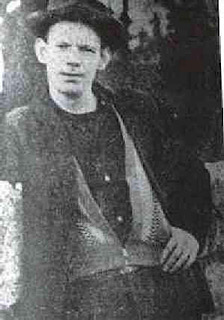
Robert Andrew McGladdery, the last person to be executed in Northern Ireland and the island of Ireland, is born on October 18, 1935, in the working class Damolly area of Newry, County Down, Northern Ireland.

McGladdery is raised by his mother, Cissie McGladdery, a respectable woman who works at the local Damolly Mill to support the family. His father dies prior to this period, leaving Cissie to raise four children alone in modest circumstances. Information on his father remains scarce, and while details about his siblings are limited, he has at least one older brother named Sam.

During his teenage years in the Newry area, McGladdery exhibits patterns of truancy and engages in minor troubles that lead to multiple placements in reform school. Locally in Newry, he earns a reputation as a “well-known bad lad,” particularly noted for predatorial behavior toward women. This perception persists into his early adulthood, marking him as a loner with a violently self-willed disposition, as recalled by his mother. He works sporadically as an agricultural laborer in the Newry region, a common occupation for young men in the area during the late 1950s. By age 25 in 1961, however, he is unemployed and continues to reside with his mother in Damolly.

McGladdery is convicted of the murder of Pearl Gamble, aged 19, whom he had battered, strangled and stabbed to death on January 28, 1961, and whose body is discovered at Upper Damolly, near Newry. It transpires that the murderer and victim are distant cousins. Gamble had gone to a dance at the Henry Thomson Memorial Orange Hall in Newry with three girlfriends. She had been seen dancing with her boyfriend and McGladdery.

The murder investigations lead to McGladdery. When interviewed, he states to have worn a dark blue suit but other people at the dance say he wore a light-coloured one. He is put under surveillance and is discreetly seen going to some undergrowth on February 10, 1961. The following day, the police discover, inside a pillow case in a septic tank, an overcoat, a waistcoat and a handkerchief, all of which are heavily bloodstained. McGladdery is arrested on the same day.

At his trial in Downpatrick, McGladdery pleads his innocence but is found guilty and sentenced to death on October 16, 1961. The evening before his execution he allegedly makes a full confession to the murder. He is hanged, aged 26, at Crumlin Road Gaol in Belfast on December 20, 1961, by executioner Harry Allen.

A BBC Northern Ireland dramatisation of the case, Last Man Hanging, is broadcast on September 8, 2008. McGladdery is portrayed by Michael Condron.

The murder and subsequent execution is the theme of Eoin McNamee‘s 2010 novel, Orchid Blue.

Leave a comment

Death of Robin Jackson, Northern Irish Loyalist Paramilitary

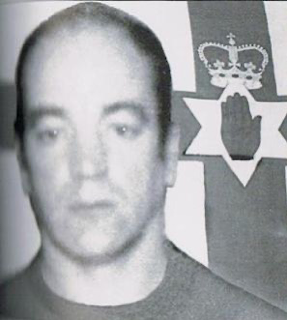
Robin Jackson, also known as The Jackal, a Northern Irish loyalist paramilitary and part-time soldier, dies at his home in Donaghcloney, County Down, Northern Ireland, on May 30, 1998.

Jackson is born on September 27, 1948, in Tullynarry Cottages, Donaghmore, County Tyrone, Northern Ireland, one of seven children of John Jackson, farmhand, and his wife Eileen. As a teenager he participates in Paisleyite demonstrations against the Northern Ireland civil rights movement. He is already a local “hard man” who cultivates an air of menace. After a brief period in Australia, he returns home and serves in the Ulster Defence Regiment (UDR) from 1972 to 1975. He also joins the Ulster Volunteer Force (UVF) and is alleged to have committed his first murders in 1973. He is arrested in 1973 after the doorstep killing of a Banbridge Catholic who works in the shoe factory that employs Jackson. The victim’s wife identifies Jackson as the murderer, but the charge is withdrawn after she admits to a degree of prompting by the police.

Jackson is a leading member of a UVF gang linked to about 100 murders carried out at random against Catholic civilians between 1973 and 1979, earning for the north Armagh and east Tyrone area the nickname “the murder triangle.” He also allegedly helps to plan the Dublin and Monaghan car bombings of May 17, 1974, killing thirty-three civilians, and orchestrates the attack on the Miami Showband on July 31, 1975. He becomes UVF Mid-Ulster Brigade commander in 1975. Never convicted of any of the numerous murders attributed to him, he is however jailed between 1979 and 1983 for arms possession.

Jackson marries Eileen Maxwell in the late 1960s. They have a son and two daughters. The marriage does not survive his imprisonment and after his release he moves to Donaghcloney, County Down, where he lives with a much younger girlfriend. He remains active in loyalist paramilitarism but takes a less prominent role. He survives several Irish Republican Army (IRA) attempts on his life, including the detonation of a car bomb outside his house. In 1984, the editor of the Belfast edition of the Sunday World  is shot and wounded after publishing articles denouncing “the Jackal,” the nickname by which the press calls Jackson during his lifetime.

After the Anglo–Irish Agreement of 1985, Jackson is briefly linked to Ulster Resistance (UR), a paramilitary group founded by associates of Ian Paisley. He allegedly assists the rearming and reorganisation of the Mid-Ulster UVF under Billy Wright after the killing of his brother-in-law and alleged accomplice, Roy Metcalf, by the IRA in 1988. Relations between Wright and Jackson cool after the killing of a Catholic in Donaghcloney by Wright’s men leads to Jackson being called in for questioning, and he supports the UVF leadership in its 1996–97 dispute with Wright. He is also the focus of recurring allegations about collusion between loyalist paramilitaries and elements of the security forces in mid-Ulster, including claims that he operated on behalf of British military intelligence who shielded him from prosecution.

Jackson dies of lung cancer at the age of 49 at his Donaghcloney home on May 30, 1998. He is buried on June 1 in a private ceremony in the St. Bartholomew Church of Ireland churchyard in his native Donaghmore, County Down. His grave, close to that of his parents, is unmarked apart from a steel poppy cross. His father had died in 1985 and his mother outlives him by five years.

Considerable uncertainty surrounds his involvement in many of the crimes attributed to him, but there is no doubt that he is a cold-blooded multiple murderer and one of the most sinister “hard men” of loyalist paramilitarism.

(From: “Jackson, Robin” by Patrick Maume, Dictionary of Irish Biography, http://www.dib.ie, October 2009)


Leave a comment

Birth of Robin Jackson, Northern Irish Loyalist Paramilitary

Robin Jackson, also known as The Jackal, a Northern Irish loyalist paramilitary and part-time soldier, is born on September 27, 1948, in Tullynarry Cottages, Donaghmore, County Tyrone, Northern Ireland.

Jackson is one of seven children of John Jackson, farmhand, and his wife Eileen. As a teenager he participates in Paisleyite demonstrations against the Northern Ireland civil rights movement. He is already a local “hard man” who cultivates an air of menace. After a brief period in Australia, he returns home and serves in the Ulster Defence Regiment (UDR) from 1972 to 1975. He also joins the Ulster Volunteer Force (UVF) and is alleged to have committed his first murders in 1973. He is arrested in 1973 after the doorstep killing of a Banbridge Catholic who works in the shoe factory that employs Jackson. The victim’s wife identifies Jackson as the murderer, but the charge is withdrawn after she admits to a degree of prompting by the police.

Jackson is a leading member of a UVF gang linked to about 100 murders carried out at random against Catholic civilians between 1973 and 1979, earning for the north Armagh and east Tyrone area the nickname “the murder triangle.” He also allegedly helps to plan the Dublin and Monaghan car bombings of May 17, 1974, killing thirty-three civilians, and orchestrates the attack on the Miami Showband on July 31, 1975. He becomes UVF Mid-Ulster Brigade commander in 1975. Never convicted of any of the numerous murders attributed to him, he is however jailed between 1979 and 1983 for arms possession.

Jackson marries Eileen Maxwell in the late 1960s. They have a son and two daughters. The marriage does not survive his imprisonment and after his release he moves to Donaghcloney, County Down, where he lives with a much younger girlfriend. He remains active in loyalist paramilitarism but takes a less prominent role. He survives several Irish Republican Army (IRA) attempts on his life, including the detonation of a car bomb outside his house. In 1984, the editor of the Belfast edition of the Sunday World  is shot and wounded after publishing articles denouncing “the Jackal,” the nickname by which the press calls Jackson during his lifetime.

After the Anglo–Irish Agreement of 1985, Jackson is briefly linked to Ulster Resistance (UR), a paramilitary group founded by associates of Ian Paisley. He allegedly assists the rearming and reorganisation of the Mid-Ulster UVF under Billy Wright after the killing of his brother-in-law and alleged accomplice, Roy Metcalf, by the IRA in 1988. Relations between Wright and Jackson cool after the killing of a Catholic in Donaghcloney by Wright’s men leads to Jackson being called in for questioning, and he supports the UVF leadership in its 1996–97 dispute with Wright. He is also the focus of recurring allegations about collusion between loyalist paramilitaries and elements of the security forces in mid-Ulster, including claims that he operated on behalf of British military intelligence who shielded him from prosecution.

Jackson dies of lung cancer at the age of 49 at his Donaghcloney home on May 30, 1998. He is buried on June 1 in a private ceremony in the St. Bartholomew Church of Ireland churchyard in his native Donaghmore, County Down. His grave, close to that of his parents, is unmarked apart from a steel poppy cross. His father had died in 1985 and his mother outlives him by five years.

Considerable uncertainty surrounds his involvement in many of the crimes attributed to him, but there is no doubt that he is a cold-blooded multiple murderer and one of the most sinister “hard men” of loyalist paramilitarism.

(From: “Jackson, Robin” by Patrick Maume, Dictionary of Irish Biography, http://www.dib.ie, October 2009)