seamus dubhghaill

Promoting Irish Culture and History from Little Rock, Arkansas, USA


Leave a comment

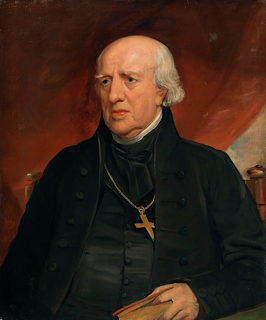
Birth of John Thomas Troy, Archbishop of Dublin

John Thomas Troy, an Irish Dominican friar who serves as Archbishop of Dublin from 1786 to 1823, is born at Annefield House, near Porterstown, County Dublin on May 10, 1739.

Troy receives his early education at Liffey Street, Dublin. At the age of sixteen he joins the Dominican Order and proceeds to their house of San Clemente at Rome. Historian Edward D’Alton notes that he is “amenable to discipline, diligent in his studies, and talented.” He makes rapid progress, and while still a student is appointed to give lectures in philosophy. Subsequently, he teaches theology and canon law, and finally becomes prior/rector of the convent in 1772.

When Thomas Burke, the Bishop of Ossory, dies in 1776, the priests of the diocese recommend one of their number, Father Molloy, to Rome for the vacant see, and the recommendation is endorsed by many of the Irish bishops. But Troy, who is held in high esteem at Rome, has already been appointed Bishop of Ossory. He is consecrated at Leuven in June 1777 by the nuncio to Flanders, Archbishop (later Cardinal) Ignazio Busca.

Troy arrives at Kilkenny in August 1777 and for the next nine years he Labour a hard for the spiritual interests of his diocese. Maddened by excessive rents and tithes, and harried by grinding tithe-proctors, farmers have banded themselves together in a secret society called the “Whiteboys,” so called from the white smocks the members wear in their nightly raids. They attack landlords, bailiffs, agents, and tithe-proctors, and often commit fearful outrages. Bishop Troy frequently and sternly denounces them, declaring any who join the secret society to be excommunicated. He has no sympathy with oppression, but he had lived long in Rome, and does not fully appreciate the extent of misery in which the poor Catholic masses live.

Troy is ready to condemn all violent efforts for reform, and has no hesitation in denouncing not only all secret societies in Ireland, but also “our American fellow-subjects, seduced by specious notions of liberty.” This makes him unpopular. He is zealous in correcting abuses in his diocese and in promoting education. So well is this recognized at Rome that in 1781, in consequence of some serious troubles which have arisen between the primate and his clergy, Troy is appointed Administrator of Armagh. He holds this office until 1782.

Upon the death of Archbishop John Carpenter of Dublin in 1786, Troy is appointed to succeed him. At Dublin, as at Ossory, he shows his zeal for religion, his sympathy with authority, and his distrust of popular movements, especially when violent means are employed. Though his circular, issued on March 15, 1792, disavowing the authority of any ecclesiastical power to absolve subjects from their allegiance, is believed to influence the concession in that year of the relaxations embodied in Langrishe’s Act, and the extension of the franchise to Roman Catholics in 1793, he declines to associate himself with John Keogh and other Catholic reformers in their demands for further relief.

In early 1798, the French Directory conquers Rome, and establishes the Roman Republic. Its ally in Ireland, the Society of United Irishmen, starts a rebellion in May 1798. Troy issues a sentence of excommunication against all those of his flock who decide to join the rebellion. In a pastoral read in all the churches, he speaks of the clerical organisers of the rebellion as “vile prevaricators and apostates from religion, loyalty, honour, and decorum, degrading their sacred character, and the most criminal and detestable of rebellious and seditious culprits.” Hus action at this time appears to endanger his life. But the influence he has acquired with the government enables him to moderate the repressive measures taken by the authorities. Believing that Catholic emancipation can never be conceded by the Irish parliament, he is one of the most determined supporters of the Union.

In 1799, Troy agrees to accept the veto of government on the appointment of bishops in Ireland, and even when the other bishops, feeling they have been tricked by Pitt and Castlereagh, repudiate the veto, he continues to favour it. However, in 1809, he recommends Daniel Murray be appointed his coadjutor. Murray is an uncompromising opponent of the veto, and while Troy’s coadjutor, makes trips in 1814 and 1815 to Rome concerning the controversy.

In April 1815, Archbishop Troy lays the foundation of St. Mary’s Pro-Cathedral in Marlborough Street, Dublin, but does not live to see it completed. He dies in Dublin on May 11, 1823, at the age of eighty-four. He dies very poor, leaving scarce sufficient to pay for his burial, and is interred in the unfinished St. Mary’s Pro-Cathedral.

In the administration of his diocese and in his private life, Troy is eminently zealous, pious, and charitable. Although his cordial relations with the government expose him to many suspicions and accusations, there is no ground for questioning the integrity of his motives and conduct, which are inspired by his views of the interest of his church. His distrust of revolutionary tendencies in civil affairs is fully aligned with the policy of the Vatican throughout his career. John D’Alton speaks of Troy as “a truly learned and zealous pastor, … a lover and promoter of the most pure Christian morality, vigilant in the discharge of his duty, and devotedly solicitous not only for the spiritual good of those consigned to his charge, but also for the public quiet of the state.”

1 Comment

The Philadelphia Nativist Riots

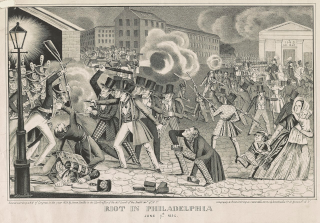
The Philadelphia nativist riots (also known as the Philadelphia Prayer Riots, the Bible Riots and the Native American Riots) are a series of riots that take place on May 6—8 and July 6—7, 1844, in Philadelphia, Pennsylvania, and the adjacent districts of Kensington and Southwark. The riots are a result of rising anti-Catholic sentiment at the growing population of Irish Catholic immigrants.

On July 3, Father John Patrick Dunn of the Church of St. Philip Neri in the Southwark District is warned that the church might be attacked during an upcoming parade held by the Native American Party. The Native American Party, a nativist political party, plans to hold a large parade the next day on Independence Day.

To prepare for violence, the church applies for an arsenal that a volunteer company could use in case the church is attacked. Pennsylvania Governor David R. Porter authorizes the formation of a company and the procurement of twenty-five muskets from the Frankford Arsenal. Major General Robert Patterson, commander of the Pennsylvania militia, puts the troops on alert in case of violence.

Five of the muskets placed in St. Philip Neri’s Church are discovered to be defective and are sent back to the Frankford Arsenal to be repaired. No violence occurs before or during the parade, but on July 5, a nativist mob numbering in the thousands gathers at the church after some observe five defective muskets being returned to the church. They then demand that the sheriff remove the weapons, while Father Dunn and volunteers rally to protect the church. Sheriff Morton McMichael and two aldermen search the church and remove twelve muskets. After leaving the church, the sheriff urges the crowd to disperse and leaves a volunteer posse to guard the church. The mob remains, and a man injured in the May riots makes a speech to the crowd, calling for a second search of the church. The sheriff, an alderman, and seventeen nativists enter the church and find three armed men, fifty-three muskets, ten pistols, a keg of gunpowder and ammunition. To avoid inciting the mob, the sheriff decides not to remove the armaments, and the search party stays in the church. Just after midnight, July 6, Major General Patterson orders a company of city guards to clear the streets. After the crowd disperses, the arms found within the church are removed.

By midday, the crowds return around St. Philip Neri’s Church. General George Cadwalader orders the crowds to disperse, but they do not. By the evening, the sheriff arrives with a 150-strong posse. Throughout the evening, the military presence grows, and three cannons are stationed on the streets. The soldiers clear the streets near the church, despite being pelted with rocks by the mob. Responding to the rock throwers, General Cadwalader orders a cannon to be fired at the crowd on Third Street. Former U.S. Congressman Charles Naylor begs the general not to fire. He and several others are arrested and held within the church. By the morning of July 7, most of the soldiers have left, but the crowds, led by an alderman and the sheriff, return and demand that the remaining guard release Naylor. Everyone except Naylor is released. The crowds grow, and a cannon is brought from a nearby wharf and used to threaten the church. After further negotiations, Naylor is released and carried home to cheers on people’s shoulders.

After Naylor is brought home, the mob attacks the church, damaging a wall with the cannon. A second cannon is brought from the wharfs and fired at the church, after which the mob pelts the building with rocks and break in through a side door. The soldiers fire on the men breaking into the church, who promptly retreat. After retreating, the nativists negotiate with the guard, who agrees to withdraw, allowing the nativists to guard the church. The crowd pelts the soldiers with rocks and some soldiers fire back, which only incites the mob further. The mob forces its way into the church, causing extensive damage to the interior. After about an hour, a group of twenty men organizes themselves to guard St. Philip Neri’s, and the mob leaves the church.

By the evening, a large number of soldiers arrive with orders to clear the streets, only to be stoned in the process. After a captain is attacked, the order is given to fire on the mob, which results in seven fatalities and nine injuries. Not long after, people with muskets and cannons arrive and fierce fighting breaks out between the soldiers and the mob. The fighting lasts for several hours, with the soldiers being fired upon from alleyways and the windows of nearby buildings. The soldiers bring in two cannons of their own and fire on the mob. The mob returns fire using their own cannons, armed with items such as nails, chains, knives and broken bottles. In an attempt to capture the mob’s cannons, soldiers charge one cannon’s position, only to be knocked off their horses by a rope tied across the street. The cannons are all eventually captured, and by early morning on July 8, the fighting has ended.

At least fifteen people, including rioters and soldiers, are killed in the riot, and at least fifty people are injured. Under Governor Porter’s orders, state troops continue to arrive in the city in the days afterward, but no further violence takes place. An estimated 5,000 militia are used to stop violence. Troops begin to withdraw from the city on July 10, and the church takes over responsibility from the district of Southwark of protecting the church on July 11. As with the May riots, a grand jury blames the Irish Catholics for the riots but supports the military’s response to the violence.

The riots gain national attention and condemnation. The riots are used as an issue in the 1844 U.S. Presidential election, the Democratic Party condemning the growing Native American Party and the Whig Party, which the Democrats accuse of involvement in the nativist movement. In Philadelphia, the Native American Party ends up making a strong showing in the city’s October election.

On July 11, 1844, Philadelphia passes an ordinance that gives the city a battalion of artillery, a regiment of infantry, and at least one full troop of cavalry to preserve peace within the city when necessary. The difficulty of quelling the riots and other crime leads the Pennsylvania General Assembly to pass an 1845 act that requires Philadelphia, the township of Moyamensing and the unincorporated districts of Spring Garden, Northern Liberties, and Penn to maintain a police force of one man per 150 taxable inhabitants. In 1850, another act is passed that establishes that the Philadelphia police force will police the city and seven surrounding districts. The inability to maintain order effectively in Philadelphia’s suburbs is an important argument for the consolidation of the city in 1854.

After the riots, Bishop Kenrick ends his efforts to influence the public education system and begins encouraging the creation of Catholic schools, with 17 being founded by 1860. The friars of the Church of St. Augustine sue the city of Philadelphia for not providing the church with adequate protection, claiming $80,000 in damages. The city argues that the friars cannot claim their civil rights were violated, as the Order of Saint Augustine is a foreign organization under the Pope. Furthermore, the city argues that the friars took a vow of poverty and cannot be property owners. The Augustinians end up proving the Order is incorporated in 1804 and is awarded $45,000. The church is rebuilt in 1848.

(Pictured: “Riot in Philadelphia,” lithograph by H. Bucholzer, 1844, Library of Congress)


Leave a comment

The Banishment Act Goes into Effect

The Banishment Act or Bishops’ Banishment Act, which receives royal assent on September 25, 1697, requires most Catholic clergy to leave the kingdom by May 1, 1698, and bans Catholic clergy from entering the kingdom. The Act is never efficiently enforced.

The Banishment Act is a 1697 Act of the Parliament of Ireland which banishes all ordinaries and regular clergy of the Roman Catholic Church from Ireland. All “popish archbishops, bishops, vicars general, deans, jesuits, monks, friars, and other regular popish clergy” are required to be in one of several named ports awaiting a ship out of the country by May 1, 1698. Remaining or entering the country after this date would result in punishment as a first offence with twelve months imprisonment followed by expulsion. A second offence would constitute high treason.

The Act is one of the Penal Laws passed after the Williamite War to safeguard the Church of Ireland as the established church and from fears of Catholic clerical support for Jacobitism. It is foreshadowed by proclamations issued by the Dublin Castle administration in 1673 and 1678 with similar terms. The banishment is originally and most effectively applied to regular clergy, many of whom register under the Registration Act of 1704, as parish priests to be treated as secular clergy and avoid deportation. The ban on bishops may have been intended to prevent ordination of new priests, which, coupled with a ban on clerical immigration, would lead to their eventual extinction. Of the eight Catholic bishops in Ireland when the act is passed, two leave, one (John Sleyne)is arrested, and five go into hiding. The port authorities pay for the passage of 424 clerics who emigrate. Mary of Modena estimates that about 700 in total leave, of whom 400 settle in France. Priest hunters are active in subsequent decades. Maurice Donnellan, Bishop of Clonfert, is arrested in 1703 but rescued by an armed crowd.

The Act is gradually less stringently enforced as the eighteenth-century progresses. The Roman Catholic Relief Act 1782 provides that its provisions cannot apply to a priest who has registered and taken the oath of supremacy. The Act is explicitly repealed by the Statute Law Revision (Ireland) Act 1878.