seamus dubhghaill

Promoting Irish Culture and History from Little Rock, Arkansas, USA


Leave a comment

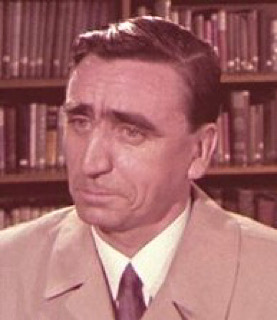
Death of Gerard Slevin, Heraldist & Dramatist

(John) Gerard Slevin, dramatist and Chief Herald of Ireland from 1954 to 1981, dies on January 18, 1997.

Slevin is born on November 1, 1919, in Cork, County Cork, the son of John Slevin, motor mechanic, of Wellington Road, Cork, and Bridget Slevin (née Kennelly). His father, who hails from County Laois tenant farmers, works with the Irish Omnibus Corporation. He is educated at North Monastery CBS and University College Cork (UCC), taking an MA summa cum laude in philosophy and English in 1941.

After lecturing at St. Patrick’s College, Dublin, from 1941 to 1944, Slevin enters the civil service. Despite no prior interest in heraldry, he is selected via competition to assist the newly installed Chief Herald, Dr. Edward MacLysaght, in the genealogical office, Bedford Tower, Dublin Castle. After serving as Deputy Chief Herald (1944–54), he succeeds MacLysaght as Chief Herald of Ireland, becoming the longest-serving occupant of the office (1954–81).

One of three national heralds named to a vexillogical committee to devise a common emblem for the Council of Europe, Slevin persuades his colleagues to eschew religious iconography, such as the Christian cross, as inappropriate. His own design of a circle of twelve golden stars on an azure field is selected by the committee in 1954, and formally accepted by the council in December 1955. With blue chosen as a colour common to the flags of many European countries, the twelve stars represent not individual states but such associations as the zodiac and a clock face, suggesting ideals of universality, harmony, and evolution through time. Adopted in 1985 for the flag of the European Community (latterly the European Union), his design attracts wide acclaim in heraldic circles, leading to his being awarded membership of the Académie Internationale d’Héraldique.

During Slevin’s tenure as Chief Herald, several hundred patents of arms are issued to Irish public bodies, including civic and municipal authorities, and to individuals of Irish descent worldwide. On behalf of the Irish government, he confirms the Irish connections of such notables as United States presidents Kennedy, Nixon, and Reagan, French president Charles de Gaulle, and Princess Grace of Monaco. His coat of arms for President Kennedy, combining the ancient arms of the Kennedy and Fitzgerald families, wins renown as a masterpiece of heraldic design. While possessing a keen sense of graphic impact, he is not a great draughtsman, and he employs the noted heraldic painter Myra Maguire to execute the designs that he creates. He oversees expansion of genealogical office services, instituting an advisory service and team of research assistants for the growing numbers – especially within emigrant communities abroad – seeking to trace Irish ancestry. He establishes a committee to catalogue churchyard memorial inscriptions as an archival resource, meant to redress the loss of state records in the 1922 Four Courts fire.

Slevin wins first prize in successive years in the 1950s for entries in the Oireachteas drama competition, both plays being subsequently produced at the Abbey Theatre. He writes a detective novel in Irish, and contributes numerous articles to learned journals, chiefly on medieval heraldry and Anglo-Irish families. Erudite and possessed of great presence, courtesy, and wit, he is an engaging speaker.

Resident in south County Dublin, Slevin is active in amateur dramatics, local history societies, and the ecumenical movement. His recreation is long country walks. He marries Millicent Nolan in 1950 and they have three sons. He dies on January 18, 1997.

(From: “Slevin, (John) Gerard” by Lawrence William White, Dictionary of Irish Biography, http://www.dib.ie, October 2009 (last revised February 2025))


Leave a comment

Birth of Edward MacLysaght, Genealogist of 20th Century Ireland

Edgeworth Lysaght, later Edward Anthony Edgeworth Lysaght, and from 1920 Edward MacLysaght (Irish: Éamonn Mac Giolla Iasachta), a genealogist of twentieth century Ireland, is born on November 6, 1887, at Flax Bourton, Somerset, England. His numerous books on Irish surnames build upon the work of Rev. Patrick Woulfe’s Irish Names and Surnames (1923).

Lysaght is born to Sidney Royse Lysaght (1856-1941), of Irish origin, a director of the family iron and steel firm John Lysaght and Co. and a writer of novels and poetry, and Katherine (died 1953), daughter of Joseph Clarke, of Waddington, Lincolnshire. His grandfather, Thomas Royse Lysaght, is an architect, and his great-grandfather, William Lysaght, a small landowner distantly connected with the Barons Lisle. He is named “Edgeworth Lysaght” after his father’s friend, the economist Francis Ysidro Edgeworth. He loses the sight in one eye after a childhood accident.

Lysaght is educated at Nash House preparatory school, Bristol, and Rugby School at Rugby, Warwickshire, where he is unhappy, his parents’ frequent absence due to his father’s business responsibilities necessitating travel to South America, South Africa, and Australia contributing to this. He is a contemporary there of Rupert Brooke, whose father is Lysaght’s housemaster. Eighteen months after leaving Rugby, on the advice of Francis Edgeworth, he goes to Corpus Christi College, Oxford, to study law, but, having on his own account “had a wild time as part of the smart set” and anticipating rustication after a drunken incident, he leaves after three terms.

Lysaght takes up residence in a caravan at Lahinch, County Clare, where he had previously holidayed and become friendly with local people. His father, himself strongly connected to his Irish boyhood and wanting to establish himself as a “country gentleman,” recognizes his son’s enthusiasm for Ireland and in 1909 purchases a 600-acre estate at Tuamgraney, at which Lysaght farms until 1913, introducing an electrical generator and other forms of modernization including the development of a lime kiln, nursery, and school where young men of means can learn the basics of farming. This is the beginning of a metamorphosis for him. Although of English upbringing, he dislikes the local gentry, considering them “layabout rentiers,” and prefers to make friendships amongst employees and his neighbours. He seeks to replace his English accent with a Clare accent, eschews his lack of religion of a few years before in favour of Roman Catholicism, and becomes involved in the Gaelic League.

An integral factor in Lysaght’s reinvention is his relationship with Mabel (“Maureen”) Pattison. Five years his senior, they meet when he spends a period at a Dublin hospital. She is born and raised in South Africa, her father a civil servant there, but has Irish family including a local postmistress. His family seeks to avoid what they consider an unsuitable marriage, sending him and his brother Patrick on a world tour, but the couple are nevertheless married at the Brompton Oratory on September 4, 1913. Mabel introduces him to friends in the Arts Club, and he enters Dublin literary society. His father invests £300 in Maunsell’s publishers, who produces Lysaght’s book of poems, Irish Eclogues. As of the early 1930s, he serves on the General Committee of the Munster Agricultural Society.

By 1915, Lysaght’s command of the Irish language has improved dramatically, and in that year he founds the Nua-Ghaeltacht at Raheen, County Clare. He is an independent delegate to the 1917-18 Irish Convention in which he opposes John Redmond‘s compromise on Home Rule. By 1918 his involvement in all aspects of the Irish independence movement have deepened greatly. Although not known if he is actually a member of the Irish Republican Army (IRA), he is very active in the Irish War of Independence as a supporter, financially and otherwise, of the East Clare Brigade of the IRA and its legendary leaders, Michael and Conn Brennan.

In 1920, Lysaght, along with others of the name, changes his name to “MacLysaght,” “so as to emphasise its Gaelic origin.”

MacLysaght’s Raheen office serves as a meeting place for the Volunteers and guns, documents and ammunition are stored there. However, the war leads to a sharp decline in the fortunes of his farm. The execution of close friends such as Conor Clune of Quin in November 1920 and the subsequent devastating raids on his farm result in his playing a far more active role in Sinn Féin as a loyal supporter of the new TD for Clare, Éamon de Valera. For this he is imprisoned following his return from Britain as part of a Sinn Féin delegation which is publicising the Black and Tans atrocities.

MacLysaght is elected to the Free State Seanad Éireann in 1922. He is appointed Inspector for the Irish Manuscripts Commission in 1938. He is elected to the Royal Irish Academy in 1942 and in the same year is awarded a Doctor of Letters (D.Litt). He is appointed Chief Herald of Ireland in 1943 and serves in this post until 1954. He serves as Keeper of Manuscripts at the National Library of Ireland from 1948 to 1954 and is Chairman of the Irish Manuscripts Commission from 1956 to 1973.

MacLysaght dies at the age of 98 on March 4, 1986, and is interred in the graveyard of St. Cronan’s Church, Tuamgraney.