seamus dubhghaill

Promoting Irish Culture and History from Little Rock, Arkansas, USA


Leave a comment

Birth of Tom Barry, Prominent Irish Republican Army Leader

Thomas Bernadine Barry, prominent guerrilla leader in the Irish Republican Army (IRA) during the Irish War of Independence and the Irish Civil War, is born on July 1, 1897, in Killorglin, County Kerry.

Barry is the second child and son among eleven children of Thomas Barry, small farmer, Royal Irish Constabulary (RIC) member and shopkeeper, and his wife, Margaret Donovan, daughter of a Liscarroll businessman. Educated at Ardagh Boys’ National School and Mungret College, near Limerick, he leaves school at 17, is employed as a clerk for a Protestant merchant in Bandon, County Cork, and joins the British Army in 1915 after falsifying his age. More committed, it appears, to the British Army than he is later to admit, he is mentioned in dispatches and serves in Mesopotamia, Asiatic Russia (where he is wounded), Egypt, Italy, and France.

Barry returns to Bandon in early 1919. He describes in his guerilla days in Ireland a Damascus-like conversion to Irish nationalism on hearing of the Easter Rising while with the Mesopotamian expeditionary force, but he is only accepted into the IRA with considerable caution. Initially tested in intelligence and training work, in mid-1920 he takes charge of the new brigade flying column, which is used both to train officers and to stage offensive actions.

Barry adapts his military experience successfully to the demands of guerrilla warfare, becoming the most famed of column leaders during the Irish War of Independence. In his memoirs, he pours scorn on the obsession of many with military titles and orthodox procedure, complaining of a “paper army.” He stresses the need for spontaneity, initiative, and knowledge of local conditions. “The reality,” he writes, “was a group of fellows, mostly in caps and not-too-expensive clothing, wondering how to tackle their job and where they would sleep that night or get their supper.” (The Reality of the Anglo–Irish War (1974)). He well realises that the war’s character does not permit any close control from the IRA’s GHQ in Dublin, hence increasing the importance of local leaders. His tactics put strong emphasis on speed of movement and on the need to attack the enemy at his weakest point. The column’s ambush successes are small in number but among the best-remembered of the war. He admits, however, that his own and his column’s lack of experience with mines frequently weakened their offensives.

The column’s first successful ambush is at Tooreen on October 22, 1920, followed on November 28 by the dramatic ambushing of a patrol of auxiliaries at Kilmichael while travelling from their Macroom base. A column of thirty-six men, divided into three sections, kill sixteen auxiliaries, with one captured and later shot, suffering two fatalities of their own. Controversy has raged since over whether a false surrender by the British force caused the brutality of some of the deaths. Together with the Bloody Sunday killings of a week earlier in Dublin, Kilmichael has a profound effect on the British military and political establishment, with the declaration in December of martial law for much of Munster and the implementation of wide-ranging internment, together with the authorisation of official reprisals.

After a short period in hospital with a heart condition, in early 1921 Barry leads unsuccessful attacks on Kilbrittain, Innishannon, Drimoleague, and Bandon barracks. The seizure of Burgatia House, outside Rosscarbery, in early February, and the successful resistance made there to British troops, wins much publicity but has little military significance. He is a leading figure in the brutal final stage of the war in the first six months of 1921, which sees widespread shooting of suspected spies and destruction of loyalist property. By March 1921, his flying column, with 104 men, is easily the largest in Ireland, and an explosives expert, Capt. McCarthy, has joined them.

The protracted engagement between Barry’s column and encircling British forces at Crossbarry on March 19, 1921, comes at a time when large-scale sweeps are making life increasingly difficult for the IRA. It consists of a daring and courageous breakout. Crossbarry is the largest action of the war, and Barry is to regard it as even more important than Kilmichael. Soon afterwards, Rosscarbery barracks is successfully attacked by a Barry-led party, representing one of the few successful such initiatives in 1921. Isolated triumphs, however, cannot hide the fact that pressure is increasing on the column, and he becomes increasingly critical of inactive regions. He is later to say that all County Kerry does during the war is to shoot one decent police inspector at Listowel Racecourse and a colleague of his. He is strongly critical also of the lack of assistance from GHQ and of the divisionalisation policy. He visits Dublin in May, travels around with Michael Collins, and is present when two American officers demonstrate the Thompson submachine gun. He is more aware than most of his 1st Southern Division colleagues of the scarcity of arms and ammunition at the war’s end.

During the truce, Barry becomes liaison officer for Munster, riling the British by insisting on his military rank, and criticising the IRA liaison men in Dublin for being overly deferential. He joins the overwhelming majority of the Cork IRA in opposing the Anglo–Irish Treaty but plays a characteristically maverick role throughout the treaty split. His independent attitude is heightened by his dislike of Liam Lynch, the republican IRA’s Chief of Staff, and his continuing respect for Michael Collins. He shows impatience at the long-drawn-out peace initiatives. In March 1922, therefore, he advocates armed confrontation with pro-treaty units over the occupation of barracks in Limerick, and on June 18 he submits a resolution, which only narrowly fails, at the army convention, giving British troops seventy-two hours to leave Dublin.

At the beginning of the Irish Civil War, Barry is arrested entering the Four Courts disguised as a woman. He escapes from an internment camp at Gormanston in early September 1922. For the rest of the war his actions mirror its confused nature. In late October 1922, he leads successful raids on the small towns of Ballineen and Enniskean, and later on Inchigeelagh and Ballyvourney. In December his column takes Carrick-on-Suir, demonstrating the weakness of the Free State army, but his talk of advancing on the Curragh and of large-scale actions does not materialise. There is no evidence that he is acting in accordance with any coordinated plan. By February 1923, he realises that the Republican IRA cause is hopeless and he is involved with Fr. Tom Duggan in efforts to get 1st Southern Division to declare a ceasefire. He journeys to Dublin to put pressure on the intransigent Lynch in this connection, telling Lynch, “I did more fighting in one week than you did in your whole life.”

Barry avoids capture in roundups after the war, remaining on the run until 1924. Unlike many republicans, he does not turn to constitutionalism, remaining strongly militaristic. He is always an unreconstructed republican, though by no means a naive one. In 1924 he becomes attached to Cleeves Milk Co., based in Limerick and Clonmel, and from 1927 to retirement in 1965 is general superintendent with the Cork harbour commissioners. He strongly advocates preserving the independence of the IRA army executive during the republican split of 1925–27. He is instrumental in continuing the drilling of IRA members and is a strong supporter of armed opposition to the Blueshirts.

During the 1930s Barry is arrested at various times for possession of arms and seditious utterances. He promotes an attack against a Freemasons’ meeting in Cork in 1936 and gives the orders for the killing on March 4 of that year of Vice-Admiral Henry Boyle Somerville. He is opposed to the use by Frank Ryan of IRA volunteers to support the republican cause in the Spanish Civil War and to the proposals of Seán Russell for a bombing campaign in England. To maintain the link with traditional republicanism, he is elected IRA chief of staff in 1937. His plan, however, for the seizure of Armagh city, as part of a direct northern offensive, quickly collapses due to a leak of information, and he soon resigns his position. He forcefully attacks the bombing of English cities in 1938, regarding attacks on innocent civilians as immoral and counterproductive. He enlists in the National Army on July 12, 1940, only to be demobilised a month later. In 1946, he stands as an independent candidate in a by-election in the Cork Borough constituency, finishing at the bottom of the poll. He is more comfortable the following year touring the United States on an anti-partition platform.

In 1949 his Guerilla Days in Ireland is published. It proves a best-seller and has frequently been reprinted. It is well written in a forceful and direct style, one memoir needing no assistance from a ghost writer. Age does not mellow him: lawyers and bank managers are threatened by him over matters relating to his own column, and in 1974 he publishes a fierce pamphlet, angry at perceived slights in the Irish War of Independence memoir of Liam Deasy. He does strive to achieve a public reconciliation with Collins’s memory by unveiling the memorial to Collins at Sam’s Cross in 1966. On the outbreak of the Northern Ireland crisis in the late 1960s, he takes a militant line, castigating the argument that the Six Counties can be brought into the Republic by peaceful means, and asking when had peaceful means existed there. At the memorial meeting in Carrowkennedy, County Mayo, in 1971, he claims that there is a perfect right at the opportune time to take the Six Counties by force. He remains opposed to IRA bombing of civilian targets.

Barry dies in Cork on July 2, 1980. He is buried in St. Finbarr’s Cemetery, Cork. Early in the truce of 1921 he marries Leslie Price, one of the most active of Cumann na mBan members during and after the rising. They have no children.

While Barry always remains an influential figure in republican circles, he will be remembered best as the pioneer of guerrilla warfare, the hero of Kilmichael and Crossbarry. His military flair, individualism, and ruthlessness are well suited to the 1919–21 conflict. After that, his strained relations with colleagues and his lack of flexibility reduce his importance. While his life after the revolutionary era appears anti-climactic, he retains much of his charisma. In later years, he is ever willing to remind politicians and historians how far Ireland has retreated from republican ideals. He is often prickly and autocratic yet could be generous to old colleagues of either side of the treaty split. He is arguably the most intelligent but also the most intolerant of the revolutionary leaders.

(From: “Barry, Thomas Bernadine (‘Tom’)” by M. A. Hopkinson, Dictionary of Irish Biography, http://www.dib.ie, October 2009)


Leave a comment

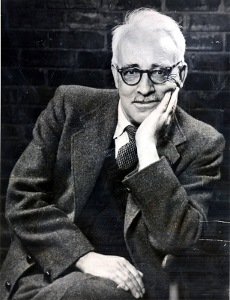
Death of Frank O’Connor, Poet & Novelist

Frank O’Connor, Irish writer of over 150 works and best known for his short stories and memoirs, dies of a heart attack in Dublin on March 10, 1966. The Frank O’Connor International Short Story Award is named in his honour.

O’Connor is born Michael Francis O’Donovan in Cork, County Cork, on September 17, 1903. The only child of Minnie (née O’Connor) and Michael O’Donovan, he attends Saint Patrick’s School on Gardiner’s Hill and North Monastery CBS. His early life is marked by his father’s alcoholism, debt, and ill-treatment of his mother. His childhood is shaped in part by his mother, who supplies much of the family’s income by cleaning houses, because his father is unable to keep steady employment due to his drunkenness. He adores his mother and is bitterly resentful of his father. In his memoirs, he recalls his childhood as “those terrible years,” and admits that he has never been able to forgive his father for his abuse of himself and his mother. When his mother is seventy, O’Connor is horrified to learn from his own doctor that she has suffered for years from chronic appendicitis, which she has endured with great stoicism, as she has never had the time nor the money to see a doctor.

In 1918 O’Connor joins the First Brigade of the Irish Republican Army (IRA) and serves in combat during the Irish War of Independence. He opposes the Anglo-Irish Treaty of 1921 and joins the Anti-Treaty IRA during the Irish Civil War, working in a small propaganda unit in Cork city. He is one of twelve thousand Anti-Treaty combatants who are interned by the government of the new Irish Free State. Between 1922 and 1923 he is imprisoned in Cork City Gaol and in Gormanston, County Meath.

Following his release, O’Connor takes various positions including that of teacher of the Irish language, theatre director, and librarian. He begins to move in literary circles and is befriended by George William Russell (Æ), through whom he comes to know most of the well-known Irish writers of the day, including William Butler Yeats, Lennox Robinson, F. R. Higgins and Lady Gregory. In his memoirs, he pays tribute to both Yeats and Russell for the help and encouragement they gave him.

In 1935, O’Connor becomes a member of the board of directors of the Abbey Theatre in Dublin, founded by Yeats and other members of the Irish National Theatre Society. In 1937, he becomes managing director of the Abbey. Following Yeats’s death in 1939, O’Connor’s long-standing conflict with other board members comes to a head and he leaves the Abbey later that year. In 1950, he accepts invitations to teach in the United States, where many of his short stories have been published in The New Yorker and have won great acclaim. He spends much of the 1950s in the United States, although it is always his intention to return eventually to Ireland.

From the 1930s to the 1960s O’Connor is a prolific writer of short stories, poems, plays, and novellas. His work as an Irish teacher complements his plethora of translations into English of Irish poetry, including his initially banned translation of Brian Merriman‘s Cúirt an Mheán Oíche (The Midnight Court). Many of his writings are based on his own life experiences – notably his well-known The Man of the House in which he reveals childhood details concerning his early life in County Cork. The Sullivan family in this short story, like his own boyhood family, is lacking a proper father figure.

O’Connor’s early years are recounted in An Only Child, a memoir published in 1961 which has the immediacy of a precocious diary. He continues his autobiography through his time with the Abbey Theatre in Dublin in his book My Father’s Son, which is published posthumously in 1968. It contains valuable character sketches of many of the leading Irish literary figures of the 1930s, in particular Yeats and Æ.

Frank O’Connor has a stroke while teaching at Stanford University in 1961, and he later dies from a heart attack in Dublin on March 10, 1966. He is buried in Deans Grange Cemetery two days later.


Leave a comment

The 1921 Drumcondra Ambush

tolka-bridge-drumcondra

An encounter between eight young Irish Republican Army (IRA) volunteers and a large body of the Black and Tans takes place at Tolka Bridge in Drumcondra on January 21, 1921 during the Irish War of Independence.

On Friday, January 21, 1921, eight men from the 1st Battalion IRA, set out to stage an ambush at Binn’s Bridge on Lower Drumcondra Road. The plan is to attack a Royal Irish Constabulary (RIC) patrol which uses the road to travel from their base at Gormanston, County Meath, near Drogheda.

Led by Lieutenant Francis “Frank” Flood (19), Michael Francis ‘Mick’ Magee (24) Patrick Doyle (29), Thomas Bryan (24), Bernard ‘Bertie’ Ryan (21) and Dermott O’Sullivan (17) set off at 8:30 AM for Binn’s Bridge. They are to ambush RIC Auxiliaries (Black and Tans) travelling into Dublin from Gormanston. However, the Auxiliaries do not arrive. The witness statement of Harry Colley, former Adjutant, IRA Dublin Brigade 1920-21, says “they had actually been sent to carry out the ambush at Binn’s Bridge, but for some reason of their own, when they reached the position, moved up beyond Tolka Bridge, to Clonturk Park.” According to Dermott O’Sullivan, the only survivor, when it appears that the Black and Tans will not be coming their way, the party leaves the Binn’s Bridge site and heads to Tolka Bridge in Drumcondra.

However, the police receive a tip-off from Sergeant Singleton of the Dublin Metropolitan Police (DMP). It is also said, that as the British army unit is approaching the bridge over the River Tolka in Drumcondra, they are warned by a man by the name Robert Pike from Tolka Cottages.

The ambushers commence an attack upon two lorries of RIC constables, who return fire until the vehicles are able to accelerate out of range. Then the Black and Tans arrive in motor lorries and an armored car at the rear of their position to cut off their escape. Some volunteers manage to dash across fields to safety but others are arrested as they attempted to seek refuge in houses in the vicinity. All of the prisoners are found in possession of revolvers and ammunition, and Frank Flood is also found to have a grenade in his pocket.

In an attempt to escape the Auxiliaries, Michael Magee and Séan Burke run across a field of garden allotments in Clonturk Park. The Auxiliaries shoot Magee, mortally wounding him in the legs and lower torso. Magee is captured but soon dies of his wounds.

So at the end of the day, of the eight men involved in the action at Drumcondra, two men, Burke and Dunne, escape the scene. The five remaining, Frank Flood, Thomas Bryan, Bernard Ryan, Patrick Doyle and Dermot O’Sullivan are captured and Magee dies of his wounds. The captives are tried by a court-martial that lasts two days. All of the accused are convicted of High Treason and sentenced to death.

On March 14, 1921, all of the men, save Dermot O’Sullivan, are hanged at Mountjoy Prison. Citing his age of only 17 years, the British commute O’Sullivan’s sentence to life in prison. He is released from Portland Gaol at the end of August 1921.


Leave a comment

Birth of Irish Writer Frank O’Connor

Frank O’Connor, Irish writer of over 150 works and best known for his short stories and memoirs, is born Michael Francis O’Donovan in Cork, County Cork, on September 17, 1903. The Frank O’Connor International Short Story Award is named in his honour.

Raised in Cork, the only child of Minnie (née O’Connor) and Michael O’Donovan, O’Connor attends Saint Patrick’s School on Gardiner’s Hill and North Monastery CBS. His early life is marked by his father’s alcoholism, debt, and ill-treatment of his mother. His childhood is shaped in part by his mother, who supplies much of the family’s income by cleaning houses, because his father is unable to keep steady employment due to his drunkenness. He adores his mother and is bitterly resentful of his father. In his memoirs, he recalls his childhood as “those terrible years,” and admits that he has never been able to forgive his father for his abuse of himself and his mother. When his mother is seventy, O’Connor is horrified to learn from his own doctor that she has suffered for years from chronic appendicitis, which she has endured with great stoicism, as she has never had the time nor the money to see a doctor.

In 1918 O’Connor joins the First Brigade of the Irish Republican Army and serves in combat during the Irish War of Independence. He opposes the Anglo-Irish Treaty of 1921 and joins the Anti-Treaty IRA during the Irish Civil War, working in a small propaganda unit in Cork City. He is one of twelve thousand Anti-Treaty combatants who are interned by the government of the new Irish Free State. Between 1922 and 1923 he is imprisoned in Cork City Gaol and in Gormanston, County Meath.

Following his release, O’Connor takes various positions including that of teacher of Irish, theatre director, and librarian. He begins to move in literary circles and is befriended by George William Russell (Æ), through whom he comes to know most of the well-known Irish writers of the day, including William Butler Yeats, Lennox Robinson, F. R. Higgins and Lady Gregory. In his memoirs, he pays tribute to both Yeats and Russell for the help and encouragement they gave him.

In 1935, O’Connor becomes a member of the board of directors of the Abbey Theatre in Dublin, founded by Yeats and other members of the Irish National Theatre Society. In 1937, he becomes managing director of the Abbey. Following Yeats’s death in 1939, O’Connor’s long-standing conflict with other board members comes to a head and he leaves the Abbey later that year. In 1950, he accepts invitations to teach in the United States, where many of his short stories have been published in The New Yorker and have won great acclaim. He spends much of the 1950s in the United States, although it is always his intention to return eventually to Ireland.

From the 1930s to the 1960s O’Connor is a prolific writer of short stories, poems, plays, and novellas. His work as an Irish teacher complements his plethora of translations into English of Irish poetry, including his initially banned translation of Brian Merriman‘s Cúirt an Mheán Oíche (The Midnight Court). Many of O’Connor’s writings are based on his own life experiences – notably his well-known The Man of the House in which he reveals childhood details concerning his early life in County Cork. The Sullivan family in this short story, like his own boyhood family, is lacking a proper father figure.

O’Connor’s early years are recounted in An Only Child, a memoir published in 1961 which has the immediacy of a precocious diary. He continues his autobiography through his time with the Abbey Theatre in Dublin in his book My Father’s Son, which is published posthumously in 1968. It contains valuable character sketches of many of the leading Irish literary figures of the 1930s, in particular Yeats and Æ.

Frank O’Connor has a stroke while teaching at Stanford University in 1961, and he later dies from a heart attack in Dublin on March 10, 1966. He is buried in Deans Grange Cemetery two days later.