seamus dubhghaill

Promoting Irish Culture and History from Little Rock, Arkansas, USA


Leave a comment

Death of Eavan Boland, Poet, Author & Professor

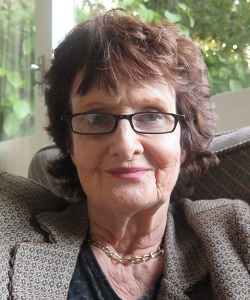
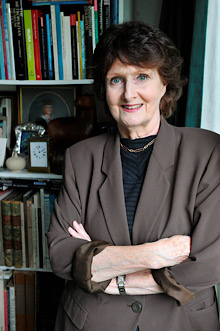
Eavan Aisling Boland, Irish poet, author, and professor, dies in Dublin on April 27, 2020. She is a professor at Stanford University, where she teaches from 1996. Her work deals with the Irish national identity, and the role of women in Irish history. A number of poems from Boland’s poetry career are studied by Irish students who take the Leaving Certificate. She is a recipient of the Lannan Literary Award for Poetry.

Boland is born in Dublin on September 24, 1944. Her father, Frederick Boland, is a career diplomat and her mother, Frances Kelly, was a noted painter.

When she is six, Boland’s father is appointed Irish Ambassador to the United Kingdom, and the family moves to London, where she has her first experiences of anti-Irish sentiment. Her dealing with this hostility strengthens her identification with her Irish heritage. She speaks of this time in her poem, “An Irish Childhood in England: 1951.”

At 14, Boland returns to Dublin to attend Holy Child Killiney in Killiney, County Dublin. She publishes a pamphlet of poetry in her first year at Trinity College Dublin (TCD), in 1962. She earns a Bachelor of Arts (BA) with First Class Honors in English Literature and Language from TCD in 1966.

After graduating, Boland holds numerous teaching positions and publishes poetry, prose criticism and essays. She teaches at TCD, University College Dublin (UCD), and Bowdoin College in Brunswick, Maine, and is a member of the International Writing Program (IWP) at the University of Iowa. She is also writer in residence at TCD, and at the National Maternity Hospital in Dublin.

In 1969, Boland marries the novelist Kevin Casey. They have two daughters together. Her experiences as a wife and mother influence her to write about the centrality of the ordinary, as well as providing a frame for more political and historical themes. According to her friend Gabrielle Calvocoressi, she “loved gossip like fish love water.”

In the late 1970s and 1980s, Boland teaches at the School of Irish Studies in Dublin. From 1996 she is a tenured Professor of English at Stanford University where she is the Bella Mabury and Eloise Mabury Knapp Professor in the Humanities and Melvin and Bill Lane Professor for Director of the Creative Writing program. She divides her time between Palo Alto and her home in Dublin.

Boland’s first book of poetry is New Territory published in 1967 with Dublin publisher Allen Figgis. This is followed by The War Horse (1975) and In Her Own Image (1980). Night Feed (1982) establishes her reputation as a writer on the ordinary lives of women and on the difficulties faced by women poets in a male-dominated literary world. While she is writer in residence at the National Maternity Hospital in Dublin in 1994, she composes “Night Feed” and “The Tree of Life,” and her work remains on a plaque in the hospital garden.

Several of Boland’s volumes of poetry have been Poetry Book Society choices in the United Kingdom, where she is primarily published by Carcanet Press. In the United States her publisher is W. W. Norton & Company.

Her poem “Quarantine” is one of ten poems shortlisted for RTÉ‘s selection of Ireland’s favourite poems of the last 100 years in 2015.

Former Irish TaoiseachBertie Ahern, quotes from her poem “The Emigrant Irish” in his address to the joint houses of the United States Congress in May 2008.

On March 15, 2016, United States President Barack Obama quotes lines from her poem “On a Thirtieth Anniversary” (from Against Love Poetry 2001) in his remarks at a reception in the White House to celebrate Saint Patrick’s Day.

In March 2018, RTÉ broadcasts a documentary on Boland’s life as a poet called “Eavan Boland: Is it Still the Same?” In the same year, she is commissioned by the Government of Ireland and the Royal Irish Academy (RIA) to write the poem “Our future will become the past of other women” to be read at the United Nations (UN) and in Ireland during the centenary commemorations of women gaining the vote in Ireland in 1918.

Boland co-edits The Making of a Poem: A Norton Anthology of Poetic Forms (with Mark Strand; W. W. Norton & Co., 2000). She also publishes a volume of translations in 2004 called After Every War (Princeton University Press). With Edward Hirsch, she co-edits “The Making of a Sonnet: A Norton Anthology of the Sonnet” (W. W. Norton & Co., 2008).

In 1976, Boland wins a Jacob’s Award for her involvement in The Arts Programme broadcast on RTÉ Radio. Her other awards include a Lannan Foundation Award in Poetry and an American Ireland Fund Literary Award. Her collection In a Time of Violence (1994) receives a Lannan Award and is shortlisted for the T. S. Eliot Prize.

In 1997 Boland receives an honorary degree from University College Dublin. She also receives honorary degrees from the University of Strathclyde in Glasgow, Scotland, and Colby College in Waterville, Maine, in 1997, and the College of the Holy Cross in Worcester, Massachusetts, in 1999. She receives one from Bowdoin College in 2004. In 2004 she also receives an honorary degree from Trinity College Dublin.

Boland receives the Bucknell Medal of Distinction 2000 from Bucknell University, the Corrington Medal for Literary Excellence by Centenary College of Louisiana in 2002, the Smartt Family prize from The Yale Review and the John Frederick Nims Award from Poetry magazine 2002. Her volume of poems Against Love Poetry is a New York Times Notable Book of the Year. Her volume Domestic Violence (2007) is shortlisted for the Forward Prize in the United Kingdom. Her poem “Violence Against Women” from the same volume is awarded the James Boatwright III Prize for Poetry for the best poem published in 2007 in Shenandoah magazine. In 2012, she wins a PEN Award for creative nonfiction with her collection of essays, A Journey With Two Maps: Becoming a Woman Poet, published in 2012.

In 2016, Boland is inducted into the American Academy of Arts and Sciences. In 2017, she receives the Bob Hughes Lifetime Achievement Award at the Bord Gáis Energy Irish Book Awards.

On May 25, 2018, Boland is elected an honorary member of the Royal Irish Academy. She receives the Irish PEN Award for Literature in 2019. She is writer in residence at the National Maternity Hospital, Dublin, in 1994. During this time she composes “Night Feed” and “The Tree of Life,” and her work remains on a plaque in the hospital garden.

Boland dies in Dublin on April 27, 2020, at the age of 75. Later that year she is posthumously awarded the Costa Book Award for poetry for her final collection The Historians.

In 2024, Trinity College Dublin announces the renaming of the “denamed” former Berkeley Library as the Eavan Boland Library. This makes it the first building named after any woman on Trinity’s city centre campus. The name is made official in March 2025.

(Image credit: Maura Hickey)


Leave a comment

Death of Frank O’Connor, Poet & Novelist

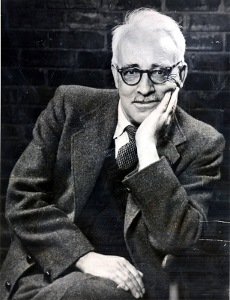
Frank O’Connor, Irish writer of over 150 works and best known for his short stories and memoirs, dies of a heart attack in Dublin on March 10, 1966. The Frank O’Connor International Short Story Award is named in his honour.

O’Connor is born Michael Francis O’Donovan in Cork, County Cork, on September 17, 1903. The only child of Minnie (née O’Connor) and Michael O’Donovan, he attends Saint Patrick’s School on Gardiner’s Hill and North Monastery CBS. His early life is marked by his father’s alcoholism, debt, and ill-treatment of his mother. His childhood is shaped in part by his mother, who supplies much of the family’s income by cleaning houses, because his father is unable to keep steady employment due to his drunkenness. He adores his mother and is bitterly resentful of his father. In his memoirs, he recalls his childhood as “those terrible years,” and admits that he has never been able to forgive his father for his abuse of himself and his mother. When his mother is seventy, O’Connor is horrified to learn from his own doctor that she has suffered for years from chronic appendicitis, which she has endured with great stoicism, as she has never had the time nor the money to see a doctor.

In 1918 O’Connor joins the First Brigade of the Irish Republican Army (IRA) and serves in combat during the Irish War of Independence. He opposes the Anglo-Irish Treaty of 1921 and joins the Anti-Treaty IRA during the Irish Civil War, working in a small propaganda unit in Cork city. He is one of twelve thousand Anti-Treaty combatants who are interned by the government of the new Irish Free State. Between 1922 and 1923 he is imprisoned in Cork City Gaol and in Gormanston, County Meath.

Following his release, O’Connor takes various positions including that of teacher of the Irish language, theatre director, and librarian. He begins to move in literary circles and is befriended by George William Russell (Æ), through whom he comes to know most of the well-known Irish writers of the day, including William Butler Yeats, Lennox Robinson, F. R. Higgins and Lady Gregory. In his memoirs, he pays tribute to both Yeats and Russell for the help and encouragement they gave him.

In 1935, O’Connor becomes a member of the board of directors of the Abbey Theatre in Dublin, founded by Yeats and other members of the Irish National Theatre Society. In 1937, he becomes managing director of the Abbey. Following Yeats’s death in 1939, O’Connor’s long-standing conflict with other board members comes to a head and he leaves the Abbey later that year. In 1950, he accepts invitations to teach in the United States, where many of his short stories have been published in The New Yorker and have won great acclaim. He spends much of the 1950s in the United States, although it is always his intention to return eventually to Ireland.

From the 1930s to the 1960s O’Connor is a prolific writer of short stories, poems, plays, and novellas. His work as an Irish teacher complements his plethora of translations into English of Irish poetry, including his initially banned translation of Brian Merriman‘s Cúirt an Mheán Oíche (The Midnight Court). Many of his writings are based on his own life experiences – notably his well-known The Man of the House in which he reveals childhood details concerning his early life in County Cork. The Sullivan family in this short story, like his own boyhood family, is lacking a proper father figure.

O’Connor’s early years are recounted in An Only Child, a memoir published in 1961 which has the immediacy of a precocious diary. He continues his autobiography through his time with the Abbey Theatre in Dublin in his book My Father’s Son, which is published posthumously in 1968. It contains valuable character sketches of many of the leading Irish literary figures of the 1930s, in particular Yeats and Æ.

Frank O’Connor has a stroke while teaching at Stanford University in 1961, and he later dies from a heart attack in Dublin on March 10, 1966. He is buried in Deans Grange Cemetery two days later.


Leave a comment

Birth of Erskine B. Childers, Writer, Correspondent & Civil Servant

erskine-barton-childers

Erskine Barton Childers, Irish writer, BBC correspondent and United Nations senior civil servant, is born in Dublin on March 11, 1929.

Childers is born to Erskine Hamilton Childers (Ireland’s fourth President) and his first wife Ruth Ellen Dow. He grows up in a multi-cultural atmosphere which influences his whole life. From an early age, he has an obvious fascination with history and world affairs. He studies at Newtown School, Waterford and much later on at Trinity College, Dublin and Stanford University. At Stanford he is actively involved with the National Student Association and rises to Vice-President of the organisation by 1949.

By 1960, Childers is in London working for the BBC in both radio and television. His broadcasts from the BBC World Service range on varying topics from the Suez Crisis and Palestine to the John F. Kennedy assassination in 1963. He is one of the first presenters at the start of the BBC TV show The Money Programme in 1966. The Suez Canal and Palestine issues later form the basis of his writing on the subjects.

Childers is distinguished as one of the first mainstream writers in the West to systematically challenge the contention that Palestinian Arab refugees of the 1947–1948 Civil War in Mandatory Palestine and the 1948 Arab–Israeli War fled their homes primarily from Arab broadcast evacuation orders, rather than from the use of force and terror by armed forces of the newly forming state of Israel.

Childers specialises in UN issues, even serving as a periodic consultant including a special mission in the Congo for Secretary-General U Thant. In 1967, under the leadership of Henry Richardson Labouisse, Jr., he is hired to lead a United Nations, UNICEF and United Nations Development Programme (UNDP) programme called Development Support Communication. In 1968 he co-authors a paper with United Nations colleague Mallica Vajrathon called “Project Support Communication,” later published in an important anthology about social change.

From 1975 to 1988, Childers is based in New York as Director of Information for UNDP. By his retirement in 1989 after 22 years of service as Senior Advisor to the UN Director General for Development and International Economic Co-operation, Childers had worked with most of the organisations of the UN system, at all levels and in all regions.

After his retirement, Childers continues to strive relentlessly for the ideals for which he had worked so hard. He co-authors several notable books for the Ford Foundation and the Dag Hammarskjöld Foundation on the reform of the United Nations with his colleague and equally devoted United Nations civil servant, Sir Brian Urquhart. The best known of these publications is A World in Need of Leadership. He continues writing on United Nations matters while traveling constantly and lecturing on the Organisation and the many challenges confronting it, such as globalisation and democracy, conflict prevention and peacekeeping, humanitarian assistance, human rights, famine, ageing and development, health, financial arrangement of the United Nations, citizen’s rights, female participation, design and perceptions, education, the North South divide and world economy. In 1995 he co-authors a paper with his international law colleague Marjolijn Snippe called The Agenda for Peace and the Law of the Sea, for Pacem in Maribus XXIII, the Annual Conference of the International Ocean Institute, that is held in Costa Rica, December 1995.

Childers becomes Secretary General of the World Federation of United Nations Associations in March 1996. Having served for only five months, he dies on August 25, 1996, during the organisation’s fiftieth anniversary congress. He is buried in Roundwood, County Wicklow.


Leave a comment

Birth of Eavan Boland, Irish Poet, Author & Professor

Eavan Boland, Irish poet, author and professor who has been active since the 1960s and helped develop feminist publishing company Arlen House, is born in Dublin on September 24, 1944. She is currently a professor at Stanford University, where she has taught since 1996. Her work deals with the Irish national identity and the role of women in Irish history. A number of poems from Boland’s poetry career are studied by Irish students who take the Leaving Certificate.

Boland’s father, Frederick Boland, is a career diplomat and her mother, Frances Kelly, is a noted post-expressionist painter. When she is six, her father is appointed Irish Ambassador to the United Kingdom. The family follows him to London, where she has her first experiences of anti-Irish sentiment. Her dealing with this hostility strengthens her identification with her Irish heritage. She speaks of this time in her poem “An Irish Childhood in England: 1951.”

At 14, she returns to Dublin to attend Holy Child School in Killiney. She publishes a pamphlet of poetry, 23 Poems, in her first year at Trinity College, Dublin in 1962. She earns a BA with First Class Honors in English Literature and Language from Trinity in 1966. Since then, she has held numerous teaching positions and published poetry, prose criticism and essays. She marries the novelist Kevin Casey in 1969 and has two daughters. Her experiences as a wife and mother influence her to write about the centrality of the ordinary, as well as provide a frame for more political and historical themes.

Boland has taught at Trinity College, Dublin, University College Dublin, and Bowdoin College, and was a member of the International Writing Program at the University of Iowa. She was also writer in residence at Trinity College, Dublin, and at the National Maternity Hospital, Dublin. In the late 1970s and 1980s, she teaches at the School of Irish Studies in Dublin. Since 1996 she has been a tenured Professor of English at Stanford University where she is currently Bella Mabury and Eloise Mabury Knapp Professor in the Humanities and Melvin and Bill Lane Professor for Director of the Creative Writing program. She divides her time between Palo Alto, California and her home in Dublin.

In 2015, Boland says that Trinity College, Dublin not only “influenced her career,” but “determined her career.”


Leave a comment

Birth of Irish Writer Frank O’Connor

Frank O’Connor, Irish writer of over 150 works and best known for his short stories and memoirs, is born Michael Francis O’Donovan in Cork, County Cork, on September 17, 1903. The Frank O’Connor International Short Story Award is named in his honour.

Raised in Cork, the only child of Minnie (née O’Connor) and Michael O’Donovan, O’Connor attends Saint Patrick’s School on Gardiner’s Hill and North Monastery CBS. His early life is marked by his father’s alcoholism, debt, and ill-treatment of his mother. His childhood is shaped in part by his mother, who supplies much of the family’s income by cleaning houses, because his father is unable to keep steady employment due to his drunkenness. He adores his mother and is bitterly resentful of his father. In his memoirs, he recalls his childhood as “those terrible years,” and admits that he has never been able to forgive his father for his abuse of himself and his mother. When his mother is seventy, O’Connor is horrified to learn from his own doctor that she has suffered for years from chronic appendicitis, which she has endured with great stoicism, as she has never had the time nor the money to see a doctor.

In 1918 O’Connor joins the First Brigade of the Irish Republican Army and serves in combat during the Irish War of Independence. He opposes the Anglo-Irish Treaty of 1921 and joins the Anti-Treaty IRA during the Irish Civil War, working in a small propaganda unit in Cork City. He is one of twelve thousand Anti-Treaty combatants who are interned by the government of the new Irish Free State. Between 1922 and 1923 he is imprisoned in Cork City Gaol and in Gormanston, County Meath.

Following his release, O’Connor takes various positions including that of teacher of Irish, theatre director, and librarian. He begins to move in literary circles and is befriended by George William Russell (Æ), through whom he comes to know most of the well-known Irish writers of the day, including William Butler Yeats, Lennox Robinson, F. R. Higgins and Lady Gregory. In his memoirs, he pays tribute to both Yeats and Russell for the help and encouragement they gave him.

In 1935, O’Connor becomes a member of the board of directors of the Abbey Theatre in Dublin, founded by Yeats and other members of the Irish National Theatre Society. In 1937, he becomes managing director of the Abbey. Following Yeats’s death in 1939, O’Connor’s long-standing conflict with other board members comes to a head and he leaves the Abbey later that year. In 1950, he accepts invitations to teach in the United States, where many of his short stories have been published in The New Yorker and have won great acclaim. He spends much of the 1950s in the United States, although it is always his intention to return eventually to Ireland.

From the 1930s to the 1960s O’Connor is a prolific writer of short stories, poems, plays, and novellas. His work as an Irish teacher complements his plethora of translations into English of Irish poetry, including his initially banned translation of Brian Merriman‘s Cúirt an Mheán Oíche (The Midnight Court). Many of O’Connor’s writings are based on his own life experiences – notably his well-known The Man of the House in which he reveals childhood details concerning his early life in County Cork. The Sullivan family in this short story, like his own boyhood family, is lacking a proper father figure.

O’Connor’s early years are recounted in An Only Child, a memoir published in 1961 which has the immediacy of a precocious diary. He continues his autobiography through his time with the Abbey Theatre in Dublin in his book My Father’s Son, which is published posthumously in 1968. It contains valuable character sketches of many of the leading Irish literary figures of the 1930s, in particular Yeats and Æ.

Frank O’Connor has a stroke while teaching at Stanford University in 1961, and he later dies from a heart attack in Dublin on March 10, 1966. He is buried in Deans Grange Cemetery two days later.