seamus dubhghaill

Promoting Irish Culture and History from Little Rock, Arkansas, USA


Leave a comment

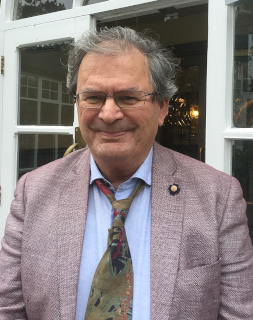
Birth of Matthew Gerard Sweeney, Irish Poet

Matthew Gerard Sweeney, Irish poet, is born at Lifford, County Donegal, on October 6, 1952. His work has been translated into Dutch, Italian, Hebrew, Japanese, Latvian, Mexican Spanish, Romanian, Slovakian and German.

Growing up in Clonmany, Sweeney attends Gormanston College (1965–70). He then reads sciences at University College Dublin (1970–72). He goes on to study German and English at the Polytechnic of North London, spending a year at the University of Freiburg, before graduating with a BA Honours degree in 1978.

Sweeney meets Rosemary Barber in 1972 and they marry in 1979. Two offspring – daughter Nico and son Malvin – are produced before the couple goes their separate ways in the early 21st century. Having lived in London for many years until 2001, he separates from Rosemary and goes to live in Timișoara, Romania and Berlin. In 2007, he meets his partner, Mary Noonan, and in early 2008 he moves to Cork to live with her there.

Sweeney produces numerous collections of poetry for which he wins several awards. His novels for children include The Snow Vulture (1992) and Fox (2002). He authors a satirical thriller, co-written with John Hartley Williams, and entitled Death Comes for the Poets (2012).

As Bill Swainson, Sweeney’s editor at Allison & Busby in the 1980s, recalls: “As well as writing his own poetry, Matthew was a great encourager of poetry in others. The workshops he animated, and later the residencies he undertook, were famous for their geniality and seriousness and fun. Sometime in the late 1980s I attended one of these workshops in an upstairs room of a pub in Lamb’s Conduit Street, Bloomsbury, where the poems were circulated anonymously and carefully read and commented on by all. Around the pushed-together tables were Ruth Padel, Eva Salzman, Don Paterson, Maurice Riordan, Jo Shapcott, Lavinia Greenlaw, Michael Donaghy, Maura Dooley and Tim Dooley.” Sweeney later has residencies at the University of East Anglia and Southbank Centre, among many others. He reads at three Rotterdam Poetry Festivals, in 1998, 2003 and 2009.

According to the poet Gerard Smyth: “I always sensed that in the first instance [Sweeney] regarded himself as a European rather than an Irish poet – and rightly so: like the German Georg Trakl whom he admired he apprehended the world in a way that challenged our perceptions and commanded our attention.” Sweeney’s work has been considered “barely touched by the mainstream of English writing” and more so by the German writers Heinrich von Kleist, Georg Büchner, Franz Kafka, Günter Grass and Heinrich Böll, as well as the aforementioned Georg Trakl. According to Poetry International Web, he would be among the top five most famous Irish poets on the international scene.

Sweeney’s final year sees the publication of two new collections: My Life As A Painter (Bloodaxe Books) and King of a Rainy Country (Arc Publications), inspired by Charles Baudelaire‘s posthumously published Petits poèmes en prose.

Having been diagnosed with motor neuron disease the previous year, Sweeney dies at the age of 65 at Cork University Hospital in Wilton, Cork, on August 5, 2018, surrounded by family and friends. He continues writing up until three days before his death. In an interview shortly before his death he is quizzed on his legacy, to which he gives the response, “Mostly what awaits the poet is posthumous oblivion. Maybe there will be a young man in Hamburg, or Munich, or possibly Vienna, for whom my German translations will be for a while important – and might just contribute to him becoming a German language poet with Irish leanings.”

Among those attending a special ceremony on August 8, 2018, at the Triskel Arts Centre in Cork to celebrate Sweeney’s life are fellow poets Jo Shapcott, Thomas McCarthy, Gerry Murphy, Maurice Riordan and Padraig Rooney. On August 9, 2018, he is buried in Clonmany New Cemetery in County Donegal.

Leave a comment

Birth of Irish Writer Gabriel Rosenstock

Gabriel Rosenstock, Irish writer who works chiefly in the Irish language, is born in Kilfinane, County Limerick, on September 29, 1949. A member of Aosdána, he is poet, playwright, haikuist, tankaist, essayist, and author/translator of over 180 books, mostly in Irish.

Rosenstock’s father, George, is a doctor and writer from Schleswig-Holstein, Germany, who serves as a medical officer with the Wehrmacht in World War II. His mother is a nurse from County Galway. He is the third of six children and the first born in Ireland. He is educated locally in Kilfinane, then in Mount Sackville, County Dublin.

Rosenstock exhibits an early interest in anarchism and is expelled from Gormanston College in County Meath and exiled to Rockwell College near Cashel, County Tipperary. Later, he attends University College Cork (UCC).

Rosenstock works for some time on the television series Anois is Arís on RTÉ, then on the weekly newspaper Anois. Until his retirement he works with An Gúm, the publications branch of Foras na Gaeilge, the North-South body which promotes the Irish language.

Although he has worked in prose, drama and translation, Rosenstock is primarily known as a poet. He has written or translated over 180 books.

Rosenstock has edited and contributed to books of haiku in Irish, English, Scots and Japanese. He is a prolific translator into Irish of international poetry (among others Ko Un, Seamus Heaney, K. Satchidanandan, Rabindranath Tagore, Muhammad Iqbal, Hilde Domin, Peter Huchel), plays (Samuel Beckett, Max Frisch, W. B. Yeats) and songs (Bob Dylan, Kate Bush, The Pogues, Leonard Cohen, Bob Marley, Van Morrison, Joni Mitchell). He also has singable Irish translations of Lieder and other art songs. His being named as Lineage Holder of Celtic Buddhism inspires the latest title in a rich output of haiku collections: Antlered Stag of Dawn (Onslaught Press, Oxford, 2015), haiku in Irish and English with translations into Japanese and Scots Lallans.

Rosenstock also writes for children, in prose and verse. Haiku Más É Do Thoil É! (An Gúm) wins the Children’s Books Judges’ Special Prize in 2015.

Rosenstock appears in the anthology Best European Fiction 2012, edited by Aleksandar Hemon, with a preface by Nicole Krauss (Dalkey Archive Press). He gives the keynote address to Haiku Canada in 2015.

Rosenstock has worked with American photographer Ron Rosenstock, Indian Photographer Debiprasad Mukherjee, Greek photographer Kon Markogiannis, Dublin photographer Jason Symes, French photographer Jean-Pierre Favreau and many more to create the new guise of a photo-haiku (or a haiga) – the interplay of visual aesthetic and literature.

Rosenstock currently resides in Dublin. His son, Tristan, is a member of the Irish traditional music quintet Téada, and impressionist/actor Mario Rosenstock is his nephew.


Leave a comment

Birth of Charlie McCreevy, Fianna Fáil Politician

Charles McCreevy, former Fianna Fáil politician, is born in Sallins, County Kildare, on September 30, 1949. He serves as European Commissioner for Internal Market from 2004 to 2010, Minister for Finance from 1997 to 2004, Minister for Tourism, Transport and Communication from 1993 to 1994 and Minister for Social Welfare from 1992 to 1993. He also serves as a Teachta Dála (TD) for the Kildare constituency (and later the Kildare North constituency) from 1977 to 2004.

McCreevy is educated locally at Naas by the Congregation of Christian Brothers, and later at the fee paying Franciscan Gormanston College. He studies Commerce at University College Dublin and goes on to become a chartered accountant. His family background is modest, his father and ancestors since the late 18th century are lockkeepers on the Grand Canal, a job carried on by his mother after the death of his father, when McCreevy is four years old.

McCreevy’s political career begins with when he wins a seat in the Kildare constituency at the 1977 Irish general election, which is a landslide for Charles Haughey‘s supporters in Fianna Fáil and he is re-elected at every subsequent election until he joins the European Commission. Between 1979 and 1985, he serves as an elected member of the Kildare County Council.

In the 1979 Fianna Fáil leadership election, McCreevy strongly supports the controversial Charles Haughey, who narrowly wins the post. However, in a time of severe budgetary difficulties for Ireland, he soon becomes disillusioned with the new Taoiseach and his fiscal policies. In October 1982, he launches a motion of no-confidence in the party leader, which evolves into a leadership challenge by Desmond O’Malley. In an open ballot and supported by only 21 of his 79 colleagues, the motion fails and McCreevy is temporarily expelled from the parliamentary party.

In later years O’Malley is expelled from Fianna Fáil itself and forms the Progressive Democrats (PDs), espousing conservative fiscal policies. Although considered ideologically close to the PDs, and a personal friend of its erstwhile leader, Mary Harney, McCreevy chooses to remain a member of Fianna Fáil, where he eventually serves in joint FF-PD Governments.

For his first 15 years as TD, while Haughey remains leader, McCreevy remains a backbencher. In 1992, Albert Reynolds becomes Taoiseach and McCreevy is appointed Minister for Social Welfare. In this role, he is principally remembered for a set of 12 cost-cutting measures, collectively termed the “dirty dozen”, which are arguably minor in their direct impact but provide a major political headache for his party in the 1992 Irish general election.

In 1993, McCreevy becomes Minister for Tourism, Transport and Communication, which he holds until the government falls in December 1994. In opposition under new Fianna Fáil leader Bertie Ahern, he is appointed Opposition Spokesperson for Finance. In this role he is viewed as actively pro-enterprise, anti-spending and a key advocate for tax cuts.

In 1997, Fianna Fáil returns to power and McCreevy becomes Minister for Finance. His period coincides with the era of the “Celtic Tiger,” which sees the rapid growth of the Irish economy due to social partnership between employers, government and unions, increased female participation in the labour force, decades of tuition-free secondary education, targeting of foreign direct investment, a low corporation tax rate, an English-speaking workforce only five time-zones from New York City, and membership of the European Union – which provides payments for infrastructural development, export access to the European Single Market and a Eurozone country. He is a consistent advocate of cutting taxes and spending.

In 2004, McCreevy is selected by the Government of Ireland to replace David Byrne as Ireland’s European Commissioner. He is appointed to the Internal Market and Services portfolio, by President of the European Commission José Manuel Barroso. At his confirmation hearings in the European Parliament MEPs describe him as “fluent and relaxed.” He also informs them that he has campaigned for the ratification of every European Treaty since 1972.

In October 2007, McCreevy, commenting on the Northern Rock bank’s loss of investor confidence, claims that banking regulations in the UK, which forces banks to be open to scrutiny from outside investors, caused the panic. He says if access to the bank’s dealings had been restricted, then the trouble could have been avoided.

Irish constitutional law requires a referendum to alter the constitution for such a major change as the adoption of the Treaty of Lisbon. Interviewed beforehand, McCreevy says that he has not read the Treaty in full himself, though he understands and endorses it. The referendum is held on June 12, 2008, and the Irish electorate does not approve the Treaty. He is heavily criticised in the European Parliament and by the leader of the Socialist group in the European Parliament, Martin Schulz, who demands on June 17, 2008, that McCreevy be removed as a European Commissioner. Schulz slightly misquotes McCreevy, whom he stated had contributed to Ireland’s rejection of the Treaty of Lisbon with remarks during the referendum campaign that no “sane person” would read the document.

Following McCreevy’s departure from the commission, he is forced to resign from the board of a new banking firm, NBNK Investments, after an EU ethics committee finds a conflict of interest with his work as a European Commissioner in charge of financial regulation.


Leave a comment

Death of Poet Matthew Gerard Sweeney

Matthew Gerard Sweeney, Irish poet, dies at Cork University Hospital in Wilton, Cork on August 5, 2018. His work has been translated into Dutch, Italian, Hebrew, Japanese, Latvian, Mexican Spanish, Romanian, Slovakian and German.

Sweeney is born at Lifford, County Donegal, on October 6, 1952. Growing up in Clonmany, he attends Gormanston College (1965–70). He then reads sciences at University College Dublin (1970–72). He goes on to study German and English at the Polytechnic of North London, spending a year at the University of Freiburg, before graduating with a BA Honours degree in 1978.

Sweeney meets Rosemary Barber in 1972 and they marry in 1979. Two offspring – daughter Nico and son Malvin – are produced before the couple goes their separate ways in the early 21st century. Having lived in London for many years until 2001, he separates from Rosemary and goes to live in Timișoara, Romania and Berlin. In 2007, he meets his partner, Mary Noonan, and in early 2008 he moves to Cork to live with her there.

Sweeney produces numerous collections of poetry for which he wins several awards. His novels for children include The Snow Vulture (1992) and Fox (2002). He authors a satirical thriller, co-written with John Hartley Williams, and entitled Death Comes for the Poets (2012).

As Bill Swainson, Sweeney’s editor at Allison & Busby in the 1980s, recalls: “As well as writing his own poetry, Matthew was a great encourager of poetry in others. The workshops he animated, and later the residencies he undertook, were famous for their geniality and seriousness and fun. Sometime in the late 1980s I attended one of these workshops in an upstairs room of a pub in Lamb’s Conduit Street, Bloomsbury, where the poems were circulated anonymously and carefully read and commented on by all. Around the pushed-together tables were Ruth Padel, Eva Salzman, Don Paterson, Maurice Riordan, Jo Shapcott, Lavinia Greenlaw, Michael Donaghy, Maura Dooley and Tim Dooley.” Sweeney later has residencies at the University of East Anglia and Southbank Centre, among many others. He reads at three Rotterdam Poetry Festivals, in 1998, 2003 and 2009.

According to the poet Gerard Smyth: “I always sensed that in the first instance [Sweeney] regarded himself as a European rather than an Irish poet – and rightly so: like the German Georg Trakl whom he admired he apprehended the world in a way that challenged our perceptions and commanded our attention.” Sweeney’s work has been considered “barely touched by the mainstream of English writing” and more so by the German writers Heinrich von Kleist, Georg Büchner, Franz Kafka, Günter Grass and Heinrich Böll, as well as the aforementioned Georg Trakl. According to Poetry International Web, he would be among the top five most famous Irish poets on the international scene.

Sweeney’s final year sees the publication of two new collections: My Life As A Painter (Bloodaxe Books) and King of a Rainy Country (Arc Publications), inspired by Charles Baudelaire‘s posthumously published Petits poèmes en prose.

Having been diagnosed with motor neuron disease the previous year, Sweeney dies at the age of 65 at Cork University Hospital on August 5, 2018, surrounded by family and friends. He continues writing up until three days before his death. In an interview shortly before his death he is quizzed on his legacy, to which he gives the response, “Mostly what awaits the poet is posthumous oblivion. Maybe there will be a young man in Hamburg, or Munich, or possibly Vienna, for whom my German translations will be for a while important – and might just contribute to him becoming a German language poet with Irish leanings.”

Among those attending a special ceremony on August 8, 2018 at the Triskel Arts Centre in Cork to celebrate Sweeney’s life are fellow poets Jo Shapcott, Thomas McCarthy, Gerry Murphy, Maurice Riordan and Padraig Rooney. On August 9, 2018, he is buried in Clonmany New Cemetery in County Donegal.


Leave a comment

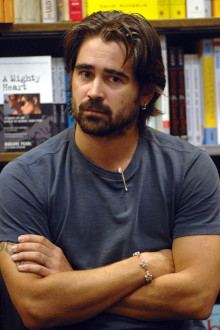
Birth of Actor Colin Farrell

colin-farrell

Irish actor Colin James Farrell is born on May 31, 1976, in Castleknock, Dublin.

Farrell is educated at St. Brigid’s National School, followed by secondary school at Castleknock College, an exclusive all boys private school and then Gormanston College in County Meath. He unsuccessfully auditions for the Irish musical group Boyzone around this time.

Farrell is inspired to try acting when Henry Thomas‘ performance in E.T. the Extra-Terrestrial moves him to tears. With his brother’s encouragement, he attends the Gaiety School of Acting, dropping out in 1998 when he is cast as Danny Byrne on Ballykissangel, a BBC drama about a young English priest who becomes part of an Irish rural community.

Farrell makes his film debut in the Tim Roth-directed drama The War Zone in 1999 and is discovered by Hollywood when Joel Schumacher casts him as the lead in the war drama Tigerland in 2000. He then stars in Schumacher’s psychological thriller Phone Booth (2003) where he plays a hostage in a New York City phone booth, and the American thrillers S.W.A.T. (2003) and The Recruit (2003), establishing his international box-office appeal. During this time, he also appears in Steven Spielberg‘s science fiction thriller Minority Report (2002) and as the villain Bullseye in the superhero film Daredevil (2003).

After starring in the independent films Intermission (2003) and A Home at the End of the World (2004), Farrell heads Oliver Stone‘s biopic Alexander (2004) and Terrence Malick‘s The New World (2005). Roles in Michael Mann‘s Miami Vice (2006), the adaptation of John Fante‘s Ask the Dust (2006), and Woody Allen‘s Cassandra’s Dream (2007) follow, underscoring his popularity among Hollywood writers and directors. However, it is his role in Martin McDonagh‘s In Bruges (2008) that earns him a Hollywood Foreign Press Association Golden Globe Award for Best Actor – Motion Picture Musical or Comedy.

Farrell stars in the black comedy film Horrible Bosses (2011), for which he receives critical praise, along with the comedy-horror film Fright Night (2011) and the science fiction action film Total Recall (2012), both remakes, and McDonagh’s second feature, the black comedy crime film Seven Psychopaths (2012). He also stars in the Niels Arden Oplev action film Dead Man Down (2013), and as Travers Goff in the period drama Saving Mr. Banks (2013). In 2014, he stars as Peter Lake in the supernatural fable Winter’s Tale, an adaptation of the novel of the same name by Mark Helprin. In 2015, he stars as Detective Ray Velcoro in the second season of HBO‘s True Detective, and also stars in the film The Lobster, for which he is nominated for his second Golden Globe Award for Best Actor – Motion Picture Musical or Comedy. In 2016, he plays Percival Graves in the Harry Potter spin-off film Fantastic Beasts and Where to Find Them.

In December 2005, Farrell checks into a rehabilitation treatment centre for addictions to recreational drugs and painkillers. He speaks about it on the Late Show with David Letterman after coming out of rehab and continues to do so in the years following. “There was an energy that was created,” he says of the time when he was addicted, “a character that was created, that no doubt benefited me. And then there was a stage where it all began to crumble around me.”

In 2007, Farrell joins other celebrities as a spokesman for the Special Olympics World Games in Shanghai, China. He has also lent his support to the anti-bullying campaign Stand Up! organised by the Irish LGBT youth organisation BeLonG To in March 2012. He appears on The Ellen DeGeneres Show two years earlier to increase awareness of the subject. In 2015 he becomes an official Ambassador of the Homeless World Cup which uses street football to inspire homeless people to change their lives.