seamus dubhghaill

Promoting Irish Culture and History from Little Rock, Arkansas, USA


Leave a comment

The Burning of Cork

The burning of Cork by British forces takes place on the night of December 11, 1920, during the Irish War of Independence. It follows an Irish Republican Army (IRA) ambush of a British Auxiliary patrol in the city, which wounds twelve Auxiliaries, one fatally.

IRA intelligence establishes that an Auxiliary patrol usually leaves Victoria Barracks (in the north of the city) each night at 8:00 p.m. and makes its way to the city centre via Dillon’s Cross. On December 11, IRA commander Seán O’Donoghue receives intelligence that two lorries of Auxiliaries will be leaving the barracks that night and travelling with them will be British Army Intelligence Corps Captain James Kelly.

A unit of six IRA volunteers commanded by O’Donoghue take up position between the barracks and Dillon’s Cross, a “couple of hundred yards” from the barracks. Their goal is to destroy the patrol and capture or kill Captain Kelly. Five of the volunteers hide behind a stone wall while one, Michael Kenny, stands across the road dressed as an off-duty British officer. When the lorries near he is to beckon the driver of the first lorry to slow down or stop.

At 8:00 p.m., two lorries, each carrying 13 Auxiliaries, emerge from the barracks. The first lorry slows when the driver spots Kenny and, as it does so, the IRA unit attacks with grenades and revolvers. The official British report says that 12 Auxiliaries are wounded and that one, Spencer Chapman, a former Officer in the 4th Battalion London Regiment (Royal Fusiliers), dies from his wounds shortly after. As the IRA unit makes its escape, some of the Auxiliaries fire on them while others drag the wounded to the nearest cover: O’Sullivan’s pub.

The Auxiliaries break into the pub with weapons drawn. They order everyone to put their hands over their heads to be searched. Backup and an ambulance are sent from the nearby barracks. One witness describes young men being rounded up and forced to lie on the ground. The Auxiliaries drag one of them to the middle of the crossroads, strip him naked and forced him to sing “God Save the King” until he collapses on the road.

Angered by an attack so near their headquarters and seeking retribution for the deaths of their colleagues at Kilmichael, the Auxiliaries gather to wreak their revenge. Charles Schulze, an Auxiliary and a former British Army Captain in the Dorsetshire Regiment during World War I, organizes a group of Auxiliaries to burn the centre of Cork.

At 9:30 p.m., lorries of Auxiliaries and British soldiers leave the barracks and alight at Dillon’s Cross, where they break into houses and herd the occupants onto the street. They then set the houses on fire and stand guard as they are razed to the ground. Those who try to intervene are fired upon and some are badly beaten. Seven buildings are set on fire at the crossroads. When one is found to be owned by Protestants, the Auxiliaries quickly douse the fire.

British forces begin driving around the city firing at random as people rush to get home before the 10:00 p.m. curfew. A group of armed and uniformed Auxiliaries surround a tram at Summerhill, smash its windows, and forced all the passengers out. Some of the passengers, including at least three women, are repeatedly kicked, hit with rifle butts, threatened, and verbally abused. The Auxiliaries then force the passengers to line up against a wall and search them, while continuing the physical and verbal abuse. Some have their money and belongings stolen. One of those attacked is a Catholic priest, who is singled out for sectarian abuse. Another tram is set on fire near Father Mathew‘s statue. Meanwhile, witnesses report seeing a group of 14–18 Black and Tans firing wildly for upwards of 20 minutes on nearby MacCurtain Street.

Soon after, witnesses report groups of armed men on and around St. Patrick’s Street, the city’s main shopping area. Most are uniformed or partially uniformed Auxiliaries and some are British soldiers, while others wear no uniforms. They are seen firing into the air, smashing shop windows and setting buildings on fire. Many report hearing bombs exploding. A group of Auxiliaries are seen throwing a bomb into the ground floor of the Munster Arcade, which houses both shops and flats. It explodes under the residential quarters while people are inside the building. They manage to escape unharmed but are detained by the Auxiliaries.

The Cork City Fire Brigade is informed of the fire at Dillon’s Cross shortly before 10:00 p.m. and are sent to deal with it at once. On finding that Grant’s department store on St. Patrick’s Street is ablaze, they decide to address it first. The fire brigade’s Superintendent, Alfred Hutson, calls Victoria Barracks and asks them to tackle the fire at Dillon’s Cross so that he can focus on the city centre. The barracks take no heed of his request. As he does not the resources to deal with all the fires at once, he has to prioritize the order in which the fires are addressed. He oversees the operation on St. Patrick’s Street and meets The Cork Examiner reporter Alan Ellis. He tells Ellis that “all the fires were being deliberately started by incendiary bombs, and in several cases, he had seen soldiers pouring cans of petrol into buildings and setting them alight.”

British forces hindered the firefighter’s attempts to tackle the blazes by intimidating them and cutting or driving over their hoses. Firemen are also shot at, and at least two are wounded by gunfire. Shortly after 3:00 a.m. on December 12, reporter Alan Ellis comes upon a unit of the fire brigade pinned down by gunfire near City Hall. The firemen say that they are being shot at by Black and Tans who have broken into the building. They also claim to see uniformed men carrying cans of petrol into the building from nearby Union Quay barracks.

At about 4:00 a.m. there is a large explosion and City Hall and the neighbouring Carnegie Library go up in flames, resulting in the loss of many of the city’s public records. According to Ellis, the Black and Tans had detonated high explosives inside City Hall. When more firefighters arrive, British forces shoot at them and refuse them access to water. The last act of arson takes place at about 6:00 a.m. when a group of policemen loot and burn the Murphy Brothers’ clothes shop on Washington Street.

After the ambush at Dillon’s Cross, IRA commander Seán O’Donoghue and volunteer James O’Mahony make their way to the farmhouse of the Delaney family at Dublin Hill on the northern outskirts of the city, not far from the ambush site. Brothers Cornelius and Jeremiah Delaney are members of F Company, 1st Battalion, 1st Cork Brigade IRA. O’Donoghue hides some grenades on the farm and the two men go their separate ways.

At about 2:00 a.m., at least eight armed men enter the house and go upstairs into the brothers’ bedroom. The brothers get up and stand at the bedside and are asked their names. When they answer, the gunmen open fire. Jeremiah is killed outright, and Cornelius dies of his wounds on December 18. Their elderly relative, William Dunlea, is wounded by gunfire. The brothers’ father says the gunmen wore long overcoats and spoke with English accents. It is thought that, while searching the ambush site, Auxiliaries had found a cap belonging to one of the volunteers and had used bloodhounds to follow the scent to the family’s home.

Over 40 business premises and 300 residential properties are destroyed, amounting to over five acres of the city. Over £3 million worth of damage (1920 value) is caused, although the value of property looted by British forces is not clear. Many people become homeless and 2,000 are left jobless. Fatalities include an Auxiliary killed by the IRA, two IRA volunteers killed by Auxiliaries, and a woman who dies from a heart attack when Auxiliaries burst into her house. Several people, including firefighters, are reportedly assaulted or otherwise wounded.

Irish nationalists call for an open and impartial inquiry. In the British House of Commons, Sir Hamar Greenwood, the Chief Secretary for Ireland, refuses the demand for such an inquiry. He denies that British forces had any involvement and suggests the IRA started the fires in the city centre.

Conservative Party leader Bonar Law says, “in the present condition of Ireland, we are much more likely to get an impartial inquiry in a military court than in any other.” Greenwood announces that a military inquiry would be carried out by General Peter Strickland. This results in the “Strickland Report,” but Cork Corporation instructs its employees and other corporate officials to take no part. The report blames members of the Auxiliaries’ K Company, based at Victoria Barracks. The Auxiliaries, it is claimed, burned the city centre in reprisal for the IRA attack at Dillon’s Cross. The British Government refuses to publish the report.

(Pictured: Workers clearing rubble on St. Patrick’s Street in Cork after the fires)


2 Comments

The Battle of Ballinalee

The Battle of Ballinalee takes place on November 4, 1920, during the Irish War of Independence.

Members of the North Longford Irish Republican Army (IRA) column, led by Seán Mac Eoin, drives a mixed group of Crown forces consisting of Black and Tans and Auxiliary Division personnel from the village of Ballinalee in County Longford.

Crown forces hope to burn the town of Ballinalee as a reprisal for the deaths of several Royal Irish Constabulary (RIC) personnel in the preceding days. This includes the killing of an RIC inspector, Philip St. Johnstone Howlett Kelleher, the previous week and an RIC Constable, Peter Cooney, the previous day. Cooney had been suspected of being a spy and his execution is reputedly ordered by Michael Collins. At the time of his killing, Cooney is allegedly carrying coded dispatches with the names of Longford IRA men.

The Crown forces, numbering 100 men in eleven trucks, are defeated by about twenty-five IRA members, of which four are involved in the main battle. Mac Eoin had placed several groups at the roads leading into the village, including one at a house, Rose Cottage, on the approach to the village centre. This group, referred to in some sources as the “Rose Cottage Four,” engage the much larger RIC force using rifle fire and grenades, and force their retreat after a two and a half hour gunfight.

The IRA column remains in the village for a week.


Leave a comment

Birth of Philip Shanahan, Sinn Féin Politician

Philip Shanahan, Irish Sinn Féin politician, is born in Hollyford, County Tipperary, on October 27, 1874. He is elected to the House of Commons of the United Kingdom in 1918 and serves as a Teachta Dála (TD) in Dáil Éireann from 1919 to 1922.

At some point Shanahan moves to Dublin, where he is a licensed vintner, maintaining an Irish pub in the notorious Monto red-light district.

Shanahan is involved in the Easter Rising in Dublin in April 1916. This leads to him having legal difficulties over the licence of his public house. He consults the lawyer and politician Tim Healy who comments:

“I had with me today a solicitor with his client, a Dublin publican named Phil Shanahan, whose licence is being opposed, and whose house was closed by the military because he was in Jacob’s during Easter week. I was astonished at the type of man – about 40 years of age, jolly and respectable. He said he ‘rose out’ to have a ‘crack at the English’ and seemed not at all concerned at the question of success or failure. He was a Tipperary hurler in the old days. For such a man to join the Rebellion and sacrifice the splendid trade he enjoyed makes one think there are disinterested Nationalists to be found. I thought a publican was the last man in the world to join a rising! Alfred Byrne, MP, was with him, and is bitter against the Party. I think I can save Shanahan’s property.”

Shanahan is elected for Dublin Harbour at the 1918 Irish general election, defeating Alfred Byrne. Like other Sinn Féin MPs, he does not take his seat at Westminster, but becomes a member of the revolutionary Dáil. He represents Dublin Harbour in the First Dáil from 1919 to 1921. He is arrested and detained in custody by the British government in April 1920 but is released in time to attend the next meeting of the Dáil on June 29, 1920.

During the Irish War of Independence, Billy Dunleavy recalls, “The IRA were the best men we ever had at that time. The Tans used to go around in the tenders with a wire over the top and if it was going by up there in Talbot Street they’d (IRA) say, ‘Get out of the way, quick!’ and they’d throw a hand grenade into the car. Now Phil Shanahan, he owned a pub over there on the corner, he was a great man and he used to hide them after they’d been out on a job. He had cellars and all the IRA men used to go there and hide their stuff.”

In 1921 a general election is held for the House of Commons of Southern Ireland. Republicans use this as an election for the Second Dáil. Shanahan is elected unopposed for the four member Dublin Mid constituency. He is defeated at the 1922 Irish general election to the Third Dáil, as a member of the Anti-Treaty faction of Sinn Féin, which opposes the creation of the Irish Free State in the place of the Republic declared in 1919.

Shanahan leaves Dublin in 1928 and returns to his home village of Hollyford, County Tipperary. He dies there on November 21, 1931, at the age of 57.


Leave a comment

The Birches RUC Base Attack

The East Tyrone Brigade of the Provisional Irish Republican Army (IRA) attacks the Royal Ulster Constabulary (RUC) base at The Birches near Portadown, County Armagh, Northern Ireland, on August 11, 1986. The unmanned base is raked with gunfire before being destroyed by a 200-pound (91 kg) bomb, which is driven through the gate of the base in the bucket of a JCB digger.

In 1985 the IRA’s East Tyrone Brigade, commanded by Patrick J. Kelly, begins a campaign of destroying remote RUC stations and preventing anyone from rebuilding them, to create no-go zones. On December 7, 1985, it launches an attack on the RUC barracks in Ballygawley, County Tyrone, destroying the base and killing two RUC officers.

On January 22, 1986, the East Tyrone Brigade fires mortars at the Ulster Defence Regiment (UDR) base in Dungannon, County Tyrone, injuring two UDR soldiers and damaging the base. Just over a week later, on February 1, it carries out a large van bomb attack on the RUC base at Coalisland, County Tyrone, damaging the base and several houses and shops.

The Birches base attack is a complex attack that involves several units, including teams of lookouts, an armed team and bomb-makers as well as a team to carry out a diversionary attack. A diversionary bomb attack is staged at Pomeroy to draw security forces away from the real target at the Birches. Another team hijacks a JCB digger, getaway vehicles and scout cars at Washing Bay.

The digger is used to deliver the bomb to its target. The IRA does not expect any resistance as the RUC station is unmanned at the time of the attack. The IRA first rakes the base with automatic gunfire while the digger, with the bomb in its bucket, is driven through the high wire perimeter fence which had been constructed to protect the base from grenade or mortar attack. The digger is most likely driven by young IRA volunteer Declan Arthurs from Galbally, County Tyrone, who has experience driving diggers on his family’s farm. A volunteer then lights a fuse, and the bomb explodes after the IRA hads retreated to safety in a waiting van. The blast destroys most of the base and also damages nearby buildings, blowing the roof off a pub across the road. The IRA team then makes its getaway. According to journalist Mark Urban, the armed members of the unit evade British security force roadblocks by escaping in a boat across Lough Neagh.

About 35 people are reportedly involved in the Birches attack, from planning, executing the attack and creating an escape route. A partially disabled American tourist and six local civilians are slightly injured in the blast.

A member of the British security forces tells Mark Urban of the attack: “The Birches RUC station was destroyed by the bomb, creating problems for the authorities about how to re-build it. The Tyrone IRA was able to combine practical skills such as bomb-making and the welding needed to make mortars with considerable resources. Its members went on operations carrying the latest assault rifles and often wore body-armour similar to that used by the security forces, giving them protection against pistol or sub-machine-gun fire. By 1987 they had also succeeded in obtaining night-sights, allowing them to aim weapons or observe their enemy in darkness.”

The IRA unit’s next major target is the RUC station at Loughgall, which is attacked in the same manner. This operation is a disaster for the IRA as the IRA unit is ambushed by the Special Air Service (SAS). The entire IRA unit of eight, along with a Catholic civilian, are shot dead. Many of those IRA volunteers killed at Loughgall had taken part in the Birches attack, like Pádraig McKearney, Jim Lynagh and Patrick J. Kelly.


Leave a comment

The Milltown Cemetery Attack

The Milltown Cemetery attack takes place on March 16, 1988, at Milltown Cemetery in Belfast, Northern Ireland. During the large funeral of three Provisional Irish Republican Army members killed in Gibraltar, an Ulster Defence Association (UDA) member, Michael Stone, attacks the mourners with hand grenades and pistols.

On March 6, 1988, Provisional IRA members Daniel McCann, Seán Savage and Mairéad Farrell are shot dead by the Special Air Service (SAS) in Gibraltar, in Operation Flavius. The three had allegedly been preparing a bomb attack on British military personnel there, but the deaths outrage republicans as the three were unarmed and shot without warning. Their bodies arrive in Belfast on March 14 and are taken to their family homes. Tensions are high as the security forces flood the neighbourhoods where they had lived, to try to prevent public displays honouring the dead. For years, republicans have complained about heavy-handed policing of IRA funerals, which have led to violence. In a change from normal procedure, the security forces agree to stay away from the funeral in exchange for guarantees that there will be no three-volley salute by IRA gunmen. The British Army and Royal Ulster Constabulary (RUC) will instead keep watch from the sidelines. This decision is not made public.

Michael Stone is a loyalist, a member of the Ulster Defence Association (UDA) who had been involved in several killings and other attacks, and who describes himself as a “freelance loyalist paramilitary.” He learns that there will be little security force presence at the funerals, and plans “to take out the Sinn Féin and IRA leadership at the graveside.” He says his attack is retaliation for the Remembrance Day bombing four months earlier, when eleven Protestants had been killed by an IRA bomb at a Remembrance Sunday ceremony. He claims that he and other UDA members considered planting bombs in the graveyard but abandon the plan because the bombs might miss the republican leaders.

The funeral service and Requiem Mass go ahead as planned, and the cortege makes its way to Milltown Cemetery, off the Falls Road. Present are thousands of mourners and top members of the IRA and Sinn Féin, including Sinn Féin leader Gerry Adams and Martin McGuinness. Two RUC helicopters hover overhead. Stone claims that he entered the graveyard through the front gate with the mourners and mingled with the large crowd, although one witness claims to have seen him enter from the M1 motorway with three other people.

As the third coffin is about to be lowered into the ground, Stone throws two grenades, which have a seven-second delay, toward the republican plot and begins shooting. The first grenade explodes near the crowd and about 20 yards from the grave. There is panic and confusion, and people dive for cover behind gravestones. Stone begins jogging toward the motorway, several hundred yards away, chased by dozens of men and youths. He periodically stops to shoot and throw grenades at his pursuers.

Three people are killed while pursuing Stone – Catholic civilians Thomas McErlean (20) and John Murray (26), and IRA member Caoimhín Mac Brádaigh (30), also known as Kevin Brady. During the attack, about 60 people are wounded by bullets, grenade shrapnel and fragments of marble and stone from gravestones. Among those wounded is a pregnant mother of four, a 72-year-old grandmother and a ten-year-old boy. Some fellow loyalists say that Stone made the mistake of throwing his grenades too soon. The death toll would likely have been much higher had the grenades exploded in mid-air, “raining lethal shrapnel over a wide area.”

A white van that had been parked on the hard shoulder of the motorway suddenly drives off as Stone flees from the angry crowd. There is speculation that the van is part of the attack, but the RUC says it was part of a police patrol, and that the officers sped off because they feared for their lives. Stone says he had arranged for a getaway car, driven by a UDA member, to pick him up on the hard shoulder of the motorway, but the driver allegedly “panicked and left.” By the time he reaches the motorway, he has seemingly run out of ammunition. He runs out onto the road and tries to stop cars, but is caught by the crowd, beaten, and bundled into a hijacked vehicle. Armed RUC officers in Land Rovers quickly arrive, “almost certainly saving his life.” They arrest him and take him to Musgrave Park Hospital for treatment of his injuries. The whole event is recorded by television news cameras.

That evening, angry youths in republican districts burn hijacked vehicles and attack the RUC. Immediately after the attack, the two main loyalist paramilitary groups—the UDA and the Ulster Volunteer Force (UVF)—deny responsibility. Sinn Féin and others “claimed that there must have been collusion with the security forces, because only a small number of people knew in advance of the reduced police presence at the funerals.”

Three days later, during the funeral of one of Stone’s victims, Caoimhín Mac Brádaigh, two British Army corporals, Derek Wood and David Howes, in civilian clothes and in a civilian car drive into the path of the funeral cortège, apparently by mistake. Many of those present believe the soldiers are loyalists intent on repeating Stone’s attack. An angry crowd surrounds and attacks their car. Corporal Wood draws his service pistol and fires a shot into the air. The two men are then dragged from the car before being taken away, beaten and shot dead by the IRA. The incident is often referred to as the corporals killings and, like the attack at Milltown, much of it is filmed by television news cameras.

In March 1989, Stone is convicted for the three murders at Milltown, for three paramilitary murders before, and for other offences, receiving sentences totaling 682 years. Many hardline loyalists see him as a hero, and he becomes a loyalist icon. After his conviction, an issue of the UDA magazine Ulster is devoted to Stone, stating that he “stood bravely in the middle of rebel scum and let them have it.” Apart from time on remand spent in Crumlin Road Gaol, he spends all of his sentence in HM Prison Maze. He is released after serving 13 years as a result of the Good Friday Agreement.

In November 2006, Stone is charged with attempted murder of Martin McGuinness and Gerry Adams, having been arrested attempting to enter the Parliament Buildings at Stormont while armed. He is subsequently convicted and sentenced to a further 16 years imprisonment. He is released on parole in 2021.


Leave a comment

The Derryard Checkpoint Attack

The Provisional Irish Republican Army (IRA) attacks a British Army permanent vehicle checkpoint complex manned by the King’s Own Scottish Borderers (KOSB) near the Northern IrelandRepublic of Ireland border at Derryard, north of Rosslea, County Fermanagh, on December 13, 1989.

According to journalist Ed Moloney, the IRA Army Council, suspecting a great deal of infiltration by double agents at the grassroots level of the IRA, decide to form an experimental flying column (rather than the usual active service unit) to mount a large-scale operation against a permanent vehicle checkpoint along the border. It hopes that this will prevent any information leak that might result in another fiasco like the Loughgall Ambush of 1987.

Moloney maintains that the planning is in the charge of Thomas Murphy, alleged leader of the South Armagh Brigade, and that the raid is to be led by East Tyrone Brigade member Michael “Pete” Ryan. Journalist Ian Bruce instead claims that the IRA unit is led by an Irish citizen who had served in the Parachute Regiment, citing intelligence sources. The column is made up of about 20 experienced IRA volunteers from throughout Northern Ireland, eleven of whom are to carry out the attack itself. Bruce reports that IRA members from County Monaghan, supported by local Fermanagh militants, carry out the raid.

The target is a permanent vehicle checkpoint at Derryard. Described as a “mini base,” it includes an accommodation block and defensive sangars. It is manned by eight soldiers of the 1st Battalion, King’s Own Scottish Borderers and a Royal Ulster Constabulary (RUC) officer. The eleven IRA members are driven to the checkpoint in the back of a makeshift Bedford armoured dumper truck. They are armed with 7.62mm AK-47s, 5.56mm ArmaLite AR-18s, two 12.7mm DShK heavy machine-guns, RPG-7s, different kinds of grenades, and a LPO-50 flamethrower. The heavy machine guns and the flamethrower are mounted on a tripod on the lorry bed. To assure widespread destruction, the column plan to detonate a van bomb after the initial assault.

The attack takes place shortly after 4:00 PM. IRA members seal off roads leading to the checkpoint in an attempt to prevent civilians from getting caught up in the attack. The truck is driven from the border and halted at the checkpoint. As Private James Houston begins to check the back of the truck, the IRA open fire with assault rifles and throw grenades into the compound. Two RPG-7s are fired at the observation sangar while the flamethrower stream is directed at the command sangar. Heavy shooting continues as the truck reverses and smashes through the gates of the compound. At least three IRA volunteers dismount inside the checkpoint and spray the portacabins with gunfire and the flamethrower’s fire stream, while throwing grenades and nail bombs. The defenders are forced to seek shelter in sangars, from where they fire into their own base. A farmer some distance away sees an orange ball of flames and hears gunfire ‘raking the fields.’ As the truck drives out of the now wrecked compound, a red transit van loaded with a 400-lb. (182 kg) bomb is driven inside and set to detonate once the IRA unit has made its escape. However, only the booster charge explodes.

The attack is finally repulsed by a four-men Borderers section from the checkpoint that is patrolling nearby, with the support of a Westland Wessex helicopter. The patrol fires more than 100 rounds at the IRA unit. The Wessex receives gunfire and is forced to take evasive action. The IRA column, at risk of being surrounded, flee toward the border in the armoured truck. It is found abandoned at the border with a 460-lb. (210 kg) bomb on board.

Two soldiers are killed in the attack: Private James Houston (22) from England and Lance-Corporal Michael Patterson (21) from Scotland. Corporal Whitelaw is badly wounded by shrapnel and later airlifted for treatment. Another soldier suffers minor injuries.

There is outrage in Westminster and among unionists, as a supposedly well-defended border post has been overrun by the IRA and two soldiers killed. On the other hand, according to Moloney, there is also some disappointment among republicans. Despite the positive propaganda effect, the quick and strong reaction from the outpost’s defenders convince some high-ranking IRA members that the Army Council has been infiltrated by a mole.

KOSB officers and security sources believe that the IRA unit involved was not locally recruited, putting the blame instead on IRA members from Clogher, County Tyrone and South Monaghan in the Republic. The same sources say that the attack was executed “in true backside-or-bust Para style.”

After the action of Derryard, the British Army in Northern ireland are issued the French designed Luchaire 40mm rifle grenade, fitted on the muzzle of the SA80 rifle. This gives the troops a lightweight armour piercing capability to deal with the threat imposed by improvised armoured vehicles. Permanent checkpoints along the border are also fitted with general-purpose machine guns. From 1990 until the end of the IRA campaign in 1997, there are a number of further bloodless, small-scale attacks against permanent vehicle checkpoints along this part of the border using automatic weapons, particularly in County Fermanagh and against a military outpost at Aughnacloy, County Tyrone.

Two soldiers, Corporal Robert Duncan and Lance Corporal Ian Harvey, are bestowed the Distinguished Conduct Medal (DCM), while Lance-Corporal Patterson receives a posthumous mention in dispatches for his actions during the attack. The checkpoint is dismantled in March 1991, as part of a major border security re-arrangement codenamed Operation Mutilate.

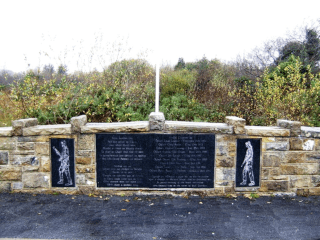
(Pictured: Republican memorial at Carragunt bridge, on the border between Northern Ireland and the Republic, often crossed by Provisional IRA forces during the Troubles to attack British targets inside County Fermanagh)


Leave a comment

Birth of Frank Flood, One of the “Forgotten Ten”

Francis Xavier Flood, known as Frank Flood, a 1st Lieutenant in the Dublin Active Service Brigade during the Irish War of Independence, is born at 6 Emmet Street, Dublin on December 1, 1901. He is executed by the British authorities in Mountjoy Prison and is one of the ten members of the Irish Republican Army commonly referred to as the Forgotten Ten.

Flood is the son of policeman John Flood and Sarah Murphy. The 1911 census lists the family living at 15 Emmet Street. He is one of ten children consisting of nine brothers and one sister, most of whom are heavily involved in the Independence movement. He attends secondary school at O’Connell School in Dublin and wins a scholarship to study engineering at University College Dublin (UCD) where he is an active member of UCD’s famous debating forum, the Literary and Historical Society. He passes his first- and second-year engineering exams with distinction. At the time of his arrest, he is living with his family at 30 Summerhill Parade, Dublin.

Flood is captured, together with Thomas Bryan, Patrick Doyle, Bernard Ryan and Dermot O’Sullivan, while attacking a lorry-load of Dublin Metropolitan Police at Drumcondra on January 21, 1921. All of the men are found in possession of arms and a grenade is discovered in Flood’s pocket. On February 24, 1921, he is charged by court-martial, with high treason/levying war against the King, and is one of six men executed by hanging on March 14, 1921, in Mountjoy Prison, Dublin. At nineteen years of age, he is the youngest of the six. No members of any of the six families are allowed to attend the execution in the yard at Mountjoy Prison.

Flood is a close personal friend of Kevin Barry and asks that he be buried as close as possible to him. He had taken part in the September 1920 ambush during which Barry had been arrested and had been involved in the planning of several aborted attempts to rescue him. He remains buried at Mountjoy Prison, together with nine other executed members of the Irish Republican Army known as The Forgotten Ten, until he is given a state funeral and reburied at Glasnevin Cemetery on October 14, 2001, after an intense campaign led by the National Graves Association.

Students of University College Dublin establish the Frank Flood Shield, an annual debating competition, in his memory. Flood and the other five men executed on March 14, 1921, are commemorated in Thomas MacGreevy‘s poem “The Six who were Hanged.”

The bridge over the River Tolka in Drumcondra at Millmount Avenue/Botanic Avenue is named Droichead Frank Flood on March 14, 2018.


Leave a comment

The Maze Prison Escape

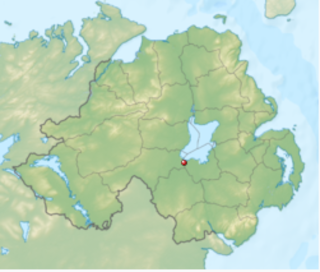
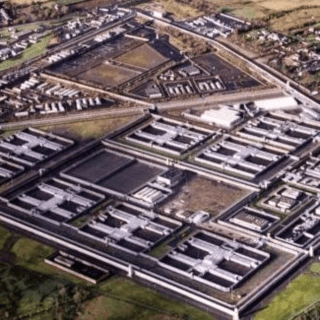
The Maze Prison escape, known to Irish republicans as the Great Escape, takes place on September 25, 1983, in County Antrim, Northern Ireland. HM Prison Maze, also known as Long Kesh, is a maximum-security prison considered to be one of the most escape-proof prisons in Europe, and holds prisoners suspected of taking part in armed paramilitary campaigns during the Troubles. In the biggest prison escape in UK history, 38 Provisional Irish Republican Army (IRA) prisoners escaped from H-Block 7 (H7) of the prison. One prison officer dies of a heart attack during the escape and twenty others are injured, including two who are shot with guns that had been smuggled into the prison. The escape is a propaganda coup for the IRA, and a British government minister faces calls to resign. The official inquiry into the escape places most of the blame onto prison staff, who in turn blame the escape on political interference in the running of the prison.

IRA volunteers regard themselves as prisoners of war with a duty to escape. During the Troubles, Irish republican prisoners escape from custody en masse on several occasions between 1971 and 1981.

Prisoners had been planning the 1983 escape for several months. Bobby Storey and Gerry Kelly start working as orderlies in H7, which allows them to identify weaknesses in the security systems. Six handguns are also smuggled into the prison. Shortly after 2:30 PM on September 25, prisoners seize control of H7 by simultaneously taking the prison officers hostage at gunpoint in order to prevent them from triggering an alarm. One officer is stabbed with a craft knife, and another is knocked down by a blow to the back of the head. One officer who attempts to prevent the escape is shot in the head by Gerry Kelly but survives. By 2:50 PM the prisoners are in control of H7 without an alarm being raised. A dozen prisoners also take uniforms from the officers, and the officers are forced to hand over their car keys and details of where their cars are, for possible later use during the escape. A rearguard is left behind to watch over hostages and keep the alarm from being raised until they believe the escapees are clear of the prison, at which time they return to their cells. At 3:25 PM, a lorry delivering food supplies arrives at the entrance to H7, whereupon Brendan McFarlane and other prisoners take the occupants hostage at gunpoint and move them inside H7. The lorry driver is told the lorry is being used in the escape, and he is instructed what route to take and how to react if challenged.

At 3:50 PM the prisoners leave H7, and the driver and a prison orderly are taken back to the lorry. Thirty-seven prisoners climb into the back of the lorry, while Gerry Kelly lay on the floor of the cab with a gun pointed at the driver, who is also told the cab has been booby trapped with a hand grenade. At nearly 4:00 PM the lorry drives toward the main gate of the prison, where the prisoners intend to take over the gatehouse. Ten prisoners dressed in guards’ uniforms and armed with guns and chisels dismount from the lorry and enter the gatehouse, where they take the officers hostage.

At 4:05 PM the officers begin to resist, and an officer presses an alarm button. When other staff respond via an intercom, a senior officer says while being held at gunpoint that the alarm had been triggered accidentally. By this time the prisoners are struggling to maintain control in the gatehouse due to the number of hostages. Officers arriving for work are entering the gatehouse from outside the prison, and each is ordered at gunpoint to join the other hostages. Officer James Ferris runs from the gatehouse toward the pedestrian gate attempting to raise the alarm, pursued by Dermot Finucane. Ferris had already been stabbed three times in the chest, and before he can raise the alarm he collapses.

Finucane continues to the pedestrian gate where he stabs the officer controlling the gate, and two officers who had just entered the prison. This incident is seen by a soldier on duty in a watchtower, who reports to the British Army operations room that he has seen prison officers fighting. The operations room telephones the prison’s Emergency Control Room (ECR), which replies that everything is all right and that an alarm had been accidentally triggered earlier.

At 4:12 PM the alarm is raised when an officer in the gatehouse pushes the prisoner holding him hostage out of the room and telephones the ECR. However, this is not done soon enough to prevent the escape. After several attempts the prisoners open the main gate and are waiting for the prisoners still in the gatehouse to rejoin them in the lorry. At this time two prison officers block the exit with their cars, forcing the prisoners to abandon the lorry and make their way to the outer fence which is 25 yards away.

Four prisoners attack one of the officers and hijack his car, which they drive toward the external gate. They crash into another car near the gate and abandon the car. Two escape through the gate, one is captured exiting the car, and another is captured after being chased by a soldier. At the main gate, a prison officer is shot in the leg while chasing the only two prisoners who have not yet reached the outer fence. The prisoner who fires the shot is captured after being shot and wounded by a soldier in a watch tower, and the other prisoner is captured after falling. The other prisoners escape over the fence, and by 4:18 PM the main gate is closed and the prison secured, after 35 prisoners had breached the prison perimeter. The escape is the biggest in British history, and the biggest in Europe since World War II.

Outside the prison the IRA has planned a logistical support operation involving 100 armed members, but due to a miscalculation of five minutes, the prisoners find no transport waiting for them and are forced to flee across fields or hijack vehicles. The British Army and Royal Ulster Constabulary immediately activate a contingency plan and by 4:25 PM a cordon of vehicle checkpoints are in place around the prison, and others are later in place in strategic positions across Northern Ireland, resulting in the recapture of one prisoner at 11:00 PM. Twenty prison officers are injured during the escape, thirteen are kicked and beaten, four stabbed, and two shot. One prison officer, James Ferris, who had been stabbed, dies after suffering a heart attack during the escape.

The escape is a propaganda coup and morale boost for the IRA, with Irish republicans dubbing it the “Great Escape.” Leading unionist politician Ian Paisley calls on Nicholas Scott, the Parliamentary Under-Secretary of State for Northern Ireland, to resign. The British Prime Minister Margaret Thatcher makes a statement in Ottawa during a visit to Canada, saying “It is the gravest [breakout] in our present history, and there must be a very deep inquiry.” The day after the escape, Secretary of State for Northern Ireland James Prior announces an inquiry to be headed by Her Majesty’s Chief Inspector of Prisons, James Hennessy. The Hennessy Report is published on January 26, 1984, placing most of the blame for the escape on prison staff, and making a series of recommendations to improve security at the prison. The report also places blame with the designers of the prison, the Northern Ireland Office and successive prison governors who had failed to improve security. Prior announces that the prison’s governor has resigned, and that there will be no ministerial resignations as a result of the report’s findings. Four days after the Hennessy Report is published, the Minister for Prisons Nicholas Scott dismisses allegations from the Prison Governors Association and the Prison Officers Association that the escape is due to political interference in the running of the prison.

Fifteen escapees are captured on the day, including four who are discovered hiding underwater in a river near the prison using reeds to breathe. Four more escapees are captured over the next two days, including Hugh Corey and Patrick McIntyre who are captured following a two-hour siege at an isolated farmhouse. Out of the remaining 19 escapees, 18 end up in the republican stronghold of South Armagh where two members of the IRA’s South Armagh Brigade are in charge of transporting them to safehouses and given the option of either returning to active service in the IRA’s armed campaign or a job and new identity in the United States.

On October 25, 1984, nineteen prisoners appear in court on charges relating to the death of prison officer James Ferris, sixteen charged with his murder. A pathologist determines that the stab wounds Ferris suffered would not have killed a healthy man. The judge acquits all sixteen as he cannot correlate the stabbing to the heart attack.


2 Comments

Irish Republican Patsy O’Hara Dies on Hunger Strike

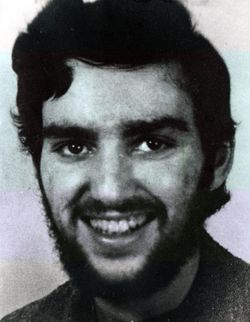
Patsy O’Hara, Irish republican hunger striker and member of the Irish National Liberation Army (INLA), dies on hunger strike in the H Blocks of Long Kesh Prison at 11:29 PM on May 21, 1981. Earlier in the day, at 2:11 AM, he is preceded in death by his friend and fellow hunger-striker, Raymond McCreesh.

O’Hara is born on July 11, 1957, in Bishop Street, Derry, County Londonderry, Northern Ireland.

O’Hara joins Na Fianna Éireann in 1970 and, in 1971, his brother Sean is interned in Long Kesh Prison. In late 1971, at the age of 14, he is shot and wounded by a soldier while manning a barricade. Due to his injuries, he is unable to attend the civil rights march on Bloody Sunday but watches it go by him in the Brandywell Stadium, and the events of the day have a lasting effect on him.

In October 1974, O’Hara is interned in Long Kesh Prison, and upon his release in April 1975 he joins the Irish Republican Socialist Party (IRSP) and INLA. He is arrested in Derry in June 1975 and held on remand for six months. In September 1976, he is arrested again and once more held on remand for four months.

On May 10, 1978, O’Hara is arrested on O’Connell Street in Dublin under section 30 of the Offences Against the State Act and is released eighteen hours later. He returns to Derry in January 1979 and is active in the INLA. On May 14, 1979, he is arrested and is convicted of possessing a hand grenade. He is sentenced to eight years in prison in January 1980.

O’Hara becomes Officer Commanding of the INLA prisoners at the beginning of the first hunger strike in 1980, and he joins the 1981 strike on March 22.

On Thursday, May 21, 1981, at 11:29 PM, Patsy O’Hara dies at the age of 23 after 61 days on hunger strike. In accordance with his wishes, his parents do not get him the medical intervention needed to save his life. His corpse is found to be mysteriously disfigured prior to its departure from prison and before the funeral, including signs of his face being beaten, a broken nose, and cigarette burns on his body.

O’Hara’s mother, Peggy O’Hara, is a candidate in the 2007 Northern Ireland Assembly election in the Foyle constituency. She is not elected, but she is one of the more successful dissident republican candidates opposed to the new policy of the Sinn Féin leadership of working with the Police Service of Northern Ireland (PSNI) and wins 1,789 votes. On the eve of the election, over 330 former republican prisoners write a letter to the Derry Journal endorsing her campaign.


2 Comments

The Hollyford Barracks Attack

Irish Republican Army (IRA) volunteers destroy the Royal Irish Constabulary (RIC) barracks at Hollyford, County Tipperary, on May 11, 1920.

In 1920 twelve RIC Constables, or Peelers as they are called, are stationed in the barracks in Hollyford. They are regarded as the eyes and ears of the British establishment and therefore a thorn in the side of the local IRA. Since the previous year, the IRA has developed a policy of attacking police barracks throughout the country and forcing their closure thereby reducing the flow of information to Dublin Castle.

On the night of May 11, 1920, it is the turn of Hollyford Barracks. The local IRA with its leaders assembles at Phil Shanahan’s house on the Glenough road. At this time Shanahan is a member of the First Dáil, elected from a Dublin constituency as he is living and running a public house there. He fought in the Jacob’s Biscuit Factory under Thomas MacDonagh during the 1916 Easter Rising. It is decided the attack will be led by Ernie O’Malley, an organiser for the IRA who moves around to various Brigades throughout the country. His second in command is Séumas Robinson, commanding officer of the 3rd Tipperary Brigade. Other officers are Seán Treacy, whose mother Bridget Allis is from Lacknacreena, Dan Breen who is quartermaster general (QMG) of the Brigade, Comdt. Tadgh O’Dwyer, Captain Paddy O’Dwyer and Lt. Jim O’Gorman.

Roads are blocked in the vicinity and telephone lines are cut. Robinson and O’Malley, with the help of ladders, get on the roof and with lump hammers break holes in the slates. They then drop hand grenades and petrol in through the holes. They also ignite turf sods soaked in petrol and drop them through the holes. The fire on the upper floor escalates. While all this is happening, Seán Treacy, with his covering party, concentrate their fire on the port holes which keeps the occupants pinned down. The battle goes on all night and, as daylight approaches on the morning of May 12, the attackers have to withdraw without dislodging the police. While they do not achieve their aim to capture guns and ammunition, they do enough damage to ensure the RIC leaves Hollyford immediately never to return.

The next occupants, following the Anglo-Irish Treaty, are the Gárda Síochána in 1948. Various changes in personnel take place in the 1950s until Gárda Maurice Slattery is the only Gárda left in Hollyford. In 1965, after a lifetime in the Gárdí, he retires, and he and his family move to Limerick. He is the last Gárda to serve in Hollyford.

(From: “The Burning of Hollyford Barracks,” Third Tipperary Brigade Memorial (www.thirdtippbrigade.ie), July 12, 2018)