seamus dubhghaill

Promoting Irish Culture and History from Little Rock, Arkansas, USA


Leave a comment

Birth of James Chichester-Clark, Prime Minister of Northern Ireland

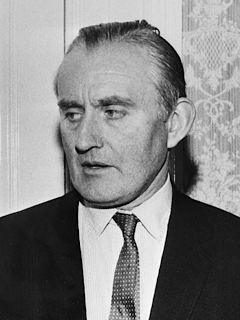
James Dawson Chichester-Clark, Baron Moyola, the penultimate Prime Minister of Northern Ireland and eighth leader of the Ulster Unionist Party (UUP), is born as James Dawson Clark on February 12, 1923, at Moyola Park, near CastledawsonCounty Londonderry, his family’s ancestral home.

Chichester-Clark is the eldest of three children of James Lenox-Conyngham Clark and Marion Caroline Dehra (née Chichester). His brother is Robin Chichester-Clark and his sister is Penelope Hobhouse, the garden writer and historian.

In 1924, James Clark Snr. changes the family name to Chichester-Clark by deed poll, thus preventing the old Protestant Ascendancy name Chichester, his wife’s maiden name, from dying out. On his mother’s side the family are descended from the Donegall Chichesters and are the heirs of the Dawsons of Castledawson, who had originally held Moyola Park.

Educated, against his own wishes, at Selwyn House, Broadstairs, and then Eton College, Chichester-Clark leaves school and enters adulthood in the midst of World War II. On joining the Irish Guards, the regiment of his grandfather, in Omagh, he begins his year-long training at the Royal Military College, Sandhurst, before receiving his commission as a second lieutenant.

Chichester-Clark marries widow Moyra Haughton (née Morris) in 1959. Lady Moyola’s first husband, Capt. Thomas Haughton from Cullybackey, had been killed in the RAF Nutts Corner air crash in January 1953. She, while pregnant, is seriously injured in the crash and suffers a broken neck.  He and his wife have two daughters (Tara and Fiona), in addition to Moyra’s son Michael from her previous marriage. Lady Moyola is a cousin of Colonel Sir Michael McCorkellLord Lieutenant of County Londonderry (1975–2000). Chichester-Clark serves as his Vice Lord-Lieutenant.

Chichester-Clark is an officer in the 1st Battalion, Irish Guards, part of 24th Infantry Brigade attached to British 1st Infantry Division, and participates briefly in the Anzio landings. He is injured on February 23, 1944, by an 88m shell as he and his Platoon Sergeant take their first look at the ground in the “gullies” to the west of the AnzioAlbano Laziale road. His company is all but wiped out, and he spends most of the war in hospital recovering from injuries, the effects of which stay with him throughout his life.

Following the war, Chichester-Clark’s military career takes him from the dull duties of the post-war occupation of Germany, to Canada as aide-de-camp to Harold Alexander, 1st Earl Alexander of Tunis, then Governor General of Canada. The popularity and competence of his senior officer makes this uneventful two-year period of his life the most remarkable element of his pre-parliamentary career. On returning from Canada, he continues in the Army for several years, refusing promotion to seniority before retiring a major in 1960.

In an uncontested by-election in 1960, Chichester-Clark takes over the South Londonderry seat in the Northern Ireland Parliament that had been held by his grandmother, Dame Dehra Parker, since 1933. As Dehra Chichester, she is an MP for the county of Londonderry until 1929 when she stands down for a first time. Chichester-Clark’s father replaces her in 1929 when the county is split, but he suddenly dies in 1933. Dehra, by then remarried, willingly returns to Northern Ireland from England, and wins the ensuing by-election.

Chichester-Clark retains the seat for the remainder of the Parliament’s existence, and so the South Londonderry area is represented by three generations of the same family for the entire period of the Northern Ireland House of Commons. Between 1929 and the last election in 1969, the family is challenged for the seat on only two occasions, the second being in 1969, when future Westminster MP Bernadette Devlin stands, attracting 39% of the vote.

Chichester-Clark makes his maiden speech on February 8, 1961, during the Queen’s speech debate.

For the remainder of Basil Brooke, 1st Viscount Brookeborough‘s premiership, Chichester-Clark remains on the back benches. It is not until 1963, when Terence O’Neill becomes Prime Minister of Northern Ireland, that he is appointed assistant whip, and a month later when William Craig is promoted to the Ministry of Home Affairs, he takes over as Government Chief Whip. Accounts of the period are that he enjoys the Whip’s office more than any other he is to subsequently hold in politics. This despite including references to anti O’Neill MP and future Democratic Unionist Party (DUP) Westminster MP, John McQuade, and the occasional “good row.” From the outset, O’Neill takes the unusual decision to allow Chichester-Clark to attend and speak at all cabinet meetings while Chief Whip. Proving a competent parliamentary party administrator, O’Neill adds Leader of the House of Commons to Chichester-Clark’s duties in October 1966, a promotion that makes him a full member of the Cabinet. He is also sworn into the Privy Council of Northern Ireland in 1966.

In 1967, O’Neill sacks his Minister of Agriculture, Harry West, for ministerial impropriety, and Chichester-Clark is appointed in his place, a position he retains for two quiet years. On April 23, 1969, he resigns from the Cabinet one day prior to a crucial Parliamentary Party meeting, claiming that he disagrees with the Prime Minister’s decision to grant universal suffrage in local government elections at that time. He states that he disagrees not with the principle of one man one vote but with the timing of the decision, having the previous day expressed doubts over the expediency of the measure in Cabinet. It has since been suggested that his resignation was in order to accelerate O’Neill’s own resignation, and to improve his own position in the jostling to succeed him.

O’Neill “finally walked away” five days later on April 28, 1969. In order to beat his only serious rival, Brian Faulkner, Chichester-Clark needs the backing of O’Neill-ite MPs elected at the 1969 Northern Ireland general election, to which end he attends a tea party in O’Neill’s honour only days after causing his resignation.

Chichester-Clark beats Faulkner in the 1969 Ulster Unionist Party leadership election by one vote on May 1, 1969, with his predecessor using his casting vote in the tied election for his distant cousin because “Faulkner had been stabbing him in the back for a lot longer.” Although Faulkner believes, until his death, that he is the victim of an upper-class conspiracy to deny him the premiership, he becomes a high profile and loyal member of Chichester-Clark’s cabinet.

Chichester-Clark’s premiership is punctuated by civil unrest that erupts after August 1969. He suffers from the effects of the Hunt Report, which recommends the disbandment of the Ulster Special Constabulary, which his Government accepts to the consternation of many Unionists.

In April 1970, Chichester-Clark’s predecessor and another Unionist MP resign their seats in the Northern Ireland House of Commons. The by-election campaigns are punctuated by major liberal speeches by senior government figures like Brian Faulkner, Jack Andrews and the Prime Minister himself. Ian Paisley‘s Protestant Unionist Party (PUP), however, takes both seats in the House of Commons. Later that same month the O’Neill-ite group, the New Ulster Movement, becomes the Alliance Party of Northern Ireland, and his party begins passing votes of no confidence in him.

As the civil unrest grows, the British Government, particularly the Home SecretaryJames Callaghan, becomes increasingly involved in Northern Ireland’s affairs, forcing Chichester-Clark’s hand on many issues. These include the disbanding of the “B” Specials of the Ulster Special Constabulary and, importantly, the handing over of operational control of the security forces to the British Army General Officer Commanding Northern Ireland.

On March 9, 1971, the Provisional Irish Republican Army lures three off-duty soldiers from a pub in Belfast to a lane way outside the city, where they kill them. Chichester-Clark flies to London on March 18, 1971, to request a new security initiative from the new British prime minister Edward Heath, who offers an extra 1,300 troops, and resists what he sees as an attempt by Chichester-Clark to gain political control over them. Chichester-Clark resigns on March 20.

On March 23, 1971, Brian Faulkner is elected UUP leader in a vote by Unionist MP’s, defeating William Craig by twenty-six votes to four. He is appointed prime minister the same day.

On July 20, 1971, Chichester-Clark is created a life peer as Baron Moyola, of Castledawson in the County of Londonderry, his title taken from the name of his family’s estate. He endorses the Good Friday Agreement in the 1998 Northern Ireland Good Friday Agreement referendum. He remains quiet about his political career in his retirement. Lady Moyola, however, says that her husband does enjoy the time – contrary to popular opinion – and that he thinks of life as an MP as akin to that of an army welfare officer.

Chichester Clark dies on May 17, 2002, at the age of 79, following a short illness. His funeral takes place at Christ Church in Castledawson on May 21. He is the last surviving Prime Minister of Northern Ireland.

Leave a comment

Birth of James Kilfedder, Northern Ireland Unionist Politician

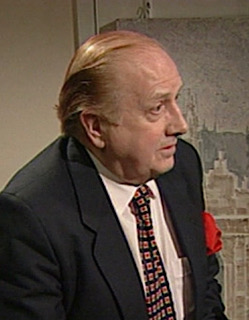
Sir James Alexander Kilfedder, Northern Irish unionist politician usually known as Sir Jim Kilfedder, is born on July 16, 1928, in KinloughCounty Leitrim, in what is then the Irish Free State. He is the last unionist to represent Belfast West in the House of Commons.

Kilfedder’s family later moves to Enniskillen in neighbouring County Fermanagh in Northern Ireland, where he is raised. He is educated at Portora Royal School in Enniskillen and at Trinity College, Dublin (TCD). During his time at TCD, he acts as Auditor of the College Historical Society (CHS), one of the oldest undergraduate debating societies in the world. He becomes a barrister, called to the Irish Bar at King’s Inns, Dublin, in 1952 and to the English Bar at Gray’s Inn in 1958. He practises law in London.

At the 1964 United Kingdom general election, Kilfedder is elected as an Ulster Unionist Party (UUP) Member of Parliament for Belfast West. During the campaign, there are riots in Divis Street when the Royal Ulster Constabulary(RUC) remove an Irish flag from the Sinn Féin offices of Billy McMillen. This follows a complaint by Kilfedder in the form of a telegram to the Minister of Home Affairs, Brian McConnell. It reads, “Remove tricolour in Divis Street which is aimed to provoke and insult loyalists of Belfast.” Kilfedder loses his seat at the 1966 United Kingdom general election to Gerry Fitt. He is elected again in the 1970 United Kingdom general election for North Down, and holds the seat until his death in 1995.

Kilfedder is elected for North Down in the 1973 Northern Ireland Assembly election, signing Brian Faulkner‘s pledge to support the White Paper which eventually establishes the Sunningdale Agreement, but becoming an anti-White Paper Unionist after the election. In 1975, he stands for the same constituency in the Northern Ireland Constitutional Convention election, polling over three quotas as a UUP member of the United Ulster Unionist Council (UUUC) although he refuses to sign the UUUC’s pledge of conduct.

Kilfedder leaves the UUP in 1977 in opposition to the party’s policies tending to integrationism, preferring to advocate the restoration of the Stormont administration. For a time he sits as an “Independent Ulster Unionist.” He contests the 1979 European Parliament election under that label, finishing fourth in the count for the three seats, having overtaken the UUP leader Harry West on transfers.

In 1980, Kilfedder forms the Ulster Popular Unionist Party (UPUP) and is re-elected under that label in all subsequent elections. He again tops the poll in the 1982 Northern Ireland Assembly election and is elected as Speaker of the Assembly, serving in the position until 1986. He generally takes the Conservative whip at Westminster. While Speaker, he is paid more than the Prime Minister.

On March 20, 1995, while traveling by train into London from Gatwick Airport, Kilfedder dies of a heart attack. This is the same day that the Belfast Telegraph carries a front-page story saying that an Ulster MP has been targeted as one of twenty MPs invited by the LGBT rights organisation OutRage! in a letter to come out. He dies unmarried and is survived by two sisters.

Kilfedder is described by Democratic Unionist Party MLA Peter Weir as “the best MP North Down ever had.”

The UPUP does not outlive Kilfedder, and the by-election for his Commons seat is won by Robert McCartney, standing for the UK Unionist Party (UKUP). McCartney had fought the seat in the 1987 United Kingdom general election as a “Real Unionist” with the backing of the Campaign for Equal Citizenship. At the 1987 election count, in his victory speech, Kilfedder “attacked his rival’s supporters as ‘a rag tag collection of people who shame the name of civil rights.’ He said they included communists, Protestant paramilitaries and Gay Rights supporters and he promised to expose more in future.” McCartney loses North Down in 2001 to Sylvia Hermon of the UUP.

Kilfedder’s personal and political papers (including constituency affairs) are held at the Public Record Office of Northern Ireland, reference D4127.

Kilfedder is buried in Roselawn Cemetery in East Belfast.


Leave a comment

Birth of Brian Faulkner, Sixth & Last Prime Minister of Northern Ireland

Arthur Brian Deane Faulkner, Baron Faulkner of Downpatrick, the sixth and last Prime Minister of Northern Ireland, is born on February 18, 1921, in Helen’s Bay, County Down.

Faulkner is the elder of two sons of James, owner of the Belfast Collar Company, and Nora Faulkner. His younger brother is Colonel Sir Dennis Faulkner. He is educated initially at Elm Park preparatory school, Killylea, County Armagh, but at 14, preferring to stay in Ireland, is sent to the Church of Ireland-affiliated St. Columba’s College at Whitechurch, County Dublin, although he is Presbyterian. His best friend at the school is Michael Yeats, son of W. B. Yeats. He enters Queen’s University Belfast in 1939 to study law, but, with the advent of World War II, he quits his studies to work full-time in the family shirt-making business. He is the only Prime Minister of Northern Ireland to have been educated in the Irish Free State and one of only two to have been educated in Ireland.

Faulkner becomes involved in unionist politics, the first of his family to do so, and is elected to the Parliament of Northern Ireland as the Ulster Unionist Party (UUP) Member of Parliament (MP) for the constituency of East Down in 1949. His vociferous traditional unionist approach to politics ensures him a prominent backbench position. He is, at the time, the youngest ever MP in the Northern Irish Parliament. He is also the first Chairman of the Ulster Young Unionist Council in 1949. In 1956 he is offered and accepts the job of Parliamentary Secretary to the Ministry of Finance, or Government Chief Whip.

In 1959, Faulkner becomes Minister of Home Affairs and his handling of security for most of the Irish Republican Army‘s border campaign of 1956–62 bolsters his reputation in the eyes of the right wing of Ulster unionism.

When Terence O’Neill becomes Prime Minister in 1963, he appoints Faulkner, his chief rival for the job, as Minister of Commerce. He resigns in 1969 over the technicalities of how and when to bring in the local government reforms which the British Labour government is pushing for. This is a factor in the resignation of O’Neill, who resigns as Prime Minister in the aftermath of his failure to achieve a good enough result in the 1969 Northern Ireland general election.

In the ensuing leadership contest, Faulkner loses out again when O’Neill gives his casting vote to his cousin, James Chichester-Clark. In 1970, he becomes the Father of the House. He comes back into government as Minister of Development under Chichester-Clark and in a sharp turn-around, begins the implementation of the political reforms that were the main cause of his resignation from O’Neill’s cabinet. Chichester-Clark himself resigns in 1971 as the political and security situation and the more intensive British interest proves difficult.

Faulkner is elected leader of the Ulster Unionist Party and Prime Minister. In his initial innovative approach to government, he gives a non-unionist, David Bleakley, a former Northern Ireland Labour Party (NILP) MP, a position in his cabinet as Minister for Community Relations. In June 1971, he proposes three new powerful committees at Stormont which would give the opposition salaried chairmanships of two of them.

However, this initiative (radical at the time) is overtaken by events. A shooting by soldiers of two nationalist youths in Derry causes the Social Democratic and Labour Party (SDLP), the main opposition, to boycott the Stormont parliament. The political climate deteriorates further when, in answer to a worsening security situation, Faulkner introduces internment on August 9, 1971. This is a disaster and causes the situation to worsen.

Despite this, Faulkner continues his radical approach to Northern Irish politics and, following Bleakley’s resignation in September 1971 over the internment issue, appointes Dr. G. B. Newe, a prominent lay Catholic, as Minister of State in the Cabinet Office. His administration staggers on through the rest of 1971, insisting that security is the paramount issue.

In January 1972, an incident occurs during a Northern Ireland Civil Rights Association march in Derry, during which paratroopers shoot and killed thirteen unarmed civilians. A fourteenth civilian dies later. What history has come to know as Bloody Sunday is, in essence, the end of Faulkner’s government. In March 1972, he refuses to maintain a government without security powers which the British government under Edward Heath decides to take back. The Stormont parliament is subsequently prorogued, initially for a period of one year, and following the appointment of a Secretary of State for Northern Ireland, William Whitelaw, direct rule is introduced.

In June 1973, elections are held to a new devolved parliament, the Northern Ireland Assembly. The elections split the UUP. Faulkner becomes chief executive in a power-sharing executive with the SDLP and the centre-ground Alliance Party, a political alliance cemented at the Sunningdale Conference that year. The power-sharing Executive lasts only six months and is brought down by a loyalist Ulster Workers’ Council strike in May 1974. In 1974, he loses the leadership of the UUP to anti-Sunningdale elements led by Harry West. He subsequently resigns from the Ulster Unionist Party and forms the Unionist Party of Northern Ireland (UPNI).

The UPNI fares badly in the Northern Ireland Constitutional Convention elections of 1975, winning only five out of the 78 seats contested. Faulkner wins the final seat. In 1976 he announces that he is quitting active politics. He is elevated to the House of Lords in the 1977 New Year Honours list, being created Baron Faulkner of Downpatrick on February 7, 1977.

Faulkner, a keen huntsman, dies on March 3, 1977, following a riding accident while hunting with the County Down Staghounds at the Ballyagherty/Station Road junction near Saintfield, County Down. He is riding at full gallop along a narrow country road when his horse slips, throwing him off and killing him instantly. He is laid to rest at Magherahamlet Presbyterian Church near Spa, County Down where he had been a regular member of the congregation. His twenty-four-day life peerage is thus the shortest-lived until the death of Lord Heywood of Whitehall in 2018 just nine days after ennoblement.


Leave a comment

Long Kesh Prison Hunger Strike Ends

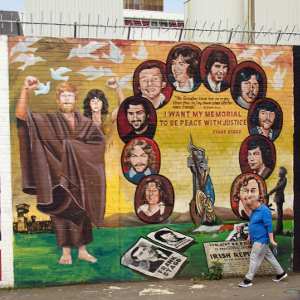
The Irish Republican Army (IRA) hunger strike is called off at Long Kesh prison – later known as HM Prison Maze – on October 3, 1981. While the IRA does not win immediate concessions, in some ways it is a Pyrrhic victory for Margaret Thatcher’s government. It galvanises support and membership for the IRA and generates huge sympathy for the strikers in the United States where fund-raising is a major priority. The death of the first hunger striker, Bobby Sands, creates a martyr and an iconic figure.

In January 1981, prison authorities begin to supply the prisoners with officially issued civilian clothing, whereas the prisoners demand the right to wear their own clothing. On February 4, the prisoners issue a statement saying that the British government has failed to resolve the crisis and declares their intention of a hunger strike. The hunger strike begins on March 1, when Bobby Sands, the IRA’s former officer commanding (OC) in the prison, refuses food. Unlike the first hunger strike the previous year, the prisoners join one at a time and at staggered intervals, which they believe would arouse maximum public support and exert maximum pressure on Prime Minister Margaret Thatcher.

The republican movement initially struggles to generate public support for the second hunger strike. The Sunday before Sands begins his strike, 3,500 people march through west Belfast. During the first hunger strike four months earlier, the marchers had numbered 10,000. Five days into the strike, Independent Republican MP for Fermanagh and South Tyrone Frank Maguire dies, resulting in a by-election. There is debate among nationalists and republicans regarding who should contest the election. After negotiations they agree not to split the nationalist vote by contesting the election and Sands stands as an Anti H-Block candidate against Ulster Unionist Party candidate Harry West. Following a high-profile campaign, the election takes place on April 9, and Sands is elected to the British House of Commons with 30,492 votes to West’s 29,046.

Sands’ election victory raises hopes that a settlement can be negotiated, but Thatcher stands firm in refusing to give concessions to the hunger strikers. The world’s media descends on Belfast, and several intermediaries visit Sands in an attempt to negotiate an end to the hunger strike, including Síle de Valera, granddaughter of Éamon de Valera, Pope John Paul II‘s personal envoy John Magee, and European Commission of Human Rights officials. With Sands close to death, the government’s position remains unchanged.

On 5 May, Sands dies in the prison hospital on the 66th day of his hunger strike, prompting rioting in nationalist areas of Northern Ireland. More than 100,000 people line the route of his funeral, which is conducted with full IRA military honours. Margaret Thatcher shows no sympathy for his death.

In the two weeks following Sands’ death, hunger strikers Francis Hughes, Raymond McCreesh and Patsy O’Hara die. Following the deaths of Joe McDonnell and Martin Hurson, the families of some of the hunger strikers attend a meeting on July 28 with Catholic priest Father Denis Faul. The families express concern at the lack of a settlement to the priest, and a decision is made to meet with Gerry Adams later that day. The following day Adams holds a meeting with six of the hunger strikers to outline a proposed settlement on offer from the British government should the strike be brought to an end. The six men reject the settlement, believing that accepting anything less than the “Five Demands” would be a betrayal of the sacrifice made by Bobby Sands and the other hunger strikers who had died.

The hunger strike begins to break on July 31, when the mother of Paddy Quinn insists on medical intervention to save his life. The following day Kevin Lynch dies, followed by Kieran Doherty on August 2, Thomas McElwee on August 8 and Michael Devine on August 20. On September 6, the family of Laurence McKeown becomes the fourth family to intervene and asks for medical treatment to save his life, and Cahal Daly issues a statement calling on republican prisoners to end the hunger strike.

The strike is called off at 3:15 PM on October 3, 1981. Three days later, James Prior, the new Secretary of State for Northern Ireland, announces partial concessions to the prisoners including the right to wear their own clothes at all times. The only one of the “Five Demands” still outstanding is the right not to do prison work. Following sabotage by the prisoners and the Maze Prison escape in 1983, the prison workshops are closed, effectively granting all of the “Five Demands” but without any formal recognition of political status from the government.

(Pictured: A Belfast mural of the Long Kesh hunger strikers)


Leave a comment

Northern Ireland Falls Under Direct Rule from Westminster

Northern Ireland is brought under direct rule from Westminster on May 29, 1974, following the collapse of Northern Ireland’s first power-sharing assembly the previous day.

The power-sharing assembly’s leader, Brian Faulkner, and fellow members resign on May 28. The collapse follows a seven-day general strike organised by militant unionists opposed to the Sunningdale Agreement. Over the week leading up to the collapse industrial production comes to a halt with power cuts of up to eighteen hours. Rubbish is not collected and there are reports that undertakers refuse to bury the dead.

In 1973, the British Government under Edward Heath held talks at Sunningdale in Berkshire with the government of the Irish Republic and three political parties – the Official Unionists led by Faulkner, the nationalist Social Democratic and Labour Party (SDLP), and the non-sectarian Alliance Party. They agree to set up a power-sharing executive for Northern Ireland and, eventually, a Council of Ireland involving the Republic with limited jurisdiction over issues of joint concern between north and south.

The declaration also recognises the wishes of unionists to remain within the United Kingdom and nationalists for a united Ireland. Both sides agreed the will of the majority should be respected. But hardline loyalists, led by Harry WestIan Paisley and William Craig, do not attend most of the talks at Sunningdale, and when the proposals are announced, they criticise them strongly.

The new executive formally comes into power on January 1, 1974, but soon runs into trouble. Anti-power sharing unionists do their best to disrupt proceedings and eighteen members including Paisley are forcibly removed by the police.

In February, a general election sees Labour returned to power in Westminster and eleven of the twelve seats in Northern Ireland won by unionists opposed to the deal under the umbrella of the United Ulster Unionist Council. Of those supporting the executive, only Gerry Fitt is elected as the UUUC wins more than 50% of the vote.

With the Sunningdale executive teetering on the edge, the coup de grâce is delivered by the loyalist Ulster Workers’ Council, which organises a seven-day strike after the assembly approves the agreement in the week prior to the collapse of the power-sharing assembly. Devolved government is not re-established in Northern Ireland until 1998.

(Pictured: Ulster Workers’ Council (UWC) strike outside the Northern Ireland Parliament Buildings, commonly known as Stormont)


Leave a comment

The Sunningdale Agreement

council-of-ireland

The Sunningdale Agreement, an attempt to establish a power-sharing Northern Ireland Executive and a cross-border Council of Ireland, is signed at Sunningdale Park in Sunningdale, Berkshire, England on December 9, 1973. Unionist opposition, violence, and a loyalist general strike causes the collapse of the Agreement in May 1974.

On March 20, 1973, the British government publishes a white paper which proposes a 78-member Northern Ireland Assembly, to be elected by proportional representation. The British government would retain control over law, order and finance, while a Council of Ireland composed of members of the executive of the Republic of Ireland, the Dáil Éireann, the Northern Ireland Executive and the Northern Ireland Assembly would act in a consultative role.

The Northern Ireland Assembly Bill resulting from the White paper becomes law on May 3, 1973, and elections for the new assembly are held on June 28. Republicans boycott the elections and the Irish Republican Army (IRA) continued its campaign of opposition throughout the outcome.

After the Assembly elections, negotiations between the pro-White Paper parties on the formation of a “power-sharing Executive” begin. The main concerns are internment, policing, and the question of a Council of Ireland. On November 21, an agreement is reached on a voluntary coalition of pro-agreement parties. This new power-sharing Executive take up office and have its very first meeting on January 1, 1974. The Ulster Unionist Party (UUP) is deeply divided – its Standing Committee votes to participate in the executive by a margin of only 132 to 105.

Provisions for a Council of Ireland exist in the Government of Ireland Act 1920, but these have never been enacted. Unionists resent the idea of any “interference” by the Republic of Ireland in their newly established region. In 1973, after agreement has been reached on the formation of an executive, agreement is sought to re-establish a Council of Ireland to stimulate co-operation with the Republic of Ireland. Talks are held between December 6-9 in the Berkshire town of Sunningdale between the British Prime Minister Edward Heath, the Irish Taoiseach Liam Cosgrave and the three pro-agreement parties. On December 9, a communiqué announcing the agreement is issued, which later becomes known as the “Sunningdale Agreement.”

On December 10, the day after the agreement is announced, loyalist paramilitaries form the Ulster Army Council, a coalition of loyalist paramilitary groups, including the Ulster Defence Association and the Ulster Volunteer Force, which oppose the agreement.

In January 1974, the Ulster Unionist Party narrowly votes against continued participation in the Assembly and Brian Faulkner resigns as leader. He is succeeded by the anti-Sunningdale Harry West. In March 1974, pro-agreement unionists withdraw their support for the agreement, calling for the Republic of Ireland to remove the Articles 2 and 3 of its constitution first. These Articles are not revised until the Good Friday Agreement of 1998.

Following the defeat of a motion condemning power-sharing in the Northern Ireland Assembly, the Ulster Workers’ Council, a loyalist organisation, calls a general strike for May 15. After two weeks of barricades, shortages, rioting, and intimidation, Faulkner resigns as chief executive and the Sunningdale Agreement collapses on May 28, 1974.

(Pictured: Unionist Party leader and designated leader of Ulster’s new executive, Brian Faulkner, sits with SDLP leader Gerry Fitt and John Hume, during talks at Sunningdale, Berkshire, to establish a Council of Ireland.)


Leave a comment

The 1981 Irish Hunger Strike Begins

hunger_strike_memorial

The 1981 hunger strike begins on March 1, 1981, when Bobby Sands, a former commanding officer of the Irish Republican Army (IRA) and prisoner at Long Kesh prison, refuses food. Other prisoners join the hunger strike one at a time at staggered intervals, which they believe will arouse maximum public support and exert maximum pressure on Prime Minister Margaret Thatcher.

The movement initially struggles to generate public support for the hunger strike. The Sunday before Sands begins his strike, only 3,500 people march through the streets of west Belfast as compared to 10,000 marchers during a previous hunger strike four months earlier.

Five days into the strike, however, Independent Republican Member of Parliament (MP) for Fermanagh and South Tyrone Frank Maguire dies, resulting in a by-election. There is debate among nationalists and republicans regarding who should contest the election, but they ultimately agreed not to split the nationalist vote by contesting the election and Sands stands as an Anti H-Block candidate against Ulster Unionist Party candidate Harry West. Following a high-profile campaign the election takes place on April 9, and Sands is elected to the British House of Commons with 30,492 votes to West’s 29,046.

Sands’ election victory raises hopes that a settlement can be negotiated, but Thatcher stands firm in refusing to give concessions to the hunger strikers. The world’s media descends on Belfast, and several intermediaries, including Síle de Valera, granddaughter of Éamon de Valera, Pope John Paul II‘s personal envoy John Magee, and European Commission of Human Rights officials, visit Sands in an attempt to negotiate an end to the hunger strike. With Sands close to death, the government’s position remains unchanged, and they do not force medical treatment upon him.

On May 5, Sands dies in the prison hospital on day 66 of his hunger strike, prompting rioting in nationalist areas of Northern Ireland. Over 100,000 people line the route of his funeral, which is conducted with full IRA military honours. Margaret Thatcher showed no sympathy for his death.

In the two weeks following Sands’ death, three more hunger strikers die – Francis Hughes on May 12, and Raymond McCreesh and Patsy O’Hara on May 21. The deaths result in further rioting in Northern Ireland, particularly Derry and Belfast. Following the May 21 deaths, Primate of All Ireland Tomás Ó Fiaich criticises the British government’s handling of the hunger strike. Despite this, Thatcher still refuses to negotiate a settlement.

On July 28, following the deaths of Joe McDonnell (July 8) and Martin Hurson (July 13), the families of some of the hunger strikers attend a meeting with Catholic priest Father Denis Faul. The families express concern at the lack of a settlement and a decision is made to meet with Gerry Adams later that day. At the meeting Father Faul puts pressure on Adams to find a way of ending the strike, and Adams agrees to ask the IRA leadership to order the men to end the hunger strike. The following day Adams holds a meeting with six of the hunger strikers to outline a proposed settlement on offer from the British government should the strike be brought to an end. The strikers reject the settlement, believing that accepting anything less than their original demands will be a betrayal of the sacrifice made by Bobby Sands and the other men who had died.

On July 31, the hunger strike begins to break when the mother of Paddy Quinn insists on medical intervention to save his life. The following day Kevin Lynch dies, followed by Kieran Doherty on August 2, Thomas McElwee on August 8, and Michael Devine on August 20. On September 6, the family of Laurence McKeown becomes the fourth family to intervene and asks for medical treatment to save his life, and Cahal Daly issues a statement calling on republican prisoners to end the hunger strike.

A week later James Prior replaces Humphrey Atkins as Secretary of State for Northern Ireland and meets with prisoners in an attempt to end the strike. Liam McCloskey ends his strike on September 26 after his family says they will ask for medical intervention if he becomes unconscious. It also becomes clear that the families of the remaining hunger strikers will also intervene to save their lives. The strike is called off at 3:15 PM on October 3. Three days later Secretary of State Prior announces partial concessions to the prisoners including the right to wear their own clothes at all times. The only one of their original five demands still outstanding is the right not to do prison work. Following sabotage by the prisoners and the Maze Prison escape in 1983, the prison workshops are closed, effectively granting all five of the demands but without any formal recognition of political status from the government.

Over the summer of 1981, ten hunger strikers die. Thirteen others begin refusing food but are taken off hunger strike, either due to medical reasons or after intervention by their families. Many of them still suffer from the effects of the strike, with problems including digestive, visual, physical and neurological disabilities.