seamus dubhghaill

Promoting Irish Culture and History from Little Rock, Arkansas, USA


Leave a comment

Death of Irish Writer Denis Johnston

Irish writer (William) Denis Johnston dies on August 8, 1984, at Ballybrack, County Dublin. He writes mostly plays, but also works of literary criticism, a book-length biographical essay of Jonathan Swift, a memoir and an eccentric work on cosmology and philosophy. He also works as a war correspondent and as both a radio and television producer for the BBC.

Johnston is born in Dublin on June 18, 1901, the only child of William John Johnston from Magherafelt, a barrister and later an Irish Supreme Court judge, and his wife Kathleen (née King), a teacher and singer from Belfast. They are Presbyterians and liberal home rulers. He sees the family home in Dublin occupied by rebels during the 1916 Easter Rising.

Johnston is educated at St. Andrew’s College, Dublin (1908–15, 1917–19), and Merchiston Castle School, Edinburgh (1915–16). In 1918, he attempts to join Sinn Féin, offering to supply the party with weapons taken from his Officers’ Training Corps. In 1922, while reading history and law at Christ’s College, Cambridge (1919–23) he tries to enlist in the civil war Free State army. He goes on to study at the Harvard Law School (1923–24) and enters King’s Inns in Dublin and the Inner Temple in London.

In London, developing his interest in the theatre, Johnston abandons plans for a legal and political career.

Johnston is a protégé of W. B. Yeats and George Bernard Shaw, and has a stormy friendship with Seán O’Casey. He is a pioneer of television and war reporting. He works as a lawyer in the 1920s and 1930s before joining the BBC as a writer and producer, first in radio and then in the fledgling television service. His broadcast dramatic work includes both original plays and adaptation of the work of many different writers.

Johnston’s first play, The Old Lady Says “No!”, helps establish the worldwide reputation of Dublin’s Gate Theatre. His second play, The Moon in the Yellow River, has been performed around the globe in numerous productions featuring such storied names as James Mason, Jack Hawkins, Claude Rains, Barry Fitzgerald, James Coco and Errol Flynn. Later plays deal with the life of Jonathan Swift, the 1916 Rebellion, the pursuit of justice, and the fear of death. He writes two opera libretti and a pageant.

“Passionate in his radical skepticism and loathing of what he saw as the pernicious influence of the Roman Catholic Church,” at the end of 1933, Johnston joins the trade unionist John Swift, the Dublin novelist Mary Manning, and fellow northerner, the libertarian socialist Jack White, in forming The Secular Society of Ireland. “Convinced that clerical domination in the community is harmful to advance,” the society seeks “to establish in this country complete freedom of thought, speech and publication, liberty for mind, in the widest toleration compatible with orderly progress and rational conduct.” Among other things it aims to terminate the clerically-dictated ban on divorce, the Censorship of Publications Act and the system of clerical management, and consequent sectarian teaching, in schools.

This is at a time of heightened clerical militancy and as soon the meeting place of the Society (from which it distributed the British journal The Freethinker) is exposed, it has to shift to private houses outside of Dublin. In 1936, Johnston and the other members disband the society and donate the proceeds to the government of the beleaguered Spanish Republic. He has become a recognised man of the left. In 1930 he joins the Irish Friends of Soviet Russia, and though never a party member, until as late as the 1950s he professes faith in a communist future.

During World War II he serves as a BBC war correspondent, reporting from El Alamein, through the Italian campaign, to Buchenwald and Adolf Hitler‘s Berghof. For this he is awarded an OBE, a mention in dispatches, and the Yugoslav Partisans Medal. He then becomes Director of Programmes for the television service.

Johnston later moves to the United States and teaches at Mount Holyoke College, Smith College and other universities. He keeps extensive diaries throughout his life, now deposited in the Library of Trinity College, Dublin, and these together with his many articles and essays give a distinctive picture of his times and the people he knew. Another archive of his work is held at the library of Ulster University at Coleraine. He receives honorary degrees from Ulster University and Mount Holyoke College and is a member of Aosdána.

Johnston and actress Shelah Richards are the parents of Jennifer Johnston, a respected novelist and playwright, and a son, Micheal. His second wife is the actress Betty Chancellor, with whom he has two sons, Jeremy and Rory.

Johnston dies on August 8, 1984, at Ballybrack, County Dublin, and is buried in St. Patrick’s Cathedral close. His epitaph is a quotation from The Old Lady Says “No!” – Emmet’s lines praising Dublin “the strumpet city.”

Johnston’s war memoir, Nine Rivers from Jordan, reaches The New York Times‘ Best Seller list and is cited in the World Book Encyclopedia‘s 1950s article on World War II under “Books to Read,” along with Winston Churchill, Dwight D. Eisenhower, et al. Joseph Ronsley cites an unnamed former CBS Vietnam War correspondent who called the book the “Bible,” carrying it with him constantly, “reading it over and over in the field during his tour of duty.” In a profile in The New Yorker in 1938, Clifford Odets is quoted as saying that the only playwrights he admires are John Howard Lawson, Sean O’Casey, and Denis Johnston.

The Denis Johnston Playwriting Prize is awarded annually by Smith College Department of Theatre for the best play, screenplay or musical written by an undergraduate at Smith College, Mount Holyoke College, Amherst College, Hampshire College and the University of Massachusetts Amherst. The prize is endowed by his former student at Smith, Carol Sobieski.

Leave a comment

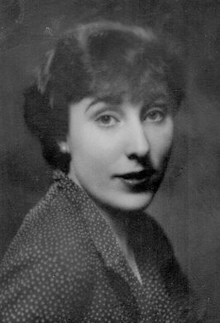
Birth of Mary Manning, Novelist, Playwright & Film Critic

Mary Manning Howe Adams, Irish novelist, playwright and film critic, is born in Dublin on June 30, 1905.

Raised in Dublin, Manning goes to school in Morehampton House and Alexandra College, Dublin. She gets her theatre training in Sara Allgood‘s teaching class in the Abbey Theatre.

Prior to her career as a writer and filmmaker, Manning works as a film critic throughout the 1920s and 30s. She works as a film critic for The Irish Statesman for a year during that time until it goes out of business. She is known to disapprove of Hollywood‘s “unimaginable stories and its stereotypical portrayal of Ireland and the Irish.” She also works as a writer for the Gate Theatre. She adapts the short story “Guests of the Nation” for a film directed by Denis Johnston. She also helps found the Dublin Film Society in 1930 and co-founds the Gate Theatre arts magazine Motley in 1932.

From 1914 to 1926, Ireland experiences a surge of new film styles being produced, consisting of historical melodramas and romantic comedies. Following this, 1930 to 1935 births a second wave of industry produced silent films that are intended to be less cliche compared to the first wave. The films produced under the second wave are much more experimental and deal less with the commercial appeals of the first wave. There’s minimal information on how Manning specifically contributed to the second wave, however, it is stated that she plays an important role producing five out of the six films to come out of that wave.

In 1935, Manning moves to Boston where she marries Harvard Law School professor Mark De Wolfe Howe. They have three daughters, Fanny, Susan and Helen. When her husband dies, she returns to Dublin in 1967 and lives in Monkstown, County Dublin, for another ten years. During this time she writes for various publications such as The Hibernia Magazine, The Irish Times and The Atlantic. She later returns to live in Cambridge, Massachusetts.

Manning is a founder of the Poets’ Theatre in Cambridge, Massachusetts, and works as drama director at Radcliffe College during World War II. She marries Faneuil Adams of Boston, Massachusetts, in 1980.

Manning dies at the age of 93 on June 27, 1999, at Mt. Auburn Hospital in Cambridge, Massachusetts.


Leave a comment

Mary Robinson Inaugurated 7th President of Ireland

Mary Robinson, Irish lawyer, independent politician, and diplomat born Mary Teresa Winifred Bourke, is inaugurated as the seventh President of Ireland on December 3, 1990, becoming the first woman to hold the office. She later serves as United Nations High Commissioner for Human Rights (UNHCHR) from September 1997 – September 2002.

Robinson is born on May 21, 1944, in Ballina, County Mayo. She is educated at Trinity College and the King’s Inns in Dublin and at Harvard Law School in the United States. She serves at Trinity College (University of Dublin) as Reid Professor of penal legislation, constitutional and criminal law, and the law of evidence (1969–1975) and lecturer in European Community law (1975–1990). In 1988 she and her husband establish the Irish Centre for European Law at Trinity College.

A distinguished constitutional lawyer and a renowned supporter of human rights, Robinson is elected to the Royal Irish Academy and is a member of the International Commission of Jurists in Geneva (1987–1990). She sits in Seanad Éireann, the upper house of the Oireachtas, for the University of Dublin constituency (1969–1989) and serves as whip for the Labour Party until resigning from the party over the Anglo-Irish Agreement of 1985, which she feels ignores unionist objections. She is also a member of the Dublin City Council (1979–1983) and runs unsuccessfully in 1977 and 1981 for Dublin parliamentary constituencies.

Nominated by the Labour Party and supported by the Green Party and the Workers’ Party, Robinson becomes Ireland’s first woman president in 1990 by mobilizing a liberal constituency and merging it with a more conservative constituency opposed to the Fianna Fáil party. As president, she adopts a much more prominent role than her predecessors and she does much to communicate a more modern image of Ireland. Strongly committed to human rights, she is the first head of state to visit Somalia after it suffers from civil war and famine in 1992 and the first to visit Rwanda after the genocide in that country in 1994.

Shortly before her term as president expires, Robinson accepts the post of United Nations High Commissioner for Human Rights (UNHCHR). As high commissioner, she changes the priorities of her office to emphasize the promotion of human rights at the national and regional levels. She was the first UNHCHR to visit China, and she also helps to improve the monitoring of human rights in Kosovo. In 2001 she serves as secretary-general of the World Conference against Racism held in Durban, South Africa. In 1998 she is elected chancellor of Trinity College, a post she holds until 2019.

After stepping down as UNHCHR, Robinson founds the nongovernmental organization Realizing Rights: The Ethical Globalization Initiative (2002–2010). Its central concerns include equitable international trade, access to health care, migration, women’s leadership and corporate responsibility. She is also a founding member of the Council of Women World Leaders, serves as honorary president of Oxfam International, a private organization that provides relief and development aid to impoverished or disaster-stricken communities worldwide, and is a member of the Club of Madrid, which promotes democracy. She also holds various posts at the United Nations, and in 2010, she establishes the Mary Robinson Foundation—Climate Justice, which operates until 2019.

Robinson is the recipient of numerous honours. In 2004 Amnesty International awards her its Ambassador of Conscience Award for her human rights work. In 2009 she receives the United States Presidential Medal of Freedom from President Barack Obama. Her memoir, Everybody Matters: My Life Giving Voice (cowritten with Tessa Robinson), is published in 2012.

(Pictured: Mary Robinson during her inauguration as president in 1990, photograph by Matt Kavanagh)


Leave a comment

Mary Robinson Elected Chancellor of the University of Dublin

File written by Adobe Photoshop? 4.0

United Nations High Commissioner for Human Rights, Mary Robinson, is elected Chancellor of the University of Dublin by the Trinity College Dublin senate on November 19, 1998. The University is the degree awarding body for Trinity College.

Robinson becomes the first woman in the university’s 406-year history to be elected to the position, making her the titular head of the University of Dublin of which Trinity College is the sole constituent, and represents it on ceremonial occasions. She is installed as Chancellor on December 17, 1998, replacing Dr. Francis Joseph Charles O’Reilly.

Born Mary Bourke in Ballina, County Mayo in 1944, the daughter of two physicians, she is educated at the University of Dublin (Trinity College), King’s Inns in Dublin and Harvard Law School to which she wins a fellowship in 1967. She graduates with a first class TCD law degree in 1967. She is Reid Professor of Constitutional and Criminal Law from 1969 to 1975, and lectures in European law from 1972 to 1990. She represents the university in Seanad Éireann from 1969 to 1989. She serves as the seventh (and first female) President of Ireland from 1990 to 1997.

The recipient of numerous honours and awards throughout the world including the Presidential Medal of Freedom from United States President Barack Obama, Robinson is a member of The Elders, former Chair of the Council of Women World Leaders and a member of the Club of Madrid. She is chair of the GAVI Alliance Board and President of the International Commission of Jurists.

She serves on several boards including the United Nations Global Compact, the Mo Ibrahim Foundation, is a member of the Royal Irish Academy and the American Philosophical Society and serves as President of the Mary Robinson Foundation – Climate Justice.


Leave a comment

William J. Brennan Appointed to U.S. Supreme Court

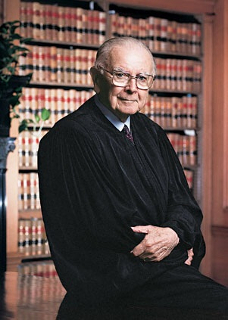
william-brennan

William Joseph Brennan, Jr., American judge, is named an Associate Justice of the Supreme Court of the United States through a recess appointment by President Dwight D. Eisenhower on October 15, 1956, shortly before the 1956 presidential election. He serves from 1956 until July 20, 1990. As the seventh longest-serving justice in Supreme Court history, he is known for being a leader of the Court’s liberal wing.

Brennan is born in Newark, New Jersey to Irish immigrants, originally from County Roscommon, on April 25, 1906. He attends public schools in Newark, graduating from Barringer High School in 1924. He then attends the Wharton School of the University of Pennsylvania, where he graduates cum laude with a degree in economics in 1928. He graduates from Harvard Law School near the top of his class in 1931 and is a member of the Harvard Legal Aid Bureau.

Brennan enters private practice in New Jersey and serves in the United States Army during World War II. He is appointed to the Supreme Court of New Jersey in 1951. After his appointment to the U.S. Supreme Court by Eisenhower in 1956, he wins Senate confirmation the following year.

On the Supreme Court, Brennan is known for his outspoken progressive views, including opposition to the death penalty and support for abortion rights. He authors several landmark case opinions, including Baker v. Carr, establishing the “one person, one vote” principle, and New York Times Co. v. Sullivan, which requires “actual malice” in libel suits brought by public officials. Due to his ability to shape a wide variety of opinions and “bargain” for votes in many cases, he is considered to be among the Court’s most influential members. Justice Antonin Scalia calls Brennan “probably the most influential Justice of the [20th] century.”

Brennan holds the post on the Court until his retirement on July 20, 1990, after suffering a stroke. He is succeeded by Justice David Souter. Brennan then teaches at Georgetown University Law Center until 1994. He dies in Arlington County, Virginia on July 24, 1997, and is buried in Arlington National Cemetery.

With 1,360 opinions, he is second only to William O. Douglas in number of opinions written while a Supreme Court justice. On November 30, 1993, President Bill Clinton presents Brennan with the Presidential Medal of Freedom.