seamus dubhghaill

Promoting Irish Culture and History from Little Rock, Arkansas, USA


Leave a comment

Death of Michele Esposito, Composer, Conductor & Pianist

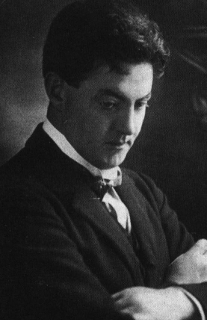
Michele Esposito, Italian composer, conductor and pianist who spends most of his professional life in Dublin, dies on November 19, 1929.

Esposito is born at Castellammare di Stabia, near Naples, Italy, on September 29, 1855. In 1865, he wins a scholarship to the Naples Conservatory as a piano pupil of Beniamino Cesi, himself a favourite pupil of Sigismond Thalberg, and studies composition there for eight years under Paolo Serrao, teacher of Francesco Cilea and others. He is a near-contemporary of Giuseppe Martucci, and a few years the senior of Alessandro Longo, both taught by these teachers. In 1878, he goes to Paris for several years where he establishes a growing reputation.

In 1879, Esposito marries Natalia Klebnikoff, the only daughter of Pierre Klebnikoff, professor of chemistry and physics at Saint Petersburg University. They have four children, including the noted scholar, Mario Esposito.

On December 24, 1881, Esposito is visited by an old friend, Caracciolo, who is principal professor of singing at the Royal Irish Academy of Music (RIAM) in Dublin. Upon his recommendation, Esposito is offered the position of chief pianoforte professor of piano at the RIAM at Easter 1882.

Esposito remains in Dublin for more than forty years, devoting himself to the encouragement of classical music in Dublin. He inaugurates the Royal Dublin Society (RDS) chamber music recitals, with great success, and gives piano recitals for the Society every year. He establishes the Dublin Orchestral Society in 1898 and is its conductor until its disbandment in 1914. He is also the conductor of the Sunday Orchestral Concerts until they are discontinued in 1914. He conducts concerts of the London Symphony Orchestra at Woodbrook in 1913 and 1914, and also performs his piano concerto with them under the baton of Hamilton Harty. Together with Sir Stanley Cochrane, he founds the music publishing company C. E. Edition.

Esposito receives awards from the Feis Ceoil for his cantata Deirdre, his Irish Symphony and his String Quartet in D major. His Cello Sonata wins a prize from the London Incorporated Society of Musicians in 1899. His Violin Sonata in E minor gains a prize offered by La Société Nouvelle, Paris, in 1907, and his String Quartet in C minor wins another offered by the Accademia Filarmonica di Bologna.

In 1923, King Victor Emmanuel III awards Esposito the Order of the Crown of Italy, with the title “Commendatore,” to mark his contribution to Irish music.

Esposito retires in 1928 and returns to Italy after failing to revive the Dublin Orchestral Society the previous year. He dies on November 19, 1929, in Florence. He is buried at the Cimitero di Trespiano where his gravestone is inscribed with three bars of music by “H. H.” Of his four children, Vera Esposito is involved in Irish theatre, and Mario Esposito becomes a scholar of Latin learning in medieval Ireland.

Leave a comment

Birth of Herbert Hughes, Composer, Music Critic, Collector & Arranger

Herbert Hughes, Irish composer, music critic and a collector and arranger of Irish folksongs, is born in Belfast on May 16, 1882. He was the father of Spike Hughes.

Hughes is raised in Belfast but completes his formal music education at the Royal College of Music, London, where he studies with Charles Villiers Stanford and Charles Wood, graduating in 1901. Subsequently, he works as a music critic, notably for The Daily Telegraph from 1911 to 1932.

Described as having an “ardent and self-confident manner,” Hughes is first heard of in an Irish musical capacity (beyond being honorary organist at St. Peter’s Church on Antrim Road at the age of fourteen) collecting traditional airs and transcribing folksongs in North Donegal in August 1903 with his brother Fred, Francis Joseph Bigger, and John Patrick Campbell. Dedicated to seeking out and recording such ancient melodies as are yet to be found in the more remote glens and valleys of Ulster, he produces Songs of Uladh (1904) with Joseph Campbell, illustrated by his brother John and paid for by Bigger. Throughout his career, he collects and arranges hundreds of traditional melodies and publishes many of them in his own unique arrangements. Three of his best-known works are the celebrated songs, My Lagan Love, She Moved Through the Fair, and Down by the Salley Gardens, which are published as part of his four collections of Irish Country Songs, his key achievement. These are written in collaborations with the poets Joseph Campbell and Padraic Colum, and W. B. Yeats himself. A dispute with Hamilton Harty over copyright on My Lagan Love is pursued on Bigger’s advice, but fails.

Hughes has a unique approach to arranging Irish traditional music. He calls upon the influence of the French impressionist Claude Debussy in his approach to harmony: “Musical art is gradually releasing itself from the tyranny of the tempered scale. […] and if we examine the work of the modern French school, notably that of M. Claude Debussy, it will be seen that the tendency is to break the bonds of this old slave-driver and return to the freedom of primitive scales.” He regards arrangements as an independent art form on an equal level with original composition: “[…] under his [i.e. the arranger’s] hands it is definitively transmuted into an art-song, an art-song of its own generation.” His folksong arrangements have been sung all across the English-speaking world. John McCormack and Kathleen Ferrier are the first to record them on gramophone records.

An admirer of James Joyce‘s poetry, Hughes in 1933 edits The Joyce-Book, a volume of settings of Joyce’s poetry, with 13 pieces by 13 composers including, besides Hughes himself, Arnold Bax, Arthur Bliss, Herbert Howells, John Ireland, and non-British composers such as George Antheil, Edgardo Carducci-Agustini, and Albert Roussel. The large-format, blue-cloth covered volume has since become a collector’s item.

Hughes also composes a limited amount of original chamber music (a violin sonata is mentioned in a letter to Hughes from Bernard van Dieren dated April 4, 1932), and some scores for the stage (like And So to Bed by James Bernard Fagan) and film. Hughes and John Robert Monsell also create songs for a musical version of Richard Brinsley Sheridan‘s The Rivals called Rivals!, which is staged at the Kingsway Theatre in London in October 1935 by Vladimir Rosing and runs for 86 performances.

Married to Lillian Florence (known as Meena) Meacham and Suzanne McKernan, Hughes has three children: Patrick, known professionally as Spike Hughes, Angela and Helena. He dies in Brighton, England, at the relatively early age of fifty-four on May 1, 1937.


Leave a comment

Birth of Composer Sir Herbert Hamilton Harty

herbert-hamilton-harty

Sir Herbert Hamilton Harty, composer, conductor, pianist and organist, is born on December 4, 1879, in Hillsborough, County Down.

Harty’s father teaches him the viola, the piano and counterpoint, and, at the age of twelve, he follows his father’s profession and is appointed organist of Magheracoll Church, County Antrim.

Harty takes further posts in his teenage years as a church organist in Belfast and Bray. While in the latter, he comes under the influence of Michele Esposito, professor of piano at the Royal Irish Academy of Music, who encourages him to pursue a career as a piano accompanist. As Bray is only twelve miles from Dublin, Harty is able go into the city to hear an orchestra for the first time in his life.

After his early career as a church organist in his native Ireland, Harty moves to London at about age 20, soon becoming a well-known piano accompanist. The Musical Times calls him “the prince of accompanists.” As a composer he writes throughout his career, many of his works being well received, though few are regularly performed in the 21st century.

In his career as a conductor, which begins in 1904, Harty is particularly noted as an interpreter of the music of Hector Berlioz. From 1920 to 1933 he is the chief conductor of The Hallé symphony orchestra in Manchester, which he returns to the high standards and critical acclaim that it had enjoyed under its founder, Charles Hallé. His last permanent post is with the London Symphony Orchestra, but it lasts only two years, from 1932 to 1934, as Harty does not prove to be a box-office draw. According to a historian of the orchestra, Richard Morrison, Harty is “brutally and hurtfully” dropped in 1934.

During his conducting career, Harty makes some recordings with his orchestras. Shortly after his dismissal by the London Symphony Orchestra, Harty begins to suffer the symptoms of a brain tumor. After surgery which includes the removal of his right eye, he resumes his career until 1940, but the tumour returns to cause his death at the age of 61 in Hove on February 19, 1941. He is cremated, and his ashes are interred in the grounds of Hillsborough parish church, near the front door. There is a separate memorial in the church.