seamus dubhghaill

Promoting Irish Culture and History from Little Rock, Arkansas, USA


Leave a comment

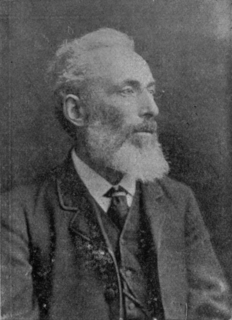
Birth of John Martin, Irish Nationalist Activist

John Martin, Irish nationalist activist, is born on September 8, 1812, into a landed Presbyterian family, the son of Samuel and Jane (née Harshaw) Martin, in Newry, County Down, in what is now Northern Ireland. He shifts from early militant support for Young Ireland and the Repeal Association, to non-violent alternatives such as support for tenant farmers’ rights and eventually as the first Home Rule MP, for Meath (1871–75).

Martin first meets John Mitchel while attending Dr. Henderson’s private school in Newry. He receives an Arts degree at Trinity College Dublin in 1832 and proceeds to study medicine but has to abandon this in 1835 when his uncle dies, and he has to return to manage the family landholding.

In 1847 Martin is moved by the Great Famine to join Mitchel in the Repeal Association but subsequently leaves it with Mitchel. He contributes to Mitchel’s journal, United Irishman, and then following Mitchel’s arrest on May 27, 1848, he continues with his own anti-British journal, The Irish Felon, and establishes “The Felon Club.” This leads to a warrant for his arrest, and he turns himself in on July 8, 1848. He is sentenced on August 18, 1848, to ten years transportation to Van Diemen’s Land.

Martin arrives on the Elphinstone with Kevin Izod O’Doherty in Hobart, Tasmania, in November 1849. He accepts a “ticket of leave” which allows him to live in relative freedom at Bothwell, provided he promises not to escape.

While in Tasmania, Martin continues to meet in secret with his fellow exiles Kevin Izod O’Doherty, Thomas Francis Meagher, William Smith O’Brien, and John Mitchel. He and Mitchel live together before the arrival of Mitchel’s wife, Jenny. He chooses not to join Mitchel when Mitchel revokes his ticket of leave and escapes. Instead, he remains in Tasmania until he is granted a “conditional pardon” in 1854. This allows him to leave for Paris, and he returns to Ireland on being granted a full pardon in 1856.

On return to Ireland Martin becomes a national organiser for the Tenant Right League. He begins to write for The Nation in 1860. He forms the National League with others in January 1864 – it is mainly an educational organisation but Fenians disrupt its meetings. He remains in contact with Mitchel in Paris through 1866. He opposes the Fenians’ support of armed violence, yet, together with Alexander Martin Sullivan in December 1867, he heads the symbolic funeral march honouring the Manchester Martyrs as it follows the MacManus route to Glasnevin Cemetery, Dublin. He is briefly arrested for these activities, but the charges are dropped.

Martin is in the United States in December 1869 when he is nominated by Isaac Butt and his nationalists as the Irish nationalist Home Rule candidate to oppose Reginald Greville-Nugent, who is supported by the Catholic clergy, in the Longford by-election. Greville-Nugent initially wins the vote, but the result is nullified by Judge Fitzgerald on the grounds that voters had been illegally influenced in the non-secret voting process. In the May 1870 re-run, Butt’s second candidate, Edward Robert King-Harman, like Martin a Protestant landlord, is also defeated, but this time legally.

Contradictions and factionalism are symptomatic of the struggle for influence and leadership at the time between the waning Church of Ireland and the rising Irish Catholic Church. Hence a secular Protestant land-owning, non-violent elite reformist nationalist who desires Home Rule like Martin, can find himself both sympathetic to and at odds with a militant organisation like the Fenians with their Jacobin– and American-influenced ideas of revolutionary republicanism and different social roots. Until Charles Stewart Parnell, the Isaac Butt-originated Home Rule forces could not obtain the support of the Catholic Church under the anti-Fenian Cardinal Paul Cullen or manage to achieve more than short-term tactical alliances with Fenians, leading to a split and uncoordinated opposition to British rule. Protestants such as Martin and John Mitchel, with their early political roots in Young Ireland, are, whatever their political ideals, not part of the majority Catholic mainstream, which consists largely of tenants rather than landlords.

In the January 1871 by-election, Martin is elected by a margin of 2–1 to the seat of Meath in the British parliament as the first Home Rule MP, representing first Isaac Butt’s Home Government Association and from November 1873 the Home Rule League. This is unusual for a Protestant in a Catholic constituency, and is a measure of the popular esteem Martin is held in. He retains his seat in the 1874 United Kingdom general election as one of 60 Home Rule members. He is commonly known as “Honest John Martin.” In parliament he speaks strongly for Home Rule for Ireland and opposes Coercion Bills.

Martin dies in Newry, County Down, on March 29, 1875, homeless and in relative poverty, having forgiven tenant fees during preceding years of inflation and low farm prices. His parliamentary seat of County Meath is taken up by Charles Stewart Parnell.

Martin marries Henrietta Mitchel, the youngest sister of John Mitchel, on November 25, 1868, after twenty years of courtship. She shares her husband’s politics, and after his death campaigns for home rule believing this to be a continuation of the Young Ireland mandate. After the split in the party, she sides with Charles Stewart Parnell. She dies at her home in Dublin on July 11, 1913, and is buried in Newry.
Leave a comment

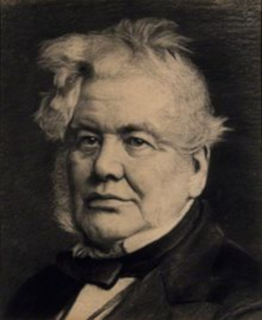
Birth of Alfred John Webb, Politician & Member of Parliament

Alfred John Webb, Irish Quaker from a family of activist printers, is born in Dublin on June 10, 1834. He becomes an Irish Parliamentary Party (IPP) politician and Member of Parliament (MP), as well as a participant in nationalist movements around the world. He supports Isaac Butt‘s Home Government Association and the United Irish League. At Madras in 1894, he becomes the third non-Indian (after George Yule and William Wedderburn) to preside over the Indian National Congress.

Webb is the first child and only son of the three children of Richard Davis Webb (1805-1872) and Hannah Waring Webb (1810-1862). The family runs a printing shop in Dublin and belongs to a Quaker group that supports reforms such as suffrage, the abolition of slavery and anti-imperialism. The family press prints booklets for many of these causes and, in turn, their regular customers grow to include other similar organisations, including the Irish Protestant Home Rule Association and the Ladies’ Land League, an organisation founded by Fanny and Anna Parnell in 1880 that advocates on behalf of poor tenant farmers.

Webb is interested in literature and history and begins to write A Compendium of Irish Biography. In 1865, he begins to take a more active interest in Irish politics. He is inspired by the Fenians, although he believes in non-violence and the Fenians of that time believe that Ireland can only gain independence through an armed revolution. He is first elected to the House of Commons of the United Kingdom on February 24, 1890, when he wins a by-election for the West Waterford constituency. He is again returned for West Waterford in the 1892 United Kingdom general election, this time as an anti-Parnellite MP. In December 1883, he resigns from the position of Land League treasurer, complaining of Parnell’s “autocratic management of funds.”

Webb’s family takes an interest in the welfare of British colonies and are outspoken opponents of the opium traffic into China. He is a close friend of Dadabhai Naoroji, a key member of the Indian National Congress, who is also a friend of other Irish nationalists including Michael Davitt and Frank Hugh O’Donnell. Naoroji is elected, as a member of the Liberal Party, in 1892, the year of the Liberal landslide to the Finsbury Central Westminster seat. While O’Donnell attempts to involve Naoroji in Irish politics, Webb is invited by Naoroji to preside over the Indian National Congress in 1894.

Webb is a supporter of Anti-Caste, Britain’s first anti-racism journal which fellow Quaker activist Catherine Impey founds in 1888. He is able to rally subscribers and activists for the journal around the world. For example, although he is not a regular subscriber, he and Dadabhai Naoroji co-sign a letter with others to request support for a new association, The Society for the Furtherance of Human Brotherhood.

Webb dies on July 30, 1908, and is laid to rest in the Quaker Friends Burial Ground in Temple Hill, Blackrock, Dublin.


Leave a comment

Birth of Isaac Butt, Barrister & Politician

File source: http://commons.wikimedia.org/wiki/File:Portrait_of_Isaac_Butt.jpg

Isaac Butt, barrister and politician, is born in Glenfin, County Donegal on September 6, 1813. If not the originator of the term Home Rule, he is the first to make it an effective political slogan. He is the founder (1870) and first chief of the Home Government Association and president (1873–77) of the Home Rule League of Great Britain, but he is superseded in 1878 as head of the Home Rule movement by the younger and more forceful Charles Stewart Parnell.

Butt is the son of a Church of Ireland rector and is descended from the O’Donnells of Tyrconnell, through the Ramsays. He receives his secondary school education at The Royal School in Raphoe, County Donegal, and at Midleton College in County Cork, before going to Trinity College Dublin at the age of fifteen, where he is elected a Scholar. While there he co-founds the Dublin University Magazine and edits it for four years. For much of his life he is a member of the Irish Conservative Party. He becomes Whately Chair of Political Economy at Trinity in 1836 and holds that position until 1841.

Butt is called to the Irish bar in 1838 and the English bar in 1859. Intermittently from 1852 he represents, successively, one English and two Irish constituencies in the House of Commons. In 1848 he undertakes the defense of the Young Ireland leaders, who are charged with high treason for their abortive insurrection that year. From 1865 to 1869 he is the principal defense counsel for the imprisoned leaders of the Fenians (Irish Republican, or Revolutionary, Brotherhood).

Despite his legal work for the Fenians, Butt, who is basically a conservative, fears the consequences of a successful Fenian revolt. Disillusioned, however, by the British government’s failure to relieve the Irish Great Famine of the late 1840s, he becomes convinced that a native parliament is required for Irish land reform and other needs. In May 1870 he calls for an Irish Parliament subordinate to the imperial Parliament at Westminster, and later that year he forms the Home Government Association. From 1871 he quickens the Irish nationalist agitation in the House of Commons but gradually loses his leadership, partly because he disapproves of Parnell’s tactics of obstructing routine parliamentary business.

Butt amasses debts and pursues romances. It is said that at meetings he is occasionally heckled by women with whom he had fathered children. He is also involved in a financial scandal when it is revealed that he had taken money from several Indian princes to represent their interests in parliament.

Isaac Butt dies on May 5, 1879, in Clonskeagh in Dublin. His remains are brought by train to Stranorlar, County Donegal, where he is buried in a corner of the Church of Ireland cemetery beneath a tree by which he used to sit and dream as a boy. His grave has been restored and the memorial now includes a wreath.

Despite his chaotic lifestyle and political limitations, Butt is capable of inspiring deep personal loyalty. Some of his friends, such as John Butler Yeats and the future Catholic Bishop of Limerick, Edward Thomas O’Dwyer, retain a lasting hostility towards Parnell for his role in Butt’s downfall.

In May 2010 the Church of Ireland parishes of Stranorlar, Meenglass and Kilteevogue instigate an annual memorial Service and Lecture in Butt’s honour, inviting members of the professions of law, politics and journalism to reflect aspects of his life. Speakers have included Dr. Joe Mulholland, Senator David Norris, Dr. Chris McGimpsey and Prof. Brian Walker.

(Pictured: Isaac Butt, portrait by John Butler Yeats)