seamus dubhghaill

Promoting Irish Culture and History from Little Rock, Arkansas, USA


Leave a comment

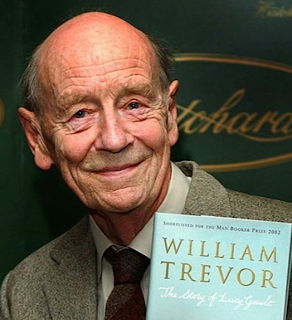
Death of William Trevor, Writer & Playwright

William Trevor Cox KBE, Irish novelist, playwright, and short story writer, dies in Crediton, Devon, England, on November 20, 2016. One of the elder statesmen of the Irish literary world, he is widely regarded as one of the greatest contemporary writers of short stories in the English language. He wins the Whitbread Prize three times and is nominated five times for the Booker Prize, the last for his novel Love and Summer (2009), which is also shortlisted for the International Dublin Literary Award in 2011. His name is also mentioned in relation to the Nobel Prize in Literature.

Trevor wins the 2008 International Nonino Prize in Italy. In 2014, he is bestowed with the title of Saoi within Aosdána. He resides in England from 1954 until his death in 2016, at the age of 88.

Trevor is born as William Trevor Cox on May 24, 1928, in Mitchelstown, County Cork, to a middle classAnglo-Irish Protestant (Church of Ireland) family. He moves several times to other provincial locations, including SkibbereenTipperaryYoughal and Enniscorthy, as a result of his father’s work as a bank official.

Trevor is educated at a succession of schools including St Columba’s College, Dublin (where he is taught by Oisín Kelly) and at Trinity College Dublin (TCD), from which he receives a degree in history. He works as a sculptor under the name Trevor Cox following his graduation from TCD, supplementing his income by teaching

Trevor marries Jane Ryan in 1952 and emigrates to England, working as a teacher, a sculptor and then as a copywriter for an advertising agency. During this time he and his wife have their first son. In 1952, he becomes an art teacher at Bilton Grange, a prep school near Rugby. He is commissioned to carve reliefs for several churches, including All Saints’ ChurchBraunstonNorthamptonshire. In 1956, he moves to Somerset to work as a sculptor and carries out commissions for churches. He stops wood carving in 1960. 

Trevor’s first novel, A Standard of Behaviour, is published in 1958 by Hutchinson & Co. of London, but receives little critical success. He later disowns this work, and, according to his obituary in The Irish Times, “refused to have it republished.” It is, in fact, republished in 1982 and in 1989.

In 1964, at the age of 36, Trevor is awarded the Hawthornden Prize for The Old Boys. This success encourages him to become a full-time writer.

In 1971, he and his family move from London to Devon in South West England, first to Dunkeswell, then in 1980 to Shobrooke, where he lives until his death. Despite having spent most of his life in England, he considers himself to be “Irish in every vein”.

Trevor dies peacefully in his sleep, at the age of 88, at Crediton, Devon, England, on November 20, 2016.

Leave a comment

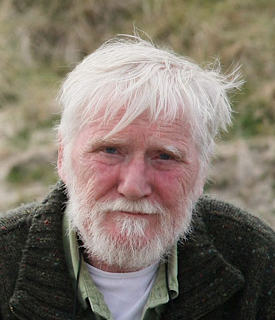
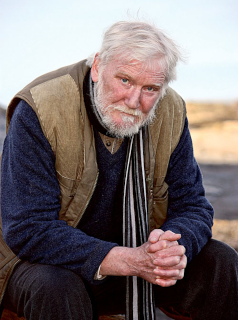
Death of Dermot Healy, Novelist, Playwright, Poet & Short Story Writer

Dermot Healy, Irish novelistplaywrightpoet and short story writer, dies at his home in Ballyconnell, Sligo, County Sligo, on June 29, 2014. A member of Aosdána, he is also part of its governing body, the Toscaireacht. He is described variously as a “master,” a “Celtic Hemingway” and as “Ireland’s finest living novelist.”

Healy is born in FinneaCounty Westmeath, on November 9, 1947, the son of a Guard. As a child the family moves to Cavan, County Cavan, where he attends the local secondary school. In his late teens he moves to London and works in a succession of jobs, including barman, security man and as a labourer. He later returns to Ireland, settling in Ballyconnell, County Sligo, a small settlement on the Atlantic coast.

Often overlooked due to his relatively low public profile, Healy’s work is admired by his Irish literary predecessors, peers and successors alike, many of whom idolise him. Among the writers to have spoken highly of him are Seamus HeaneyEugene McCabeRoddy DoylePatrick McCabe and Anne Enright.

Healy’s work is influenced by an eclectic range of writers from around the world, including Anna AkhmatovaJohn ArdenIsaac BabelMatsuo BashōSamuel BeckettJorge Luis BorgesAngela CarterJ. M. CoetzeeEmily DickinsonMaria EdgeworthT. S. EliotHermann HesseNâzım HikmetAidan HigginsMiroslav HolubEugène IonescoFranz KafkaMary LavinFederico García LorcaGuy de MaupassantEdgar Allan PoeSylvia PlathEzra PoundWilliam Shakespeare and Robert Louis Stevenson. Healy writes in a shed and is fascinated by etymology. However, on being a writer, he is quoted as saying, “I know writing is what I do but I still don’t see myself as one.”

Healy is longlisted for the Booker Prize with his novel A Goats Song. He wins the Hennessy Literary Award (1974 and 1976), the Tom-Gallon Trust Award (1983), and the Encore Award (1995). In 2011, he is shortlisted for the Poetry Now Award for his 2010 poetry collection, A Fool’s ErrandLong Time, No See is nominated for the International Dublin Literary Award, the world’s most valuable literary award for a single work in the English language, by libraries in Russia and Norway.

Healy dies at his home in Ballyconnell on June 29, 2014, while awaiting an ambulance after suddenly being taken ill. He is laid to rest at Carrigans Cemetery following funeral mass by Fr. Michael Donnelly at St. Patrick’s Church in Maugherow, County Sligo.


Leave a comment

Birth of Irish Novelist Cecelia Ahern

Cecelia Ahern, Irish novelist known for her works like PS, I Love You (2004), Where Rainbows End (2004) and If You Could See Me Now (2005), is born in Dublin on September 30, 1981. She is now published in nearly fifty countries and has sold over 25 million copies of her novels worldwide. Two of her books have been adapted as major motion pictures. The short story collection Roar (2018) has been adapted as a series for Apple TV+.

Ahern and her books have won numerous awards, including the Irish Book Award for Popular Fiction for The Year I Met You (2014). She publishes several novels and contributes a number of short stories to various anthologies.

Ahern is the daughter of Bertie Ahern, former Taoiseach of Ireland, and Miriam Ahern. Her older sister, Georgina Ahern, is married to Nicky Byrne of Irish pop group Westlife. In 2000, she is part of the Irish pop group Shimma, who finishes third in the Irish national final for the Eurovision Song Contest.

Before starting her writing and producing career, Ahern obtains a degree in journalism and media communications from Griffith College Dublin, but withdraws from a master’s degree course to pursue her writing career.

In 2002, when Ahern is twenty-one, she writes her first novel, PS, I Love You. Published in 2004, it is the number 1 bestseller in Ireland (for 19 weeks), the United Kingdom, United States, Germany and the Netherlands. It is sold in over forty countries. The book is adapted as a motion picture directed by Richard LaGravenese and starring Hilary Swank and Gerard Butler. It is released in the United States on December 21, 2007.

Ahern’s second book, Where Rainbows End (known as Love, Rosie in the United States), also reaches number 1 in Ireland and the United Kingdom and wins the German Corine Literature Prize in 2005. It is adapted as a motion picture titled Love, Rosie which is released in 2014, directed by Christian Ditter and starring Lily Collins and Sam Claflin.

Ahern has contributed to charity books with the royalties from short stories such as Irish Girls are Back in Town and Ladies’ Night.

Ahern is the co-creator and producer of the ABC comedy Samantha Who? starring Christina Applegate, Jean Smart, Jennifer Esposito, Barry Watson, Kevin Dunn, Melissa McCarthy and Tim Russ.

Ahern’s book The Gift is published just before Christmas 2008 in the United Kingdom. Her following book, The Book of Tomorrow, is published on October 1, 2009. In 2016, she releases Flawed, her first book for young adults, and Lyrebird.

Ahern is nominated for Best Newcomer 2004/5 at the British Book Awards for her debut novel PS, I Love You. She wins the 2005 Irish Post Award for Literature and a 2005 Corine Literature Prize for her second book Where Rainbows End, which is voted for by German readers. In 2006, she is long listed for the International IMPAC Dublin Literary Award for PS, I Love You. Cosmopolitan US honours her with a Fun Fearless Fiction Award 2007 for If You Could See Me Now. Irish Tatler awards her Writer of the Year at the Woman of the Year awards in 2009. Her fifth novel, Thanks for the Memories, is nominated for Most Popular Book in the British Book Awards 2008. She is voted Author of Year in the UK Glamour Awards in 2008.

Ahern marries David Keoghan in 2010. They have three children, two daughters and a son. As of 2015, they reside in Malahide in County Dublin. She had COVID-19 in early 2022, describing it as “kind of mild. I was lucky.”


Leave a comment

Birth of Dermot Healy, Novelist, Playwright, Poet & Short Story Writer

Dermot Healy, Irish novelist, playwright, poet and short story writer, is born in Finnea, County Westmeath, on November 9, 1947. A member of Aosdána, he is also part of its governing body, the Toscaireacht. He is described variously as a “master,” a “Celtic Hemingway” and as “Ireland’s finest living novelist.”

Healy is the son of a Guard. As a child the family moves to Cavan, where he attends the local secondary school. In his late teens he moves to London and works in a succession of jobs, including barman, security man and as a labourer. He later returns to Ireland, settling in Ballyconnell, County Sligo, a small settlement on the Atlantic coast.

Often overlooked due to his relatively low public profile, Healy’s work is admired by his Irish literary predecessors, peers and successors alike, many of whom idolise him. Among the writers to have spoken highly of him are Seamus Heaney, Eugene McCabe, Roddy Doyle, Patrick McCabe and Anne Enright.

Healy’s work is influenced by an eclectic range of writers from around the world, including Anna Akhmatova, John Arden, Isaac Babel, Matsuo Bashō, Samuel Beckett, Jorge Luis Borges, Angela Carter, J. M. Coetzee, Emily Dickinson, Maria Edgeworth, T. S. Eliot, Hermann Hesse, Nâzım Hikmet, Aidan Higgins, Miroslav Holub, Eugène Ionesco, Franz Kafka, Mary Lavin, Federico García Lorca, Guy de Maupassant, Edgar Allan Poe, Sylvia Plath, Ezra Pound, William Shakespeare and Robert Louis Stevenson. Healy writes in a shed and is fascinated by etymology. However, on being a writer, he is quoted as saying, “I know writing is what I do but I still don’t see myself as one.”

Healy is longlisted for the Booker Prize with his novel A Goats Song. He wins the Hennessy Literary Award (1974 and 1976), the Tom-Gallon Trust Award (1983), and the Encore Award (1995). In 2011, he is shortlisted for the Poetry Now Award for his 2010 poetry collection, A Fool’s Errand. Long Time, No See is nominated for the International Dublin Literary Award, the world’s most valuable literary award for a single work in the English language, by libraries in Russia and Norway.

Healy dies at his home in Ballyconnell on June 29, 2014, while awaiting an ambulance after suddenly being taken ill. He is laid to rest at Carrigans Cemetery following funeral mass by Fr. Michael Donnelly at St. Patrick’s Church in Maugherow.


Leave a comment

Birth of William Trevor, Novelist, Playwright & Short Story Writer

William Trevor KBE, Irish novelist, playwright and short story writer, is born William Trevor Cox in Mitchelstown, County Cork, on May 24, 1928. One of the elder statesmen of the Irish literary world, he is widely regarded as one of the greatest contemporary writers of short stories in the English language.

Trevor is born to a middle-class, Anglo-Irish Protestant family. They move several times to other provincial towns, including Skibbereen, Tipperary, Youghal and Enniscorthy, as a result of his father’s work as a bank official. He is educated at St. Columba’s College, Dublin, and at Trinity College, Dublin, from which he receives a degree in history. He works as a sculptor under the name Trevor Cox after his graduation from Trinity College, supplementing his income by teaching. He marries Jane Ryan in 1952 and emigrates to Great Britain two years later, working as a copywriter for an advertising agency. It is during this time that he and his wife have their first son.

Trevor’s first novel, A Standard of Behaviour, is published in 1958 by Hutchinson of London, but has little critical success. He later disowns this work and, according to his obituary in The Irish Times, “refused to have it republished.” It was, in fact, republished in 1982 and in 1989.

In 1964, at the age of 36, Trevor wins the Hawthornden Prize for Literature for The Old Boys. The win encourages him to become a full-time writer. He and his family then move to Devon in South West England, where he resides until his death. In 2002, he makes honorary KBE for services to literature. Despite having spent most of his life in England, he considers himself to be “Irish in every vein.”

Trevor writes several collections of short stories that are well received. His short stories often follow a Chekhovian pattern. The characters in his work are typically marginalised members of society. The works of James Joyce influence his short-story writing, and “the odour of ashpits and old weeds and offal” can be detected in his work, but the overall impression is not of gloominess since, particularly in his early work, his wry humour offers the reader a tragicomic version of the world. He adapts much of his work for stage, television and radio. In 1990, Fools of Fortune is made into a film directed by Pat O’Connor, along with a 1999 film adaptation of Felicia’s Journey, which is directed by Atom Egoyan.

Trevor’s stories are set in both England and Ireland. They range from black comedies to tales based on Irish history and politics. His early books are peopled by eccentrics who speak in a pedantically formal manner and engage in hilariously comic activities that are recounted by a detached narrative voice. Instead of one central figure, the novels feature several protagonists of equal importance, drawn together by an institutional setting, which acts as a convergence point for their individual stories. The later novels are thematically and technically more complex. The operation of grace in the world is explored, and several narrative voices are used to view the same events from different angles.

Trevor wins the Whitbread Prize three times and is nominated five times for the Booker Prize, the last for his novel Love and Summer (2009), which is also shortlisted for the International Dublin Literary Award in 2011. His name is also mentioned in relation to the Nobel Prize in Literature. In 2014, he is bestowed Saoi by the Aosdána.

William Trevor dies peacefully in his sleep at the age of 88 on November 20, 2016, in Somerset, England.