seamus dubhghaill

Promoting Irish Culture and History from Little Rock, Arkansas, USA


Leave a comment

Death of Writer Robert Tressell

robert-tressell

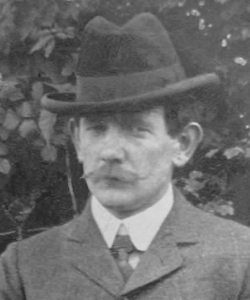
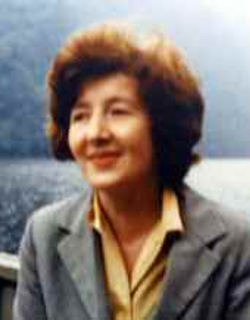
Robert Noonan, Irish writer born Robert Croker and best known by the pen name Robert Tressell, dies in Liverpool, England on February 3, 1911. He is best known for his novel The Ragged-Trousered Philanthropists.

Noonan is born in Dublin on April 18, 1870, the illegitimate son of Samuel Croker, a senior member of the Royal Irish Constabulary. He is baptised and raised a Roman Catholic by his mother Mary Noonan. His father, who is not Catholic, has his own family, but attempts to provide for Robert until his death in 1875.

By 1875 Noonan is living in London. When he is sixteen, he shows signs of a radical political consciousness. He leaves his family declaring he “would not live on the family income derived largely from absentee landlordism.” It is around this time he changes his surname to his mother’s maiden name.

In 1890, Noonan is a sign writer living in Queen’s Road, Everton, Liverpool. On June 10, 1890, he appears at Liverpool County Intermediate Sessions court at Sessions House, Islington, Liverpool on charges of housebreaking and larceny. He is found guilty and given a six-month prison sentence.

By 1891, Noonan has moved to Cape Town, South Africa, where he is a painter and decorator. He marries in 1891, but the marriage is an unhappy one, with his wife having numerous affairs after the birth of their daughter, Kathleen. They divorce in 1895, and Noonan acquires all the property, including their house in an affluent suburb of Cape Town.

Noonan and his daughter move to Johannesburg, where he secures a well-paying job with a construction company. It is here that he learns the ways of the industry he would later write about in his novel, although Noonan’s actual circumstances vary greatly from the proletarian characters of the book. After becoming Secretary of the Transvaal Federated Building Trades Council, he is able to send his daughter to an exclusive convent school and also to employ a black manservant called Sixpence.

In 1897, Noonan leads a successful protest against the employment of black skilled labour. During 1898, he becomes a member of the Transvaal Executive Committee of the Centennial of 1798 Association, which commemorates the revolutionary nationalist Society of United Irishmen. As a 1798 Association member, he helps form the Irish Brigades, an anti-British force that fights alongside the Boers in the Second Boer War. At this point, accounts of his life differ. Some assert he takes up arms and is interned by the British until the end of the war, when he returns to Britain. Others say he leaves South Africa just before hostilities began in October 1899.

In any event, around the turn of the century, Noonan ends up in Hastings, Sussex. Here, he finds work as a sign writer, but at much lower wages and in far poorer conditions than he had experienced in South Africa. He has to take part-time jobs in addition to his full-time position.

Influenced by the Marxist-influenced ideas of designer and socialist William Morris, he joins the Social Democratic Federation in 1906. The next year, after a dispute with his employer, he loses his job. Despite the demand for his skills, his health begins to deteriorate, and he eventually develops tuberculosis. Unemployed and unable to remain politically active, he starts writing, something he hopes will earn enough money to keep him from the workhouse.

He writes under the pen name Robert Tressell as he fears the socialist views expressed in the book will have him blacklisted. He completes The Ragged Trousered Philanthropists in 1910, but the 1,600-page hand-written manuscript is rejected by three publishing houses. The rejections severely depress him, and his daughter has to save the manuscript from being burned.

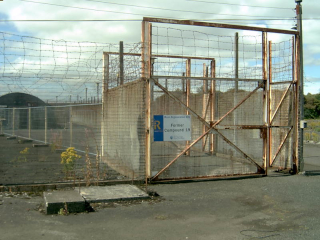
Unhappy with his life in Britain, Noonan decides that he and Kathleen should emigrate to Canada. However, he only reaches Liverpool when he is admitted to the Royal Liverpool Infirmary, where he dies of pulmonary tuberculosis on February 3, 1911, at the age of 40. He is buried in a pauper’s grave at Liverpool Parochial Cemetery, later known as Walton Park Cemetery. The location of the grave is not rediscovered until 1970. Twelve other people are buried in the same plot. The plot is now marked although the land is no longer used as a cemetery and is now used by Rice Lane City Farm.

Kathleen mentions her father’s novel to a friend, writer Jessie Pope, who recommends it to her publisher. In April 1914, the publisher purchases the rights to the book for £25, and it appears in Britain, Canada and the United States later that year, in the Soviet Union in 1920, and in Germany in 1925. The version as originally published is heavily abridged by Pope, with much of the socialist ideology removed.

The original manuscript is subsequently located by F. C. Ball and, after he raises funds to acquire and reassemble the original version, an unabridged edition is published in 1955.

Leave a comment

The Sunningdale Agreement

council-of-ireland

The Sunningdale Agreement, an attempt to establish a power-sharing Northern Ireland Executive and a cross-border Council of Ireland, is signed at Sunningdale Park in Sunningdale, Berkshire, England on December 9, 1973. Unionist opposition, violence, and a loyalist general strike causes the collapse of the Agreement in May 1974.

On March 20, 1973, the British government publishes a white paper which proposes a 78-member Northern Ireland Assembly, to be elected by proportional representation. The British government would retain control over law, order and finance, while a Council of Ireland composed of members of the executive of the Republic of Ireland, the Dáil Éireann, the Northern Ireland Executive and the Northern Ireland Assembly would act in a consultative role.

The Northern Ireland Assembly Bill resulting from the White paper becomes law on May 3, 1973, and elections for the new assembly are held on June 28. Republicans boycott the elections and the Irish Republican Army (IRA) continued its campaign of opposition throughout the outcome.

After the Assembly elections, negotiations between the pro-White Paper parties on the formation of a “power-sharing Executive” begin. The main concerns are internment, policing, and the question of a Council of Ireland. On November 21, an agreement is reached on a voluntary coalition of pro-agreement parties. This new power-sharing Executive take up office and have its very first meeting on January 1, 1974. The Ulster Unionist Party (UUP) is deeply divided – its Standing Committee votes to participate in the executive by a margin of only 132 to 105.

Provisions for a Council of Ireland exist in the Government of Ireland Act 1920, but these have never been enacted. Unionists resent the idea of any “interference” by the Republic of Ireland in their newly established region. In 1973, after agreement has been reached on the formation of an executive, agreement is sought to re-establish a Council of Ireland to stimulate co-operation with the Republic of Ireland. Talks are held between December 6-9 in the Berkshire town of Sunningdale between the British Prime Minister Edward Heath, the Irish Taoiseach Liam Cosgrave and the three pro-agreement parties. On December 9, a communiqué announcing the agreement is issued, which later becomes known as the “Sunningdale Agreement.”

On December 10, the day after the agreement is announced, loyalist paramilitaries form the Ulster Army Council, a coalition of loyalist paramilitary groups, including the Ulster Defence Association and the Ulster Volunteer Force, which oppose the agreement.

In January 1974, the Ulster Unionist Party narrowly votes against continued participation in the Assembly and Brian Faulkner resigns as leader. He is succeeded by the anti-Sunningdale Harry West. In March 1974, pro-agreement unionists withdraw their support for the agreement, calling for the Republic of Ireland to remove the Articles 2 and 3 of its constitution first. These Articles are not revised until the Good Friday Agreement of 1998.

Following the defeat of a motion condemning power-sharing in the Northern Ireland Assembly, the Ulster Workers’ Council, a loyalist organisation, calls a general strike for May 15. After two weeks of barricades, shortages, rioting, and intimidation, Faulkner resigns as chief executive and the Sunningdale Agreement collapses on May 28, 1974.

(Pictured: Unionist Party leader and designated leader of Ulster’s new executive, Brian Faulkner, sits with SDLP leader Gerry Fitt and John Hume, during talks at Sunningdale, Berkshire, to establish a Council of Ireland.)


Leave a comment

Sinn Féin Splits in 1970

sinn-fein

On January 11, 1970, at Sinn Féin‘s Ard Fheis at the Intercontinental Hotel in Ballsbridge, Dublin, the proposal to end abstentionism and take seats, if elected, in the Dáil, the Northern Ireland Parliament, and the Parliament of the United Kingdom is put before the members. A similar motion had been adopted at an Irish Republican Army (IRA) convention the previous month, leading to the formation of a Provisional Army Council by Seán Mac Stíofáin and other members opposed to the leadership.

There are allegations of malpractice and that some supporters cast votes to which they are not entitled. In addition, the leadership has also refused voting rights to a number of Sinn Féin cumainn (branches) known to be in opposition, particularly in the north and in County Kerry. The motion is debated all of the second day, and when it was put to a vote at 5:30 PM the result is 153:104 in favour of the motion, failing to achieve the necessary two-thirds majority.

The Executive attempts to circumvent this by introducing a motion in support of the IRA Army Council, led by Tomás Mac Giolla, which only requires a simple majority. In protest of the motion, Ruairí Ó Brádaigh and his minority group walks out of the meeting. These members reconvene at a hall in 44 Parnell Square, which they had already booked in anticipation of the move by the leadership. They appoint a Caretaker Executive, and pledged allegiance to the Provisional Army Council.

irish-republican-army

The Caretaker Executive declares itself in opposition to the ending of abstentionism, the drift towards Marxism, the failure of the leadership to defend the nationalist people of Belfast during the 1969 Northern Ireland riots, and the expulsion of traditional republicans by the leadership during the 1960s. At the October 1970 Ard Fheis, it is announced that an IRA convention has been held and has regularised its structure, bringing the “provisional” period to an end.

At the end of 1970 the terms “Official IRA” and “Regular IRA” are introduced by the press to differentiate the two factions. During 1971, the rival factions play out their conflict in the press with the Officials referring to their rivals as the Provisional Alliance, while the Provisionals refer to the Officials (IRA and Sinn Féin) as the National Liberation Front (NLF).

The Falls Road Curfew, coupled with internment in August 1971, and Bloody Sunday in Derry in January 1972, boosts the Provisionals in Belfast. These events produce an influx into the Provisionals on the military side, making them the dominant force and finally eclipsing the Officials everywhere. Despite becoming the dominant group and the dropping of the word “provisional” at the convention of the IRA Army Council in September 1970, they are still known to the mild irritation of senior members as Provisionals, Provos, or Provies.