seamus dubhghaill

Promoting Irish Culture and History from Little Rock, Arkansas, USA


Leave a comment

Birth of John Bowman, Broadcaster & Presenter

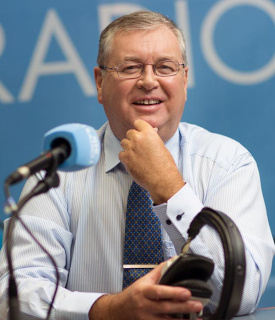
John Bowman, Irish historian and a long-standing broadcaster and presenter of current affairs and political programmes with Raidió Teilifís Éireann (RTÉ), is born in Dublin on July 28, 1942. He chairs the audience-participation political programme Questions and Answers on RTÉ One for 21 years.

Bowman is brought up in Ballsbridge in south Dublin. His father works for Great Southern Railways (later CIÉ) and his mother is a nurse, originally from County Monaghan. He is educated at Belvedere College and Trinity College Dublin where he receives a bachelor’s degree in history and political science in 1970 and a PhD in political science in 1980. He joins Radio Éireann in 1962, later becoming the presenter and commentator on numerous current affairs programmes, as well as an analyst of political developments and interviewer of politicians on radio and later on television. In the 1980s, he presents the current affairs programme Today Tonight, the precursor to Prime Time.

Bowman wins Jacob’s Awards in 2013 and 2016 for his radio broadcasting, the former for his presentation of the current affairs programme, Day by Day. In April 2008, he comments on RTÉ television coverage of the state funeral of Patrick Hillery, a former President of Ireland.

Bowman chairs the audience-participation political programme Questions and Answers on RTÉ One television for 21 years, the final edition airing on June 29, 2009. He is the presenter of Bowman: Sunday: 8.30 (previously Bowman Saturday) on radio, a weekly compilation of material from broadcasting archives at home and abroad.

In May 2011, Bowman fronts RTÉ television coverage of Queen Elizabeth II’s visit to the Republic of Ireland.

Bowman writes a history of RTÉ Television called Window and Mirror. RTÉ Television: 1961-2011. It is launched by Taoiseach Enda Kenny at the National Museum of Ireland in Dublin on November 23, 2011.

In January 2019, Bowman is awarded the Freedom of the City of Cork.

Bowman serves a two-year term as president of The Irish Association for Cultural, Economic and Social Relations from 1991 and of Comhar, an environmental pressure group, from 1999 until 2004.

Bowman is married to psychiatrist Eimer Philbin Bowman and they have have four children: Jonathan, Emma, Abie and Daniel. His eldest son, Jonathan Philbin Bowman, a journalist, television and radio presenter, dies in an accident in March 2000. His daughter, Emma Philbin Bowman, works in Dublin as a psychotherapist. His middle son, Abie Philbin Bowman, is a columnist for The Dubliner magazine and a stand-up comedian, while in 2005 his youngest son, Daniel, initiates Be Not Afraid, a charity wristband campaign which raises over €80,000 in aid of Turning the Tide of Suicide and the Irish Red Cross and later sets up a youth marketing firm, Spark.

Leave a comment

Death of Irish Actor Ray McAnally

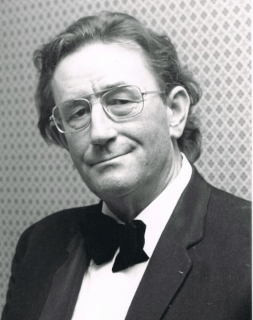
Ray McAnally, Irish actor and winner of four BAFTA awards in the late 1980s, dies in County Wicklow on June 15, 1989.

McAnally is born on March 30, 1926, in Buncrana, a seaside town located on the Inishowen peninsula of County Donegal. The son of a bank manager, he is educated at Saint Eunan’s College in Letterkenny where he writes, produces and stages a musical called “Madame Screwball” at the age of sixteen. He enters St. Patrick’s College, Maynooth at the age of 18 but leaves after a short time having decided that the priesthood is not his vocation. He joins the Abbey Theatre in 1947 where he meets and marries actress Ronnie Masterson.

The couple later forms Old Quay Productions and present an assortment of classic plays in the 1960s and 1970s. McAnally makes his theatre debut in 1962 with A Nice Bunch of Cheap Flowers and gives a well-received performance as George in Who’s Afraid of Virginia Woolf?, opposite Constance Cummings, at the Piccadilly Theatre.

On television he is a familiar face, often in glossy thriller series like television series The Avengers, Man in a Suitcase, and Strange Report. In 1968 he takes the title role in Spindoe, a series charting the return to power of an English gangster, Alec Spindoe, after a five-year prison term. This is a spin-off from another series, The Fellows (1967) in which McAnally had appeared in several episodes as the Spindoe character. He could render English accents very convincingly.

McAnally regularly acts in the Abbey Theatre and at Irish festivals, but in the last decade of life he achieves award-winning notice on TV and films. His impressive performance as Cardinal Altamirano in the film The Mission (1986) earns him Evening Standard and BAFTA awards. He earns a second BAFTA award for his role in the BBC’s A Perfect Spy (1987). In 1988 he wins the BAFTA for Best Actor for his performance in A Very British Coup, a role that also brings him a Jacob’s Award. In the last year of his life, he portrays the father of Christy Brown, played by Daniel Day-Lewis, in the Academy Award-winning film, My Left Foot (1989).

McAnally dies suddenly of a heart attack on June 15, 1989, at the age of 63, at his home in County Wicklow which he shares with Irish actress Britta Smith. He remains married to actress Ronnie Masterson until his death, although they reside in different homes. He receives a posthumous BAFTA award for Best Supporting Actor for his last film, My Left Foot, in 1990.

At the time of his death, McAnally is due to play “Bull McCabe” in Jim Sheridan‘s film The Field. The part eventually goes to Richard Harris who receives an Academy Award nomination for his performance. McAnally had also been cast in the lead role of First and Last, a drama about a man who walked from Land’s End to John o’ Groats. Filming is almost a third of the way done when he dies, but the whole play has to be re-filmed, with Joss Ackland taking the role instead.


Leave a comment

Birth of Irish Sports Broadcaster Jimmy Magee

Jimmy Magee, Irish sports broadcaster known as The Memory Man, is born on January 31, 1935, in New York City. He spends over half a century in sports broadcasting, and presents radio and television coverage of the Olympic Games since 1968 and the FIFA World Cup since 1966. By the time of his retirement he is the longest-serving sports commentator in the English-speaking world.

Magee is born to Patrick (Paddy) Magee and his wife Rose (née Mackin). The family returns to Ireland shortly after his birth. He and his three siblings are subsequently raised in Cooley, County Louth. As a child he is influenced by the sports commentary of the legendary Gaelic games broadcaster Michael O’Hehir. He recalls commentating as a seven-year-old for his next-door neighbour on a variety of imaginary games that the young Magee is also playing in. He also speaks of making up his own radio commentary in a field at a young age.

After being educated locally, Magee secures a full-time clerical post with Dundalk, Newry and Greenore Railway. While still working at the Railway he begins his broadcasting career. He starts out as a reporter for the Radio Éireann programme Junior Sports Magazine. Other contributors on the programme are Jim Tunney and Peter Byrne, former football correspondent with The Irish Times. On leaving his Railway job, he presents a number of sponsored radio programmes before concentrating on sport. He is a producer, presenter and script writer for Radio Éireann’s sponsored programmes in the 1950s and 1960s.

Magee and his wife Marie are married on October 11, 1955, and have five children: Paul, a soccer player with Shamrock Rovers F.C. (winning the League of Ireland Cup in 1977), who died of motor neuron disease, in May 2008, Linda (b. 1959), June (b. 1961), Patricia (b. 1962), and Mark (b. 1970).

Magee joins Raidió Teilifís Éireann in 1956. In 1966 he covers his first World Cup for RTÉ Radio. He does likewise for the 1970 FIFA World Cup before transferring to television for the 1974 FIFA World Cup finals. In all he provides commentary at eleven World Cups – his latest commentary coming at the 2010 FIFA World Cup in South Africa.

Magee’s column or quiz appears in every single publication of the Sunday World since the first edition in 1973.

Magee is also a staple of RTÉ’s coverage of the Olympic Games. Beginning at the 1968 Summer Olympics in Mexico City, he attends the eleven subsequent Olympic games as a commentator with RTÉ. In 2012, he commentates on the boxing for RTÉ at the 2012 Summer Olympics in London, including Katie Taylor‘s gold medal-winning fight. At the 2016 Summer Olympics, he provides commentary on the football.

From 1987 to 1998 Magee hosts Know Your Sport, a sports-themed quiz show, along with George Hamilton. His broadcasting career also sees him provide commentary for over 200 international football games, 30 European Cup finals, multiple Tour de France cycle races, World Athletic Championships and boxing. He also narrates numerous videos on sport in general such as The Purple and Gold, Meath Return to Glory, etc.

A freelancer, Magee works for Channel 4 in 1994 and signs for UTV in 1995 on a three-year contract where a lifetime ambition of commentating on All-Ireland Finals is achieved. He commentates on three finals in both hurling and football.

Magee launches his memoir, Memory Man, in 2012. Some of his one-liners in commentaries have become famous or infamous, what are affectionately known in the broadcasting industry as Colemanballs after the famed commentating clangers of BBC broadcaster David Coleman.

In the emotionally trying year of 1989, Magee’s mother and wife die within months of each other, Marie dying at the young age of 54.

Magee dies on September 20, 2017, after a short illness. Many tributes are made to him including Taoiseach Leo Varadkar who says, “His commentaries were legendary and based on a breadth of sporting knowledge that was peerless.” RTÉ Head of Sport Ryle Nugent says, “It’s hard to put it into words, the man meant an inordinate amount to so many people, I think he was the soundtrack to many generations.”

In 1972 Magee wins a Jacob’s Award for his radio sports commentaries. In 1989, he is the subject of a special tribute show on The Late Late Show. At the 2012 Summer Olympics in London, the International Olympic Committee presents him with a replica of its torch.


Leave a comment

Death of A. J. Potter, Irish Composer & Teacher

Archibald James (Archie) Potter, Irish composer and teacher who writes hundreds of works including operas, a mass, and four ballets, as well as orchestral and chamber music, dies suddenly in Greystones, County Wicklow, on July 5, 1980.

Potter is born in Belfast on September 22, 1918, to a Presbyterian family who, oddly, lives on the Falls Road, a republican (Catholic) stronghold. His father is a church organist and piano tuner who has been blind since childhood. His mother is, in Potter’s own words, “a raging alcoholic.” He escapes a rather grim childhood when he goes to live with an aunt in Kent, England.

Possessed of a good voice and natural musical ability, Potter is accepted as a treble by the world-famous choir of All Saints, Margaret Street. In 1933, after four years as a chorister, he is sent to Clifton College, Bristol. From there he goes to the Royal College of Music on a scholarship and studies composition under Vaughan Williams. While at the Royal College he wins the Cobbett prize for chamber music.

World War II interrupts Potter’s music education, and he leaves college to serve with the London Irish Rifles in Europe and the Far East. After the war he settles in Dublin, where he continues his studies at Trinity College, Dublin, gaining a Doctorate in Music in 1953.

Potter had already started composing chamber and vocal music before the war. Now, established in Dublin, he chooses the orchestra as his principal means of expression. His early pieces, such as Rhapsody under a High Sky and Overture to a Kitchen Comedy, show that he has absorbed Vaughan Williams’ pastoral style and his love of folk music. In 1952, both pieces are awarded Radio Éireann‘s “Carolan Prize” for orchestral composition by the adjudicator Arnold Bax. A year later Potter repeats this success when his Concerto da Chiesa, a concerto for piano and orchestra, also wins the Carolan Prize.

In 1955 Potter is appointed Professor of Composition at the Royal Irish Academy of Music, where he becomes an effective administrator and inspiring teacher.

In the 1960s, Potter turns to ballet, writing four orchestral scores for the Cork Ballet company. The first of these, Careless Love, becomes the composer’s own favourite of all his compositions. Several years later, following a successful battle with alcoholism, he writes what some regard as his magnum opus, Sinfonia “de Profundis” (1969). The première is given at the Gaiety Theatre, Dublin on March 23, 1969, in a performance by the RTÉ Symphony Orchestra under the baton of Albert Rosen. The Irish Times refers to the concert as a “major national event.” In December 1969, he receives a Jacob’s Award for the composition.

Potter’s last substantial work, an opera entitled The Wedding, receives its first public performance in Dublin in 1981, almost a year after his death.

Potter dies suddenly at his home in Greystones, County Wicklow on July 5, 1980, at the age of 61. He is buried in the nearby Redford cemetery.


Leave a comment

Birth of RTÉ Broadcaster Joe Duffy

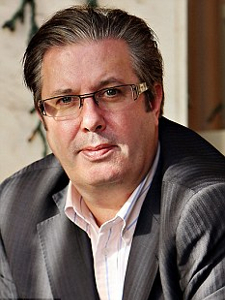
Joseph Duffy, Irish broadcaster employed by Raidió Teilifís Éireann (RTÉ), is born in Mountjoy Square, Dublin, on January 27, 1956. One of RTÉ’s highest-earning stars, he is the current presenter of Liveline, an interview and phone-in chat show broadcast on RTÉ Radio 1.

Duffy is brought up in Ballyfermot, one of five siblings. His father is Jimmy and his mother Mabel. His father, who has problems with alcohol, dies aged 58 in 1984. His 25-year-old brother Aidan is killed in a road accident on the Maynooth Road in 1991, with Duffy first learning of the “horrific accident” on the news on RTÉ Radio. His brother Brendan is described by him as “crippled, ruined and wrecked by a savage addiction” to sniffing glue which he develops as a teenager.

Duffy attends De La Salle Boys’ primary school, St. Lorcan’s B.N.S and St. John’s De La Salle College. He enrolls at Trinity College, Dublin (TCD) in 1977 to study Social Work and is elected President of Trinity College Students’ Union in 1979, becoming President of the Union of Students in Ireland (USI) four years later.

Duffy considers resigning from RTÉ in 2007 after the broadcaster forces him to give Minister for Justice Michael McDowell a platform on Liveline to make a “party political broadcast.” He considers it “direct party-political interference” in Liveline. However, he goes ahead with the broadcast and does not resign or make any protest on air.

In October 2008, Duffy is proactive as a supporter of Irish pensioners who march on Leinster House to protest at the proposed means testing of their medical cards in the Government Budget. However, earlier that month, he is reportedly censored by the government when he attempts to continually discuss the effects of the global financial crisis in Ireland. This follows on from the outrage caused when he is held responsible by Minister for Finance Brian Lenihan Jnr for inciting widespread public fear that Irish citizens are on the verge of losing their savings. Several callers freely speak of their lack of confidence in the banking system, of how they have withdrawn their money from banks, some of which are identified, and are either carrying it around on their person, or considering keeping it “under the mattress,” or burying it in their garden. Lenihan personally calls Cathal Goan, the Director-General of RTÉ, to express his outrage at the sudden increase in potentially disastrous speculation following the show.

The extent of the Finance Minister’s concern first publicly emerges the following morning when he is interviewed by RTÉ’s economics editor George Lee. In that interview, Lenihan insists that deposits are not in any danger and says that people should not be going to banks to shift their deposit accounts “on the basis of unfounded allegations made on radio programmes.”

Rival broadcaster TV3 accuses Raidió Teilifís Éireann (RTÉ) and Duffy of waging a “dirty tricks” war against them after a late-night game show run by TV3 is berated by callers to Liveline and saying several times on air that he has been unable to get a representative from the station to reply to callers’ concerns. TV3 says a lengthy statement is sent to the Liveline office almost two hours before the September 2009 show goes on air but is ignored, despite the fact that it clarifies some of the issues. The Play TV service is discontinued by TV3 in March 2010 after 29 complaints to the Broadcasting Authority of Ireland (BAI), though TV3 says it is because of a decline in viewership.

Duffy is famous for taking up the causes of the disadvantaged on Liveline, and examples of this include Berry Fleming who lost her job in 2010, and Aubrey McCarthy, who is trying desperately to get his removal business off the ground in 2012/2013.

Duffy is frequently lampooned at length on the satirical TV programme The Savage Eye. It portrays him as a fetish garment clad sado-masochist who derives perverse pleasure by urging his call-in radio listeners in a strong working-class Dublin accent, to express excesses of degradation and misery as he “empathizes” verbally and plays with his nipple clamps. He has since questioned viewership figures for The Savage Eye on his daily radio show and has questioned whether it is “blasphemous” on his Sunday afternoon religious affairs TV show Spirit Level.

Duffy is married and is the father of triplets. He currently resides on Dublin’s Northside. His autobiography, Just Joe, is launched by Gay Byrne in Harry’s Bar in October 2011. In 2014, he makes a cameo in Mrs. Brown’s Boys D’Movie as himself. The film is negatively received but is a moderate box office success.

In 1992, Duffy wins a Jacob’s Award for his reports on RTÉ Radio 1’s The Gay Byrne Show. He is named 11th most influential person of 2009 by Village.


2 Comments

Death of Cyril Cusack, Irish Film & Television Actor

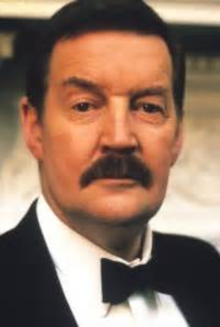
Cyril James Cusack, Irish actor who appears in numerous films and television productions in a career lasting more than 70 years, dies in Chiswick, London, England on October 7, 1993. In 2020, he is listed at number 14 on The Irish Times‘s list of Ireland’s greatest film actors.

Cusack is born in Durban, Natal, South Africa, on November 26, 1910. His mother, Alice Violet (née Cole), is an English Cockney actress and chorus girl, and his father, James Walter Cusack, is an Irish mounted policeman in the Colony of Natal, South Africa. His parents separate when he is young and his mother takes him to England, and then to Ireland. His mother and her partner, Brefni O’Rorke, join the O’Brien and Ireland Players.

Cusack makes his first stage performance at the age of seven. He is educated at Newbridge College in Newbridge, County Kildare, then reads law at University College Dublin. He leaves without a degree and joins the Abbey Theatre in 1932. Between then and 1945, he performs in over 60 productions, particularly excelling in the plays of Seán O’Casey. He also performs Irish playwright Teresa Deevy‘s plays Katie Roche and The King of Spain’s Daughter. In 1932 he also joins the Gate Theatre company, appearing with them in many notable productions over the years. In 1947, he forms his own company and stages productions in Dublin, Paris and New York.

In 1963, Cusack joins the Royal Shakespeare Company in London and appears there for several seasons. By this stage he has established a successful career in films, which had started at the age of eight. Also in 1963, he wins a Jacob’s Award for his performance in the Telefís Éireann production of Triptych. He receives honorary degrees in 1977 and 1980 from the National University of Ireland (NUI) and the University of Dublin respectively.

Cusack, who is bilingual in English and Irish, has a leading role in the controversial Irish language film Poitín (1977). He is also offered the role of the First Doctor in Doctor Who.

Cusack’s last stage performance is in Anton Chekhov‘s Three Sisters (1990), in which three of his daughters play the sisters.

Cusack is twice married, firstly to Mary Margaret “Maureen” Kiely (1920–1977), on April 5, 1945. Together they have five children: Paul (1946), Sinéad (1948), Sorcha (1949), Niamh (1959), and Pádraig (1962). He and his second wife, Mary Rose Cunningham (1979–1993), have one daughter, Catherine (1968).

In later life, Cusack becomes a campaigner for conservative causes in Ireland, notably in his opposition to abortion, where he becomes a frequent letter-writer to the main liberal Irish newspaper, The Irish Times. Regarding his Catholic faith, he comments “Religion promotes the divine discontent within oneself, so that one tries to make oneself a better person and draw oneself closer to God.” His religious credentials come under scrutiny following his death and the revelation that he had been unfaithful in his first marriage, with a long-term mistress, Mary Rose Cunningham. He marries Cunningham following his first wife’s death.

Cusack is a longtime friend of Attorney General of Ireland, Chief Justice of Ireland and fifth President of Ireland Cearbhall Ó Dálaigh, whom he got to know when they were students at University College Dublin in the early 1930s.

On October 7, 1993, Cusack dies at the age of 82 at home in Chiswick, Greater London, from amyotrophic lateral sclerosis (ALS). His acting career had lasted 75 years.

Cusack is the maternal grandfather of Irish Socialist Workers Party Teachta Dála (TD) Richard Boyd Barrett and English actor Max Irons.


Leave a comment

Birth of A. J. Potter, Composer & Teacher

Archibald James (Archie) Potter, Irish composer and teacher who writes hundreds of works including operas, a mass, and four ballets, as well as orchestral and chamber music, is born in Belfast on September 22, 1918.

Potter is born to a Presbyterian family who, oddly, lives on the Falls Road, a republican (Catholic) stronghold. His father is a church organist and piano tuner who has been blind since childhood. His mother is, in Potter’s own words, “a raging alcoholic.” He escapes a rather grim childhood when he goes to live with an aunt in Kent, England.

Possessed of a good voice and natural musical ability, Potter is accepted as a treble by the world-famous choir of All Saints, Margaret Street. In 1933, after four years as a chorister, he is sent to Clifton College, Bristol. From there he goes to the Royal College of Music on a scholarship and studies composition under Vaughan Williams. While at the Royal College he wins the Cobbett prize for chamber music.

World War II interrupts Potter’s music education, and he leaves college to serve with the London Irish Rifles in Europe and the Far East. After the war he settles in Dublin, where he continues his studies at Trinity College, Dublin, gaining a Doctorate in Music in 1953.

Potter had already started composing chamber and vocal music before the war. Now, established in Dublin, he chooses the orchestra as his principal means of expression. His early pieces, such as Rhapsody under a High Sky and Overture to a Kitchen Comedy, show that he has absorbed Vaughan Williams’ pastoral style and his love of folk music. In 1952, both pieces are awarded Radio Éireann‘s “Carolan Prize” for orchestral composition by the adjudicator Arnold Bax. A year later Potter repeats this success when his Concerto da Chiesa, a concerto for piano and orchestra, also wins the Carolan Prize.

In 1955 Potter is appointed Professor of Composition at the Royal Irish Academy of Music, where he becomes an effective administrator and inspiring teacher.

In the 1960s, Potter turns to ballet, writing four orchestral scores for the Cork Ballet company. The first of these, Careless Love, becomes the composer’s own favourite of all his compositions. Several years later, following a successful battle with alcoholism, he writes what some regard as his magnum opus, Sinfonia “de Profundis” (1969). The première is given at the Gaiety Theatre, Dublin on March 23, 1969 in a performance by the RTÉ Symphony Orchestra under the baton of Albert Rosen. The Irish Times refers to the concert as a “major national event.” In December 1969, he receives a Jacob’s Award for the composition.

Potter’s last substantial work, an opera entitled The Wedding, receives its first public performance in Dublin in 1981, almost a year after his death.

Potter dies suddenly at his home in Greystones, County Wicklow on July 5, 1980, at the age of 61. He is buried in the nearby Redford cemetery.


Leave a comment

Birth of Irish Entertainer Adèle King

Adèle King, Irish entertainer better known as Twink, is born on April 4, 1951, in Dublin. She is the mother of singer Chloë Agnew from the group Celtic Woman.

King begins singing and acting at the age of five. She is a Gaiety Kiddie and works in pantomime with performers such as Jimmy O’Dea, Milo O’Shea and Maureen Potter. She is also a Young Dublin Singer, from which is formed the trio Maxi, Dick and Twink.

King spends more than 30 years in Dublin’s theatres, 26 years in the Gaiety Theatre, two years in the Point Theatre and five years in the Olympia Theatre. At the Olympia Theatre she co-produces and co-writes much of the shows. She has been described as Ireland’s “Panto Queen.” She has roles in a number of theatrical productions in Ireland, including Dirty Dusting at the Gaiety Theatre and Menopause: The Musical.

King appears on Irish television regularly since the late 1960s. She stars in her own series Twink on RTÉ. She spends ten years on Play the Game and makes many appearances as a guest on a wide range of programmes, including RTÉ’s The Late Late Show, being the subject of a tribute on that show in 2005. She also is the subject of a weekend visit by the television programme Livin’ with Lucy with Lucy Kennedy.

In 1993 King is the guest act at a Christmas concert by Perry Como at Dublin’s Point Theatre, televised to a worldwide audience of 880 million. In 2003 she takes part in RTÉ’s Celebrity Farm and in 2011 she wins TV3‘s Celebrity Head Chef, receiving €10,000 for charity as a result.

King has written an agony aunt page for the Irish magazine TV Now. In 2011, she is given an agony aunt programme on TV3 called Give Adele a Bell. However, after a delay, the programme is cancelled in June 2012 without an episode being made. She wins a Jacob’s Award for her performance in her 1981 Christmas Light Entertainment Special on RTÉ2.

King establishes a performance school in the summer of 2002, the Adèle King Theatre School in Castleknock and Greenhills. Pupils of the school have appeared on television, in films, and in commercials in Ireland and abroad. The school does not re-open for the 2008 autumn term.

King marries oboist David Agnew in 1983 and has two children, Chloë in 1989, who sings with the group Celtic Woman, and Naomi in 1993. The marriage ends after 21 years, in October 2004.

King describes the Irish singer Linda Martin as a “cunt” during a tirade in May 2010. The two had been friends for 30 years but afterwards both say they have no plans to speak to each other again.

King has pet dogs, cats, birds, and a donkey. She lives with her daughters in Knocklyon, Dublin. In April 2015 it is reported that she and her ex-husband face a bid by the Bank of Scotland to repossess a house which is mortgaged in both their names. The application for possession against King had already previously been adjourned by the court.

In September 2014 it is widely reported across major Irish media outlets that King’s dog, Teddy Bear, had been kidnapped. Commenting on the events, she is quoted describing Linda Martin as being “a very powerful woman in the dog world” and that the kidnapping marked her own personal “Erin Brockovich moment.” On September 24 she is reunited with her dog after a public tip-off leads to the police arrest of a man in Dublin.

(Photo credit to Crispin Rodwell, The Sun Dublin)


Leave a comment

Gerry Ryan Model Unveiled at Madame Tussaud’s Dublin Museum

Gerard “Gerry” Ryan, presenter of radio and television employed by Raidió Teilifís Éireann (RTÉ), becomes the latest homegrown celebrity to feature in the Irish version of Madame Tussauds collection when he unveils a life-size model of himself at the Dublin museum on October 29, 2002.

Ryan is born in Clontarf, County Dublin on June 4, 1956. He describes his father, Vinnie, as a “slightly eccentric” dentist from a Presbyterian background and his mother, Maureen, as “a flamboyant woman” who comes from a theatrical background and works in the theatre. His godfather is broadcaster Eamonn Andrews. He is educated at St. Paul’s College, Raheny.

Ryan hosts several series of television shows, including Secrets, Gerry Ryan Tonight, Ryantown, Gerry Ryan’s Hitlist, Ryan Confidential and the first three series of Operation Transformation. In 1987, he earns notoriety and the moniker “Lambo” after an unpleasant incident in Connemara. He is also noted for co-presenting, with Cynthia Ní Mhurchú, Eurovision Song Contest 1994 and, in 2008, presenting an edition of The Late Late Show, television’s longest-running chat show, in place of the then regular host Pat Kenny.

Ryan presents The Gerry Ryan Show on radio station RTÉ 2fm each weekday morning from 1988 until hours before his sudden death. He is presented with a Jacob’s Award for the show in 1990.

Ryan marries Morah Brennan in 1988 and they have five children: Lottie, Rex, Bonnie, Elliott and Babette. In 1997, Morah famously telephones her husband’s show and, under the name Norah, tells half a million listeners intimate details concerning his personal household habits. Gerry and Morah announce their separation in March 2008, which Ryan calls “a very painful experience.” He soon begins a relationship with the former South African Ambassador to Ireland and the then UNICEF Ireland executive director, Melanie Verwoerd.

Ryan is noted for his love of fine food and wine. He battles a weight problem for several years and takes Reductil (Sibutramine), a “slimming pill,” which he says is effective and safe. Ryan concedes in his autobiography Would the Real Gerry Ryan Please Stand Up, released in October 2008, that he drinks too much for his own good.

Ryan is found dead in the bedroom of his home on Leeson Street, Dublin on April 30, 2010.

Among the dignitaries to send tributes following Ryan’s death are Bono, Bill and Hillary Clinton, Taoiseach Brian Cowen, and President Mary McAleese. His funeral takes place on May 6, 2010, and is broadcast on 2fm, the home of Ryan’s radio show and a first for the predominantly youthpop-oriented station. His death also comes sixteen years to the day after he hosted Eurovision 1994.

An inquest shows that the cause of Ryan’s death is cardiac arrhythmia and that traces of cocaine found in Ryan’s system are the “likely trigger” of Ryan’s death. A considerable public controversy erupts when Ryan’s long-term use of cocaine comes to light. RTÉ eventually admits to having given insufficient coverage of Ryan’s cocaine habit in the aftermath of the inquest.


Leave a comment

Birth of Writer James Plunkett Kelly

james-plunkett

James Plunkett Kelly, Irish writer who writes under the pseudonym of James Plunkett, is born in Dublin on May 21, 1920.

Plunkett is the son of a World War I veteran who was a member of James Larkin‘s Irish Transport and General Workers Union, which had a life-long impact on the young writer. He is educated at Synge Street CBS. He works as a clerk in the Dublin Gas Company and later joins the trade union movement, serving under Larkin between 1946 and 1947.

Plunkett grows up among the Dublin working class and they, along with the petite bourgeoisie and lower intelligentsia, make up the bulk of the dramatis personae of his oeuvre. His best-known works are the novel Strumpet City, set in Dublin in the years leading up to the lockout of 1913 and during the course of the strike, and the short stories in the collection The Trusting and the Maimed. His other works include a radio play on Larkin, who figures prominently in his work.

During the 1960s, Plunkett works as a producer at Telefís Éireann. He wins two Jacob’s Awards, in 1965 and 1969, for his TV productions. In 1971 he writes and presents “Inis Fail – Isle of Destiny,” his very personal appreciation of Ireland. It is the final episode of the BBC series Bird’s Eye View, shot entirely from a helicopter, and the first co-production between the BBC and RTÉ. He is a member of Aosdána.

Plunkett dies in a Dublin nursing home at the age of 83 on May 28, 2003. A second-year class, “2 Plunkett” at Synge Street CBS, is named in his honour.