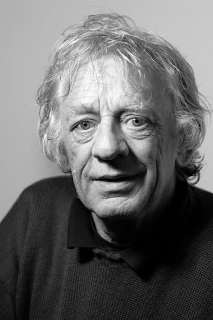
James Plunkett Kelly, Irish writer who writes under the pseudonym of James Plunkett, is born in Dublin on May 21, 1920.
Plunkett is the son of a World War I veteran who was a member of James Larkin‘s Irish Transport and General Workers Union, which had a life-long impact on the young writer. He is educated at Synge Street CBS. He works as a clerk in the Dublin Gas Company and later joins the trade union movement, serving under Larkin between 1946 and 1947.
Plunkett grows up among the Dublin working class and they, along with the petite bourgeoisie and lower intelligentsia, make up the bulk of the dramatis personae of his oeuvre. His best-known works are the novel Strumpet City, set in Dublin in the years leading up to the lockout of 1913 and during the course of the strike, and the short stories in the collection The Trusting and the Maimed. His other works include a radio play on Larkin, who figures prominently in his work.
During the 1960s, Plunkett works as a producer at Telefís Éireann. He wins two Jacob’s Awards, in 1965 and 1969, for his TV productions. In 1971 he writes and presents “Inis Fail – Isle of Destiny,” his very personal appreciation of Ireland. It is the final episode of the BBC series Bird’s Eye View, shot entirely from a helicopter, and the first co-production between the BBC and RTÉ. He is a member of Aosdána.
Plunkett dies in a Dublin nursing home at the age of 83 on May 28, 2003. A second-year class, “2 Plunkett” at Synge Street CBS, is named in his honour.
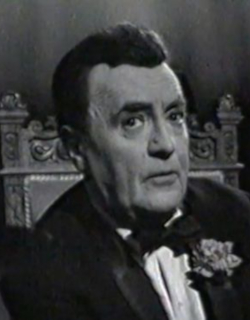
As Alfred Willmore, he is one of the leading child actors on the English stage, in the company of Noël Coward. He appears for several seasons in Peter Pan. He studies painting at London’s Slade School of Fine Art, continuing to paint throughout his lifetime. In the 1920s he travels all over Europe. He is captivated by Irish culture and learns the Irish language which he speaks and writes fluently. He changes his name to an Irish version, presenting himself in Ireland as a descendant of Irish Catholics from Cork. Later in his life, he writes three autobiographies in Irish and translates them into English.
While acting in Ireland with the touring company of his brother-in-law Anew MacMaster, Mac Liammóir meets the man who becomes his partner and lover, Hilton Edwards. Their first meeting takes place in the Athenaeum, Enniscorthy, County Wexford. Deciding to remain in Dublin, where they live at Harcourt Terrace, the pair assists with the inaugural production of Galway‘s Irish language theatre, An Taibhdhearc. The play is Mac Liammóir’s version of the mythical story Diarmuid agus Gráinne, in which Mac Liammóir plays the lead role as Diarmuid.
Mac Liammóir and Edwards then throw themselves into their own venture, co-founding the Gate Theatre in Dublin in 1928. The Gate becomes a showcase for modern plays and design. Mac Liammóir’s set and costume designs are key elements of the Gate’s success. His many notable acting roles include Robert Emmet/The Speaker in Denis Johnston‘s The Old Lady Says “No!” and the title role in Hamlet.
In 1948, Mac Liammóir appears in the NBC television production of Great Catherine with Gertrude Lawrence. In 1951, during a break in the making of Othello, he produces Orson Welles‘s ghost-story Return to Glennascaul which is directed by Hilton Edwards. He plays Iago in Welles’s film version of Othello (1951). The following year, he goes on to play ‘Poor Tom’ in another Welles project, the TV film of King Lear (1953) for CBS.
Mac Liammóir claims when talking to Irish playwright Mary Manning, to have had a homosexual relationship with General Eoin O’Duffy, former Garda Síochána Commissioner and head of the paramilitary Blueshirts in Ireland, during the 1930s. The claim is revealed publicly by RTÉ in a documentary, The Odd Couple, broadcast in 1999. However, Mac Liammóir’s claims have not been substantiated.
Mac Liammóir’s life and artistic development are the subject of a major study by Tom Madden, The Making of an Artist. Edwards and Mac Liammóir are the subject of a biography, titled The Boys by Christopher Fitz-Simon.
Micheál Mac Liammóir dies at the age of 78 on March 6, 1978. Edwards and Mac Liammóir are buried alongside each other at St. Fintan’s Cemetery, Sutton, Dublin.
Marie Kean, actress of stage and screen whose career spanned over 40 years, is born in the village of Rush, County Dublin on June 27, 1918. The Stage calls her one of Ireland’s most impressive actresses, and “an artist of considerable emotional depth and theatrical command.”
Kean grows up in Rush and is educated at Loreto College, North Great George’s Street, Dublin. She learns her craft at the Gaiety School of Acting and is part of the Abbey Theatre company until 1961.
Kean’s leading role as the kindly matriarch, Mrs. Kennedy, in the RTÉ Radio serial drama, The Kennedys of Castleross, makes her famous throughout Ireland. She stars in the programme for the duration of its 18-year run.
In 1968, Kean wins a Jacob’s Award for her performance as Winnie in RTÉ television’s production of Samuel Beckett‘s play Happy Days, a role she had previously performed on stage and which she describes later as her favourite part. Among her other television roles is that of Mrs. Conn Brickley, Bridget’s mother, in an episode of The Irish R.M. called “The Boat’s Share.”
Kean’s many stage appearances include performances in the plays of John Millington Synge, Seán O’Casey and Brian Friel. She takes the lead role of Maggie Polpin in the 1969 world première of John B. Keane‘s play Big Maggie at the Cork Opera House. In 1978 she wins the State of New York best actress award for her performance in what has become Keane’s most successful play.
Arguably her most memorable film role is as Barry’s scheming mother in Stanley Kubrick‘s Barry Lyndon. She also plays a bigoted Irish shopkeeper in David Lean‘s Ryan’s Daughter. Her final movie appearance is in John Huston‘s The Dead (1987), in which she plays the part of Mrs. Malins.
Marie Kean dies in Donnybrook, Dublin at the age of 75 on December 30, 1993. Her husband, William Mulvey, predeceases her in 1977.
Michael “Mick” Lally, Irish stage, film and television actor, dies in Dublin on August 31, 2010. He departs from a teaching career for acting during the 1970s. Though best known in Ireland for his role as Miley Byrne in the television soap Glenroe, his stage career spans several decades, and he is involved in feature films such as Alexander and the Academy Award-nominated The Secret of Kells. Many reports cite him as one of Ireland’s finest and most recognisable actors.
In 1982, Lally stars in the TV series The Ballroom of Romance alongside Brenda Fricker. From 1983 he plays the role of Miley Byrne in the RTÉ soap Glenroe, reprising the character that he played earlier in Bracken in 1978. In 1979, he wins a Jacob’s Award for his performance as Miley in Bracken. He also has some musical success when “The By-road to Glenroe” goes to the top of the Irish charts in 1990. He is also involved in voice-over work, including a noted advertisement for Kilmeaden Cheese during the 1990s. Other TV appearances include roles in Tales of Kinvarna, The Year of the French and Ballykissangel.
In 1994, Lally plays the character Hugh in The Secret of Roan Inish, and in 1995 portrays Dan Hogan in the film adaptation of Maeve Binchy‘s Circle of Friends. Other film roles included Poitín, Our Boys, The Outcasts, A Man of No Importance and others. In later years, he provides the voice of Brother Aidan in the Academy Award-nominated The Secret of Kells, an animated film directed by Tomm Moore.
Lally appears in several TV advertisements encouraging elderly people to “release the equity tied up in their homes” during the Celtic Tiger.
Mick Lally dies on the morning of August 31, 2010, after a short stay in the hospital. The cause of death is reported as heart failure, arising from an underlying emphysema condition. His funeral takes place in Dublin on September 2, 2010. The Irish Examiner comments that the “nation has lost one of its favourite uncles.” Personalities from TV, film, theatre and politics attend, while President of IrelandMary McAleese sends a letter and Lally receives a standing ovation at the end.
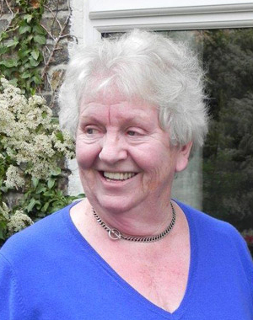
In 1972, Linehan wins a Jacob’s Award for her RTÉ Radio comedy series Get an Earful of This. She is the recipient of the Lifetime Achievement Award at the Irish Theatre Awards in 2008.
Linehan and her husband live in Dublin and have four children and eight grandchildren. Her father Daniel McMenamin was a Teachta Dála for Donegal from 1927 to 1961.
James Plunkett Kelly, known by the pen name James Plunkett, Irish novelist, playwright, and short-story writer, dies in Dublin on May 28, 2003. His works, which deal with Ireland’s political and labour problems, contain vivid portraits of working-class and middle-class Dubliners.
Plunkett is born in Sandymount, Dublin on May 21, 1920, and grows up among the Dublin working class and they, along with the petite bourgeoisie and lower intelligentsia, make up the bulk of the dramatis personæ of his oeuvre. He is educated at Synge Street CBS, a Christian Brothers school located on Synge Street in Dublin. He leaves school at the age of seventeen. He later studies violin and viola at the Dublin College of Music and plays professionally in Dublin. He serves for a time as an official in the Workers’ Union of Ireland.
Plunkett’s best-known works are the novel Strumpet City, set in Dublin in the years leading up to the Dublin lock-out of 1913 and during the course of the strike, and the short stories in the collection The Trusting and the Maimed. His other works include a radio play on James Larkin, who figures prominently in his work.
During the 1960s, Plunkett works as a producer at Telefís Éireann. He wins two Jacob’s Awards, in 1965 and 1969, for his TV productions. In 1971 he writes and presents “Inis Fail – Isle of Destiny,” his very personal appreciation of Ireland. It is the final episode of the BBC series Bird’s Eye View, shot entirely from a helicopter, and the first co-production between the BBC and RTÉ. Plunkett is a member of Aosdána.
James Plunkett dies in a Dublin nursing home on May 28, 2003, just a week after his 83rd birthday. He is cremated at Mount Jerome Cemetery and Crematorium in Dublin.
A second-year class, “2 Plunkett” at Synge Street CBS, is named in honour of James Plunkett.
McCafferty is born to Hugh and Lily McCafferty and spends her early years in the Bogside area of Derry. She is admitted to Queen’s University Belfast, where she takes a degree in Arts. After a brief spell as a substitute English teacher in Northern Ireland and a stint on an Israeli kibbutz, she takes up a post with The Irish Times.
McCafferty is a founding member of the Irish Women’s Liberation Movement. Her journalistic writing on women and women’s rights reflects her beliefs on the status of women in Irish society. In 1971, she travels to Belfast with other members of the Irish Women’s Liberation Movement in order to protest the prohibition of the importation and sale of contraceptives in the Republic of Ireland.
After the disintegration of the Irish Women’s Liberation Movement, McCafferty remains active in other women’s rights groups, as well as focusing her journalism on women’s rights. Her most notable work is her coverage of the Kerry Babies case, which is recorded in her book, A Woman to Blame. She contributes the piece “Coping with the womb and the border” to the 1984 anthology Sisterhood Is Global: The International Women’s Movement Anthology, edited by Robin Morgan.
In 1990, McCafferty wins a Jacob’s Award for her reports on the 1990 FIFA World Cup for RTÉ Radio 1‘s The Pat Kenny Show. She publishes her autobiography, Nell, in 2004. In it, she explores her upbringing in Derry, her relationship with her parents, her fears about being gay, the joy of finding a domestic haven with the love of her life, the Irish writer Nuala O’Faolain, and the pain of losing it.
In 2009, after the publication of the Murphy Report into the abuse of children in the Dublin archdiocese, McCafferty confronts Archbishop Diarmuid Martin asking him why the Catholic Church has not, as a “gesture of redemption,” relinquished titles such as “Your Eminence” and “Your Grace.”
McCafferty causes a controversy in 2010 with a declaration in a live Newstalk radio interview that the then Minister for Health, Mary Harney, is an alcoholic. This allegation leads to a court case in which Harney is awarded €450,000 the following year. McCafferty has very rarely been featured on live radio or television in Ireland as a commentator since the incident, despite being ever present in those media from 1990 forward. However, she has been featured on a number of recorded programs.
The Irish Times writes that “Nell’s distinctive voice, both written and spoken, has a powerful and provocative place in Irish society.”
McCafferty receives an honorary Doctor of Literature from University College Cork on November 2, 2016, for “her unparalleled contribution to Irish public life over many decades and her powerful voice in movements that have had a transformative impact in Irish society, including the feminist movement, campaigns for civil rights and for the marginalised and victims of injustice.”
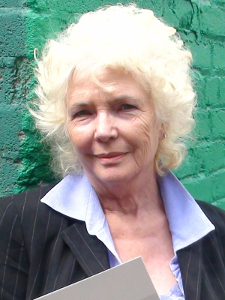
Flanagan is the daughter of Rosanna (née McGuirk) and Terence Niall Flanagan, an Irish Army officer and Communist who had fought in the International Brigade in the Spanish Civil War against General Francisco Franco. Although her parents are not Irish speakers, they want Fionnula and her four siblings to learn the Irish language, thus she grows up speaking English and Irish fluently. She is educated in Switzerland and England. She trains extensively at the Abbey Theatre in Dublin and travels throughout Europe before settling in Los Angeles, California in early 1968.
Flanagan comes to prominence in Ireland in 1965 as a result of her role as Máire in the Telefís Éireann production of the Irish language play An Triail, for which she receives the Jacob’s Award in Dublin for her “outstanding performance.” With her portrayal of Gerty McDowell in the 1967 film version of Ulysses, she establishes herself as one of the foremost interpreters of James Joyce. She makes her Broadway debut in 1968 in Brian Friel‘s Lovers, then appears in The Incomparable Max (1971) and such Joycean theatrical projects as Ulysses in Nighttown and James Joyce’s Women (1977-1979), a one-woman show written by Flanagan and directed for the stage by Burgess Meredith. It is subsequently filmed in 1983, with Flanagan both producing and playing all six main female roles.
Niall Tóibín, Irish comedian and actor, is born into an Irish speaking family in Cork, County Cork, on November 21, 1929. He is the sixth of seven children born to Siobhán (née Ní Shúileabháin) and Seán Tóibín.
Tóibín’s father is born in Passage West, County Cork, and his parents come from Waterford and West Cork. His father is a teacher in the School of Commerce in Cork city and the author of two books, Blátha an Bhóithrín and Troscán na mBánta, on wayside and meadowland flowers, both written in the Irish language. His mother comes from Beaufort, County Kerry.
Tóibín is born on the south side of Cork city in Friars’ Walk. He is raised with Irish and uses the language in his professional career, notably in the film Poitín. As a child he sings in the cathedral choir and the Opera House in Cork. In his teens he joins a drama society attached to the Keating Branch of the Gaelic League. He is educated by the Irish Christian Brothers at the North Monastery after which he leaves Cork in January 1947 for a job in the Civil Service in Dublin.
Tóibín plays Dr. Paul O’Callaghan in the first series of the Irish TV programme The Clinic. He also plays Judge Ballaugh, alongside Cate Blanchett, in Jerry Bruckheimer‘s film Veronica Guerin. He also acts for the radio, such as his guest appearance in the BBC Radio 4 series Baldi.
Ryan is born in Clontarf, County Dublin on June 4, 1956. He describes his father, Vinnie, as a “slightly eccentric” dentist from a Presbyterian background and his mother, Maureen, as “a flamboyant woman” who comes from a theatrical background and works in the theatre. His godfather is broadcaster Eamonn Andrews. He is educated at St. Paul’s College, Raheny.
Ryan marries Morah Brennan in 1988 and they have five children: Lottie, Rex, Bonnie, Elliott and Babette. In 1997, Morah famously telephones her husband’s show and, under the name Norah, tells half a million listeners intimate details concerning his personal household habits. Gerry and Morah announce their separation in March 2008, which Ryan calls “a very painful experience.” He soon begins a relationship with the former South African Ambassador to Ireland and the then UNICEF Ireland executive director, Melanie Verwoerd.
Ryan is noted for his love of fine food and wine. He battles a weight problem for several years and takes Reductil (Sibutramine), a “slimming pill,” which he says is effective and safe. Ryan concedes in his autobiography Would the Real Gerry Ryan Please Stand Up, released in October 2008, that he drinks too much for his own good.
Among the dignitaries to send tributes following Ryan’s death are Bono, Bill and Hillary Clinton, TaoiseachBrian Cowen, and President Mary McAleese. His funeral takes place on May 6, 2010, and is broadcast on 2fm, the home of Ryan’s radio show and a first for the predominantly youthpop-oriented station. His death also comes sixteen years to the day after he hosted Eurovision 1994.
An inquest shows that the cause of Ryan’s death is cardiac arrhythmia and that traces of cocaine found in Ryan’s system are the “likely trigger” of Ryan’s death. A considerable public controversy erupts when Ryan’s long-term use of cocaine comes to light. RTÉ eventually admits to having given insufficient coverage of Ryan’s cocaine habit in the aftermath of the inquest.