seamus dubhghaill

Promoting Irish Culture and History from Little Rock, Arkansas, USA


Leave a comment

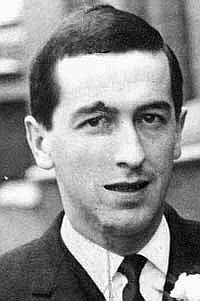
Birth of Michael D. Higgins, Ninth President of Ireland

Michael Daniel Higgins, politician, human rights activist, university lecturer, poet, and the ninth and current President of Ireland, is born in LimerickCounty Limerick, on April 18, 1941. He takes office on November 11, 2011, following victory in the 2011 Irish presidential election.

At age five Higgins is separated from his parents, whose struggle to make ends meet is partly the product of his father’s ill health. He is raised in modest means by relatives in County Clare and starts his working life as a clerk in a bank. With a loan from a benefactor, he enters University College Galway, now National University of Ireland, Galway, at age 20 and continues his study with the benefit of scholarships. He serves as president of the student council and becomes involved with the Fianna Fáil party. Under the influence of politician Noël Browne, he soon switches allegiance to socialism and the Labour Party. An unashamed intellectual, Higgins continues his studies at Indiana University Bloomington and the University of Manchester. Before beginning a career in politics, he lectures in sociology and political science at Galway and is a visiting professor at Southern Illinois University Carbondale.

Twice Higgins runs unsuccessfully for a seat in the Dáil Éireann, the lower house of the Oireachtas, before being appointed to Seanad Éireann, the upper house, by Taoiseach Liam Cosgrave in 1973. Higgins is then elected to represent Galway West in the Dáil (1981–82) and serves another term in the Seanad (1983–87), representing the National University of Ireland, before becoming a fixture in the Dáil in the seat for Galway West (1987–2011). He also serves two terms as the mayor of Galway (1982–83, 1991–92). Early on he earns a reputation as a leftist firebrand who opposes participation in coalition government. His radical commitment to human rights and to peace and justice in places such as NicaraguaEl Salvador, and Cambodia, as well as his advocacy of progressive issues such as equal pay for women and the rights of people with disabilities, remain constant, but he mellows over the years to accept coalition rule.

In 1993, in the Fianna Fáil–Labour coalition government led by Albert Reynolds, Higgins becomes the minister for arts, culture, and the Gaeltacht (the districts in which the Irish language and the traditional national culture are best preserved). In that capacity he champions the Irish film industry and is responsible for the creation of the first Irish-language television station, Teilifís na Gaeilge (TG4). A poet who publishes four books of poetry before his election as president, Higgins earns a reputation as an impassioned and eloquent orator in both Irish and English.

By 2003, when he takes over the leadership of the Labour Party, the diminutive Higgins has become something of a national icon, known to most people simply as “Michael D.” He seeks Labour’s nomination for the presidency in 2004 unsuccessfully, but in 2011 he is elected the ninth president of Ireland with some 40 percent of the first-preference votes. In the process he bests heavily favoured independent Seán Gallagher, who stumbles badly in a televised debate just before the election, as well as Martin McGuinness, a former Irish Republican Army (IRA) leader who steps down temporarily as the deputy first minister of Northern Ireland to run.


Leave a comment

Birth of Northern Ireland Politician Gerry Fitt

Gerard FittNorthern Ireland politician, is born in Belfast on April 9, 1926. He is a founder and the first leader of the Social Democratic and Labour Party (SDLP), a social democratic and Irish nationalist party.

Fitt is educated at a local Christian Brothers school in Belfast. He joins the Merchant Navy in 1941 and serves on convoy duty during World War II. His elder brother Geordie, an Irish Guardsman, is killed at the Battle of Normandy.

Living in the nationalist Beechmount neighbourhood of the Falls, he stands for the Falls as a candidate for the Dock Labour Party in a city council by-election in 1956, but loses to Paddy Devlin of the Irish Labour Party, who later becomes his close ally. In 1958, he is elected to Belfast City Council as a member of the Irish Labour Party.

In 1962, he wins a seat in the Parliament of Northern Ireland from the Ulster Unionist Party, becoming the only Irish Labour member. Two years later, he left Irish Labour and joined with Harry Diamond, the sole Socialist Republican Party Stormont MP, to form the Republican Labour Party. At the 1966 general election, Fitt won the Belfast West seat in the Westminster parliament.

Many sympathetic British Members of Parliament (MPs) are present at a civil rights march in Derry on October 5, 1968, when Fitt and others are beaten by the Royal Ulster Constabulary. Fitt also supports the 1969 candidacy of Bernadette Devlin in the Mid Ulster by-election who runs as an anti-abstentionist ‘Unity‘ candidate. Devlin’s success greatly increases the authority of Fitt in the eyes of many British commentators, particularly as it produces a second voice on the floor of the British House of Commons who challenge the Unionist viewpoint at a time when Harold Wilson and other British ministers are beginning to take notice.

In August 1970, Fitt becomes the first leader of a coalition of civil rights and nationalist leaders who create the Social Democratic and Labour Party (SDLP). By this time Northern Ireland is charging headlong towards near-civil war and the majority of unionists remain hostile.

After the collapse of Stormont in 1972 and the establishment of the Northern Ireland Assembly in 1973 Fitt becomes deputy chief executive of the short-lived Power-Sharing Executive created by the Sunningdale Agreement.

Fitt becomes increasingly detached from both his own party and also becomes more outspoken in his condemnation of the Provisional Irish Republican Army. He becomes a target for republican sympathisers in 1976 when they attack his home. He becomes disillusioned with the handling of Northern Ireland by the British government. In 1979, he abstains from a crucial vote in the House of Commons which brings down the Labour government, citing the way that the government had failed to help the nationalist population and tried to form a deal with the Ulster Unionist Party.

In 1979, Fitt is replaced by John Hume as leader of the SDLP and he leaves the party altogether after he agrees to constitutional talks with British Secretary of State Humphrey Atkins without any provision for an ‘Irish dimension’ and then sees his decision overturned by the SDLP party conference. Like Paddy Devlin before him, he claims the SDLP has ceased to be a socialist force.

In 1981, he opposes the hunger strikes in the Maze prison in Belfast. His seat in Westminster is targeted by Sinn Féin as well as by the SDLP. In June 1983, he loses his seat in Belfast West to Gerry Adams, in part due to competition from an SDLP candidate. The following month, on October 14, 1983, he is created a UK life peer as Baron Fitt, of Bell’s Hill in County Down. His Belfast home is firebombed a month later and he moves to London.

Gerry Fitt dies in London on August 26, 2005, at the age of 79, after a long history of heart disease.


Leave a comment

Birth of Labour Party Leader Frank Cluskey

Frank Cluskey, Irish politician and leader of the Irish Labour Party from 1977 to 1981, is born in Dublin on April 8, 1930.

Cluskey is educated at St. Vincent’s C.B.S. in Glasnevin. He works as a butcher and then joins the Labour Party. He quickly becomes a branch secretary in the Workers’ Union of Ireland. At the 1965 general election he is elected as a Labour Party Teachta Dála (TD) for the Dublin South-Central constituency. In 1968 he is elected Lord Mayor of Dublin. In 1973 he is appointed Parliamentary Secretary to the Minister for Social Welfare, Brendan Corish. He introduces sweeping reforms to the area while he holds that position. He plays a leading role in initiating the EU Poverty Programmes.

The Fine Gael–Labour Party coalition is defeated at the 1977 general election resulting in the resignation of Brendan Corish as Labour Party leader. Cluskey is elected the new leader of the Labour Party. In 1981, the Labour Party enters into a coalition government with Fine Gael. However, Cluskey has lost his seat in Dáil Éireann at the 1981 general election and with it the party leadership. He is appointed on July 1, 1981, as a Member of the European Parliament (MEP) for Dublin, replacing Michael O’Leary, who had resigned the seat after succeeding Cluskey as Labour leader.

The coalition government falls in January 1982 over a budget dispute, and Cluskey is re-elected to the Dáil at the February 1982 general election. When the coalition returns to office after the November 1982 election, Cluskey is appointed as Minister for Trade, Commerce and Tourism. He then resigns from the European Parliament, to be replaced by Brendan Halligan.

On December 8, 1983, Cluskey resigns as Minister due to a fundamental disagreement over government policy about the Dublin Gas Company. He retains his Dáil seat in the 1987 general election.

Following his re-election Cluskey’s health begins to deteriorate. He dies in Dublin on May 7, 1989, following a long battle with cancer.


Leave a comment

Death of Hunger Striker Frank Stagg

frank-stagg

Frank Stagg, Provisional Irish Republican Army (IRA) hunger striker from County Mayo, dies on February 12, 1976, in Wakefield Prison, West Yorkshire, England after 62 days on hunger strike.

Stagg is the seventh child in a family of thirteen children. He is born on October 4, 1942, in Hollymount, County Mayo. His brother, Emmet Stagg, is a Labour Party politician, formerly a Teachta Dála (TD) for Kildare North.

Stagg is educated to primary level at Newbrook Primary School and at CBS Ballinrobe to secondary level. After finishing his schooling, he works as an assistant gamekeeper with his uncle prior to emigrating to England in search of work.

Once in England he gains employment as a bus conductor in north London and later becomes a bus driver. Whilst in England he meets and marries fellow Mayo native, Bridie Armstrong from Carnacon. In 1972, he joins the Luton cumann of Sinn Féin and soon after becomes a volunteer in the Provisional Irish Republican Army (IRA).

In April 1973, Stagg is arrested with six others alleged to comprise an IRA unit planning bombing attacks in Coventry. He is tried at Birmingham Crown Court. The jury finds three of the seven not guilty. The remaining four are all found guilty of criminal damage and conspiracy to commit arson. Stagg and English-born priest, Father Patrick Fell, are found to be the unit’s commanding officers. Stagg is given a ten-year sentence and Fell twelve years. Thomas Gerald Rush is given seven years and Anthony Roland Lynch, who is also found guilty of possessing articles with intent to destroy property, namely nitric acid, balloons, wax, and sodium chlorate, is given ten years.

Stagg is initially sent to the top security Albany Prison on the Isle of Wight. In March 1974, having been moved to Parkhurst Prison, he and fellow Mayo man Michael Gaughan join a hunger strike begun by the sisters Marion Price and Dolours Price, Hugh Feeney, and Gerry Kelly.

Following the hunger strike that results in the death of Michael Gaughan, the Price sisters, Feeney, and Kelly are granted repatriation to Ireland. Stagg is denied repatriation and is transferred to Long Lartin Prison. During his time there he is subject to solitary confinement for refusing to do prison work and is also subjected, along with his wife and sisters during visits, to humiliating body searches. In protest against this he begins a second hunger strike that lasts for thirty-four days. This ends when the prison governor agrees to an end to the strip-searches on Stagg and his visitors. Stagg is bed-ridden for the rest of his incarceration in Long Lartin, due to a kidney complaint.

In 1975 Stagg is transferred to Wakefield Prison, where it is demanded that he again do prison work. He refuses and is placed in solitary confinement. On December 14, 1975, Stagg embarks on a hunger strike in Wakefield, along with a number of other republican prisoners, after being refused repatriation to Ireland during the IRA/British truce. Stagg’s demands are an end to solitary confinement, no prison work, and repatriation to prison in Ireland. The British government refuses to meet any of these demands. Stagg dies on February 12, 1976, after 62 days on hunger strike.

Frank Stagg’s burial causes considerable controversy in Ireland, with republicans and two of his brothers seeking to have Stagg buried in the republican plot in Ballina in accordance with his wishes, while his widow, his brother, Emmet Stagg, and the Irish government wish to have him buried in the family plot in the same cemetery and to avoid republican involvement in the funeral. As the republicans wait at Dublin Airport for the body, the Irish government orders the flight to be diverted to Shannon Airport.

His body is taken to Ballina and buried near the family plot. In order to prevent the body being disinterred and reburied by republicans, the grave is covered with concrete. In November 1976, a group of republicans tunnel under the concrete to recover the coffin under cover of darkness and rebury it in the republican plot.


Leave a comment

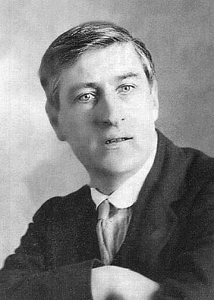
Birth of Union Leader Jim Larkin

james-larkin

James (Jim) Larkin, Irish trade union leader and socialist activist, is born to Irish parents in Liverpool, England, on January 21, 1876. He and his family later move to a small cottage in Burren, County Down. Growing up in poverty, he receives little formal education and begins working in a variety of jobs while still a child.

In 1905, Larkin is one of the few foremen to take part in a strike on the Liverpool docks. He is elected to the strike committee, and although he loses his foreman’s job as a result, his performance so impresses the National Union of Dock Labourers (NUDL) that he is appointed a temporary organiser.

Larkin moves to Belfast in 1907 to organise the city’s dock workers for the NUDL. He succeeds in unionising the workforce, and as employers refuse to meet the wage demands, he calls the dockers out on strike in June. Carters and coal men soon join in, the latter settling their dispute after a month.

In 1908, Larkin moves south and organises workers in Dublin, Cork, and Waterford, with considerable success. His involvement, against union instructions, in a dispute in Dublin results in his expulsion from the NUDL. The union later prosecutes him for diverting union funds to give strike pay to Cork workers engaged in an unofficial dispute. After trial and conviction for embezzlement in 1910, he is sentenced to prison for a year. This is widely regarded as unjust, and the Lord Lieutenant of Ireland, Lord Aberdeen, pardons him after he has served three months in prison.

After his expulsion from the NUDL, Larkin founds the Irish Transport and General Workers’ Union (ITGWU) at the end of December 1908. The organisation exists today as the Services Industrial Professional & Technical Union (SIPTU). In early 1909, Larkin moves to Dublin, which becomes the main base of the ITGWU and the focus of all his future union activity in Ireland.

In June 1911, Larkin establishes a newspaper, The Irish Worker and People’s Advocate, as a pro-labour alternative to the capitalist-owned press. In 1912, in partnership with James Connolly, Larkin helps form the Irish Labour Party.

In early 1913, Larkin achieves some successes in industrial disputes in Dublin. Two major employers, Guinness and the Dublin United Tramway Company, are the main targets of Larkin’s organising ambitions. The chairman of the Dublin United Tramway Company, industrialist and newspaper proprietor William Martin Murphy, is determined not to allow the ITGWU to unionise his workforce. On August 15, he dismisses 40 workers he suspects of ITGWU membership, followed by another 300 over the next week. On August 26, 1913, the tramway workers officially go on strike.

The resulting industrial dispute is the most severe in Ireland’s history. Employers in Dublin engage in a sympathetic lockout of their workers when the latter refuses to sign the pledge, employing blackleg labour from Britain and from elsewhere in Ireland. Guinness, the largest employer in Dublin, refuses the employers’ call to lock out its workers but it sacks 15 workers who struck in sympathy.

For seven months the lockout affects tens of thousands of Dublin workers and employers, with Larkin portrayed as the villain by Murphy’s three main newspapers, the Irish Independent, the Sunday Independent, and the Evening Herald, and by other bourgeois publications in Ireland. The lock-out eventually concludes in early 1914 when calls by James Connolly and Larkin for a sympathetic strike in Britain are rejected by the British Trades Union Congress (TUC). Larkin’s attacks on the TUC leadership for this stance also lead to the cessation of financial aid to the ITGWU.

Some months after the lockout ends, Larkin leaves for the United States. He intends to recuperate from the strain of the lockout and raise funds for the union. Once there he becomes a member of the Socialist Party of America and is involved in the Industrial Workers of the World union (the Wobblies). He becomes an enthusiastic supporter of the Soviet Union and is expelled from the Socialist Party of America in 1919 along with numerous other sympathisers of the Bolsheviks during the Red Scare of that year.

Upon his return to Ireland in April 1923, Larkin receives a hero’s welcome and immediately sets about touring the country meeting trade union members and appealing for an end to the Irish Civil War. In September 1923, Larkin forms the Irish Worker League (IWL), which is soon afterwards recognised by the Communist International as the Irish section of the world communist movement.

James Larkin dies in his sleep on January 30, 1947, in the Meath Hospital. Fr. Aloysius Travers, OFM, who had administered last rites to James Connolly in 1916, also administers extreme unction to Larkin. His funeral mass is celebrated by the Catholic Archbishop of Dublin, John Charles McQuaid, who had visited him in hospital before he died, and thousands line the streets of the city as the hearse passes through on the way to Glasnevin Cemetery.


1 Comment

Establishment of the Irish Free State

free-state-executive-council

The Irish Free State (Irish: Saorstát Éireann), an independent state established under the Anglo-Irish Treaty of December 1921, comes into being on December 6, 1922. The treaty ends the three-year Irish War of Independence between the forces of the self-proclaimed Irish Republic, the Irish Republican Army (IRA), and British Crown forces.

The Free State is established as a Dominion of the British Commonwealth of Nations. For one day, it encompasses all thirty-two counties of Ireland. Northern Ireland, which is comprised of the six northernmost counties, exercises its right under the Treaty to opt out of the new state on December 7.

The Free State government consists of the Governor-General, the representative of the king, and the Executive Council, which replaces both the revolutionary Dáil Government and the Provisional Government set up under the Treaty. W. T. Cosgrave, who had led both of these governments since August 1922, becomes the first President of the Executive Council. The legislature consists of Dáil Éireann, the lower house, and Seanad Éireann, also known as the Senate. Members of the Dáil are required to take an Oath of Allegiance, swearing fidelity to the king. The oath is a key issue for opponents of the Treaty, who refuse to take the oath and therefore do not take their seats. Pro-Treaty members, who form Cumann na nGaedheal in 1923, hold an effective majority in the Dáil from 1922 to 1927, and thereafter rule as a minority government until 1932.

In the first months of the Free State, the Irish Civil War is waged between the newly established National Army and the anti-Treaty IRA, who refuse to recognise the state. The Civil War ends in victory for the government forces, with the anti-Treaty forces dumping its arms in May 1923. The anti-Treaty political party, Sinn Féin, refuses to take its seats in the Dáil, leaving the relatively small Labour Party as the only opposition party. In 1926, when Sinn Féin president Éamon de Valera fails to have this policy reversed, he resigns from Sinn Féin and founds Fianna Fáil. Fianna Fáil enters the Dáil following the 1927 general election, and enters government after the Irish general election of 1932, when it becomes the largest party.

De Valera abolishes the Oath of Allegiance and embarks on an economic war with Britain. In 1937 he drafts a new constitution, which is passed by a referendum in July of that year. The Free State comes to an end with the coming into force of the new constitution on December 29, 1937. Under the new constitution the Irish state is named Ireland.

(Pictured: The Executive Council of the Irish Free State, October 1928)


Leave a comment

Mary Robinson Elected First Woman President of the Republic

mary-robinson-1

Mary Robinson becomes the first woman to be elected President of the Republic of Ireland on November 7, 1990. She becomes the first Labour Party candidate, the first woman, and the first non-Fianna Fáil candidate in the history of contested presidential elections to win the presidency.

Brian Lenihan, the Tánaiste and Minister for Defence is chosen by Fianna Fáil as their candidate, though he faces a late challenge for the party nomination from another senior minister, John P. Wilson, TD. Lenihan is popular and widely seen as humorous and intelligent. He has delivered liberal policy reform (relaxed censorship in the 1960s) and is seen as a near certainty to win the presidency.

Fine Gael, after trying and failing to get former Taoiseach Garret FitzGerald and former Tánaiste Peter Barry to run, ultimately nominate the former civil rights campaigner and Social Democratic and Labour Party (SDLP) member Austin Currie. Currie is elected to Dáil Éireann in the 1989 general election and has been a minister in Brian Faulkner‘s power-sharing executive in Northern Ireland from 1973–1974. However, Currie has little experience in the politics of the Republic and is widely seen as the party’s last choice, nominated only when no one else is available.

The Labour Party lets it be known that it would for the first time run a candidate. Along with the Workers’ Party, Labour nominates the independent candidate Mary Robinson, SC, a former Labour Party member and senator, and liberal campaigner. Robinson is a former Reid Professor of Law in the Trinity College, Dublin. She is previously involved in the Campaign for Homosexual Law Reform and the campaign to save Wood Quay.

Lenihan enters the race as odds-on favourite. No Fianna Fáil candidate has ever lost a presidential election. However, Lenihan is derailed when he confirms in an on-the-record interview with freelance journalist and academic researcher Jim Duffy that he has been involved in controversial attempts to pressurise the President, Patrick Hillery, over a controversial parliamentary dissolution in 1982. As a result of the contrast between his public denials during the campaign and his confirmation during an earlier interview recorded in May, he is dismissed from the Irish government.

At this point a cabinet colleague, Pádraig Flynn, launches a controversial personal attack on Mary Robinson “as a wife and mother,” an attack that is itself attacked in response as “disgraceful” on live radio by Michael McDowell, a senior member of the Progressive Democrats, then in coalition with Fianna Fáil and up to that point supporting Lenihan’s campaign. Flynn’s attack is a fatal blow to Lenihan’s campaign, causing many female supporters of Lenihan to vote for Robinson in a gesture of support.

Lenihan nonetheless receives a plurality of first-choice votes. Mary Robinson beats Austin Currie, forcing Fine Gael’s candidate into third place. Under Ireland’s system of single transferable vote, Robinson receives over 75% of the transfers when Austin Currie is eliminated, beating Lenihan into second place and becoming the seventh President of Ireland.

While the role of the presidency in day-to-day politics is a very limited one, the Robinson presidency is regarded by many observers as a watershed in Irish society, symbolising the shift away from the conservative ultra-Catholic male-dominated Ireland which existed up until the end of the 1980s to the more liberal society symbolised by Robinson.

Robinson is generally credited with raising the profile of the office of president, which has been considered little more than an honorary figurehead position under her predecessors. Prior to Mary Robinson’s presidency it was not unusual to hear commentators advocating the abolition of the office of president, a viewpoint that is almost never advanced nowadays.


Leave a comment

Eighth Amendment of the Constitution of Ireland Approved

eighth-amendment

The Eighth Amendment of the Constitution of Ireland, which introduces a constitutional ban on abortion by recognizing a right to life of an unborn child, is approved by referendum on September 7, 1983, and signed into law on October 7 of the same year. It is often referred to as the Irish Pro-Life Amendment.

The amendment is adopted during the Fine GaelLabour Party coalition government led by Garret FitzGerald but is drafted and first suggested by the previous Fianna Fáil government of Charles Haughey. The amendment is supported by Fianna Fáil and some of Fine Gael and is generally opposed by the political left. Most of those opposed to the amendment, however, insist that they are not in favour of legalising abortion. The Roman Catholic hierarchy supports the amendment, but it is opposed by the other mainstream churches. After an acrimonious referendum campaign, the amendment is passed by 67% voting in favour to 33% voting against.

Under sections 58 and 59 of the Offences against the Person Act 1861, abortion is already illegal in Ireland. However, anti-abortion campaigners fear the possibility of a judicial ruling in favour of allowing abortion. In McGee v. Attorney General (1973), the Supreme Court of Ireland had ruled against provisions of the Criminal Law Amendment Act 1935 prohibiting the sale and importation of contraception on the grounds that the reference in Article 41 to the “imprescriptable rights, antecedent and superior to all positive law” of the family conferred upon spouses a broad right to privacy in marital affairs. In the same year, the Supreme Court of the United States ruled on similar grounds in Roe v. Wade to find a right to an abortion grounded on privacy.

The Pro-Life Amendment Campaign (PLAC) is founded in 1981 to campaign against a ruling in in Ireland similar to Roe. Prior to the 1981 general election, PLAC lobbies the major Irish political parties – Fianna Fáil, Fine Gael, and the Labour Party – to urge the introduction of a Bill to allow the amendment to the constitution to prevent the Irish Supreme Court so interpreting the constitution as giving a right to abortion. The leaders of the three parties – respectively Charles Haughey, Garret FitzGerald, and Frank Cluskey – agree although there is little consultation with any of their parties’ ordinary members. All three parties are in government over the following eighteen months, but it is only in late 1982, just before the collapse of a Fianna Fáil minority government, that a proposed wording for the amendment is produced.

The referendum is supported by PLAC, Fianna Fáil, some members of Fine Gael, and the Roman Catholic hierarchy and opposed by various groups under the umbrella name of the Anti-Amendment Campaign (AAC), including Labour senator, and future President of Ireland, Mary Robinson, feminist campaigners, and trade unions.

There is currently a campaign for repeal of the Eighth Amendment in Ireland. This is led by both a coalition of human rights and pro-choice groups and has widespread support from a number of legal academics and members of the medical profession. In the run up to the 2016 general election, a number of parties commit to a referendum to repeal the Eighth Amendment and a group of feminist law academics publish model legislation to show what a post-Eighth Amendment abortion law could look like. In June 2016, Minister for Health Simon Harris states his support for a referendum on repealing the 8th.

On July 27, 2016, the government appoints Supreme Court judge Mary Laffoy as chair of a Citizens’ Assembly to consider a number of topics, including the Eighth Amendment.


Leave a comment

Death of Paddy Devlin, Northern Ireland Labour Activist

paddy-devlin

Paddy Devlin, Irish social democrat and Labour activist, former Stormont Member of Parliament (MP), a founder of the Social Democratic and Labour Party (SDLP), and member of the 1974 Power Sharing Executive, dies in Belfast’s Mater Hospital on August 15, 1999, after a long illness.

Devlin is born into a highly political household in the Pound Loney in the Lower Falls of West Belfast on March 8, 1925, and lives in the city for almost all his life. His early activism is confined to Fianna Éireann and then the Irish Republican Army (IRA) and as a result he is interned in Crumlin Road Gaol during the World War II. He leaves the republican movement upon his release.

After the war, and in search of work, he spends some time in Portsmouth working as a scaffolder and in Coventry working in the car industry. In Coventry he becomes interested in Labour and trade union politics and briefly joins the British Labour Party.

Returning to Belfast in 1948 Devlin helps establish the Irish Labour Party there after the Northern Ireland Labour Party (NILP) splits on the issue of partition. He later beats Gerry Fitt to win a seat on the city council. Later Catholic Action claims the Irish Labour Party is infested with communists and ensures the party is effectively wiped-out causing Devlin to lose his seat.

In the mid 1960s Devlin joins the revived NILP and beats Harry Diamond for the Falls seat in Stormont. Devlin then goes on, with Fitt, John Hume, Austin Currie, and others to found the SDLP in 1970. He is later involved, at the request of William Whitelaw, the Secretary of State for Northern Ireland, in ensuring safe passage for Gerry Adams for talks with the British government in 1973. He is a member of the Northern Ireland Assembly, 1973 and Minister of Health and Social Services in the power-sharing Executive from January 1, 1974, to May 28, 1974.

In 1978 Devlin establishes the United Labour Party, which aims to be a broad-based Labour formation in Northern Ireland. He stands under its label for the European Parliament in 1979 but polls just 6,122 first preferences (1.1% of those cast) and thereby loses his deposit.

In 1987 Devlin, together with remnants of the NILP and others, establishes Labour ’87 as another attempt at building a Labour Party in Northern Ireland by uniting the disparate groups supporting labour and socialist policies but it too meets with little or no success. In 1985 he loses his place on Belfast City council.

Devlin suffers from severe diabetes and throughout the 1990s suffers a series of ailments as his health and sight collapse.


Leave a comment

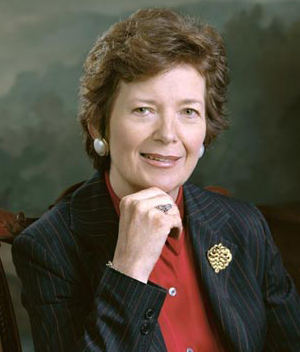
Birth of Mary Robinson, 1st Female President of Ireland

mary-robinson

Mary Therese Winifred Robinson, seventh and first female President of Ireland (1990-1997), is born on May 21, 1944, in Ballina, County Mayo. Robinson also serves as the United Nations High Commissioner for Human Rights from 1997 until 2002.

Robinson first rises to prominence as an academic, barrister, campaigner, and member of the Irish Senate (1969–1989). Running as an Independent candidate nominated by the Labour Party, the Workers’ Party, and independent senators, Robinson defeats Fianna Fáil‘s Brian Lenihan and Fine Gael‘s Austin Currie in the 1990 presidential election becoming the first elected president in the office’s history not to have had the support of Fianna Fáil.

Robinson is widely regarded as a transformative figure for Ireland, and for the Irish presidency, revitalising and liberalising a previously conservative, low-profile political office. She resigns the presidency two months before the end of her term in office in order to take up her post in the United Nations. During her UN tenure, she visits Tibet in 1998, the first High Commissioner to do so. She criticises Ireland’s immigrant policy and criticises the use of capital punishment in the United States. She extends her intended single four-year term by a year to preside over the World Conference against Racism 2001 in Durban, South Africa. The conference proves controversial, and under continuing pressure from the United States, Robinson resigns her post in September 2002.

After leaving the UN in 2002, Robinson forms Realizing Rights: The Ethical Globalization Initiative, which comes to a planned end at the end of 2010. Its core activities are fostering equitable trade and decent work, promoting the right to health and more humane migration policies, and working to strengthen women’s leadership and encourage corporate social responsibility. The organisation also supports capacity building and good governance in developing countries. Robinson returns to live in Ireland at the end of 2010, and sets up The Mary Robinson Foundation – Climate Justice, which aims to be “a centre for thought leadership, education, and advocacy on the struggle to secure global justice for those many victims of climate change who are usually forgotten – the poor, the disempowered, and the marginalised across the world.”

Robinson is Chair of the Institute for Human Rights and Business and Chancellor of the University of Dublin. Since 2004, she has also been Professor of Practice in International Affairs at Columbia University, where she teaches international human rights. Robinson also visits other colleges and universities where she lectures on human rights. Robinson sits on the Board of the Mo Ibrahim Foundation, an organisation which supports good governance and great leadership in Africa and is a member of the Foundation’s Ibrahim Prize Committee. Robinson is an Extraordinary Professor in the Centre for Human Rights and the Centre for the Study of AIDS at the University of Pretoria. Robinson serves as Oxfam’s honorary president from 2002 until she steps down in 2012 and is the honorary president of the European Inter-University Centre for Human Rights and Democratisation EIUC since 2005. She is Chair of the International Institute for Environment and Development (IIED) and is also a founding member and Chair of the Council of Women World Leaders (2003-2009). Robinson was a member of the European members of the Trilateral Commission.

In 2004, she receives Amnesty International‘s Ambassador of Conscience Award for her work in promoting human rights.

In July 2009, Robinson is awarded the Presidential Medal of Freedom, the highest civilian honour awarded by the United States. In presenting the award to Robinson, U.S. President Barack Obama says, “Mary Robinson learned early on what it takes to make sure all voices are heard. As a crusader for women and those without a voice in Ireland, Mary Robinson was the first woman elected President of Ireland, before being appointed U.N. High Commissioner for Human Rights. When she traveled abroad as President, she would place a light in her window that would draw people of Irish descent to pass by below. Today, as an advocate for the hungry and the hunted, the forgotten and the ignored, Mary Robinson has not only shone a light on human suffering but illuminated a better future for our world.”