seamus dubhghaill

Promoting Irish Culture and History from Little Rock, Arkansas, USA


Leave a comment

Birth of Ruairí Ó Brádaigh, Republican Political & Military Leader

Ruairí Ó Brádaigh, Irish republican political and military leader, is born Peter Roger Casement Brady on October 2, 1932, in Longford, County Longford. He is Chief of Staff of the Irish Republican Army (IRA) from 1958 to 1959 and again from 1960 to 1962, president of Sinn Féin from 1970 to 1983, and president of Republican Sinn Féin from 1987 to 2009.

Ó Brádaigh is born into a middle-class republican family. His father, Matt Brady, is an IRA volunteer who is severely wounded in an encounter with the Royal Irish Constabulary (RIC) in 1919. His mother, May Caffrey, is a Cumann na mBan volunteer and a 1922 graduate of University College Dublin (UCD). His father dies when he is ten and is given a paramilitary funeral led by his former IRA colleagues. His mother, prominent as the Secretary for the County Longford Board of Health, lives until 1974. He is educated at Melview National School at primary level and attends secondary school at St. Mel’s College, leaving in 1950, and graduates from University College Dublin in 1954. That year he takes a job teaching Irish language at Roscommon Vocational School in Roscommon. He is a deeply religious Catholic who refrains from smoking or drinking.

Ó Brádaigh joins Sinn Féin in 1950. While at university, in 1951, he joins the Irish Republican Army. In September 1951, he marches with the IRA at the unveiling of the Seán Russell monument in Fairview Park, Dublin. A teacher by profession, he is also a Training Officer for the IRA. In 1954, he is appointed to the Military Council of the IRA, a subcommittee set up by the IRA Army Council in 1950 to plan a military campaign against Royal Ulster Constabulary (RUC) barracks in Northern Ireland.

On August 13, 1955, Ó Brádaigh leads a ten-member IRA group in an arms raid on Hazebrouck Barracks, near Arborfield, Berkshire, England, a depot for the No. 5 Radar Training Battalion of the Royal Electrical and Mechanical Engineers. It is the biggest IRA arms raid in Britain. Most, if not all, of the weapons are recovered in a relatively short period of time. A van, traveling too fast, is stopped by the police and IRA personnel are arrested. Careful police work leads to weapons that had been transported in a second van and stored in London.

The IRA Border Campaign commences on December 12, 1956. As an IRA General Headquarters Staff (GHQ) officer, Ó Brádaigh is responsible for training the Teeling Column in the west of Ireland. During the Campaign, he serves as second-in-command of the Teeling Column. On December 30, 1956, he partakes in the Teeling Column attack on RUC barracks in Derrylin, County Fermanagh. RUC Constable John Scally is killed in the attack and is the first fatality of the new IRA campaign. Ó Brádaigh and others are arrested by the Garda Síochána across the border in County Cavan the day after the attack. They are tried and jailed for six months in Mountjoy Prison. A leading abstentionist, upon his arrest he refuses to recognize the authority of the Irish government and refuses to renounce violence in exchange for his release.

Although a prisoner, Ó Brádaigh is elected a Sinn Féin Teachta Dála (TD) for the Longford–Westmeath constituency at the 1957 Irish general election. Running on an abstentionist ticket, Sinn Féin wins four seats which go to Ó Brádaigh, Eighneachán Ó hAnnluain, John Joe McGirl and John Joe Rice. They refuse to recognise the authority of Dáil Éireann and state they will only take a seat in an all-Ireland parliament. He does not retain his seat at the 1961 Irish general election.

Upon completing his prison sentence, Ó Brádaigh is immediately interned at the Curragh Camp along with other republicans. On September 27, 1958, he escapes from the camp along with Dáithí Ó Conaill. While a football match is in progress, the pair cuts through a wire fence and escapes from the camp under a camouflage grass blanket. This is an official escape, authorised by the officer commanding (OC) of the IRA internees, Tomás Óg Mac Curtain. He is the first Sinn Féin TD on the run since the 1920s.

In October 1958, Ó Brádaigh becomes the IRA Chief of Staff, a position he holds until May 1959, when Seán Cronin is elected as his replacement. He is arrested in November 1959, refuses to answer questions, and is jailed in Mountjoy Prison under the Offences against the State Act. He is released in May 1960 and, after Cronin is arrested, again becomes Chief of Staff. Although he always emphasises that it is a collective declaration, he is the primary author of the statement ending the IRA Border Campaign in 1962. At the IRA 1962 Convention he indicates that he is not interested in continuing as Chief of Staff.

After Ó Brádaigh’s arrest in December 1956, he takes a leave from teaching at Roscommon Vocational School. He is re-instated and begins teaching again in late 1962, just after he is succeeded by Cathal Goulding in the position of Chief of Staff of the IRA. He remains an active member of Sinn Féin and is also a member of the IRA Army Council throughout the decade.

In the 1966 United Kingdom general election, Ó Brádaigh runs unsuccessfully as an Independent Republican candidate in the Fermanagh and South Tyrone constituency.

Ó Brádaigh opposes the decision of the IRA and Sinn Féin to drop abstentionism and to recognise the Westminster parliament in London, the Stormont parliament in Belfast and the Leinster House parliament in 1969/1970. On January 11, 1970, along with Seán Mac Stíofáin, he leads the walkout from the 1970 Sinn Féin Ard Fheis after the majority votes to end the policy of abstentionism, although the vote to change the Sinn Féin constitution fails to receive the required two-thirds majority. The delegates who walk out reconvene at the Kevin Barry Hall in Parnell Square, Dublin, and establish Provisional Sinn Féin.

Ó Brádaigh is voted chairman of the Caretaker Executive of Provisional Sinn Féin. That October, he formally becomes president of the party. He holds this position until 1983. In his presidential address to the 1971 Provisional Sinn Féin Ard Fheis, he says that the first step to achieving a United Ireland is to make Northern Ireland ungovernable. He apparently also serves on the Army Council or the executive of the Provisional Irish Republican Army until he is seriously injured in a car accident on January 1, 1984.

On May 31, 1972, Ó Brádaigh is arrested under the Offences Against the State Act and immediately commences a hunger strike. A fortnight later the charges against him are dropped and he is released. With Dáithí Ó Conaill he develops the Éire Nua policy, which is launched on June 28, 1972. The policy calls for a federal Ireland.

On December 3, 1972, Ó Brádaigh appears on the London Weekend Television Weekend World programme. He is arrested by the Gardaí again on December 29, 1972, and charged in the newly established Special Criminal Court with Provisional IRA membership. In January 1973 he is the first person convicted under the Offences Against the State (Amendment) Act 1972 and is sentenced to six months in the Curragh Camp.

In 1974, Ó Brádaigh testifies in person before the United States Senate Committee on Foreign Relations regarding the treatment of IRA prisoners in Ireland. He also has a meeting with prominent Irish American congressman Tip O’Neill. The same year, the State Department revokes his multiple entry visa. Federal Bureau of Investigation documents in 1975 describe him as a “national security threat” and a “dedicated revolutionary undeterred by threat or personal risk” and show that the visa ban was requested by the British Foreign Office and supported by the Dublin government.

On December 10, 1974, Ó Brádaigh participates in the Feakle talks between the IRA Army Council and Sinn Féin leadership and the leaders of the Protestant churches in Ireland. Although the meeting is raided and broken up by the Gardaí, the Protestant churchmen pass on proposals from the IRA leadership to the British government. These proposals call on the British government to declare a commitment to withdraw, the election of an all-Ireland assembly to draft a new constitution and an amnesty for political prisoners.

The IRA subsequently calls a “total and complete” ceasefire intended to last from December 22, 1974, to January 2, 1975, to allow the British government to respond to proposals. British government officials also hold talks with Ó Brádaigh in his position as president of Sinn Féin from late December to January 17, 1975.

On February 10, 1975, the IRA Army Council, unanimously endorses an open-ended cessation of IRA “hostilities against Crown forces,” which becomes known as the 1975 truce. The IRA Chief of Staff at the time is Seamus Twomey of Belfast. It is reported in some quarters that the IRA leaders mistakenly believe they had persuaded the British Government to withdraw from Ireland and the protracted negotiations between themselves and British officials are the preamble to a public declaration of intent to withdraw. In fact, as British government papers now show, the British entertain talks with the IRA in the hope that this would fragment the movement further and score several intelligence coups during the talks. This bad faith embitters many in the republican movement, and another ceasefire does not happen until 1994.

In late December 1976, along with Joe Cahill, Ó Brádaigh meets two representatives of the Ulster Loyalist Central Co-ordinating Committee (ULCCC), John McKeague and John McClure, at the request of the latter body. Their purpose is to try to find a way to accommodate the ULCCC proposals for an independent Northern Ireland with the Sinn Féin’s Éire Nua programme. It is agreed that if this can be done, a joint Loyalist-Republican approach can then be made to request the British government to leave Ireland. Desmond Boal QC and Seán MacBride SC are requested and accepted to represent the loyalist and republican positions. For months they have meetings in various places including Paris. The dialogue eventually collapses when Conor Cruise O’Brien, then Minister for Posts and Telegraphs and vociferous opponent of the Provisional IRA, becomes aware of it and condemns it on RTÉ Radio. As the loyalists had insisted on absolute secrecy, they feel unable to continue with the talks as a result.

In the aftermath of the 1975 truce, the Ó Brádaigh/Ó Conaill leadership comes under severe criticism from a younger generation of activists from Northern Ireland, headed by Gerry Adams, who becomes a vice-president of Sinn Féin in 1978. By the early 1980s, Ó Brádaigh’s position as president of Sinn Féin is openly under challenge and the Éire Nua policy is targeted in an effort to oust him. The policy is rejected at the 1981 Sinn Féin Ard Fheis and finally removed from the Sinn Féin constitution at the 1982 Ard Fheis. At the following year’s Ard Fheis, Ó Brádaigh and Ó Conaill resign from their leadership positions, voicing opposition to the dropping of the Éire Nua policy by the party.

On November 2, 1986, the majority of delegates to the Sinn Féin Ard Fheis vote to drop the policy of abstentionism if elected to Dáil Éireann, but not the British House of Commons or the Northern Ireland parliament at Stormont, thus ending the self-imposed ban on Sinn Féin elected representatives from taking seats at Leinster House. Ó Brádaigh and several supporters walk out and immediately assemble at Dublin’s West County Hotel and set up Republican Sinn Féin (RSF). As an ordinary member, he had earlier spoken out against the motion (resolution 162) in an impassioned speech. The Continuity IRA becomes publicly known in 1996. Republican Sinn Féin’s relationship with the Continuity IRA is similar to the relationship between Sinn Féin and the Provisional IRA when Ó Brádaigh was Sinn Féin’s president.

Ó Brádaigh believes RSF to be the sole legitimate continuation of the pre-1986 Sinn Féin, arguing that RSF has kept the original Sinn Féin constitution. RSF readopts and enhances his Éire Nua policy. His party has electoral success in only a few local elections.

Ó Brádaigh remains a vociferous opponent of the Good Friday Agreement, viewing it as a programme to copperfasten Irish partition and entrench sectarian divisions in the north. He condemns his erstwhile comrades in Provisional Sinn Féin and the Provisional IRA for decommissioning weapons while British troops remain in the country. In his opinion, “the Provo sell-out is the worst yet – unprecedented in Irish history.” He condemns the Provisional IRA’s decision to seal off a number of its arms dumps as “an overt act of treachery,” “treachery punishable by death” under IRA General Army Order Number 11.

In July 2005, Ó Brádaigh hands over a portion of his personal political papers detailing discussions between Irish Republican leaders and representatives of the British Government during 1974–1975 to the James Hardiman Library, National University of Ireland, Galway.

In September 2009, Ó Brádaigh announces his retirement as leader of Republican Sinn Féin. His successor is Des Dalton. He is also a long-standing member of the Celtic League, an organization which fosters cooperation between the Celtic people and promotes the culture, identity and eventual self-determination for the people, in the form of six sovereign states, for the Celtic nationsWales, Cornwall, Brittany, Scotland, Isle of Man and Ireland.

After suffering a period of ill-health, Ó Brádaigh dies on June 5, 2013, at Roscommon County Hospital. His funeral is attended by 1,800 mourners including Fine Gael TD Frank Feighan and is policed by the Garda Emergency Response Unit and Gardaí in riot gear, for “operational reasons,” a show of force believed to have been to deter the republican tradition of firing a three-volley salute of shots over the final place of rest during the graveyard oration. As a result, there are some minor scuffles between gardai and mourners.


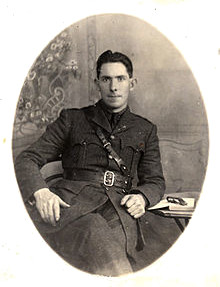
Leave a comment

Birth of Mary O’Rourke, Former Fianna Fáil Politician

Mary O’Rourke (née Lenihan), former Fianna Fáil politician, is born in Athlone, County Westmeath, on May 31, 1937.

O’Rourke is educated at St. Peter’s in Athlone, Loreto Bray Convent in County Wicklow, University College Dublin and St. Patrick’s College, Maynooth. She works as a secondary school teacher before beginning her political career.

O’Rourke begins her political career in local politics, serving on Athlone Urban District Council between 1974 and 1987 and on Westmeath County Council between 1979 and 1987. She is elected to Seanad Éireann in 1981 as a Senator for the Cultural and Educational Panel. She stands unsuccessfully for the Dáil at the February 1982 Irish general election but is subsequently re-elected to the Seanad. At the November 1982 Irish general election, she is first elected to Dáil Éireann as a Fianna Fáil TD for the Longford–Westmeath constituency, and from 1992 for the new Westmeath constituency.

In 1987, O’Rourke is appointed Minister for Education by Charles Haughey. She and her brother, Brian Lenihan Snr, become the first brother and sister in Irish history to serve in the same cabinet. In the November 1991 cabinet reshuffle, she becomes Minister for Health. In February 1992, Charles Haughey resigns as Taoiseach and Fianna Fáil leader, and she contests the subsequent leadership election along with Michael Woods and Albert Reynolds. Reynolds wins the election, and she is subsequently dropped from her ministerial position, but is appointed to a junior ministry as Minister of State for Labour Affairs at the Departments of Industry and Commerce, and later Enterprise and Employment.

In 1994, Bertie Ahern becomes party leader, and he appoints O’Rourke as deputy leader of Fianna Fáil, serving in the position until 2002. Following Ahern’s election as Taoiseach in June 1997, she becomes Minister for Public Enterprise, holding this position until she loses her Dáil seat at the 2002 Irish general election. This follows a vote management strategy from Fianna Fáil head office which restricts her from campaigning in her traditional areas around Kilbeggan, in an attempt to win 2 of the 3 seats in Westmeath. The loss of her Dáil seat is also attributed to her association with and the championing of, the privatisation of Telecom Éireann, which proves a financial disaster for many small investors, due to the share price falling radically, post privatisation. During this term as Minister, she also becomes the subject of public criticism by Ryanair chief executive Michael O’Leary. Following the loss of her Dáil seat, she is nominated to Seanad Éireann as a Senator by Taoiseach Bertie Ahern where she becomes Leader of the Seanad and leader of Fianna Fáil in the Seanad.

In January 2006, O’Rourke receives the party nomination to stand at the 2007 Irish general election. She narrowly defeats her nearest rival and Dáil election running mate, Kevin “Boxer” Moran of Athlone Town Council, causing a controversy when she thanks her election team for working “like blacks.” She is re-elected to the Dáil at the May 2007 Irish general election, with her highest ever vote.

In November 2008, during a march against the re-introduction of college fees, students from the Athlone Institute of Technology lay a funeral wreath at the door of O’Rourke’s constituency office. The card in the wreath states “Sincere sympathies on the death of free fees. We will remember this.” She describes the act as “heinous.” The wreath is placed there because she is not speaking at a rally against the fees.

In July 2010, O’Rourke concedes that she does not expect the party to be in power after the next general election. On RTÉ Radio‘s Today with Pat Kenny programme, she says the government is taking tough decisions to steer the country through the financial crisis and this will make it easy for the opposition. She says there is a general air of “crossness” within the Fianna Fáil party over their standing in the polls, but nobody is harboring leadership ambitions to challenge Brian Cowen.

In November 2010, O’Rourke says there is then more to unite her party and Fine Gael than to divide them. She points to the common approach of the two parties to Northern Ireland, Europe and the current financial crisis. In an address to the 1916–1921 Club in Dublin Castle, she says that most voters no longer defined themselves in terms of Civil War politics.

O’Rourke’s senior years lead her to often being referred to as the “Mammy of the Dáil.”

O’Rourke contests the 2011 Irish general election but is defeated on the poll. She had been critical of former Taoiseach Brian Cowen, saying that he should have resigned after his infamous “congested” radio interview. She supports the attack on Cowen by her nephew, former Finance Minister Brian Lenihan Jnr, who says he is “disappointed” by Cowen’s performance, and he had to provide the leadership when the Taoiseach did not.

As well as being a well-known politician, O’Rourke makes regular appearances in the media in a non-political capacity. She has been a contestant on RTÉ‘s reality series Celebrity Bainisteoir, as well as other shows such as Sex & Sensibility. She has guest presented Tonight with Vincent Browne.

In 2012, Just Mary: My Memoir is published. It wins the 2012 Irish Book Award in the “Listeners’ Choice” category.

O’Rourke comes from a strong political family, her father Patrick Lenihan serves as a TD for Longford–Westmeath from 1965 to 1970. Her brother Brian Lenihan is a senior government Minister and Tánaiste. Another brother, Paddy Lenihan, is a County Councillor in Roscommon, but resigns from Fianna Fáil in 1983 and becomes associated with Neil Blaney‘s Independent Fianna Fáil party. Two of her nephews, Brian Lenihan Jnr and Conor Lenihan, both sons of her brother Brian, serve as Ministers. Brian Lenihan Jnr is the Minister for Finance. Conor Lenihan is a Minister of State.

O’Rourke is widowed in January 2001, following the death of her husband, Enda. She has two sons. Aengus O’Rourke, her adopted son, runs for Athlone Town Council in 2009. The other son, Feargal O’Rourke, becomes Managing Partner of PricewaterhouseCoopers in Ireland in 2015 and is considered the “grand architect” of the Double Irish tax system, a major contributor to Ireland’s economic success in attracting U.S. multinationals to Ireland.


Leave a comment

IRA Commander Seán Mac Eoin Captured at Mullingar

Seán Mac Eoin, Irish Republican Army (IRA) North Longford commander, is captured at Mullingar, County Westmeath, on March 1, 1921, and charged with the murder of a Royal Irish Constabulary (RIC) detective, dealing a severe blow to the IRA in that area.

Mac Eoin is born John Joseph McKeon on September 30, 1893, at Bunlahy, Granard, County Longford, the eldest son of Andrew McKeon and Catherine Treacy. After a national school education, he trains as a blacksmith at his father’s forge and, on his father’s death in February 1913, he takes over the running of the forge and the maintenance of the McKeon family. He moves to Kilinshley in the Ballinalee district of County Longford to set up a new forge.

Having joined the United Irish League in 1908, Mac Eoin’s Irish nationalist activities begin in earnest in 1913, when he joins the Clonbroney Company of the Irish Volunteers. Late that year he is sworn into the Irish Republican Brotherhood (IRB) and joins the Granard circle of the organization.

Mac Eoin comes to prominence in the Irish War of Independence as leader of an Irish Republican Army (IRA) flying column. In November 1920, he leads the Longford brigade in attacking Crown forces in Granard during one of the periodic government reprisals, forcing them to retreat to their barracks. On October 31, Inspector Philip St. John Howlett Kelleher of the RIC is shot dead in the Greville Arms Hotel in Granard. Members of the British Auxiliary Division set fire to parts of the town. The following day, Mac Eoin holds the village of Ballinalee situated on the Longford Road between Longford and Granard. They stand against superior British forces, forcing them to retreat and abandon their ammunition. In a separate attack on November 8, he leads his men against the RIC at Ballinalee. One constable is killed, and two others are wounded.

On the afternoon of January 7, 1921, a joint RIC and British Army patrol consisting of ten policemen appears on Anne Martin’s street. According to Mac Eoin’s own testimony at his trial he is in the house in partial uniform, wearing Sam Browne belt and revolver with two Mills No. 4 bombs in his pocket. Owing to some females being in the house, he has to get out as to not endanger them. He steps out on the street and opens fire with his revolver. The leading file falls and the second file brings their rifles to the ready. He then throws a bomb, after which he sees that the entire force has cleared away, save the officer who was dead or dying on the street.

On February 2, 1921, the Longford IRA ambushes a force of the Auxiliaries on the road at Clonfin, using a mine it had planted. Two lorries are involved, the first blown up, and the second strafed by rapid rifle fire. Four auxiliaries and a driver are killed and eight wounded. The IRA volunteers capture 18 rifles, 20 revolvers and a Lewis gun. At the Clonfin Ambush, Mac Eoin orders his men to care for the wounded British, at the expense of captured weaponry, earning him both praise and criticism. He is admired by many within the IRA for leading practically the only effective column in the midlands.

Mac Eoin is captured at Mullingar railway station on March 1, 1921, imprisoned and sentenced to death for the murder of an RIC district inspector in the shooting at Anne Martin’s street in January 1921.

In June 1921, Henry Wilson, the British Chief of the General Staff (CIGS), is petitioned for clemency by Mac Eoin’s mother, his brother Jemmy, and the local Church of Ireland vicar, but passes on the appeals out of respect for the latter two individuals. Three auxiliaries had already given character references on his behalf after he had treated them chivalrously at the Clonfin Ambush in February 1921. However, Nevil Macready, British Commander-in-Chief, Ireland, confirms the death sentence describing Mac Eoin as “nothing more than a murderer.”

While imprisoned Mac Eoin is elected to Dáil Éireann at the 1921 Irish elections, as a TD for Longford–Westmeath. He is eventually released from prison, along with all other members of the Dáil, after Michael Collins threatens to break off treaty negotiations with the British government unless they are freed.

Mac Eoin joins the National Army and is appointed GOC Western Command in June 1922. His military career soars after the Irish Civil War. He is appointed GOC Curragh Training Camp in August 1925, Quartermaster General in March 1927, and Chief of Staff in February 1929.

Mac Eoin resigns from the Army in 1929 and is elected at a by-election to Dáil Éireann for the Leitrim–Sligo constituency, representing Cumann na nGaedheal. At the 1932 Irish general election, he returns to the constituency of Longford–Westmeath and continues to serve the Longford area as TD until he is defeated at the 1965 Irish general election.

During a long political career Mac Eoin serves as Minister for Justice (February 1948 – March 1951) and Minister for Defence (March–June 1951) in the First Inter-Party Government, and again as Minister for Defence (June 1954 – March 1957) in the Second Inter-Party Government. He unsuccessfully stands twice as candidate for the office of President of Ireland, against Seán T. O’Kelly in 1945 and Éamon de Valera in 1959.

Mac Eoin retires from public life after the 1965 general election and dies in Dublin on July 7, 1973.


Leave a comment

Ballinalee Raid in Search of Seán Mac Eoin

The Royal Irish Constabulary (RIC) raid a cottage near Ballinalee, County Longford, on January 7, 1921, looking for Seán Mac Eoin. Mac Eoin opens fire from the cottage, killing District Inspector Thomas McGrath, wounding a constable, and escaping.

Mac Eoin is a soldier and eventual politician of the Fine Gael party. He is commonly referred to as the “Blacksmith of Ballinalee.” He is born John Joseph McKeon on September 30, 1893, at Bunlahy, Granard, County Longford, the eldest son of Andrew McKeon and Catherine Treacy. He joins the United Irish League in 1908. His Irish nationalist activities begin in earnest in 1913, when he joins the Clonbroney Company of the Irish Volunteers. Late that year he is sworn into the Irish Republican Brotherhood and joins the Granard circle of the organization.

Mac Eoin comes to prominence in the Irish War of Independence as leader of an Irish Republican Army (IRA) flying column. On November 4, 1920, his column holds the village of Ballinalee situated on the Longford Road between Longford and Granard. They stand against superior British forces, forcing them to retreat and abandon their ammunition. In a separate attack on November 8, he leads his men against the RIC at Ballinalee. An eighteen-year-old Constable Taylor is killed. Constable E. Shateford and two others are wounded. The story is that the small garrison sings “God Save the King” as they take up positions to return fire.

On the afternoon of January 7, 1921, a joint RIC and British Army patrol consisting of ten policemen led by an Inspector, with a security detachment of nine soldiers, appears on Anne Martin’s street. Mac Eoin’s own testimony at his trial, which is not contested by any parties present, states, “I was at the table writing when I was informed of the advance of the party. My account books were left in this house for safety. I was in partial uniform, wearing Sam Browne belt and revolver with two Mills No. 4 bombs in my pocket. Owing to some females being in the house, I had to get out as I could not endanger them by putting up a defence in the house, and as this Officer and Police Force had already signified to my sister and mother their intention to shoot me on sight, I decided to give them a run for their money. I stepped out on the street, about three paces directly in front of the oncoming force and opened fire with my revolver. The leading file fell, and then the second file in the gateway brought their rifles to the ready. I then threw a bomb and jumped back behind the porch to let it burst. When it had burst and the smoke had lifted, I saw that the whole force had cleared away, save the officer who was dead or dying on the street.” The casualties from this incident are District Inspector Thomas McGrath killed, and a police constable wounded.

Mac Eoin is captured at Mullingar railway station in March 1921, imprisoned and sentenced to death for the murder of RIC District Inspector McGrath in the shooting at Anne Martin’s street in January 1921. Michael Collins organises a rescue attempt in June 1921. Six IRA Volunteers, led by Paddy Daly and Emmet Dalton, capture a British armoured car and, wearing British Army uniforms, gain access to Mountjoy Prison. However, Mac Eoin is not in the part of the jail they believed and, after some shooting, the party retreats.

Within days, Mac Eoin is elected to Dáil Éireann at the 1921 Irish elections, as a TD for Longford–Westmeath. He is eventually released from prison, along with all other members of the Dáil, after Collins threatens to break off treaty negotiations with the British government unless he is freed. It is rumoured that Sean Mac Eoin serves as the best man at Collins’ wedding.