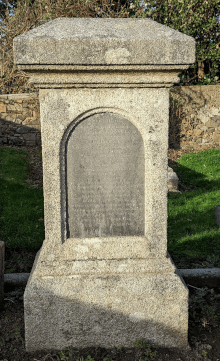
Bushe is born at Kilmurry House, near Thomastown, County Kilkenny, the only son of the Reverend Thomas Bushe, rector of Mitchelstown, and his wife Katherine Doyle, daughter of Charles Doyle of Bramblestown, near Gowran. Kilmurry House had been built by the Bushe family in the 1690s. His father is forced to sell it to pay his debts, but he is able to repurchase it in 1814. He goes to the celebrated Quaker academy, Shackleton’s School in Ballitore, County Kildare, then graduates from Trinity College Dublin (TCD), where his eloquence makes him a star of the College Historical Society. He is called to the Bar in 1790.
Bushe is a member of the Irish Parliament for Callan from 1796 to 1799, and for Donegal Borough from 1799 to 1800. He is Escheator of Leinster in 1799. By this time the office is a sinecure. He is vehemently opposed to the Acts of Union 1800, referring emotionally to Britain’s subjection of Ireland as “six hundred years of uniform oppression and injustice,” a phrase which quickly became a proverb. Although he refuses an offer of a place on the Bench as a bribe for supporting the Union, cynics note that his staunch opposition to the Union does not prevent him accepting high office under the British Crown afterwards. He is appointed Solicitor-General for Ireland in 1805 and holds the office for 17 years until in 1822 he is appointed Lord Chief Justice of the King’s Bench for Ireland, although only after William Saurin, the equally long-serving Attorney-General, refuses the position. He retire in 1841.
As an advocate “silver-tongued Bushe” is legendary for his eloquence, and as a politician, he is admired by his English contemporaries like Sir Robert Peel and Lord Brougham. As a judge, according to F. Elrington Ball, he does not live up to expectations, although, if not an outstanding judge, he is an impressive and dignified one. As a statesman he is often accused of double-dealing: having opposed the Acts of Union, he has few scruples about accepting office under the new regime; and while himself supporting Catholic Emancipation, he prosecutes members of the Catholic Association for sedition, merely for advocating the same cause.
He returns to England to be brigade major of the 2nd Infantry Brigade at Aldershot in 1886. He becomes deputy assistant adjutant general at Horse Guards in 1892, and deputy assistant adjutant general at Aldershot in 1894. He takes part in the Fourth Anglo-Ashanti War in 1895 and becomes assistant adjutant general at Horse Guards in 1897.
Stopford takes part in the Second Boer War as military secretary to General Sir Redvers Buller and later military secretary to the general officer commanding Natal, for which he is knighted as a Knight Commander of the Order of St. Michael and St. George in November 1900. After his return to Britain, he is appointed deputy adjutant general at Aldershot in 1901, and chief staff officer for I Corps with the temporary rank of brigadier general, on April 1, 1902. Two years later, he is appointed director of military training at Horse Guards. Promoted to major general in February 1904, he is Major-General commanding the Brigade of Guards and general officer commanding (GOC) of the London District from 1906. He is promoted to lieutenant general in September 1909.
On August 5, 1914, a day after the British entry into World War I, he is appointed GOC First Army, part of Home Forces, a position he holds until he takes command of IX Corps the following year.
As GOC of IX Corps, Stopford is blamed for the failure to attack following the landing at Suvla Bay in August 1915, during the Gallipoli campaign. He chose to command the landing from HMS Jonquil, anchored offshore, but sleeps as the landing is in progress. He is quickly replaced on August 15 by Major-General Sir Julian Byng.
After almost 50 years of military service, Stopford retires from the army in 1920.
Stopford dies at the age of 75 on May 4, 1929, at Marylebone, City of Westminster, Greater London, England. He is buried in the Holy Trinity and St. Andrew’s Churchyard in Ashe, Basingstoke and Deane borough, Hampshire, England.
His brother, Richard Pennefather, has a longer and more successful career as a judge. Appointed a Baron of the Court of Exchequer in 1821, he serves for nearly 40 years and is held in universal regard. With the general support of the profession, he remains on the Bench until shortly before his death at eighty-six, by which time he is blind. Edward and Richard, “the two Pennefathers,” are leading practitioners in the Court of Chancery (Ireland).
Pennefather is generally regarded as more gifted, a master of the law of equity and also a skilled libel lawyer. In 1816, he is one of the lead counsels in the celebrated libel case of Bruce v. Grady, which arises from the publication of a scurrilous poem called “The Nosegay,” written by a barrister, Thomas Grady, about his former friend, the notably eccentric banker George Evans Brady of Hermitage House, Castleconnell, County Limerick. The quarrel is said to arise from a dispute over money which Bruce had loaned to Grady. The plaintiff claims £20000 but the jury awards £500.
According to Elrington Ball, Pennefather is considered to be one of the greatest Irish advocates of his time, and one with few rivals in any age, but he does not live up to expectations as a judge, due largely to his age and increasing ill-health. As a judge he is remembered mainly for presiding at the trial of Daniel O’Connell in 1843 for sedition, where his alleged bias against the accused damages his reputation: he is accused of acting as prosecutor rather than judge, and his summing-up is described as simply an extra speech for the prosecution. Further damage to his reputation is done by the majority decision of the House of Lords quashing the verdict in the O’Connell case: while many of the errors were the fault of the prosecution, the Law Lords do not spare Pennefather for his conduct of the proceedings, and in particular for his summing-up. The Law Lords comment severely that the course of the trial, if condoned, will make a mockery of trial by jury in Ireland.
The related trial of Sir John Gray descends into farce when the Attorney-General, Sir Thomas Cusack-Smith, who is noted for his hot temper, challenges one of the defence counsel, Gerald Fitzgibbon, to a duel, for having allegedly accused him of improper motives. Pennefather tells the Attorney-General severely that a man in his position has no excuse for such conduct, whereupon the Attorney-General agrees to let the matter drop. The public notes with interest that Fitzgibbon’s wife and daughter are present in Court during the contretemps.
Following a long illness, Pennefather dies in Dunlavin, County Wicklow, on September 6, 1847. He is buried in Christ Church Cemetery, Delgany, County Wicklow.
Holmes, the son of parents who are natives of Antrim, County Antrim, and settled in Belfast, is born during a visit by his parents to Dublin in 1765. He enters Trinity College, Dublin in 1782, and graduates B.A. in 1787. He at first devotes himself to medicine, but he soon turns his attention to the law. In 1795, he is called to the bar. He spends a substantial period of his professional life travelling the northeast circuit in Ireland, where he gains a reputation for great ability and legal skill.
Holmes studies law and becomes one of the best-known defenders of the Nationalist leaders in Ireland. He speaks in 1846 in defence of Charles Gavan Duffy, editor of The Nation. Duffy had been indicted over an article written by John Mitchel, which comes to be known as the “Railway Article.” His defence proves successful and his speech on behalf of his client is described by Lord Chief JusticeEdward Pennefather as “the most eloquent ever heard in a court of Justice.”
In 1798, during a parade of the lawyer’s corps of yeomanry, of which he is a member, Holmes throws down his arms on learning that the corps is to be placed under the military authorities, dreading that he might have to act against the populace. To one Joy, a barrister, who had used insulting language to him respecting this circumstance, he sends a challenge, for which he suffers three months’ imprisonment. In 1799, he publishes a satirical pamphlet on the projected Acts of Union, entitled A Demonstration of the Necessity of the Legislative Union of Great Britain and Ireland. With the rising of his brother-in-law, Robert Emmet, on July 23, 1803, he has no connection, although he is arrested on suspicion and imprisoned for some months. This retards his advancement. He declines to receive any favours from the government, refusing in succession the offices of Crown prosecutor, King’s Counsel, and Solicitor-General, and to the last he remains a member of the outer bar.
Holmes has for many years the largest practice of any member of the Irish courts, and is listened to with attention by judges, although he is not always very civil to them. His law arguments form an important set of articles in the Irish Law Reports, and he is an impressive advocate, notably in his speeches in Watson v. Dill, in defence of The Nation newspaper, and his oration on behalf of John Mitchel, tried for treason-felony on May 24, 1848. During the course of his practice he makes over £100,000.
Holmes marries, firstly, Mary Anne Emmet, daughter of Dr. Robert Emmet. She is the sister of Robert Emmet, who leads an unsuccessful rebellion in 1803, and whose brother, Thomas Addis Emmet, is a leading member, with Theobald Wolfe Tone, of the Society of United Irishmen. Both take part in the Irish Rebellion of 1798. The marriage produces one surviving child, a daughter, who later marries George William Lenox-Conyngham, chief clerk of the Foreign Office, and in turn has an only daughter who in 1861 marries Viscount Doneraile.
Holmes marries in 1810 at Childwall, Liverpool, as his second wife, the English educator and writer Eliza Lawrence. She dies in 1811.
After his retirement in 1852, Holmes resides in London with his only child Elizabeth. He dies at the age of 94 at her home, 37 Eaton Place, Belgrave Square, London, on October 7, 1859.
During the course of his life, Holmes is the author of three published works. The first, published in 1799, is entitled A Demonstration of the Necessity of the Legislative Union of Great Britain and Ireland, a satirical pamphlet ridiculing the arguments of its supporters. The next is An Address to the Yeomanry of Ireland, demonstrating the necessity of their declaring their opinions upon Political Subjects. His most important work however, according to Peter Aloysius Sillard, is The Case of Ireland Stated, which apparently goes through six editions, the last in 1847.
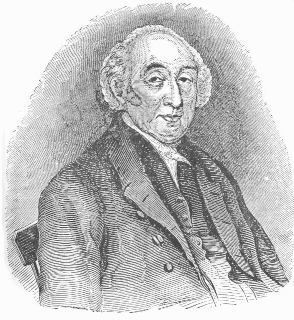
(Pictured: Image of Robert Holmes from Michael Doheny’s “The Felon’s Track”)
Whiteside is the son of William Whiteside, a clergyman of the Church of Ireland. His father is transferred to the parish of Rathmines but dies when his son is only two years old, leaving his widow in straitened circumstances. She schools her son personally in his early years. He is educated at Trinity College Dublin, enters the Middle Temple, and is called to the Irish bar in 1830.
Whiteside very rapidly acquires a large practice, and after taking silk in 1842 he gains a reputation for forensicoratory surpassing that of all his contemporaries and rivalling that of his most famous predecessors of the 18th century. He defends Daniel O’Connell in the state trial of 1843, and William Smith O’Brien in 1848. His greatest triumph is in the Yelverton case in 1861. He is elected Member of Parliament (MP) for Enniskillen in 1851, and in 1859 becomes an MP for Dublin University. In Parliament, he is no less successful as a speaker than at the bar, and in 1852 is appointed Solicitor-General for Ireland in the first administration of Prime MinisterEdward Smith-Stanley, becoming Attorney-General for Ireland in 1858, and again in 1866. In the same year he is appointed Lord Chief Justice of the Queen’s Bench, having previously turned down offers of a junior judgeship. His reputation as a judge does not equal his reputation as an advocate, although he retains his great popularity. In 1848, after a visit to Italy, he publishes Italy in the Nineteenth Century. In 1870 he collects and republishes some papers contributed many years before to periodicals, under the title Early Sketches of Eminent Persons.
In July 1833, Whiteside marries Rosetta, daughter of William and Rosetta Napier, and sister of Sir Joseph Napier, Lord Chancellor of Ireland. Like his brother-in-law, Joseph, he is devoted to the Church of Ireland and strongly opposes its disestablishment.
Whiteside is universally well-liked, being noted for charm, erudition and a sense of humour. Barristers who practise before him say that his charm, courtesy and constant flow of jokes make appearing in his Court a delightful experience.
Whiteside’s last years on the bench ware affected by ill health. He dies on November 25, 1876, at Brighton, Sussex, England. His brother-in-law, from whom he is estranged in later years, is overcome with grief at his death and collapses at the funeral. He is buried at Mount Jerome Cemetery in Dublin.
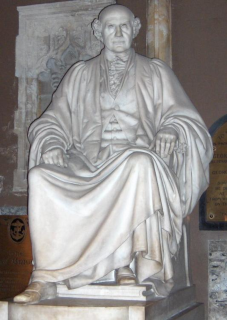
(Pictured: Statue of James Whiteside by Albert Bruce-Joy on display in St. Patrick’s Cathedral)
Christian is considered one of the best Irish lawyers of his time, but as a judge, he regularly courts controversy. His bitter and sarcastic temper and open contempt for most of his colleagues leads to frequent clashes both in Court and in the Press. Though he is rebuked for misconduct several times by the House of Commons, no serious thought seems to be given to removing him from office.
Christian is the third son of George Christian, a solicitor, and his wife Margaret Cormack. He is educated at the Trinity College Dublin, enters Gray’s Inn in 1831 and is called to the Bar of Ireland in 1834. He marries Mary Thomas in 1859 and they have four sons and four daughters. He lives at Ravenswell, Bray, County Wicklow.
Christian’s early years at the Bar are not successful, and he admits to being near to despair at times about his prospects. His practice lays in the Court of Chancery (Ireland). Chancery procedures are extremely complex, and he finds them at first almost unintelligible. Gradually he masters the intricacies of Chancery practice and becomes a leader of the Bar, taking silk in 1841. It is said that his expertise in Chancery procedures leaves even the Lord Chancellor himself quite unable to argue with him.
Christian is appointed Law Adviser to the Lord Lieutenant of Ireland, an influential post which involves assisting the Attorney General and Solicitor General in advising the Crown in 1850, but resigns after only a few months, on the ground that it interferes with his private practice. He is appointed Third Sergeant later the same year but resigns in 1855, allegedly because he is disappointed at not receiving further promotion. Promotion does in time come his way. He is appointed Solicitor General the following year and a judge of the Court of Common Pleas in 1858. He is unusual in having no strong political loyalty. It is said that his political allegiance is known only to himself.
As a judge of the Court of Common Pleas, Christian gets on well with his colleagues, and any dissenting judgements he writes are short and courteous. It is after his appointment as a Lord Justice of Appeal in Chancery in 1867 that his behaviour begins to attract unfavourable comment, as he goes out of his way to court controversy on a wide variety of topics.
Christian develops a deep contempt for the Irish Reports, castigating them in open Court as “nonsense,” “worthless rubbish” and “disjointed twaddle.” All attempts by colleagues to get him to moderate his language fail. He threatens to refuse to let his judgements be reported, and in his last years, his relations with the law reporters are so bad that they simply publish their uncorrected notes of his decisions rather than sending them to the judge for revision.
In 1867 a new office of Vice-Chancellor for Ireland is created. It is filled throughout its existence by one man, Hedges Eyre Chatterton, who retires in 1904. Despite his length of service, he is not considered a judge of the first rank, and Christian evidently combines feelings of professional contempt with a personal dislike for him. Christian usually votes on appeals to overturn his judgments, and frequently adds personal attacks on Chatterton, despite protests from his colleagues. The feud between the two judges reaches the Press in 1870 when The Irish Times, without naming them, quotes one judge’s opinion that another is “lazy, stupid, conceited and dogmatic.” Although Christian denies it, it is universally believed that he is the author of the remarks, which are aimed at Chatterton. Chatterton is fortunate in enjoying the support of the Lord Chancellor of Ireland, Thomas O’Hagan, 1st Baron O’Hagan, who is also on bad terms with Christian.
Christian had worked well with Abraham Brewster, O’Hagan’s predecessor, whom he respected. For O’Hagan on the other hand, he feels the same dislike and contempt which he felt for Chatterton. Although they served together in the Court of Common Pleas without any obvious conflict, Christian considers O’Hagan’s appointment as Lord Chancellor to be a purely political act, and that he is unfit to be either head of the judiciary or an appeal judge in Chancery. He also complains of what he sees as O’Hagan’s laziness, which puts an extra burden on him. During O’Hagan’s first term as Chancellor, Christian subjects him to constant criticism. Unwisely he does not confine these attacks to the Courtroom but publishes numerous pamphlets, which is widely seen as improper conduct in a judge. When O’Hagan becomes Chancellor for the second time, a friend congratulates him on escaping from “the misnamed Christian” who had retired two years earlier.
It is probably Christian’s feud with O’Hagan which leads to his extraordinary decision to publicly attack the House of Lords for reversing, by a majority including O’Hagan, his judgment in O’Rorke v Bolingbroke. In a letter to The Times in 1877, whose content has been described as “astounding,” he questions the Law Lords knowledge of equity. While he singles out Lord Blackburn for criticism, it is likely that he also intends to harm O’Hagan’s reputation.
A major source of contention between Christian and O’Hagan is the Landlord and Tenant (Ireland) Act 1870, which O’Hagan steers through Parliament. The Act provides for compensation for tenants in the event of eviction. Christian, though he is not a landowner and is not as a rule much interested in politics, objects strongly to the policy of the Act, which he believes to be most unjust to landlords. His attacks from the Bench on the Act lead to serious rebukes both from the House of Commons and from the Press, which comment on the impropriety of a judge attacking an Act of Parliament, which it is his duty to enforce.
O’Hagan’s retirement does nothing to lessen Christian’s ill-temper. Other judges come in for attack, including Lord Chief Justice of IrelandJames Whiteside, whom he accuses of speaking constantly on matters of which he is ignorant. In his later years, he seems to be a lonely and isolated figure. His vigorous opposition to the Supreme Court of Judicature (Ireland) Act 1877 is entirely unsuccessful. A feeling of isolation may partly explain his decision to retire, though certainly his increasing deafness also plays a part.
V.T.H. Delaney praises Christian as a great master of equity, a man of great learning and a judge with a great desire to see justice done, but he does not deny that Christian loved controversy. Even his supporters spoke of “arrows too sharply pointed.” Critics spoke of his “spirit of personal sarcasm, cold, keen and cynical.” No doubt Christian was genuinely concerned to uphold high standards of judicial conduct, but as Daire Hogan points out, his own conduct struck most observers as far more improper than anything he complained of in others.
Wolfe is the eighth of nine sons born to John Wolfe (1700–60) and his wife Mary (d. 1763), the only child and heiress of William Philpot, a successful merchant at Dublin. One of his brothers, Peter, is the High Sheriff of Kildare, and his first cousin Theobald is the father of the poet Charles Wolfe.
Wolfe is educated at Trinity College Dublin, where he is elected a Scholar, and at the Middle Temple in London. He is called to the Irish Bar in 1766. In 1769, he marries Anne Ruxton (1745–1804) and, after building up a successful practice, takes silk in 1778. He and Anne have four children, John, Arthur, Mariana and Elizabeth.
Appointed Attorney-General for Ireland in 1789, Wolfe is known for his strict adherence to the forms of law, and his opposition to the arbitrary measures taken by the authorities, despite his own position in the Protestant Ascendancy. He unsuccessfully prosecutes William Drennan in 1792. In 1795, Lord Fitzwilliam, the new Lord Lieutenant of Ireland, intends to remove him from his place as Attorney-General to make way for George Ponsonby. In compensation, Wolfe’s wife is created Baroness Kilwarden on September 30, 1795. However, the recall of Fitzwilliam enables Wolfe to retain his office.
After the Irish Rebellion of 1798, Wolfe becomes notable for twice issuing writs of habeas corpus on behalf of Wolfe Tone, then held in military custody, but these are ignored by the army and forestalled by Tone’s suicide in prison. In 1795 he had also warned Tone and some of his associates to leave Ireland to avoid prosecution. Tone’s godfather, Theobald Wolfe of Blackhall (the father of Charles Wolfe), is Wolfe’s first cousin, and Tone may have been Theobald’s natural son. These attempts to help a political opponent are unique at the time.
In 1802 Wolfe presides over the case against Town Major Henry Charles Sirr in which the habitual abuses of power used to suppress rebellion are exposed in court.
In the same year Wolfe orders that the well-known Catholic priest Father William Gahan be imprisoned for contempt of court. In a case over the disputed will of Gahan’s friend John Butler, 12th Baron Dunboyne, the priest refuses to answer certain questions on the ground that to do so would violate the seal of the confessional, despite a ruling that the common law does not recognize the seal of the confessional as a ground for refusing to give evidence. The judge apparently feels some sympathy for Gahan’s predicament, as he is released from prison after only a few days.
During the Irish rebellion of 1803, Wolfe, who had never been forgiven by the United Irishmen for the execution of William Orr, is clearly in great danger. On the night of July 23, 1803, the approach of the Kildare rebels induces him to leave his residence, Newlands House, in the suburbs of Dublin, with his daughter Elizabeth and his nephew, Rev. Richard Wolfe. Believing that he will be safer among the crowd, he orders his driver to proceed by way of Thomas Street in the city centre. However, the street is occupied by Robert Emmet‘s rebels. Unwisely, when challenged, he gives his name and office, and he is rapidly dragged from his carriage and stabbed repeatedly with pikes. His nephew is murdered in a similar fashion, while Elizabeth is allowed to escape to Dublin Castle, where she raises the alarm. When the rebels are suppressed, Wolfe is found to be still alive and is carried to a watch-house, where he dies shortly thereafter. His last words, spoken in reply to a soldier who called for the death of his murderers, are “Murder must be punished; but let no man suffer for my death, but on a fair trial, and by the laws of his country.”
Wolfe is succeeded by his eldest son John Wolfe, 2nd Viscount Kilwarden. Neither John nor his younger brother Arthur, who dies in 1805, have male issue, and on John’s death in 1830 the title becomes extinct.
(Pictured: Portrait of Lord Chief Justice of Ireland, Arthur Wolfe (later Viscount Kilwarden) by Hugh Douglas Hamilton, between 1797 and 1800, Gallery of the Masters)
Scott is the third son of Thomas Scott of Scottsborough, County Tipperary, and his wife Rachel, daughter of Mark Prim of Johnswell, County Kilkenny. His parents are cousins, being two of the grandchildren of Nicholas Purcell, 13th Baron of Loughmoe. His elder brother is the uncle of Bernard Phelan, who establishes Château Phélan Ségur, and Dean John Scott, who first plants the gardens open to the public at Ballyin, County Waterford and marries a niece of Scott’s political ally, Henry Grattan.
While at Kilkenny College, Scott stands up to the tormentor of a boy named Hugh Carleton, who grows up to be Viscount Carleton of Clare. They become firm friends, and Carleton’s father, then known as the “King of Cork,” due to his wealth and influence, invites him to their home and becomes his patron. In 1756, Carleton sends both the young men off, with equal allowances, to study at Trinity College, Dublin and then the Middle Temple in London. On being called to the Irish bar in 1765, Scott’s eloquence secures him a position that enables him to pay £300 a year to his patron, Francis Carleton, who through a series of disappointments has been declared bankrupt. He continues to gratefully support his patron until Hugh Carleton is financially able to insist that he take up the payments to his father. Scott in later life turns against Carleton, describing him in his diary as a “worthless wretch.”
Admitted to King’s Inns in 1765, Scott is entitled to practice as a barrister. In 1769 he is elected as the Member of Parliament for Mullingar, a seat he holds until 1783. The following year he is made a King’s Counsel (KC). In 1772 he is Counsel to the Board of Revenue and in 1774 is appointed Solicitor-General for Ireland (1774–1777). Three years later, he is elected a Privy Councillor and Attorney-General for Ireland (1774–1783). He is dismissed from the latter position in 1782 for refusing to acknowledge the right of England to legislate for Ireland. In 1775, he is awarded an honorary degree of Doctor of Law (LL.D.) by Trinity College, Dublin. He holds the office of Prime Serjeant-at-Law of Ireland between 1777 and 1782. He is Clerk of the Pleas of the Court of the Exchequer in 1783 and is elected Member of Parliament for Portarlington between 1783 and 1784.
In 1784, Scott is created 1st Baron Earlsfort of Lisson-Earl, County Tipperary, following his appointment to Lord Chief Justice of the King’s Bench. In 1789 he is created 1st Viscount Clonmel, of Clonmel, County Tipperary and in 1793 is created 1st Earl of Clonmel. By the 1790s he has an annual income of £20,000. Due to heavy drinking and overeating he becomes seriously overweight, and this no doubt contributes to his early death, although his diary shows that he makes frequent efforts to live a more temperate life. Drinking also produces the red face which earns him the nickname “Copper-faced Jack.”
In 1768, Scott marries the widowed Catherine Anna Maria Roe, daughter of Thomas Mathew, of Earl Landaff and sister of Francis Mathew, 1st Earl Landaff. She dies in 1771. In 1779, he marries Margaret Lawless, daughter and eventual heiress of banker Patrick Lawless of Dublin. He leaves a son and heir and a daughter by his second marriage.
Scott lives at Clonmell House, 17 Harcourt Street, Dublin. He also keeps a country residence, Temple Hill House, in County Dublin. Clonmell Street in Dublin is named in his honour, as is Earlsfort Terrace, also in Dublin. He also gains a reputation of being an experienced duelist.
In 1797, in the last conversation he would have with his wife’s cousin, Valentine Lawless, 2nd Baron Cloncurry, he exclaims, “My dear Val, I have been a fortunate man in life. I am a Chief Justice and an Earl; but, believe me, I would rather be beginning the world as a young (chimney) sweep.” He dies at the age of 58 the following year on May 23, 1798.
(Pictured: John Scott, 1st Earl of Clonmell, oil on canvas by Gilbert Charles Stuart)
The statue is the location for annual rituals organised by loyalist elements in the city, with events held in July and November being flashpoints on the Dublin calendar. Heavily criticised by Daniel O’Connell and other nationalist voices, Dublin Castle distances itself from the ceremonies, but it is the eventual banning of the November ceremony which infuriates the Orange Order into action.
Following clashes at the event in July 1822, a decision is made by Marquess Wellesley, in his capacity as Lord Lieutenant, to seek a ban against the November event. A heavy military presence prevents the traditional loyalist display. This decision causes great resentment towards Wellesley from loyalists in the city, as would other actions such as appointing a Catholic lawyer to a position of importance in the courts. A visit by him to the Theatre Royal is seen as an opportunity to show that discontent. The Theatre Royal on Hawkins Street is relatively new at the time, having only opened the previous year. The announcement that the Lord Lieutenant would be attending the theatre causes considerable excitement in the city.
Six men meet in a tavern on Wednesday, December 11, all members of the Orange Order. John and George Atkinson, James Forbes, William Graham and Henry and Matthew Handwith drink to “the glorious, immortal and pious memory” of King William of Orange, plotting a protest against the Lord Lieutenant which would grab the attention of the city. On December 13, a meeting of Lodge 1612 of the Orange Order on Werburgh Street decides to fund the purchase of twelve pit tickets for the upcoming play, with the aim of creating a scene which would embarrass the Lord Lieutenant.
The trouble begins inside the theatre with the tossing of pamphlets with the slogan “No Popery” upon them, most of which drift towards the stage. There are some cries of “No Popish Lord Lieutenant,” and the Lord Mayor of Dublin is also subject to ridicule. The play begins as planned, only to be interrupted throughout. A series of items are thrown in the direction of the Lord Lieutenant. The event comes to be known as “The Bottle Riot” in Dublin, owing to the missiles thrown. While the Lord Lieutenant is never in any real physical danger, the incident is hugely embarrassing for the authorities, with mob rule taking centre stage at one of Dublin’s most prestigious venues.
Several days later, the behaviour of the Orangemen is the subject of a protest meeting in Dublin. This meeting is significant as it is addressed by some hugely influential figures, including the Duke of Leinster, Daniel O’Connell, Henry Grattan, Jr. and Arthur Guinness II, son of the famous brewer. Guinness denounces the men as a “mischievous faction” and calls for them to be opposed “by the severe but wholesome discipline of the laws.”
While the instigators of the affair are brought in front of the courts on two separate occasions, both cases collapse causing much anger. Lord Chief Justice of IrelandCharles Kendal Bushe remarks to the jury in his summation that “an audience may cry down a play, or hiss, or hoot an actor,” but that riotous behaviour is not permitted. One effect of the mini riot is the outlawing of the Orange Order for a period, when the Unlawful Societies Act of 1825 comes into being.
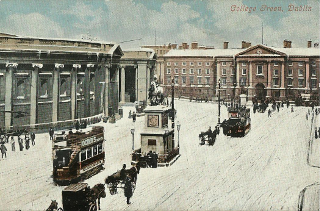
(Pictured: Undated postcard showing the monument of King William of Orange on College Green)




 seamus dubhghaill