seamus dubhghaill

Promoting Irish Culture and History from Little Rock, Arkansas, USA


Leave a comment

Birth of Eva Gore-Booth, Suffragist & Sister of Countess Markievicz

Eva Selina Laura Gore-Booth, poet and dramatist, and a committed suffragist, social worker and labour activist, is born at Lissadell HouseCounty Sligo, on May 22, 1870. She is the younger sister of Constance Gore-Booth, later known as the Countess Markievicz.

The work of Gore-Booth, alongside that of Esther Roper, the English woman who would become her lifelong companion, is responsible for the close link between the struggle for women’s rights in industry and the struggle for women’s right to vote. As a middle-class suffragist representing Manchester, the work of Gore-Booth is mainly recognized in the Lancashire cotton towns from 1899 to 1913. Her struggle begins when she becomes a member of the executive committee of the National Union of Women’s Suffrage Societies. Carrying out work at the Ancoats settlement, Eva becomes co-secretary of the Manchester and Salford Women’s Trade Union Council.

In 1902 Gore-Booth campaigns at the Clitheroe by-election on behalf of David Shackleton, a Labour candidate who promises her that he would show support for the women’s enfranchisement. Shackleton is elected but does not act upon his promise. This leads to the founding of the Lancashire and Cheshire Women Textile and Other Worker’s Representation Committee by Gore-Booth, Esther Roper and Sarah Reddish. When the Women’s Trade Union Council refuses to make women’s suffrage one of its aims, Gore-Booth resigns from the council.

In 1902 Gore-Booth campaigns at the Clitheroe by-election on behalf of David Shackleton, a Labour candidate who promises her that he would show support for the women’s enfranchisement. Shackleton is elected but does not act upon his promise. This leads to the founding of the Lancashire and Cheshire Women Textile and Other Worker’s Representation Committee by Gore-Booth, Esther Roper and Sarah Reddish. When the Women’s Trade Union Council refuses to make women’s suffrage one of its aims, Gore-Booth resigns from the council.

In 1907 Gore-Booth, reluctant to give up hope, contributes an essay “The Women’s Suffrage Movement Among Trade Unionists” to The Case for Women’s Suffrage. In this essay Eva gives a summary of reasons for the methods of the LCWTOW campaign to gain a vote for working women.

As World War I breaks out, Gore-Booth and Esther Roper take up welfare work among German women and children in England. Gore-Booth becomes a member of the Women’s Peace Crusade in 1915 and the No-Conscription Fellowship in 1916.

When Gore-Booth embarks on her writing career she is visited by William Butler Yeats who is very much taken with her work. Yeats hopes that she will take up his cause of writing Irish tales to enchant and amuse. Instead, Eva takes Irish folklore and put emphasis on the females in the story. Her widely discussed sexuality in later years is never declared but her poetry reflects it quite overtly. Gore-Booth is also one of a group of editors of the magazine Urania that publishes three issues per year from 1916 to 1940. It is a feminist magazine that reprints stories and poems from all over the world with editorial comment.

After years of playing a lead role in the Women’s Suffrage Movement and fighting for equality of women’s rights in the UK as well as staying true to her literary roots, Gore-Booth and Roper relocate to London from Manchester in 1913 due to Gore-Booth’s deteriorating respiratory health.

Just weeks after the 1916 Easter Rising, Gore-Booth travels to Dublin accompanied by Roper and is pivotal in the efforts to reprieve the death sentence of her sister Constance Markievicz awarded for her instrumental role in the rising, which is successfully converted to a life sentence. She further campaigns to abolish the death sentence overall and to reform prison standards. She attends the trial of Irish nationalist and fellow poet Roger Casement thus showing solidarity and support for the overturning of his death sentence.

During the remaining years of her life, which is claimed by cancer on June 30, 1926, Gore-Booth remains devoted to her poetry, dedicates time to her artistic talents as a painter, studies the Greek language and is known as a supporter of animal rights. She dies in her home in Hampstead, London, which she shares with Roper until her passing. She is buried alongside Roper in St. John’s churchyard, Hampstead.


Leave a comment

The M62 Coach Bombing

m62-coach-bombing

The M62 coach bombing occurs on February 4, 1974, on the M62 motorway in Northern England, when a Provisional Irish Republican Army (IRA) bomb explodes in a coach carrying off-duty British Armed Forces personnel and their family members. Twelve people, nine soldiers and three civilians, are killed by the bomb, which consists of 25 pounds of high explosive hidden in a luggage locker on the coach.

The coach has been specially commissioned to carry British Army and Royal Air Force personnel on leave with their families from and to the bases at Catterick and Darlington during a period of railway strike action. The vehicle departs from Manchester and is making good progress along the motorway. Shortly after midnight, when the bus is between junction 26 and 27, near Oakwell Hall, there is a large explosion on board. Most of those aboard are sleeping at the time. The blast, which can be heard several miles away, reduces the coach to a “tangle of twisted metal” and throws body parts up to 250 yards.

The explosion kills eleven people outright and wounds over fifty others, one of whom dies four days later. Amongst the dead are nine soldiers – two from the Royal Artillery, three from the Royal Corps of Signals, and four from the 2nd battalion Royal Regiment of Fusiliers. One of the latter is Corporal Clifford Haughton, whose entire family, consisting of his wife Linda and his sons Lee (5) and Robert (2), also die. Numerous others suffer severe injuries, including a six-year-old boy, who is badly burned.

The driver of the coach, Roland Handley, is injured by flying glass, but is hailed as a hero for bringing the coach safely to a halt. Handley dies at the age of 76 after a short illness in January 2011.

Suspicions immediately fall upon the IRA, which is in the midst of an armed campaign in Britain involving numerous operations, later including the Guildford pub bombing and the Birmingham pub bombings.

Reactions in Britain are furious, with senior politicians from all parties calling for immediate action against the perpetrators and the IRA in general. The British media are equally condemnatory. According to The Guardian, it is “the worst IRA outrage on the British mainland” at that time, whilst the BBC describes it as “one of the IRA’s worst mainland terror attacks.” The Irish newspaper The Sunday Business Post later describes it as the “worst” of the “awful atrocities perpetrated by the IRA” during this period.

IRA Army Council member Dáithí Ó Conaill is challenged over the bombing and the death of civilians during an interview and replies that the coach had been bombed because IRA intelligence indicated that it was carrying military personnel only.

Following the explosion, the British public and politicians from all three major parties call for “swift justice.” The ensuing police investigation led by Detective Chief Superintendent George Oldfield is rushed, careless, and ultimately forged, resulting in the arrest of the mentally ill Judith Ward who claims to have conducted a string of bombings in Britain in 1973 and 1974 and to have married and had a baby with two separate IRA members. Despite her retraction of these claims, the lack of any corroborating evidence against her, and serious gaps in her testimony – which is frequently rambling, incoherent, and “improbable” – she is wrongfully convicted in November 1974.

The case against Ward is almost completely based on inaccurate scientific evidence using the Griess test and deliberate manipulation of her confession by some members of the investigating team. The case is similar to those of the Guildford Four, the Birmingham Six, and the Maguire Seven, which occur at the same time and involve similar forged confessions and inaccurate scientific analysis. Ward is finally released in 1992, when three Appeal Court judges hold unanimously that her conviction was “a grave miscarriage of justice,” and that it had been “secured by ambush.”


Leave a comment

Birth of Catholic Teetotalist Reformer Theobald Mathew

theobald-mathew

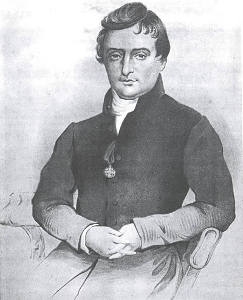
Theobald Mathew, Irish Catholic teetotalist reformer popularly known as Father Mathew and “The Apostle of Temperance,” is born at Thomastown, near Golden, County Tipperary, on October 10, 1790.

Mathew receives his schooling in Kilkenny, then moves for a short time to Maynooth. From 1808 to 1814 he studies in Dublin, where in the latter year he is ordained to the priesthood. Having entered the Capuchin order, after a brief period of service at Kilkenny, he joins the mission in Cork.

The movement with which his name is associated begins on April 10, 1838, with the establishment of the Cork Total Abstinence Society, which in less than nine months enrolls no fewer than 150,000 names. It rapidly spreads to Limerick and elsewhere, and some idea of its popularity may be formed from the fact that at Nenagh 20,000 persons are said to take the pledge in one day, 100,000 at Galway in two days, and 70,000 in Dublin in five days. At its height, just before the Great Famine, his movement enrolls some 3 million people, or more than half of the adult population of Ireland. In 1844 he visits Liverpool, Manchester, and London with almost equal success.

His work has a remarkable impact on the condition of the people in Ireland. The number committed to jail falls from 12,049 in 1839 to 9,875 by 1845. Sentences of death fall from 66 in 1839 to 14 in 1846, and transportations fall from 916 to 504 over the same period.

Mathew visits the United States in 1849, returning in 1851. While there, he finds himself at the center of the Abolitionist debate. Many of his hosts are pro-slavery and want assurances that their influential guest will not stray outside his remit of battling alcohol consumption. But Mathew has signed a petition encouraging the Irish in the U.S. to not partake in slavery in 1841 during Charles Lenox Remond‘s tour of Ireland. Now however, in order to avoid upsetting his slave-owning friends in the U.S., he snubs an invitation to publicly condemn chattel slavery, sacrificing his friendship with that movement. He defends his position by pointing out that there is nothing in the scripture that prohibits slavery. He is condemned by many on the abolitionist side, including the former slave and abolitionist Frederick Douglass who had received the pledge from Mathew in Cork in 1845.

Mathew dies on December 8, 1856, in Queenstown, County Cork, after suffering a stroke. He is buried at St. Joseph’s Cemetery, Cork City, which he had established himself.

Statues of Mathew stand on St. Patrick’s Street, Cork by John Henry Foley (1864), and on O’Connell Street, Dublin by Mary Redmond (1893). There is also a Fr. Mathew Bridge in Limerick, County Limerick, which is named after the temperance reformer when it is rebuilt in 1844-1846.


Leave a comment

Birth of Hunger Striker Edward Martin Hurson

edward-martin-hurson

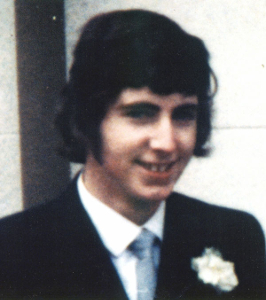
Edward Martin Hurson, Irish republican hunger striker and a volunteer in the East Tyrone Brigade of the Provisional Irish Republican Army (IRA), is born in Cappagh, County Tyrone, on September 13, 1956.

Hurson is one of nine children born to Johnnie and Mary Ann Hurson. Both of his parents come from the Cappagh district, and every member of the family is born into the white-washed farmhouse perched precipitously on top of the thirty hilly acres of rough land. Martin is close to the land as he grows up. He is educated to a primary level at Crosscavanagh Primary School in Galbally and at secondary level in St. Patrick’s, Galbally. When he is not at school, he is more often than not helping out about the farm, driving a tractor, helping to rear “croppy pigs,” or looking after cattle.

After leaving school, he works as an apprentice fitter welder for a while before going to Manchester, England where he stays for eighteen months with his brother Francis and works in the building trade. Returning to County Tyrone around Christmas of 1974, both he and his brother spend time in Bundoran, County Donegal, a known IRA training and supply centre.

Hurson, together with Kevin O’Brien, Dermot Boyle, Peter Kane, and Pat O’Neill are arrested and taken to the Omagh Royal Ulster Constabulary (RUC) barracks on November 11, 1976. He is beaten about the head, back, and testicles, spread-eagled against a wall and across a table, slapped, punched, and kicked. Under torture Martin signs statements admitting involvement in republican activity. On Saturday night, November 13, Martin is charged with a landmine explosion at Galbally in November 1975.

This charge is later dropped, but he is then further charged with IRA membership and explosive offences. Hurson spends a year on remand before being convicted in November 1977 and sentenced to 20 years for possession of landmines and conspiracy. He appeals his conviction on the grounds that the judge had ignored medical evidence about his ill-treatment.

The appeal is dismissed but he is granted a retrial. At the four-day trial in September 1979, the Omagh statements are ruled inadmissible, but instead of Martin walking free the judge goes on to accept the admissibility of the Cookstown statements, themselves extracted under threat of renewed torture. Following his retrial, he appeals his conviction once again, challenging the admissibility of the Cookstown statements, but his appeal is disallowed in June 1980.

Hurson becomes engaged to his long-term girlfriend, Bernadette Donnelly, while in prison. He is part of the blanket protest and joins the 1981 Irish Hunger Strike on May 28, replacing South Derryman Brendan McLaughlin who withdraws following a perforated stomach ulcer.

He loses the ability to hold down water after approximately 40 days on hunger strike and suffers a horrifically agonising death due to dehydration at 4:30 AM on July 13, after only 46 days on hunger strike, considerably shorter than any other hunger striker. Near the end his family considers the possibility of intervening to save his life, but they are told that he will likely have permanent brain damage.


Leave a comment

The 1996 Manchester Bombing

manchester-bombing-1996

The Provisional Irish Republican Army (IRA) detonates a powerful 3,300-pound truck bomb on Corporation Street in the centre of Manchester, England, at 11:17 AM on June 15, 1996. The biggest bomb detonated in Great Britain since World War II, it targets the city’s infrastructure and economy and causes widespread damage, estimated by insurers at £700 million.

The IRA sends telephone warnings about 90 minutes before the bomb is detonated. The area is evacuated but the bomb squad, using a remote-controlled device, is unable to defuse the bomb in time. More than 200 people are injured, but there are no fatalities. At the time, England is hosting the UEFA Euro ’96 football championships and a match between Russia and Germany is to take place in Manchester the following day.

The Marks & Spencer store, the sky bridge connecting it with the Arndale Centre, and neighbouring buildings are destroyed. The blast creates a mushroom cloud which rises 1,000 feet into the sky. Glass and masonry are thrown into the air and people are showered by falling debris behind the police cordon a half mile away. A search of the area for casualties is confused by mannequins blasted from shop windows, which are sometimes mistaken for bodies.

Since 1970 the Provisional IRA has been waging a campaign aimed at forcing the British government to negotiate a withdrawal from Northern Ireland. Although Manchester has been the target of IRA bombs before 1996, it has not been subjected to an attack of this scale. The IRA had ended its seventeen-month ceasefire in February 1996 with a similarly large truck bomb attack on the London Docklands.

The bombing is condemned by John Major‘s government, the opposition, and by individual members of parliament (MPs) as a “sickening”, “callous,” and “barbaric” terrorist attack. Early on, Major states that, “This explosion looks like the work of the IRA. It is the work of a few fanatics and…causes absolute revulsion in Ireland as it does here.” Sinn Féin is criticised by Taoiseach John Bruton for being “struck mute” on the issue in the immediate aftermath. The President of the United States, Bill Clinton, states he is “deeply outraged by the bomb explosion” and joins Bruton and Major in “utterly condemning this brutal and cowardly act of terrorism.” On June 20, 1996, the IRA claims responsibility for the bombing and states that it “sincerely regretted” causing injury to civilians.

Several buildings near the explosion are damaged beyond repair and have to be demolished, while many more are closed for months for structural repairs. Most of the rebuilding work is completed by the end of 1999, at a cost of £1.2 billion, although redevelopment continues until 2005. The perpetrators of the attack have not been caught and Greater Manchester Police concede it is unlikely that anyone will ever be charged in connection with the bombing.