seamus dubhghaill

Promoting Irish Culture and History from Little Rock, Arkansas, USA


Leave a comment

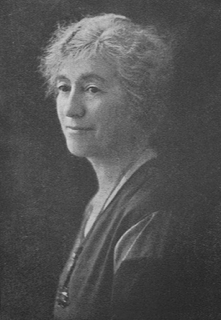
Birth of Margaret Cousins, Educationist, Suffragist & Theosophist

Margaret Elizabeth Cousins (née Gillespie), an Irish-Indian educationist, suffragist, and Theosophist who plays a pivotal role in advancing women’s rights in Ireland and India, is born in Boyle, County Roscommon, on November 7, 1878.

Cousins, also known as Gretta Cousins, is born into a Protestant and Unionist family. She is the eldest of fifteen children of Joseph Gillespie, a petty session clerk, and Margaret Annie Gillespie (née Shera). She excels academically, earning a scholarship to Victoria High School for Girls in Derry. In 1898, she moved to Dublin and studies music at the Royal Irish Academy of Music before attending the Royal University of Ireland, graduating with a BMus in 1902. She marries poet and literary critic James Cousins on April 9, 1903, and maintains her independence by continuing to work as a music teacher.

Cousins is deeply involved in the Irish women’s suffrage movement. She co-founds the Irish Women’s Franchise League with Hanna Sheehy-Skeffington in 1908, serving as its first treasurer, and actively participates in protests, including the Parliament of Women in 1910 and demonstrations against the Second Home Rule Bill in 1913, which leads to her imprisonment in Tullamore Jail. She is also a committed vegetarian and engages with the Irish Vegetarian Society, promoting social reform and ethical living.

In 1915, Cousins and her husband move to India, where she continues her activism. She becomes the first non-Indian member of the Indian Women’s University at Poona (present-day Pune) and co-founds the Women’s Indian Association (WIA) in 1917 with Annie Besant and Dorothy Jinarajadasa, advocating for women’s education and empowerment.

Cousins also plays a key role in preserving the tune of the Indian National Anthem, Jana Gana Mana, and is part of the Flag Presentation Committee that presents the National Flag to the Constituent Assembly of India in 1947. She later founds the All India Women’s Conference (AIWC), further cementing her legacy in advancing women’s rights in India.

A stroke leaves Cousins paralysed from 1943 onward. She receives financial support from the Madras government, and later Jawaharlal Nehru, in recognition of her services to India. She dies at the age of 75 on March 1, 1954, in Adyar, Chennai.

Cousins’ work bridges Irish and Indian social reform movements, combining her interests in education, feminism, and Theosophy. She is recognized for her contributions to women’s rights and education, and her efforts leave a lasting impact on both countries. Her manuscripts are dispersed in various collections across the world.


Leave a comment

Founding of the Irish Women’s Franchise League

irish-womens-franchise-league

The Irish Women’s Franchise League (IWFL), an organisation for women’s suffrage, is established in Dublin on November 4, 1908. Its founder members include Hanna Sheehy-Skeffington, Francis Sheehy-Skeffington and James H. Cousins. Thomas MacDonagh is also a member. The IWFL has 1,000 members by 1912 but only about fifty of these are active.

In the early 20th century, the Irish Parliamentary Party under John Redmond and his deputy John Dillon is opposed to votes for women, as is the British prime minister, H. H. Asquith.

In June 1912, after a meeting of a number of women’s organisations, Hanna Sheehy-Skeffington and Margaret Cousins with six other members of the IWFL smash government windows in the General Post Office (GPO) and other government buildings. They are arrested, charged, and jailed. The following month Asquith makes a visit to Dublin to address a meeting in the Theatre Royal. Frank Sheehy-Skeffington manages to gain entrance and demands votes for women before being thrown out. Meanwhile Asquith’s carriage is attacked by British suffragists Mary Leigh and Gladys Evans. In that attack John Redmond is injured. Leigh and Evans go on hunger strike in Mountjoy Gaol, and are joined by the imprisoned Irish IWFL members in solidarity.

In March 1913 a bust of John Redmond in the Royal Hibernian Academy (RHA) is defaced by a suffragist protesting against the failure of the Irish Parliamentary Party to support a Women’s Franchise Bill in the House of Commons. In contrast, as a mark of solidarity with the women, James Connolly travels from Belfast to Dublin to speak at one of the IWFL’s weekly meetings which is held in the Phoenix Park, and members of the Irish Transport and General Workers’ Union (ITGWU) provide protection and offer escorts to women as they leave the meetings.

Hanna Sheehy-Skeffington loses her teaching job in 1913 when she is arrested and put in prison for three months after throwing stones at Dublin Castle. While in jail she starts a hunger strike but is released under the Prisoners (Temporary Discharge of Ill Health) Act 1913 and is soon rearrested.

The league keeps a neutral stance on Home Rule, but is opposed to World War I. After the killing of Francis Sheehy-Skeffington by a British officer in 1916, it supports Sinn Féin.

The Irish Women’s Franchise League publishes a paper, The Irish Citizen, from 1912 to 1920. The paper is edited originally by James H. Cousins.