seamus dubhghaill

Promoting Irish Culture and History from Little Rock, Arkansas, USA


Leave a comment

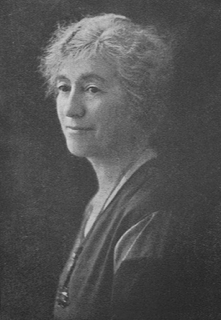
Birth of Margaret Cousins, Educationist, Suffragist & Theosophist

Margaret Elizabeth Cousins (née Gillespie), an Irish-Indian educationist, suffragist, and Theosophist who plays a pivotal role in advancing women’s rights in Ireland and India, is born in Boyle, County Roscommon, on November 7, 1878.

Cousins, also known as Gretta Cousins, is born into a Protestant and Unionist family. She is the eldest of fifteen children of Joseph Gillespie, a petty session clerk, and Margaret Annie Gillespie (née Shera). She excels academically, earning a scholarship to Victoria High School for Girls in Derry. In 1898, she moved to Dublin and studies music at the Royal Irish Academy of Music before attending the Royal University of Ireland, graduating with a BMus in 1902. She marries poet and literary critic James Cousins on April 9, 1903, and maintains her independence by continuing to work as a music teacher.

Cousins is deeply involved in the Irish women’s suffrage movement. She co-founds the Irish Women’s Franchise League with Hanna Sheehy-Skeffington in 1908, serving as its first treasurer, and actively participates in protests, including the Parliament of Women in 1910 and demonstrations against the Second Home Rule Bill in 1913, which leads to her imprisonment in Tullamore Jail. She is also a committed vegetarian and engages with the Irish Vegetarian Society, promoting social reform and ethical living.

In 1915, Cousins and her husband move to India, where she continues her activism. She becomes the first non-Indian member of the Indian Women’s University at Poona (present-day Pune) and co-founds the Women’s Indian Association (WIA) in 1917 with Annie Besant and Dorothy Jinarajadasa, advocating for women’s education and empowerment.

Cousins also plays a key role in preserving the tune of the Indian National Anthem, Jana Gana Mana, and is part of the Flag Presentation Committee that presents the National Flag to the Constituent Assembly of India in 1947. She later founds the All India Women’s Conference (AIWC), further cementing her legacy in advancing women’s rights in India.

A stroke leaves Cousins paralysed from 1943 onward. She receives financial support from the Madras government, and later Jawaharlal Nehru, in recognition of her services to India. She dies at the age of 75 on March 1, 1954, in Adyar, Chennai.

Cousins’ work bridges Irish and Indian social reform movements, combining her interests in education, feminism, and Theosophy. She is recognized for her contributions to women’s rights and education, and her efforts leave a lasting impact on both countries. Her manuscripts are dispersed in various collections across the world.


Leave a comment

Birth of Margaret “Gretta” Cousins, Educationist & Suffragist

Margaret Elizabeth Cousins (née Gillespie), also known as Gretta Cousins, Irish Indian educationist, suffragist and Theosophist, is born into an Irish Protestant family in Boyle, County Roscommon, on October 7, 1878.

Gillespie is educated locally and in Derry. She studies music at the Royal University of Ireland in Dublin, graduating in 1902, and becomes a teacher. As a student she meets the poet and literary critic James Cousins. They are married in 1903. The pair explore socialism, vegetarianism, and parapsychology together. In 1906, after attending a National Conference of Women (NCW) meeting in Manchester, Cousins joins the Irish branch of the NCW. In 1907 she and her husband attend the London convention of the Theosophical Society, and she makes contact with suffragettes, vegetarians, anti-vivisectionists, and occultists in London.

Cousins co-founds the Irish Women’s Franchise League with Hanna Sheehy-Skeffington in 1908, serving as its first treasurer. In 1910 she is one of six Dublin women attending the Parliament of Women, which attempt to march to the House of Commons to hand a resolution to the Prime Minister. After 119 women marching to the House of Commons have been arrested, fifty requiring medical treatment, the women decide to break the windows of the houses of Cabinet Ministers. Cousins is arrested and sentenced to a month in Holloway Prison.

Vacationing with William Butler Yeats in 1912, Cousins and her husband hear Yeats read translations of poems by Rabindranath Tagore. In 1913, breaking the windows of Dublin Castle on the reading of the Second Home Rule Bill, Cousins and other suffragists are arrested and sentenced to one month in Tullamore Jail. The women demand to be treated as political prisoners and go on hunger strike to achieve release.

In 1913, she and her husband move to Liverpool, where James Cousins works in a vegetarian food factory. In 1915 they move to India. James Cousins initially works for New India, the newspaper founded by Annie Besant. After Besant is forced to dismiss him for an article praising the 1916 Easter Rising, she appoints him Vice-Principal of the new Besant Theosophical College, where Margaret teaches English.

In 1916, Cousins becomes the first non-Indian member of the SNDT Women’s University at Poona. In 1917, Cousins co-founds the Women’s Indian Association (WIA) with Annie Besant and Dorothy Jinarajadasa. She edits the WIA’s journal, Stri Dharma. In 1919 Cousins becomes the first Head of the National Girls’ School at Mangalore. She is credited with composing the tune for the Indian national anthem Jana Gana Mana in February 1919, during Rabindranath Tagore’s visit to Besant Theosophical College. In 1922, she becomes the first woman magistrate in India. In 1927, she co-founds the All India Women’s Conference, serving as its President in 1936.

In 1932, she is arrested and jailed for speaking against the Emergency Measures. By the late 1930s she feels conscious of the need to give way to indigenous Indian feminists:

“I longed to be in the struggle, but I had the feeling that direct participation by me was no longer required, or even desired by the leaders of India womanhood who were now coming to the front.”

A stroke leaves Cousins paralysed from 1944 onwards. She receives financial support from the Madras government, and later Jawaharlal Nehru, in recognition of her services to India. She dies on March 11, 1954. Her manuscripts are dispersed in various collections across the world.