seamus dubhghaill

Promoting Irish Culture and History from Little Rock, Arkansas, USA


Leave a comment

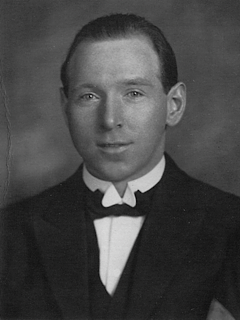
Birth of Charles McGuinness, Sailor & Adventurer

Charles John McGuinness, sailor and adventurer, is born on March 6, 1893, in Derry, County Londonderry.

McGuinness is the elder of two sons of John McGuinness, sea captain and harbourmaster who is born in the United States, and Margaret McGuinness (née Hernand) from Donegal, County Donegal.

In 1908, at the age of 15, McGuinness leaves home, stowing away in a ship and traveling extensively throughout the world for several years. At the age of 17 he is involved in the first of several shipwrecks, drifting for two weeks on a lifeboat before being rescued near Tahiti. He works as a pearl fisher in the South Seas for a year before resuming his nautical career.

In 1913, McGuinness travels through Canada, working as a panhandler and briefly joining the Canadian Militia. In August 1914, following the outbreak of World War I, he joins the British navy, serving in Admiral Reginald Bacon‘s Dover Patrol and in Cameroon. After learning of the 1916 Easter Rising, he deserts the British navy but later joins the South African Army, in which he fights in east Africa. He is captured by the German Schutztruppe of Colonel Paul von Lettow-Vorbeck but manages to escape by trekking through the jungle.

Disillusioned with the war, McGuinness resumes his travels. In 1920, he returns to Derry and joins the Irish Republican Army (IRA), leading a flying column in northwest Ireland. McGuinness, who reputedly introduces the first monkey to Derry, is viewed locally as an eccentric adventurer but is much celebrated for his instrumental role in the daring escape of Frank Carty, the IRA Sligo Brigade commander, from Derry jail.

Wanted for the murder of Inspector Robert Johnson in Glasgow, a charge he denies, McGuinness is captured by the British army in June 1921 after a failed bank raid in Glenties, County Donegal, but escapes from Derry’s Ebrington Barracks before his identity is established. Shortly after the truce in July 1921 he is sent by Liam Mellows to Germany, from where he smuggles arms to Ireland. After the treaty split, he continues to smuggle arms for the republican side but leaves the IRA, having become disillusioned with its incompetence. He claims to have been arrested in Berlin in 1922 for conspiring with Bulgarian revolutionaries, and released on condition that he leaves the state.

McGuinness emigrates to New York in 1923 where, following an alleged spell of employment by Chiang Kai-shek‘s forces in China, he establishes himself as a building contractor. In 1928, he joins Admiral Richard E. Byrd‘s expedition to the Antarctic, serving as a navigation officer. At a reception on his return in 1929, he presents the mayor of New York City, Jimmy Walker, with an Irish tricolour which, he claims, Byrd had flown over the South Pole. He is not, as he claims, awarded a congressional medal by the secretary of the navy.

In 1930, McGuinness embarks on a new career, smuggling rum between Canada and the United States (his memoirs of which are subsequently published in the American press under the pseudonym “Night-Hawk”). After losing his fortune when his boat and cargo are impounded in the summer of 1931, he travels to the Soviet Union to observe communism at first hand. He remains in the Soviet Union around two years, where he claims to work as a harbourmaster in Murmansk, and forms an unfavourable opinion of the Soviet Union.

McGuinness’s autobiography, Nomad, is published in 1934. His publisher, Methuen Publishing, is sued for considerable damages by the notorious Alderman John William Nixon, MP, as a result of McGuinness’s veiled reference to him as the former Royal Ulster Constabulary (RUC) detective inspector who led a murder gang in Belfast in 1922, believed responsible for the murder of the McMahon family.

In late 1936, McGuinness joins the International Brigades in the Spanish Civil War but soon deserts after disagreements with the authorities. He returns to Ireland, where he pens a sensational exposé of the International Brigades, I fought with the Reds, which is published by the Irish Independent. He also writes colourful accounts of life under communism, such as Behind the Iron Curtain, under the pseudonym “Peter Dawson.”

In 1942, while serving as chief petty officer in the marine service at Haulbowline, McGuinness offers to assist the German legation by smuggling spies out of Ireland. Despite his British naval service, he is virulently anti-British. According to local legend he has the sole of both feet tattooed with the Union Jack so wherever he goes he is safe in the knowledge that he is “trampling on the butcher’s apron.” He is arrested and sentenced to seven years imprisonment but is released shortly after the end of the Emergency.

McGuinness is believed to have died on December 4, 1947, when he supposedly drowns alongside four other crew members of the schooner Isaalt that he is piloting on Ballymoney Strand near GoreyCounty Wexford. Two members of the crew survive, managing to swim ashore, the ship is a mere 100 metres from land. However, members of McGuinness’ family express doubt over the years. A nephew claims to have encountered McGuinness on the London Underground in 1955. Upon their gazes meeting, McGuinness is reported to smile and say four simple words: “You never saw me.”

(From: “McGuinness, Charles John” by Fearghal McGarry, Dictionary of Irish Biography, http://www.dib.ie, October 2009)


1 Comment

The McMahon Murders

The McMahon murders occur on March 24, 1922 when six Catholic civilians are shot dead at the home of the McMahon family in Belfast. Police officers break into their house at night and shoot all eight males inside, in an apparent sectarian attack. The victims are businessman Owen McMahon, four of his sons, and one of his employees. Two others are shot but survive, and a female family member is assaulted. The survivors say that most of the gunmen wore police uniforms and it is suspected that they were members of the Ulster Special Constabulary (USC). It is believed to be a reprisal for the Irish Republican Army‘s (IRA) killing of two policemen the previous day.

Following the end of the Irish War of Independence in July 1921 and the signing of the Anglo-Irish Treaty in December 1921, the new unionist Government of Northern Ireland establishes the Ulster Special Constabulary (USC), a quasi-military reserve police force to the Royal Irish Constabulary (RIC), to counter the IRA.

The McMahon killings are believed to be a reprisal for the IRA’s killing of two USC policemen in Belfast. On March 23, 1922, USC officers Thomas Cunningham and William Cairnside are patrolling Great Victoria Street in the city centre when they are approached by a group of IRA members and shot dead. Two Catholics, Peter Murphy (61) and Sarah McShane (15), are shot dead in a suspected reprisal attack several hours later in the Catholic Short Strand area by unidentified gunmen. The McMahon family has no connection to any paramilitary violence.

At about 1:00 a.m. on March 24, 1922, two men wearing police uniforms seize a sledgehammer from a Belfast Corporation workman, who is guarding a building site at Carlisle Circus. A curfew is in place at the time, due to the daily violence in the city. At nearby Clifton Avenue they meet three other men and the party of five proceed to the home of Owen McMahon. Eight males and three females are in the house that night. The males are Owen, his six sons, and Edward McKinney, a parish just north of Buncrana in Inishowen, County Donegal. He works for the McMahons as a barman. The women are Owen’s wife Eliza, her daughter and her niece. At about 1:20 a.m., the gang uses the sledgehammer to break down the door of the McMahon residence.

Owen’s wife, Eliza, says that four of the men wore police caps and carried revolvers while another wore civilian clothes. John McMahon, one of Owen’s sons, says, “Four of the five men were dressed in the uniform of the RIC but, from their appearance, I know they are Specials, not regular RIC.” All of the men hide their faces. The four men in police uniform rush up the stairs and herd the males into the dining room. The women are taken into another room. When Owen asks why his family is being singled-out, one of the gunmen says it is because he is “a respected papist.” The gunmen say “you boys say your prayers,” before opening fire. The shooting continues for five minutes. Five of the men are killed outright and two are wounded, one fatally.

Owen McMahon (50), Gerard McMahon (15), Frank McMahon (24), Patrick McMahon (22) and Edward McKinney (25) are killed outright while Bernard McMahon (26) dies later. The youngest McMahon son, 12-year-old Michael, survives the attack by hiding behind furniture and pretending to be hit. John McMahon (30) survives despite serious gunshot wounds. Eliza McMahon raises the alarm by opening the drawing room window and shouting “Murder! Murder!” A matron at an adjoining nursing home is alerted and phones the police and an ambulance.

It is alleged that a group of policemen operating out of Brown Square Barracks in the Shankill Road area are behind the killings. This has never been proved, but historian Eamon Phoenix, of Stranmillis University College in Belfast, has said there is “strong circumstantial evidence” that District Inspector John Nixon was responsible. Historian Tim Pat Coogan believes the police were responsible. An inquiry is carried out by the Department of Defence of the Irish Free State, but not by the Northern Irish authorities. A 1924 Free State report alleges that twelve policemen, whom the report identifies by name, had carried out the McMahon murders, as well as several other attacks on Catholics.

The killings cause outrage among Belfast’s Catholic population and over 10,000 people attend the funerals of those killed.

David Lloyd George and Winston Churchill, worried that the violence could collapse the new Northern Ireland administration, organise a meeting in London between Irish republican leader Michael Collins and Sir James Craig, Prime Minister of Northern Ireland, both to try to stop the IRA violence which Collins has been tacitly encouraging and supporting, and to pressure Craig to provide more protection for Catholics. Craig denies the nationalist assertion that the McMahon killings were part of an anti-Catholic pogrom on behalf of state forces.

No one is ever prosecuted for the killings but District Inspector John Nixon of the Royal Irish Constabulary (RIC) is strongly suspected of being responsible. Nixon is later forced to step down from the Royal Ulster Constabulary, the force that succeeds the RIC in June 1922, albeit on full pension, in 1924 after being heard giving (in breach of police regulations) a political speech to an Orange Order meeting saying that, “not an inch of Ulster should be yielded” to the Free State.


2 Comments

The Arnon Street Massacre

arnon-street-massacre

The Arnon Street Massacre takes place on April 1, 1922, in Belfast, Northern Ireland. Six Catholic civilians, three in Arnon Street, are shot dead. It is believed that members of either the Ulster Special Constabulary (USC) or the Royal Irish Constabulary (RIC) are responsible, acting in retaliation for the killing of an RIC officer by the Irish Republican Army (IRA).

Although the Irish War of Independence officially ends in July 1921, the Irish Republican Army’s conflict with British and unionist forces continues in Northern Ireland and escalates in the first half of 1922. The Ulster IRA, with the tacit but covert assistance of Michael Collins, head of the new Irish Free State, continues to wage a guerrilla war in Northern Ireland. According to historian Alan Parkinson, despite “the IRA having some short-term successes … the main effect of this intensive campaign was to unleash a terrible backlash on the Catholic population in Belfast.” Only a week before the Arnon Street incident, policemen – either Royal Irish Constabulary (RIC) or Ulster Special Constabulary (USC) – kill six Catholic civilians in the McMahon murders.

On the evening of April 1, RIC constable George Turner is patrolling the Old Lodge Road when he is killed by a sniper.

About ten police officers in Brown Square Barracks, upon hearing of Turner’s murder, take a Lancia armoured car and begin touring nationalist areas. When they dismount their vehicle, witnesses hear them shouting “Cut the guts out of them for the murder of Turner.” Their first victim is John McRory who lives on Stanhope Street, just across the road from where Constable Turner had been shot. The police break into his house and shoot him dead in his kitchen. In Park Street, Bernard McKenna, father of seven, is killed while lying in bed. Finally, the police arrived at Arnon Street.

William Spallen, who lives at 16 Arnon Street, has just returned from the funeral of his wife who had also been killed in the conflict. His 12-year-old grandson, Gerald Tumelty, witnesses his death. “Two men came into the room, one was in the uniform of a policeman. They asked my grandfather his name and he said William Spallen. The man in plain clothes fired three shots at him. When I cried out, he said, ‘lie down or I will put a bullet into you.'” Tumelty says the killers then take £20 that his grandfather had to pay for his wife’s funeral.

The attackers then use a sledgehammer to break into the house next door, where they find Joseph Walsh in bed with his seven-year-old son Michael and his two-year-old daughter Bridget. Joseph Walsh is bludgeoned to death with the sledgehammer while Michael Walsh is shot and dies from his wounds the next day. Another son, Frank, is shot in the thigh but survives. Later that evening another Catholic, John Mallon, is shot dead in Skegoneill Avenue.

The unionist press, the Belfast News Letter and Belfast Telegraph, condemn the killings but do not identify the killers as police. The Dublin-based Irish Independent writes that “never even in the worst state of terror in the west and south has the state of affairs which now prevails in the Northern capital been experienced.” Michael Collins sends an angry telegram to Northern Ireland Prime Minister James Craig, demanding a joint inquiry into the killings. No such inquiry is set up.

As with the McMahon killings one week earlier, it is strongly suspected that an RIC Detective Inspector, Nixon, operating out of the Brown Street Police barracks, had organised the attack. Nixon and several other policemen fail to turn up at roll call at the barracks immediately after the killings.