seamus dubhghaill

Promoting Irish Culture and History from Little Rock, Arkansas, USA


Leave a comment

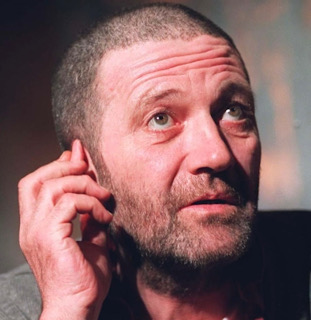
Death of Donal McCann, Stage, Film & Television Actor

Donal McCann, Irish stage, film, and television actor, dies from pancreatic cancer in Dublin on July 17, 1999. He is best known for his roles in the works of Brian Friel and for his lead role in John Huston‘s last film, The Dead (1987). In 2020, he is listed as number 45 on The Irish Times list of Ireland’s greatest film actors.

McCann is born on May 7, 1943, in Terenure, Dublin. His father is John J. McCann, a playwright and politician who serves twice as Lord Mayor of Dublin. Although he acts in a production of his father’s Give Me a Bed of Roses at Terenure College in 1962, he briefly studies architecture before taking a job as a trainee sub-editor at the Evening Press which allows him to pursue part-time acting classes at the Abbey School of Acting at the same time. He joins the Abbey Players in the late 1960s.

Among his most important early roles are Cú Chulainn in W. B. Yeats‘s On Baile Strand (1966), and as Estragon in a seminal production of Samuel Beckett‘s Waiting for Godot, partnering with Peter O’Toole as Vladimir (1969).

McCann’s career includes parts in many plays from the Irish literary canon, including Tarry FlynnThe Shaughran, and the Gate Theatre‘s highly acclaimed production of Seán O’Casey‘s classic Juno and the Paycock in the 1980s (McCann plays the “Paycock” (Captain Boyle) opposite Geraldine Plunkett as Juno and John Kavanagh as Joxer Daly) as well as a subsequent production of O’Casey’s The Plough and the Stars.

McCann develops a particularly fruitful relationship with the playwright Brian Friel. He plays the role of Gar O’Donnell, the public figure, in a film adaptation of Philadelphia, Here I Come! in 1970 and, despite popular belief, he never plays either public or private Gar on stage. He gives a landmark performance as Frank Hardy, the title character, in Faith Healer in 1980 (a role he reprised in 1994), continuing his relationship with Friel through productions of Translations (1988) and Wonderful Tennessee (1993).

Friel says that McCann’s work “contains extraordinary characteristics that go beyond acting … it is deeply spiritual.” Perhaps McCann’s most renowned role is as Thomas Dunne in Sebastian Barry‘s The Steward of Christendom. He wins the London Critics’ Circle Theatre Award (Drama Theatre) as best actor for this role in 1995. He reprises this role in a 1996 production at the Gate Theatre, Dublin and, following a twelve-week run at the Brooklyn Academy of Music in 1997, his “performance of unarguable greatness” (The New York Observer) had Newsweek hailing him as “a world-class star,” and The New York Times referring to this “astonishing Irish actor…widely regarded as the finest of them all.”

On the London stage, McCann plays in Prayer for My Daughter opposite Antony Sher (1978), and is Jean to Dame Helen Mirren‘s Julie in Miss Julie (1971). This is filmed for the BBC, and he much later plays Judge Brack with Fiona Shaw in the title role of Henrik Ibsen‘s Hedda Gabler, a production filmed for the BBC in 1993.

McCann begins his film career early, in 1966, in Walt Disney Pictures’s The Fighting Prince of Donegal (this later becomes a TV series). More significant roles include the title character’s father Shamie in Cal and one of the feuding brothers in Thaddeus O’Sullivan‘s December Bride (1990). He works a number of times with Neil Jordan (in AngelThe Miracle and High Spirits).

His best-known film role is as Gabriel Conroy in The Dead (1987), starring opposite Anjelica Huston and directed by her father, John Huston. Significant late roles include Bernardo Bertolucci‘s Stealing Beauty (1996) and in John Turturro‘s Illuminata (released in 1999, after McCann’s death).

McCann’s television work includes the featured role of Phineas Finn in the BBC’s serialised adaptation of Anthony Trollope‘s The Pallisers, Willie Burke in RTÉ‘s Prix Italia drama entry The Burke Enigma (1979) and Barney Mulhall in RTÉ’s Strumpet City (1980), as well as many one-off parts.

McCann plays in Bob Quinn‘s Irish language film Poitín (1979) and in Quinn’s somewhat experimental The Bishop’s Story (1995). After hearing that McCann is ill, Tom Collins asks Quinn to make a TV documentary about McCann for RTÉ called It Must Be Done Right (1999), after a remark by McCann on his craft. The film airs on RTÉ a week before McCann’s death.

In his private life, McCann is a quiet and unassuming man, but he battles both depression and alcoholism all his life. He has many friends in Irish theatre and artistic circles but also across all strata of life. His hobbies include sketching and he is passionate about horse racing.

Remembering McCann on the 25th anniversary of his death, Gerald Smyth writes, “In the melancholy of that life-worn voice could be heard the cadences of a lyric heart.”


Leave a comment

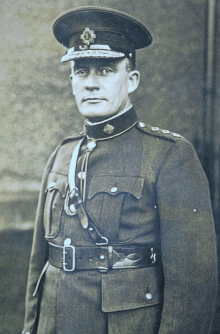
Death of Eamon Broy, Member of the Dublin Metropolitan Police & IRA

Eamon “Ned” Broy, successively a member of the Dublin Metropolitan Police (DMP), the Irish Republican Army (IRA), the National Army, and the Garda Síochána of the Irish Free State, dies in Rathgar, Dublin, on January 22, 1972. He serves as Commissioner of the Gardaí from February 1933 to June 1938. He later serves as president of the Olympic Council of Ireland for fifteen years.

Broy is born in Rathangan, County Kildare, on December 22, 1887. He joins the Royal Irish Constabulary (RIC) on August 2, 1910, and the Dublin Metropolitan Police on January 20, 1911.

Broy is a double agent within the DMP, with the rank of Detective Sergeant (DS). He works as a clerk inside G Division, the intelligence branch of the DMP. While there, he copies sensitive files for IRA leader Michael Collins and passes many of these files on to Collins through Thomas Gay, the librarian at Capel Street Library. On April 7, 1919, he smuggles Collins into G Division’s archives in Great Brunswick Street (now Pearse Street), enabling him to identify “G-Men,” six of whom are eventually killed by the IRA. He supports the Anglo-Irish Treaty of 1921 and joins the National Army during the Irish Civil War, reaching the rank of colonel. In 1925, he leaves the Army and joins the Garda Síochána.

Broy’s elevation to the post of Commissioner comes when Fianna Fáil replaces Cumann na nGaedheal as the government. Other more senior officers are passed over as being too sympathetic to the outgoing party.

In 1934, Broy oversees the creation of “The Auxiliary Special Branch” of the Garda, formed mainly of hastily trained anti-Treaty IRA veterans, who were opponents of Broy in the civil war. It is nicknamed the “Broy Harriers” by Broy’s opponents, a pun on the Bray Harriers athletics club or more likely on the Bray Harriers hunt club. It is used first against the quasi-fascist Blueshirts, and later against the diehard holdouts of the IRA, now set against former comrades. The “Broy Harriers” nickname persists into the 1940s, even though Broy himself is no longer in command, and for the bodies targeted by the unit is a highly abusive term, still applied by radical Irish republicans to the Garda Special Branch (now renamed the Special Detective Unit). The Broy Harriers engage in several controversial fatal shootings. They shoot dead a protesting farmer named Lynch in Cork, and when the matter is discussed in the Senate in 1934, the members who support Éamon de Valera‘s government walk out. They are detested by sections of the farming community. In the light of this latter history, their name is often used in reference to individuals or groups who attempt to disrupt contemporary dissident republicans, such as the remnants of the Provisional Irish Republican Army.

Broy is President of the Olympic Council of Ireland from 1935 to 1950. He is also a member of the Standing Committee of the Irish Amateur Handball Association.

Broy dies on January 22, 1972, at his residence in the Dublin suburb of Rathgar.

On September 17, 2016, a memorial to Broy is unveiled in Coolegagen Cemetery, County Offaly, close to his childhood home. His daughter Áine is in attendance, as are representatives of the government, the Air Corps, and the Garda Síochana.

Neil Jordan‘s film Michael Collins (1996) inaccurately depicts Broy (played by actor Stephen Rea) as having been arrested, tortured and killed by Secret Intelligence Service (SIS) agents. In addition, G Division was based not in Dublin Castle, as indicated in the film, but in Great Brunswick Street. Collins had a different agent in the Castle, David Neligan. Broy is also mentioned and makes an appearance in Michael Russell’s detective novel The City of Shadows, set partly in Dublin in the 1930s, published by HarperCollins in 2012.


Leave a comment

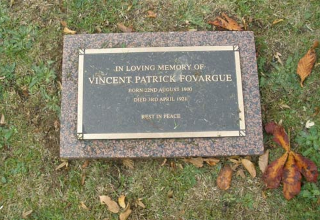
Birth of Vincent Fovargue, IRA Officer & British Army Spy

Vincent Patrick Fovargue, a company officer in the Dublin brigade of the Irish Republican Army (IRA) during the Irish War of Independence, is born on August 22, 1900, at 2 Rutland Place, Clontarf, Dublin, to Robert Fovargue, an engineer/fitter, and Elizabeth (Lillie) Larkin.

An intelligence officer with the 4th Battalion of the Dublin Brigade of the IRA in the Ranelagh area, Fovargue is captured by the British Army in Dublin. Under interrogation, he allegedly leaks information that results in the arrest of the other members of his unit a few days later. In return for this information, the Intelligence Corps allegedly allows him to escape during a staged ambush in Dublin’s South Circular Road.

This attempted ruse however does not go unnoticed by Michael Collins‘s many moles inside the Crown’s security forces. On the night of the escape, Detective Constable David Neligan of the Dublin Metropolitan Police‘s G Division is on duty in Dublin Castle when a telephone message on a police form is passed to him. The message, issued by the British Military Headquarters, states that a “Sinn Féin” suspect named Fovargue has escaped from three Intelligence Corps officers in a car while en route to prison. It gives a description of his appearance and asks that the British Army be notified in the event of his recapture by the Dublin Metropolitan Police.

Joe Kinsella is the I/O of the 4th Battalion. He is temporarily transferred to take care of munitions under Seán Russell for a few weeks and Fovargue is put in his place. From Joe Kinsella’s own statement to the Irish Bureau of Military History:

“From the outset I personally did not place a lot of trust in him, because on the morning that he took over from me he appeared to me, to be too inquisitive about the movements of Michael Collins and the G.H.Q. staff generally. He wanted to know where they could be located at any time. He said that he had big things in view, and that it would be to the advantage of the movement generally if he was in a position to get in touch with the principal men with the least possible delay. From his attitude I there and then formed the opinion, rightly or wrongly, that he was inclined to overstep his position. I did not feel too happy about him and I discussed him with Sean Dowling. It transpired that my impressions of this man were correct. I told him of two meeting places of Intelligence staff, one of Company Intelligence held at Rathmines Road and one of Brigade Intelligence held at Saville Place. A short time after giving him this information both these places were raided…I was now confirmed in my suspicions that Fovargue was giving away information. He was later shot in England by the IRA.”

Neither was Neligan fooled by this, as he explains:

“Now if they had said that this man (who was completely unknown to both of us) had escaped from one I.O. it might have sounded reasonable enough. But to tell us that an unarmed man had escaped out of a motorcar in the presence of three presumably armed men was imposing a strain on our credulity. Both of us thought this story too good to be true.”

The two men retype the message and pass it to Collins the following day. Meanwhile, Fovargue has been sent to England where he adopts the alias of Richard Staunton. He has in fact been sent to England by Intelligence Corps Colonel Ormonde Winter to infiltrate the IRA in Britain.

Sean Kavanagh, a Kilkenny IRA man, claims that Fovargue is put in a cell with him in Kilmainham Gaol in 1921 in order to try to extract information from him.

On April 2, 1921, a boy walking on the golf links of the Ashford Manor Golf Club in Ashford, Middlesex discovers the body of Fovargue, who had been shot through the chest. Discovered near the corpse is a small piece of paper on which has been scribbled in blue pencil the words “Let spies and traitors beware – IRA.”

In the Neil Jordan film Michael Collins, Fovargue’s assassination is depicted onscreen. Fovargue is tracked down while working out at the golf course, allowed to say the Act of Contrition, and then fatally shot by Liam Tobin (Brendan Gleeson).

(Pictured: Dublin Brigade IRA officer’s cap badge in white metal, “FF” (Fianna Fáil) at centre, surrounded by a garter bearing the motto “Drong Átha Cliath” (Dublin Brigade), all on an eight-pointed rayed star)


Leave a comment

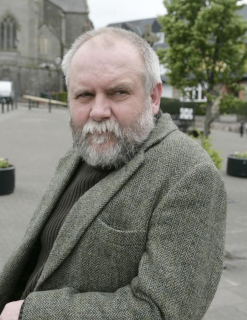
Birth of Irish Writer Patrick McCabe

Patrick McCabe, Irish writer known for his mostly dark and violent novels set in contemporary—often small-town—Ireland, is born in Clones, County Monaghan, on March 27, 1955. He has twice been shortlisted for the Booker Prize, for The Butcher Boy (1992) and Breakfast on Pluto (1998), both of which have been made into films.

At the age of 17, McCabe migrates to London and works as a teacher, returning to Ireland after finding success as a writer. He resides in Clones with his artist wife Margot Quinn and two daughters, Katie and Ellen.

McCabe’s books include The Butcher Boy (1992) and Breakfast on Pluto (1998), both shortlisted for the Booker Prize. He has written a children’s book, The Adventures of Shay Mouse (1985), and several of his radio plays have been broadcast by RTÉ and BBC Radio 4. He wrote a collection of linked short stories, Mondo Desperado, published in 1999. The play Frank Pig Says Hello, which he adapts from The Butcher Boy, is first performed at the Dublin Theatre Festival in 1992.

McCabe’s 2001 novel Emerald Germs of Ireland is a black comedy featuring matricide. Winterwood, published in 2006, is the 2007 Hughes & Hughes/Irish Independent Irish Novel of the Year. Three years later, 2009 sees the publication of The Holy City. The Stray Sod Country (2010) is described as “Strangely elegiac, gloriously operatic and driven by (…) wild and savage imagination, (…) an eerie folk tale that chronicles the passing of a generation.”

Director and novelist Neil Jordan adapts both The Butcher Boy (1997) and Breakfast on Pluto (2005) into films.

Zelig Theatre premieres the play Appointment in Limbo, written by McCabe and directed by Cathal Cleary, in Galway‘s Town Hall Theatre in 2008.

McCabe and British film director Kevin Allen are organisers of the Flat Lake Literary & Arts Festival, a music festival held annually since 2007 on the Hilton Park farm estate in Clones, County Monaghan.


Leave a comment

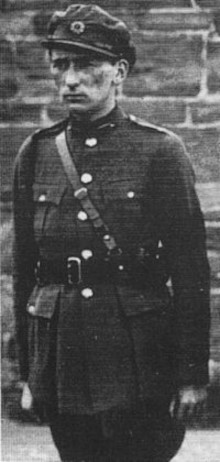
Birth of Liam Tobin, Irish Army Officer

Liam Tobin, officer in the Irish Army and the instigator of the Irish Army Mutiny in March 1924, is born William Joseph Tobin at 13 Great Georges Street in Cork, County Cork, on November 15, 1895. During the Irish War of Independence, he serves as an Irish Republican Army (IRA) intelligence officer for Michael CollinsSquad.

Tobin is the eldest son of Mary Agnes (nee Butler) and David Tobin, a hardware clerk. He has two younger siblings, Katherine and Nicholas Augustine Tobin, also born in Cork. His family moves to John Street in Kilkenny and then to Dublin. He goes to school in Kilkenny and is an apprentice in a hardware shop at the time of the 1916 Easter Rising. As a participant in the Rising, he fights in the Four Courts garrison under Edward Daly. He is arrested, court martialed, and sentenced to death but his sentence is commuted to life imprisonment. He is a prisoner in Kilmainham, Mountjoy, Lewes, Dartmoor, Broadmoor and Pentonville prisons. He is released in June 1917.

In early 1919 Tobin becomes Collins’ chief executive in the Intelligence Directorate handling the many spies in Dublin Castle, including double agent David Neligan. Nancy O’Brien works for Under-Secretary for Ireland James Macmahon, decoding messages sent from London. Each day between 2:30 and 3:30 she passes any information acquired to either Tobin, Joseph McGrath, or Desmond FitzGerald. Tobin is involved in planning the assassinations of British soldiers, informants, members of the Royal Irish Constabulary, the Dublin Metropolitan Police, and operatives of MI5. He constructs detailed profiles of everyone remotely connected to the British government, often using Who’s Who, The Morning Post, and The Times, a newspaper that describes him as “one of the most formidable of [the] Twelve Apostles.”

In October 1921, Tobin travels with the Irish Treaty Delegation as part of Collins’ personal staff.

Tim Pat Coogan and James Mackay have examined Tobin’s involvement in the assassination of British Field Marshal Sir Henry Wilson. Wilson’s public tirades about Collins is evidence of mutual personal dislike between the two men. In May 1922 Collins tells Tobin “We’ll kill a member of that bunch” to the news of “bloody pogroms” in Belfast. Wilson is intimately involved with the Ulster loyalist cause, including the Curragh Mutiny and the establishment of the Ulster Special Constabulary. Just before the shooting, Coogan places Tobin in London. He meets courier Peig Ni Braonain at Euston Station collecting a document that has been sent from Dublin. Returning to Dublin before the incident, he is jubilant when he tells defence minister Richard Mulcahy about Wilson’s death. Mulcahy is appalled and threatens to resign.

Following the Anglo-Irish Treaty, Tobin is appointed deputy director of intelligence in the new state and assigned to the Criminal Investigation Department based at Oriel House. However Collins soon replaces him with Joseph McGrath. Tobin is placed on the Army Council and is Director of Intelligence from September 1922 until his appointment as Senior Aide-de-Camp to the new GovernorGeneral of the Irish Free State, Tim Healy, in November 1922. The position provides an apartment in Viceregal Lodge.

In October 1922, Tobin’s brother Nicholas, a Free State captain, is accidentally shot dead by his own troops during the raid and capture of a bomb making factory at number 8 Gardiner’s Place, Dublin.

Tobin believes in the steppingstone doctrine which sees the Treaty as a stage towards full independence. With the outbreak of the Irish Civil War he remains loyal to Collins and takes the Pro-Treaty side. He leads in the fight against the Anti-Treaty IRA in the south. Disillusioned with the continuing hostilities and in the aftermath of the death of Collins, he forms an association called the IRA Organisation (IRAO) or “Old Irish Republican Army” to distinguish themselves from the anti-treaty insurgents.

Richard Mulcahy, the new Irish defence minister, proposes to reduce the army from 55,000 to 18,000 men in the immediate post- Civil-War period. Tobin knows his own position is to be affected and shares the perception that the Irish Army treats former British officers better than former IRA officers. On March 7, 1924, Tobin, together with Colonel Charlie Dalton, sends an ultimatum to President of the Executive Council of the Irish Free State W. T. Cosgrave demanding an end to the army demobilisation. The immediate response is an order for the arrest of the two men on a charge of mutiny. The cabinet, already wary of the Irish Army, orders an inquiry and appoints Garda Commissioner Eoin O’Duffy to the army command.

On March 18, the mutineers assemble with hostile intent at a Dublin pub. An order is made to arrest the mutineers and the cabinet demands the resignation of the army council. The generals resign, affirming the subservience of the military to the civilian government of the new state.

In later years, Tobin rebuilds relations with his Civil War foes and joins Éamon de Valera‘s Anti-Treaty Fianna Fáil party. He joins up with Joseph McGrath to form the Irish Hospitals’ Sweepstake in the 1930s. Many other former army comrades find work in this lottery. He leaves the Sweep in 1938. After World War II, he becomes Superintendent of the Oireachtas for the Irish Dáil.

On October 14, 1929, Tobin marries Monica “Mona” Higgins at the Church of the Holy Family, Aughrim Street, Dublin. They have two daughters, Máire and Anne Tobin. Following the death of his father, David, in 1956, Tobin’s health declines, resulting in his death in Dublin on April 30, 1963.

Tobin is portrayed by actor Brendan Gleeson in Neil Jordan‘s biopic Michael Collins.


Leave a comment

Death of Liam Tobin, Irish Army Officer & IRA Intelligence Officer

Liam Tobin, officer in the Irish Army and the instigator of the Irish Army Mutiny in March 1924, dies in Dublin on April 30, 1963. During the Irish War of Independence, he serves as an Irish Republican Army (IRA) intelligence officer for Michael CollinsSquad.

Tobin is born William Joseph Tobin at 13 Great Georges Street in Cork, County Cork, on November 15, 1895, the eldest son of Mary Agnes (nee Butler) and David Tobin, a hardware clerk. He has two younger siblings, Katherine and Nicholas Augustine Tobin, also born in Cork. His family moves to John Street in Kilkenny and then to Dublin. He goes to school in Kilkenny and is an apprentice in a hardware shop at the time of the 1916 Easter Rising. As a participant in the Rising he fights in the Four Courts garrison under Edward Daly. He is arrested, court martialed, and sentenced to death but his sentence is commuted to life imprisonment. He is a prisoner in Kilmainham, Mountjoy, Lewes, Dartmoor, Broadmoor and Pentonville prisons. He is released in June 1917.

In early 1919 Tobin becomes Collins’ chief executive in the Intelligence Directorate handling the many spies in Dublin Castle, including double agent David Neligan. Nancy O’Brien works for Under-Secretary for Ireland James Macmahon, decoding messages sent from London. Each day between 2:30 and 3:30 she passes any information acquired to either Tobin, Joseph McGrath, or Desmond FitzGerald. Tobin is involved in planning the assassinations of British soldiers, informants, members of the Royal Irish Constabulary, the Dublin Metropolitan Police, and operatives of MI5. He constructs detailed profiles of everyone remotely connected to the British government, often using Who’s Who, The Morning Post, and The Times, a newspaper that describes him as “one of the most formidable of [the] Twelve Apostles.”

In October 1921, Tobin travels with the Irish Treaty Delegation as part of Collins’ personal staff.

Tim Pat Coogan and James Mackay have examined Tobin’s involvement in the assassination of British Field Marshal Sir Henry Wilson. Wilson’s public tirades about Collins is evidence of mutual personal dislike between the two men. In May 1922 Collins tells Tobin “We’ll kill a member of that bunch” to the news of “bloody pogroms” in Belfast. Wilson is intimately involved with the Ulster loyalist cause, including the Curragh Mutiny and the establishment of the Ulster Special Constabulary. Just before the shooting, Coogan places Tobin in London. He meets courier Peig Ni Braonain at Euston Station collecting a document that has been sent from Dublin. Returning to Dublin before the incident, he is jubilant when he tells defence minister Richard Mulcahy about Wilson’s death. Mulcahy is appalled and threatens to resign.

Following the Anglo-Irish Treaty, Tobin is appointed deputy director of intelligence in the new state and assigned to the Criminal Investigation Department based at Oriel House. However Collins soon replaces him with Joseph McGrath. Tobin is placed on the Army Council and is Director of Intelligence from September 1922 until his appointment as Senior Aide-de-Camp to the new GovernorGeneral of the Irish Free State, Tim Healy, in November 1922. The position provides an apartment in Viceregal Lodge.

In October 1922, Tobin’s brother Nicholas, a Free State captain, is accidentally shot dead by his own troops during the raid and capture of a bomb making factory at number 8 Gardiner’s Place, Dublin.

Tobin believes in the stepping stone doctrine which sees the Treaty as a stage towards full independence. With the outbreak of the Irish Civil War he remains loyal to Collins and takes the Pro-Treaty side. He leads in the fight against the Anti-Treaty IRA in the south. Disillusioned with the continuing hostilities and in the aftermath of the death of Collins, he forms an association called the IRA Organisation (IRAO) or “Old Irish Republican Army” to distinguish themselves from the anti-treaty insurgents.

Richard Mulcahy, the new Irish defence minister, proposes to reduce the army from 55,000 to 18,000 men in the immediate post- Civil-War period. Tobin knows his own position is to be affected and shares the perception that the Irish Army treats former British officers better than former IRA officers. On March 7, 1924, Tobin, together with Colonel Charlie Dalton, sends an ultimatum to President of the Executive Council of the Irish Free State W. T. Cosgrave demanding an end to the army demobilisation. The immediate response is an order for the arrest of the two men on a charge of mutiny. The cabinet, already wary of the Irish Army, orders an inquiry and appoints Garda Commissioner Eoin O’Duffy to the army command.

On March 18, the mutineers assemble with hostile intent at a Dublin pub. An order is made to arrest the mutineers and the cabinet demands the resignation of the army council. The generals resign, affirming the subservience of the military to the civilian government of the new state.

In later years, Tobin rebuilds relations with his Civil War foes and joins Éamon de Valera‘s Anti-Treaty Fianna Fáil party. He joins up with Joseph McGrath to form the Irish Hospitals’ Sweepstake in the 1930s. Many other former army comrades find work in this lottery. He leaves the Sweep in 1938. After World War II, he becomes Superintendent of the Oireachtas for the Irish Dáil.

On October 14, 1929, Tobin marries Monica “Mona” Higgins at the Church of the Holy Family, Aughrim Street, Dublin. They have two daughters, Máire and Anne Tobin. Following the death of his father, David, in 1956, Tobin’s health declines, resulting in his death in Dublin on April 30, 1963.

Tobin is portrayed by actor Brendan Gleeson in Neil Jordan‘s biopic Michael Collins.


2 Comments

Murder of Vincent Patrick Fovargue

Vincent Patrick Fovargue, a company officer in the Dublin brigade of the Irish Republican Army (IRA) during the Irish War of Independence, is shot dead at a golf course near London, England by the IRA on April 2, 1921. The IRA accuses him of being a British spy.

Fovargue is born on August 22, 1900, at 2 Rutland Place, Clontarf, Dublin, to Robert Fovargue, an engineer/fitter, and Elizabeth (Lillie) Larkin.

An intelligence officer with the 4th Battalion of the Dublin Brigade of the IRA in the Ranelagh area, he is captured by the British Army in Dublin. Under interrogation, he allegedly leaks information that results in the arrest of the other members of his unit a few days later. In return for this information, the Intelligence Corps allegedly allow him to escape during a staged ambush in Dublin’s South Circular Road.

This attempted ruse however does not go unnoticed by Michael Collins‘ informants in the Crown’s security forces. On the night of the escape, Detective Constable David Neligan of the Dublin Metropolitan Police‘s “G” Division is on duty in Dublin Castle when he is passed a telephone message on a police form. The message, issued by the British Military Headquarters, states that a “Sinn Féin” suspect named Fovargue had escaped from three Intelligence Corps officers in a car while en route to prison. It gives a description of his appearance and asks that the British Army be notified in the event of his recapture by the Dublin Metropolitan Police.

Joe Kinsella is the I/O of the 4th Battalion. He is temporarily transferred to take care of munitions under Seán Russell for a few weeks and Fovargue is put in his place. In Kinsella’s statement to the BMH, he writes:

“From the outset I personally did not place a lot of trust in him, because on the morning that he took over from me he appeared to me, to be too inquisitive about the movements of Michael Collins and the GHQ staff generally. He wanted to know where they could be located at any time. He said that he had big things in view, and that it would be to the advantage of the movement generally if he was in a position to get in touch with the principal men with the least possible delay. From his attitude I there and then formed the opinion, rightly or wrongly, that he was inclined to overstep his position. I did not feel too happy about him and I discussed him with Sean Dowling. It transpired that my impressions of this man were correct. I told him of two meeting places of Intelligence staff, one of Company Intelligence held at Rathmines Road and one of Brigade Intelligence held at Saville Place. A short time after giving him this information both these places were raided…I was now confirmed in my suspicions that Fovargue was giving away information. He was later shot in England by the IRA.”

Neligan is not fooled by this either, as he explains:

“Now if they had said that this man (who was completely unknown to both of us) had escaped from one I.O. it might have sounded reasonable enough. But to tell us that an unarmed man had escaped out of a motor-car in the presence of three presumably armed men was imposing a strain on our credulity. Both of us thought this story too good to be true.”

The two men retype the message and pass it to Collins the following day. Meanwhile, Fovargue has been sent to England where he adopts the alias of Richard Staunton. Fovargue has in fact been sent to England by Intelligence Corps Colonel Ormonde Winter to infiltrate the IRA in Britain.

Sean Kavanagh, a Kilkenny IRA man, claims that Fovargue is put in a cell with him in Kilmainham in 1921 in order to try to extract information from him.

On April 2, 1921, a boy walking on the golf links of the Ashford Manor Golf Club in Ashford, Middlesex discovers the body of Fovargue, who had been shot through the chest. Discovered near the corpse is a small piece of paper on which had been scribbled in blue pencil the words “Let spies and traitors beware – IRA.”

In the Neil Jordan film Michael Collins, Fovargue’s assassination is depicted onscreen. Fovargue is tracked down while working out at the golf course, allowed to say the Act of Contrition, and then fatally shot by Liam Tobin (Brendan Gleeson).


Leave a comment

Birth of Jonathan Rhys Meyers, Actor & Model

CREATOR: gd-jpeg v1.0 (using IJG JPEG v62), quality = 82

Jonathan Rhys Meyers, Irish actor and model, is born Jonathan Michael Meyers on July 27, 1977, in Dublin.

Rhys Meyers is born to Geraldine (née Meyers) and folk musician John O’Keeffe. The family moves to County Cork when he is almost a year old. At the age of three, his father leaves the family, leaving his mother alone to care for him and his three younger brothers.

Rhys Meyers grows up with a tumultuous childhood and attends North Monastery Christian Brothers school, from which he is permanently expelled at age sixteen. Happy to be out of school, he begins spending time in a local pool hall where he is discovered by Hubbard Casting. The casting agents are talent-spotting for the David Puttnam production of War of the Buttons (1994) and ask him to appear for an audition. After three days of auditions, however, he does not get the role and gives up on his acting aspirations. Soon after the failed audition, he receives a call to audition for a national ad campaign for Knorr soup, and though embarrassed by the attention from the ad, he soon finds himself considered for a major film.

Rhys Meyers movie acting debut is a very small role in the film A Man of No Importance (1994), where his simple cast credit is as “First Young Man.” His first lead role is in the film The Disappearance of Finbar (1996). During a 6-month postponement in production, he returns home to Cork and there receives a call about the film Michael Collins (1996). He travels to Dublin to meet with director Neil Jordan and successfully wins the role of Collins’s assassin. Jordan writes about his meeting with the actor, “I have found someone to play Collins’s killer. Jonathan Rhys Meyers, from County Cork, apparently, who looks like a young Tom Cruise. He comes into the casting session with alarming certainty. Obviously gifted.”

In addition to his role in Michael Collins, Rhys Meyers is also known for his roles in the films Velvet Goldmine (1998), Bend It Like Beckham (2002), Alexander (2004), Match Point (2005), Mission: Impossible III (2006) and his television roles as Elvis Presley in the biographical miniseries Elvis (2005), for which he wins a Golden Globe Award and earns a Primetime Emmy Award nomination, as King Henry VIII in the historical drama The Tudors (2007–10), which earns him two Golden Globe Award nominations, and in the NBC drama series Dracula (2013–14) as the title character. He also stars as Bishop Heahmund in the History Channel television series Vikings.

Rhys Meyers continues to star in other films, such as Albert Nobbs in 2011. In 2013, he appears as the villain Valentine Morgenstern in The Mortal Instruments: City of Bones, based on Cassandra Clare‘s novel, The City of Bones. He appears in the 2015 film Stonewall, directed by Roland Emmerich, in 2017, stars in The 12th Man, and in 2018 wins the Best Actor award at the Manchester Film Festival for his starring role in Damascus Cover.

Rhys Meyers has been the face of several Hugo Boss advertising campaigns. He has also been involved in several charitable causes, including the Hope Foundation, and the children’s charity, Barretstown. He is married to Mara Lane, and they have one son together. He still resides in County Cork.

In 2020, Rhys Meyers is listed as number 44 on The Irish Times list of Ireland’s greatest film actors.


Leave a comment

Neil Jordan Receives Silver Bear for Best Director

neil-patrick-jordan

Neil Patrick Jordan, director of The Butcher Boy (1997), is awarded a Silver Bear for Best Director at the 48th Berlin International Film Festival on February 22, 1998.

Jordan is born in County Sligo on February 25, 1950. His first book, Night in Tunisia, wins a Somerset Maugham Award and the Guardian Fiction Prize in 1979. He also wins an Academy Award for Best Original Screenplay for The Crying Game (1992).

Jordan is educated at St. Paul’s College, Raheny. Later, Jordan attends University College Dublin, where he studies Irish history and English literature. He is raised a Catholic and is quite religious during the early stages of his life. Regarding his current beliefs, he states that “God is the greatest imaginary being of all time. Along with Einstein‘s General Theory of Relativity, the invention of God is probably the greatest creation of human thought.”

When John Boorman is filming Excalibur in Ireland, he recruits Jordan as a “creative associate.” A year later Boorman is executive producer on Jordan’s first feature, Angel, a tale of a musician caught up in the Troubles, starring Stephen Rea who subsequently appears in almost all of Jordan’s films to date. During the 1980s, he directs films that win him acclaim, including The Company of Wolves and Mona Lisa, both made in England. The Company of Wolves becomes a cult favorite.

As a writer/director, Jordan has a highly idiosyncratic body of work, ranging from mainstream hits like Interview with the Vampire to commercial failures like We’re No Angels to a variety of more personal, low-budget arthouse pictures. He is also the driving force behind the cable TV series The Borgias.

Unconventional sexual relationships are a recurring theme in Jordan’s work, and he often finds a sympathetic side to characters that audiences would traditionally consider deviant or downright horrifying. His film The Miracle, for instance, follows two characters who struggle to resist a strong, incestuous attraction, while The Crying Game makes complicated, likable characters out of an IRA volunteer and a transgender woman. Interview with the Vampire, like the Anne Rice book it is based on, focuses on the intense, intimate interpersonal relationship of two undead men who murder humans nightly, accompanied by an equally lusty vampire woman who is eternally trapped in the body of a little girl. While Lestat (Tom Cruise) is depicted in an attractive but villainous manner, his partner Louis (Brad Pitt) and the child vampire Claudia (Kirsten Dunst) are meant to capture the audience’s sympathy despite their predatory nature.

In addition to the unusual sexuality of Jordan’s films, he frequently returns to the Troubles of Northern Ireland. The Crying Game and Breakfast on Pluto both concern a transgender character, both concern the Troubles, and both feature frequent Jordan leading man Stephen Rea. The two films, however, are very different, with The Crying Game being a realistic thriller/romance and Breakfast on Pluto a much more episodic, stylized, darkly comic biography. Jordan also frequently tells stories about children or young people, such as The Miracle and The Butcher Boy. While his pictures are most often grounded in reality, he occasionally directs more fantastic or dreamlike films, such as The Company of Wolves, High Spirits, Interview with the Vampire, and In Dreams.

The critical success of Jordan’s early pictures leads him to Hollywood, where he directs High Spirits and We’re No Angels. Both are critical and financial disasters. He later returns home to make the more personal The Crying Game, which is nominated for six Academy Awards. Jordan wins the Academy Award for Best Original Screenplay for the film. Its unexpected success leads him back to American studio filmmaking, where he directs Interview with the Vampire. He also directs the crime drama The Brave One starring Jodie Foster.

Jordan also writes and directs the Irish-made film Ondine (2009), starring Colin Farrell and Alicja Bachleda-Curuś. He also directs Byzantium, an adaptation of the vampire play of the same name starring Saoirse Ronan, Gemma Arterton, and Jonny Lee Miller.

Jordan lives in Dalkey, which is a part of the larger town of Dún Laoghaire.


Leave a comment

Death of Alan Rickman, Actor & Director

alan-rickman

Alan Sidney Patrick Rickman, English actor and director, dies in London on January 14, 2016.

Rickman is born into a working-class family of Irish and Welsh descent in Hammersmith, London, on February 21, 1946. Rickman attends Derwentwater Primary School in Acton, and then Latymer Upper School in London through the Direct Grant system, where he becomes involved in drama. After leaving Latymer, he attends Chelsea College of Art and Design and then the Royal College of Art. After graduation, Rickman and several friends open a graphic design studio called Graphiti, but after three years of successful business, he decides that he is going to pursue acting professionally. He writes to request an audition with the Royal Academy of Dramatic Art (RADA), which he attends from 1972 until 1974.

Upon leaving the Royal Academy of Dramatic Art, Rickman becomes a member of the Royal Shakespeare Company, performing in modern and classical theatre productions. His first big television role comes in 1982, but his big break is as the Vicomte de Valmont in the stage production of Les Liaisons Dangereuses in 1985, for which he is nominated for a Tony Award.

Rickman’s first film role is as the German terrorist leader Hans Gruber in Die Hard (1988). His other film roles include the Sheriff of Nottingham in Robin Hood: Prince of Thieves (1991), for which he receives the BAFTA Award for Best Actor in a Supporting Role, Elliott Marston in Quigley Down Under (1990), Jamie in Truly, Madly, Deeply (1990), P.L. O’Hara in An Awfully Big Adventure (1995), Colonel Brandon in Sense and Sensibility (1995), Éamon de Valera in Neil Jordan‘s Michael Collins (1996), Alexander Dane in Galaxy Quest (1999), Harry in Love Actually (2003) and Judge Turpin in the film adaptation of Stephen Sondheim‘s musical of Sweeney Todd: The Demon Barber of Fleet Street (2007). He gains further notice for his film performances as Severus Snape in the Harry Potter series. He also stars in television films, playing the title character in Rasputin: Dark Servant of Destiny (1996), which wins him a Golden Globe Award, an Emmy Award and a Screen Actors Guild Award, and Dr. Alfred Blalock in the Emmy-winning Something the Lord Made (2004). His final film roles are as Lieutenant General Frank Benson in the thriller Eye in the Sky (2015), and the voice of Absolem, the caterpillar in Alice Through the Looking Glass (2016).

In August 2015, Rickman suffers a minor stroke, which leads to the diagnosis of pancreatic cancer. He reveals the fact that he has terminal cancer to only his closest confidants. He dies of pancreatic cancer on January 14, 2016, at the age of 69. His remains are cremated on February 3, 2016, in the West London Crematorium in Kensal Green. His ashes are given to his wife, Rima Horton. His final two films, Eye in the Sky and Alice Through the Looking Glass, are dedicated to his memory.