Corr, the youngest of four children, is born to Gerry Corr, a manager of the payroll department of the Irish Electricity Supply Board (ESB), and his wife, Jean, a housewife. Gerry and Jean have their own band, Sound Affair, which plays songs by ABBA and the Eagles in local pubs in Dundalk where they would often bring along their children.
With the encouragement of her parents, Corr takes up the tin whistle and is taught the piano by her father. Throughout their teenage years, she and her siblings often practise in her brother Jim‘s bedroom at a house he had rented. She sings lead vocals; her sister Sharon plays the violin and sister Caroline and Jim both play keyboards. She takes part in school plays at her school, Dundalk’s Dún Lughaidh Convent.
Corr debuts in 1990 as the lead singer of the Celticfolk rock and pop rock group The Corrs along with her three siblings. Aside from singing lead vocals she plays the tin whistle, the ukulele, and the piano.
With the others, Corr releases six studio albums, two compilation albums, one remix album and two live albums. She also pursues a solo career, releasing her debut album, Ten Feet High, in 2007. The album moves away from the sound of the Corrs and features a dance-pop sound. Her next album, released on May 30, 2011, is entirely made up of covers of songs that were important to her when younger.
The Real IRA broke off from the main Irish Republican Army and its political wing Sinn Féin in 1998 to oppose the decision by Sinn Féin to support the Northern Ireland peace process and work to end 30 years of fighting in Northern Ireland.
As a result of the FTO designation many activities, including fund-raising, of the Real IRA or its two so-called “front groups” or “political pressure groups” — the “32 County Sovereignty Movement” and the “Irish Republican Prisoner Welfare Association” — are now illegal.
A senior State Department official notes that this is the first time a group with “heavy ties” to the United States, with sympathizers and supporters coming from the United States, has been designated as a terrorist organization. But, in the words of this official, the “British and Irish government publicly asked us to look into this.” The “rigorous” review, begun in the fall of 2000, included volumes of evidence and was an inner-agency process that required the signature of the Secretary of the Treasury, the Attorney General and the Secretary of State.
According to the State Department Patterns of Global Terrorism report in 2000, the Real IRA was formed in February-March 1998, has between 150-200 hard-line members and is dedicated to removing British forces from Northern Ireland and unifying Ireland.
State Department officials say they absolutely anticipate the Real IRA to challenge the FTO designation in court. The designation comes as the Irish Republic prepares to prosecute Michael McKevitt, the Real IRA’s alleged leader.
Davis starts as a news reporter with the American network ABC and BBC Northern Ireland before spending 11 years in the newsroom at RTÉ. In the early 1980s he becomes a newsreader for The Six-o-clock News and begins to become well-known due to his sometimes-off-the-cuff comments on news stories.
Davis impersonates Big Tom on the RTÉ satirical programme Hall’s Pictorial Weekly and, as a result, is offered a part in a showband in Cork. After a ballroom tour, he joins RTÉ proper in 1975, initially to work as a television news reporter, eventually becoming newsreader on the nine o’clock news. In the mid-1980s, he hosts his own talk show, Davis at Large. It is on this show, which is screened live, that he is attacked and hurled across the studio by a guest female body builder. In addition to this he has an interactive summer current affairs show, simply called Davis. In 1986, he begins co-hosting (with Thelma Mansfield) RTÉ 1’s afternoon programme Live at 3, a role he fills for eleven years.
Davis presents the Rose of Tralee twice in 1995 and 1996, the first of these when Gay Byrne is taken ill at short notice. He memorably thanks the providers of the air conditioning while wiping sweat from his brow. Live at 3 comes to an end in 1997. Davis returns to the screen in the late 1990s with a marine programme devoted to boats and the waters around Ireland called Out of the Blue, which runs for four series, the last of which is broadcast in 2001.
In 2000, Davis presents a radio quiz show called A Question of Food. During the summer season he takes over RTÉ Radio 1‘s mid-morning slot usually occupied by Today with Pat Kenny, and he also hosts the radio phone-in show, Liveline, when regular presenter Joe Duffy is on holiday. Later, he presents Sunday Magazine with Davis on 4 on 4fm.
In 2005, Davis hosts a show called Time on Their Hands, a travel series for older people. One of his last television appearances is on the second season of Celebrity Bainisteoir in 2009, in which he and seven other Irish celebrities manage an intermediate Gaelic football club team from their home county in an official GAA tournament. Davis’s team wins the tournament.
During the 2010s, Davis makes frequent guest appearances on TV3‘s Tonight with Vincent Browne, where he and another guest preview the following morning’s papers.
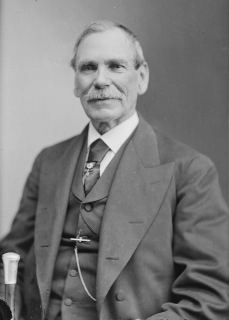
Born and initially educated in Ireland, Shields emigrates to the United States in 1826. He is briefly a sailor and spends time in Quebec before settling in Kaskaskia, Illinois, where he studies and practices law. In 1836, he is elected to the Illinois House of Representatives, and later as State Auditor. His work as auditor is criticized by a young Abraham Lincoln, who with his then fiancée, Mary Todd, publishes a series of inflammatory pseudonymous letters in a local paper. Shields challenges Lincoln to a duel, and the two nearly fight on September 22, 1842, before making peace and eventually becoming friends.
In 1848, Shields is appointed to and confirmed by the Senate as the first governor of the Oregon Territory, which he declines. After serving as Senator from Illinois, he moves to Minnesota and there founds the town of Shieldsville. He is then elected as Senator from Minnesota. He serves in the American Civil War and, at the Battle of Kernstown, his troops inflict the only tactical defeat of Stonewall Jackson in the war. He resigns his commission shortly thereafter. After moving multiple times, he settles in Missouri and serves again for three months in the Senate.
Shields dies unexpectedly in Ottumwa, Iowa on June 1, 1879, while on a lecture tour, after reportedly complaining of chest pains. His body is transferred to Carrollton, Missouri by train, where a funeral is held at the Catholic church, and his body escorted to St. Mary’s Cemetery by two companies of the Nineteenth Infantry, the Craig Rifles, and a twenty-piece brass band. His grave remains unmarked for 30 years, until the local government and the U.S. Congress fund a granite and bronze monument there in his honor.
An announcement of the death, issued by the church’s press office in both Belfast and Dublin, says Ó Fiaich had appeared unwell to doctors accompanying the group of 600 pilgrims from his seat at Armagh in Northern Ireland.
Ó Fiaich is admitted first to a hospital in Lourdes, then flown by helicopter to Toulouse. Philippe Giovanni, director of the Rangueil Hospital there, says the cardinal died of a brutal cardiac arrest soon after being admitted.
While calling for a unified Ireland and criticizing British policy in Northern Ireland, Ó Fiaich, whose name is pronounced O’Fee, also castigates the violence of the Irish Republican Army, the predominantly Catholic outlawed guerrilla army that seeks to end British rule in Northern Ireland and unite it with the Republic of Ireland.
Ó Fiaich is appointed spiritual leader of Ireland’s four million Catholics in in 1977. Two years later Pope John Paul II makes him one of the first cardinals of his papacy.
Tributes to Ó Fiaich poured in from some both sides of the Irish border. In Dublin, TaoiseachCharles Haughey says he is “devastated, … deeply grieved.” Britain’s top official in Northern Ireland, Secretary of StatePeter Brooke, also expresses sadness. “We did not always agree about everything, but he treated me with the greatest possible courtesy, friendliness and warmth.”
However hardline Protestant leader Ian Paisley of Northern Ireland’s Democratic Unionist Party says Ó Fiaich is “the mallet of Rome against the Protestants of Northern Ireland.” He claims Ó Fiaich had “made an outrageous statement that the majority of bigotry in Ulster stemmed from the Protestant section of the community” and added, “He did not seem to realize that the IRA, which is carrying out the most atrocious of outrages … were the people who needed to be indicted with bigotry.”
In Belfast, Ulster Television suspends scheduled programs for an hour and airs a religious program and a news program about the cardinal.
Ó Fiaich retains close ties to Armagh, which had been dubbed “bandit country” because of the IRA activity. From the time he becomes primate, he speaks publicly of his wishes for a united Ireland. He visits IRA guerrillas in jail, calls the British Army’s fatal shooting of an Irish civilian murder, and says the border dividing Ireland is “unnatural.”
Following his death, Ó Fiaich lies in state at St. Patrick’s Cathedral, Armagh, where thousands of people line up to pay their respects.
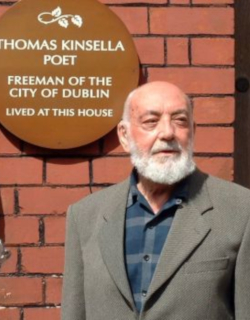
Thomas Kinsella, poet whose sensitive lyrics deal with primal aspects of the human experience, often in a specifically Irish context, is born in Inchicore, Dublin on May 4, 1928.
Kinsella spends most of his childhood in the Kilmainham/Inchicore area of Dublin. He is educated at the Model School, Inchicore, where classes are taught in Irish Gaelic, and at the O’Connell School in North Richmond Street, Dublin. He acquires a series of grants and scholarships that allow him to attend University College Dublin, where he studies physics and chemistry before receiving a degree in public administration.
Kinsella begins serving in the Irish civil service in 1946, and in the early 1950s he meets Liam Miller, the founder of Dolman Press, which publishes much of Kinsella’s poetry beginning in 1952. Among these publications are Poems (1956), his first volume of collected work, Another September (1958), which contains poems that explore the imposition of existential order through various forms, be they natural or products of the poet’s imagination and Downstream (1962), a collection focusing on war and political and social disruption in modern Ireland.
In 1965 Kinsella leaves the Irish civil service and takes a position as a writer in residence at Southern Illinois University in Carbondale (1965–70). During this time, he publishes Nightwalker, and Other Poems (1967), a sombre collection ruminating on Ireland’s past and turbulent present. His translation of the ancient Gaelic saga The Cattle Raid of Cooley (Táin bó Cuailnge) is published in 1969, and the following year he begins teaching at Temple University in Philadelphia. New Poems 1956–73 (1973) and One, and Other Poems (1979) skillfully extend the themes of love, death, and rejuvenation.
Kinsella founds his own publishing company, the Peppercanister Press, in Dublin in 1972, which allows him to publish pamphlets and individual poems in limited editions without relying on submissions to journals or magazines. His first poem to be published through his press is Butcher’s Dozen (1972), about Bloody Sunday, in which 13 demonstrators are killed by British troops in Derry, Northern Ireland, and the ensuing tribunal. Blood & Family (1988) combines four short collections of prose and verse originally published individually through Peppercanister, and Godhead (1999) explores the Trinity in the light of contemporary society. Later works published through Peppercanister include Marginal Economy (2006), Man of War (2007), and Belief and Unbelief (2007). Numerous collections of his poems have been released, including Collected Poems, 1956–2001 (2001) and Selected Poems (2007).
In December 2018, Kinsella is awarded Doctor in Littoris, Honoris Causa, by Trinity College Dublin.
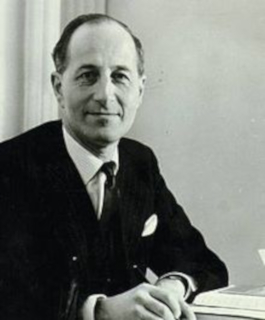
O’Neill is born on September 10, 1914 in London. Having served in the Irish Guards, he comes to live in Northern Ireland in 1945. He is returned unopposed for the Stormont seat of Bannside in November 1946 for the Ulster Unionist Party (UUP) and ten years later reaches cabinet rank. When Lord Brookeborough retires as prime minister in March 1963, O’Neill succeeds as the apostle of technocratic modernization who could see off the Northern Ireland Labour Party. In community relations O’Neill is unprecedentedly liberal, visiting Catholic schools and, more dramatically, meeting with the Taoiseach of the Irish Republic, Seán Lemass, at Stormont on January 14, 1964. O’Neill hopes to encourage Catholic acceptance of the state, but he more quickly aggravates suspicious unionist and loyalist opinion.
The eruption of the civil rights movement of 1968 multiplies pressures for substantive reform from the British government. O’Neill impresses on his cabinet colleagues the necessity of concessions. On November 22 he unveils a program of reforms, notably the closing down of the gerrymandered Londonderry Corporation. However, the local government’s rate-based franchise is for the time untouched. In a television broadcast on December 9, 1968, O’Neill warns that Northern Ireland stands at the crossroads. He calls for an end to street demonstrations but also promises meaningful reforms. There is a massive response from the public, but attitudes polarize again when a radical civil rights march from Belfast to Derry is attacked by loyalists at Burntollet Bridge on January 4, 1969.
O’Neill’s failure to preserve governmental authority by repression or concession leads to discontent in his party. In an attempt to regain the initiative and remake the Ulster Unionist Party, he calls for an election on February 24, 1969. He refuses to campaign for official unionist candidates opposed to his leadership and lends his support to Independent candidates who vow to support him personally. Breaking with unionist convention, O’Neill openly canvasses for Catholic votes. Such strategic innovations fail to produce a clear victory, however, and a phalanx of anti-O’Neill unionists are returned. There is little evidence that O’Neill’s re-branded unionism has succeeded in attracting Catholic votes.
From O’Neill’s point of view, the election results are inconclusive. He is humiliated by his near-defeat in his own constituency of Bannside by Ian Paisley and resigns as leader of the UUP and as Prime Minister on April 28, 1969 after a series of bomb explosions on Belfast’s water supply by the Ulster Volunteer Force (UVF) bring his personal political crisis to a head. Before leaving, he secures “one person, one vote” in place of the ratepayers’ franchise in local elections as well as the succession of the relatively loyal James Chichester-Clarke.
O’Neill retires from Stormont politics in January 1970 when he resigns his seat, having become the Father of the House in the previous year. On January 23, 1970, he is created a life peer as Baron O’Neill of the Maine, of Ahoghill in the County of Antrim. The Maine is a river which flows near Ahoghill.
O’Neill spends his last years at Lisle Court, Lymington, Hampshire, although he continues to speak on the problems of Northern Ireland in the House of Lords where he sits as a crossbencher. His Reform Policies are largely forgotten by British Unionists and Irish Nationalists in Ulster, however he is remembered by historians for his efforts to reform the discrimination and sectarianism within the Province during the 1960s. In retirement he is also a trustee of the Winston Churchill Memorial Trusts.
Terence O’Neill dies at his home of cancer on June 12, 1990.
Widgery receives promotion to the Court of Appeal in 1968. He has barely gotten used to his new position when Lord Parker of Waddington, who had been Lord Chief Justice of England and Wales since 1958, announces his retirement. There is no obvious successor and Widgery is the most junior of the possible appointees. The Lord Chancellor, Quintin Hogg, Baron Hailsham of St. Marylebone, chooses Widgery largely on the basis of his administrative abilities. On April 20, 1971, he is created a life peer taking the title Baron Widgery, of South Molton in the County of Devon.
Shortly after taking over, Widgery is handed the politically sensitive job of conducting an inquiry into the events of January 30, 1972, in Derry, where troops from 1st Battalion, Parachute Regiment had murdered 13 civil rights marchers, commonly referred to as Bloody Sunday. A 14th person dies shortly after Widgery’s appointment. He hears testimony from the paratroopers, who claim they had been shot at, while the marchers insist that no one from the march was armed. Widgery produces a report that takes the British Army‘s side. He placed the main blame for the deaths on the march organisers for creating a dangerous situation where a confrontation was inevitable. His strongest criticism of the Army is that the “firing bordered on the reckless.”
The Widgery Report is accepted by the British government and Northern Ireland‘s unionists but is immediately denounced by Irish nationalist politicians, and people in the Bogside and Creggan areas are disgusted by his findings. The British Government had acquired some goodwill because of its suspension of the Stormont Parliament, but that disappears when Widgery’s conclusions are published. The grievance with Widgery’s findings lingers and the issue remains live as the Northern Ireland peace process advances in the 1990s.
In January 1998, on the eve of the 26th anniversary of Bloody Sunday, Prime MinisterTony Blair announces a new inquiry, criticising the rushed process in which Widgery failed to take evidence from those wounded and did not personally read eyewitness accounts. The resulting Bloody Sunday Inquiry lasts 12 years before the Saville Report is published on June 15, 2010. It demolishes the Widgery Report, finding that soldiers lied about their actions and falsely claimed to have been attacked.
Prime Minister David Cameron, on behalf of the United Kingdom, formally apologises for the “unjustified and unjustifiable” events of Bloody Sunday. As a result of the Saville Report, even observers who are natural supporters of the British Army now regard Widgery as discredited. The conservative historian and commentator Max Hastings describes the Widgery report as “a shameless cover-up.”
The bombing occurs during a period of heightened IRA activity. The previous two years are some of the less active and less violent years during the Troubles. The British policy of criminalization seems to be working but the IRA is gearing up for a new offensive. In 1976, 295 people are killed compared with 111 in 1977 and 80 in 1978 but in 1979 the number increases to 120 with 76 being British security force members compared to just 34 in 1978. The entire IRA “battalion structure” has been reconstructed using more smaller, tight knit cells making the IRA more secretive, harder to infiltrate and makes them much more effective at carrying out larger operations. The only brigade area which does not go under this reconstruction is the South Armagh Brigade which is viewed by the IRA Army Council as an independent Republic. In fact, by the mid-1970s South Armagh has become so dangerous for the British security forces, who are snipped at and have bombs thrown at them whenever they enter the area on foot, they have to be airlifted into the area and ground patrols are stopped altogether effectively giving up the ground to the South Armagh PIRA.
While the four Protestant members of the Royal Ulster Constabulary are on an evening patrol, they are all killed when a Provisional IRA unit detonates a remote-controlled bomb hidden in a parked van. The IRA unit detonates the well-hidden bomb at the exact second the RUC mobile patrol is passing giving the officers no chance of survival. The dead RUC men are, Paul Gray (25), Robert Lockhart (44), Richard Baird (28) and Noel Webb (30). The bomb is estimated at 1,000 lbs. and is believed to be the largest bomb used by the IRA up to that date.
In January 1981, Patrick Joseph Traynor (27) from Crossmaglen is found guilty of the four murders and a range of other charges. He is jailed for life on each of the four murder charges and is sentenced to 12 years for the related crimes.
The IRA continues to intensify their campaign. On August 29, 1979, the IRA carries out two separate attacks in Northern Ireland and the Republic of Ireland that shock the world and give huge media coverage to their campaign. The first is the killing of Lord Mountbatten and his grandson when the boat they are on off the County Sligo coast is blown up by a remote-controlled bomb. The second is the Warrenpoint Ambush where the IRA kills 18 British soldiers in a double bomb attack, the highest loss of life for the British Army during the Troubles. The IRA carries out several of these type of large attacks against the British forces throughout the 1980s like the 1983 Ballygawley land mine attack which kills four soldiers, the 1988 Lisburn van bombing which kills six soldiers and the Ballygawley bus bombing also carried out in 1988 which kills eight soldiers and injures 28.
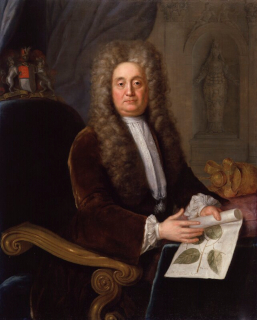
As a child Sloane possesses a strong curiosity of nature, and he develops a particular interest in plants. After studying medicine in London, he travels in France, taking an M.D. degree at the University of Orange in 1683. In 1685 he returns to London and is elected a fellow of the Royal Society. He proceeds to practice medicine as an assistant to British physician Thomas Sydenham. He is made a fellow of the Royal College of Physicians in 1687. That same year he accepts an opportunity to visit Jamaica, traveling as personal physician to the Christopher Monck, 2nd Duke of Albermarle, who had been appointed to govern the island.
The journey to Jamaica provides Sloane with the chance to pursue his interest in the natural sciences. During the 15 months of his travels, he visits multiple islands in the West Indies, including Saint Kitts, Nevis, and Barbados. He ultimately collects specimens of about 800 plants. He also records information on and collects specimens of various fish, mollusks, and insects, and he observes the local peoples and contemplates the natural phenomena of the area. His observations and the specimens he collects during the voyage lay the foundation for his later contributions to botany and zoology and for his role in the formation of the British Museum. He returns to England in 1689, his trip having been cut short by Monck’s death. His collection of plants from the West Indies is one of the first from that region to reach England.
Sloane’s trip to Jamaica also leads to his invention of a milk chocolate beverage. While on the island, he encounters a local drink made from a cacao plant. The beverage apparently makes him nauseous. To avoid this, he decides to mix the cacao material with milk. He finds this concoction to be not only more tolerable but also tasty and healthy. Shortly after his return to England, his milk-based concoction is sold by apothecaries as a medicinal product. His recipe later forms the basis for a milk chocolate product manufactured by Cadbury.
In 1696 Sloane publishes in Latin an elaborate catalogue, Catalogus Plantarum Quae in Insula Jamaica, on the plants he collected in Jamaica. He later publishes Natural History of Jamaica (2 Vol., 1707 and 1725), a comprehensive account of his studies of the natural phenomena of the island country.
Sloane also makes important contributions to medicine. He is physician to Queen Anne, King George I, and King George II. He is created a baronet in 1716, becoming the first medical practitioner to receive a hereditary title. He is relatively progressive as a physician, and, while serving George I, he adopts the practice of inoculation against smallpox for members of the royal family. In 1719 he is elected president of the Royal College of Physicians, a post he serves until 1735. In 1727 he becomes president of the Royal Society, succeeding physicist and mathematician Sir Isaac Newton. He holds the position until 1741. He earns a reputation as a specialist in eye diseases, and he eventually publishes Account of a Medicine for Soreness, Weakness and Other Distempers of the Eyes (1745).
Sloane is also known as an avid collector, and he benefits greatly from the acquisition of the cabinets of other collectors, including amateur scientist William Charleton and English apothecary and botanist James Petiver. When he retires from active work in 1741, his library and cabinet of curiosities has grown to be of unique value, and on his death, he bequeaths his collection to the nation, on condition that parliament pay his executors £20,000. The bequest is accepted and goes to form the collection opened to the public as the British Museum in 1759.
Sloane has no son that survives beyond infancy, and the baronetcy becomes extinct upon his death in London on January 11, 1753.





 seamus dubhghaill