seamus dubhghaill

Promoting Irish Culture and History from Little Rock, Arkansas, USA


Leave a comment

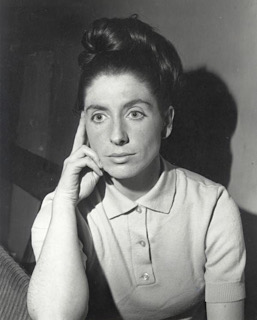
Death of Caitlín Maude, Poet, Actress & Language Revival Activist

Caitlín MaudeIrish language poetlanguage revival activist, and actress, dies in County Dublin on June 6, 1982. She is also well-known for her campaigns to improve the lives of women in Ireland.

Maude is born on May 22, 1941, in CaslaCounty Galway, and reared in the Irish language. Her mother, Máire Nic an Iomaire, is a school teacher, and she receives her primary education from her on a small island off the coast of Rosmuc. Her father, John Maude, is from Cill Bhriocáin township near Rosmuc. She attends secondary school at Coláiste Chroí Mhuire, Spiddal, an all-Irish language school in County Galway. She later credits one of her Irish language teachers there, Sister Ailbhe, as an early influence in cultivating her writing confidence.

Maude attends University College Galway, where she studies English, Irish, French, and Mathematics. She becomes a teacher, working in schools in Counties KildareMayo, and Wicklow. She also works in other capacities in London and Dublin.

Maude begins writing modern literature in Irish in secondary school and develops a rhythm of poetry closely attuned to the rhythms of the Conamara Theas dialect of Connacht Irish, spoken in her native district. Though not conventionally religious, she admits in an interview that she has a deep interest in spirituality and that this has left its mark on her poetry. She is noted as a highly effective reciter of her own verse. Géibheann is the best-known of her poems, and is studied at Leaving Certificate Higher Level Irish in the Republic of Ireland. A posthumous collected edition, Caitlín Maude, Dánta, is published in 1984, Caitlín Maude: file in 1985 in Ireland and Italy, and Coiscéim in 1985.

Maude is widely known as an actress. She acts at the university, at An Taibhdhearc in Galway and the Damer Theatre in Dublin, and is particularly successful in a production of An Triail by Máiréad Ní Ghráda at the Damer Theatre in 1964. She plays the protagonist, Máire Ní Chathasaigh, an unmarried mother who experiences family rejection, a stay in a Magdalene laundry, and ultimately murders her infant child followed by suicide. In 2017, Former Irish Minister For Justice Máire Geoghegan-Quinn cites this performance as “pathbreaking”: “Caitlín Maude played the role, when nobody talked about the issue and when, as we know, women were still devalued, still caricatured, still incarcerated and disenfranchised if they became mothers out of wedlock.” Maude herself is a playwright and co-authors An Lasair Choille with poet Michael Hartnett.

Maude is very active in the  Celtic Revival. She founds An Bonnán Buí, an Irish-speaking social club in the 1970s in Dublin. As a member of the Dublin Metropolitan Gaelgeoir community, she is active in many direct action campaigns by the language revival organization Gluaiseacht Chearta Sibhialta na Gaeltachta, including the campaign that forces the Irish State to establish a Gaelscoil (Irish-medium primary schoolScoil Santain in the suburb of Tallaght, County Dublin. A second Irish language school, Scoil Chaitlin Maude, opens in Tallaght in 1985 shortly after her death. It begins as a two-room school with 35 children and has grown to a 16 room new building serving 345 children as of 2023.

Maude is also a distinguished sean-nós singer. She makes one album in this genre, Caitlín, released in 1975 on Gael Linn Records and now available as a CD. It contains both traditional songs and a selection of readings of her poetry.

Maude marries Cathal Ó Luain in 1969. They have one child Caomhán, their son.

Maude dies of complications from cancer on June 6, 1982, at the age of 41. She is buried in Bohernabreena graveyard, which overlooks the city from the Wicklow Mountains.

In 2001, a new writers’ centre in Galway is named after her: Ionad Scríbhneoirí Chaitlín Maude, Gaillimh.

Since Maude’s death, critics in several languages have continued to study her literary works. Irish writer and The Irish Times columnist Michael Harding cites her as one of a few examples of groundbreaking women to “spin the hurt and wound of their oppression, and weave new loves songs and laments.” Irish Studies professor Sarah McKibben notes that Maude’s innovation in the poem represents an instance of recent Irish writers transgressing “literary, nationalistic, sociolinguistic and gender norms to craft new ways of writing in Irish.”

According to Louis de Paor, “Although no collection of her work was published during her lifetime, Caitlín Maude had a considerable influence on Irish language poetry and poets, including Máirtín Ó DireáinMicheál Ó hAirtnéideTomás Mac Síomóin, and Nuala Ní Dhomhnaill. That influence is a measure of the dramatic force of her personality, her exemplary ingenuity and commitment to the language, and her ability as a singer to embody the emotional disturbance at the heart of a song. Her collected poems are relatively slight, including incomplete drafts and fragments, but reveal a poetic voice confident of its own authority, drawing on the spoken language of the Connemara Gaeltacht but rarely on its conventions of oral composition or, indeed, on precedents in Irish poetry in either language. The best of her work is closer to the American poetry of the 1960s in its use of looser forms that follow the rhythms of the spoken word and the sense of the poem as direct utterance without artifice, a technique requiring a high degree of linguistic precision and formal control.”

Maude’s work has also been translated into English and Spanish. Spanish language critic Pura Coloma notes that Maude’s work played a role in preserving Connemaran culture, as she “utilizes her own style to replicate the deep rhythms and tonalities of the regional voice.”

Leave a comment

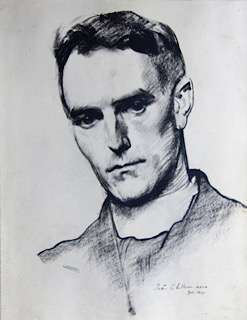
Birth of Pádraig de Brún, Catholic Priest & Linguist

Pádraig de Brún, also called Patrick Joseph Monsignor Browne, a Roman Catholic priestlinguistClassicist, and Celticist, is born in Grangemockler, County Tipperary, on October 13, 1889. With regard to his contribution to modern literature in Irish, he, who Louis de Paor terms in 2014 “one of the most distinguished literary figures of his time,” is also a writer of Irish poetry in the Irish language and the literary translator of many of the greatest works of the Western canon into Modern Irish. He serves as President of University College, Galway (UCG), and is known in friendly and informal circles as Paddy Browne.

De Brún is the son of a primary school teacher, Maurice Browne. He is educated locally, at Rockwell CollegeCashel, and at Holy Cross College, Drumcondra, Dublin (at both he is tutored in mathematics by Éamon de Valera). In 1909, he is awarded a BA from the Royal University of Ireland. He is awarded an MA degree by the National University of Ireland, and wins a traveling scholarship in mathematics and mathematical physics, enabling him to pursue further studies in Paris. He is ordained as a Catholic priest at the Irish College in Paris in 1913, the same year he earns his D.Sc. in mathematics from the University of Paris under Émile Picard.

After a period at the University of Göttingen, de Brún is appointed professor of mathematics at St. Patrick’s Pontifical University, Maynooth, in 1914. In April 1945, he is elected by the Senate of the National University of Ireland to succeed John Hynes as President of University College, Galway, an office he holds until his retirement in 1959. His friend Thomas MacGreevy refers to de Brún as, “Rector Magnificus,” and praises his, “Olympian capacity to appreciate the most exalted works of art and literature, ancient and modern.”

The School of Mathematics, Mathematical Physics and Statistics is based in Áras de Brún, a building named in de Brún‘s honour. He subsequently becomes Chairman of the Arts Council of Ireland, a position he holds until his death in 1960. He also serves as chairman of the Council of the Dublin Institute for Advanced Studies (DIAS).

De Brún is close friend of 1916 Easter Rising leader Seán Mac Diarmada and is deeply affected by the latter’s execution.

De Brún was a prolific writer of Irish poetry in the Irish language, including the well-known poem “Tháinig Long ó Valparaiso.” He further translates into Modern Irish many great works of the Western canon, including Homer‘s Iliad and OdysseySophocles‘ Antigone and Oedipus Rex, and Plutarch‘s Parallel Lives, as well as French stage plays by Jean Racine and Dante Alighieri‘s Divine Comedy. With regards to his importance to modern literature in Irish, he is recently termed “one of the most distinguished literary figures of his time.”

The French Government awards de Brún the title of Chevalier of the Legion d’Honneur in 1949, and in 1956, the order Al Merito della Repubblica Italiana is conferred on him by the President of Italy. He is created a Domestic Prelate (a Monsignor) by Pope Pius XII in 1950.

De Brún purchases land at Dunquin in the Dingle Peninsula Gaeltacht. In the 1920s, he also builds a house there known as Tigh na Cille, where his sister and her children often visit and stay at length. Through his literary mentorship of his niece, the future poet Máire Mhac an tSaoi, he has been credited with having an enormous influence upon the future development of modern literature in Irish.

After suffering a heart attack at his house at Seapoint, Dún Laoghaire, into which he had recently moved, de Brún dies on June 5, 1960, in St. Vincent’s nursing home, Leeson Street, Dublin.


Leave a comment

Birth of Máire Mhac an tSaoi, Diplomat, Poet & Memoirist

Máire Mhac an tSaoi, Irish civil service diplomat, writer of Modernist poetry in the Dingle Peninsula dialect of Munster Irish, a memoirist, and a highly important figure within modern literature in Irish, is born Máire MacEntee in Dublin on April 4, 1922. Along with Seán Ó Ríordáin and Máirtín Ó Direáin, she is, in the words of Louis de Paor, “one of a trinity of poets who revolutionised Irish language poetry in the 1940s and 50s.” She has a lifelong passion for the Irish language and is one of the leading authorities on Munster Irish.

Mhac an tSaoi’s father, Seán MacEntee, is born in Belfast and is a veteran of the Irish Volunteers during the 1916 Easter Rising and the subsequent Irish War of Independence, and of the Anti-Treaty Irish Republican Army (IRA) during the Irish Civil War. He is also a founding member of Fianna Fáil, a long-serving TD and Tánaiste in the Dáil. Her mother, Margaret Browne (or de Brún) of County Tipperary, is also an Irish republican and a distinguished Celticist who teaches courses in Irish literature in the Irish language at Alexandra College and University College Dublin (UCD).

Mhac an tSaoi is influenced by her stays in the Dingle Peninsula in County Kerry with her uncle, Monsignor De Brún, at his parish of Dún Chaoin. Monsignor de Brún, similarly to his sister, is a distinguished linguist and Celticist, the literary translator of Homer, Dante Alighieri, Sophocles, and Jean Racine into Modern Irish, “and one of the most distinguished literary figures of his time.”

Mhac an tSaoi studies Modern Languages and Celtic Studies at UCD, before going to further research at the Dublin Institute for Advanced Studies and at the University of Paris. She writes the famous work of Christian poetry in Munster Irish, Oíche Nollag (“Christmas Eve”), when she is only 15-years of age.

Mhac an tSaoi spends two years studying in post-war Paris (1945–47) before joining the Irish diplomatic service and is working at the Irish embassy in Madrid when she commits herself to writing poetry in Irish following her discovery of the works of Federico García Lorca.

She remains a prolific poet and is credited, along with Seán Ó Ríordáin and Máirtín Ó Direáin, with reintroducing literary modernism into Irish literature in the Irish language, where it had been dormant since the 1916 execution of Patrick Pearse, in the years and decades following World War II. Her poetry draws on the vernacular spoken by the native Irish speakers of the Munster Gaeltacht of West Kerry during the first half of the twentieth century. Formally, she draws on the song metres of the oral tradition and on older models from the earlier literary tradition. In later work, she explores looser verse forms but continues to draw on the remembered dialect of Dún Chaoin and on a scholarly knowledge of the older literature.

Mhac an tSaoi is elected to Aosdána in 1996 but resigns in 1997 after Francis Stuart is elevated to the position of Saoi. She had voted against Stuart because of his role as an Abwehr spy and in radio propaganda broadcasts from Nazi Germany aimed at neutral Ireland during World War II.

In 2001, she publishes an award-winning novel A Bhean Óg Ón… about the relationship between the 17th-century County Kerry poet and Irish clan chief Piaras Feiritéar and Meg Russell, the woman for whom he composed some of the greatest works of love poetry ever written in the Irish language.

Her poems Jack and An Bhean Óg Ón are both featured on the Leaving Certificate Irish course, at both Higher and Ordinary Levels, from 2006 to 2010. Her literary translation of Rainer Maria Rilke‘s Duino Elegies from Austrian German into the Irish language is published in 2013.

Mhac an tSaoi marries Irish politician, writer, and historian Conor Cruise O’Brien in a Roman Catholic wedding Mass in Dublin in 1962. This makes her the stepmother to O’Brien’s children from his 1939 civil marriage. Her mother is deeply embarrassed by the exposure of the relationship and staunchly opposes the match, as she has long been a close friend of O’Brien’s Presbyterian first wife. Despite their subsequent marriage, the exposure of their extramarital relationship ends Mhac an tSaoi’s diplomatic and civil service career. They later adopted two children, Patrick and Margaret.

She then lives with her husband in New York City, where he becomes a professor at New York University (NYU) after the Congo Crisis destroys O’Brien’s diplomatic career. He is long blamed by the United Nations for the escalation of the Congo Crisis.

Mhac an tSaoi and her husband, who is then serving as Albert Schweitzer Professor of the Humanities at NYU, are both staunchly opposed to the Vietnam War. They are both arrested by the New York City Police Department (NYPD), along with Dr. Benjamin Spock and Beat Generation poet Allen Ginsberg, during an allegedly violent protest outside a United States military induction centre in New York City on December 5, 1967. Afterward, during an interview with The New York Times, she accuses the NYPD of using excessive force both during and after her husband’s arrest.

She later returns with O’Brien to live in Dublin, where she attends another protest rally against the Vietnam War along O’Connell Street in 1969.

Mhac an tSaoi dies peacefully at the age of 99 on October 16, 2021, at home where she has been cared for by her daughter Margaret.