seamus dubhghaill

Promoting Irish Culture and History from Little Rock, Arkansas, USA


Leave a comment

Birth of Charles Doran, Irish Actor

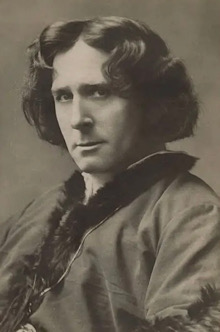
Charles Doran, an Irish actor and one of the last of the touring actor-managers in the tradition of Frank BensonJohn Martin-Harvey and Ben Greet, is born on January 1, 1877, in Cork, County Cork. Among those who join his company at the start of their careers are Cecil ParkerRalph RichardsonFrancis L. Sullivan and Donald Wolfit.

Doran tours with Benson and other managements, and plays in the West End before setting up his own company in 1920. He leads it for eleven years, before leaving Britain to work in India. On his return he works on stage and makes occasional television appearances.

Doran is the son of Charles Jenkins Doran. He is educated in Cork and privately. In 1899, he makes his stage debut as a member of Frank Benson’s touring company, in Julius Caesar at the Theatre Royal, Belfast. He remains with Benson for two and a half years, during which he makes his London debut, as Captain MacMorris in Henry V at the Lyceum Theatre.

In 1903, Doran tours in a stage version of Leo Tolstoy‘s Resurrection. He is engaged by Fred Terry and Julia Neilson, and appears at the New Theatre in 1905, as the Comte de Tournai in The Scarlet Pimpernel. In 1906, touring with Harry Brodribb Irving, he makes his first appearance in the United States, and the following year tours in South Africa with Cora Urquhart Brown-Potter‘s company. In 1907, he returns to Benson’s company. In 1908, he tours with Mrs. Patrick Campbell in The Thunderbolt, and The Second Mrs. Tanqueray. During 1909–10 he tours England and Australia with Oscar Asche and Lily Brayton, both former members of Benson’s troupe. His parts include the title role in The Merchant of Venice, Lodovico in Othello, Tranio in The Taming of the Shrew and the Soothsayer in Julius Caesar.

In October 1910, returning to England, Doran plays La Tribe in Count Hannibal at the New Theatre, after which he is Pistol in The Merry Wives of Windsor at the Garrick Theatre to the Falstaff of Asche. For the next ten years he plays in new, ephemeral works, interspersed with classics. Among his roles in the latter are Constantine Levin in Anna Karenina (1913), Douglas in Henry IV, Part 1 and the Constable of France in Henry V (1914) in London, and a variety of Shakespeare parts at the Memorial Theatre, Stratford-upon-Avon (1919).

In February 1920, Doran begins touring with his own Shakespearean company, playing Hamlet, Shylock in The Merchant of Venice, Brutus in Julius Caesar, Malvolio in Twelfth Night, Prospero in The Tempest, Petruchio in The Taming of the ShrewMacbeth, Falstaff, Henry V, and Jaques in As You Like It. He has a keen eye for rising talent, and among his recruits are Noel Streatfeild, Cecil Parker, Ralph Richardson, Edith SharpeNorman ShelleyAbraham Sofaer, Francis L. Sullivan and Donald Wolfit.

In 1931, Doran goes to India as director of Shakespeare’s plays at the State Theatre in Jhalawar and then on to Bombay where he performs primarily in Shakespeare on the radio. He returns to England in 1937. His last London appearance is in Song of Norway (1949). His last Shakespearean role in the theatre is Time in The Winter’s Tale (1951). He continues to act on stage in other parts until 1954. He appears on BBC Television as a senator in Othello in 1950 and Adabashev, the tragedian in Curtain Down in 1952.

Doran dies in Folkestone on the south coast of England on April 5, 1964, at the age of 87. An article on him published by Emory University in 2003 sums up his career thus:

On stage in one role or another, Doran’s fifty-seven years in the theatre made him a major force in the profession, particularly in his productions of Shakespeare. Such was his energy and enthusiasm that he kept alive for a few more years the actor-manager system when the major talents, men like Tree, Benson, and Irving, had dissolved their companies. Doran was indeed the last of his theatrical breed.

Leave a comment

Birth of Anew McMaster, Anglo-Irish Stage Actor

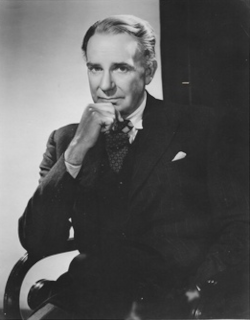
Anew McMaster, Anglo-Irish stage actor, is born in Birkenhead, England, on December 24, 1891. During his nearly 45 year acting career he tours Ireland, Britain, Australia and the United States. For almost 35 years he tours as actor-manager of his own theatrical company performing the works of Shakespeare and other playwrights.

McMaster is born as Andrew McMaster, the son of Liverpool-born Andrew McMaster (1855–1940), a master stevedore, and Alice Maude née Thompson (1865–1895). A number of sources make the erroneous claims, based on details supplied by McMaster himself, that he is born in 1893 or 1894 or even 1895 in County Monaghan in Ireland but, according to the Birth Register and the 1901 United Kingdom Census, he is actually born in 1891 in Birkenhead, England. Like his future brother-in-law Micheál Mac Liammóir, who is born in London as Alfred Willmore but claims to have been born in Cork to Gaelic-speaking parents, McMaster reinvents himself as Irish and claims for himself the town of Monaghan as his birthplace, and Warrenpoint, County Down, as the scene of his earliest memories.

At the age of nineteen McMaster gives up a career in banking to pursue one on the stage. He moves to Ireland and tours the country with the O’Brien-Ireland theatrical company from 1910 to 1914. Success quickly follows with his appearance as Jack O’Hara in Paddy the Next Best Thing at the Savoy Theatre (1920). From 1921 he tours Australia in this and other plays, and in 1925 forms his own company, the McMaster Intimate Theatre Company, a ‘fit-up‘ company to tour in the works of Shakespeare, mainly in Ireland but also in Britain and Australia, touring with his theatrical company until 1959. One of the last actor-managers “of the old school – and an epitome of the type,” on occasions he persuades a ‘big name’ to act with his company as a draw for audiences. Frank Benson (1928), Sara Allgood (1929) and Mrs. Patrick Campbell appear with him.

In 1933 at the Shakespeare Memorial Theatre in Stratford-upon-Avon McMaster appears as Hamlet opposite Esme Church as Gertrude, Coriolanus, Macduff in Macbeth, Leonato in Much Ado About Nothing, Prince Escalus in Romeo and Juliet, and Petruchio in The Taming of the Shrew. His greatest roles are as Othello and as Shylock in The Merchant of Venice, to which he adds King Lear in 1952. Just before World War II he and his company appear at the Chiswick Empire in a Shakespeare season. He tours the United States as James Tyrone in Eugene O’Neill‘s Long Day’s Journey into Night in 1956. Having ‘a great organ voice,’ Harold Pinter, who acts in his company in Ireland from 1951 to 1953 and calls him ‘perhaps the greatest actor-manager of his time,’ later describes McMaster as ‘evasive, proud, affectionate, shrewd, merry.’ In his brief biography Mac (1968), Pinter recalls, “Mac gave about a half dozen magnificent performances of Othello while I was with him… At his best he was the finest Othello I have seen. [He] stood dead in the centre of the role, and the great sweeping symphonic playing would begin, the rare tension and release within him, the arrest, the swoop, the savagery, the majesty and repose.”

McMaster’s only film role is an uncredited appearance as the Judge in Sword of Sherwood Forest (1960).

In 1924 McMaster marries the actress and designer Marjorie Willmore (1894–1970), the sister of Micheál Mac Liammóir. They have two children, the actors John Christopher McMaster (1925–1995) and Mary-Rose McMaster (1926–2018).

Anew McMaster dies at the age of 70 at his home in Dublin on August 24, 1962. He is buried with his wife in Deans Grange Cemetery in County Dublin.

McMaster trains a generation of actors who tour with his company and go on to achieve success as actors. These include Pauline Flanagan, Milo O’Shea, T. P. McKenna, Kenneth Haigh, Henry Woolf, Harold Pinter, Donal Donnelly and Patrick Magee. It is while they are touring with McMaster’s company that the actor and dramatist Micheál Mac Liammóir and the actor and producer Hilton Edwards first meet and begin their lifelong partnership.

McMaster’s biography, A Life Remembered: A Memoir of Anew McMaster by his daughter Mary-Rose McMaster, is published in 2017. Harold Pinter also publishes a short biography, Mac, in 1968.


Leave a comment

Birth of Shakespearean Actress Harriet Smithson

Harriet Constance Smithson, Anglo-Irish Shakespearean actress of the 19th century and best known as the first wife and muse of Hector Berlioz, is born at Ennis, County Clare on March 18, 1800.

Her father, William Joseph Smithson, is an actor and theatrical manager from Gloucestershire, England, and her mother is an actress whose full name is unknown. She also has a brother, Joseph Smithson, and a sister, name also unknown. In October 1801, she is left in the care of Reverend James Barrett, a priest of the Church of Ireland, parish of Drumcliffe. Barrett becomes her guardian and raises her as though she were his own daughter. He instructs her “in the precepts of religion,” and keeps everything connected with the stage from her view. After his death on February 16, 1808, the Smithsons send Harriet to a boarding school in Waterford.

On May 27, 1814, Smithson makes her first stage appearance at the Theatre Royal, Dublin, as Albina Mandevill in Frederick Reynolds‘s The Will. Her performance is well received. In 1815, she takes her parents’ place in Montague Talbot’s company in Belfast after they return to Dublin. The season opens on January 1, 1816, where she extends her range in roles, performing in multiple comedies. She then travels to Newry, Limerick, Dublin, and Birmingham, where she joins Robert Elliston‘s company. She spends the next two months playing over forty roles in various genres.

Four years later, January 20, 1818, Smithson makes her first London appearance at Drury Lane as Letitia Hardy in The Belle’s Stratagem. Her first performance receives mixed reviews from critics, but she quickly gains some favour of critics and performers as she obtains more experience. She joins the permanent company at the Royal Coburg Theatre later that year. However, she rejoins Drury Lane Company in the autumn of 1820. On February 20, 1821, she takes the lead female role in Thérèse by John Howard Payne, when the cast actress falls ill. Overall, the London public remembers her as The Times put it, “a face and features well adapted to her profession; but [an actress] not likely to make a great impression on a London audience, or to figure among stars of the first magnitude.”

In 1827, Smithson makes her Paris début as Lydia Languish in The Rivals at the Théâtre de l’Impératrice. Though she receives negative reviews for this role, she is highly praised for her beauty and ability in the subsequent performance of She Stoops to Conquer. On September 11, 1827, she is given the small part of Ophelia next to Charles Kemble in Shakespeare’s Hamlet. She leaves a long-lasting impression on the French through her interpretation of Ophelia’s madness, utilizing pantomime and natural presentation.

The tremendous success of Hamlet leads to the announcement of Romeo and Juliet, for September 15. Smithson is cast as Juliet, where she revolutionizes the women’s role in theatre by becoming as important as her male counterpart. Until this point, women’s lines in theatre are heavily cut and censored to reduce the role for the company’s “restricted talent.” Again, the production is widely well received. On September 18, Shakespeare’s Othello becomes the third Shakespeare tragedy to be performed by The English theatre. Her performance as Desdemona is less effective, but the production is popular enough to be repeated the following week. She is cast as Jane Shore in the renowned tragedy The Tragedy of Jane Shore, a role in which she moves her audience to tears. The production soon becomes the most performed play in the English season. At the end of her time in France, she had acted in several productions with famous actors such as William Charles Macready, Edmund Kean, and Charles Kemble.

As opportunities to continue her work in Paris dwindle, Smithson returns to London to perform Jane Shore again. The production opens at Covent Garden on May 11, 1829, under unfavorable circumstances. Some audience members, who had read her reviews before she went to Paris, feel reluctant to attend the show. However, just seven days after her next performance as Juliet, in Shakespeare’s Romeo and Juliet, the press gives her glowing reviews.

After Covent Garden closes for the summer in 1832, Smithson tours England to minor theatres performing almost exclusively in tragedies. In June 1832, she joins the Theatre Royal Haymarket, where she has limited success and receives criticism about her weight.

In 1830, Smithson goes back to Paris to set up an English theatre under her own management. She obtains permission to perform at the Theatre-Italien where she performs several unsuccessful plays. A year later, she breaks her leg and is forced to put her career on hold until her leg heals, leaving her in great debt. She gives her last performance, as Ophelia, on December 15, 1836, before her health deteriorates.

Toward the end of her life, Smithson suffers from paralysis, which leaves her barely able to move or speak. She dies on March 3, 1854, at her home on the rue Saint-Vincent, and is buried at the Cimetière Saint-Vincent. Berlioz has her body is later reinterred at the Montmartre Cemetery when Cimetière Saint-Vincent undergoes redevelopment.

(Pictured: Oil on canvas portrait of Harriet Smithson by Claude-Marie-Paul Dubufe, located at the Musee Magnin, Dijon, France)


Leave a comment

Death of English Actress Ellen Kean

LEAD Technologies Inc. V1.01

Ellen Kean, one of the finest English actresses of her day, dies in Bayswater, City of Westminster, England on August 20, 1880. She is known as Ellen Tree until her marriage in 1842, after which she is known both privately and professionally as Mrs. Charles Kean and always appears in productions together with her husband.

Kean is born Eleanora Tree in Ireland on December 12, 1805, the third of four daughters of Cornelius Tree, an official of the East India Company in London. Her three sisters become actresses, but, unlike Ellen, retire from the stage when they marry. Her professional stage debut is in a musical version of Twelfth Night in London in 1822 as Olivia alongside her sister Maria as Viola. She gains experience touring in the provinces, and from 1826 is a regular member of the companies at the Theatre Royal, Drury Lane and Theatre Royal Haymarket, making a success in The Wonder and The Youthful Queen. At the Royal Opera House at Covent Garden, she takes on the roles of William Shakespeare‘s Romeo to the Juliet of Fanny Kemble, Françoise de Foix in Francis I, and Lady Townley in The Provoked Husband.

In 1832, by now established as a leading actress, Tree accepts an engagement in Hamburg, Germany, where a junior member of the company is Charles Kean. He had made an undistinguished debut at Drury Lane in 1827, and he and Tree had acted together in 1828 in a play called Lovers’ Vows and later in Othello. In the German season they fall in love but are persuaded by family and friends not to marry in haste. Tree returns to London and resumes her successful West End career, including a considerable success in Ion in another breeches role. At the end of 1836, Tree goes to the United States, where she tours in Shakespeare for more than three years, playing heroines such as Rosalind, Viola and Beatrice, among other roles. By the time of her return to England in 1839, she has made a profit of £12,000 on the tour, equivalent to at least £1 million in modern terms.

By 1841 Charles Kean has established himself as a successful actor, and he and Tree appear together in Romeo and Juliet at the Theatre Royal Haymarket. They are married the next year, and she at once switches her professional name from Ellen Tree to Mrs. Charles Kean. For the next nine years they appear together at the Haymarket, making a joint visit to the United States in 1846. In 1850, Kean takes over the management of the Princess’s Theatre in London. The Times called this “the most important period of Mrs. Kean’s career…. Hitherto she had been the Rosalind and the Viola of the stage; henceforward her name was to be associated with characters of a more matronly type” in roles including Lady Macbeth and Gertrude in Hamlet. The same writer also credits her for “the good taste and artistic completeness” of Kean’s productions. Ellen Terry, who makes her first stage appearance as the boy Mamillius in The Winter’s Tale, remembers Kean “as Hermione wearing a Greek wreath round her head and a crinoline with many layers of petticoats.”

Charles Kean dies in 1868, and his widow retires from the stage, living quietly in Bayswater, in the City of Westminster, where she dies at the age of 73 on August 20, 1880. The Times in its obituary says, “Mrs. Kean is not to be numbered with the greatest votaries of the English stage, but her acting was distinguished by considerable power, tenderness and refinement.” She is buried in a vault alongside her husband at Catherington, Hampshire.

(Pictured: “Charles Kean and Wife Ellen Tree” by Mathew Brady Studio (1844-1894), modern albumen print from wet plate collodion negative, National Portrait Gallery, Smithsonian Institution)


Leave a comment

Birth of Stage Actress George Anne Bellamy

george-anne-bellamy

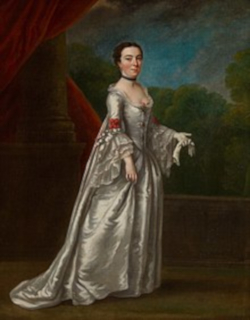
George Anne Bellamy, English actress whose stage career and personal life are, in their irregularity, not entirely atypical of her era, is born in County Fingal on April 23, 1727. Her best performances are in such tragic roles as Desdemona in Othello and Juliet in Romeo and Juliet.

Bellamy is the illegitimate daughter of a Quaker lady who elopes from boarding school with the diplomat James O’Hara, 2nd Baron Tyrawley. She is named George Anne through a mishearing of the name Georgiana at her christening. Though her mother marries a Captain Bellamy in Lisbon, Bellamy is acknowledged by Tyrawley as his daughter and he provides for her needs, including her education at a convent in Boulogne-sur-Mer. While living with her mother in London, she meets the theatrical manager John Rich and other leading stars of the stage, and she soon determines to pursue an acting career.

Bellamy’s early roles at Covent Garden, beginning about 1744, are as Miss Prue in Love for Love and with James Quin in The Orphan. Her reputation as an actress rests largely on her good looks and her “soft” feminine manner. Her career reaches its pinnacle when, in 1750, her performance of Juliet to David Garrick’s Romeo at Theatre Royal, Drury Lane is said to surpass the work of the revered Susannah Cibber in a rival production of the play at Covent Garden.

Riotous living, including a legal and a bigamous marriage, takes its toll on Bellamy’s beauty and her appeal to managers. Her later life is marred by ill health and credit troubles. Her last appearance is at Drury Lane on May 24, 1785, at her own benefit concert. She is unable to act but speaks briefly to the audience.

In the same year Bellamy publishes “An Apology for the Life of George Anne Bellamy” in six volumes. The salacious work is said to be ghost written by Alexander Bicknell.

George Anne Bellamy dies in poverty on February 16, 1788, in London.

(Pictured: George Anne Bellamy by F Lindo exhibited in 1833 now owned by Garrick Club)