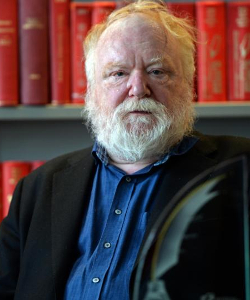
He first comes to prominence with his play The Factory Girls but establishes his reputation with his play about World War I, Observe the Sons of Ulster Marching Towards the Somme, which is staged in Dublin‘s Abbey Theatre and internationally. The play makes a name for him when it is performed at Hampstead Theatre, drawing comments about McGuinness’s Irish Catholic background. It wins numerous awards including the London Evening Standard Award for Most Promising Playwright for McGuinness and the Christopher Ewart-Biggs Memorial Prize. He has also written new versions of classic dramas, including works by Henrik Ibsen, Anton Chekhov, and Euripides, adapting the literal translations of others. In addition, he writes the screenplay for the film Dancing at Lughnasa, adapting the stage play by fellow UlstermanBrian Friel.
McGuinness’s first poetry anthology, Booterstown, is published in 1994. Several of his poems have been recorded by Marianne Faithfull, including Electra, After the Ceasefire and The Wedding.
McGuinness previously lectured in Linguistics and Drama at the University of Ulster, Medieval Studies at University College, Dublin and English at the National University of Ireland, Maynooth. Then he is a writer-in-residence lecturing at University College Dublin before being appointed Professor of Creative Writing in the School of English, Drama and Film there in 2007.
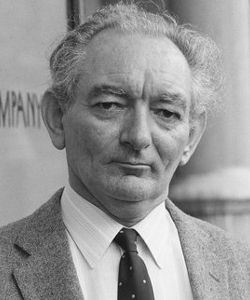
Friel receives his B.A. from St. Patrick’s College, Maynooth (1945–48), and qualifies as a teacher at St. Joseph’s Training College in Belfast. He marries Anne Morrison in 1954, with whom he has four daughters and one son. Between 1950 and 1960, he works as a math teacher in the Derry primary and intermediate school system, taking leave in 1960 to pursue a career as a writer, living off his savings. In the late 1960s, the Friels move from 13 Malborough Street, Derry to Muff, County Donegal, eventually settling outside Greencastle, County Donegal.
Recognised for early works such as Philadelphia, Here I Come! and Faith Healer, Friel has 24 plays published in a more than half-century spanning career that culminates in his election to the position of Saoi of Aosdána. His plays are commonly featured on Broadway throughout this time. In 1980, Friel co-founds Field Day Theatre Company, and his play Translations is the company’s first production. With Field Day, Friel collaborates with Seamus Heaney, 1995 recipient of the Nobel Prize in Literature. Heaney and Friel first become friends after Friel sends the young poet a letter following the publication of Death of a Naturalist.
Fallon’s upbringing and his early impressions of Athenry and the surrounding landscape are intimately described in his poetry. After passing the civil service exams in 1923 he moves to Dublin to work in the Customs House. In Dublin he becomes part of the circle of George William Russell (Æ) who encourages his literary ambitions and arranges for the publication of his early poetry. His early poetry, short stories, and literary criticism are published in The Dublin Magazine and The Bell.
He forms close friendships with Seumas O’Sullivan, editor of The Dublin Magazine, the poets Austin Clarke, Robert Farren, F.R. Higgins, and Patrick McDonagh and later the novelist James Plunkett. In 1939, Fallon leaves Dublin to serve as a Customs official in County Wexford, living in Prospect House, near Wexford Town with his wife, Dorothea (née Maher) and his six sons. During this time, he becomes a close friend of the painter Tony O’Malley.
Fallon is a regular contributor to Radio Éireann in the 1940s and 1950s, serving variously as a journalist, scriptwriter, and literary critic. A number of his short stories and early dramatic pieces are broadcast by the station during the 1940s. The first of Fallon’s verse plays for radio, Diarmuid and Gráinne, is broadcast by Radio Éireann in November 1950. This is followed by The Vision of Mac Conglinne (1953), Two Men with a Face (1953), The Poplar (1953), Steeple Jerkin (1954), A Man in the Window (1955), Outpost (1955), The Wooing of Étain (1955), Deirdre’s King (1956), The Five Stations (1957), The Hags of Clough (1957), The Third Bachelor (1958), At the Bridge Inn (1960), and Lighting up Time (1961).
Three plays adapted from Irish mythology, Diarmuid and Gráinne, The Vision of Mac Conglinne, and Deirdre’s King receive particular contemporary critical acclaim. The landscape, mythology, and history of Ireland, interwoven with classical themes and religious symbolism, are frequent themes in his poetry and dramatic works.
A number of his radio plays are later broadcast on the BBC Third Programme, and, in translation, in Germany, Holland, and Hungary. A stage play, The Seventh Step, is staged at The Globe Theatre in Dublin in 1954. A second stage play, Sweet Love ’till Morn, is staged in the Abbey Theatre in 1971. Fallon also writes dramatic pieces for television such as A Sword of Steel (1966) and The Fenians (1967), the latter produced by James Plunkett.
Fallon retires from the Civil Service in 1963, returning to Dublin before moving to Cornwall in 1967 to live with his son, the sculptor Conor Fallon and his daughter-in-law, the artist Nancy Wynne-Jones. He and his wife return to Ireland in 1971. He spends his last years in Kinsale. He is visiting his son Ivan Fallon in Kent at the time of his death on October 9, 1974.
While his poetry has previously appeared in The Dublin Magazine, The Bell, The Irish Times, and a number of anthologies, his first volume of collected poetry, Poems, incorporating a number of previously unpublished poems, is not produced until 1974, months before his death. Three volumes of his poetry, edited by his son, the journalist and critic Brian Fallon, are published after his death – Poems and Versions (1983), Collected Poems (1990), with an introduction by Seamus Heaney, and A Look in the Mirror and Other Poems (2003), with an introduction by Eavan Boland. In 2005, three of Fallon’s verse plays, The Vision of Mac Conglinne, The Poplar, and The Hags of Clough are published in a single volume. A selection of his prose writings and criticism edited by Brian Fallon, A Poet’s Journal, is published in the same year.
Dobbs’ father, Conway Edward Dobbs, is Justice of the Peace for County Antrim, High Sheriff for Carrickfergus in 1875, and High Sheriff for County Louth in 1882. The family spends time living in Dublin which is where Dobbs is born. She attempts to learn Irish. However, when her father dies in 1898 her mother, Sarah Mulholland, daughter of St. Clair Kelvin Mulholland Eglantine, moves the family back to Glenariff.
Dobbs’ interest in learning Irish continues and she finds it easier to learn in Donegal where the language is still spoken. Her first teacher is Hugh Flaitile. She attends the Irish College at Cloughaneely in the Donegal Gaeltacht. She brings the idea of promoting the language to the Glens of Antrim and her circle of friends. Dobbs is one of the small numbers of Protestant women interested in the Gaelic revival.
The “Great Feis” takes place in Antrim in 1904. Dobbs is a founding member of the Feis na nGleann committee and later a tireless literary secretary. In 1946, the Feis committee decides to honour her by presenting her with an illuminated address. It can be seen today at Portnagolan House with its stained-glass windows commemorating a great Irishwoman. During her speech she says, “Ireland is a closed book to those who do not know her language. No one can know Ireland properly until one knows the language. Her treasures are hidden as a book unopened. Open the book and learn to love your language.”
Dobbs writes seven plays, published by Dundalgan Press in 1920, though only three are ever performed. The Doctor and Mrs. McAuley wins the Warden trophy for one-act plays at the Belfast festival in 1913. However, her plays are generally not a success and after 1920 she never writes another. She continues to work on historical and archaeological studies and her articles are published in the Ulster Journal of Archaeology, in a German magazine for Celtic studies, in the French Revue Celtique, and in the Irish magazine Eriu.
Roger Casement is a good friend and, although Dobbs never makes her political opinions known, she contributes to his defence costs when he is accused of treason. She also is a member of the Gaelic League and in the executive of Cumann na mBan.
She dies in Portnagalon, County Antrim, on January 2, 1962.
The son of Edmund Thomas and Elsie Margaret (Coyle) Keneally, he grows up in Kempsey and is educated at St. Patrick’s College, Strathfield where, subsequently, a writing prize has been named after him. Keneally enters St. Patrick’s Seminary, Manly to train as a Catholic priest. Although he is ordained as a deacon while at the seminary, he leaves without being ordained into the priesthood. He works as a Sydney schoolteacher before his success as a novelist and is a lecturer at the University of New England from 1968–1970.
Keneally is known as “Mick” until 1964 but, upon the advice of his publisher to use his real first name, begins using the name Thomas when he starts publishing. He is most famous for writing Man Booker Prize winner Schindler’s Ark (1982) which is later republished as Schindler’s List, and is later adapted to Steven Spielberg‘s Schindler’s List, which wins the Academy Award for Best Picture. Many of Keneally’s novels are reworkings of historical material, although modern in their psychology and style.
Keneally is a strong advocate of an Australian republic, meaning the abolition of the Australian monarchy, and publishes a book, Our Republic, on the subject in 1993. Several of his Republican essays appear on the web site of the Australian Republican Movement.
In March 2009, the Prime Minister of Australia, Kevin Rudd, gives an autographed copy of Keneally’s biography Lincoln to President Barack Obama as a state gift. Recently Keneally has been a featured writer in the critically acclaimed Australian drama Our Sunburnt Country.
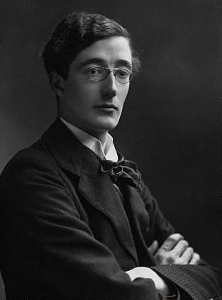
Robinson is raised in a Protestant and Unionist family in which he is the youngest of seven children. His father, Andrew Robinson, is a middle-class stockbroker who in 1892 decides to become a clergyman in the Church of Ireland in the small Ballymoney parish, near Ballineen in West Cork. A sickly child, Robinson is educated by private tutor and at Bandon Grammar School. In August 1907, his interest in the theatre begins after he goes to see an Abbey production of plays by W.B. Yeats and Lady Gregory at the Cork Opera House. He publishes his first poem that same year. His first play, The Cross Roads, is performed in the Abbey in 1909 and he becomes manager of the theatre towards the end of that year. He resigns in 1914 as a result of a disastrous tour of the United States but returns in 1919. He is appointed to the board of the theatre in 1923 and continues to serve in that capacity until his death. His Abbey career and production involvement can be found in the Abbey archives.
As a playwright, Robinson shows himself as a nationalist with plays like Patriots (1912) and Dreamers (1915). On the other hand, he belongs to a part of Irish society which is not seen as fully Irish. This division between the majority native Irish (Roman Catholics) on one side and the Anglo-Irish (Protestants) on the other can be seen in a play such as The Big House (1926), which depicts the burning of a Protestant manor home by the Irish Republican Army (IRA). Robinson’s most popular play is The Whiteheaded Boy (1916).
Other plays include Crabbed Youth and Age (1924), The Far Off Hills (1928), Drama at Inish (1933), and Church Street (1935). Drama at Inish, which is presented in London and on Broadway as Is Life Worth Living?, is revived as part of the 2011 season at the Shaw Festival at Niagara-on-the-Lake, Ontario, Canada, with Mary Haney in the role of Lizzie Twohig. Robinson’s fiction includes Eight Short Stories (1919). In 1931 he publishes a biography of Bryan Cooper, who had recently died. In 1951, he publishes Ireland’s Abbey Theatre, the first full-length history of the company.
He publishes an edited edition of Lady Gregory’s diaries in 1947. In 1958 he co-edits with Donagh MacDonaghThe Oxford Book of Irish Verse. He is also a director and producer, in 1930 producing a play by Irish playwright Teresa Deevy called The Reapers. In 1931 he is co-director of A Disciple along with W.B. Yeats and Walter Starkie.
On January 18, 1882, while on a successful speaking tour of the United States, the 27-year-old Irish playwright, Oscar Wilde, newly famous at home and abroad, visits 62-year-old poet Walt Whitman at Whitman’s home in Camden, New Jersey, at 431 Stevens Street, a building that no longer exists.
Wilde’s mother purchases a copy of Whitman’s Leaves of Grass in 1866 and reads passages to him when he is a child. It is not surprising, therefore, that Wilde seeks out Whitman when he has the opportunity to visit the United States. Wilde, through his friend and publisher in Philadelphia, Joseph Marshall Stoddart, requests that Whitman meet them for dinner in Philadelphia on the afternoon of Saturday, January 14. The ailing Whitman is not well enough to make the crossing of the Delaware River to Philadelphia. The meeting is then arranged to take place at Whitman’s home.
On Wednesday, January 18, after giving his lecture in Philadelphia the previous evening, Wilde travels by ferryboat across the river to visit Whitman. The two poets spend two hours together in a pleasant discussion over wine and milk punch.
Wilde is known to speak publicly about their meeting only once, in an interview with the Boston Herald about ten days after the meeting. He says, “I spent the most charming day I have spent in America. He is the grandest man I have ever seen. The simplest, most natural, and strongest character I have ever met in my life. I regard him as one of those wonderful, large, entire men who might have lived in any age, and is not peculiar to any one people. Strong, true, and perfectly sane: the closest approach to the Greek we have yet had in modern times. Probably he is dreadfully misunderstood.”
Wilde and Whitman meet for a second time in early May. Due to so little being known about the visits, some biographers incorrectly speculate that the two poets are estranged. However, Whitman sends Wilde an inscribed copy of November Boughs in 1888. This is sold a decade later when Wilde’s library is liquidated for debts while he is in prison after being found guilty of “gross indecency with men.”
Whitman always defends Wilde against the accusations of his detractors. “Wilde was very friendly to me – was and is, I think – both Oscar and his mother – Lady Wilde – and thanks be most to the mother, that greater, and more important individual. Oscar was here – came to see me – and he impressed me a strong, able fellow, too.”
Unknown to many, Fitzgerald is also a patriot. In 1916 he is a member of the Irish Volunteers and is prepared to fight in the Easter Rising on Easter Sunday when the orders are countermanded. On Easter Monday the revolution is on again, and Shields goes to the Abbey Theatre and retrieves his rifle from under the stage. He goes around the corner to Liberty Hall and joins with James Connolly’s Irish Citizen Army.
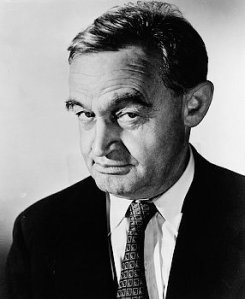
Fitzgerald goes to Hollywood to star in another O’Casey work, The Plough and the Stars (1936), directed by John Ford. He has a successful Hollywood career in such films as The Long Voyage Home (1940), How Green Was My Valley (1941), And Then There Were None (1945), The Naked City (1948), and The Quiet Man (1952). Fitzgerald achieves a feat unmatched in the history of the Academy Awards. He is nominated for both the Best Actor Oscar and the Best Supporting Actor Oscar for the same performance, as Father Fitzgibbon in Going My Way (1944). He wins the Best Supporting Actor Award. This feat will likely never be matched as the Academy Award rules have since been changed to prevent this. During World War II, Oscar statues are made of plaster rather than gold due to wartime metal shortages. Being an avid golfer, Fitzgerald later breaks the head off his Oscar statue while practicing his golf swing.
Fitzgerald has two stars on the Hollywood Walk of Fame, one for films located at 6220 Hollywood Blvd. and one for television located at 7001 Hollywood Blvd.
Fitzgerald returns to live in Dublin in 1959. He dies of heart failure on January 14, 1961, and is buried at Deansgrange Cemetery in Dublin.