seamus dubhghaill

Promoting Irish Culture and History from Little Rock, Arkansas, USA


Leave a comment

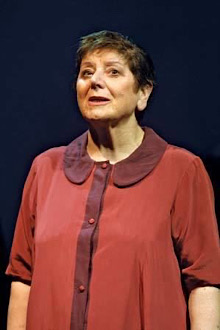
Birth of Anna Manahan, Stage, Film & Television Actress

Anna Maria Manahan, Irish stage, film and television actress, is born on October 18, 1924, in County Waterford in what is at the time the Irish Free State (now the Republic of Ireland).

Manahan receives two Tony Award for Best Featured Actress in a Play nominations for her performances in the 1968 production of Lovers and the 1998 production of The Beauty Queen of Leenane, the latter for which she wins at the 52nd Tony Awards.

Manahan is also nominated for two Drama Desk Awards, a Laurence Olivier Award, and an Outer Critics Circle Award in a career that spans more than 60 years. She interprets the works of, among others, Seán O’CaseyJohn B. KeaneJohn Millington SyngeOscar WildeJames JoyceMartin McDonaghChristy Brown, and Brian Friel.

Manahan’s career begins when, as a young woman, she is recruited by the legendary Irish impresarios and theatrical directors Micheál Mac Liammóir and Hilton Edwards. She later marries stage director Colm O’Kelly, who dies not long afterward of polio, which he contracts after swimming in the Nile during a theatre tour of Egypt. They have no children and she never remarries. She is known professionally by her maiden name. In 1946 she appears in a production by Irish playwright Teresa DeevyThe Wild Goose, where she plays the part of Eileen Connolly. This is performed by Equity Productions in the Theatre Royal, Waterford.

In 1957, Manahan plays Serafina in the first Irish production of Tennessee Williams‘s The Rose Tattoo and achieves unexpected notoriety when she and several other members of the cast are arrested for the possession of a condom on stage.

Manahan plays a minor role in the Irish cult soap opera The Riordans (1960s), and as Mrs. Mary Kenefick in the TV comedy Me Mammy (1970s). She also plays the lead in the Irish comedy series, Leave It To Mrs O’Brien (1980s) and Mrs. Cadogan in The Irish R.M. (1980s). Most recently she plays Ursula in Fair City, for which her niece, Michele Manahan (daughter of Michael Manahan), is a writer.

Manahan has an extensive theatre portfolio having played at theatres throughout Ireland including the Abbey Theatre, the United Kingdom, continental Europe, the United States and Australia. She wins the Tony Award for Best Featured Actress in a Play for her role as Mag in Martin McDonagh’s The Beauty Queen of Leenane on Broadway. She previously receives a Tony nomination in 1969 for Brian Friel’s Lovers.

The Irish playwright John B. Keane writes the play Big Maggie specifically for Manahan. In 2001 she stars in Keane’s The Matchmaker with veteran Irish actor Des Keogh. In 2005 she stars in Sisters, a new play by Declan Hassett that is also written for her and for which she is nominated for a Drama Desk Award in the category of Outstanding Solo Performance. The production tours Ireland and is staged at the International Festival of World Theatre in Colorado and also plays at the 59E59 Theater in New York City in 2006.

Manahan appears in films starring, among others, Laurence OlivierPeter CushingKenneth MoreChristopher WalkenMaggie SmithAlbert Finney and Brenda Fricker, and with John Gielgud in A Portrait of the Artist as a Young Man (1977).

Manahan receives the Gold Medal of the Éire Society of Boston in 1984 and thus joins the company of past recipients such as John F. Kennedy, and film makers John Ford and John Huston. She receives an honorary doctorate in letters from the University of Limerick in 2003. She is granted the freedom of the city of Waterford in 2002 in recognition of her life’s achievement in the arts. She thus becomes the 28th Freeman of Waterford since Isaac Butt in 1877.

In 2004 Manahan starts to play the role of Ursula in Fair CityAll About Anna (2005), a documentary on her life and work is made by Charlie Mc Carthy/Icebox Films for RTÉ Television. In 2008, she becomes the first ever patron of the Active Retirement Ireland organization.

Manahan dies of multiple organ failure on March 8, 2009 in Waterford. She had suffered from a longterm illness.

Her funeral is held on March 11, officiated by her “longtime friend” the psychoanalyst, poet, and priest Bernard Kennedy. “As the final curtain falls, the lights dim, the auditorium becomes silent, we remember her” he says. Describing her as a woman of faith (who “sought to bring the word of God alive”), he says she had brought everyone together to be present at “her last great exit from this great stage of life,” saying her life’s work had drawn people from all over the world. “Anna believed in the empty tomb of the Resurrection and she believed the empty tomb could be filled by hearing the word take the place of the emptiness,” he says. “She knew the bedsits which preceded the Tony nomination.”

Manahan is buried in Ballygunner Cemetery, Knockboy, County Waterford.

Leave a comment

Birth of Evie Hone, Painter & Stained Glass Artist

Eva Sydney Hone RHA, Irish painter and stained glass artist usually known as Evie, is born at Roebuck Grove, County Dublin, on April 22, 1894. She is considered to be an early pioneer of cubism, although her best known works are stained glass. Her most notable pieces are the East Window in the Chapel at Eton College, which depicts the Crucifixion, and My Four Green Fields, which is now in the Government Buildings in Dublin.

Hone is the youngest daughter of Joseph Hone, of the Hone family, and Eva Eleanor (née Robinson), daughter of Sir Henry Robinson and granddaughter of Arthur Annesley, 10th Viscount Valentia. Her mother dies two days after her birth. She is related to artists Nathaniel Hone and Nathaniel Hone the Younger.

Shortly before her twelfth birthday, Hone suffers from polio (infant paralysis), suffering a fall while helping to decorate the Taney parish church for Easter. Her resulting ill health leads to her seeking treatment in Harley Street, Marylebone, Central London. She is educated by a governess, continuing her education in Switzerland, and goes on tours to Spain and Italy before moving to London in 1913. Her three sisters all marry British Army officers, and all are widowed in World War I.

Hone studies at the Byam Shaw School of Art in London and then under Bernard Meninsky at the Central School of Arts and Crafts. She meets Mainie Jellett when both are studying under Walter Sickert at the Westminster Technical Institute. She works under André Lhote and Albert Gleizes in Paris before returning to become influential in the modern movement in Ireland and becoming one of the founders of the Irish Exhibition of Living Art. She is considered an early pioneer of Cubism but in the 1930s turns to stained glass, which she studies with Wilhelmina Geddes.

Hone is extremely devout. She spends time in an Anglican Convent in 1925 at Truro in Cornwall and converts to Catholicism in 1937. This possibly influences her decision to begin working in stained glass. Initially, she works as a member of the An Túr Gloine stained glass co-operative before setting up a studio of her own in Rathfarnham.

Hone’s most important works are probably the East Window, depicting the Crucifixion, for the Chapel at Eton College, Windsor (1949–1952) and My Four Green Fields, now located in Government Buildings, Dublin. This latter work, commissioned for the Irish Government’s Pavilion, wins first prize for stained glass in the 1939 New York World’s Fair. It graces CIÉ‘s Head Office in O’Connell Street from 1960 to about 1983. The East Window of Eton College is commissioned following the destruction of the building after a bomb is dropped in 1940 on the school during World War II. She is commissioned to design the East Window in 1949, and the new window is inserted in 1952. This work is featured on an Irish postage stamp in 1969. From December 2005 to June 2006, an exhibition of her work is on display at the National Gallery of Ireland. Saint Mary’s church in Clonsilla also features her stained glass windows.

Despite ill health, Hone continues to produce a huge number of small stained glass panels as well as oils, watercolours, and gouache landscapes. In 1953, she is represented at the Contemporary Irish Art exhibition at Aberystwyth, Wales, and at the Tate gallery in London, receiving as well an honorary LLD from Trinity College Dublin (TCD). In 1954, she is elected an honorary member of the Royal Hibernian Academy (RHA).

Unmarried, Hone dies on March 13, 1955, while entering her parish church at Rathfarnham. She is survived by two of her sisters. Over 20,000 people visit a memorial exhibition of her work at University College Dublin (UCD), Earlsfort Terrace, Dublin, in 1958.

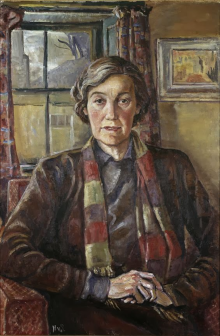
(Pictured: Portrait of Evie Hone by Hilda van Stockum)


Leave a comment

Death of Evie Hone, Painter & Stained Glass Artist

Eva Sydney Hone RHA, Irish painter and stained glass artist usually known as Evie, dies on March 13, 1955, in Rathfarnham, County Dublin. She is considered to be an early pioneer of cubism, although her best known works are stained glass. Her most notable pieces are the East Window in the Chapel at Eton College, which depicts the Crucifixion, and My Four Green Fields, which is now in the Government Buildings in Dublin.

Hone is born at Roebuck Grove, County Dublin, on April 22, 1894. She is the youngest daughter of Joseph Hone, of the Hone family, and Eva Eleanor, née Robinson, daughter of Sir Henry Robinson and granddaughter of Arthur Annesley, 10th Viscount Valentia. She is related to Nathaniel Hone and Nathaniel Hone the Younger. Shortly before her twelfth birthday she suffers from polio. She is educated by a governess, continuing her education in Switzerland, and goes on tours to Spain and Italy before moving to London in 1913. Her three sisters all marry British Army officers, and all are widowed in World War I.

Hone studies at the Byam Shaw School of Art in London and then under Bernard Meninsky at the Central School of Arts and Crafts. She meets Mainie Jellett when both are studying under Walter Sickert at the Westminster Technical Institute. She works under André Lhote and Albert Gleizes in Paris before returning to become influential in the modern movement in Ireland and become one of the founders of the Irish Exhibition of Living Art. She is considered an early pioneer of Cubism but in the 1930s turns to stained glass, which she studies with Wilhelmina Geddes.

Hone’s most important works are probably the East Window, depicting the Crucifixion, for the Chapel at Eton College, Windsor (1949–1952) and My Four Green Fields, now located in Government Buildings, Dublin. This latter work, commissioned for the Irish Government’s Pavilion, wins first prize for stained glass in the 1939 New York World’s Fair. It graces CIÉ‘s Head Office in O’Connell Street from 1960 to about 1983. The window is then taken into storage by Abbey Glass in Kilmainham, Dublin at the request of the Office of Public Works.

The East Window of Eton College is commissioned following the destruction of the building after a bomb is dropped on the school in 1940 during World War II. She is commissioned to design the East Window in 1949, and the new window is inserted in 1952. This work is featured on an Irish postage stamp in 1969. From December 2005 to June 2006, an exhibition of her work is on display at the National Gallery of Ireland. Saint Mary’s church in Clonsilla also features her stained glass windows.

Hone is extremely devout. She spends time in an Anglican Convent in 1925 at Truro in Cornwall and converts to Catholicism in 1937. This may have influenced her decision to begin working in stained glass. Initially she works as a member of the An Túr Gloine stained glass co-operative before setting up a studio of her own in Rathfarnham.

Hone is elected an honorary member of the Royal Hibernian Academy (RHA) in 1954.

Unmarried, Hone dies on March 13, 1955, while entering her parish church at Rathfarnham. She is survived by two of her sisters. Over 20,000 people visit a memorial exhibition of her work at University College Dublin (UCD), Earlsfort Terrace, Dublin, in 1958.

(Pictured: “My Four Green Fields” by Evie Hone, which depicts the four provinces of Ireland)


Leave a comment

Birth of Ninette de Valois, Dancer & Choreographer

ninette-de-valois

Dame Ninette de Valois, Irish-born British ballet dancer, choreographer, and founder of the company that in October 1956 becomes the Royal Ballet, is born Edris Stannus at Baltyboys House in Blessington, County Wicklow on June 6, 1898. She is influential in establishing ballet in England.

In 1908, at the age of ten, de Valois starts attending ballet lessons. At the age of thirteen she begins her professional training at the Lila Field Academy for Children. It is at this time that she changes her name and makes her professional debut as a principal dancer in pantomime at the Lyceum Theatre in the West End.

In 1919, at the age of 21, de Valois is appointed principal dancer of the Beecham Opera Company, which is then the resident opera company at the Royal Opera House. She continues to study ballet with notable teachers, including Edouard Espinosa, Enrico Cecchetti and Nicholas Legat.

In 1923, de Valois joins Sergei Diaghilev’s Ballets Russes as a soloist. At age 26, however, she quits performing after learning she is suffering from an undiagnosed case of childhood polio. In 1926 she founds her own school, the Academy of Choreographic Art, in London. She also produces dances for Lennox Robinson at the Abbey Theatre in Dublin and for Terence Gray at the Cambridge Festival Theatre.

The success of de Valois’s ballet Job: A Masque for Dancing for the Camargo Society in 1931, followed by her association with Lilian Baylis, director of the Old Vic Theatre, leads to the founding in 1931 of the Vic-Wells Ballet Company and the Sadler’s Wells School. She traces the history of the company, from its founding until it becomes the Royal Ballet in 1956, in Invitation to the Ballet (1937) and Come Dance with Me (1957).

Besides directing the company that she created, de Valois choreographs numerous ballets, including Checkmate (1937) and Don Quixote (1950). By drawing from English tradition for her choreographic material, as in The Rake’s Progress (1935), inspired by William Hogarth’s series of engravings, and The Prospect Before Us (1940), modeled on Thomas Rowlandson’s caricature of the same name, she creates a uniquely national ballet company. Her narrative ballets include prominent roles for male dancers, giving them artistic opportunities often neglected by other choreographers.

In 1963 de Valois retires as director of the Royal Ballet, although she remains head of the school until 1972. She is created a Dame of the British Empire in 1951 and is named Companion of Honour in 1980.

de Valois keeps her private life very distinct from her professional life, making only the briefest of references to her marriage to Dr. Arthur Blackall Connell, a physician and surgeon from Wandsworth, in her autobiographical writings. In April 1964 she is the subject of This Is Your Life, when she is surprised by Eamonn Andrews at the home of the dancer Frederick Ashton in London. She continues to make public appearances until her death in London on March 8, 2001 at the age of 102.

(Pictured: Ninette de Valois, circa early 1920s)


Leave a comment

Birth of Irish Revolutionary Leader Seán Mac Diarmada

sean-mac-diarmada

Seán Mac Diarmada, Irish political activist and revolutionary leader also known as Seán MacDermott, is born in Corranmore, near Kiltyclogher in County Leitrim on February 28, 1883. He is one of the seven leaders of the Easter Rising of 1916 and a signatory of the Proclamation of the Irish Republic.

Mac Diarmada is educated by the Irish Christian Brothers. He moves to Dublin in 1908, by which time he already has a long involvement in several Irish separatist and cultural organisations, including Sinn Féin, the Irish Republican Brotherhood (IRB), the Ancient Order of Hibernians, and the Gaelic League. He is soon promoted to the Supreme Council of the IRB and is eventually elected secretary.

In 1910, he becomes manager of the radical newspaper Irish Freedom, which he founds along with Bulmer Hobson and Denis McCullough. He also becomes a national organiser for the IRB and is taken under the wing of veteran Fenian Tom Clarke and the two become nearly inseparable. Shortly afterward, Mac Diarmada is stricken with polio and is forced to walk with a cane.

In November 1913, Mac Diarmada is one of the original members of the Irish Volunteers and continues to work to bring the organisation under IRB control. Mac Diarmada is arrested in Tuam, County Galway, in May 1915 under the Defense of the Realm Act 1914 for giving a speech against enlisting into the British Army.

Following his release in September 1915, Mac Diarmada joins the secret Military Committee of the IRB, which is responsible for planning the rising.

Due to his disability, Mac Diarmada has little participation in the fighting of Easter week but is stationed at the headquarters in the General Post Office (GPO), as one of the Provisional Republican Government. Following the surrender on April 29, 1916, he nearly escapes execution by blending in with the large body of prisoners but is eventually identified by Daniel Hoey of G Division. Following a May 9 court-martial, Mac Diarmada, at the age of 33, is executed by firing squad in Kilmainham Gaol. Before his execution, Mac Diarmada writes, “I feel happiness the like of which I have never experienced. I die that the Irish nation might live!”

In September 1919, Hoey is shot dead by Michael Collins‘s Squad. Likewise, the British Officer who ordered Mac Diarmada to be shot rather than imprisoned, is also killed in Cork on Collins’s order during the Irish War of Independence.

Seán MacDermott Street in Dublin, Sligo Mac Diarmada railway station in Sligo, and Páirc Seán Mac Diarmada, the Gaelic Athletic Association stadium in Carrick-on-Shannon, County Leitrim, are named in his honour. Sean MacDermott tower in Ballymun, demolished in 2005, is also named after him. In his hometown of Kiltyclogher a statue inscribed with his final written words is erected in the village centre and his childhood home has become a national monument.

Mac Diarmada will be portrayed by actor Colin Morgan in the 2016 Irish historical biopic drama film, The Rising, written by Kevin McCann and Colin Broderick.