seamus dubhghaill

Promoting Irish Culture and History from Little Rock, Arkansas, USA


Leave a comment

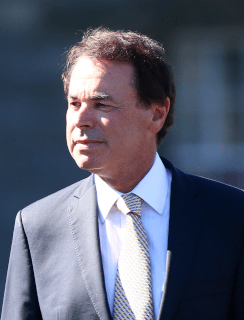
Birth of Alan Shatter, Lawyer, Author & Fine Gael Politician

Alan Joseph Shatter, Irish lawyer, author and former Fine Gael politician who serves as Minister for Justice and Equality and Minister for Defence (2011-14), is born into a Jewish family in Dublin on February 14, 1951. He also serves as a Teachta Dála (TD) for the Dublin South constituency (1981-2002, 2007-16). He leaves Fine Gael in early 2018 and unsuccessfully contests the 2024 Irish general election as an independent candidate for Dublin Rathdown.

Shatter is the son of Reuben and Elaine Shatter, an English couple who meet by chance when they are both on holiday in Ireland in 1947. He is educated at The High School, Dublin, Trinity College Dublin (TCD) and the Europa Institute of the University of Amsterdam. In his late teens, he works for two months in Israel on a kibbutz. He is a partner in the Dublin law firm Gallagher Shatter (1977-2011). As a solicitor he acts as advocate in many seminal and leading cases determined both by the Irish High and Supreme Courts. He is the author of one the major academic works on Irish family law which advocates substantial constitutional and family law reform.

Shatter enters politics at the 1979 Irish local elections, winning a seat on Dublin County Council for the Rathfarnham local electoral area. He retains this seat until 1999, becoming a member of South Dublin County Council in 1994. He is first elected to Dáil Éireann in 1981 as a Fine Gael TD and is re-elected at each subsequent election until he loses his seat in the 2002 Irish general election. He is re-elected at the 2007 Irish general election.

Shatter is Fine Gael Front Bench spokesperson on Law Reform (1982, 1987–88), the Environment (1989–91), Labour (1991), Justice (1992–93), Equality and Law Reform (1993–94), Health and Children (1997–2000), Justice, Law Reform and Defence (2000–02), Children (2007–10) and Justice and Law Reform (2010–11).

On March 9, 2011, Shatter is appointed by Taoiseach Enda Kenny as both Minister for Justice and Equality and Minister for Defence.

Under Shatter’s steerage, a substantial reform agenda is implemented with nearly 30 separate pieces of legislation published, many of which are now enacted including the Personal Insolvency Act 2012, Criminal Justice Act 2011, DNA Database Act, and the Human Rights and Equality Commission Act.

Under Shatter’s guidance, major reforms are introduced in 2011 into Ireland’s citizenship laws and a new Citizenship Ceremony is created. He both devises and pilots Ireland’s first ever citizenship ceremony which takes place in June 2011 and a new inclusive citizenship oath which he includes in his reforming legislation. During his time as Minister, he clears an enormous backlog of citizenship applications, and 69,000 foreign nationals become Irish citizens. Some applications had lain dormant for 3 to 4 years. He introduces a general rule that save where there is some real complication, all properly made citizenship applications should be processed within a six-month period. He also takes steps to facilitate an increased number of political refugees being accepted into Ireland and creates a special scheme to facilitate relations of Syrian families already resident in Ireland who are either caught up in the Syrian civil war, or in refugee camps elsewhere as a result of the Syrian civil war, to join their families in Ireland.

Shatter enacts legislation before the end of July 2011 to facilitate access to financial documentation and records held by third parties in investigations into banking scandals and white-collar crime. The legislation is first used by the Gardaí in September 2011.

During Ireland’s Presidency of the Council of the European Union in 2013, Shatter chairs the Justice and Home Affairs Council (JHA) meetings and, in January 2013, in Dublin Castle, the meeting of EU Defence Ministers. Under his guidance, Ireland plays a more active role than in the past in EU defence matters and in deepening Ireland’s participation in NATO’s partnership for peace. During the Irish Presidency, substantial progress is made at the European Union level in the adoption and development of new legislation and measures across a broad range of Justice and Home Affairs issues.

Shatter implements substantial reform in the Department of Defence and restructures the Irish Defence Forces. He is a strong supporter of the Irish Defence Forces participation in international peacekeeping and humanitarian engagements and is an expert on the Middle East. As a member of the Irish Parliament and as Minister on many occasions, he visits Irish troops participating in United Nations (UN) missions in the Middle East. Under his watch contracts are signed for the acquisition of two new naval vessels with an option to purchase a third. All three naval vessels are now part of the Irish Naval Service and have been actively engaged in recent years in rescuing drowning refugees in the Mediterranean Sea attempting to enter Europe.

As Minister for Defence he enacts legislation to grant a pardon and an amnesty to members of the Irish Defence Forces who deserted during World War II to fight on the allied side against Nazi Germany and gives a state apology for their post-war treatment by the Irish State.

Shatter is the minister responsible for two amendments to the Constitution of Ireland which are passed in referendums: the Twenty-ninth Amendment in 2011 to allow for the reduction of judges’ pay, and the Thirty-third Amendment in 2013 to establish a Court of Appeal. Just prior to his resignation from government, the draft legislation to create the court is published and the court is established and sitting by October 2014.

The jurisdictions of the courts are extended for the first time in 20 years and the maximum civil damages payable for the emotional distress of bereaved relations following a negligent death is increased.

As a politician, Shatter plays a lead role in effecting much of the constitutional and legislative change he advocates. He is a former chairperson of FLAC (the Free Legal Advice Centres), a former chairperson of CARE, an organisation that campaigns for childcare and children’s legislation reform in the 1970s and a former President of the Irish Council Against Blood Sports.

Shatter is a founder member of the Irish Soviet Jewry Committee in 1970 and pioneers a successful all party Dáil motion on the plight of Soviet Jewry (1984) and visits various refuseniks in Moscow in 1985. He is a former chairperson of the Oireachtas Foreign Affairs Committee (1996-97) and initiates the creation of an Ireland/Israel Parliamentary Friendship group in 1997, leading a number of visits to Israel by members of the Dáil Éireann and Seanad Éireann.

Shatter is the author of the satirical book Family Planning Irish Style (1979), and the novel Laura (1989). In 2017 his biography, Life is a Funny Business, is published by Poolbeg Press and in 2019 Frenzy and Betrayal: The Anatomy of a Political Assassination is published by Merrion Press. In 2023, his book Cyril’s Lottery of Life, a comedic book with an English solicitor from a small town as its protagonist, is published.


Leave a comment

The January 1973 Sackville Place Bombing

The fourth of four paramilitary bombings in the centre of Dublin takes place in Sackville Place on January 20, 1973.

The first bombing takes place in Burgh Quay on November 26, 1972. The next two bombings take place on December 1, 1972, in Eden Quay and Sackville Place. Three civilians are killed and 185 people are injured in the four bombings. No group has ever claimed responsibility for the attacks, and nobody has ever been charged in connection with the bombings.

On Saturday, January 20, 1973, at 3:08 p.m., a male caller with an English accent calls the telephone exchange in Exchequer Street, Dublin, with the following bomb warning: “Listen love, there is a bomb in O’Connell Street at the Bridge.” Although the call is placed from a coin box in the Dublin area, the exact location is never determined. The receiver of the call immediately contacts the Garda Síochána. The streets of central Dublin are more crowded than usual as Ireland is playing the All Blacks at an international rugby match being held that afternoon in Lansdowne Road.

At 3:18 p.m., a man leaving Kilmartin’s betting shop in Sackville Place notices smoke or steam emanating from the boot of a red Vauxhall Victor car parked outside Egan’s pub facing the direction of O’Connell Street. Its registration number was EOI 1229. About five seconds later the bomb inside the red car’s boot explodes, scattering sections of the vehicle and throwing the man off his feet. The explosion is so powerful that it hurls the car’s roof over adjacent Abbey Street where it lands in Harbour Place. The right-hand rear hub and axle sections are blasted through a metal grill on a shop window.

A CIÉ bus conductor, 21-year-old Thomas Douglas, originally from Stirling, Scotland, is passing the betting shop just as the bomb goes off and the force of the blast hurls him through a shop front window where he dies minutes later of shock and hemorrhage from the multiple injuries he received in the explosion. The entire shop front is devastated and spattered with blood. Fourteen people are badly injured in the bombing which causes bedlam as hysterical Saturday afternoon shoppers seek to flee the area in panic and confusion. The car bomb detonates at almost the exact location of the December 1 bomb. Later eyewitness accounts suggest that the car had been parked at the curb several hours before it exploded. According to journalists Jim Cusack and Henry McDonald in their book UVF: The Endgame (Poolbeg Press, 2008), the bomb is designed to cause widespread chaos and alarm throughout the city, and to inflict massive injuries upon shoppers and pedestrians as Saturday is traditionally the busiest shopping day of the week for Dubliners.

Suspicion initially falls on the Provisional Irish Republican Army (IRA) and other republican groups. Shortly afterwards, however the blame shifts to loyalist paramilitary organisations, in particular, the Ulster Volunteer Force (UVF). Gardaí receives a telephone call from a male caller in Belfast who gives the names of five men who he claims are responsible for January 20 car bombing. The caller says that the five men were originally from Belfast’s Sailortown area but had since relocated to new housing estates in the city. It is not known what action, if any, was ever undertaken by the Garda Síochána to follow up this telephone call. The UVF has never admitted responsibility for the bombing.

Irish Supreme Court Justice Henry Barron commissions an official inquiry into the four bombings. The findings are published in a report in November 2004. The Inquiry concludes that it “seemed more likely than not” that the bombing of the Film Centre Cinema on November 26, 1972, was “carried out by Republican subversives as a response to a Government ‘crackdown’ on the IRA and their associates” and to influence the outcome of the voting in the Dáil regarding the passage of the controversial amendment to the Offences Against the State Acts. Regarding December 1, 1972, and January 20, 1973, car bombings, the Inquiry concludes that confidential information obtained by the Gardaí indicates the three attacks were perpetrated by the UVF, “but no evidence was ever found to confirm this. Nor was there any evidence to suggest the involvement of members of the security forces in the attacks.”


Leave a comment

Birth of Eoghan Ó Tuairisc, Poet & Writer

Eoghan Ó Tuairisc (Eugene Rutherford Watters), Irish poet and writer, is born at Dunlo Hill, Ballinasloe, County Galway, on April 3, 1919.

Eugene Rutherford Watters is the eldest of two sons and two daughters born to Thomas Watters, a soldier, and his wife, Maud Sproule. His second name comes from his grandfather, Rutherford Sproule. He is educated at Garbally College. He enters St. Patrick’s Teacher Training College, Drumcondra, Dublin, in 1939, graduating with a Diploma in Education in 1945. He is awarded an MA, by University College Dublin in 1947.

Ó Tuairisc holds a commission in the Irish Army during the Emergency from 1939 to 1945. He is a teacher in Finglas, County Dublin from 1940 to 1969. From 1962 to 1965, he is editor of Feasta, the journal of Conradh na Gaeilge.

Ó Tuairisc writes novels, verse, drama and criticism in both Irish and English. His first major publication is his controversial novel Murder in Three Moves (1960), followed by the Irish-language prose epic L’Attaque (1962), which wins an Irish Book Club award. Both works have a strong poetic flavour. His next book is a volume of verse entitled Week-End. His narrative poem The Weekend of Dermot and Grace (1964), an Irish version of Venus and Adonis, is considered his finest work.

Ó Tuairisc’s first wife, the Irish artist Una McDonnell, dies in 1965. He produces little during the five years following McDonnell’s death, which is an unsettled period of limited productivity, changing residence and jobs, and, ultimately, serious depression. In 1972 he marries the writer Rita Kelly, also of Ballinasloe. They live in the lock house at the Maganey Lock on the River Barrow that he had bought near Carlow, County Carlow.

In 1981 Ó Tuairisc publishes The Road to Brightcity: and other stories (Swords: Poolbeg Press, 1981), a translation of nine of the best short stories written originally in Irish by Máirtín Ó Cadhain. Also in 1981, he and Rita Kelly publish a joint collection of their poems, Dialann sa Díseart.

Like Diarmaid Ó Súilleabháin, Ó Tuairisc “challenged the critical orthodoxy by openly proclaiming that their standards could not be those of the Gaeltacht and by demanding a creative freedom that would acknowledge hybridity and reject the strictures of the linguistic purists.”

Ó Tuairisc is an inaugural member of Aosdána, when it is founded in 1981, and the first of its members to die. He is a recipient of an Arts Council of Ireland prize, as well as an Abbey Theatre prize for a Christmas pantomime in Irish.

Ó Tuairisc dies on August 24, 1982. He is survived by his second wife, Rita. A bibliography of his work, together with biographical information, is published in Irish in 1988.