seamus dubhghaill

Promoting Irish Culture and History from Little Rock, Arkansas, USA


Leave a comment

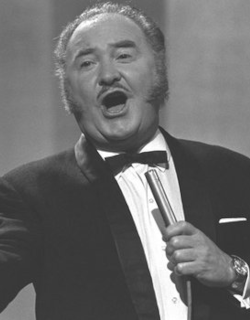
Birth of Irish Tenor Josef Locke

Joseph McLaughlin, Irish tenor known professionally as Josef Locke, is born in Derry, County Londonderry, on March 23, 1917. He is successful in the United Kingdom and Ireland in the 1940s and 1950s.

McLaughlin is one of ten children of Patrick McLaughlin, butcher and cattle dealer, and Annie McLaughlin (née Doherty). He starts singing in local churches in the Bogside at the age of seven, and as a teenager adds two years to his age to enlist in the Irish Guards, later serving abroad with the Palestine Police Force, before returning in the late 1930s to join the Royal Ulster Constabulary (RUC).

Known as The Singing Bobby, McLaughlin becomes a local celebrity before starting to work in the UK variety circuit, where he also plays summer seasons in English seaside resorts. The renowned Irish tenor John McCormack (1884–1945) advises him that his voice is better suited to a lighter repertoire than the operatic one he has in mind and urges him to find an agent. He finds the noted impresario Jack Hylton (1892–1965) who books him but is unable to fit his full name on the bill, thus Joseph McLaughlin becomes Josef Locke.

Locke makes an immediate impact when featured in “Starry Way,” a twenty-week summer show at the Opera House Theatre in Blackpool, Lancashire, England in 1946 and is rebooked for the following summer, then starring for three seasons at the Blackpool Hippodrome. He appears in ten Blackpool seasons from 1946 to 1969, not the nineteen seasons he later claims.

Locke makes his first radio broadcast in 1949 and subsequently appears on television programmes such as Rooftop Rendezvous, Top of the Town, All-star Bill and The Frankie Howerd Show. He is signed to the Columbia label in 1947, and his first releases are the two Italian songs “Santa Lucia” and “Come Back to Sorrento.”

In 1947, Locke releases “Hear My Song, Violetta,” which becomes forever associated with him. It is based on a 1936 tango “Hör’ mein Lied, Violetta” by Othmar Klose and Rudolf Lukesch. The song “Hör’ mein Lied, Violetta” is often covered, including by Peter Alexander and is itself based on Giuseppe Verdi‘s La traviata. His other songs are mostly a mixture of ballads associated with Ireland, excerpts from operettas, and familiar favourites.

In 1948, Locke appears in several films produced by Mancunian Films, usually as versions of himself. He plays himself in the film Holidays with Pay. He also appears as “Sergeant Locke” in the 1949 comedy What a Carry On!

In 1958, after Locke has appeared in five Royal Variety Performance telecasts, and while he is still at the peak of his career, the British tax authorities begin to make substantial demands that he declines to meet. Eventually he flees the country for Ireland, where he lays low for several years. When his differences with the taxman are eventually settled, he relaunches his career in England with tours of the northern variety clubs and summer seasons at Blackpool’s Queen’s Theatre in 1968 and 1969, before retiring to County Kildare, emerging for the occasional concert in England. He later appears on British and Irish television, and in November 1984 is given a lengthy 90-minute tribute in honour of the award he is to receive at the Olympia Theatre commentating his career in show business on Gay Byrne‘s The Late Late Show. He also makes many appearances on the BBC Television‘s long running variety show The Good Old Days.

In 1991, the Peter Chelsom film Hear My Song is released. It is a fantasy based on the notion of Locke returning from his Irish exile in the 1960s to complete an old love affair and save a Liverpool-based Irish night-club from ruination. Locke is played by Ned Beatty, with the singing voice of Vernon Midgley. The film leads to a revival in Locke’s career. A compilation CD is released, and he appears on This Is Your Life in March 1992. He performs in front of the Prince and Princess of Wales at the 1992 Royal Variety Performance, singing “Goodbye,” the final song performed by his character in the film. He announces prior to the song that this will be his final public appearance.

Locke dies at the age of 82 at a nursing home in Clane, County Kildare on October 15, 1999, and is cremated at Glasnevin Cemetery. He is survived by his wife, Carmel, and a son.

On March 22, 2005, a bronze memorial to Locke is unveiled outside the City Hotel on Queen’s Quay in Derry by Phil Coulter and John Hume. The memorial is designed by Terry Quigley. It takes the form of a spiraling scroll divided by lines, representing a musical stave. The spiral suggests the flowing melody of a song and is punctuated by images illustrating episodes in his life, including Locke in police uniform, Blackpool Tower, Carnegie Hall, and the musical notes of the opening lines of “Hear My Song.”

A biography of the singer, entitled Josef Locke: The People’s Tenor, by Nuala McAllister Hart is published in March 2017, the centenary of his birth. The book corrects many myths that the charismatic Locke circulated about his career.

Leave a comment

Death of Rory O’Moore, Organizer of the Irish Rebellion of 1641

Sir Rory O’Moore (Irish: Ruaidhrí Ó Mórdha), Irish politician and landowner also known Sir Roger O’Moore or O’More or Sir Roger Moore, dies in obscurity on February 16, 1655. He is most notable for being one of the four principal organizers of the Irish Rebellion of 1641.

O’Moore belongs to an ancient Irish noble family descended from Conall Cernach. He is born in either County Laois, around 1600, or more likely at Balyna, his father’s estate in County Kildare.

O’Moore’s uncle, Rory O’More, Lord of Laois, had fought against the English during the Tudor conquest of Ireland. In 1556, Queen Mary I confiscates the O’Mores’ lands and creates “Queens County” (modern-day County Laois). Over 180 family members, who are peaceful and have taken no part in any rebellion, are murdered with virtually all of the leaders of Laois and Offaly by the English at a feast at Mullaghmast, County Kildare, in 1577. Rory Óg and his wife Maighréad O’Byrne, sister of Fiach MacHugh O’Byrne, are hunted down and killed soon afterwards. This leads to the political downfall of the O’Moore family as their estates are given to English settlers.

Given the causes of the rebellion and the Crown’s weakness during the Bishops’ Wars into 1641, O’Moore plans a bloodless coup to overthrow the English government in Ireland. With Connor Maguire, 2nd Baron of Enniskillen, he plans to seize Dublin Castle, which is held by a small garrison, on October 23, 1641. Allies in Ulster led by Sir Phelim O’Neill are to seize forts and towns there. The leaders are to assume the governing of their own country and with this provision offer allegiance to King Charles. They are betrayed, and the plan is discovered on October 22 and the rising fails in its first objective. O’Neill has some success, and O’Moore quickly succeeds in creating an alliance between the Ulster Gaelic clans and the Old English gentry in Leinster.

In November 1641, the Irish forces besiege Drogheda, and a royalist force comes north from Dublin to oppose them. O’Moore is one of the leaders of the rebel army that intercepts and defeats the relief force at the Battle of Julianstown on November 29.

In the ensuing Irish Confederate Wars, a major achievement by O’Moore is to recruit Owen Roe O’Neill from the Spanish service in 1642. He commands the Confederate forces in what is now County Laois and County Offaly, which remain peaceful, and helps arrange alliances with Murrough O’Brien, 1st Earl of Inchiquin, in 1647 and James Butler, 1st Duke of Ormond, in 1648. The resulting larger alliance fails to stop the Cromwellian invasion of Ireland (1649–53) in which an estimated third of the Irish population dies.

The Irish historian Charles Gavan Duffy writes: “Then a private gentleman, with no resources beyond his intellect and his courage, this Rory, when Ireland was weakened by defeat and confiscation, and guarded with a jealous care constantly increasing in strictness and severity, conceived the vast design of rescuing the country from England, and even accomplished it; for, in three years, England did not retain a city in Ireland but Dublin and Drogheda, and for eight years the land was possessed and the supreme authority exercised by the Confederation created by O’Moore. History contains no stricter instance of the influence of an individual mind.”

Bishop Michael Comerford writes that after O’Moore’s defeat at the Battle of Kilrush in April 1642 he retires and dies in Kilkenny city in the winter of 1642–43, having co-founded the Irish Catholic Confederation there a few months earlier. However, this ignores his contacts with Inchiquin and Ormonde in 1647–48.

In 1652, O’Moore goes to Inishbofin off the coast of Galway, one of the last Catholic strongholds, but as the parliamentary forces approach, he makes arrangements to flee. Walter Lynch, Bishop of Clonfert, sails in the last ship to leave the island without waiting for O’Moore, who is forced to make his own way. He finally escapes into Ulster but dies in obscurity on February 16, 1655. He is buried at Steryne churchyard, in the parish of Magilligan, County Londonderry.

St. Colman’s Church on the island once bears a tablet with the inscription: “In memory of many valiant Irishmen who were exiled to this Holy Island and in particular Rory O’More a brave chieftain of Leix, who after fighting for Faith and Fatherland, disguised as a fisherman escaped from his island to a place of safety. He died shortly afterwards, a martyr to his Religion and his County, about 1653. He was esteemed and loved by his countrymen, who celebrated his many deeds of valour and kindness in their songs and reverenced his memory, so that it was a common expression among them; ‘God and Our Lady be our help and Rory O’More’.”

O’More marries Jane Barnewall, daughter of Sir Patrick Barnewall, of Donabate, County Dublin, and his second wife Mary Bagenal. They had two sons and four daughters. His daughter Anne marries Patrick Sarsfield from an Old English Catholic family from The Pale. His grandsons include Patrick Sarsfield, 1st Earl of Lucan, who leads a Jacobite force in the Williamite War in Ireland, and his brother William Sarsfield, whose descendants include all the Earls of Lucan and the 4th and all subsequent Earls Spencer, through which O’More is an ancestor to Diana, Princess of Wales.

The Balyna estate is inherited from Calvagh O’More by Rory’s brother Lewis. Balyna is passed down to Lewis’s last surviving O’More descendant, Letitia, who is also descended from Rory O’More because her grandfather married a second cousin. Letitia marries a Richard Farrell in 1751. This Farrell family henceforth takes the surname More O’Ferrall.

The Rory O’More Bridge in Dublin is renamed after him. The film Rory O’More, made by the Kalem Company in 1911, directed by Sidney Olcott and Robert G. Vignola, sets O’More’s rebellion in 1798 rather than the 17th century, and moves the action to the Lakes of Killarney.


Leave a comment

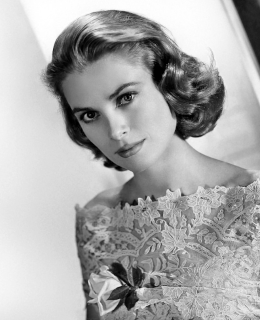
Birth of Grace Kelly, Award Winning Actress & Princess of Monaco

Grace Patricia Kelly, an American Academy Award winning actress, is born into an affluent Catholic family of half Irish and half German descent in Philadelphia, Pennsylvania, on November 12, 1929. After starring in several significant films in the early to mid-1950s, she becomes Princess of Monaco by marrying Prince Rainier III in April 1956.

Kelly’s father, Irish American John B. Kelly, Sr., wins three Olympic gold medals for sculling, and owns a successful brickwork contracting company that is well known on the East Coast. As Democratic nominee in the 1935 election for Mayor of Philadelphia, he loses by the closest margin in the city’s history. In later years he serves on the Fairmount Park Commission and, during World War II, is appointed by President Franklin D. Roosevelt as National Director of Physical Fitness. Her mother, Margaret Majer, has German parents. She teaches physical education at the University of Pennsylvania and is the first woman to coach women’s athletics at Penn. She also models for a time in her youth. After marrying John Kelly in 1924, she focuses on being a housewife until her four children are of school age, following which she begins actively participating in various civic organizations.

Kelly receives her elementary education in the parish of Saint Bridget’s in East Falls. While attending Ravenhill Academy, a reputable Catholic girls’ school, she models fashions at local charity events with her mother and sisters. In 1942, at the age of 12, she plays the lead in Don’t Feed the Animals, a play produced by the Old Academy Players also in East Falls. In May 1947, she graduates from Stevens School, a socially prominent private institution in nearby Chestnut Hill, where she participates in drama and dance programs. Owing to her low mathematics scores, she is rejected by Bennington College in July 1947. Despite her parents’ initial disapproval, she decides to pursue her dreams of becoming an actress.

After graduating from the American Academy of Dramatic Arts in 1949, Kelly begins appearing in New York City theatrical productions and over 40 live drama productions broadcast in early 1950s Golden Age of Television. She gains stardom from her performance in John Ford‘s adventure-romance Mogambo (1953), for which she is nominated for an Academy Award for Best Supporting Actress. She wins the Academy Award for Best Actress for her performance in the drama The Country Girl (1954). Other notable works include the western High Noon (1952), the romance-comedy High Society (1956), and three consecutive Alfred Hitchcock suspense thrillers: Dial M for Murder (1954), Rear Window (1954), and To Catch a Thief (1955). She works with some of the most prominent leading men of the era, including Gary Cooper, Clark Gable, Ray Milland, James Stewart, Bing Crosby, William Holden, Cary Grant, Alec Guinness, and Frank Sinatra.

Kelly retires from acting at age 26 to marry Rainier and begins her duties as Princess of Monaco. Hitchcock hopes that she will appear in more of his films which require an “icy blonde” lead actress, but he is unable to coax her out of retirement. The Prince and Princess have three children: Princess Caroline, Prince Albert, and Princess Stéphanie. Princess Grace retains her link to America by her dual U.S. and Monégasque citizenship. Her charity work focuses on young children and the arts, establishing the Princess Grace Foundation-USA to support local artisans in 1964. Her organization for children’s rights, World Association of Children;s Friends (AMADE), gains consultive status within UNICEF and UNESCO. Her final film contribution is in 1977 to documentary The Children of Theatre Street directed by Robert Dornhelm, where she serves as the narrator. The documentary is nominated for an Academy Award for Best Documentary Feature.

On September 13, 1982, Princess Grace suffers a small stroke while driving back to Monaco from her country home in Roc Agel. As a result, she loses control of her 1971 Rover P6 3500 and drives off the steep, winding road and down the 120-foot mountainside. Her teenage daughter Stéphanie, who is in the passenger seat, tries but fails to regain control of the car. The Princess is taken to the Monaco Hospital (later named the Princess Grace Hospital Centre) with injuries to the brain and thorax and a fractured femur. She dies the following night at 10:55 PM after Rainier decides to turn off her life support. Stéphanie suffers a slight concussion and a hairline fracture of a cervical vertebra and is unable to attend her mother’s funeral.

Princess Grace’s funeral is held at the Cathedral of Our Lady Immaculate in Monaco-Ville, on September 18, 1982. After a Requiem Mass, she is buried in the Grimaldi family vault. Over 400 people attend, including Cary Grant, Nancy Reagan, Danielle Mitterrand, the Princess of Wales, and Empress Farah of Iran.

Rainier, who does not remarry, is buried alongside her after his death in 2005.


Leave a comment

Death of Irish Tenor Josef Locke

Joseph McLaughlin, Irish tenor known professionally as Josef Locke, dies in Clane, County Kildare on October 15, 1999. He is successful in the United Kingdom and Ireland in the 1940s and 1950s.

Born in Derry on March 23, 1917, McLaughlin is the son of a butcher and cattle dealer, and one of nine children. He starts singing in local churches in the Bogside at the age of seven, and as a teenager adds two years to his age to enlist in the Irish Guards, later serving abroad with the Palestine Police Force, before returning in the late 1930s to join the Royal Ulster Constabulary.

Known as The Singing Bobby, McLaughlin becomes a local celebrity before starting to work in the UK variety circuit, where he also plays summer seasons in English seaside resorts. The renowned Irish tenor John McCormack (1884–1945) advises him that his voice is better suited to a lighter repertoire than the operatic one he has in mind and urges him to find an agent. He finds the noted impresario Jack Hylton (1892–1965) who books him but is unable to fit his full name on the bill, thus Joseph McLaughlin becomes Josef Locke.

Locke makes an immediate impact when featured in “Starry Way,” a twenty-week summer show at the Opera House Theatre in Blackpool, Lancashire, England in 1946 and is rebooked for the following summer, then starring for three seasons at the Blackpool Hippodrome. He appears in ten Blackpool seasons from 1946 to 1969, not the nineteen seasons he later claims.

Locke makes his first radio broadcast in 1949 and subsequently appears on television programmes such as Rooftop Rendezvous, Top of the Town, All-star Bill and The Frankie Howerd Show. He is signed to the Columbia label in 1947, and his first releases are the two Italian songs “Santa Lucia” and “Come Back to Sorrento.”

In 1947, Locke releases “Hear My Song, Violetta,” which becomes forever associated with him. It is based on a 1936 tango “Hör’ mein Lied, Violetta” by Othmar Klose and Rudolf Lukesch. The song “Hör’ mein Lied, Violetta” is often covered, including by Peter Alexander and is itself based on Giuseppe Verdi‘s La traviata. His other songs are mostly a mixture of ballads associated with Ireland, excerpts from operettas, and familiar favourites.

In 1948, Locke appears in several films produced by Mancunian Films, usually as versions of himself. He plays himself in the film Holidays with Pay. He also appears as “Sergeant Locke” in the 1949 comedy What a Carry On!

In 1958, after Locke has appeared in five Royal Variety Performance telecasts, and while he is still at the peak of his career, the British tax authorities begin to make substantial demands that he declines to meet. Eventually he flees the country for Ireland, where he lays low for several years. When his differences with the taxman are eventually settled, he relaunches his career in England with tours of the northern variety clubs and summer seasons at Blackpool’s Queen’s Theatre in 1968 and 1969, before retiring to County Kildare, emerging for the occasional concert in England. He later appears on British and Irish television, and in November 1984 is given a lengthy 90-minute tribute in honour of the award he is to receive at the Olympia theatre commentating his career in show business on Gay Byrne‘s The Late Late Show. He also makes many appearances on the BBC Television‘s long running variety show The Good Old Days.

In 1991, the Peter Chelsom film Hear My Song is released. It is a fantasy based on the notion of Locke returning from his Irish exile in the 1960s to complete an old love affair and save a Liverpool-based Irish night-club from ruination. Locke is played by Ned Beatty, with the singing voice of Vernon Midgley. The film leads to a revival in Locke’s career. A compilation CD is released, and he appears on This Is Your Life in March 1992. He performs in front of the Prince and Princess of Wales at the 1992 Royal Variety Show, singing “Goodbye,” the final song performed by his character in the film. He announces prior to the song that this will be his final public appearance.

Locke dies at the age of 82 in Clane, County Kildare on October 15, 1999, and is survived by his wife, Carmel, and a son.

On March 22, 2005, a bronze memorial to Locke is unveiled outside the City Hotel on Queen’s Quay in Derry by Phil Coulter and John Hume. The memorial is designed by Terry Quigley. It takes the form of a spiraling scroll divided by lines, representing a musical stave. The spiral suggests the flowing melody of a song and is punctuated by images illustrating episodes in his life, including Locke in police uniform, Blackpool Tower, Carnegie Hall, and the musical notes of the opening lines of “Hear My Song.”

A biography of the singer, entitled Josef Locke: The People’s Tenor, by Nuala McAllister Hart is published in March 2017, the centenary of his birth. The book corrects many myths that the charismatic Locke circulated about his career.

Leave a comment

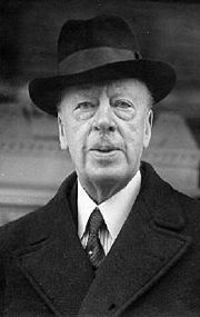
Birth of James Hamilton, First Governor of Northern Ireland

james-hamilton

James Albert Edward Hamilton, 3rd Duke of Abercorn, is born in Hamilton Place, Piccadilly, London, on November 30, 1869. Styled Marquess of Hamilton between 1885 and 1913, he is a British peer and Unionist politician. He serves as the first Governor of Northern Ireland, a post he holds between 1922 and 1945. He is a great-grandfather of Diana, Princess of Wales.

Hamilton is the eldest son of James Hamilton, 2nd Duke of Abercorn, and godson of the Prince of Wales. His mother, Lady Mary Anna, is the fourth daughter of Richard Curzon-Howe, 1st Earl Howe. He is educated at Eton College and subsequently serves first in the Royal Inniskilling Fusiliers until 1892 when he joins the 1st Life Guards. He is later transferred as major to the North Irish Horse.

In early 1901 he accompanies his father on a special diplomatic mission to announce the accession of King Edward to the governments of Denmark, Sweden and Norway, Russia, Germany, and Saxony.

In the 1900 general election, Hamilton stands successfully as Unionist candidate for Londonderry City, and three years later he becomes Treasurer of the Household, a post he holds until the fall of Arthur Balfour‘s Conservative administration in 1905. After serving for a time as an Opposition whip, Hamilton succeeds his father as third Duke of Abercorn in 1913. In 1922, he is appointed governor of the newly created Northern Ireland. He also serves as Lord Lieutenant of Tyrone from 1917 until his death, having previously been a Deputy Lieutenant for County Donegal. Abercorn proves a popular royal representative in Northern Ireland and is reappointed to the post in 1928 after completing his first term of office. In 1931, he declines the offer of the governor generalship of Canada, and three years later he is again reappointed governor for a third term. He remains in this capacity until his resignation in July 1945.

Abercorn is made the last non-royal Knight of the Most Illustrious Order of Saint Patrick in 1922. In 1928 he becomes a Knight of the Most Noble Order of the Garter and is also the recipient of an honorary degree from the Queen’s University Belfast. He receives the Royal Victorian Chain in 1945, the same year he is sworn of the Privy Council.

Abercorn marries Lady Rosalind Cecilia Caroline Bingham, only daughter of Charles Bingham, 4th Earl of Lucan and his wife Lady Cecilia Catherine Gordon-Lennox at St. Paul’s Church, Knightsbridge, on November 1, 1894. They have three daughters and two sons.

Abercorn dies at his London home on September 12, 1953, and is buried at Baronscourt in County Tyrone.