seamus dubhghaill

Promoting Irish Culture and History from Little Rock, Arkansas, USA


Leave a comment

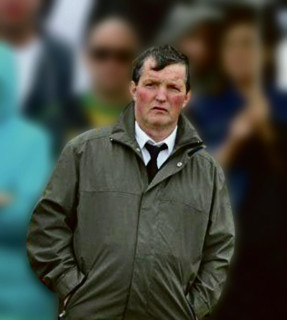
The Funeral of Liam Cosgrave

The funeral of Liam Cosgrave, Taoiseach from 1973 to 1977, takes place in Dublin on October 7, 2017. In accordance with the wishes of the Cosgrave family, it is not a state funeral. The Requiem Mass takes place at the Church of the Annunciation in Rathfarnham with burial afterwards at Goldenbridge Cemetery in Inchicore, Dublin. Taoiseach Leo Varadkar, members of the Government, and former Taoisigh are in attendance at the ceremony in Rathfarnham. Cosgrave died on October 4, 2017, at the age of 97.

Born on April 13, 1920, Cosgrave has a 40-year political career and is part of the government which sees Ireland become a Republic in 1949. He also oversees Ireland joining the United Nations, addresses the United States Congress in 1976 and signs the Sunningdale Agreement in Northern Ireland which leads to a short-lived power-sharing executive in Belfast in 1972.

Following tributes from across the political spectrum in Ireland, the Cosgrave family, his three children, Mary, Liam and Ciaran, are offered a state funeral. At their request the funeral Mass and burial has some trappings of state, but it is a private service. His wife Vera died in 2016.

Ten military policemen carry the coffin of Cosgrave as his funeral begins in Dublin. Current Taoiseach Leo Varadkar and his predecessors Enda Kenny and Bertie Ahern are among those who attend the funeral Mass at the Church of the Annunciation in Rathfarnham. Members of the judiciary, Army and police also pay their respects.

Cosgrave is buried in Goldenbridge Cemetery, Inchicore, beside his father W.T. Cosgrave, a key figure in the foundation of the Irish Free State and an officer in the 1916 Easter Rising.

Cosgrave is Taoiseach from 1973-1977, some of the most turbulent years of the Northern Ireland Troubles. He has been described as a consistent and courageous voice against terrorism. He is at the head of government on the worst day of atrocities in the Troubles – the Dublin and Monaghan bombings on May 17, 1974, when loyalists kill 33 people, including a pregnant woman at full term.


Leave a comment

Death of Michael Flannery, Irish Republican Founder of NORAID

Michael Flannery, Irish republican who fought in the Irish War of Independence and the Irish Civil War, dies in New York City on September 30, 1994. He supports the Provisional Irish Republican Army during The Troubles and is a founder of the Irish Northern Aid Committee (NORAID).

Flannery is born in Cangort, near Brosna, on the border of County Offaly and County Tipperary, on January 7, 1903.

In 1916 Flannery joins the Irish Volunteers alongside his brother Peter, although he does not take part in the Easter Rising. However, he does participate in the Irish War of Independence. Following the outbreak of the Irish Civil War, he fights as part of the Anti-Treaty IRA until his capture by the National Army on November 11, 1922, in Roscrea, County Tipperary. He is imprisoned for nearly a year and a half in Dublin’s Mountjoy Prison (C Wing). While there he witnesses the execution of Anti-Treaty IRA leaders Richard Barrett, Joe McKelvey, Liam Mellows and Rory O’Connor from his cell window. Following a 28-day hunger strike, he is placed in the Curragh Camp until May 1, 1924, when he is finally released, a full year after the end of the civil war.

In February 1927 Flannery immigrates to the United States, settling in Jackson Heights, Queens, New York City. In 1928 he marries Margaret Mary Egan, a Tipperary-born research chemist, who had been educated at University College Dublin and University of Geneva.

Following the creation of Fianna Fáil and their entry into the Irish Parliament Dáil Éireann, Flannery becomes affiliated with Sinn Féin, who had voted to retain their abstentionist policy towards the Dáil and their refusal to acknowledge it as the legitimate government of Ireland. Sinn Féin tasks him with drumming up support for the party in New York. However, following the start of the Great Depression he finds it difficult to focus on politics in the face of mounting poverty. By 1933 finding support for Sinn Féin and the IRA becomes particularly tough when Fianna Fáil expands greatly the range of people eligible for military pensions, which under the previous government had been biased against members of the Anti-Treaty IRA. For the next 40 years Flannery works for the Metropolitan Life Insurance Company.

Upon the onset of The Troubles in Northern Ireland, Flannery is once again drawn into the world of Irish Republicanism. In a response to the mounting violence, he sets up the Irish Northern Aid Committee, or as it became better known as, NORAID. The official purpose of NORAID is to provide funds to the families of imprisoned Irish Republicans and victims of violence. However, opponents level the accusation against the organisation that it is also providing funding directly to the Provisional Irish Republican Army, and perhaps even also supplying firearms.

In 1970 Flannery travels around America and sets up 62 chapters of NORAID. In 1971 he says, “The more coffins sent back to Britain, the sooner this will be all over,” referring to British soldiers.

In 1982 Flannery is indicted, with four other members of NORAID, for arms smuggling, but all defendants are acquitted after their legal defence is able to successfully argue their actions had been sanctioned the CIA.

Four months after the verdict of the arms trial, Flannery is named as Grand Marshal of the Saint Patrick’s Day Parade in New York City. His appointment causes considerable controversy within the Irish American community and several high-profile figures boycott the parade that year, including the Archbishop of New York Terence Cooke.

In 1986 Flannery quietly resigns from NORAID following the decision by Sinn Féin to drop its abstentionist policy in the Republic of Ireland and to recognise Dáil Éireann as the legitimate governing body of Ireland.

Flannery opposes the Northern Ireland peace process, believing that Sinn Féin and the Provisionals have “sold out,” and believes the removal of British troops from Northern Ireland is the only starting point upon which negotiations can begin.

Flannery dies at the age of 92 in New York City on September 30, 1994. He is buried in Mount Saint Mary’s Cemetery in Flushing, Queens, New York.


Leave a comment

Birth of Joe McDonnell, Irish Hunger Striker

joseph-mcdonnell

Joseph (Joe) McDonnell, a volunteer in the Provisional Irish Republican Army (IRA), is born on Slate Street in the lower Falls Road of Belfast, Northern Ireland on September 14, 1951. He dies after 61 days on hunger strike during the 1981 Irish hunger strike.

McDonnell is one of ten children. He attends a nearby Roman Catholic school. He marries Goretti in 1970 and moves into her sister’s house in Lenadoon. There are only two Catholic houses in this predominantly Ulster Protestant housing estate, and their house is attacked on numerous occasions.

McDonnell is arrested in Operation Demetrius and, along with Gerry Adams and others, is interned on the prison ship HMS Maidstone. He is later moved to HM Prison Maze in County Down for several months. Upon release, he joins the Provisional IRA Belfast Brigade. He meets Bobby Sands during the preparation for a firebomb attack on the Balmoral Furnishing Company’s premises in Dunmurry. During the ensuing shoot-out between the IRA and the Royal Ulster Constabulary (RUC) and British Army, both men, along with Séamus Finucane and Seán Lavery, are arrested. McDonnell and the others are sentenced to 14 years in prison for possession of a firearm. None of the men accept the jurisdiction of the court.

McDonnell agrees with the goals of the 1981 Irish hunger strike, namely: the right not to wear a prison uniform; the right not to do prison work; the right of free association with other prisoners; the right to organise their own educational and recreational facilities and the right to one visit, one letter and one parcel per week.

Although McDonnell is not involved in the first hunger strike in 1980, he joins Bobby Sands and the others in the second hunger strike the following year. During the strike he fights the general election in the Republic of Ireland, and only narrowly misses election in the Sligo–Leitrim constituency. He goes 61 days without food before dying on July 8, 1981. He has two children. His wife takes an active part in the campaign in support of the hunger strikers.

McDonnell is buried in the grave next to Bobby Sands at Milltown Cemetery in west Belfast. John Joe McGirl, McDonnell’s election agent in Sligo–Leitrim, gives the oration at his funeral. Quoting Patrick Pearse, he states, “He may seem the fool who has given his all, by the wise men of the world; but it was the apparent fools who changed the course of Irish history.”

McDonnell is commemorated on the Irish Martyrs Memorial at Waverley Cemetery in Sydney, Australia and is also commemorated in The Wolfe Tones song, “Joe McDonnell.”


Leave a comment

Assassination of Lord Louis Mountbatten

assassination-of-lord-mountbatten

Lord Louis Mountbatten is killed on August 27, 1979, when Provisional Irish Republican Army (IRA) terrorists detonate a 50-pound bomb hidden on his fishing vessel, Shadow V. Mountbatten, a war hero, elder statesman, and second cousin of Queen Elizabeth II, is spending the day with his family in Donegal Bay off Ireland’s northwest coast when the bomb explodes. Three others are killed in the attack, including Mountbatten’s 14-year-old grandson, Nicholas. Later that day, an IRA bombing attack on land kills 18 British paratroopers in County Down, Northern Ireland in what becomes known as the Warrenpoint ambush.

The assassination of Mountbatten is the first blow struck against the British royal family by the IRA during its long terrorist campaign to drive the British out of Northern Ireland and unite it with the Republic of Ireland to the south. The attack hardens the hearts of many British against the IRA and convinces Prime Minister Margaret Thatcher’s government to take a hardline stance against the terrorist organization.

Mountbatten, the son of Prince Louis of Battenberg and a great-grandson of Queen Victoria I, enters the Royal Navy in 1913, when he is in his early teens. He sees service during World War I and at the outbreak of World War II is commander of the 5th Destroyer Flotilla. His destroyer, the HMS Kelly, is sunk during the Battle of Crete early in the war. In 1941, he commands an aircraft carrier, and in 1942 he is named Chief of Combined Operations Headquarters. From this position, he is appointed Supreme Allied Commander for South East Asia Command in 1943 and successfully conducts the campaign against Japan that leads to the recapture of Burma.

In 1947, Mountbatten is appointed the last Viceroy of India, and he conducts the negotiations that lead to independence for India and Pakistan later that year. He holds various high naval posts in the 1950s and serves as chief of the United Kingdom Defense Staff and chairman of the Chiefs of Staff Committee. Meanwhile, he is made Viscount Mountbatten of Burma and a first earl. He is the uncle of Philip Mountbatten and introduces Philip to the future Queen Elizabeth. He later encourages the marriage of the two distant cousins and becomes godfather and mentor to their first born, Charles, Prince of Wales.

Made Governor and then Lord-Lieutenant of the Isle of Wight in his retirement, Mountbatten is a respected and beloved member of the royal family. His assassination is perhaps the most shocking of all horrors inflicted by the IRA against the United Kingdom. In addition to his grandson Nicholas, 15-year-old boat hand Paul Maxwell and the Dowager Lady Brabourne, Nicholas’ grandmother, are also killed. Mountbatten’s grandson Timothy, Nicholas’ twin brother, is injured as is his daughter, Lady Brabourne, and the twins’ father, Lord Brabourne.

The IRA immediately claims responsibility for the attack, saying it detonated the bomb by remote control from the coast. It also takes responsibility for the same-day bombing attack against British troops in County Down, which claims eighteen lives.

IRA member Thomas McMahon is later arrested and convicted of preparing and planting the bomb that destroyed Mountbatten’s boat. A near-legend in the IRA, he is a leader of the IRA’s notorious South Armagh Brigade, which kills more than 100 British soldiers. He is one of the first IRA members to be sent to Libya to train with detonators and timing devices and is an expert in explosives. Authorities believe the Mountbatten assassination is the work of many people, but McMahon is the only individual convicted. Sentenced to life in prison, he is released in 1998 along with other IRA and Unionist terrorists under a controversial provision of the Good Friday Agreement.

(From: This Day In History: Mountbatten killed by IRA, by the editors of History.com, July 21, 2010, http://www.history.com)


Leave a comment

Death of Hunger Striker Michael “Mickey” Devine

michael-devine

Michael James “Mickey” Devine, a founding member of the Irish National Liberation Army (INLA) and participant in the 1981 Irish hunger strike, dies in Maze Prison on August 20, 1981, the tenth and last of the hunger strikers to die.

Devine, also known as “Red Mickey” because of his red hair, is born into a family from the Springtown Camp, on the outskirts of Derry, a former United States military base from the World War II. In 1960, when he is six years of age, the Devine family, including his grandmother, sister Margaret and parents Patrick and Elizabeth, move to the then newly built Creggan estate to the north of Derry city centre. He is educated at Holy Child Primary School and St. Joseph’s Boy’s School, both in the Creggan.

After British soldiers shoot dead two unarmed civilians, Dessie Beattie and Raymond Cusack, Devine joins the James Connolly Republican Club in Derry in July 1971. Bloody Sunday has a deep impact on him. In the early 1970s, he joins the Irish Labour Party and Young Socialists.

Devine helps found the Irish National Liberation Army (INLA) in 1975. In 1976, after an arms raid in County Donegal in the Republic of Ireland, he is arrested in Northern Ireland. He is convicted and sentenced to twelve years in prison. He joins the blanket protest before joining the hunger strike.

Devine participates in a brief hunger strike in 1980, which is called off without fatalities. On June 22, 1981, he joins Joe McDonnell, Kieran Doherty, Kevin Lynch, Martin Hurson, Thomas McElwee and Paddy Quinn on hunger strike at the Maze Prison. He dies on August 20, after sixty days on hunger strike.


1 Comment

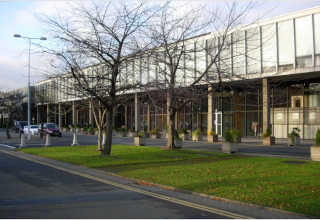
RTÉ Television Centre Bombing

File written by Adobe Photoshop? 5.0

At the beginning of “The Troubles” in Northern Ireland, the Ulster Volunteer Force (UVF) plants their first bomb in the Republic of Ireland, damaging the RTÉ Television Centre in Donnybrook, Dublin, on August 5, 1969. No injuries result from the bombing.

The RTÉ Television Centre is a television studio complex which is owned by Raidió Teilifís Éireann (RTÉ) and has been home to Ireland’s national public service broadcaster since 1961. The building houses the main production studios for RTÉ Television, the control rooms for all RTÉ’s TV channels, and RTÉ’s main newsroom.

At 1:30 AM on the morning of August 5, a bomb explodes at the RTÉ Television Centre causing damage primarily to the western end of the studios. The explosion is heard over a wide area of Dublin. Only a skeleton staff are on duty and nobody is injured. The bombing takes place during the protest campaign by the Northern Ireland Civil Rights Association but before the 1969 Northern Ireland riots.

The bomb, which is believed to be a time bomb placed at the rear wall of the studio building, causes no structural damage to the building but destroys the wardrobe department and shatters windows in a large section of the building, including the large structural plate glass panels which are a feature of the building.

Army explosive experts are called in to investigate the cause of the explosion and determine who planted it.


Leave a comment

Death of John Dillon, Irish Parliamentary Party Leader

john-dillon

John Dillon, a Member of Parliament (MP) for over 35 years and the last leader of the Irish Parliamentary Party in the struggle to secure Home Rule by parliamentary means, dies in a London nursing home on August 4, 1927. Through the 1880s he is perhaps the most important ally of the greatest 19th-century Irish nationalist, Charles Stewart Parnell, but, following Parnell’s involvement as co-respondent in a divorce case, he repudiates Parnell for reasons of political prudence.

Dillon is born in Blackrock, Dublin, a son of the former “Young IrelanderJohn Blake Dillon (1814–1866). Following the premature death of both his parents, he is partly raised by his father’s niece, Anne Deane. He is educated at Catholic University School, at Trinity College, Dublin and at the Catholic University of Leuven in Belgium. He afterwards studies medicine at the Royal College of Surgeons in Dublin, then ceases active involvement in medicine after he joins Isaac Butt‘s Home Rule League in 1873

Dillon is a member of the British House of Commons during 1880–1883 and 1885–1918. For his vigorous work in the Irish National Land League, which seeks fixed tenure, fair rents, and free sale of Irish land, he is imprisoned twice between May 1881 and May 1882. He is Parnell’s fellow inmate in Kilmainham Gaol in Dublin from October 1881. For six months in 1888 he is imprisoned for aiding William O’Brien, author of the “plan of campaign” against high rent charges by English absentee landlords in Irish farming districts.

When Parnell is named co-respondent in Captain William Henry O’Shea’s divorce suit in 1890, Dillon and O’Brien at first affirm their support of him, but they finally decide that he will thenceforth be a liability as party leader. The party then splits, the anti-Parnellite majority forming the Irish National Federation, of which Dillon serves as chairman from 1896. In 1900, however, he agrees to join a reunited party under the Parnellite John Redmond.

During the prime ministry of Arthur James Balfour (1902–1905), Dillon comes to believe that the British Conservative government intends to grant Irish reforms without independence, thereby “killing Home Rule by kindness.” In 1905 he advises Irishmen to vote for Liberal Party candidates for Parliament, and, after the Liberals had taken office that year, he supports their reform program.

Throughout World War I Dillon vehemently opposes the extension of British military conscription to Ireland, both because that measure would strengthen the agitation by the more extreme nationalist Sinn Féin party and because he never accepted the view that British imperial interests necessarily coincided with those of Ireland. After the Easter Rising in Dublin in 1916, he protests against the harsh measures that ensue and, in the House of Commons, makes a passionate speech in defense of the Irish rebels.

Upon Redmond’s death on March 6, 1918, Dillon, who had broken with him over Irish support for the British war effort, succeeds him as Irish Parliamentary Party leader. By that time, however, the party has been discredited and in the 1918 Irish general election Sinn Féin wins easily. On losing his House of Commons seat to Éamon de Valera, the future president of the Republic of Ireland, he retires from politics.

Dillon dies in a London nursing home at the age of 76, on August 4, 1927. He is buried four days later in Glasnevin Cemetery in Dublin. There is a street named after him in Dublin’s Liberties area, beside the old Iveagh Markets. One of his six children is James Mathew Dillon (1902–1986), a prominent Irish politician and leader of the National Centre Party and of Fine Gael (1957–1966) and also serves as Minister for Agriculture (1954-1957).


Leave a comment

Death of Hunger Striker Kevin Lynch

kevin-lynch

Kevin Lynch, Irish republican hunger striker and member of the Irish National Liberation Army (INLA), dies on August 1, 1981 at Maze Prison in County Down, Northern Ireland following 71 days on hunger strike.

Lynch is born on May 25, 1956 in Park near Dungiven, County Londonderry, Northern Ireland, the youngest in a family of eight children born to Paddy and Bridie Lynch. His older brother, Frank, is an amateur boxer and he also participates in the sport as well as Gaelic football and hurling. He is a member of the winning Dungiven GAC team which wins the Féile na nGael Division 3 in Thurles, County Tipperary in 1971. In 1972 he captains the Derry Hurling team to an Under-16 All-Ireland title at Croke Park in Dublin by defeating the Armagh GAA club.

Lynch stands as a Anti H-Block candidate in the Waterford constituency during the June 1981 general election in the South and polls extremely well despite missing out on election.

Lynch is tried, convicted and sentenced to ten years for conspiracy to obtain arms, taking part in a punishment shooting and conspiring to take arms from the security forces. He is sent to the Maze Prison in County Down in December 1977. He becomes involved with the blanket protest and joins the 1981 hunger strike at the Maze on May 23, 1981. He dies at Maze Prison 71 days later on August 1, 1981.

The Dungiven hurling team is renamed Kevin Lynch’s Hurling Club in his honour following his death.


Leave a comment

The Assassination of Christopher Ewart-Biggs

christopher-ewart-biggs-assassination

Christopher Thomas Ewart Ewart-Biggs, British Ambassador to the Republic of Ireland, author and senior Foreign Office liaison officer with MI6, is killed in Sandyford, Dublin on July 21, 1976, by a Provisional Irish Republican Army (IRA) land mine.

Ewart-Biggs is born in the Thanet district of Kent, South East England to Captain Henry Ewart-Biggs of the Royal Engineers and his wife Mollie Brice. He is educated at Wellington College and University College, Oxford and serves in the Queen’s Own Royal West Kent Regiment of the British Army during World War II. At the Second Battle of El Alamein in 1942 he loses his right eye and as a result he wears a smoked-glass monocle over an artificial eye.

Ewart-Biggs joins the Foreign Service in 1949, serving in Lebanon, Qatar and Algiers, as well as Manila, Brussels and Paris.

Ewart-Biggs is 55 when he is killed by a land mine planted by the IRA on July 21, 1976. He had been taking precautions to avoid such an incident since coming to Dublin only two weeks earlier. Among the measures he employs is to vary his route many times a week however, at a vulnerable spot on the road connecting his residence to the main road, there is only a choice between left or right. He chooses right and approximately 150 yards from the residence he hits a land mine that is later judged to contain hundreds of pounds of explosives. Ewart-Biggs and fellow passenger and civil servant Judith Cooke (aged 26) are killed. Driver Brian O’Driscoll and third passenger Brian Cubbon (aged 57) are injured. Cubbon is the highest-ranking civil servant in Northern Ireland at the time.

The Irish government launches a manhunt involving 4,000 Gardaí and 2,000 soldiers. Taoiseach Liam Cosgrave declares that “this atrocity fills all decent Irish people with a sense of shame.” In London, Prime Minister James Callaghan condemns the assassins as a “common enemy whom we must destroy or be destroyed by.” Thirteen suspected members of the IRA are arrested during raids as the British and Irish governments attempt to apprehend the criminals, but no one is ever convicted of the killings. In 2006, released Foreign and Commonwealth Office files reveal that the Gardaí had matched a partial fingerprint at the scene to Martin Taylor, an IRA member suspected of gun running from the United States.

Ewart-Biggs’s widow, Jane Ewart-Biggs, becomes a Life Peer in the House of Lords, campaigns to improve Anglo-Irish relations and establishes the Christopher Ewart-Biggs Memorial Prize for literature.

(Pictured: The twisted remains of the car lie upended beside a huge crater after the explosion that killed Christopher Ewart-Biggs and civil servant Judith Cooke)


Leave a comment

British Troops Shoot Derry Rioters

File written by Adobe Photoshop? 4.0

During street disturbances on July 8, 1971, British soldiers shoot dead two Catholic civilians in Derry, County Londonderry, Northern Ireland. Some of the worst violence in the town for three years flares up when a crowd of 200 gather in Lecky Street at the news of the shootings. As a result, the Social Democratic and Labour Party (SDLP) withdraws from Stormont in protest.

British troops are the target of sporadic rioting in the Republican Bogside area of Derry in the four days leading up to the rioting.

At about 1:00 AM on the morning of July 8, 1971, in the Bogside area of Derry, Seamus Cusack, 28, a local man who is a welder and former boxer, is shot in the upper part of the leg by a soldier of the Crown Forces. He dies about forty minutes later in Letterkenny Hospital in the Republic of Ireland.

Cusack’s death gives rise to further disturbances in the city. Troops open fire, initially with rubber bullets and CS gas, but they fail to disperse the crowd. The rioters retaliate by throwing three nail bombs. The army returns fire. During this exchange, George Desmond Beattie, 19, is shot in the stomach by a soldier and dies instantly at about 3:15 PM. Five soldiers are reportedly injured during the skirmishes.

There is a lull in the violence after Beattie is shot and a group of factory girls march in silence through the area carrying black bags.

Army marksmen claim one of the men they shot was armed with a rifle and another was about to throw a petrol or nail bomb. It is unclear which incident Cusack is involved in, but an inquest hears that he could have been saved if he had gone to a local hospital instead of one 20 miles south of the border in County Donegal. Apparently, his rescuers fear they would be arrested by police if he had been taken to the local hospital.

In the evening the Ministry of Defence announces that an additional 500 men from the First King’s Own Scottish Borderers are to be sent to Northern Ireland the following day. This brings to 1,400 the total number of men drafted to Northern Ireland over the previous ten days in preparation for the upcoming traditional The Twelfth celebrations on July 12.