seamus dubhghaill

Promoting Irish Culture and History from Little Rock, Arkansas, USA


Leave a comment

Birth of James FitzJames Butler, 2nd Duke of Ormonde

James FitzJames Butler, 2nd Duke of Ormonde, KG, Irish statesman and soldier, is born into a Protestant family on April 29, 1665, at Dublin Castle. He is the third of the Kilcash branch of the family to inherit the earldom of Ormond. He serves in the campaign to put down the Monmouth Rebellion, in the Williamite War in Ireland, in the Nine Years’ War and in the War of the Spanish Succession but is accused of treason and goes into exile after the Jacobite rising of 1715.

Butler is the second but eldest surviving son, and one of eleven children, of Thomas Butler by his wife Emilia van Nassau-Beverweerd. His father is known as Lord Ossory. His father is heir apparent of James Butler, 1st Duke of Ormond but predeceases him and so never becomes duke. His father’s family, the Butler dynasty, is Old English and descends from Theobald Walter, who had been appointed Chief Butler of Ireland by King Henry II in 1177. His mother is Dutch. She descends from a cadet branch of the House of Nassau.

Butler is educated in France and afterwards at Christ Church, Oxford. On the death of his father on July 30, 1680, he becomes Baron Butler in the peerage of England and the 7th Earl of Ossory in the peerage of Ireland.

Butler obtains command of a cavalry regiment in Ireland in 1683 and having received an appointment at court on the accession of James II, he serves against the Duke of Monmouth at the Battle of Sedgemoor in July 1685. Having succeeded his grandfather as 2nd Duke of Ormonde on July 21, 1688, he is appointed a Knight of the Order of the Garter on September 28, 1688. In 1688, he also becomes Chancellor of the University of Dublin and Chancellor of the University of Oxford.

In January and February 1689, Butler votes against the motion to put William of Orange and Mary on the throne and against the motion to declare that James II has abdicated it. Nevertheless, he subsequently joins the forces of William of Orange, by whom he is made colonel of the 2nd Troop of Horse Guards on April 20, 1689. He accompanies William in his Irish campaign, debarking with him in Carrickfergus on June 14, 1690, and commands this troop at the Battle of the Boyne in July 1690. In February 1691 he becomes Lord Lieutenant of Somerset.

Butler serves on the continent under William of Orange during the Nine Years’ War and, having been promoted to major general, he fights at the Battle of Steenkerque in August 1692 and the Battle of Landen in July 1693, where he is taken prisoner by the French and then exchanged for the Duke of Berwick, James II’s illegitimate son. He is promoted to lieutenant general in 1694.

After the accession of Queen Anne in March 1702, Butler becomes commander of the land forces co-operating with Sir George Rooke in Spain, where he fights in the Battle of Cádiz in August 1702 and the Battle of Vigo Bay in October 1702 during the War of the Spanish Succession (1701–1714). Having been made a Privy Councillor, he succeeds Lord Rochester as Lord Lieutenant of Ireland in 1703. In 1704, he leases and rebuilds a property that becomes known as Ormonde Lodge in Richmond outside London.

Following the dismissal of the Duke of Marlborough, Butler is appointed Commander-in-Chief of the Forces and colonel of the 1st Regiment of Foot Guards on January 4, 1712, and Captain General on February 26, 1712. In the Irish Parliament he and the majority of peers support the Tory interest.

Butler plays a dramatic role at the notorious meeting of the Privy Council on March 8, 1711, when Antoine de Guiscard, a French double agent who is being questioned about his treasonable activities, attempts to assassinate Robert Harley, 1st Earl of Oxford, against whom he has a personal grudge for drastically cutting his allowance, by stabbing him with a penknife. Harley is wounded, but not seriously, due largely to the fact that he is wearing a heavy gold brocade waistcoat in which the knife gets stuck. Several Councillors, including Butler, stab Guiscard in return. Guiscard implores Butler to finish the deed, but he replies that it is not for him to play the hangman. In any case, he has the sense to see that Guiscard must be kept alive at least long enough to be questioned, although as it turns out Guiscard’s wounds are fatal, and he dies a week later.

On April 23, 1712, Butler leaves Harwich for Rotterdam to lead the British troops taking part in the war. Once there he allows himself to be made the tool of the Tory ministry, whose policy is to carry on the war in the Netherlands while giving secret orders to him to take no active part in supporting their allies under Prince Eugene. In July 1712, he advises Prince Eugene that he can no longer support the siege of Le Quesnoy and that he is withdrawing the British troops from the action and instead intends to take possession of Dunkirk. The Dutch are so exasperated at the withdrawal of the British troops that they close the towns of Bouchain on Douai to British access, despite the fact that they have plenty of stores and medical facilities available. Butler takes possession of Ghent and Bruges as well as Dunkirk, in order to ensure his troops are adequately provided for. On April 15, 1713, he becomes Lord Lieutenant of Norfolk.

Ormonde’s position as Captain-General makes him a personage of much importance in the crisis brought about by the death of Queen Anne and, during the last years of Queen Anne, he almost certainly has Jacobite leanings and corresponds with the Jacobite Court including his cousin, Piers Butler, 3rd Viscount Galmoye, who keeps barrels of gunpowder at Kilkenny Castle. King George I, on his accession to the throne in August 1714, institutes extensive changes and excludes the Tories from royal favour. Butler is stripped of his posts as Captain-General, as colonel of the 1st Regiment of Foot Guards and as Commander in Chief of the Forces with the first two posts going to the Duke of Marlborough and the role of Commander-in-Chief going to John Dalrymple, 2nd Earl of Stair. On November 19, 1714, Butler is instead made a member of the reconstituted Privy Council of Ireland.

Accused of supporting the Jacobite rising of 1715, Butler is impeached for high treason by Lord Stanhope on June 21, 1715. He might avoid the impending storm of Parliamentary prosecution, if he remains in England and stands trial but instead, he chooses to flee to France in August 1715 and initially stays in Paris with Lord Bolingbroke. On August 20, 1715, he is attainted, his estate forfeited, and honours extinguished. The Earl Marshal is instructed to remove the names and armorial bearings of Butler and Bolingbroke from the list of peers and his banner as Knight of the Garter is taken down in St. George’s Chapel.

On June 20, 1716, the Parliament of Ireland passes an act extinguishing the regalities and liberties of the county palatine of Tipperary; for vesting Butler’s estate in the crown and for giving a reward of £10,000 for his apprehension, should he attempt to land in Ireland. But the same parliament passes an act on June 24, 1721, to enable his brother, Charles Butler, 1st Earl of Arran, to purchase his estate, which he does accordingly.

Butler subsequently moves to Spain where he holds discussions with Cardinal Giulio Alberoni. He later takes part in a Spanish and Jacobite plan to invade England and puts James Francis Edward Stuart on the British throne in 1719, but his fleet is disbanded by a storm in the Bay of Biscay. In 1732, he moves to Avignon, where he is seen in 1733 by the writer Lady Mary Wortley Montagu. He dies at Avignon in exile on November 16, 1745, but his body is returned to London and buried in Westminster Abbey on May 22, 1746.

On July 20, 1682, Butler, then called Lord Ossory, marries Lady Anne Hyde, daughter of Laurence Hyde, who is then Viscount Hyde of Kenilworth but becomes Earl of Rochester in November. The couple has a daughter, Mary, who dies young in 1688.

Following the death of his first wife in 1685, Butler plans to marry again in order to secure a male heir. He gains permission from the House of Lords for the arranging of a jointure for another marriage in May 1685, and in August of that year, he marries Lady Mary Somerset, daughter of the Duke of Beaufort and Mary Capel. The couple has a son, Thomas (1686–1689), and two daughters, Elizabeth (1689–1750) and Mary (1690–1713). His second wife is a Lady of the Bedchamber to Queen Anne. Their younger daughter, Mary, marries John Ashburnham, 1st Earl of Ashburnham.

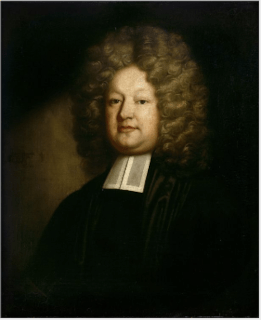
(Pictured: Portrait of James Butler, 2nd Duke of Ormonde, by Michael Dahl, National Portrait Gallery)


Leave a comment

Death of Esther Johnson, Close Friend of Jonathan Swift

Esther Johnson, an Englishwoman known as “Stella” and known to be a close friend of Jonathan Swift, dies on January 28, 1728. Whether or not she and Swift are secretly married, and if so, why the marriage is never made public, is a subject of debate.

Johnson is born in Richmond, Surrey, England, on March 13, 1681, and spends her early years at Moor Park, Farnham, home of Sir William Temple, 1st Baronet. Here, when she is about eight, she meets Swift, who is Temple’s secretary. He takes a friendly interest in her from the beginning and apparently supervises her education.

Johnson’s parentage has been the subject of much speculation. The weight of evidence is that her mother acts as companion to Temple’s widowed sister, Martha, Lady Giffard, and that Johnson, her mother and her sister Anne are regarded as part of the family. Her father is said to have been a merchant who died young. Gossip that she is Temple’s illegitimate daughter seems to rest on nothing more solid than the friendly interest he shows in her. There are similar rumours about his supposed relationship with Swift.

When Swift sees Johnson again in 1696, he considers that she has grown into the “most beautiful, graceful and agreeable young woman in London.” Temple, at his death in 1699, leaves her some property in Ireland, and it is at Swift’s suggestion that she move to Ireland in 1702 to protect her interests, but her long residence there is probably due to a desire to be close to Swift. She generally lives in Swift’s house, though always with female companions like Rebecca Dingley, a cousin of Temple whom she has known since childhood. She becomes extremely popular in Dublin and an intellectual circle grows up around her, although it was said that she finds the company of other women tedious and only enjoys the conversation of men.

In 1704, their mutual friend, the Reverend William Tisdall, tells Swift that he wishes to marry Johnson, much to Swift’s private disgust, although his letter to Tisdall, which outlines his objections to the marriage, is courteous enough, making the practical point that Tisdall is not in a position to support a wife financially. Little is known about this episode, other than Swift’s letter to Tisdall. It is unclear if Tisdall actually proposes to her. If he does, he seems to have been met with a firm rejection, and he marries Eleanor Morgan two years later. He and Swift, after a long estrangement, become friends once more after Johnson’s death.

Johnson’s friendship with Swift becomes fraught after 1707 when he meets Esther Vanhomrigh, daughter of the Dutch-born Lord Mayor of Dublin, Bartholomew Van Homrigh. Swift becomes deeply attached to her and invents for her the name “Vanessa.” She in turn becomes infatuated with him and after his return to Ireland follows him there. The uneasy relationship between the three of them continues until 1723 when Vanessa, who is by now seriously ill from tuberculosis, apparently asks Swift not to see Johnson again. This leads to a violent quarrel between them, and Vanessa, before her death in June 1723, destroys the will she had made in Swift’s favour, leaving her property to two men, George Berkeley and Robert Marshall, who though eminent in their respective callings are almost strangers to her.

Whether Swift and Johnson are married has always been a subject of intense debate. The marriage ceremony is allegedly performed in 1716 by St. George Ashe, Bishop of Clogher, with no witnesses present, and it is said that the parties agree to keep it secret and live apart. Johnson always describes herself as a “spinster” and Swift always refers to himself as unmarried. Rebecca Dingley, who lives with Johnson throughout her years in Ireland, says that Johnson and Swift were never alone together. Those who know the couple best are divided on whether a marriage ever took place. Some, like Mrs. Dingley and Swift’s housekeeper Mrs. Brent laugh at the idea as “absurd.” On the other hand, Thomas Sheridan, one of Swift’s oldest friends, believes that the story of the marriage is true. He reportedly gives Johnson herself as his source. Historians have been unable to reach a definite conclusion on the truth of the matter. Bishop Ashe dies before the story first becomes public, and there are no other witnesses to the supposed marriage.

A collection of Johnson’s witticisms is published by Swift under the titles of “Bon Mots de Stella” as an appendix to some editions of Gulliver’s Travels. A Journal to Stella, a collection of 65 letters from Swift to Johnson, is published posthumously.

In 1722, Martha, Lady Giffard, dies and leaves money to Johnson and Swift’s sister, Mrs. Fenton, who had been her companion in 1711.

Johnson’s health begins to fail in her mid-forties. In 1726, she is thought to be dying and Swift rushes back from London to be with her but finds her better. The following year it becomes clear that she is gravely ill. After sinking slowly for months, she dies on January 28, 1728, and is buried in St. Patrick’s Cathedral, Dublin. Swift is inconsolable at her death and writes The Death of Mrs. Johnson in tribute to her. When Swift dies in October 1745, he is buried beside her at his own request. A ward in St. Patrick’s University Hospital is named “Stella” in her memory.

In the 1994 film Words Upon the Window Pane, based on the play by William Butler Yeats, Johnson is played by Bríd Brennan. The plot turns on a séance in Dublin in the 1920s, where the ghosts of Swift, Johnson and Vanessa appear to resume their ancient quarrel.

In the 1982 Soviet film The House That Swift Built, Johnson is played by Aleksandra Zakharova.

Leave a comment

Death of James Butler, 2nd Duke of Ormonde

James FitzJames Butler, 2nd Duke of Ormonde, KG, Irish statesman and soldier, dies in Avignon on November 16, 1745. He is the third of the Kilcash branch of the family to inherit the earldom of Ormond. He serves in the campaign to put down the Monmouth Rebellion, in the Williamite War in Ireland, in the Nine Years’ War and in the War of the Spanish Succession but is accused of treason and goes into exile after the Jacobite rising of 1715.

Butler is born into a Protestant family on April 29, 1665, at Dublin Castle. He is the second but eldest surviving son, and one of eleven children, of Thomas Butler by his wife Emilia van Nassau-Beverweerd. His father is known as Lord Ossory. His father is heir apparent of James Butler, 1st Duke of Ormond but predeceases him and so never becomes duke. His father’s family, the Butler dynasty, is Old English and descends from Theobald Walter, who had been appointed Chief Butler of Ireland by King Henry II in 1177. His mother is Dutch. She descends from a cadet branch of the House of Nassau.

Butler is educated in France and afterwards at Christ Church, Oxford. On the death of his father on July 30, 1680, he becomes Baron Butler in the peerage of England and the 7th Earl of Ossory in the peerage of Ireland.

Butler obtains command of a cavalry regiment in Ireland in 1683 and having received an appointment at court on the accession of James II, he serves against the Duke of Monmouth at the Battle of Sedgemoor in July 1685. Having succeeded his grandfather as 2nd Duke of Ormonde on July 21, 1688, he is appointed a Knight of the Order of the Garter on September 28, 1688. In 1688, he also becomes Chancellor of the University of Dublin and Chancellor of the University of Oxford.

In January and February 1689, Butler votes against the motion to put William of Orange and Mary on the throne and against the motion to declare that James II has abdicated it. Nevertheless, he subsequently joins the forces of William of Orange, by whom he is made colonel of the 2nd Troop of Horse Guards on April 20, 1689. He accompanies William in his Irish campaign, debarking with him in Carrickfergus on June 14, 1690, and commands this troop at the Battle of the Boyne in July 1690. In February 1691 he becomes Lord Lieutenant of Somerset.

Butler serves on the continent under William of Orange during the Nine Years’ War and, having been promoted to major general, he fights at the Battle of Steenkerque in August 1692 and the Battle of Landen in July 1693, where he is taken prisoner by the French and then exchanged for the Duke of Berwick, James II’s illegitimate son. He is promoted to lieutenant general in 1694.

After the accession of Queen Anne in March 1702, Butler becomes commander of the land forces co-operating with Sir George Rooke in Spain, where he fights in the Battle of Cádiz in August 1702 and the Battle of Vigo Bay in October 1702 during the War of the Spanish Succession (1701–1714). Having been made a Privy Councillor, he succeeds Lord Rochester as Lord Lieutenant of Ireland in 1703. In 1704, he leases and rebuilds a property that becomes known as Ormonde Lodge in Richmond outside London.

Following the dismissal of the Duke of Marlborough, Butler is appointed Commander-in-Chief of the Forces and colonel of the 1st Regiment of Foot Guards on January 4, 1712, and Captain General on February 26, 1712. In the Irish Parliament he and the majority of peers support the Tory interest.

Butler plays a dramatic role at the notorious meeting of the Privy Council on March 8, 1711, when Antoine de Guiscard, a French double agent who is being questioned about his treasonable activities, attempts to assassinate Robert Harley, 1st Earl of Oxford, against whom he has a personal grudge for drastically cutting his allowance, by stabbing him with a penknife. Harley is wounded, but not seriously, due largely to the fact that he is wearing a heavy gold brocade waistcoat in which the knife gets stuck. Several Councillors, including Butler, stab Guiscard in return. Guiscard implores Butler to finish the deed, but he replies that it is not for him to play the hangman. In any case, he has the sense to see that Guiscard must be kept alive at least long enough to be questioned, although as it turns out Guiscard’s wounds are fatal, and he dies a week later.

On April 23, 1712, Butler leaves Harwich for Rotterdam to lead the British troops taking part in the war. Once there he allows himself to be made the tool of the Tory ministry, whose policy is to carry on the war in the Netherlands while giving secret orders to him to take no active part in supporting their allies under Prince Eugene. In July 1712, he advises Prince Eugene that he can no longer support the siege of Le Quesnoy and that he is withdrawing the British troops from the action and instead intends to take possession of Dunkirk. The Dutch are so exasperated at the withdrawal of the British troops that they close the towns of Bouchain on Douai to British access, despite the fact that they have plenty of stores and medical facilities available. Butler takes possession of Ghent and Bruges as well as Dunkirk, in order to ensure his troops are adequately provided for. On April 15, 1713, he becomes Lord Lieutenant of Norfolk.

Ormonde’s position as Captain-General makes him a personage of much importance in the crisis brought about by the death of Queen Anne and, during the last years of Queen Anne, he almost certainly has Jacobite leanings and corresponds with the Jacobite Court including his cousin, Piers Butler, 3rd Viscount Galmoye, who keeps barrels of gunpowder at Kilkenny Castle. King George I, on his accession to the throne in August 1714, institutes extensive changes and excludes the Tories from royal favour. Butler is stripped of his posts as Captain-General, as colonel of the 1st Regiment of Foot Guards and as Commander in Chief of the Forces with the first two posts going to the Duke of Marlborough and the role of Commander-in-Chief going to John Dalrymple, 2nd Earl of Stair. On November 19, 1714, Butler is instead made a member of the reconstituted Privy Council of Ireland.

Accused of supporting the Jacobite rising of 1715, Butler is impeached for high treason by Lord Stanhope on June 21, 1715. He might avoid the impending storm of Parliamentary prosecution, if he remains in England and stands trial but instead, he chooses to flee to France in August 1715 and initially stays in Paris with Lord Bolingbroke. On August 20, 1715, he is attainted, his estate forfeited, and honours extinguished. The Earl Marshal is instructed to remove the names and armorial bearings of Butler and Bolingbroke from the list of peers and his banner as Knight of the Garter is taken down in St. George’s Chapel.

On June 20, 1716, the Parliament of Ireland passes an act extinguishing the regalities and liberties of the county palatine of Tipperary; for vesting Butler’s estate in the crown and for giving a reward of £10,000 for his apprehension, should he attempt to land in Ireland. But the same parliament passes an act on June 24, 1721, to enable his brother, Charles Butler, 1st Earl of Arran, to purchase his estate, which he does accordingly.

Butler subsequently moves to Spain where he holds discussions with Cardinal Giulio Alberoni. He later takes part in a Spanish and Jacobite plan to invade England and puts James Francis Edward Stuart on the British throne in 1719, but his fleet is disbanded by a storm in the Bay of Biscay. In 1732, he moves to Avignon, where he is seen in 1733 by the writer Lady Mary Wortley Montagu. He dies at Avignon in exile on November 16, 1745, but his body is returned to London and buried in Westminster Abbey on May 22, 1746.

On July 20, 1682, Butler, then called Lord Ossory, marries Lady Anne Hyde, daughter of Laurence Hyde, who is then Viscount Hyde of Kenilworth but becomes Earl of Rochester in November. The couple has a daughter, Mary, who dies young in 1688.

Following the death of his first wife in 1685, Butler plans to marry again in order to secure a male heir. He gains permission from the House of Lords for the arranging of a jointure for another marriage in May 1685, and in August of that year, he marries Lady Mary Somerset, daughter of the Duke of Beaufort and Mary Capel. The couple has a son, Thomas (1686–1689), and two daughters, Elizabeth (1689–1750) and Mary (1690–1713). His second wife is a Lady of the Bedchamber to Queen Anne. Their younger daughter, Mary, marries John Ashburnham, 1st Earl of Ashburnham.

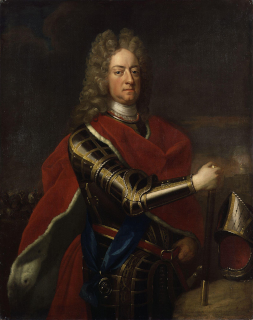
(Pictured: Portrait of James Butler, 2nd Duke of Ormonde, by Michael Dahl, National Portrait Gallery)


Leave a comment

Birth of George Henry Perrott Buchanan, Poet, Novelist & Journalist

George Henry Perrott Buchanan, poet, novelist, and journalist is born on January 9, 1904, in Kilwaughter, County Antrim, in what is now Northern Ireland.

Buchanan is the second child and younger of two sons and one daughter of the Rev. Charles Henry Leslie Buchanan (1863–1939) and Florence Buchanan (née Moore). He is educated at Larne Grammar School in Larne, County Antrim, Campbell College, Belfast, and Queen’s University Belfast (QUB). He works for the Northern Whig (1921) and is a founder member of the Northern Drama League, Belfast (1923). After moving to London, he joins The Daily Graphic, becomes a reviewer (1928–40) for The Times Literary Supplement, sub-editor (1930–35) of The Times, and columnist and drama critic (1935–38) for the News Chronicle.

During World War II, Buchanan serves as an operations officer in RAF Coastal Command (1940–45). His service includes a period in Sierra Leone, operational liaison with Free France in French Equatorial Africa, and night attacks on U-boats in the Bay of Biscay. After the war, he lives in Limavady, County Londonderry, Northern Ireland, for nearly ten years, which he later describes as a period of regeneration. During this time, he broadcasts for BBC Radio and becomes chairman of the NI town and country development committee (1949–53) and a member (from 1954) of the executive council of the European Society of Culture (Venice), and later president of its London centre.

A versatile writer with wide-ranging concerns, Buchanan publishes his first journal, Passage Through the Present, in 1932. It is followed by six novels, including A London Story (1935) and Naked Reason (1971). His plays include A Trip to the Castle (1960) and War Song (1965). The Politics of Culture (1977) is one of several collections of essays, and Green Seacoast (1959) and Morning Papers (1965) are autobiographical. His writing has been noted for its integrity and for the diversity of its ideas. Recurrent themes are the importance of common experience, living sensitively in the present, and the impoverishment of urban life. He believes in the power of ideas and the creative nature of journalism in the modern world. Despite his prosaic style, he writes poetry from his teenage years. It “was always the base from which everything else was motivated. . . [it] affected, and perhaps energised, everything I did. Its pressure led me to special attitudes in journalism, in the theatre, in the novel.” He publishes his first collection, Bodily Responses, in 1958. Other collections include Annotations (1970) and Inside Traffic (1976). In order to bring the variety of his work to a wider audience, Frank Ormsby devotes a supplement in the Honest Ulsterman (1978) to Buchanan, whom he believes is almost forgotten in Ireland and has been unjustly neglected.

Buchanan lives at 18A Courtnell Street, London W2. He marries four times, first to Winifred Mary Corn (1938-45), secondly to Noel Pulleyne Ritter (1949-51), thirdly to the Hon. Janet Hampden Margesson (1952-68), with whom he had two daughters, and fourthly to Sandra Gail McCloy (1974-89). He dies on June 28, 1989, in Richmond, London, and is cremated at Mortlake Crematorium, Richmond.

(From: “Buchanan, George Henry Perrott” by Helen Andrews, Dictionary of Irish Biography, http://www.dib.ie, October 2009 | Pictured: George Henry Perrott Buchanan by Howard Coster, 10 x 8 inch film negative, 1935, transferred from Central Office of Information, 1974)


Leave a comment

Birth of Nicholas Brady, Clergyman & Poet

Nicholas Brady, Anglican clergyman and poet, is born in Bandon, County Cork, on October 28, 1659.

Brady is the second son of Major Nicholas Brady and his wife Martha Gernon, daughter of the English-born judge and author Luke Gernon. His great-grandfather is Hugh Brady, the first Protestant Bishop of Meath. He receives his education at Westminster School and at Christ Church, Oxford. He earns degrees from Trinity College, Dublin (BA 1685, MA 1686, BD & DD 1699).

Brady is a zealous promoter of the Glorious Revolution and suffers for his beliefs in consequence. When the Williamite War in Ireland breaks out in 1690, he, by his influence, thrice prevented the burning of the town of Bandon, after James II gives orders for its destruction following the Capture of Bandon. The same year he is employed by the people of Bandon to lay their grievances before the Parliament of England. He soon afterward settles in London, where he obtains various preferments. At the time of his death, he holds the livings of Clapham and Richmond.

Brady’s best-known work, written with his collaborator Nahum Tate, is New Version of the Psalms of David, a metrical version of the Psalms. It is licensed in 1696 and largely ousts the old Sternhold and Hopkins Psalter. His ode Hail! Bright Cecilia, based on a similar ode by John Dryden, is written in 1692 in honour of the feast day of Saint Cecilia, patron saint of musicians. It is set to music by Henry Purcell in 1697. Like Dryden, he also translates Virgil‘s Aeneid, and writes several smaller poems and dramas, as well as sermons.

Brady marries Letitia Synge and has four sons and four daughters. He dies on May 20, 1726, and is buried in the church at Richmond, London. Notable descendants of Brady include Maziere Brady, Lord Chancellor of Ireland.

(Pictured: “Portrait of Nicholas Brady (1659-1726),” oil on canvas by Hugh Howard (1675-1737), circa 1715, National Gallery of Ireland)


Leave a comment

Birth of Phil Lynott, Thin Lizzy Vocalist & Bassist

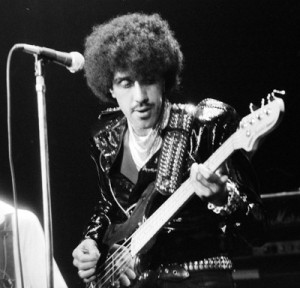
Philip Parris “Phil” Lynott, Irish musician, singer, songwriter, and a founding member, principal songwriter, lead vocalist, and bassist of Thin Lizzy, is born on August 20, 1949, in Hallam Hospital in West Bromwich, Staffordshire, England.

Lynott goes to live with his grandmother, Sarah Lynott, in Crumlin, Dublin when he is four years old. He is introduced to music through his uncle Timothy’s record collection and becomes influenced by Tamla Motown and The Mamas and the Papas.

Growing up in Dublin in the 1960s, Lynott fronts several bands as a lead vocalist, most notably teaming up with bassist Brendan ‘Brush’ Shiels to form Skid Row in early 1968. It is during this period that Lynott learns to play the bass guitar.

Toward the end of 1969, Lynott, now confident enough to play bass himself in a band, teams with Brian Downey, Eric Bell, and Eric Wrixon to form Thin Lizzy. The band’s first top ten hit comes in 1973 with a rock version of the well-known Irish traditional song “Whiskey in the Jar.” With the release of the Jailbreak album in 1976, Lynott and Thin Lizzy become international superstars on the strength of the album’s biggest hit, “The Boys Are Back in Town.” The song reaches the Top 10 in the United Kingdom, No. 1 in Ireland, and is a hit in the United States and Canada.

Having finally achieved mainstream success, Thin Lizzy embarks on several consecutive world tours. However, the band suffers from personnel changes. By the early 1980s, Thin Lizzy is starting to struggle commercially and Lynott starts showing symptoms of drug abuse, including regular asthma attacks. After the resignation of longtime manager Chris O’Donnell, Lynott decides to disband Thin Lizzy in 1983.

In 1984, Lynott forms a new band, Grand Slam, with Doish Nagle, Laurence Archer, Robbie Brennan, and Mark Stanway. The band tours various clubs but suffers from being labeled a poor version of Thin Lizzy due to the inclusion of two lead guitarists. Grand Slam disbands at the end of the year due to a lack of money and Lynott’s increasing addiction to heroin.

Lynott’s last years are dogged by drug and alcohol dependency leading to his collapse on December 25, 1985, at his home in Kew. He is taken to Salisbury Infirmary where he is diagnosed as suffering from septicemia. His condition worsens by the start of the new year, and he is put on a respirator. He dies of pneumonia and heart failure due to septicemia in the hospital’s intensive care unit on January 4, 1986, at the age of 36.

Lynott’s funeral is held at St. Elizabeth of Portugal Church, Richmond, London on January 9, 1986, with most of Thin Lizzy’s ex-members in attendance, followed by a second service at Howth Parish Church on January 11. He is buried in St. Fintan’s Cemetery, Sutton, Dublin.


2 Comments

Birth of Frances Browne, Poet & Novelist

frances-browne

Frances Browne, Irish poet and novelist, best remembered for Granny’s Wonderful Chair, her collection of short stories for children, is born on January 16, 1816, at Stranorlar, County Donegal, the seventh child in a family of twelve children.

Browne is blind from infancy as a consequence of an attack of smallpox when she is only 18 months old. In her writings, she recounts how she learned by heart the lessons which her brothers and sisters said aloud every evening, and how she bribed them to read to her by doing their chores. She then worked hard at memorising all that she had heard. She writes her first poem, a version of “The Lord’s Prayer,” when she is seven years old.

In 1841, her first poems are published in the Irish Penny Journal and in the London Athenauem. One of those included in the Irish Penny Journal is the beautiful lyric “Songs of Our Land” which can be found in many anthologies of Irish patriotic verse. She publishes a complete volume of poems in 1844, and a second volume in 1847. The provincial newspapers, especially the Belfast-based Northern Whig reprint many of her poems and she becomes widely known as “The Blind Poetess of Ulster.”

In 1845 she makes her first contribution to the popular magazine Chambers’s Journal and she writes for this journal for the next 25 years. The first short story that she has published in the Journal is entitled, “The Lost New Year’s Gift,” appearing in March 1845. She also contributes many short stories to magazines that have a largely female readership.

In 1847, she leaves Donegal for Edinburgh with one of her sisters as her reader and amanuensis. She quickly establishes herself in literary circles, and writes essays, reviews, stories, and poems, in spite of health problems. In 1852, she moves to London, where she writes her first novel, My Share of the World (1861). Her best-known work, Granny’s Wonderful Chair, is published in 1856. It remains in print to this day and has been translated into several languages. It is a richly imaginative collection of fairy stories. It is also in 1856 that Pictures and Songs of Home appears, her third volume of poetry. This is directed at very young children and contains beautiful illustrations. The poems focus on her childhood experiences in County Donegal and provide evocative of its countryside.

After her move to London she writes for the Religious Tract Society, making many contributions to their periodicals The Leisure Hour and The Sunday at Home. One of these is “1776: a tale of the American War of Independence” which is printed in The Leisure Hour on the centenary of that event in 1876. As well as describing some of the revolutionary events, it is also a touching love story and is beautifully illustrated. Her last piece of writing is a poem called “The Children’s Day” which appears in The Sunday at Home in 1879.

Frances Brown dies from apoplexy on August 21, 1879, at 19 St. John’s Grove in Richmond-upon-Thames. She is buried on August 25, 1879, in plot 40 in the cemetery at St. Mary Magdalene Church in Richmond, London. Frances dies unmarried and leaves all her belongings, valued at less than 100 pounds, to Eliza Hickman who had been her faithful companion and secretary for many years.

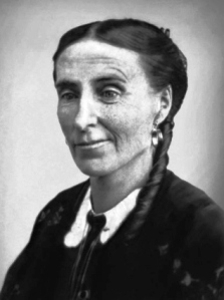
(Pictured:  Frances Brown from the family photo collection of Selwyn Glynn, Brisbane, Australia)


Leave a comment

Death of Phil Lynott

phil-lynott

Philip Parris “Phil” Lynott, Irish musician, singer, songwriter, and a founding member, principal songwriter, lead vocalist, and bassist of Thin Lizzy, dies on January 4, 1986, in Salisbury, Wiltshire, England.

Born in West Bromwich, Staffordshire, England on August 20, 1949, Lynott goes to live with his grandmother, Sarah Lynott, in Crumlin, Dublin, when he is four years old. He is introduced to music through his uncle Timothy’s record collection and becomes influenced by Motown and The Mamas and the Papas.

Growing up in Dublin in the 1960s, Lynott fronts several bands as a lead vocalist, most notably teaming up with bassist Brendan ‘Brush’ Shiels to form Skid Row in early 1968. It is during this period that Lynott learns to play the bass guitar.

Toward the end of 1969, Lynott, now confident enough to play bass himself in a band, teams with Brian Downey, Eric Bell, and Eric Wrixon to form Thin Lizzy. The band’s first top ten hit comes in 1973 with a rock version of the well-known Irish traditional song “Whiskey in the Jar.” With the release of the Jailbreak album in 1976, Lynott and Thin Lizzy become international superstars on the strength of the album’s biggest hit, “The Boys Are Back in Town.” The song reaches the Top 10 in the United Kingdom, No. 1 in Ireland, and is a hit in the United States and Canada.

Having finally achieved mainstream success, Thin Lizzy embarks on several consecutive world tours. However, the band suffers from personnel changes. By the early 1980s, Thin Lizzy is starting to struggle commercially and Lynott starts showing symptoms of drug abuse, including regular asthma attacks. After the resignation of longtime manager Chris O’Donnell, Lynott decides to disband Thin Lizzy in 1983.

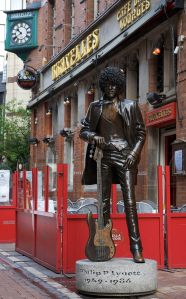
phil-lynott-statue

In 1984, Lynott forms a new band, Grand Slam, with Doish Nagle, Laurence Archer, Robbie Brennan, and Mark Stanway. The band tours various clubs but suffers from being labeled a poor version of Thin Lizzy due to the inclusion of two lead guitarists. Grand Slam disbands at the end of the year due to a lack of money and Lynott’s increasing addiction to heroin.

Lynott’s last years are dogged by drug and alcohol dependency leading to his collapse on December 25, 1985, at his home in Kew. He is taken to Salisbury Infirmary where he is diagnosed as suffering from septicemia. His condition worsens by the start of the new year, and he is put on a respirator. He dies of pneumonia and heart failure due to septicemia in the hospital’s intensive care unit on January 4, 1986, at the age of 36.

Lynott’s funeral is held at St. Elizabeth of Portugal Church, Richmond, London, on January 9, 1986, with most of Thin Lizzy’s ex-members in attendance, followed by a second service at Church of the Assumption, Howth, on January 11. He is buried in St. Fintan’s Cemetery, Sutton, Dublin.