seamus dubhghaill

Promoting Irish Culture and History from Little Rock, Arkansas, USA


Leave a comment

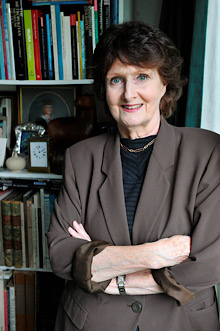
Death of Eavan Boland, Poet, Author & Professor

Eavan Aisling Boland, Irish poet, author, and professor, dies in Dublin on April 27, 2020. She is a professor at Stanford University, where she teaches from 1996. Her work deals with the Irish national identity, and the role of women in Irish history. A number of poems from Boland’s poetry career are studied by Irish students who take the Leaving Certificate. She is a recipient of the Lannan Literary Award for Poetry.

Boland is born in Dublin on September 24, 1944. Her father, Frederick Boland, is a career diplomat and her mother, Frances Kelly, was a noted painter.

When she is six, Boland’s father is appointed Irish Ambassador to the United Kingdom, and the family moves to London, where she has her first experiences of anti-Irish sentiment. Her dealing with this hostility strengthens her identification with her Irish heritage. She speaks of this time in her poem, “An Irish Childhood in England: 1951.”

At 14, Boland returns to Dublin to attend Holy Child Killiney in Killiney, County Dublin. She publishes a pamphlet of poetry in her first year at Trinity College Dublin (TCD), in 1962. She earns a Bachelor of Arts (BA) with First Class Honors in English Literature and Language from TCD in 1966.

After graduating, Boland holds numerous teaching positions and publishes poetry, prose criticism and essays. She teaches at TCD, University College Dublin (UCD), and Bowdoin College in Brunswick, Maine, and is a member of the International Writing Program (IWP) at the University of Iowa. She is also writer in residence at TCD, and at the National Maternity Hospital in Dublin.

In 1969, Boland marries the novelist Kevin Casey. They have two daughters together. Her experiences as a wife and mother influence her to write about the centrality of the ordinary, as well as providing a frame for more political and historical themes. According to her friend Gabrielle Calvocoressi, she “loved gossip like fish love water.”

In the late 1970s and 1980s, Boland teaches at the School of Irish Studies in Dublin. From 1996 she is a tenured Professor of English at Stanford University where she is the Bella Mabury and Eloise Mabury Knapp Professor in the Humanities and Melvin and Bill Lane Professor for Director of the Creative Writing program. She divides her time between Palo Alto and her home in Dublin.

Boland’s first book of poetry is New Territory published in 1967 with Dublin publisher Allen Figgis. This is followed by The War Horse (1975) and In Her Own Image (1980). Night Feed (1982) establishes her reputation as a writer on the ordinary lives of women and on the difficulties faced by women poets in a male-dominated literary world. While she is writer in residence at the National Maternity Hospital in Dublin in 1994, she composes “Night Feed” and “The Tree of Life,” and her work remains on a plaque in the hospital garden.

Several of Boland’s volumes of poetry have been Poetry Book Society choices in the United Kingdom, where she is primarily published by Carcanet Press. In the United States her publisher is W. W. Norton & Company.

Her poem “Quarantine” is one of ten poems shortlisted for RTÉ‘s selection of Ireland’s favourite poems of the last 100 years in 2015.

Former Irish TaoiseachBertie Ahern, quotes from her poem “The Emigrant Irish” in his address to the joint houses of the United States Congress in May 2008.

On March 15, 2016, United States President Barack Obama quotes lines from her poem “On a Thirtieth Anniversary” (from Against Love Poetry 2001) in his remarks at a reception in the White House to celebrate Saint Patrick’s Day.

In March 2018, RTÉ broadcasts a documentary on Boland’s life as a poet called “Eavan Boland: Is it Still the Same?” In the same year, she is commissioned by the Government of Ireland and the Royal Irish Academy (RIA) to write the poem “Our future will become the past of other women” to be read at the United Nations (UN) and in Ireland during the centenary commemorations of women gaining the vote in Ireland in 1918.

Boland co-edits The Making of a Poem: A Norton Anthology of Poetic Forms (with Mark Strand; W. W. Norton & Co., 2000). She also publishes a volume of translations in 2004 called After Every War (Princeton University Press). With Edward Hirsch, she co-edits “The Making of a Sonnet: A Norton Anthology of the Sonnet” (W. W. Norton & Co., 2008).

In 1976, Boland wins a Jacob’s Award for her involvement in The Arts Programme broadcast on RTÉ Radio. Her other awards include a Lannan Foundation Award in Poetry and an American Ireland Fund Literary Award. Her collection In a Time of Violence (1994) receives a Lannan Award and is shortlisted for the T. S. Eliot Prize.

In 1997 Boland receives an honorary degree from University College Dublin. She also receives honorary degrees from the University of Strathclyde in Glasgow, Scotland, and Colby College in Waterville, Maine, in 1997, and the College of the Holy Cross in Worcester, Massachusetts, in 1999. She receives one from Bowdoin College in 2004. In 2004 she also receives an honorary degree from Trinity College Dublin.

Boland receives the Bucknell Medal of Distinction 2000 from Bucknell University, the Corrington Medal for Literary Excellence by Centenary College of Louisiana in 2002, the Smartt Family prize from The Yale Review and the John Frederick Nims Award from Poetry magazine 2002. Her volume of poems Against Love Poetry is a New York Times Notable Book of the Year. Her volume Domestic Violence (2007) is shortlisted for the Forward Prize in the United Kingdom. Her poem “Violence Against Women” from the same volume is awarded the James Boatwright III Prize for Poetry for the best poem published in 2007 in Shenandoah magazine. In 2012, she wins a PEN Award for creative nonfiction with her collection of essays, A Journey With Two Maps: Becoming a Woman Poet, published in 2012.

In 2016, Boland is inducted into the American Academy of Arts and Sciences. In 2017, she receives the Bob Hughes Lifetime Achievement Award at the Bord Gáis Energy Irish Book Awards.

On May 25, 2018, Boland is elected an honorary member of the Royal Irish Academy. She receives the Irish PEN Award for Literature in 2019. She is writer in residence at the National Maternity Hospital, Dublin, in 1994. During this time she composes “Night Feed” and “The Tree of Life,” and her work remains on a plaque in the hospital garden.

Boland dies in Dublin on April 27, 2020, at the age of 75. Later that year she is posthumously awarded the Costa Book Award for poetry for her final collection The Historians.

In 2024, Trinity College Dublin announces the renaming of the “denamed” former Berkeley Library as the Eavan Boland Library. This makes it the first building named after any woman on Trinity’s city centre campus. The name is made official in March 2025.

(Image credit: Maura Hickey)


Leave a comment

Birth of Malcolm Byrne, Fianna Fáil Politician

Malcolm Byrne, an Irish Fianna Fáil politician, is born in GoreyCounty Wexford, on April 25, 1974. He serves as a Teachta Dála (TD) for the Wicklow–Wexford constituency since the 2024 Irish general election. He previously serves as a Senator for the Cultural and Educational Panel from 2020 to 2024. He represents the Wexford constituency from 2019 to 2020.

Byrne is the eldest child from a family of five. He attends St. Joseph’s CBS secondary school in Gorey, later studying law at University College Dublin (UCD). He is secretary of the Kevin Barry Cumann while at UCD. He Is involved in student politics, serving as education officer for both UCD Students’ Union and the Union of Students in Ireland, and as an executive member of the European Students’ Union.

Byrne describes the 1989 Tiananmen Square protests and massacre and the fall of the Berlin Wall as influencing his decision to enter politics.

Byrne is Head of Communications with the Higher Education Authority (HEA) until 2019, and has been Vice-President of the National Youth Council of Ireland. In 2014, he is named as one of the European 40 Under 40, in the European Young Leaders Programme.

When first elected to Gorey Town Council on the first count in the 1999 Irish local elections, he is its youngest member at the age of 25. He tops the poll again at the 2004 Irish local elections. He is first elected to Wexford County Council in the 2009 Irish local elections for the Gorey local electoral area, and elected Chairman following his 2014 re-election.

In January 2006, The Sun includes Byrne’s picture on the cover of its Irish edition beneath the headline “Bertie‘s FF Man in Gay Web Shame,” revealing that Byrne has a profile on the dating website Gaydar. He responds at the time, “I have not, nor have I ever, done anything illegal and I am not a hypocrite in any way. My views on gay rights issues are well known. I am not married with four children or anything like that, so there is no suggestion of hypocrisy.” His family and political career suffer as a result and he is not selected for candidacy in the 2007 Irish general election following this incident. He later describes how a journalist from The Gorey Echo first approaches him, “The first few questions were about roads. Then the journalist said, ‘Are you aware you have a profile on this dating website?'” When he confirms that the profile is his, he experiences a sleepless night before The Gorey Echo outs him locally: “I was ringing around people I knew and my parents were ringing around people … my grandmother didn’t know and a lot of my extended family and my friends didn’t know.” Gorey Echo group editor Tom Mooney defends the publication by saying he believes Byrne’s behaviour to be “unfitting of a public representative.”

Byrne is a candidate for Fianna Fáil in the 2016 Irish general election in the Wexford constituency, but does not win a seat.

Byrne contests the 2019 European Parliament election for Fianna Fail in the South constituency, having unexpectedly beaten Cork TD Billy Kelleher in the vote for the party’s nomination. However, Kelleher is later added to the ticket. Fianna Fáil then divides the constituency geographically, asking people in counties CarlowKilkennyLaoisOffalyTipperaryWaterfordWexford and Wicklow to vote for Byrne, and those in counties CorkKerryClare and Limerick to vote for Kelleher. Kelleher wins 11.69% of the first-preference votes (FPV) and is elected on the 17th count. Byrne wins 9.62% of the FPV, and is eliminated on the 16th count.

Byrne is elected as a TD at the 2019 Wexford by-election. Andrew Bolger is co-opted to Byrne’s seat on Wexford County Council following his election to the Dáil. His maiden speech is about housing solutions and the need to address the challenges facing Generation Rent. In an interview he says he can envisage a United Ireland where the 12th of July and Saint Patrick’s Day are public holidays and speaks about how Ireland needs to ensure Unionists feel at home in a new agreed state and that may mean addressing issues such as Ireland joining the Commonwealth.

Byrne loses his Dáil seat at the 2020 Irish general election, following what he calls “a dirty campaign.” His defeat after only 71 days makes him the TD with the second-shortest term of service, after the Anti H-Block TD Kieran Doherty, who dies on hunger strike in August 1981, only 52 days after his election.

On March 31, 2020, Byrne is elected to Seanad Éireann at the 2020 Seanad election. He is named as Fianna Fáil spokesperson on Higher Education, Innovation and Science by Taoiseach Micheál Martin in July 2020.

As a senator, Byrne is a vocal critic of human rights abuses in China. In February 2021, he becomes co-chair of the Inter-Parliamentary Alliance on China, along with Senator Barry Ward of Fine Gael. Byrne is a member of the cross-party Oireachtas Friends of Israel in the Oireachtas.

At the 2024 Irish general election, Byrne is elected to the Dáil. He is subsequently appointed Cathaoirleach of the Joint Committee on Artificial Intelligence.

Byrne is openly gay. As of 2020, he is single and describes politics as “almost like an addiction,” which makes relationships difficult. He lives in Gorey.

In March 2025, Byrne is injured during the theft of his phone in London.


Leave a comment

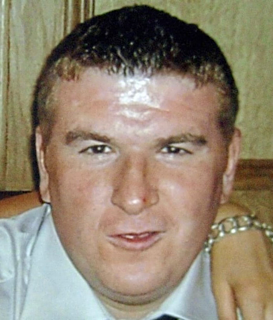
The Murder of Robert McCartney

The murder of Robert McCartney occurs in Belfast, Northern Ireland, on the night of January 30, 2005, and is carried out by members of the Provisional Irish Republican Army.

McCartney, born in 1971, is a Roman Catholic and lives in the predominantly nationalist Short Strand area of east Belfast, and is said by his family to be a supporter of Sinn Féin. He is the father of two children and is engaged to be married in June 2005 to his longtime girlfriend, Bridgeen Hagans.

McCartney is involved in an altercation in Magennis’ Bar on May Street in Belfast’s city centre on the night of January 30, 2005. He is found unconscious with stab wounds on Cromac Street by a police patrol car and dies at the hospital the following morning. He is 33 years old.

The fight arises when McCartney is accused of making an insulting gesture or comment to the wife of an IRA member in the social club. When his friend, Brendan Devine, refuses to accept this or apologise, a brawl begins. McCartney, who is attempting to defend Devine, is attacked with a broken bottle and then dragged into Verner Street, beaten with metal bars and stabbed. Devine also suffers a knife attack, but survives. The throats of both men are cut and McCartney’s wounds include the loss of an eye and a large blade wound running from his chest to his stomach. Devine is hospitalised under armed protection.

When Police Service of Northern Ireland (PSNI) officers arrive at the scene, their efforts to investigate the pub and surrounding area are met with an impromptu riot. Rioting by youths, specifically attacking the police, force them to pull back from the area, which delays initial investigation. Police with riot gear arrive later in the evening and are also attacked. Alex Maskey of Sinn Féin claims, “It appears the PSNI is using last night’s tragic stabbing incident as an excuse to disrupt life within this community, and the scale and approach of their operation is completely unacceptable and unjustifiable.” There are suggestions that the rioting is organised by those involved in the murder, so that a cleanup operation can take place in and around where the murder took place. Clothes worn by McCartney’s attackers are burned, CCTV tapes are removed from the bar and destroyed and bar staff are threatened. No ambulance is called. McCartney and Devine are noticed by a police car on routine patrol, who call an ambulance to the scene.

When the police launch the murder investigation they are met with a “wall of silence” None of the estimated seventy or so witnesses to the altercation come forward with information. In conversations with family members, seventy-one potential witnesses claim to have been in the pub’s toilets at the time of the attacks. As the toilet measures just four feet by three feet, this leads to the toilets being dubbed the TARDIS, after the time machine in the television series Doctor Who, which is much bigger on the inside than on the outside.

Sinn Féin suspends twelve members of the party and the IRA expels three members some weeks later.

Gerry Adams, then president of Sinn Féin, urges witnesses to come forward to “the family, a solicitor, or any other authoritative or reputable person or body”. He continues, “I want to make it absolutely clear that no one involved acted as a republican or on behalf of republicans.” He suspends twelve members of Sinn Féin. He stops short of asking witnesses to contact the police directly. The usefulness of making witness statements to the victim’s family or to a solicitor is derided by the McCartneys and by a prominent lawyer and Social Democratic and Labour Party (SDLP) politician, Alban Maginness, soon afterward.

On February 16, 2005, the IRA issues a statement denying involvement in the murder and calls on the perpetrators to “take responsibility.”

On March 8, 2005, the IRA issues an unprecedented statement saying that four people are directly involved in the murder, that the IRA knows their identity, that two are IRA volunteers, and that the IRA has made an offer to McCartney’s family to shoot the people directly involved in the murder.

In May 2005, Sinn Féin loses its council seat in the Pottinger area, which covers the Short Strand, with the McCartney family attributing the loss to events surrounding the murder.

Since this time, the sisters of McCartney have maintained an increasingly public campaign for justice, which sees Sinn Féin chief negotiator Martin McGuinness make a public statement that the sisters should be careful that they are not being manipulated for political ends.

The McCartney family travels to the United States during the 2005 Saint Patrick’s Day celebrations where they are met by U.S. Senators (including Hillary Clinton and John McCain) and U.S. President George W. Bush who express support in their campaign for justice.

Support for Sinn Féin by some American politicians is diminished. Adams is not invited to the White House in 2005 and Senator Edward Kennedy backs out of a meeting that had been previously scheduled. The McCartney family, previously Sinn Féin supporters, pledge to never support the party again, and a cousin of the sisters who raised funds for Sinn Féin in the United States insist that she will not be doing so in the future.

On May 5, 2005, Terence Davison and James McCormick are remanded in custody, charged with murdering McCartney and attempting to murder Devine respectively. McCormick is originally from England. They are held in the republican wing of HM Prison Maghaberry. Roughly four months later the accused are released on bail, and in June 2006, the attempted murder charge against McCormick is dropped, leaving a charge of causing an affray. On June 27, 2008, Terence Davison is found not guilty of committing the murder. Two other men charged with affray are also cleared.

In November 2005, the McCartney sisters and Bridgeen Hagans, the former partner of McCartney, refuse to accept the Outstanding Achievement award at the Women of the Year Lunch, because it would mean their sharing a platform with Margaret Thatcher, whom they dislike.

In December 2005, the McCartney sisters meet with UK Prime Minister Tony Blair, and tell him they believe the murder had been ordered by a senior IRA member, and that Sinn Féin was still not doing all it could to help them.

On January 31, 2007, two years after the murder, and in line with the party’s new policy of supporting civil policing, Sinn Féin president Gerry Adams says that anyone with information about the murder should go to the police.

On May 5, 2015, an IRA man believed to have been involved in the death of McCartney, Gerard ‘Jock’ Davison, is shot dead. Early in the investigation the police rule out either a sectarian attack or the involvement of dissident republicans.

The McCartney family has lived in the Short Strand area of Belfast for five generations. However, some local people in the Short Strand area, which is a largely nationalist area, does not welcome their dispute with the IRA. A campaign of intimidation by republicans drives members of the family and McCartney’s former fiancée to relocate and also causes one member to close her business in the city centre. The last McCartney sister to leave the area, Paula, departs Short Strand on October 26, 2005.

The family remain in contact with the family of Joseph Rafferty of Dublin, who dies under similar circumstances on April 12, 2005.