seamus dubhghaill

Promoting Irish Culture and History from Little Rock, Arkansas, USA


Leave a comment

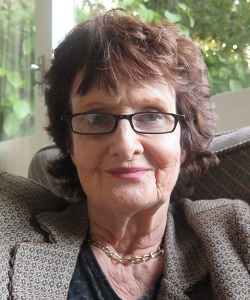
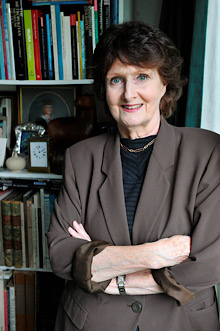
Death of Eavan Boland, Poet, Author & Professor

Eavan Aisling Boland, Irish poet, author, and professor, dies in Dublin on April 27, 2020. She is a professor at Stanford University, where she teaches from 1996. Her work deals with the Irish national identity, and the role of women in Irish history. A number of poems from Boland’s poetry career are studied by Irish students who take the Leaving Certificate. She is a recipient of the Lannan Literary Award for Poetry.

Boland is born in Dublin on September 24, 1944. Her father, Frederick Boland, is a career diplomat and her mother, Frances Kelly, was a noted painter.

When she is six, Boland’s father is appointed Irish Ambassador to the United Kingdom, and the family moves to London, where she has her first experiences of anti-Irish sentiment. Her dealing with this hostility strengthens her identification with her Irish heritage. She speaks of this time in her poem, “An Irish Childhood in England: 1951.”

At 14, Boland returns to Dublin to attend Holy Child Killiney in Killiney, County Dublin. She publishes a pamphlet of poetry in her first year at Trinity College Dublin (TCD), in 1962. She earns a Bachelor of Arts (BA) with First Class Honors in English Literature and Language from TCD in 1966.

After graduating, Boland holds numerous teaching positions and publishes poetry, prose criticism and essays. She teaches at TCD, University College Dublin (UCD), and Bowdoin College in Brunswick, Maine, and is a member of the International Writing Program (IWP) at the University of Iowa. She is also writer in residence at TCD, and at the National Maternity Hospital in Dublin.

In 1969, Boland marries the novelist Kevin Casey. They have two daughters together. Her experiences as a wife and mother influence her to write about the centrality of the ordinary, as well as providing a frame for more political and historical themes. According to her friend Gabrielle Calvocoressi, she “loved gossip like fish love water.”

In the late 1970s and 1980s, Boland teaches at the School of Irish Studies in Dublin. From 1996 she is a tenured Professor of English at Stanford University where she is the Bella Mabury and Eloise Mabury Knapp Professor in the Humanities and Melvin and Bill Lane Professor for Director of the Creative Writing program. She divides her time between Palo Alto and her home in Dublin.

Boland’s first book of poetry is New Territory published in 1967 with Dublin publisher Allen Figgis. This is followed by The War Horse (1975) and In Her Own Image (1980). Night Feed (1982) establishes her reputation as a writer on the ordinary lives of women and on the difficulties faced by women poets in a male-dominated literary world. While she is writer in residence at the National Maternity Hospital in Dublin in 1994, she composes “Night Feed” and “The Tree of Life,” and her work remains on a plaque in the hospital garden.

Several of Boland’s volumes of poetry have been Poetry Book Society choices in the United Kingdom, where she is primarily published by Carcanet Press. In the United States her publisher is W. W. Norton & Company.

Her poem “Quarantine” is one of ten poems shortlisted for RTÉ‘s selection of Ireland’s favourite poems of the last 100 years in 2015.

Former Irish TaoiseachBertie Ahern, quotes from her poem “The Emigrant Irish” in his address to the joint houses of the United States Congress in May 2008.

On March 15, 2016, United States President Barack Obama quotes lines from her poem “On a Thirtieth Anniversary” (from Against Love Poetry 2001) in his remarks at a reception in the White House to celebrate Saint Patrick’s Day.

In March 2018, RTÉ broadcasts a documentary on Boland’s life as a poet called “Eavan Boland: Is it Still the Same?” In the same year, she is commissioned by the Government of Ireland and the Royal Irish Academy (RIA) to write the poem “Our future will become the past of other women” to be read at the United Nations (UN) and in Ireland during the centenary commemorations of women gaining the vote in Ireland in 1918.

Boland co-edits The Making of a Poem: A Norton Anthology of Poetic Forms (with Mark Strand; W. W. Norton & Co., 2000). She also publishes a volume of translations in 2004 called After Every War (Princeton University Press). With Edward Hirsch, she co-edits “The Making of a Sonnet: A Norton Anthology of the Sonnet” (W. W. Norton & Co., 2008).

In 1976, Boland wins a Jacob’s Award for her involvement in The Arts Programme broadcast on RTÉ Radio. Her other awards include a Lannan Foundation Award in Poetry and an American Ireland Fund Literary Award. Her collection In a Time of Violence (1994) receives a Lannan Award and is shortlisted for the T. S. Eliot Prize.

In 1997 Boland receives an honorary degree from University College Dublin. She also receives honorary degrees from the University of Strathclyde in Glasgow, Scotland, and Colby College in Waterville, Maine, in 1997, and the College of the Holy Cross in Worcester, Massachusetts, in 1999. She receives one from Bowdoin College in 2004. In 2004 she also receives an honorary degree from Trinity College Dublin.

Boland receives the Bucknell Medal of Distinction 2000 from Bucknell University, the Corrington Medal for Literary Excellence by Centenary College of Louisiana in 2002, the Smartt Family prize from The Yale Review and the John Frederick Nims Award from Poetry magazine 2002. Her volume of poems Against Love Poetry is a New York Times Notable Book of the Year. Her volume Domestic Violence (2007) is shortlisted for the Forward Prize in the United Kingdom. Her poem “Violence Against Women” from the same volume is awarded the James Boatwright III Prize for Poetry for the best poem published in 2007 in Shenandoah magazine. In 2012, she wins a PEN Award for creative nonfiction with her collection of essays, A Journey With Two Maps: Becoming a Woman Poet, published in 2012.

In 2016, Boland is inducted into the American Academy of Arts and Sciences. In 2017, she receives the Bob Hughes Lifetime Achievement Award at the Bord Gáis Energy Irish Book Awards.

On May 25, 2018, Boland is elected an honorary member of the Royal Irish Academy. She receives the Irish PEN Award for Literature in 2019. She is writer in residence at the National Maternity Hospital, Dublin, in 1994. During this time she composes “Night Feed” and “The Tree of Life,” and her work remains on a plaque in the hospital garden.

Boland dies in Dublin on April 27, 2020, at the age of 75. Later that year she is posthumously awarded the Costa Book Award for poetry for her final collection The Historians.

In 2024, Trinity College Dublin announces the renaming of the “denamed” former Berkeley Library as the Eavan Boland Library. This makes it the first building named after any woman on Trinity’s city centre campus. The name is made official in March 2025.

(Image credit: Maura Hickey)


Leave a comment

Birth of Sebastian Barry, Novelist, Playwright & Poet

Sebastian Barry, novelist, playwright and poet, is born in Dublin on July 5, 1955. He is noted for his lyrical literary writing style and is considered one of Ireland’s finest writers. He is named Laureate for Irish Fiction, 2019–2021.

Barry’s mother is acclaimed actress Joan O’Hara. He is educated at Catholic University School and Trinity College, Dublin, where he reads English and Latin. His literary career begins in poetry before he begins writing plays and novels.

Barry starts his literary career with the novel Macker’s Garden in 1982. This is followed by several books of poetry and a further novel, The Engine of Owl-Light (1987), before his career as a playwright begins with his first play produced in the Abbey Theatre, Boss Grady’s Boys (1988).

Barry’s maternal great-grandfather, James Dunne, provides the inspiration for the main character in his most internationally known play, The Steward of Christendom, which wins the Christopher Ewart-Biggs Memorial Prize, the Lloyd’s Private Banking Playwright of the Year Award and other awards. The main character in the play, Thomas Dunne, is the chief superintendent of the Dublin Metropolitan Police from 1913 to 1922. He oversees the area surrounding Dublin Castle until the Irish Free State takeover on January 16, 1922. One of his grandfathers belonged to the British Army Corps of Royal Engineers while the other is a painter, a Nationalist, and a devotee of Éamon de Valera.

Both The Steward of Christendom and the novel The Whereabouts of Eneas McNulty, are about the dislocations, physical and otherwise, of loyalist Irish people during the political upheavals of the early 20th century. The title character of the latter work is a young man forced to leave Ireland by his former friends in the aftermath of the Irish War of Independence.

Barry has been twice shortlisted for the Man Booker Prize for his novels A Long Long Way (2005) and The Secret Scripture (2008), the latter of which wins the 2008 Costa Book of the Year and the James Tait Black Memorial Prize. His fifth novel, On Canaan’s Side (2011), is longlisted for the 2011 Man Booker Prize and wins the 2012 Walter Scott Prize. In January 2017, he is awarded the Costa Book of the Year prize for Days Without End (2016), becoming the first novelist to win the prestigious prize twice. The novel also wins The Walter Scott Prize and The Independent Booksellers’ Prize, and is longlisted for the Man Booker Prize 2017.

Barry’s play Andersen’s English is inspired by children’s writer Hans Christian Andersen coming to stay with Charles Dickens and his family in the Kent marshes. Directed by Max Stafford-Clark and produced by the Out of Joint Theatre Company and Hampstead Theatre, the play tours in the United Kingdom from February 11 to May 8, 2010. Our Lady of Sligo is directed in 1998 by Stafford-Clark at the Royal National Theatre co−produced by Out of Joint.

In 2001, Barry establishes his personal and professional archive at the Harry Ransom Center. More than sixty boxes of papers document his diverse writing career and range of creative output which includes drawings, poetry, short stories, novels, essays, and scripts.

Barry has been awarded honorary degrees from NUI Galway, the Open University and the University of East Anglia. His academic posts include Honorary Fellow in Writing at the University of Iowa (1984), Heimbold Visiting Professor at Villanova University (2006) and Writer Fellow at Trinity College, Dublin (1995–1996).

Barry lives in County Wicklow with his wife, actor and screenwriter Alison Deegan.


Leave a comment

Mo Mowlam Presented International Woman of the Year Award

mo-mowlan

Marjorie “Mo” Mowlam, English Labour Party politician, is presented with the International Woman of the Year Award at a ceremony in Dublin on October 23, 2001. United Nations High Commissioner for Human Rights Mary Robinson wins the Overall Award at the Irish Tatler Women of the Year Awards.

Mowlam is born on September 18, 1949 in Watford, Hertfordshire, England but grows up in Coventry. She starts her education at Chiswick Girls’ grammar school in West London, then moves to Coundon Court school in Coventry which, at the time, is one of the first comprehensive schools in the country. She then studies at Trevelyan College, Durham University, reading sociology and anthropology. She joins the Labour Party in her first year.

Mowlam becomes the Secretary of the Durham Union Society in 1969 and later goes on to become the Vice-President of the Durham Student’s Union. She works for then-MP Tony Benn in London and American writer Alvin Toffler in New York, moving to the United States with her then-boyfriend and studying for a PhD in political science at the University of Iowa.

Mowlam is a lecturer in the Political Science Department at the University of Wisconsin–Milwaukee in 1977 and at Florida State University in Tallahassee from 1977 to 1979. During her time in Tallahassee, someone breaks into her apartment. She suspects that it is Ted Bundy, the serial killer and rapist who is thought to have murdered at least 35 young women and attacked several others. She returns to England in 1979 to take up an appointment at the University of Newcastle upon Tyne.

Having failed to win selection for the 1983 general election, Mowlam is selected as Labour candidate for the safe seat of Redcar after James Tinn stands down. She takes the seat in the 1987 general election, becoming the Labour spokesperson on Northern Ireland later that year. Together with Shadow Chancellor John Smith, she is one of the architects of Labour’s “Prawn Cocktail Offensive” dedicated to reassuring the UK’s financial sector about Labour’s financial rectitude.

Mowlam joins the Shadow Cabinet when John Smith becomes leader of the Labour Party in 1992, holding the title of Shadow Secretary of State for National Heritage. During this time, she antagonises both monarchists and republicans by calling for Buckingham Palace to be demolished and replaced by a “modern” palace built at public expense. Later, her willingness to speak her mind, often without regard to the consequences, is seen as her greatest strength by her supporters.

Following Smith’s death in 1994, Mowlam, alongside Peter Kilfoyle, becomes a principal organiser of Tony Blair‘s campaign for the Labour leadership. After his victory, Blair makes her Shadow Secretary of State for Northern Ireland. She initially resists being appointed to the position, preferring an economic portfolio, but, after accepting it, she throws her weight into the job.

Mowlam oversees the negotiations which lead to the 1998 Good Friday Agreement. She is successful in helping to restore an Irish Republican Army (IRA) ceasefire and including Sinn Féin in multi-party talks about the future of Northern Ireland. In an attempt to persuade the Ulster loyalists to participate in the peace process, she pays an unprecedented and potentially dangerous visit to loyalist prisoners in HM Prison Maze, meeting convicted murderers face-to-face and unaccompanied.

Mowlam witnesses the Good Friday Agreement signing in 1998, which leads to the temporary establishment of a devolved power-sharing Northern Ireland Assembly. However, an increasingly difficult relationship with Unionist parties means her role in the talks is ultimately taken over by Tony Blair and his staff.

Mowlam’s deteriorating relationship with Unionists is the key reason she is replaced by Peter Mandelson as Northern Ireland Secretary in October 1999. Her move to the relatively lowly position of Minister for the Cabinet Office possibly involves other factors, notably her health and her popularity. On September 4, 2000, she announces her intention to retire from Parliament and relinquishes her seat at the 2001 general election.

Five months before the 1997 general election, Mowlam is diagnosed with a brain tumor, a fact that she tries to keep private. She appears to suffer from balance problems as a result of her radiotherapy. According to her husband, she falls on July 30, 2005, receiving head injuries and never regaining consciousness. Her living will, in which she asks not to be resuscitated, is honoured. On August 12, 2005, Mowlan is moved to Pilgrims Hospice in Canterbury, Kent, where she dies seven days later, on August 19, 2005, aged 55.

Mowlam is an atheist and is cremated in Sittingbourne on September 1, 2005 at a non-religious service conducted by Reverend Richard Coles, formerly of the 1980s band The Communards. Half of her ashes were scattered at Hillsborough Castle, the Secretary of State for Northern Ireland’s official residence, and the other half in her former parliamentary constituency of Redcar.


Leave a comment

Birth of Eavan Boland, Irish Poet, Author & Professor

Eavan Boland, Irish poet, author and professor who has been active since the 1960s and helped develop feminist publishing company Arlen House, is born in Dublin on September 24, 1944. She is currently a professor at Stanford University, where she has taught since 1996. Her work deals with the Irish national identity and the role of women in Irish history. A number of poems from Boland’s poetry career are studied by Irish students who take the Leaving Certificate.

Boland’s father, Frederick Boland, is a career diplomat and her mother, Frances Kelly, is a noted post-expressionist painter. When she is six, her father is appointed Irish Ambassador to the United Kingdom. The family follows him to London, where she has her first experiences of anti-Irish sentiment. Her dealing with this hostility strengthens her identification with her Irish heritage. She speaks of this time in her poem “An Irish Childhood in England: 1951.”

At 14, she returns to Dublin to attend Holy Child School in Killiney. She publishes a pamphlet of poetry, 23 Poems, in her first year at Trinity College, Dublin in 1962. She earns a BA with First Class Honors in English Literature and Language from Trinity in 1966. Since then, she has held numerous teaching positions and published poetry, prose criticism and essays. She marries the novelist Kevin Casey in 1969 and has two daughters. Her experiences as a wife and mother influence her to write about the centrality of the ordinary, as well as provide a frame for more political and historical themes.

Boland has taught at Trinity College, Dublin, University College Dublin, and Bowdoin College, and was a member of the International Writing Program at the University of Iowa. She was also writer in residence at Trinity College, Dublin, and at the National Maternity Hospital, Dublin. In the late 1970s and 1980s, she teaches at the School of Irish Studies in Dublin. Since 1996 she has been a tenured Professor of English at Stanford University where she is currently Bella Mabury and Eloise Mabury Knapp Professor in the Humanities and Melvin and Bill Lane Professor for Director of the Creative Writing program. She divides her time between Palo Alto, California and her home in Dublin.

In 2015, Boland says that Trinity College, Dublin not only “influenced her career,” but “determined her career.”