seamus dubhghaill

Promoting Irish Culture and History from Little Rock, Arkansas, USA


Leave a comment

Death of Seán Francis Lemass, Taoiseach (1959-1966)

sean-francis-lemass

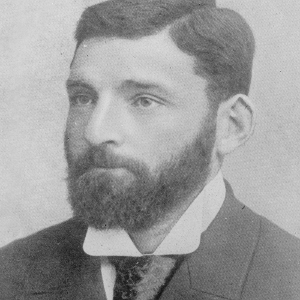
Seán Francis Lemass, one of the most prominent Irish politicians of the 20th century and Taoiseach from 1959 until 1966, dies at Mater Misericordiae University Hospital in Dublin on May 11, 1971, at the age of 71.

John Francis Lemass is born in Ballybrack, County Dublin before his family moves to Capel Street in Dublin city centre. He is the second of seven children born to John and Frances Lemass. Within the family his name soon changes to Jack and eventually, after 1916, he himself prefers to be called Seán. He is educated at O’Connell School where he was described as studious, with his two best subjects being history and mathematics.

As early as the age of sixteen, Lemass becomes a freedom fighter in the streets of Dublin, engaging in the 1916 Easter Rising, the Irish War of Independence, and the Irish Civil War, landing in jail again and again. He opposes the establishment of the Irish Free State as a dominion under the Anglo-Irish Treaty of 1921 and becomes a member of the headquarters staff of the Irish Republican Army in the civil war of 1922–1923.

Lemass is first elected as a Sinn Féin Teachta Dála (TD) for the Dublin South constituency in a by-election on November 18, 1924, and is returned at each election until the constituency is abolished in 1948, when he is re-elected for Dublin South–Central until his retirement in 1969.

He plays a key role in persuading Éamon de Valera to found a new republican party, Fianna Fáil, in 1926. After de Valera rises to the premiership in 1932, Lemass holds portfolios in all his cabinets for 21 of the next 27 years, notably as Minister for Industry and Commerce, Minister for Supplies, and Tánaiste (deputy prime minister).

When de Valera becomes President of Ireland in 1959, Lemass inherits the office of Taoiseach, serving in this position until 1966. Under him the country takes a more outward-looking approach, and he especially presses for Ireland’s entry into the European Economic Community (EEC), now the European Community embedded in the European Union, and for reconciliation with Northern Ireland.

Ill health forces Lemass to relinquish the leadership of his party in 1966 and he withdraws from politics altogether in 1969. He has been a heavy pipe smoker all his life, smoking almost a pound of tobacco a week in later life. At the time of his retirement, it is suspected that Lemass has cancer, but this is later disproved. In February 1971, while attending a rugby game at Lansdowne Road, he becomes ill, is rushed to hospital, and is told by his doctor that one of his lungs is about to collapse.

On Tuesday, May 11, 1971, Seán Lemass dies in Dublin’s Mater Misericordiae University Hospital. He is afforded a state funeral and is buried in Dean’s Grange Cemetery.

Lemass is widely regarded as the father of modern Ireland, primarily due to his efforts in facilitating industrial growth, bringing foreign direct investment into the country, and forging permanent links between Ireland and the European community. His greatest legacy, Ireland’s membership in the EEC, is not secured until 1973, after his death.
Leave a comment

Execution of Thomas Kent

thomas-kent

Irish nationalist Thomas Kent is executed at Cork Detention Barracks on May 9, 1916. Kent’s story is one of the stranger episodes that happens after the rebellion in Dublin has been quelled. Unlike the Dublin rebels, Kent does not go out to fight. Rather the British come to him looking for trouble.

Kent is part of a prominent nationalist family who lives at Bawnard House, Castlelyons, County Cork. After spending some time in Boston, he returns to Ireland because of poor health. He is active in the Land League, Sinn Féin, and the Irish Republican Brotherhood. With the launch of the Irish Volunteers in 1913, he is prominent with another legendary Cork man, Terence MacSwiney, in organizing and training recruits.

The Kent family is prepared to take part in the Easter Rising but when the mobilisation order is countermanded by Eoin MacNeill, commander of the Irish Volunteers, on April 22, they stay at home. The rising nevertheless goes ahead in Dublin on Easter Monday. The Royal Irish Constabulary (RIC) is dispatched to arrest well-known sympathizers throughout the country including, but not limited to, known members of the Irish Republican Brotherhood, Sinn Féin, and the Irish Volunteers.

When the Kent residence is raided at 3:45 AM on May 2, the RIC is met with resistance from Thomas and his brothers Richard, David, and William. A gunfight lasts for four hours, during which RIC officer Head Constable William Rowe is killed and David Kent is seriously wounded. Eventually the Kents are forced to surrender, although Richard makes a last-minute dash for freedom and is fatally wounded.

Thomas and William are tried by court martial on May 4 on a charge of “armed rebellion.” William, who is not political, is found innocent, but Thomas is found guilty in the death of Constable Rowe and is sentenced to death. Before being led out for his execution, Kent says, “I have done my duty as a soldier of Ireland and in a few moments, I hope to see the face of God.” He is executed by firing squad in Cork in the early morning hours of May 9. David Kent is brought to Dublin where he is charged with the same offence, found guilty, and sentenced to death, but the sentence is commuted, and he is sentenced to five years penal servitude.

Apart from the singular case of Roger Casement, Thomas Kent is the only person outside of Dublin to be executed for his role in the events surrounding Easter Week. He is buried on the grounds of Cork Prison, formerly the Military Detention Barracks at the rear of Collins Barracks, Cork. The former army married quarters at the rear of Collins Barracks are named in his honour.

Taoiseach Enda Kenny offers a state funeral to the Kent family early in 2015 which they accept. Kent’s remains are exhumed from Cork prison in June 2015 after being buried for 99 years. The state funeral is held on September 18, 2015, at St. Nicholas’ Church in Castlelyons. Kent lay in state at Collins Barracks in Cork the day before. The requiem mass is attended by President Michael D. Higgins, with Enda Kenny delivering the graveside oration.


Leave a comment

The Beginning of the 1916 Easter Rising

proclamation-of-independence

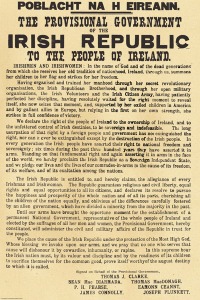
The Easter Rising, also known as the Easter Rebellion, begins in Dublin on April 24, 1916, and lasts for six days. The Rising, organised by seven members of the Military Council of the Irish Republican Brotherhood, is launched to end British rule in Ireland and establish an independent Irish Republic while the United Kingdom is heavily engaged in World War I. It is the most significant uprising in Ireland since the Irish Rebellion of 1798, and the first armed action of the Irish revolutionary period.

Shortly before midday, members of the Irish Volunteers, led by schoolmaster and Irish language activist Patrick Pearse and joined by the smaller Irish Citizen Army of James Connolly and 200 women of Cumann na mBan, seize key locations in Dublin and proclaim an Irish Republic. The rebels’ plan is to hold Dublin city centre, a large, oval-shaped area bounded by the Grand Canal to the south and the Royal Canal to the north, with the River Liffey running through the middle.

The rebels march to the General Post Office (GPO) on O’Connell Street, Dublin’s main thoroughfare, and occupy the building and hoist two republican flags. Pearse stands outside and reads the Proclamation of the Irish Republic.

Elsewhere in Dublin, some of the headquarters battalion under Michael Mallin occupy St. Stephen’s Green, where they dig trenches and barricade the surrounding roads. The 1st battalion, under Edward “Ned” Daly, occupy the Four Courts and surrounding buildings, while a company under Seán Heuston occupies the Mendicity Institution across the River Liffey from the Four Courts. The 2nd battalion, under Thomas MacDonagh, occupies Jacob’s Biscuit Factory. The 3rd battalion, under Éamon de Valera, occupy Boland’s Mill and surrounding buildings. The 4th battalion, under Éamonn Ceannt, occupy the South Dublin Union and the distillery on Marrowbone Lane. From each of these garrisons, small units of rebels establish outposts in the surrounding area.

There are isolated actions in other parts of Ireland, with attacks on the Royal Irish Constabulary barracks at Ashbourne, County Meath and in County Galway, and the seizure of the town of Enniscorthy, County Wexford. Due to a last-minute countermand issued on Saturday, April 22, by Volunteer leader Eoin MacNeill, the number of rebels who mobilise is much lower than expected.

The British Army brings in thousands of reinforcements as well as artillery and a gunboat. There is fierce street fighting on the routes into the city centre, where the rebels put up stiff resistance, slowing the British advance and inflicting heavy casualties. Elsewhere in Dublin, the fighting mainly consists of sniping and long-range gun battles. The main rebel positions are gradually surrounded and bombarded with artillery.

With much greater numbers and heavier weapons, the British Army suppresses the Rising, and Pearse agrees to an unconditional surrender on Saturday, April 29. Almost 500 people are killed during Easter Week. About 54% are civilians, 30% are British military and police, and 16% are Irish rebels. More than 2,600 are wounded. Many of the civilians are killed as a result of the British using artillery and heavy machine guns, or mistaking civilians for rebels. Others are caught in the crossfire in a crowded city. The shelling and the fires leave parts of inner-city Dublin in ruins.

After the surrender the country remains under martial law. About 3,500 people are taken prisoner by the British, many of whom have played no part in the Rising, with 1,800 of them being sent to internment camps or prisons in Britain. Most of the leaders of the Rising are executed following courts-martial. The Rising brings physical force republicanism back to the forefront of Irish politics, which for nearly 50 years has been dominated by constitutional nationalism. It, and the British reaction to it, leads to increased popular support for Irish independence. In December 1918, republicans, represented by the reconstituted Sinn Féin party, win a landslide victory in the general election to the British Parliament. They do not take their seats but instead convene the First Dáil and declare the independence of the Irish Republic, which ultimately leads to the Irish War of Independence.


Leave a comment

Birth in Belfast of Ian Paisley

ian-paisley

Ian Richard Kyle Paisley, loyalist politician and Protestant religious leader from Northern Ireland is born on April 6, 1926, in Armagh, County Armagh.

Paisley becomes a Protestant evangelical minister in 1946 and remains one for the rest of his life. In 1951, he co-founds the fundamentalist Free Presbyterian Church of Ulster and is its leader until 2008. Paisley becomes known for his fiery speeches and regularly preaches and protests against Catholicism, ecumenism and homosexuality. He gains a large group of followers who are referred to as “Paisleyites.”

Paisley becomes involved in Ulster unionist/loyalist politics in the late 1950s. In the mid-late 1960s he leads and instigates loyalist opposition to the Catholic civil rights movement in Northern Ireland. This leads to the outbreak of The Troubles in the late 1960s, a conflict that engulfs Northern Ireland for the next thirty years. In 1970, he becomes Member of Parliament for North Antrim and the following year he founds the Democratic Unionist Party (DUP), which he leads for almost forty years. In 1979, he becomes a Member of the European Parliament.

Throughout the Troubles, Paisley is seen as a firebrand and the face of hard-line unionism. He opposes all attempts to resolve the conflict through power-sharing between unionists and Irish nationalists/republicans, and all attempts to involve the Republic of Ireland in Northern affairs. His efforts help bring down the Sunningdale Agreement of 1974. He also opposes the Anglo-Irish Agreement of 1985, with less success. His attempts to create a paramilitary movement culminate in Ulster Resistance. Paisley and his party also oppose the Northern Ireland peace process and Good Friday Agreement of 1998.

In 2005, Paisley’s DUP becomes the largest unionist party in Northern Ireland, displacing the Ulster Unionist Party (UUP), which has dominated unionist politics since 1905. In 2007, following the St. Andrews Agreement, the DUP finally agrees to share power with republican party Sinn Féin and consent to all-Ireland governance in certain matters. Paisley and Sinn Féin’s Martin McGuinness become First Minister and deputy First Minister respectively in May 2007. Paisley steps down as First Minister and DUP leader in May 2008 and leaves politics in 2011. Paisley is made a life peer in 2010 as Baron Bannside.

In November 2011, Paisley announces to his congregation that he is retiring as a minister. He delivers his final sermon to a packed attendance at the Martyrs’ Memorial Hall on December 18, 2011, and finally retires from his religious ministry on January 27, 2012.

Paisley dies in Belfast on September 12, 2014. He is buried in Ballygowan, County Down on September 15 following a private funeral and a public memorial for 800 invited guests is held in the Ulster Hall on October 19. An obituary in The New York Times reports that late in life Paisley had moderated and softened his stances against Roman Catholics but that “the legacies of fighting and religious hatreds remained.”


Leave a comment

The Founding of Cumann na mBan

cumann-na-mban

Cumann na mBan, an Irish republican women’s paramilitary organisation, is formed in Dublin on April 2, 1914.

In 1913, a number of women decide to hold a meeting in Wynn’s Hotel, Dublin, for the purpose of discussing the possibility of forming an organisation for women who would work in conjunction with the recently formed Irish Volunteers. A meeting led by Kathleen Lane-O’Kelly on April 2, 1914, marks the foundation of Cumann na mBan. Branches, which pledge to the Constitution of the organisation, are formed throughout the country and are directed by the Provisional Committee.

The primary aims of Cumann na mBan, as stated in its constitution, are to “advance the cause of Irish liberty and to organize Irishwomen in the furtherance of this object,” to “assist in arming and equipping a body of Irish men for the defence of Ireland” and to “form a fund for these purposes, to be called ‘The Defence of Ireland Fund.'”

Recruits come from diverse backgrounds, mainly white-collar workers and professional women, but with a significant proportion also from the working class. In September 1914, the Irish Volunteers split over John Redmond‘s appeal for its members to enlist in the British Army. The majority of Cumann na mBan members support the 10,000 to 14,000 volunteers who rejected this call and who retain the original name, the Irish Volunteers.

On April 23, 1916, when the Military Council of the Irish Republican Brotherhood finalises arrangements for the Easter Rising, it integrates Cumann na mBan, along with the Irish Volunteers and Irish Citizen Army, into the “Army of the Irish Republic.”

On the day of the Rising, Cumann na mBan members arrive armed with both a Webley revolver and a typewriter, entering the General Post Office (GPO) on O’Connell Street in Dublin with their male counterparts. By nightfall, women insurgents are established in all the major rebel strongholds throughout the city. The majority of the women work as Red Cross workers, are couriers, or procure rations for the men. Members also gather intelligence on scouting expeditions, carry despatches, and transfer arms from dumps across the city to insurgent strongholds. A number of Cumann na mBan members die during the Rising.

At the Four Courts, they help to organise the evacuation of buildings at the time of surrender and destroy incriminating papers. On April 29, the leaders at the GPO decide to negotiate surrender. Patrick Pearse, the overall Commandant-General, asks Cumann na mBan member Elizabeth O’Farrell to act as a go-between. Under British military supervision she brings Pearse’s surrender order to the rebel units still fighting in Dublin. Over 70 women, including many of the leading figures in Cumann na mBan, are arrested after the insurrection, and many of the women who are captured fighting are imprisoned in Kilmainham Gaol. All but twelve are released by May 8, 1916.

Revitalized after the Rising and led by Countess Markievicz, Cumann na mBan takes a leading role in popularising the memory of the 1916 leaders, organising prisoner relief agencies, opposing conscription, and canvassing for Sinn Féin in the 1918 general election, in which Markievicz is elected Teachta Dála.

Cumann na mBan supports the Provisional wing in the 1969-1970 split in the Irish Republican Army (IRA) and Sinn Féin. In Northern Ireland, Cumann na mBan is integrated into the mainstream IRA during the conflict, although they continue to exist as a separate organisation in the Republic of Ireland. In 1986, Cumann na mBan opposes the decision by the IRA and Sinn Féin to drop the policy of abstentionism and aligns itself with Republican Sinn Féin and the Continuity IRA.

In 2014, Cumann na mBan celebrates the Centenary of its foundation in Wynn’s Hotel, Dublin, the site of their founding in 1914. The U.K. Home Office in March 2015 lists Cumann na mBan as a group linked to Northern Ireland related terrorism. However, it is not so listed in 2008 by the U.S. State Department.


Leave a comment

Éamon de Valera Elected President of Dáil Éireann

eamon-de-valera

Éamon de Valera is elected President of Dáil Éireann (Príomh Aire) at the third meeting of the First Dáil on April 1, 1919.

The Declaration of Independence asserts that the Dáil is the parliament of a sovereign state called the “Irish Republic,” and so the Dáil establishes a cabinet called the Ministry or “Aireacht,” and an elected prime minister known both as the “Príomh Aire” and the “President of Dáil Éireann.”

When the First Dáil meets in the Round Room of the Mansion House in Dublin on January 21, 1919, de Valera is the president of Sinn Féin and thus the natural choice for leadership. However, he is imprisoned in England so, at the second meeting of the Dáil on January 22, Cathal Brugha is elected as the first Príomh Aire on a temporary basis. De Valera escapes Lincoln Gaol in February and is then elected to replace Brugha at the Dáil’s third meeting.

As leader, de Valera visits the United States from June 1919 to December 1920. His aim is to gain both popular and official recognition for the Republic and to obtain a loan to finance Dáil Éireann and the War of Independence. By the time of his return, de Valera has won public but not official support for the Republic and has raised a loan of $6 million.

After the election of the Second Dáil in 1921, de Valera resigns on August 26 and is immediately re-elected under the new title of President of the Republic. He then remains in office until January 1922 when, against his wishes, the Dáil votes to ratify the Anglo-Irish Treaty. De Valera resigns and submits his name for re-election but is rejected by the house, which instead elects Arthur Griffith, who supports the Treaty, by a vote of 60-58.

On January 16, 1922, the British government implements the Treaty and appoints a new Irish administration called the Provisional Government. The Dáil decides that the new administration will operate in parallel with the existing institutions of the Irish Republic, which the British do not recognise. Therefore, as the Irish Civil War begins the country has two leaders, Arthur Griffith as President of Dáil Éireann and Michael Collins as Chairman of the Provisional Government. Collins is also Minister for Finance in Griffith’s cabinet. This anomalous situation continues until Griffith and Collins both died suddenly in August 1922, Collins being assassinated by anti-Treaty irregulars and Griffith dying of natural causes. W.T. Cosgrave becomes Chairman of the Provisional Government on August 25 and, when he is also elected as President of Dáil Éireann in September, the two administrations are merged.

On December 6, both the Irish Republic and the Provisional Government come to an end as the new Constitution of the Irish Free State comes into force. The new Irish Free State has three leaders, the King as head of state, the Governor-General as the King’s representative, and the President of the Executive Council as head of government. W.T. Cosgrave is appointed as the first President of the Executive Council on the same day.


Leave a comment

Death of Politician & Journalist Timothy Michael Healy

Timothy Michael “Tim” Healy, Irish nationalist politician, journalist, author, barrister, and one of the most controversial Irish Members of Parliament (MPs) in the House of Commons of the United Kingdom of Great Britain and Ireland, dies in Chapelizod, County Dublin, on March 26, 1931.

Healy is born in Bantry, County Cork, the second son of Maurice Healy, clerk of the Bantry Poor Law Union, and Eliza Healy (née Sullivan). His father is transferred in 1862 to a similar position in Lismore, County Waterford. Timothy is educated at the Christian Brothers school in Fermoy, and is otherwise largely self-educated, in 1869, at the age of fourteen, he goes to live with his uncle Timothy Daniel Sullivan in Dublin.

Healy then moves to England in 1871, working first as a railway clerk and then from 1878 in London as parliamentary correspondent of The Nation, writing numerous articles in support of Charles Stewart Parnell, the newly emergent and more militant home rule leader, and his policy of parliamentary obstructionism. Healy takes part in Irish politics and becomes associated with Parnell and the Irish Parliamentary Party. After being arrested for intimidation in connection with the Irish National Land League, he is promptly elected as member of Parliament for Wexford Borough in 1880.

In Parliament, Healy becomes an authority on the Irish land question. The “Healy Clause” of the Land Act of 1881, which protects tenant farmers’ agrarian improvements from rent increases imposed by landlords, not only makes him popular throughout nationalist Ireland but also wins his cause seats in Protestant Ulster. He breaks with Parnell in 1886 and generally remains at odds with subsequent leaders of the Irish Parliamentary Party, though he is a strong supporter of proposals for Irish Home Rule. Meanwhile, he is called to the Irish bar in 1884 and becomes a queen’s counsel in 1899.

Dissatisfied with both the Liberals and the Irish Nationalists after the Easter Rising in 1916, Healy supports Sinn Féin after 1917. He returns to considerable prominence in 1922 when, on the urging of the soon-to-be Irish Free State’s Provisional Government of W.T. Cosgrave, the British government recommends to King George V that Healy be appointed the first “Governor-General of the Irish Free State,” a new office of representative of the Crown created in the 1921 Anglo-Irish Treaty and introduced by a combination of the Irish Free State Constitution and Letters Patent from the King.

Healy believes that he has been awarded the Governor-Generalship for life. However, the Executive Council of the Irish Free State decides in 1927 that the term of office of Governors-General will be five years. As a result, he retires from the office and public life in January 1928 and publishes his extensive two volume memoirs later in that year. Throughout his life he is formidable because he is ferociously quick-witted, because he is unworried by social or political convention, and because he knows no party discipline. Towards the end of his life, he becomes more mellowed and otherwise more diplomatic.

Healy dies on March 26, 1931, at the age of 75, in Chapelizod, County Dublin. He is buried in Glasnevin Cemetery in Dublin.


Leave a comment

The Founding of Fianna Fáil

fianna-fail

Fianna Fáil, the centrist to centre-right and conservative political party in the Republic of Ireland, is founded on March 23, 1926, after a split with Sinn Féin on the issue of abstentionism. Historically, Fianna Fáil has been seen as to the left of Fine Gael and to the right of Sinn Féin and the Labour Party. It is generally seen as a “catch all” populist party, representing a broad range of people from all social classes.

When his motion calling for elected members to be allowed to take their seats in Dáil Éireann if and when the controversial Oath of Allegiance is removed fails to pass at the Sinn Féin Ardfheis in 1926, Éamon de Valera resigns from the presidency of the party and, with Seán Lemass, Constance Markievicz, and others, forms a new party, Fianna Fáil (The Warriors of Destiny), a party that is to dominate 20th-century Irish politics. The party adopts its name on April 2 of the same year.

Though the new party is also opposed to the Treaty settlement, it adopts a different approach of aiming to make the Irish Free State a republic. Fianna Fáil’s platform of economic autarky has appeal among the farmers, working-class people, and the poor, whilst alienating more affluent classes.

From the formation of the first Fianna Fáil government on March 9, 1932, until the election of 2011, the party is in power for 61 of 79 years. Its longest continuous period in office is 15 years and 11 months (March 1932 – February 1948). Its single longest period out of office in the 20th century, is four years and four months (March 1973 – July 1977). Seven of the party’s eight leaders, including de Valera, serve as Taoiseach.

Fianna Fáil joins the Alliance of Liberals and Democrats for Europe (ALDE) party on April 16, 2009, and the party’s Members of the European Parliament (MEPs) sit in the ALDE Group during the 7th European Parliament term from June 2009 until 1 July 1, 2014. The party is an observer affiliate of the Liberal International.

It is the largest party in the Dáil at every general election from the 1932 general election until the 2011 general election, when it suffers the worst defeat of a sitting government in the history of the Irish state. This loss is described as “historic” in its proportions, and “unthinkable.” The party moves from being the largest party to the third-largest party in the Dáil.


Leave a comment

Gerry Adams Assassination Attempt

adams-assassination-attempt

Sinn Féin president Gerry Adams is seriously wounded in an assassination attempt in central Belfast on March 14, 1984. As the car containing Adams and four other leading Sinn Féin members leaves Belfast Magistrate’s Court, a vehicle pulls alongside and three Ulster Defence Association (UDA) gunmen fire approximately 20 shots into the car. Adams is shot in the neck and shoulder, Seán Keenan in the face, Joe Keenan in the body and hands, and Kevin Rooney in the body. Bob Murray is the only person in the car to escape without injury.

The republicans are in Belfast facing charges of obstruction after the Royal Ulster Constabulary (RUC) attempt to remove an Irish tricolour from a Sinn Féin election cavalcade. After the shooting, Adams is rushed to the Royal Victoria Hospital, where he undergoes surgery to remove the three bullets.

The three loyalist death squad members who carry out the assassination attempt are arrested shortly after the attack by off-duty RUC and British soldiers who open fire on them before ramming their car. One of the UDA gunmen accidentally shoots himself in the foot during the escape attempt.

Following his release from the hospital later in the month, Gerry Adams says it is “quite obvious that British Intelligence were aware” of the operation and that “they wanted myself and my comrades out of the way.” Democratic Unionist Party (DUP) Stormont Assembly member George Seawright expresses regret that Adams has not been killed. The Ulster Unionist Party (UUP) and the British Government remain tight-lipped while Will Glendinning of the Alliance Party of Northern Ireland uses the attack to remind voters he was “totally opposed to the politics of Gerry Adams.”

A Sinn Féin statement released just hours after the attack says, “If the shooting was an attempt to drive us off the streets or underground, it has already failed.” The party says that such attacks are a constant danger, and that it is a testament to Sinn Féin that they continue their work despite such threats.


Leave a comment

Birth of Irish Revolutionary Leader Seán Mac Diarmada

sean-mac-diarmada

Seán Mac Diarmada, Irish political activist and revolutionary leader also known as Seán MacDermott, is born in Corranmore, near Kiltyclogher in County Leitrim on February 28, 1883. He is one of the seven leaders of the Easter Rising of 1916 and a signatory of the Proclamation of the Irish Republic.

Mac Diarmada is educated by the Irish Christian Brothers. He moves to Dublin in 1908, by which time he already has a long involvement in several Irish separatist and cultural organisations, including Sinn Féin, the Irish Republican Brotherhood (IRB), the Ancient Order of Hibernians, and the Gaelic League. He is soon promoted to the Supreme Council of the IRB and is eventually elected secretary.

In 1910, he becomes manager of the radical newspaper Irish Freedom, which he founds along with Bulmer Hobson and Denis McCullough. He also becomes a national organiser for the IRB and is taken under the wing of veteran Fenian Tom Clarke and the two become nearly inseparable. Shortly afterward, Mac Diarmada is stricken with polio and is forced to walk with a cane.

In November 1913, Mac Diarmada is one of the original members of the Irish Volunteers and continues to work to bring the organisation under IRB control. Mac Diarmada is arrested in Tuam, County Galway, in May 1915 under the Defense of the Realm Act 1914 for giving a speech against enlisting into the British Army.

Following his release in September 1915, Mac Diarmada joins the secret Military Committee of the IRB, which is responsible for planning the rising.

Due to his disability, Mac Diarmada has little participation in the fighting of Easter week but is stationed at the headquarters in the General Post Office (GPO), as one of the Provisional Republican Government. Following the surrender on April 29, 1916, he nearly escapes execution by blending in with the large body of prisoners but is eventually identified by Daniel Hoey of G Division. Following a May 9 court-martial, Mac Diarmada, at the age of 33, is executed by firing squad in Kilmainham Gaol. Before his execution, Mac Diarmada writes, “I feel happiness the like of which I have never experienced. I die that the Irish nation might live!”

In September 1919, Hoey is shot dead by Michael Collins‘s Squad. Likewise, the British Officer who ordered Mac Diarmada to be shot rather than imprisoned, is also killed in Cork on Collins’s order during the Irish War of Independence.

Seán MacDermott Street in Dublin, Sligo Mac Diarmada railway station in Sligo, and Páirc Seán Mac Diarmada, the Gaelic Athletic Association stadium in Carrick-on-Shannon, County Leitrim, are named in his honour. Sean MacDermott tower in Ballymun, demolished in 2005, is also named after him. In his hometown of Kiltyclogher a statue inscribed with his final written words is erected in the village centre and his childhood home has become a national monument.

Mac Diarmada will be portrayed by actor Colin Morgan in the 2016 Irish historical biopic drama film, The Rising, written by Kevin McCann and Colin Broderick.