seamus dubhghaill

Promoting Irish Culture and History from Little Rock, Arkansas, USA


Leave a comment

Death of Artist Samuel McCloy

Samuel McCloy, Irish artist who trains at Belfast School of Design and later at Somerset House, dies in Balham, South London, on October 4, 1904. He exhibits widely in group shows across the British Isles and is known for his watercolours, genre paintings, still life and landscapes. He is also a commercial designer, illustrator, and an educator who is for a time Master at Waterford School of Art.

Born on March 13, 1831, in Lisburn, County Antrim, McCloy is the youngest of five children, born to Peter McCloy, a painter, and his wife Martha Phelan. He studies at the School of Design in Belfast from 1850 to 1851 while serving an apprenticeship in engraving, with J and T Smyth. He then spende a year at the Central School, Somerset House in London before being appointed Master at the Waterford School of Art around 1853, when he also becomes a visiting instructor to several other institutions. In the spring of 1865 he marries his student, the Waterford artist Ellen Lucy Harris, the fourth daughter of a banker named Richard Harris. The dismembered corpse of McCloy’s mother is recovered from the River Suir in September of the same year. She had been missing since the previous November.

Between 1873 and 1891 McCloy shows nine works at the Royal Society of British Artists. Upon his return to Belfast around 1874, he works freelance designing greetings cards for Marcus Ward & Co., and in creating damask designs for linen manufacturers. He illustrates Lucy Sale-Barker‘s Sunny Childhood, published by Routledge in 1887, and he is for a time employed by The Illustrated London News.

McCloy shows just once at the Royal Academy of Arts with a work entitled The Haunt of Meditation in 1859. He exhibits infrequently at the Royal Hibernian Academy between 1862 and 1882, where he displays sixteen works in that time. He displays eleven works in the 1876 Industrial Exhibition at Belfast’s Ulster Hall. In 1880, he shows at Rodman and Company in London where the writer in the Belfast Telegraph indicates that McCloy is becoming a popular artist and is receiving extensive patronage.

Following his relocation to London in 1881, McCloy contributes works to numerous regional exhibitions, including the spring exhibition of the Derby Sketching Club in 1883, Nottingham Castle Museum’s autumn exhibition of 1888, and at Exeter‘s Eland Art Gallery in 1892. He exhibits with the Royal Scottish Academy in 1882 and with the Royal Institute of Painters in Water Colours in 1887. He is also a member of the Belfast Art Society, an antecedent to the Royal Ulster Academy.

After a year-long illness that prevents him from working, McCloy dies in Balham, South London, on October 4, 1904. He is survived by his wife, Ellen, and nine daughters. The Lisburn Museum in his hometown offers a belated retrospective of his work in 1981 to mark the one-hundred fiftieth anniversary of his birth. The exhibition is the first known solo display of McCloy’s work and consists of 58 works. The catalogue for this show is written by Eileen Black and funded by the Arts Council of Northern Ireland.

McCloy’s work can be seen in many public collections including the Ulster Museum, the Victoria and Albert MuseumAmgueddfa Cymru – Museum Wales, the National Gallery of Ireland, and in the Irish Linen Centre and Lisburn Museum.


Leave a comment

Death of Novelist Richard Dowling

Richard Dowling, Irish novelist, dies on July 28, 1898, at his home in the Tooting district of South London.

Dowling is born on June 3, 1846, in Clonmel, County Tipperary, the only son of David Jeremiah Dowling, schoolmaster, and Margaret Dowling. His father dies when he is nine years old. He is educated in Clonmel, Waterford, and St. Munchin’s College in Corbally, Limerick, before entering the shipping office of his uncle William Downey in Waterford at the age of eighteen. He distinguishes himself in the Waterford Literary and Debating Society and contributes to local newspapers, including the Waterford Citizen and The Waterford Chronicle. In 1870, he joins the staff of The Nation and moves to Dublin. On the outbreak of the Franco–Prussian War, he edits for Alexander Martin Sullivan a war-sheet, The Daily Summary, and subsequently becomes editor and contributor successively to the humorous but short-lived Zozimus and Ireland’s Eye.

Dowling settles in London in 1874, joining the staff of the Illustrated Sporting and Dramatic News, and founds Yorick in 1876, a comic paper with cartoons by Harry Furniss which lasts six months. In 1879, he publishes the first and most successful of his many novels, The Mystery of Killard, a strange tale of a deaf-mute fisherman in County Clare, which is hailed as one of the most striking romances of the year. Though his later novels are intensely realistic, exciting, and clever, they never achieve the same high standard. According to Furniss, who thought Dowling would be a great author, he “drifted into the quicksand of Bohemianism…He sank a wreck, with a rich cargo of genius that was never delivered to the world.” Other writers later mention his unfulfilled promise. Among his other novels of Irish interest are Sweet Inisfail (1882) and Old Corcoran’s Money (1892). A dramatisation of Below Bridge (1895) is staged on April 6, 1896, at the Novelty Theatre, London.

Dowling contributes poetry, short stories, and essays to several magazines, including Belgravia, London Society, and Saturday Journal, and is a frequent contributor to Tinsley’s Magazine, writing its leading serials (1880–82), which are later published as the novels Under St. Paul’s (1881) and The Duke’s Sweetheart (1881). His collections of essays include On Babies and Ladders (1873), which some critics believe to be his best work, Ignorant Essays (1887), Indolent Essays (1889), full of wit and original thought, and descriptive essays London Town (1880). He also edits the Poems (1891) of John Francis O’Donnell. He writes both under his own name and under various pseudonyms, including Peter Mendaciorum, Marcus Fall and Emmanuel Kink. A selection of his letters is published as Some Old Letters (Oct. – Nov. 1919) and More Old Letters (Jan. – Feb. 1920).

According to his daughter, Dowling works erratically, often continuously for several days and nights. An invalid during his later years, he composes his works on a sofa, invariably wearing a cap and with a soup-plate full of pipes beside him, which he enjoys in turn. A mild, kind, and gentle personality, he is an effective raconteur and a witty conversationalist. His cousin, Edmund Downey, who publishes many of his works, is introduced to the publishing world by Dowling. He is an applicant to the British charity for authors, the Royal Literary Fund, and leaves his family ill provided for.

Dowling dies on July 28, 1898, at his home at 2 Foulser Road, Tooting, South London, and is buried in Mortlake Cemetery, London. He is married and has three children, although his wife’s name and the date of their marriage are not known.

(From: “Dowling, Richard” by Helen Andrews, Dictionary of Irish Biography, http://www.dib.ie, October 2009)


Leave a comment

Irish Businessman Ben Dunne Kidnapped by the IRA

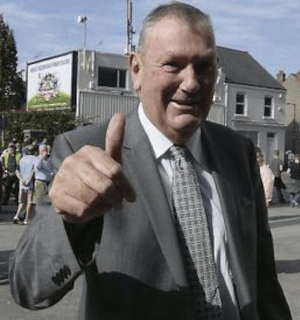
Ben Dunne, an Irish businessman, is kidnapped by the Provisional Irish Republican Army (IRA) on October 16, 1981. Former director of his family firm, Dunnes Stores, one of the largest chains of department stores in Ireland, he now owns a chain of fitness centres established by his company Barkisland Developments Limited.

Dunne is born in Cork, County Cork on March 3, 1949 to Nora Maloney and Ben Dunne, a business man who founded Dunnes Stores. He is the last of six children.

In 1981, he is kidnapped by the IRA and held for seven days. He is released unharmed after his friend and fellow businessman, Patrick Gallagher, pays his £1 million ransom.

In 1992, Dunne is arrested for cocaine possession and soliciting while on a golf holiday in Florida. His arrest triggers the end of his leadership of Dunnes Stores, as family turmoil leads to control falling to his sister Margaret Heffernan and the company paying IR£100 million for his share of the business.

Dunne is again embroiled in scandal in the mid-1990s when it emerges he had given large amounts of money to a number of Irish politicians, mainly from the Fianna Fáil party including the then Taoiseach, Charles Haughey. He also gave money to Michael Lowry of Fine Gael. Justice Brian McCracken, sole member of The McCracken Tribunal which is established by the Irish Government in 1997, finds that Dunne knowingly assisted Lowry in evading his tax obligations. On March 22, 2011, the Moriarty Tribunal concludes of Ben Dunne’s dealings with Michael Lowry that “What was contemplated and attempted on the part of Mr. Dunne and Mr. Lowry was profoundly corrupt to a degree that was nothing short of breathtaking.” The report refers to its finding Lowry sought to influence a rent review of a building part-owned by Dunne.

Dunne now owns a chain of fitness centres called Ben Dunne Gyms located in Dublin and Liverpool, which he personally promotes on radio, using recent Irish advertising legislation which allows direct comparisons to named competitors. He was working on a new health club, to open in Dún Laoghaire in Dublin, but abandons the project due to complaints from local residents.

In April 2005 Dunne pays £3,000,000 for a 21-acre site in Motspur Park, New Malden (South London), former home of BBC Football Club and other BBC sports facilities. His intent is to apply for planning permission to build a leisure and fitness centre, but he does not do so. Instead, in February 2008, his company Barkisland Developments Limited submits a planning application to the Kingston upon Thames London Borough Council for change of use of the sports ground to a cemetery. The application to change the former BBC Sports Ground into a cemetery is withdrawn on October 3, 2008 after it had become clear that planning permission was likely to be refused. Objections are lodged by many local residents, sports clubs, Sport England and the Mayor of London.


Leave a comment

Birth of Sean Scully, Painter, Printmaker, Sculptor & Photographer

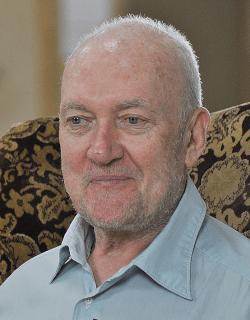
Sean Scully, Irish-born American-based artist working as a painter, printmaker, sculptor and photographer, is born in Dublin on June 30, 1945. His work is held in museum collections worldwide and he has twice been named a Turner Prize nominee.

Four years after his birth, Scully’s family moves to London where they live in a working-class part of South London, moving from lodging to lodging for a number of years. By the age of 9, he knows he wants to become an artist. From the age of 15 until he is 17, he is apprenticed at a commercial printing shop in London as a typesetter, an experience that greatly influences his future artwork.

Scully studies at Croydon School of Art between 1965-67 and at Newcastle University between 1967-71. He is awarded the Frank Knox Memorial Fellowship in 1972 to attend Harvard University. It is during this first stay in the United States that he begins to experiment with new techniques such as tape and spray paint. In 1975 he is awarded a Harkness Fellowship and establishes a studio in New York, where he settles, becoming an American citizen in 1983.

Over the years, Scully develops and refines his own recognisable style of geometric abstraction and most notably his characteristic motif of the ‘stripe.’ Although he is predominately known for his monumental paintings, he is also a gifted printmaker who has made a notable body of woodcuts and etchings.

Scully has his first solo exhibition at the Rowan Gallery, London in 1973. He has his first retrospective at the Ikon Gallery in Brindleyplace, Birmingham, in 1981, which travels throughout the United Kingdom. In 1989 his first solo exhibition in a European museum travels from the Whitechapel Gallery in London to Palacio Velázquez in Madrid and Städtische Galerie im Lenbachhaus in Munich. He has further solo exhibitions at Kunstsammlung Nordrhein Westfalen in Düsseldorf (2001) which travels to Haus der Kunst in Munich and the Institut Valencià d’Art Modern in Valencia; The Phillips Collection in Washington, D.C. (2005) travels to the Modern Art Museum of Fort Worth in Texas, the Cincinnati Art Museum in Ohio and finally the Metropolitan Museum of Art in New York City. A major retrospective tours multiple venues in China between 2015 and 2017.

Scully’s paintings and prints are held in the collections of Tate in London, the Albertina in Vienna, Museo Nacional Centro de Arte Reina Sofía in Madrid, Instituto Valencia d’Arte Modern in Valencia, the Metropolitan Museum of Art and the Solomon R. Guggenheim Museum in New York City, the National Gallery of Art in Washington D.C., Modern Art Museum of Fort Worth in Texas, Guangzhou Museum of Art in Guangzhou, China, and the Central Academy of Fine Arts in Beijing, China.

Scully has held teaching positions at Chelsea College of Arts and Goldsmith’s College of Art and Design, both in London, Princeton University in New Jersey, Parsons School of Design in New York, and most recently at the Akademie der Bildenden Künste in Munich. He is shortlisted for the Turner Prize in 1989 and in 1993, and is elected a Royal Academician in 2013. He participates for the first time at the Venice Biennale in 2014.

Sean Scully lives and works in New York and in Bavaria, Germany.