seamus dubhghaill

Promoting Irish Culture and History from Little Rock, Arkansas, USA


Leave a comment

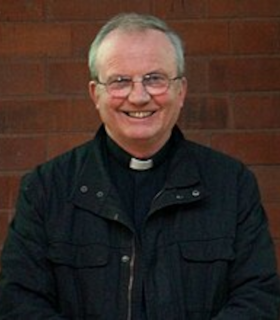
Birth of Dónal McKeown, Roman Catholic Bishop of Derry

Dónal McKeown, Roman Catholic prelate from Northern Ireland who has served as Bishop of Derry since 2014, is born in Belfast on April 12, 1950.

McKeown is one of four children born to James McKeown and his wife Rose (née McMeel), and is baptised in St. Patrick’s Church, Belfast. He is brought up in Randalstown, County Antrim, where he plays Gaelic football and hurling with Kickhams GAC Creggan.

McKeown attends primary school at Mount St. Michael’s Primary School, Randalstown, and secondary school as a boarder at St. MacNissi’s College, Camlough, between 1961 and 1968, completing his O-Levels and A-Levels with special distinctions in Modern Languages. Two of his teachers at St. MacNissi’s College are his future brother bishops, Anthony Farquhar and Patrick Walsh.

McKeown begins studying for the priesthood at St. Malachy’s College, Belfast, in 1968, and obtains a bachelor’s degree with honours in German and Italian from Queen’s University Belfast (QUB). He teaches English at a school in Dieburg, Germany, between 1970 and 1971, and subsequently works as Northern Ireland correspondent for the Catholic media company Katholische Nachrichten-Agentur between 1971 and 1973.

McKeown completes a licentiate in sacred theology at the Pontifical Gregorian University, Rome, between 1973 and 1978, during which he also works for Vatican Radio and as a correspondent for An Saol Mór, an Irish-language programme on RTÉ.

McKeown is ordained to the priesthood on July 3, 1977.

Following ordination, McKeown’s first pastoral assignment is as chaplain at Mater Infirmorum Hospital, before returning to Rome to complete his licentiate. He returns to the Diocese of Down and Connor in 1978, where he is appointed as a teacher at Our Lady and St. Patrick’s College, Knock, while also serving as assistant priest in Derriaghy. He returns to St. MacNissi’s College in 1983, where he continues his involvement with youth ministry and is given responsibility for organising the annual diocesan pilgrimage to Lourdes.

McKeown subsequently returns to St. Malachy’s College in 1987, where he teaches and serves as dean of the adjoining seminary, before succeeding Canon Noel Conway as president in 1995. During his presidency, he completes a Master of Business Administration at the University of Leicester in 2000, specialising in educational management.

McKeown has completed the Belfast Marathon on two occasions: as a priest with a team of 48 from Derriaghy in 1982, and as a bishop fundraising for a minibus for St. Malachy’s College in 2001.

McKeown is appointed auxiliary bishop-elect for the Diocese of Down and Connor and titular bishop of Cell Ausaille by Pope John Paul II on February 21, 2001, the first Irish bishop to be appointed in the third millennium. He is consecrated by the Bishop of Down and Connor, Patrick Walsh, on April 29 in St. Peter’s Cathedral, Belfast.

In response to a 2007 decision by Amnesty International to campaign for the legalisation of abortion in certain circumstances, McKeown supports the decision of Catholic schools in the diocese to disband their Amnesty International support groups, on the grounds that it is no longer appropriate to promote the organisation in their schools.

It is reported in an article in The Irish News that the mention of McKeown as a possible successor to Walsh as Bishop of Down and Connor is actively opposed by some priests in the diocese, who regard him as being “too soft” on the issue of integrated education. This opposition is branded a “Stop Donal” campaign.

McKeown also serves as a member of the Irish Catholic Bishops’ Conference, with responsibility for the promotion of Catholic education, youth ministry, university chaplaincies and the promotion of vocations. His interests include the interface between faith and the empirical sciences, and working with Catholic schools in Norway, Denmark, Lithuania, Poland and Germany.

McKeown also serves as a member of the Irish Catholic Bishops’ Conference and its committee on education and chairs its committees on vocations and youth. He leads the youth of the diocese to World Youth Day in 2002 and 2005 and also travels to Rome with his brother bishops for their quinquennial visit ad limina in 2006. He is also a regular contributor on Thought for the Day on BBC Radio Ulster.

McKeown is appointed Bishop-elect of Derry by Pope Francis on February 25, 2014. He is installed on April 6 in St. Eugene’s Cathedral, Derry.

Following the appointment of Noël Treanor as Apostolic Nuncio to the European Union on November 26, 2022, McKeown is announced as Apostolic Administrator of Down and Connor on January 21, 2023. He serves in this role until the installation of Alan McGuckian, following his appointment as Bishop of Down and Connor on February 2, 2024.

McKeown starts a 33-day journey of prayer toward the Consecration to Jesus Christ through Mary on January 9, 2025. The prayer takes place online each evening at 7:00 p.m. The 33 days of prayer take place the week following the Baptism of the Lord until the Feast of Our Lady of Lourdes on February 11.

Leave a comment

Death of Edward Daly, Catholic Bishop of Derry

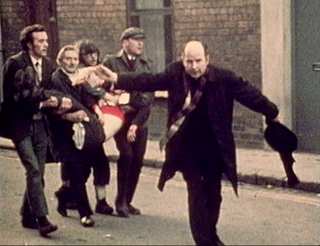
The retired Catholic Bishop of Derry, Dr. Edward Daly, whose photograph becomes the iconic image of Bloody Sunday in 1972, dies at the age of 82 on August 8, 2016.

Daly is born in Ballyshannon, County Donegal, but raised in Belleek, County Fermanagh in Northern Ireland. He attends and boards at St. Columb’s College in Derry on a scholarship, after which he spends six years studying towards ordination to the priesthood at the Pontifical Irish College in Rome. He is ordained a priest of the Diocese of Derry in Belleek on March 16, 1957. His first appointment is as a Curate in Castlederg, County Tyrone. In 1962, he is appointed a Curate in St. Eugene’s Cathedral in Derry, with responsibility for the Bogside area of the city. He leaves briefly in the 1970s to serve as a religious advisor to RTÉ in Dublin in the Republic of Ireland but spends the majority of his career in Derry.

During his time in Derry, Daly takes part in the civil rights marches. He has first-hand experience of the Battle of the Bogside in 1969, the early years of the Troubles, internment, and the events of Bloody Sunday, in which British soldiers fire on unarmed protesters on January 30, 1972, killing 14 people. He becomes a public figure after he is witnessed using a blood-stained handkerchief as a white flag in an attempt to escort 17-year-old Jackie Duddy, a wounded protester, to safety. Duddy dies of his injuries soon after and Daly administers the last rites. He later describes the events as “a young fella who was posing no threat to anybody being shot dead unjustifiably.”

Daly gives an interview to the BBC in which he insists, contrary to official reports, that the protesters were unarmed. He testifies as such to the Widgery Tribunal, though he also testifies that he had seen a man with a gun on the day, to the anger of some of those involved. The Widgery Report largely exonerates the British Army, perpetuating the controversy. Years later, he says that the events of Bloody Sunday were a significant catalyst to the violence in Northern Ireland, and that the shootings served to greatly increase recruitment to the Irish Republican Army (IRA).

Prior to Bloody Sunday, Daly is sympathetic to the “old” IRA, of which his father was a member, but the events of Bloody Sunday leave him of the opinion that “violence is completely unacceptable as a means to a political end,” which leads to tension with the Provisional Irish Republican Army throughout his career.

Daly is appointed Bishop of Derry in 1974, a position he holds until he is forced to retire in October 1993 after suffering a stroke. He continues in the role of chaplain to Derry’s Foyle Hospice until February 2016.

Daly makes headlines in 2011 when he says there needs to be a place in the modern Catholic Church for married priests. He addresses the controversial issue in his book about his life in the Church, A Troubled See. Allowing clergymen to marry would ease the church’s problems, he says.

Daly is awarded the Freedom of the City by Derry City Council in 2015 in a joint ceremony with Bishop James Mehaffey, with whom he had worked closely while the two were in office. He is “hugely pleased to accept [the award], particularly when it is being shared with my friend and brother, Bishop James.” The city’s mayor, Brenda Stevenson, announces that the joint award is in recognition of the two bishops’ efforts towards peace and community cohesion.

Daly dies on August 8, 2016, at Altnagelvin Area Hospital in Derry, having been admitted after a fall several weeks previously. He had also been diagnosed with cancer. He is surrounded by family and local priests.

Daly’s remains are taken to St. Eugene’s Cathedral, where he lay in state with mourners able to file past. His coffin is sealed at midday on August 11, 2016, and buried after Requiem Mass in the grounds of St. Eugene’s Cathedral alongside his predecessor as Bishop of Derry, Neil Farren. The bells of the cathedral toll for one hour on the morning of Daly’s death while many local people arrived to pay tribute. The mayor of Derry, Hilary McClintock, opens a book of condolence in the city’s guildhall for members of the public to sign. The funeral, conducted by the incumbent Bishop of Derry Donal McKeown, is attended by multiple religious and political leaders from across Ireland and retired leaders from throughout his career. A message from Pope Francis is read aloud at the beginning of the service. Hundreds of members of the public also attend the funeral, some lining the route from the cathedral to the gravesite. His coffin is greeted with applause as it is carried out of the cathedral for burial.

(Pictured: Father Edward Daly, waving a blood-stained white handkerchief as he escorts a mortally-wounded protester to safety during the events of Bloody Sunday (1972) in Derry, Northern Ireland, an image which becomes one of the most recognisable moments of the Troubles)