seamus dubhghaill

Promoting Irish Culture and History from Little Rock, Arkansas, USA


Leave a comment

Birth of Beatrice Moss Elvery Campbell, Painter, Stained Glass Artist & Sculptor

Beatrice Moss Elvery Campbell, Lady Glenavy, painter, stained glass artist and sculptor, is born in Dublin on April 30, 1883.

Elvery is the second among seven children of William Elvery , merchant, and Theresa Elvery (née Moss), singer and music teacher, whose parents are English Quakers. Her father’s ancestors were silk merchants from Spain, called Alvarez. Her early childhood is spent in Carrickmines, County Dublin. In 1896 the family moves to Foxrock and she attends the Dublin Metropolitan School of Art. Her mother’s family is artistic – one aunt is the artist Phoebe Anna Traquair – and she and her sisters are talented artists and singers. Her younger sister, Dorothy Kay, becomes a noted portrait painter in South Africa. At the age of sixteen, she wins a three-week scholarship to study at the Royal College of Art in South Kensington, London. Back in Dublin, she models for William Orpen, then teaching in the school. They become friends, and she regrets never studying painting under him. She concentrates on sculpture under John Hughes and has great success, winning the Taylor scholarship three years in a row (1901–03). The first year she wins, the judges, seeking evidence that she had worked unaided, asks her to model a head from life in their presence.

Elvery’s first exhibit in the Royal Hibernian Academy (RHA) is a bronze statuette of a boy in 1902. Thereafter she is a lifelong exhibitor with the RHA, showing almost annually until her death. Friendship with the older Sarah Purser introduces her to Dublin’s artistic milieu and to the arts and crafts movement. In the movement’s 1904 exhibition she shows ten items, including terracotta statuettes, a holy water stoup, and a plaster cast of a lectern, which is cast in bronze in Paris that year and placed in her former parish church in Carrickmines. The movement’s historian, Paul Larmour, calls this lectern “a remarkable piece of organic Art Nouveau . . . There is nothing else like it in Ireland.”

In 1904, after a brief period studying in Paris with her sister and fellow students Estella Solomons and Frances “Cissie” Beckett, Elvery takes lessons in stained glass from Alfred E. Child, and is then persuaded by Purser to join her Tower of Glass (An Túr Gloine) studio. She remains six years, executing windows for St. Stephen’s Church, Mount Street, Dublin; St. Nicholas Church, Carrickfergus; and a war memorial at the Church of Ireland church, Carrickmines. Although her work is generally well received, she does not rate her skill in the medium highly – “I never got the right feeling for glass or the detached, austere quality necessary for ecclesiastical art” – and her window for a Gort convent leads to a critical review of Purser’s studio by W. B. Yeats. She does not, however, confine herself to glass but also designs for silversmiths and illustrated books for children. For Iosagán agus Sgealta Eile (1907), by Patrick Pearse, she provides a black-and-white frontispiece and four colour illustrations. For the Cuala Press, run by Lily and Elizabeth Yeats, she designs calendars, Christmas cards, and fifteen hand-coloured prints, which continue to be issued until after World War II.

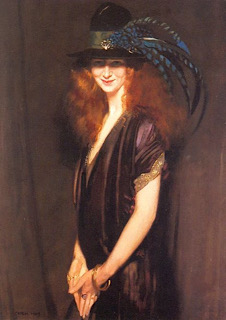
Elvery’s social life in Dublin is busy. An active member of the United Arts Club, she is called by Lady Gregory “the beautiful Miss Elvery,” and Orpen’s portrait, showing her long-necked, graceful, and vivacious, bears out this description. Tiring of glass, and wishing to become a painter, she leaves in 1910 for the Slade School of Fine Art in London. There Henry Tonks is less complimentary than her Dublin teachers. He finds her work facile: “The speed, the slickness, the skill. It is horrible!” Orpen also comes to this view: “her only fault was that the transmission of her thoughts from her brain to paper or canvas, clay or stained glass, became so easy to her that all was said in a few hours. Nothing on earth could make her go on and try to improve on her first translation of her thought.”

Back in Dublin, Elvery takes a studio in Kildare Street and teaches for a time in the Metropolitan School of Art, before her parents arrange a marriage with Charles Henry Gordon Campbell, eldest son of the future Lord Chancellor of IrelandJames Campbell. They marry on August 1, 1912, and move to London where he is called to the English bar. It is not initially a love match but they are well-suited – he likes artistic, Bohemian circles and they become friends with D. H. and Frieda Lawrence, the painter Mark Gertler, the publisher John Middleton Murry, and his wife, the writer Katherine Mansfield, who describes Campbell as “a queer mixture for she is loving and affectionate, and yet she is malicious.”

Campbell’s husband becomes secretary of the Department of Industry and Commerce in the Irish Free State and in 1922 the family moves to Clonard, Terenure, Dublin. His government position means that within six months the house is burned down by anti-Treatyites, who are, however, almost comically accommodating – local men, they express distress at the job and allow her to save the children’s Christmas presents. In 1931 she becomes Lady Glenavy after her husband succeeds to his father’s title, an important member of Dublin’s social and artistic scene. She helps establish the Dublin Drama League and assists Shelah Richards in the production of two plays in 1936. Her friendships are wide and varied and her conversation imaginative and engaged. Dressed in beige – what her son calls “variations on a theme of porridge” – she entertains constantly. Her house has what she terms a “caravanserai” character and is constantly full of people.

Appointed an associate of the RHA in 1932, Campbell becomes a full member in 1934 and takes her turn at teaching. She also joins the more radical Society of Dublin Painters and holds in February 1935 a one-person show at their premises, 7 Stephen’s Green, but she never shows with the Irish Exhibition of Living Art, though her work is more avant-garde than that of most academicians. At its best in still lifes and figure compositions, her work has “a sense of drama and an enigmatic or near-surrealist appearance.” Brian Kennedy notes that she is the first Irish painter to go surrealist (though she never thinks of herself in this way) and although she is serious about her work – taking lessons at an advanced age from Patrick Hennessy  – she is also diffident. Her memoir does not trace her development as an artist and mentions only one work with approbation – The Intruder (exhibited at the RHA in 1932). Now in the National Gallery of Ireland, it depicts in bold, rich colours a female centaur beckoning a young man from a group of picnickers. It immediately attracts attention. Richard Orpen wants the academy to buy it, but they think it obscene.

About 1941 the Campbells move to a large Georgian house in Rathfarnham, and twenty years later they transfer to a smaller house in Sandycove. After her husband’s death in 1962, she publishes her memoirs, And Today We Will Only Gossip (1964). The title is well chosen as the book is not self-revelatory but full of characters she encountered. Monk Gibbon calls her a “unique mixture: of talent and diffidence; of gregariousness and contempt for the herd; of gentle consideration and a savage determination to wound. Only those who knew her well knew her at all; and even to them she remained something of a mystery” (The Irish Times, December 2, 1980).

Campbell dies in Dublin on May 21, 1970, and is survived by her two sons, the writer and humorist Patrick Campbell and the novelist Michael Campbell, and predeceased by her daughter, Bridget, an Irish international lacrosse player and talented scientist, who is killed by a bomb during the London blitz.

Campbell’s work is in inter alia the Ulster Museum, the National Gallery of Ireland, the Hugh Lane Gallery, and the Crawford Art Gallery in Cork, County Cork.

(From: “Campbell, Beatrice Moss” by Bridget Hourican and Pauric J. Dempsey, Dictionary of Irish Biography, http://www.dib.ie, October 2009 | Pictured: “Bridgit – a picture of Miss Elvery (Beatrice Elvery),” oil on canvas by William Orpen, 1909)

Leave a comment

Birth of Dairine Vanston, Landscape Artist

Dairine (Doreen) Vanston, Irish landscape artist who works in a Cubist style, is born in Dublin on October 19, 1903.

Vanston is the daughter of solicitor John S. B. Vanston, and sculptor Lilla Vanston (née Coffey). She attends Alexandra College, going on to study at Goldsmiths College, London under Roger Bissière. She then goes to Paris to the Académie Ranson, being sent there following the advice of Paul Henry. While in Paris she meets Guillermo Padilla, a Costa Rican law student at the University of Paris. They marry in 1926 and she takes the name Vanston de Padilla. The couple lives for a time in Italy, before moving to San José, Costa Rica. The marriage breaks down in the early 1930s, at which point she returns to Paris with her son and studies with André Lhote. She is living in France at the outbreak of World War II with Jankel Adler, but is able to escape to London in 1940, and later to Dublin.

Vanston’s time in Paris leaves a lasting impression on her work, including use of primary colours and a strong Cubist influence. She belongs to what critic Brian Fallon calls the “Franco-Irish generation of painters who looked to Paris,” along with Mainie JellettEvie Hone, and Norah McGuinness. Her time spent living in Costa Rica in the late 1920s and early 1930s imbues her work with tropical and highly toned colours. In Dublin in 1935, she exhibits 17 paintings, largely Costa Rican landscapes, at Daniel Egan’s gallery on St. Stephen’s Green. This is the closest thing to a solo show she would mount, with this show also featuring Grace HenryCecil Ffrench Salkeld, and Edward Gribbon.

Meeting the English artist Basil Rakoczi, who is also living in Dublin during World War II, leads Vanston to become associated with The White Stag group. In November 1941, she exhibits for the first time at a group show with 24 other artists, including Patrick Scott. One work that is shown at this exhibition is the painting Keel dance hall, which demonstrates that she spends time in the west of Ireland. The most important event staged by the group is the Exhibition of subjective art, which takes place at 6 Lower Baggot St. in January 1944. The Dublin Magazine notes her work at this show as the most effective of the experimental vanguard. This work, Dying animal, is a Cubist work with semi-representation forms rendered in bold colours. In 1945, her work is featured in a White Stag exhibition in London of young Irish painters at the Arcade gallery, Old Bond Street.

In 1947, Vanston spends almost a year in Costa Rica where she paints primarily in watercolours. Apart from this period, she lives and works in Dublin, living at 3 Mount Street Crescent near St. Stephen’s Church. At the inaugural Irish Exhibition of Living Art in 1943, she exhibits five works. At the first Exhibition of Independent Artists in 1960, of which she is a founder, she exhibits three landscapes and a work entitled War. She largely exhibits with the Independent Artists, the Irish Exhibition of Living Art, and the Oireachtas na Gaeilge, and does not exhibit with the Royal Hibernian Academy. Later in life, she exhibits with the Figurative Image exhibitions in Dublin, and is amongst the first painters chosen for Aosdána. A number of her works are featured in the 1987 exhibition, Irish women artists, from the eighteenth century to the present arranged by the National Gallery of Ireland and The Douglas Hyde Gallery.

Vanston dies on July 12, 1988, in a nursing home in Enniskerry, County Wicklow. Her work is greatly admired, but has received little by way of critical attention, which may have been to do with her slow rate of output. A number of her works have proved difficult to trace. She was a private person, even refusing to cooperate with the Taylor Galleries in the 1980s when they wanted to mount a retrospective of her work. The National Self-Portrait Collection in Limerick holds a work by Vanston.

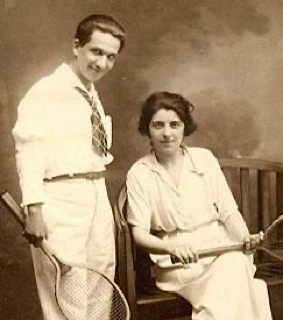
(Pictured: Dairine Vanston with Guillermo Padilla in Paris)


Leave a comment

Death of Landscape Artist Dairine Vanston

Dairine (Doreen) Vanston, Irish landscape artist who works in a Cubist style, dies in Enniskerry, County Wicklow on July 12, 1988.

Vanston is born in Dublin on October 19, 1903. She is the daughter of solicitor John S. B. Vanston, and sculptor Lilla Vanston (née Coffey). She attends Alexandra College, going on to study at Goldsmith’s College, London under Roger Bissière. She then goes to Paris to the Académie Ranson, being sent there following the advice of Paul Henry. While in Paris she meets Guillermo Padilla, a Costa Rican law student at the University of Paris. They marry in 1926 and she takes the name Vanston de Padilla. The couple lives for a time in Italy, before moving to San José, Costa Rica. The marriage breaks down in the early 1930s, at which point she returns to Paris with her son and studies with André Lhote. She is living in France at the outbreak of World War II with Jankel Adler, but is able to escape to London in 1940, and later to Dublin.

Vanston’s time in Paris leaves a lasting impression on her work, including use of primary colours and a strong Cubist influence. She belongs to what critic Brian Fallon calls the “Franco-Irish generation of painters who looked to Paris,” along with Mainie Jellett, Evie Hone, and Norah McGuinness. Her time spent living in Costa Rica in the late 1920s and early 1930s imbues her work with tropical and highly toned colours. In Dublin in 1935, she exhibits 17 paintings, largely Costa Rican landscapes, at Daniel Egan’s gallery on St. Stephen’s Green. This is the closest thing to a solo show she would mount, with this show also featuring Grace Henry, Cecil Ffrench Salkeld, and Edward Gribbon.

Meeting the English artist Basil Rakoczi, who is also living in Dublin during World War II, leads Vanston to become associated with The White Stag group. In November 1941, she exhibits for the first time at a group show with 24 other artists, including Patrick Scott. One work that is shown at this exhibition is the painting Keel dance hall, which demonstrates that she spends time in the west of Ireland. The most important event staged by the group is the Exhibition of subjective art, which takes place at 6 Lower Baggot St. in January 1944. The Dublin Magazine notes her work at this show as the most effective of the experimental vanguard. This work, Dying animal, is a Cubist work with semi-representation forms rendered in bold colours. In 1945, her work is featured in a White Stag exhibition in London of young Irish painters at the Arcade gallery, Old Bond St.

In 1947, Vanston spends almost a year in Costa Rica where she paints primarily in watercolours. Apart from this period, she lives and works in Dublin, living at 3 Mount Street Crescent near St. Stephen’s Church. At the inaugural Irish Exhibition of Living Art in 1943, she exhibits five works. At the first Exhibition of Independent Artists in 1960, of which she is a founder, she exhibits three landscapes and a work entitled War. She largely exhibits with the Independent Artists, the Irish Exhibition of Living Art, and the Oireachtas na Gaeilge, and does not exhibit with the Royal Hibernian Academy. Later in life, she exhibits with the Figurative Image exhibitions in Dublin, and is amongst the first painters chosen for Aosdána. A number of her works are featured in the 1987 exhibition, Irish women artists, from the eighteenth century to the present arranged by the National Gallery of Ireland and The Douglas Hyde Gallery.

Vanston dies on July 12, 1988, in a nursing home in Enniskerry, County Wicklow. Her work is greatly admired, but has received little by way of critical attention, which may have been to do with her slow rate of output. A number of her works have proved difficult to trace. She was a private person, even refusing to cooperate with the Taylor Galleries in the 1980s when they wanted to mount a retrospective of her work. The National Self-Portrait Collection in Limerick holds a work by Vanston.

(Pictured: “Landscape with Lake and Hills” (1964), oil on paper (monotype) by Dairine Vanston)


Leave a comment

Birth of Elizabeth Bowen, Novelist & Short Story Writer

Elizabeth Dorothea Cole Bowen CBE, Anglo-Irish novelist and short story writer notable for her fiction about life in wartime London, is born at 15 Herbert Place in Dublin on June 7, 1899.

Bowen is baptised in St. Stephen’s Church on Upper Mount Street. Her parents, Henry Charles Cole Bowen and Florence (née Colley) Bowen, later bring her to Bowen’s Court at Farahy, near Kildorrery, County Cork, where she spends her summers. When her father becomes mentally ill in 1907, she and her mother move to England, eventually settling in Hythe. After her mother dies in 1912, she is raised by her aunts. She is educated at Downe House School under the headship of Olive Willis. After some time at art school in London she decides that her talent lay in writing. She mixes with the Bloomsbury Group, becoming good friends with Rose Macaulay who helps her seek out a publisher for her first book, a collection of short stories entitled Encounters (1923).

In 1923 Bowen marries Alan Cameron, an educational administrator who subsequently works for the BBC. The marriage has been described as “a sexless but contented union.” She has various extra-marital relationships, including one with Charles Ritchie, a Canadian diplomat seven years her junior, which lasts over thirty years. She also has an affair with the Irish writer Seán Ó Faoláin and a relationship with the American poet May Sarton. She and her husband first live near Oxford, where they socialize with Maurice Bowra, John Buchan and Susan Buchan, and where she writes her early novels, including The Last September (1929). Following the publication of To the North (1932) they move to 2 Clarence Terrace, Regent’s Park, London, where she writes The House in Paris (1935) and The Death of the Heart (1938). In 1937, she becomes a member of the Irish Academy of Letters.[3]

In 1930 Bowen becomes the first (and only) woman to inherit Bowen’s Court, but remains based in England, making frequent visits to Ireland. During World War II she works for the British Ministry of Information, reporting on Irish opinion, particularly on the issue of neutrality. Her political views tend towards Burkean conservatism. During and after the war she writes among the greatest expressions of life in wartime London, The Demon Lover and Other Stories (1945) and The Heat of the Day (1948). She is awarded the CBE the same year.

Bowen’s husband retires in 1952 and they settle in Bowen’s Court, where he dies a few months later. Many writers visit her at Bowen’s Court from 1930 onwards, including Virginia Woolf, Eudora Welty, Carson McCullers, Iris Murdoch, and the historian Veronica Wedgwood. For years Bowen struggles to keep the house going, lecturing in the United States to earn money. In 1957 her portrait is painted at Bowen’s Court by her friend, painter Patrick Hennessy. She travels to Italy in 1958 to research and prepare A Time in Rome (1960), but by the following year she is forced to sell her beloved Bowen’s Court, which is demolished in 1960. In the following months, she writes for CBS the narrative of the documentary titled Ireland the Tear and the Smile which is realized in collaboration with Robert Monks as cameraman and associate producer. After spending some years without a permanent home, she finally settles at “Carbery”, Church Hill, Hythe, in 1965.

Bowen’s final novel, Eva Trout, or Changing Scenes (1968), wins the James Tait Black Memorial Prize in 1969 and is shortlisted for the Man Booker Prize in 1970. Subsequently, she is a judge that awards the 1972 Man Booker Prize to John Berger for G. She spends Christmas 1972 at Kinsale, County Cork with her friends, Major Stephen Vernon and his wife, Lady Ursula, daughter of Hugh Grosvenor, 2nd Duke of Westminster, but is hospitalised upon her return. Here she is visited by Cyril Connolly, Lady Ursula Vernon, Isaiah Berlin, Rosamund Lehmann, and her literary agent, Spencer Curtis Brown, among others.

In 1972 Bowen develops lung cancer. She dies at the age of 73 in University College Hospital in London on February 22, 1973. She is buried with her husband in St. Colman’s churchyard in Farahy, close to the gates of Bowen’s Court, where there is a memorial plaque to the author at the entrance to St. Colman’s Church, where a commemoration of her life is held annually.