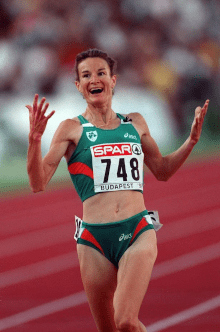
O’Sullivan first comes to prominence when winning the 1,500 metres at the 1991 Summer Universiade, before going on to finish fourth in the 3,000 metres final at the 1992 Summer Olympics in Barcelona. She then wins a silver medal in the 1,500 metres at the 1993 World Championships and a gold medal in the 5,000 metres at the 1995 World Championships. She is the favourite for the 5,000 metres title at the 1996 Summer Olympics in Atlanta but drops out of the final due to illness. Her 2,000 metres world record of 5:25.36, set in 1994, stands until 2017.
After a disappointing end to her 1997 season, O’Sullivan makes an impressive comeback in 1998. At the World Athletics Cross Country Championships at Marrakesh in March, she enters both the short course (4 km) and long course (8 km) events. On successive days, she wins both events, and her 4 km time of 12:20 is 14 seconds ahead of her nearest rival. She continues this form into the track season, where her performances in the 1,500 metres, 3,000 metres and 5,000 metres are close to those she had produced at her peak in 1994 and 1995.
At the European Athletics Championships in Budapest, the 1,500 metres and 5,000 metres finals, events at which O’Sullivan usually doubles at major championships, are scheduled to be run on the same day, thus denying her the opportunity of competing in both events. Undeterred, she enters the 5,000 metres and 10,000 metres, having never run the latter event before on the track. In the 10,000 metres final, on August 19, she shadows the leaders and then produces an astonishing 28.1 second final 200 metres to win the gold medal in 31:29.33 in her debut at the distance. Four days later, in the more familiar territory of the 5,000 metres, the pace is set by Romanian Gabriela Szabo, but again, O’Sullivan produces an explosive finishing sprint to defeat Szabo in 15:06.50.
At the IAAF World Cup held the following month in Johannesburg, South Africa, O’Sullivan wins her second major international 5,000 metres competition of the year, again sprinting clear of the opposition following a very slow pace. She concludes her year by winning the BupaGreat North Run.
At the 2000 Summer Olympics in Sydney, O’Sullivan wins a silver medal in the 5,000 metres. She wins silver medals in the 5,000 metres and 10,000 metres at the 2002 European Athletics Championships, and competes at her fourth Olympic Games in 2004. She is known for her dramatic kick, clocking 28-second final 200 metre splits in some of her races.
O’Sullivan is only one of two women (the other being Tirunesh Dibaba) who have won the short and long course World Cross Country title at the same championship (1998 in Marrakesh).
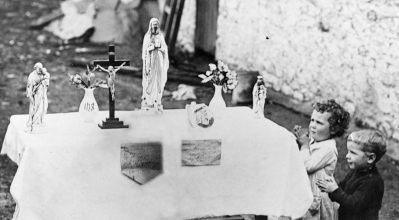
In August and September 1920 the town of Templemore in County Tipperary is the sight of alleged Marian apparitions. Thousands of people come to the town daily to see the apparitions. The affair occurs during the Irish War of Independence and results in a short-lived local truce between the Irish Republican Army (IRA) and Crown forces. When the truce ends, pilgrims stop coming to the town and the sightings end. The affair is sometimes referred to as the Templemore miracles.
In January 1919 the Irish War of Independence begins and lasts until July 1921. On the night of August 16, 1920, British soldiers of the Northamptonshire Regiment attack Templemore in reprisal for the killing of an Royal Irish Constabulary (RIC) officer by IRA volunteers earlier that day. They fire volleys and burn homes and businesses. No civilians or IRA men are killed but two soldiers die by accident in the fires.
Shortly after the attack, a sixteen-year old farm labourer named James Walsh claims that he was visited by the Virgin Mary in his cottage in the nearby townland of Curraheen. She told him that she was troubled by what was happening in Ireland. At her request he digs a hole in the ground in his bedroom and this soon fills with spring water. Afterwards he claims that all three statues of the Virgin Mary in his home began to bleed. He takes these statues to Templemore, where the bleeding is witnessed. One man who had been crippled for most of his life claims he is dancing in the streets after visiting Walsh’s cottage. He is the first of many who claim to have been cured of their ailments in the presence of Walsh or the statues.
Locals believe that divine intervention had prevented any of them being killed or wounded during the attack by the British. Walsh gathers people around the statues to say the Rosary in Irish. According to Ann Wilson, the statues are seen “as asserting the Catholic Irish identity of the population in the face of the non-Catholic British opponent, a superior spiritual power which would win out against the much more substantial, but merely worldly, advantages of the enemy.”
The affair is soon reported in local and national newspapers, which causes more pilgrims to go to Tipperary, both to see the statues in Templemore and Walsh’s cottage in Curraheen. On August 31, 1920 an RIC inspector writes to the Dublin Castle administration, estimating that over 15,000 pilgrims per day are coming down. Many come seeking cures for various illnesses and report that they had received them. One RIC officer resigns from his job to join a religious order. One soldier is reported to convert to Catholicism. The influx results in a large economic windfall for the town.
The official position of the church is one of ‘extreme reserve.’ The parishpriest Reverend Kiely refuses to see the statues. However, no effort is made to stop people making pilgrimages. Local IRA commander James Leahy notes a division between older and younger clergy in the local church, with older clergy generally being skeptical of Walsh while younger clergy are more enthusiastic about his claims.
Prior to the apparitions beginning, Wilson had given a Virgin Mary statue to a local RIC constable named Thomas Winsey, according to the Tipperary Star. Winsey placed the statue in the barracks. This too is said to be bleeding. One day a large crowd of pilgrims besiege the barracks and have to be physically restrained when they attempt to enter it. The statue is removed from the barracks. Police and military stop appearing on the street shortly after.
The IRA effectively takes over the area at this point. They keep order, organise traffic and help pilgrims. However, they do not appear in the streets in uniform and there is an informal truce in effect between them and Crown forces.
Local IRA commander James Leahy is concerned at the effect that tips given to IRA volunteers were having on discipline. He and other local commanders interrogate Walsh and stop believing him after this. He contacts IRA Director of Intelligence Michael Collins. Collins has Dan Breen interrogate Walsh. Breen reports that Walsh “was a fake.” Collins sarcastically replies, “One can’t take any notice of what you say, Breen, because you have no religion.”
Having failed to get the church to intervene and denounce Walsh, Leahy and other IRA members decide to restart the war anyway. On September 29, IRA volunteers attack a group of RIC men between Templemore and Curraheen. Two constables are killed. As anticipated, this brings police and army reinforcements to the area. Soldiers loot and desecrate sites outside Templemore associated with the pilgrimage. Rumours begin that the town itself would soon be attacked. Pilgrims flee the area. The statues apparently stop bleeding.
Interest in the statues and Walsh’s cottage largely end at this point, ending Templemore as a sight for pilgrimages. However, Michael Collins does receive a statue at his request. Upon receiving the statue, he smashes it. He discovers that inside is an alarm clock connected to fountain pen inserts containing sheep’s blood. When the clock strikes a certain time, it sends a spurt of blood out of the statue, giving the impression it is bleeding. It is not clear whether this statue performed in Templemore or was one of the ones owned by James Walsh. Collins had received complaints from a local priest that IRA volunteers had engineered statues that would bleed at intervals.
James Walsh is labelled as a possible spy by Dan Breen. At the request of Templemore clergy he is taken to Salesian College in Limerick and placed in the care of Father Aloysius Sutherland. He emigrates to Australia in 1923, settling in Sydney. Towards the end of his life he attempts to enter numerous religious orders but is unsuccessful due to a prior divorce. He dies in Sydney in 1977, having never returned to Ireland.
Historian John Reynolds states at a talk that the affair could have been a prank that got out of hand or was a money-making swindle. He speculates that Walsh may have been used by others, who really instigated it. He discounts the local IRA as having been the instigators.
The affair is not well-known despite gaining worldwide attention at the time. However, in November 2012 the Irish-language television broadcaster TG4 screens a documentary about it. In 2019 the book The Templemore Miracles, written by John Reynolds, is published.
(Pictured: Children pray beside statues that were reported to have started bleeding, Belfast Telegraph, http://www.belfasttelegraph.co.uk)
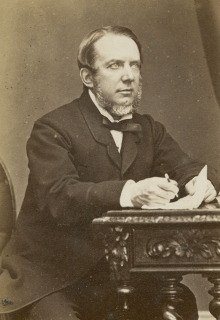
Reynolds is the son of Patrick Reynolds and his wife Elizabeth, née Bourke. Educated by the Carmelites at Clondalkin, Dublin, he later comes under the influence of the Benedictines when he volunteers for the Northern Territory mission of Bishop Rosendo Salvado Rotea, and is sent to Subiaco near Rome to train for the priesthood. He leaves after three years and goes to the Swan River Colony with Bishop Joseph Serra to continue his training at New Norcia, arriving at Fremantle in May 1855. Probably because of poor health, he leaves the Benedictines and in January 1857 goes to South Australia. He completes his training under the Jesuits at Sevenhill and is ordained in April 1860 by Bishop Patrick Geoghegan. He is parish priest at Wallaroo (where he builds the church at Kadina), Morphett Vale and Gawler. When Bishop Laurence Sheil dies in March 1872, he is appointed administrator of the diocese of Adelaide. On November 2, 1873, in Adelaide he is consecrated bishop by Archbishop John Bede Polding.
Reynolds has a large diocese and in 1872-80 travels over 52,000 miles in South Australia. The opening up of new agricultural districts, an increase in Irish migrants and diocesan debts had produced a grave shortage of clergy. But his most urgent problem is conflicts between and within the clergy and laity over education, especially the role to be played by the Sisters of St. Joseph of the Sacred Heart. He supports the Sisters, reopens schools closed by Archbishop Sheil and, though opposed by the Bishop of the Diocese of BathurstMatthew Quinn, helps the Superior, Mother Mary MacKillop, secure Rome’s approval for autonomy for her Sisterhood.
Reynolds is not a good administrator and his strenuous efforts to extend Catholic education after the Education Act of 1875 incurs alarming debts. In 1880-81 he visits Rome. On his return, increasingly concerned with finances, disturbed at the prospect of losing St. Joseph nuns and, to some extent misled by jealousy and intrigue, he dramatically reverses his policy towards the Sisterhood and on November 14, 1883, relieves Mother Mary of her duties as Mother Superior. Though the Plenary Council of the Bishops of Australasia, held in Sydney in 1885, support him, in 1888 Pope Leo XIII decrees a central government for the Sisterhood, to be located in Sydney. The council requests that Adelaide be raised to an archiepiscopal and metropolitan see and on September 11, 1887, Reynolds is invested archbishop by CardinalFrancis Moran.
Reynolds’s health is never robust and after a two-year illness he dies on June 12, 1893, in Adelaide, where he is buried. Although he is austere and hard-working, he leaves his successor church debts of over £56,000. A particularly fine preacher, he is widely respected for his missionary zeal and for an ecumenical spirit unusual for his time.
Doherty is the third son in a family of six. He is born on October 16, 1955, in the Andersonstown area of Belfast and is educated at St. Theresa’s Primary School and Glen Road Christian Brothers School (CBS). The Doherty brothers are known cyclists and sportsmen in the Andersontown area. He wins an AntrimGaelic football medal at minor level in 1971.
Doherty joins Fianna Éireann in 1971 and is interned by the British Government between February 1973 and November 1975. His brothers Michael and Terence are interned between 1972 and 1974.
Doherty works as an apprentice heating engineer. His girlfriend is Geraldine Scheiss and, although they never become formally engaged, they become very close toward the end of his life. Before his arrest, she had not known that he is in the IRA.
In August 1976, while he is out to set a bomb, the van in which he is riding is chased by the Royal Ulster Constabulary (RUC). During the chase Doherty manages to leave the van and hijack a car. He later ditches the car and is found one mile away from the car. He is convicted and sentenced to 18 years for possession of firearms and explosives, with another four years for the hijack.
Doherty starts his hunger strike on May 22, 1981. While on hunger strike, he is elected as an Anti H-Block TD for the Cavan–Monaghan constituency at the 1981 Irish general election, which is held on June 11. He receives 9,121 (15.1%) first preference votes and is elected on the fourth count. The two seats gained by Anti H-Block candidates denies TaoiseachCharles Haughey the chance to form a government, and the 22nd Dáil Éireann sees a Fine Gael–Labour Party coalition government come to office, with Garret FitzGerald as Taoiseach.
Doherty dies at the age of 25 on August 2, 1981. He lasts 73 days on hunger strike, the longest of the 1981 hunger strikers, and only one day short of Terence MacSwiney. He is the shortest-serving Dáil deputy ever, serving as a TD for only two months.
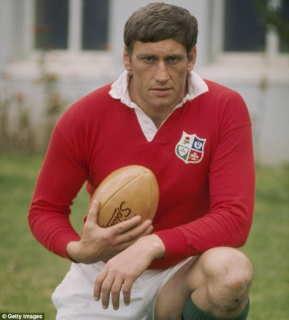
Owing to his father’s death when he is four years old, McBride spends most of his spare time helping out on his family farm. Because of this he does not start playing rugby until he is seventeen. He is educated at Ballymena Academy and plays for the school’s First XV. After he leaves he joins Ballymena R.F.C.
In 1962 McBride is selected to play for Ireland. His first Test on February 10, 1962 is against England at Twickenham Stadium. Later that year he is selected to tour South Africa with the British and Irish Lions.
McBride continues to play for Ireland throughout the 1960s and plays for Ireland when they first defeat South Africa in 1965, and when Ireland defeats Australia in Sydney, the first time a Home Nations team had defeated a major southern hemisphere team in their own country. He is again selected for the Lions in 1966, this time touring New Zealand and Australia. He tours South Africa with the Lions again in 1968.
McBride is selected to play for the Lions in their 1971 tour of New Zealand. Despite being criticized by some as being “over the hill,” he is made pack leader and helps the Lions to a test series win over New Zealand, their first and last series win over New Zealand. He receives an MBE in 1971 for services to rugby football.
McBride’s leadership qualities lead to his appointment as captain of the British and Irish Lions in their 1974 tour to South Africa. The test series is won 3–0, with one match drawn, the first Lions series ever won in South Africa. It is one of the most controversial and physical test match series ever played. At the time there are only substitutions if a doctor agrees that a player is physically unable to continue and there are no video cameras and sideline officials to keep the punching, kicking and head butting to a minimum. If the South Africans are to resort to foul play then the Lions decide “to get their retaliation in first.” The signal for this is to call “99,” which is a signal for the Lions to clobber their nearest rival players.
In 1975 as his international career is ending McBride plays his last game for Ireland at Lansdowne Road. The game is against France, and near the end of the match he scores his first test try for Ireland. It is the crowning moment of a great playing career. His last international game is against Wales on March 15, 1975. After retiring from playing the game, McBride coaches the Irish team and is manager of the 1983 Lions tour to New Zealand. Despite the test results being mainly poor, team camaraderie is high and some good wins are recorded in other games.
In 1997 McBride is an inaugural inductee into the International Rugby Hall of Fame. He has been asked to present test jerseys and give motivational speeches to Lions players prior to matches. In 2004 he is named in Rugby World magazine as “Rugby Personality of the Century.” He is a major supporter of the Wooden Spoon Society.
Barrington’s escapades, arrests, and trials are widely chronicled in the London press of his day. For over a century following his death, and still perhaps today, he is most celebrated for the line “We left our country for our country’s good.” The attribution of the line to Barrington is considered apocryphal since the 1911 discovery by Sydney book collector Alfred Lee of the 1802 book in which the line first appears.
In 1771 Barrington robs his schoolmaster in Dublin and runs away from school, becoming a member of a touring theatrical company at Drogheda under the assumed name of Barrington. At the Limerick races he joins the manager of the company in picking pockets. The manager is detected and sentenced to penal transportation, and Barrington flees to London, where he assumes clerical dress and continues his pickpocketing. At Covent Garden theatre he robs the Russian Count Orlov of a snuff box, said to be worth £30,000. He is detected and arrested but, as Count Orlov declines to prosecute, is discharged, though subsequently he is sentenced to three years’ hard labour for pocket-picking at Theatre Royal, Drury Lane.
On his release, Barrington is again caught at his old practices and sentenced to five years’ hard labour, but influence secures his release on the condition that he leave England. He accordingly goes for a short time to Dublin and then returns to London, where he is once more detected pocket-picking, and, in 1790, sentenced to seven years’ penal transportation.
One account states that on the voyage out to Botany Bay a conspiracy is hatched by the convicts on board to seize the ship. Barrington discloses the plot to the captain, and the latter, on reaching New South Wales, reports him favourably to the authorities, with the result that Barrington obtains a warrant of emancipation in 1792, becoming subsequently superintendent of convicts and later high constable of Parramatta.
While enjoying the beginnings of his prosperity in Australia, Barrington romances and cohabits with a native woman, Yeariana, who soon leaves him to return to her family. He says that Yeariana possessed “a form that might serve as a perfect model for the most scrupulous statuary.”
Barrington dies on December 27, 1804, at the age of 49 in Parramatta, New South Wales.
At some point in the 1785–1787 period Barrington marries, and the couple has a child, but the names of the wife and child, and their eventual fates, are not known.
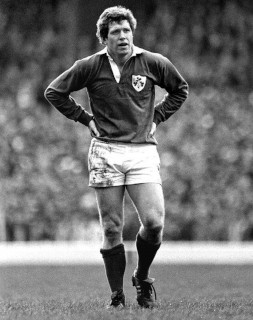
In 1971, Slattery first tours with the British and Irish Lions squad that toured New Zealand, missing out on a start in the third Test due to illness. With the back-row berths claimed by John Taylor, Peter Dixon and Mervyn Davies and still being a newcomer at international level he has to wait until 1974 for his shot at a Lions Test jersey. In the meantime, he plays for the Barbarian F.C. in the famous 1973 game against the All Blacks in Cardiff.
Slattery tours with the Lions again in 1974, playing in all four Tests and captaining the side for two provincial matches. In South Africa he is an invaluable member of the touring party that comes to be known as “the invincibles.” He starts all four Tests as the Lions win the series 3-0 and skippers the side twice during midweek tour matches.
For Ireland, Slattery captains their hugely successful touring side in Australia in 1979 when they win seven of the eight matches including the two Tests in Brisbane and Sydney. In 1982 he starts all four games of Ireland’s Triple Crown season, being denied the Grand Slam by France in the final game of the Five Nations Championship.
McDonnell is one of ten children. He attends a nearby Roman Catholic school. He marries Goretti in 1970 and moves into her sister’s house in Lenadoon. There are only two Catholic houses in this predominantly Ulster Protestanthousing estate, and their house is attacked on numerous occasions.
McDonnell agrees with the goals of the 1981 Irish hunger strike, namely: the right not to wear a prison uniform; the right not to do prison work; the right of free association with other prisoners; the right to organise their own educational and recreational facilities and the right to one visit, one letter and one parcel per week.
Although McDonnell is not involved in the first hunger strike in 1980, he joins Bobby Sands and the others in the second hunger strike the following year. During the strike he fights the general election in the Republic of Ireland, and only narrowly misses election in the Sligo–Leitrim constituency. He goes 61 days without food before dying on July 8, 1981. He has two children. His wife takes an active part in the campaign in support of the hunger strikers.
McDonnell is buried in the grave next to Bobby Sands at Milltown Cemetery in west Belfast. John Joe McGirl, McDonnell’s election agent in Sligo–Leitrim, gives the oration at his funeral. Quoting Patrick Pearse, he states, “He may seem the fool who has given his all, by the wise men of the world; but it was the apparent fools who changed the course of Irish history.”
Balfe’s musical gifts become apparent at an early age. He receives instruction from his father, a dancing master and violinist, and the composer William Rooke. His family moves to Wexford when he is a child.
In 1817, Balfe appears as a violinist in public, and in this year composes a ballad, first called “Young Fanny” and afterwards, when sung in Paul Pry by Lucia Elizabeth Vestris, “The Lovers’ Mistake”. In 1823, upon the death of his father, he moves to London and is engaged as a violinist in the orchestra of the Theatre Royal, Drury Lane. He eventually becomes the leader of that orchestra. While there, he studies violin with Charles Edward Horn and composition with Charles Frederick Horn.
While still playing the violin, Balfe pursues a career as an opera singer. He debuts unsuccessfully at Norwich in Carl Maria von Weber‘s Der Freischütz. In 1825, Count Mazzara takes him to Rome for vocal and musical studies and introduces him to Luigi Cherubini. In Italy, he also pursues composing, writing his first dramatic work, a ballet, La Perouse. He becomes a protégée of Gioachino Rossini‘s, and at the close of 1827, he appears as Figaro in The Barber of Seville at the Italian opera in Paris.
Balfe soon returns to Italy, where he is based for the next eight years, singing and composing several operas. In 1829 in Bologna, he composes his first cantata for the soprano Giulia Grisi, then 18 years old. He produces his first complete opera, I rivali di se stessi, at Palermo in the carnival season of 1829—1830.
Balfe returned to London in May 1835. His initial success takes place some months later with the premiere of The Siege of Rochelle on October 29, 1835, at Drury Lane. Encouraged by his success, he produces The Maid of Artois in 1836, which is followed by more operas in English. In July 1838, Balfe composes a new opera, Falstaff, for The Italian Opera House, based on The Merry Wives of Windsor, with an Italian libretto by S. Manfredo Maggione.
In 1841, Balfe founds the National Opera at the Lyceum Theatre, but the venture is a failure. The same year, he premieres his opera, Keolanthe. He then moves to Paris, presenting Le Puits d’amour in early 1843, followed by his opera based on Les quatre fils Aymon for the Opéra-Comique and L’étoile de Seville for the Paris Opera. Meanwhile, in 1843, he returns to London where he produces his most successful work, The Bohemian Girl, on November 27, 1843, at the Theatre Royal, Drury Lane. The piece runs for over 100 nights, and productions are soon mounted in New York, Dublin, Philadelphia, Vienna, Sydney, and throughout Europe and elsewhere.
From 1846 to 1852, Balfe is appointed musical director and principal conductor for the Italian Opera at Her Majesty’s Theatre. There he first produces several of Giuseppe Verdi‘s operas for London audiences. He conducts for Jenny Lind at her opera debut and on many occasions thereafter.
In 1851, in anticipation of The Great Exhibition in London, Balfe composes an innovative cantata, Inno Delle Nazioni, sung by nine female singers, each representing a country. He continues to compose new operas in English, including The Armourer of Nantes (1863), and writes hundreds of songs. His last opera, nearly completed when he dies, is The Knight of the Leopard and achieves considerable success in Italian as Il Talismano.
In all, Balfe composes at least 29 operas. He also writes several cantatas and a symphony. His only large-scale piece that is still performed regularly today is The Bohemian Girl.
William Vincent Wallace, Irish composer and musician, is born at Colbeck Street, Waterford, County Waterford on March 11, 1812. In his day, he is famous on three continents as a double virtuoso on violin and piano. Nowadays, he is mainly remembered as an opera composer of note, with key works such as Maritana (1845) and Lurline (1847/60), but he also writes a large amount of piano music that is much in vogue in the 19th century.
Wallace’s father, Spencer Wallace of County Mayo, becomes a regimental bandmaster with the North Mayo Militia based in Ballina. William is born while the regiment is stationed for one year in Waterford. The family returns to Ballina in 1816 and he spends his formative years there, taking an active part in his father’s band and already composing pieces by the age of nine for the band recitals.
Under the tuition of his father and uncle, Wallace writes pieces for the bands and orchestras of his native area. He becomes accomplished in playing various band instruments before the family leaves the Army in 1826, moving from Waterford to Dublin, and becoming active in music in the capital. He learns to play several instruments as a boy, including the violin, clarinet, organ, and piano. In 1830, at the age of 18, he becomes organist of the Roman Catholic Cathedral at Thurles, County Tipperary, and teaches music at the Ursuline Convent there. He falls in love with a pupil, Isabella Kelly, whose father consents to their marriage in 1832 on condition that Wallace become a Roman Catholic. The couple soon moves to Dublin where he is employed as a violinist at the Theatre Royal.
Economic conditions in Dublin deteriorate after the Acts of Union 1800 and the whole Wallace family decides to emigrate to Australia in 1835. Wallace’s party first lands at Hobart, Tasmania in late October, where they stay several months before moving on to Sydney in January 1836. The Wallaces open the first Australian music academy in April. Wallace has already given many celebrity concerts in Sydney, and being the first virtuoso to visit the Colony, becomes known as the “Australian Paganini.” He is also active in the business of importing pianos from London, but his main activity involves many recitals in and around Sydney under the patronage of the Governor, General Sir Richard Bourke. The most significant musical events of this period are two large oratorio concerts on behalf of the organ fund at St. Mary’s Cathedral in Sydney in 1836 and 1838, which he directs, and which utilize all the available musical talent of the Colony, including the recently formed Philharmonic [Choral] Society.
In 1838, Wallace separates from his wife and begins a roving career that takes him around the globe. In 1841, he conducts a season of Italian opera in Mexico City. Moving on to the United States, he stays in New Orleans for some years, where he is feted as a virtuoso on violin and piano, before reaching New York City, where he is equally celebrated, and publishes his first compositions (1843–44).
Wallace arrives in London in 1845 and makes various appearances as a pianist. In November of that year, his opera Maritana is performed at the Theatre Royal, Drury Lane with great success, and is later presented internationally. Maritana is followed by Matilda of Hungary (1847), Lurline (1847/60), The Amber Witch (1861), Love’s Triumph (1862) and The Desert Flower (1863). He also publishes numerous compositions for the piano.
In New York in 1843–1844, Wallace is associated with the early concert seasons of the New York Philharmonic Society, and in 1853 is elected an Honorary (Life) Member of the Society. In 1854, he becomes an American citizen after a marriage in New York to German-born pianist Hélène Stoepel, sister of composer Robert Stoepel. In later years, having returned to Europe for the premieres of his later operas, he develops a heart condition for which he receives treatment in Paris in 1864. He dies in poor circumstances at the Château de Bagen, Sauveterre-de-Comminges, in the Haute Garonne on October 12, 1865. He is buried in Kensal Green Cemetery, London.
(Pictured: William Vincent Wallace. Undated portrait by Mathew Brady, New York City, Library of Congress)






 seamus dubhghaill