seamus dubhghaill

Promoting Irish Culture and History from Little Rock, Arkansas, USA


Leave a comment

Birth of Irish Nationalist Joseph Mary Plunkett

joseph-mary-plunkett

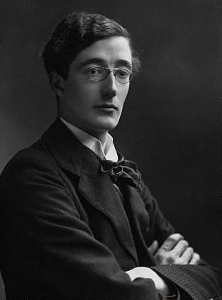
Joseph Mary Plunkett, Irish nationalist, poet, journalist, and a leader of the 1916 Easter Rising, is born at 26 Upper Fitzwilliam Street in Dublin on November 21, 1887.

Both his parents come from wealthy backgrounds, and his father, George Noble Plunkett, has been made a papal count. Despite being born into a life of privilege, young Joe Plunkett does not have an easy childhood.

Plunkett contracts tuberculosis at a young age. This is to be a lifelong burden. His mother is unwilling to believe his health is as bad as it is. He spends part of his youth in the warmer climates of the Mediterranean and North Africa. He spends time in Algiers where he studies Arabic literature and language and composes poetry in Arabic. He is educated at the Catholic University School and by the Jesuits at Belvedere College in Dublin and later at Stonyhurst College, in Lancashire, England, where he acquires some military knowledge from the Officers’ Training Corps. Throughout his life, Plunkett takes an active interest in Irish heritage and the Irish language and also studies Esperanto. He is one of the founders of the Irish Esperanto League. He joins the Gaelic League and begins studying with Thomas MacDonagh, with whom he forms a lifelong friendship. The two are both poets with an interest in theatre, and both are early members of the Irish Volunteers, joining their provisional committee. Plunkett’s interest in Irish nationalism spreads throughout his family, notably to his younger brothers George and John, as well as his father, who allows his property in Kimmage, south Dublin, to be used as a training camp for young men who wish to escape conscription in Britain during the First World War. Men there are instead trained to fight for Ireland.

Sometime in 1915 Plunkett joins the Irish Republican Brotherhood (IRB) and soon after is sent to Germany to meet with Roger Casement, who is negotiating with the German government on behalf of Ireland. Casement’s role as emissary is self-appointed, and, as he is not a member of the IRB, the organisation’s leadership wishes to have one of their own contact Germany to negotiate German aid for an uprising the following year. Plunkett is seeking, but not limiting himself to, a shipment of arms. Casement, on the other hand, spends most of his energies recruiting Irish prisoners of war in Germany to form a brigade to fight instead for Ireland. Some nationalists in Ireland see this as a fruitless endeavour, and prefer to seek weapons. Plunkett successfully gets a promise of a German arms shipment to coincide with the rising.

Plunkett is one of the original members of the IRB Military Committee that is responsible for planning the Easter Rising, and it is largely his plan that is followed. Shortly before the rising is to begin, Plunkett is hospitalised following a turn for the worse in his health. He has an operation on his neck glands days before Easter and has to struggle out of bed to take part in what is to follow. Still bandaged, he takes his place in the General Post Office with several other of the rising’s leaders, including Patrick Pearse and Tom Clarke, though his health prevents him from being terribly active. His energetic aide-de-camp is Michael Collins.

Following the surrender Plunkett is held in Kilmainham Gaol, and faces a court-martial. Seven hours before his execution by firing squad at the age of 28, he is married in the prison chapel to his sweetheart Grace Gifford, a Protestant convert to Catholicism, whose sister, Muriel, had years before also converted and married his best friend Thomas MacDonagh, who is also executed for his role in the Easter Rising. Plunkett is executed by firing squad on May 4, 1916, and is the fourth and youngest signatory of the Proclamation of the Irish Republic to be executed.

Plunkett’s brothers, George Oliver Plunkett and Jack Plunkett, join him in the Easter Rising and later become important Irish Republican Army (IRA) men. His father’s cousin, Horace Plunkett, is a Protestant and unionist who seeks to reconcile unionists and nationalists. Horace Plunkett’s home is burned down by the Anti-Treaty IRA during the Irish Civil War.

The main railway station in Waterford City is named after Plunkett as is Joseph Plunkett Tower in Ballymun. Plunkett barracks in the Curragh Camp, County Kildare is also named after him.

Leave a comment

Birth of Playwright & Poet Lennox Robinson

lennox-robinson

Esmé Stuart Lennox Robinson, playwright, poet, theatre producer, and director who is involved with the Abbey Theatre, is born in Westgrove, Douglas, County Cork, on October 4, 1886.

Robinson is raised in a Protestant and Unionist family in which he is the youngest of seven children. His father, Andrew Robinson, is a middle-class stockbroker who in 1892 decides to become a clergyman in the Church of Ireland in the small Ballymoney parish, near Ballineen in West Cork. A sickly child, Robinson is educated by private tutor and at Bandon Grammar School. In August 1907, his interest in the theatre begins after he goes to see an Abbey production of plays by W.B. Yeats and Lady Gregory at the Cork Opera House. He publishes his first poem that same year. His first play, The Cross Roads, is performed in the Abbey in 1909 and he becomes manager of the theatre towards the end of that year. He resigns in 1914 as a result of a disastrous tour of the United States but returns in 1919. He is appointed to the board of the theatre in 1923 and continues to serve in that capacity until his death. His Abbey career and production involvement can be found in the Abbey archives.

As a playwright, Robinson shows himself as a nationalist with plays like Patriots (1912) and Dreamers (1915). On the other hand, he belongs to a part of Irish society which is not seen as fully Irish. This division between the majority native Irish (Roman Catholics) on one side and the Anglo-Irish (Protestants) on the other can be seen in a play such as The Big House (1926), which depicts the burning of a Protestant manor home by the Irish Republican Army (IRA). Robinson’s most popular play is The Whiteheaded Boy (1916).

Other plays include Crabbed Youth and Age (1924), The Far Off Hills (1928), Drama at Inish (1933), and Church Street (1935). Drama at Inish, which is presented in London and on Broadway as Is Life Worth Living?, is revived as part of the 2011 season at the Shaw Festival at Niagara-on-the-Lake, Ontario, Canada, with Mary Haney in the role of Lizzie Twohig. Robinson’s fiction includes Eight Short Stories (1919). In 1931 he publishes a biography of Bryan Cooper, who had recently died. In 1951, he publishes Ireland’s Abbey Theatre, the first full-length history of the company.

He publishes an edited edition of Lady Gregory’s diaries in 1947. In 1958 he co-edits with Donagh MacDonagh The Oxford Book of Irish Verse. He is also a director and producer, in 1930 producing a play by Irish playwright Teresa Deevy called The Reapers. In 1931 he is co-director of A Disciple along with W.B. Yeats and Walter Starkie.

Melancholic and alcoholic in later years, Lennox Robinson dies in Monkstown, County Dublin, on October 15, 1958. He is buried St. Patrick’s Cathedral.


Leave a comment

Founding of the “Belfast News Letter”

belfast-news-letter

The Belfast News Letter, one of Northern Ireland‘s main daily newspapers and the oldest English language general daily newspaper still in publication, is founded on September 1, 1737.

The Belfast News Letter is originally printed in Joy’s Entry in Belfast. The Joys are a family of Huguenot descent who add much to eighteenth-century Belfast, noted for their compiling materials for its history. Francis Joy, who founds the paper, had come to Belfast early in the century from the County Antrim village of Killead. In Belfast, he marries the daughter of the town sovereign and sets up a practice as an attorney. In 1737, he obtains a small printing press which is in settlement of a debt and uses it to publish the town’s first newspaper at the sign of “The Peacock” in Bridge Street. The family later purchases a paper mill in Ballymena and are able to produce enough paper not only for their own publication but for the whole province of Ulster.

Originally published three times weekly, the Belfast News Letter becomes a daily in 1855. The title is now located at two addresses – a news section in Donegall Square South in central Belfast, and a features section in Portadown, County Armagh. Before the partition of Ireland, the Belfast News Letter is distributed island wide.

The newspaper’s editorial stance and readership, while originally republican, is now strongly unionist. Its primary competitors are the Belfast Telegraph and The Irish News. The Belfast News Letter has changed hands several times since the mid-1990s, and since 2005 is owned by the Johnston Press holding company Johnston Publishing (NI). The full legal title of the newspaper is the Belfast News Letter, although the word “Belfast” no longer appears on the masthead.

Historical copies of the Belfast News Letter, dating back to 1828, are available to search and view in digitised form at the British Newspaper Archive.