seamus dubhghaill

Promoting Irish Culture and History from Little Rock, Arkansas, USA


Leave a comment

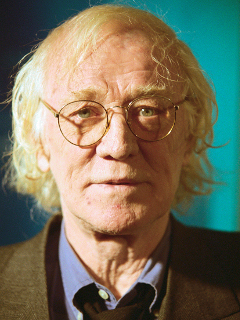
Death of Richard Harris, Actor & Singer

richard-harris

Richard St. John Harris, Irish actor and singer, dies in London from complications of Hodgkin’s lymphoma and pneumonia on October 25, 2002.

Harris is born to a farming family on October 1, 1930, in Limerick, County Limerick. He is the son of Mildred Josephine (Harty) and Ivan John Harris. He is an excellent rugby player with a strong passion for literature. Unfortunately, a bout of tuberculosis as a teenager ends his aspirations to a rugby career. He becomes fascinated with the theater and skips a local dance one night to attend a performance of Henry IV. He is hooked and goes on to learn his craft at the London Academy of Music and Dramatic Art, followed by several years in stage productions.

Harris makes his film debut in 1959 in the film Alive and Kicking and plays the lead role in The Ginger Man in the West End in 1959. His second film, Shake Hands with the Devil (1959), quickly scores regular work in films, including The Wreck of the Mary Deare (1959), The Night Fighters (1960) and a good role as a frustrated Australian bomber pilot in The Guns of Navarone (1961).

Harris’ breakthrough performance is as the quintessential “angry young man” in the sensational drama This Sporting Life (1963), for which he receives an Academy Award nomination. He then appears in the World War II commando tale The Heroes of Telemark (1965) and in the Sam Peckinpah-directed western Major Dundee (1965). He next shows up in Hawaii (1966) and plays King Arthur in Camelot (1967), a lackluster adaptation of the famous Broadway play. Better performances follow, among them a role as a reluctant police informer in The Molly Maguires (1970) alongside Sean Connery. He takes the lead role in the violent western A Man Called Horse (1970), which becomes something of a cult film and spawns two sequels.

As the 1970s progress, Harris continues to appear regularly on screen, however, the quality of the scripts vary from above average to woeful. His credits during this period include directing himself as an aging soccer player in the delightful The Hero (1971), the western The Deadly Trackers (1973), the big-budget “disaster” film Juggernaut (1974), the strangely-titled crime film 99 and 44/100% Dead (1974), with Connery again in Robin and Marian (1976), Gulliver’s Travels (1977), a part in the Jaws (1975) ripoff Orca (1977) and a nice turn as an ill-fated mercenary with Richard Burton and Roger Moore in the popular action film The Wild Geese (1978).

The 1980s kick off with Harris appearing in the silly Bo Derek vanity production Tarzan, the Ape Man (1981) and the remainder of the decade has him appearing in some very forgettable productions.

However, the luck of the Irish once again shines on Harris’ career and he scores rave reviews and another Oscar nomination for The Field (1990). He then locks horns with Harrison Ford as an Irish Republican Army sympathizer in Patriot Games (1992) and gets one of his best roles as gunfighter English Bob in the Clint Eastwood western Unforgiven (1992). He is firmly back in vogue and rewards his fans with more wonderful performances in Wrestling Ernest Hemingway (1993), Cry, the Beloved Country (1995), The Great Kandinsky (1995) and This Is the Sea (1997). Further fortune comes his way with a strong performance in the blockbuster Gladiator (2000) and he becomes known to an entirely new generation of film fans as Albus Dumbledore in the mega-successful Harry Potter and the Sorcerer’s Stone (2001) and Harry Potter and the Chamber of Secrets (2002). His final screen role is as “Lucius Sulla” in Julius Caesar (2002).

Harris is diagnosed with Hodgkin’s lymphoma in August 2002, reportedly after being hospitalised with pneumonia. He dies at University College Hospital in Fitzrovia, London on October 25, 2002, after spending his final three days in a coma. His body is cremated, and his ashes are scattered in the Bahamas, where he had owned a home.


Leave a comment

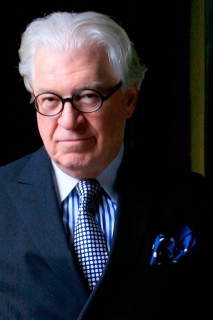
Birth of Frank Delaney, Novelist, Journalist & Broadcaster

frank-delaney

Frank Delaney, Irish novelist, journalist and broadcaster, is born in County Tipperary on October 24, 1942. He is the author of The New York Times best-seller Ireland, the non-fiction book Simple Courage: A True Story of Peril on the Sea, and many other works of fiction, non-fiction and collections.

Delaney begins working as a newsreader for the Irish state radio and television network RTÉ in 1970. In the early 1970s he becomes a news reporter for the BBC in Dublin, and covers an intense period of violence known as the Troubles. After five years of reporting on the violence, he moves to London to work in arts broadcasting. In 1978 he creates the weekly Bookshelf programme for BBC Radio 4, which covers books, writers and the business of publishing. Over the next five-and-a-half years he interviews over 1,400 authors, including Anthony Burgess, John Updike, Margaret Atwood, Christopher Isherwood and Stephen King.

On television, Delaney writes and presents for Omnibus, the BBC’s weekly arts series. He serves as the Literature Director of the Edinburgh Festival in 1980, and hosts his own talk show Frank Delaney in the early 1980s, which features many cultural and literary personalities. Afterward, he creates and presents Word of Mouth, the BBC’s radio programme about language, as well as a variety of radio and television documentaries including specials on James Joyce, Robert Graves, Ernest Hemingway in Paris, and the Shakespeare industry. He presents The Book Show on the Sky News satellite channel for many years.

Delaney’s first book, James Joyce’s Odyssey (1981), is well received and becomes a best-seller in the UK and Ireland. He writes and presents the six-part documentary series The Celts: Rich Traditions and Ancient Myths (1987) for the BBC, and writes the accompanying book. He subsequently writes five books of non-fiction (including Simple Courage), ten novels (including Ireland, Venetia Kelly’s Traveling Show and Tipperary), one novella, and a number of short stories. He also edits many compilations of essays and poetry.

After moving to the United States and settling in Kent, Connecticut in 2002, Delaney writes the screenplay for an adaptation of Goodbye, Mr. Chips (2002), which stars Martin Clunes and is shown on ITV in Britain, and in the Masterpiece Theatre series in the United States. His articles are published by newspapers in United States, the UK and Ireland, including on the Op-ed pages of The New York Times. He is a frequent public speaker, and is a contributor and guest on National Public Radio (NPR) programmes.

On Bloomsday 2010, Delaney launches Re:Joyce, a series of short weekly podcasts that go page-by-page through James Joyce’s Ulysses, discussing its allusions, historical context and references.

Frank Delaney dies in Danbury Hospital in Danbury, Connecticut on February 21, 2017 after suffering a stroke the previous day.


Leave a comment

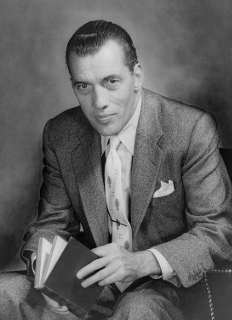
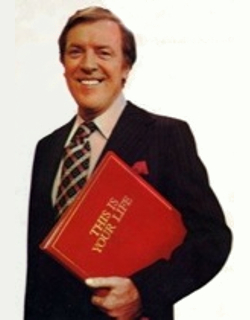
Death of Ed Sullivan,Television Personality

ed-sullivan

Edward Vincent Sullivan, Irish American television personality, sports and entertainment reporter, and syndicated columnist for the New York Daily News and the Chicago Tribune New York News Syndicate, dies in Manhattan, New York on October 13, 1974. He is principally remembered as the creator and host of the television variety show The Toast of the Town, later popularly and officially renamed The Ed Sullivan Show. Broadcast for 23 years from 1948 to 1971, it sets a record as the longest-running variety show in United States broadcast history.

Sullivan is born on September 28, 1901, in Harlem, New York City, the son of Elizabeth F. (née Smith) and Peter Arthur Sullivan, a customs house employee, and grows up in Port Chester, New York. He is a gifted athlete in high school, earning 12 athletic letters at Port Chester High School.

Sullivan lands his first job at The Port Chester Daily Item, a local newspaper for which he had written sports news while in high school and then joins the paper full-time after graduation. In 1919, he joins The Hartford Post. The newspaper folds in his first week there but he lands another job on The New York Evening Mail as a sports reporter. After The Evening Mail closes in 1923, he bounced through a series of news jobs. In 1927, he joins The Evening Graphic as sportswriter and eventually sports editor. In 1929, when Walter Winchell moves to the New York Daily Mirror, he is made Broadway columnist.

Throughout his career as a columnist, Sullivan dabbles in entertainment, producing vaudeville shows with which he appears as master of ceremonies in the 1920s and 1930s, directing a radio program over the original WABC (now WCBS) and organizing benefit reviews for various causes. In 1941, he is host of the Summer Silver Theater, a variety program on CBS radio, with Will Bradley as bandleader and a guest star featured each week.

In 1948, producer Marlo Lewis gets the CBS network to hire Sullivan to do a weekly Sunday night TV variety show, Toast of the Town, which later becomes The Ed Sullivan Show. Debuting in June 1948, the show is originally broadcast from the Maxine Elliott’s Theatre on West 39th Street in New York City. In January 1953, it moves to CBS-TV Studio 50, at 1697 Broadway in New York City, which in 1967 is renamed the Ed Sullivan Theater. The theater is later the home of the Late Show with David Letterman and The Late Show with Stephen Colbert. Television critics initially give the new show and its host poor reviews.

In the 1950s and 1960s, Sullivan is a respected starmaker because of the number of performers who become household names after appearing on the show, including Elvis Presley, The Beatles, The Dave Clark Five, B.J. Thomas and the Jackson Five. He has a knack for identifying and promoting top talent and pays a great deal of money to secure that talent for his show.

By 1971, the show’s ratings have plummeted. In an effort to refresh its lineup, CBS cancels the program along with some of its other longtime shows. Sullivan is angered and refuses to do a final show, although he remains with the network in various other capacities and hosts a 25th anniversary special in June 1973.

In early September 1974, X-rays reveal that Sullivan has an advanced growth of esophageal cancer. Doctors give him very little time to live, and the family chooses to keep the diagnosis secret from him. Sullivan, still believing his ailment to be yet another complication from a long-standing battle with gastric ulcers, dies five weeks later on October 13, 1974, at New York’s Lenox Hill Hospital. His funeral is attended by 3,000 at St. Patrick’s Cathedral, New York, on a cold, rainy day. He is interred in a crypt at the Ferncliff Cemetery in Hartsdale, New York.

Sullivan has a star on the Hollywood Walk of Fame at 6101 Hollywood Blvd.


Leave a comment

Birth of Maura O’Connell, Singer & Actress

maura-oconnell

Maura O’Connell, singer and actress known for her contemporary interpretations of Irish traditional music, strongly influenced by American country music, is born on September 16, 1958, in Ennis, County Clare.

Born into a musical family, O’Connell is the third of four sisters. Her mother’s family owns Costello’s fish shop in Ennis where O’Connell works until music becomes her full-time career. She grows up listening to her mother’s light opera, opera, and parlour music records. Her father’s interest leans towards the rebel ballads. Despite the presence of classical music in the house, O’Connell gets very involved in the local folk club scene and together with Mike Hanrahan, who later fronts folk rock outfit Stockton’s Wing, they perform a country music set, as a duo called “Tumbleweed.”

O’Connell attends St. Joseph’s Secondary School in Spanish Point from 1971 to 1974, where she takes part in the school choir. She is also a member of the “Cúl Aodha Choir”, led by Peader Ó Riada, that sings at the funeral of Willie Clancy in 1973.

O’Connell begins her professional musical journey during a six-week tour of the United States in 1980, as vocalist for the traditionally based Celtic group De Dannan. The following year, she is featured on the band’s landmark album, The Star Spangled Molly, which becomes something of a national phenomenon in her homeland. However, not long after joining the group she becomes very interested in the experimental roots music of America’s New Grass Revival when the bands’ paths cross. She moves to the United States in 1986, settling in Nashville, Tennessee. There she meets progressive bluegrass pioneers Béla Fleck and Jerry Douglas, with whom she works on most of her records.

O’Connell records her first solo album in 1983, however, it does not make any impact in Ireland or in the United States. She receives a Grammy Award nomination for her 1989 album, Helpless Heart, which is her first record released under Warner Bros. Records. Real Life Story (1990) and Blue is the Colour of Hope (1992) register a move toward a pop synthesis. Her versions of “Living in These Troubled Times” and Cheryl Wheeler‘s “Summerfly” become standout tracks on the 1993 album A Woman’s Heart, on four all-female overseas tours and on the 1994 follow-up album in her homeland. A Woman’s Heart Vol. 2 features her heartfelt renditions of Nanci Griffith‘s “Trouble in the Fields” and Gerry O’Beirne’s “Western Highway.” After numerous albums heavily inspired by American newgrass music, she returns to her Irish roots with the 1997 release Wandering Home.

As the new millennium approaches, O’Connell signs with Sugar Hill Records in late 2000 and begins working on her seventh album. Instead of working with her longtime producer Jerry Douglas, she has Ray Kennedy produce Walls and Windows, which is released in 2001, and features an eclectic collection of songs, including work by Kim Richey, Van Morrison, John Prine, Eric Clapton and Patty Griffin. Her 2004 album, Don’t I Know, contains musical textures added by everything from fiddles to clavinets, to lap steel guitar and B-3 organ.

Naked With Friends (2009) is O’Connell’s first a cappella album. Guest vocalists include Mary Black, Paul Brady, Moya Brennan, Jerry Douglas, Alison Krauss, Mairéad Ní Mhaonaigh, Tim O’Brien, Dolly Parton, Sarah Dugas, Kate Rusby and Darrell Scott. The album is nominated for a Grammy Award.

In addition to her solo work, O’Connell has collaborated with a number of Celtic, folk, pop and country artists, including Van Morrison, Brian Kennedy, Moya Brennan, Mary Black, John Prine, Jerry Douglas, Tim O’Brien, John Gorka, Béla Fleck, Robert Earl Keen, Dolly Parton and Shawn Colvin. She has also sung background vocals for a number of artists, including Van Morrison’s 1988 project with The Chieftains, Irish Heartbeat and Stockton’s Wing on Take A Chance.

Aside from the music world, Martin Scorsese casts O’Connell, scruffed up for the role, as an Irish migrant street singer in his 19th-century epic Gangs of New York, released in 2002.

O’Connell announces the end of her solo career in 2013.


Leave a comment

Birth of Film Director Roy William Neill

roy-william-neillRoy William Neill, English film director best known for directing the last eleven of the fourteen Sherlock Holmes films starring Basil Rathbone and Nigel Bruce, is born on September 4, 1887. These films were made between 1943 and 1946 and released by Universal Studios.

With his father as the captain, Neill is born on a ship off the coast of Ireland. His birth name is Roland de Gostrie. He begins directing silent films in 1917 and goes on to helm 107 films, 40 of them silent. Although most of his films are low-budget B-movies, he is known for directing films with meticulously lit scenes with carefully layered shadows that become the style of film noir in the late 1940s. In fact, his last film, Black Angel (1946), is considered a film noir.

Neill is also credited in some works as R. William Neill, Roy W. Neill, and Roy Neill. He lives in the United States for most of his career and is a U.S. citizen. He does go to London from 1935 until 1940 where better opportunities exist for American directors. During this period, British film producer Edward Black hires him to direct The Lady Vanishes. However, due to delays in production, Black hires Alfred Hitchcock to direct instead.

Roy William Neill dies at the age of 59 from a heart attack in London, England on December 14, 1946.


Leave a comment

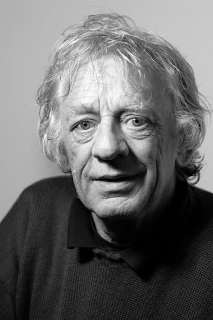
Death of Mick Lally, Stage, Film & Television Actor

mick-lally

Michael “Mick” Lally, Irish stage, film and television actor, dies in Dublin on August 31, 2010. He departs from a teaching career for acting during the 1970s. Though best known in Ireland for his role as Miley Byrne in the television soap Glenroe, his stage career spans several decades, and he is involved in feature films such as Alexander and the Academy Award-nominated The Secret of Kells. Many reports cite him as one of Ireland’s finest and most recognisable actors.

Born on November 10, 1945, and reared in the Gaeltacht village of Toormakeady, County Mayo, Lally is the eldest of a family of seven children. He goes to the local national school in Toormakeady and then to St. Mary’s College, Galway. After studying at University College Galway, he teaches history and Irish for six years in Archbishop McHale College in Tuam from 1969 to 1975 but quits teaching to pursue his career as a stage actor.

Lally begins his acting career with Taibhdhearc na Gaillimhe, Ireland’s national Irish language theatre, and is a founding member of the Druid Theatre Company. He receives an Irish Times/ESB Theatre Award Nomination for Best Actor for his role in Druid’s production of The Dead School. He also becomes a member of the Field Day Theatre Company, and stars in the company’s 1980 premiere of Brian Friel‘s play Translations. He first plays at the Abbey Theatre in 1977 in a production of Wild Oats and goes on to perform in many other Abbey productions.

In 1982, Lally stars in the TV series The Ballroom of Romance alongside Brenda Fricker. From 1983 he plays the role of Miley Byrne in the RTÉ soap Glenroe, reprising the character that he played earlier in Bracken in 1978. In 1979, he wins a Jacob’s Award for his performance as Miley in Bracken. He also has some musical success when “The By-road to Glenroe” goes to the top of the Irish charts in 1990. He is also involved in voice-over work, including a noted advertisement for Kilmeaden Cheese during the 1990s. Other TV appearances include roles in Tales of Kinvarna, The Year of the French and Ballykissangel.

In 1994, Lally plays the character Hugh in The Secret of Roan Inish, and in 1995 portrays Dan Hogan in the film adaptation of Maeve Binchy‘s Circle of Friends. Other film roles included Poitín, Our Boys, The Outcasts, A Man of No Importance and others. In later years, he provides the voice of Brother Aidan in the Academy Award-nominated The Secret of Kells, an animated film directed by Tomm Moore.

Lally appears in several TV advertisements encouraging elderly people to “release the equity tied up in their homes” during the Celtic Tiger.

Mick Lally dies on the morning of August 31, 2010, after a short stay in the hospital. The cause of death is reported as heart failure, arising from an underlying emphysema condition. His funeral takes place in Dublin on September 2, 2010. The Irish Examiner comments that the “nation has lost one of its favourite uncles.” Personalities from TV, film, theatre and politics attend, while President of Ireland Mary McAleese sends a letter and Lally receives a standing ovation at the end.


Leave a comment

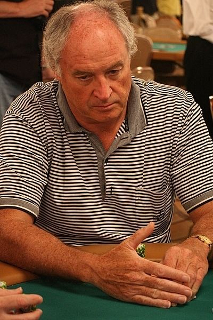
Birth of Professional Poker Player Donnacha “The Don” O’Dea

donnacha-odeaDonnacha “The Don” O’Dea, professional poker player, is born on August 30, 1948 in Dublin. In his youth, he is a swimmer and represents Ireland in the 1968 Summer Olympics. He is also the first Irish swimmer to swim 100m in less than one minute. His parents are actors Denis O’Dea and Siobhán McKenna.

O’Dea comes close to winning a World Series of Poker (WSOP) bracelet in 1983 in the $1,000 Limit Hold ’em event, finishing runner-up to Tom McEvoy. He makes the final table of the WSOP Main Event in 1983 where he finishes in sixth place behind McEvoy, the eventual winner. He finishes ninth in 1991 in the event won by Brad Daugherty. He also cashes in the Main Event in 1990 (32nd), 1994 (27th), 1996 (25th), and 2007 (171st).

In 1998, O’Dea wins a WSOP bracelet in Pot Limit Omaha Hold ’em with rebuys event, defeating two-time world champion, Johnny Chan in heads-up play.

O’Dea first appears on the Late Night Poker television programme in series 4, finishing fifth in a heat won by Robin Keston. He returns to the show in series 6, winning his heat and going on to finish fourth in the Grand Final.

In 2004, O’Dea wins the Poker Million tournament, overcoming Dave “The Devilfish” Ulliott in the eventual heads-up confrontation. The following year, he makes the final table again and finishes in fifth place.

O’Dea is the first member of the European Poker Players Hall of Fame. As of 2009, his total live tournament winnings exceed $1,000,000. His 23 cashes as the WSOP account for $471,687 of those winnings.

His son, Eoghan O’Dea, is also a poker player who competes primarily online under the moniker “intruder123.” In December 2008 he follows up a $300,000 online win with a 2nd-place finish in the Poker Million for $260,000. In 2011, he makes a deep run at the Main Event of 2011 World Series of Poker earning his place in the November Nine.


Leave a comment

Death of Actress Maureen Toal

maureen-toal

Maureen Toal, stage and television actress whose professional career lasts for more than sixty years, dies on August 24, 2012.

Toal is born in Fairview, Dublin on September 7, 1930. She begins performing at the Abbey Theatre in Dublin in 1946, when she is just sixteen years old. She becomes a fixture at the theater, portraying some of the strongest roles on the stage including Bessie Burgess in The Plough and the Stars and the Widow Quinn in The Playboy of the Western World. She also appears in several one woman shows, including Baglady, which is written by Irish playwright Frank McGuinness.

In 1952, Toal marries fellow Irish actor Milo O’Shea. They divorce in 1974.

Playwright John B. Keane writes the role of Mame Fadden in his play The Change in Mame Fadden specifically for Toal. Hugh Leonard also pens characters in his plays A Life and Great Big Blonde with the intention of casting Toal in the roles. Toal is best known to Irish television audiences for her role as Teasy McDaid on RTÉ One‘s Glenroe during the 1990s.

In 2010, Toal is awarded an honorary doctorate in literature at University College Dublin for which McGuinness delivers the citation, describing her as “our greatest actress.” He also praises her performances including Maggie in Arthur Miller‘s After the Fall and particularly her lead roles in his own plays, The Factory Girls and Baglady, where, he says, she tells the toughest of stories with devastating honesty. “Hers is the look out of which were fashioned the masks of comedy and tragedy.”

Maureen Toal dies in her sleep at her home in Sandycove, Dublin, on August 24, 2012, two weeks before her 82nd birthday. She is survived by her son, Colm O’Shea, two sisters, one brother, and three grandchildren.


Leave a comment

Birth of Benedict Kiely, Writer & Broadcaster

benedict-kiely

Benedict “Ben” Kiely, Irish writer and broadcaster, is born in Dromore, County Tyrone on August 15, 1919, the youngest of six children.

In 1920, the family moves from Dromore to Omagh. After living for a short time in Castle Street and Drumragh, the family finally settles in St. Patrick’s Terrace in the Gallows Hill area of Omagh. This area is to be a lasting inspiration for Kiely.

Kiely begins to feel the urge to become a writer during his teenage years. He has a keen interest in the work of George Bernard Shaw, H. G. Wells and Jonathan Swift. In 1936, after completing his education at Mount St. Columba Christian Brothers School in Omagh, he goes to work as a sorting clerk in the Omagh Post Office.

However, Kiely soon realises that the post office will not provide him with the life of the scholar which he so desires. In the spring of 1937, he leaves Omagh and begins a new life in Emo Park, Portarlington, County Laois, where he decides to train as a Jesuit priest. His life as a Jesuit is not meant to be for, exactly a year later, in the spring of 1938, he suffers a serious spinal injury, which results in a lengthy stay in Cappagh National Orthopaedic Hospital in Finglas, Dublin. During his hospitalisation, he is given plenty of time to think about the course his life has already taken, and about a course it might take. He also realises that he lacks a vocation to the priesthood and abandons his training as a Jesuit.

When Kiely gets out of hospital in 1939, he returns to Omagh to recover from his back problem. The following year, he begins working as a part-time journalist in the weekly Catholic Standard newspaper. In 1943, he graduates from National University of Ireland with a B.A. in History and Letters.

In 1945, Kiely begins working for the Irish Independent, where he is employed as a journalist and critic. In 1950, he joins The Irish Press as a literary editor. In 1964, he moves to the United States where, over a period of four years, he is a Writer-in-Residence at Emory University, visiting professor at the University of Oregon, and Writer-in-Residence at Hollins College (Virginia). In 1968, he returns to Ireland. In the spring of 1976, he is Distinguished Visiting Professor at the University of Delaware. He continues to receive acclaim for his writing and journalism, a career which spans over six decades, receiving the Award for Literature from the Irish Academy of Letters. By now, he is one of Ireland’s best-known writers. In 1996, he is named Saoi of Aosdána, the highest honour given by the Arts Council of Ireland.

Kiely visits Omagh in 2001 which is marked by the unveiling of a plaque outside his childhood home on Gallows Hill by Omagh’s Plain Speaking Community Arts group. Every September an event is held in Omagh called The Benedict Kiely Literary Weekend to celebrate his many achievements.

Benedict Kiely dies in St. Vincent’s University Hospital in Dublin on February 9, 2007.


Leave a comment

Death of Robin Williams, Actor & Comedian

robin-williams

Robin McLaurin Williams, American actor and comedian, is found dead in his home in Paradise Cay, California on August 11, 2014, in what is believed to be suicide via asphyxiation.

Williams is born at St. Luke’s Hospital in Chicago, Illinois on July 21, 1951, the son of Robert Fitzgerald Williams, an Irish American and a senior executive in Ford Motor Company‘s Lincoln-Mercury Division. He had English, Irish, Scottish, Welsh, German, and French ancestry.

He starts as a stand-up comedian in San Francisco and Los Angeles in the mid-1970s. He is credited with leading San Francisco’s comedy renaissance. After rising to fame as an alien called Mork in the TV sci-fi sitcom series Mork & Mindy, he establishes a career in both stand-up comedy and feature film acting. He is known for his improvisational skills.

After his first starring film role in Popeye (1980), Williams stars or co-stars in various films that achieve both critical acclaim and financial success, including Good Morning, Vietnam (1987), Dead Poets Society (1989), Aladdin (1992), The Birdcage (1996), and Good Will Hunting (1997). He also stars in widely acclaimed films such as The World According to Garp (1982), Moscow on the Hudson (1984), Awakenings (1990), The Fisher King (1991), One Hour Photo (2002), and World’s Greatest Dad (2009), as well as box office hits such as Hook (1991), Mrs. Doubtfire (1993), Jumanji (1995) and Night at the Museum (2006).

Williams wins the 1997 Academy Award for Best Supporting Actor for his performance as psychologist Sean Maguire in Good Will Hunting. He also receives two Primetime Emmy Awards, seven Golden Globe Awards, two Screen Actors Guild Awards, and four Grammy Awards throughout his career.

On August 11, 2014, Williams commits suicide at his home in Paradise Cay, California, at the age of 63. His wife attributes his suicide to his struggle with diffuse Lewy body dementia. His body is cremated at Montes Chapel of the Hills in San Anselmo and his ashes are scattered in San Francisco Bay on August 21.

Williams’s death instantly becomes global news. The entertainment world, friends, and fans respond to his death through social and other media outlets. U.S. President Barack Obama said of Williams, “He was one of a kind. He arrived in our lives as an alien—but he ended up touching every element of the human spirit.”