seamus dubhghaill

Promoting Irish Culture and History from Little Rock, Arkansas, USA


Leave a comment

The Battle of Culloden

culloden-moor-memorial

The Battle of Culloden, the final confrontation of the Jacobite rising of 1745 known in Scotland as simply “The ’45,” is fought on April 16, 1746. The Jacobite army of Charles Edward Stuart, also known as Bonnie Prince Charlie, is decisively defeated by a British government force under William Augustus, Duke of Cumberland, on Drummossie Moor near Inverness in the Scottish Highlands. It is the last pitched battle fought on British soil.

Charles is the eldest son of James Francis Edward Stuart, the exiled Stuart claimant to the British throne. Believing there is support for a Stuart restoration in both Scotland and England, he lands in Scotland in July 1745. The Jacobite Army is often assumed to have been largely composed of Gaelic-speaking Catholic Highlanders. In reality nearly a quarter of the rank and file are recruited in Aberdeenshire, Forfarshire and Banffshire, with another 20% from Perthshire. Although the army is predominantly Scots it contains a few English recruits plus significant numbers of Irish, Scottish and French professionals in French service with the Irish Brigade and Garde Écossaise.

After amassing his army of Scots Jacobite supporters, Charles takes Edinburgh by September and defeats a British government force at Prestonpans. The government recalls 12,000 troops from the Continent to deal with the rising. A Jacobite invasion of England reaches as far as Derby before turning back, having attracted relatively few English recruits.

The Jacobites, with limited French military support, attempt to consolidate their control of Scotland, whereby early 1746 they are opposed by a substantial government army. A scrambled Jacobite victory at Falkirk fails to change the strategic situation. With supplies and pay running short and with the government troops resupplied and reorganised under the Duke of Cumberland, son of British monarch George II, the Jacobite leadership has few options left other than to stand and fight. The two armies eventually meet at Culloden, on terrain that gives Cumberland’s larger, well-rested force the advantage.

The battle lasts only an hour, with the Jacobites suffering a bloody defeat with between 1,500 and 2,000 killed or wounded. Approximately 300 government soldiers are killed or wounded. While perhaps as many as 6,000 Jacobites remain in arms in Scotland, the leadership takes the decision to disperse, effectively ending the rising. The men of the combined Irish regiments, under the command of Brigadier Walter Stapleton, are the last off the field, covering the retreat of Prince Charles and the remnants of his army. The Irish had given their blood to the cause of a Stuart King for the last time. Most of the surviving Irish surrender at Inverness. The prince himself eventually manages to make his escape to France.

Culloden and its aftermath continue to arouse strong feelings. The University of Glasgow awards the Duke of Cumberland an honorary doctorate, but many modern commentators allege that the aftermath of the battle and subsequent crackdown on Jacobite sympathisers were brutal, earning Cumberland the sobriquet “Butcher.” Efforts are subsequently made to further integrate the comparatively undeveloped Scottish Highlands into the Kingdom of Great Britain. Civil penalties are introduced to undermine the Scottish clan system, which had provided the Jacobites with the means to rapidly mobilise an army.

Today, a visitor centre is located near the site of the battle. This centre is first opened in December 2007, with the intention of preserving the battlefield in a condition similar to how it was on April 16, 1746. One difference is that it currently is covered in shrubs and heather. During the 18th century, however, the area was used as common grazing ground, mainly for tenants of the Culloden estate. Those visiting can walk the site by way of footpaths on the ground and can also enjoy a view from above on a raised platform. Possibly the most recognisable feature of the battlefield today is the 20-foot-tall memorial cairn, erected by Duncan Forbes in 1881. In the same year Forbes also erects headstones to mark the mass graves of the clans.


Leave a comment

Birth of Samuel Lover, Songwriter, Novelist & Painter

samuel-lover-1

Samuel Lover, Irish songwriter, composer, novelist, and a painter of portraits, chiefly miniatures, is born at 60 Grafton Street in Dublin on February 24, 1797. He is also known as “Ben Trovato” (“well invented”) and is the grandfather of Victor Herbert. He is noted as saying, “When once the itch of literature comes over a man, nothing can cure it but the scratching of a pen.”

Lover goes to school at Samuel Whyte’s at 79 Grafton Street, now home to Bewley’s café. By 1830 he is secretary of the Royal Hibernian Academy (RHA) and lives at 9 D’Olier Street. In 1835 he moves to London and begins composing music for a series of comic stage works. To some of them, like the operetta Il Paddy Whack in Italia (1841), he contributes both words and music, for others he merely contributes a few songs.

Lover produces a number of Irish songs, of which several – including The Angel’s Whisper, Molly Bawn, and The Four-leaved Shamrock – attain great popularity. He also writes novels, of which Rory O’Moore and Handy Andy are the best known, and short Irish sketches which, with his songs, he combines into a popular entertainment called Irish Nights or Irish Evenings. With the latter, he tours North America between 1846 and 1848. He joins with Charles Dickens in founding Bentley’s Magazine.

Lover’s grandson is composer Victor Herbert whose mother is Lover’s daughter Fanny. Herbert is best remembered for his many successful musicals and operettas that premier on Broadway. As a small child he lives with the Lovers in a musical environment following the divorce of his mother.

Samuel Lover dies on July 6, 1868, in Saint Helier on the island of Jersey. A memorial in St. Patrick’s Cathedral, Dublin summarises his achievements:

“Poet, painter, novelist and composer, who, in the exercise of a genius as distinguished in its versatility as in its power, by his pen and pencil illustrated so happily the characteristics of the peasantry of his country that his name will ever be honourably identified with Ireland.”


Leave a comment

Battle of Campo Santo

battle-of-campo-santo

During the War of Austrian Succession, the Irish Brigade of Spain fights at the Battle of Campo Santo in Camposanto, Italy on February 8, 1743. The regiments of Ultonia, Irlanda, and Hibernia form the Irish Brigade fighting in Italy in a Spanish army, led by Gen. Jean Bonaventure Thierry du Mont, comte de Gages. The Spaniards and their Neapolitan allies are fought to a standstill by the Austrians and their Sardinian allies under Field Marshal Otto Ferdinand Graf von Abensperg und Traun on the Panaro.

In January 1743, General De Gages’ 13,000 strong Spanish army lay at Bologna, south of the Panaro. Count Traun’s Austrian and Piedmont-Sardinian army of 11,000 lay to the north of the river, blocking De Gages’ attempts to cross the formidable barrier. Traun prefers a maneuvering defense to risking his army in a pitched battle with his opponent, but concerns in Madrid are more political than strategic. Needing a victory, Philip V of Spain and his Queen Elisabeth Farnese demand that De Gages launch an offensive or tender his resignation. Accordingly, leaving Bologna on the night of February 3, De Gages slips across the Panaro and enters the Duchy of Modena, seeking a decisive encounter with Traun.

Fortunately for De Gages, Marshal Traun is ready to oblige him. Aware of the criticism leveled at him in Vienna where his enemies are trying to relieve him of his command, and also that Spain’s recent seizure of Savoy might well induce the King of Sardinia to negotiate with the Spanish Crown, the Marshal decides that a victory will quell the uproar and induce Austria’s allies to think twice about negotiating. Gathering up his army, Traun moves to block De Gages’ path and prevent him from advancing further into Modena. The two armies meet at the village of Camposanto.

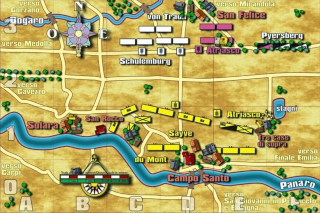
On the morning of the battle, De Gages draws up his army on the outskirts of the village in the traditional fashion with his infantry in the center and the cavalry on the wings. Traun also draws up his army in the same manner, but being slightly outnumbered, he chooses to gamble with an unorthodox strategy. Instead of aligning himself directly opposite the Spaniards, he shifts his troops to the northwest, which means that the center of Traun’s infantry is directly opposite the gap between Gages’ infantry and the right wing of cavalry. Although this means that Traun would have a greater superiority of numbers on this wing and that he could also deliver a flank attack on the Spanish right, his own right flank would, however, be vulnerable to a Spanish flank attack. Marshall is relying on the troops of that wing to delay the Spanish long enough for the action on his other wing to be decisive.

Matters are helped when De Gages chooses 4:00 in the afternoon to launch the attack, which leaves only a few hours of daylight for a battle. The Spanish are initially successful on both wings, where their cavalry drives off the Austro-Piedmontese cavalry, wounding Count Aspremont in the process and leaving the Austrian infantry vulnerable. However instead of reforming to attack the infantry, the Spanish chase them off the field. Traun stabilises his left flank, and leads his infantry into the attack against the Spanish. Meanwhile, Count Schulenberg regroups the Austrian cavalry on the Austrian right, and launches a counterattack against the Spanish cavalry. On the other flank Aspremont’s replacement, General Leutrum, leads his wing forward as well, smashing the Spanish right wing. Due to darkness it is necessary for both armies to withdraw the field. The Spanish back across the Panaro towards Bologna. Due to the smoke and darkness, many units lose their way. The 1st Guadalaxara marches in the direction of the advancing austro-sardian infantry columns, and it has to surrender after a short defence inside the walls of a farm.

Casualties in the battle are 1,755 dead, 1,307 wounded and 824 prisoners for the Spanish, while the Austro-Piedmontese lose 397 dead and 1,153 wounded or prisoners. Traun himself has two horses shot from under him during the battle.

De Gages retreats to Bologna but on March 26 he is also forced to retreat to Rimini. Despite this, the battle is widely considered a victory in Madrid, and de Gages is awarded a victory title, Count of Campo Santo. Following the battle, France promises support and co-operation with the Spanish, but for the moment Traun has saved North Italy for Maria Theresa.

Once again hundreds of Irishmen die many miles from home for “every cause but their own.”


1 Comment

Archibald Hamilton Rowan Tried for Distribution of Seditious Paper

archibald-hamilton-rowan

Archibald Hamilton Rowan, a founding member of the Dublin Society of United Irishmen, is tried on a charge of distributing seditious paper on January 29, 1794.

Hamilton Rowan is born in the home of his grandfather, William Rowan, in London on May 1, 1751, and lives there with his mother and sister for much of his early life. He is admitted to Queens’ College, Cambridge in 1768, but is expelled from the college and rusticated for an attempt to throw a tutor into the River Cam. He is sent for a period in 1769 to Warrington Academy.

Hamilton Rowan travels throughout the 1770s and 1780s, visiting parts of Europe, the Americas, and North Africa. In 1781 he marries Sarah Dawson in Paris, France. The couple has ten children. He is the godfather of the Irish mathematician William Rowan Hamilton.

Hamilton Rowan returns to Ireland in his thirties, in 1784, to live at Rathcoffey near Clane in County Kildare. He becomes a celebrity and, despite his wealth and privilege, a strong advocate for Irish liberty. That same year he joins the Killyleagh Volunteers, a militia group later associated with radical reform. He first gains public attention by championing the cause of fourteen-year-old Mary Neal in 1788. Neal had been lured into a Dublin brothel and then assaulted by Lord Carhampton. Hamilton Rowan publicly denounces Carhampton and publishes a pamphlet A Brief Investigation of the Sufferings of John, Anne, and Mary Neal in the same year. An imposing figure at more than six feet tall, his notoriety grows when he enters a Dublin dining club threatening several of Mary Neal’s detractors, with his massive Newfoundland at his side and a shillelagh in hand. The incident wins him public applause and celebrity as a champion of the poor.

In 1790 Hamilton Rowan joins the Northern Whig Club, and by October has become a founding member of the Dublin Society of United Irishmen, working alongside famous radicals such as William Drennan and Theobald Wolfe Tone. He is arrested in 1792 for seditious libel when caught handing out “An Address to the Volunteers of Ireland,” a piece of United Irish propaganda. Unknown to him, from 1791 Dublin Castle has a spy in the Dublin Society, Thomas Collins, whose activity is never discovered. From February 1793 Britain and Ireland join the War of the First Coalition against France, and the United Irish movement is outlawed in 1794.

Hamilton Rowan’s reputation for radicalism and bluster grow during this time when he leaves Ireland to confront the Lord Advocate of Scotland about negative comments made in respect to his character and that of members of the Society of United Irishmen. As a prominent member of the Irish gentry, he is an important figure in the United Irishmen and becomes the contact for the Scottish radical societies as a result of his visit. Upon his return to Dublin, he is charged and was found guilty of seditious libel, even though he is excellently defended by the famous John Philpot Curran. He is sentenced to two years imprisonment, receives a fine of £500, and is forced to pay two assurities for good behaviour of £1,000 each. In January 1794 he retires to his apartments in Dublin’s Newgate Prison.

In the years following, Hamilton Rowan spends time in exile in France, the United States and Germany. He is allowed to return to Ireland in 1806. He returns to the ancestral home of Killyleagh Castle, County Down, receiving a hero’s welcome. While he has agreed to be a model citizen under the conditions of his return to Ireland, he remains active in politics and retains his youthful radicalism. Following his last public appearance at a meeting in the Rotunda in Dublin on January 20, 1829, he is lifted up by a mob and paraded through the streets.

Hamilton Rowan dies at the age of 84 in his home on November 1, 1834. He is buried in the vaults of St. Mary’s Church, Dublin.


Leave a comment

Birth of Politician Henry Welbore Agar-Ellis

henry-welbore-agar-ellis

Henry Welbore Agar-Ellis, 2nd Viscount Clifden, Irish politician styled The Honourable Henry Agar between 1776 and 1789, is born Henry Welbore Agar at Gowran Castle, Gowran, County Kilkenny on January 22, 1761. He is perhaps the only person to sit consecutively in four different Houses of Parliament – the two in Ireland and the two in England.

Agar is the eldest son of James Agar, 1st Viscount Clifden, son of Henry Agar and Anne, daughter of Welbore Ellis, Bishop of Meath, and sister of Welbore Ellis, 1st Baron Mendip. His mother is Lucia, daughter of Colonel John Martin, of Dublin. He is the nephew of Charles Agar, 1st Earl of Normanton.

Agar is returned to the Irish House of Commons for both Gowran and Kilkenny County in 1783, but chooses to sit for the latter, a seat he holds until 1789, when he succeeds his father in the Irish viscountcy and enters the Irish House of Lords. He is appointed Clerk of the Privy Council of Ireland in 1785, which he remains until 1817.

In 1793 Agar is elected to the House of Commons of the United Kingdom as one of two representatives for Heytesbury. He succeeds his great-uncle Lord Mendip as second Baron Mendip in 1802 according to a special remainder in the letters patent. This is an English peerage and forces him to resign from the House of Commons and enter the House of Lords. Two years later he assumes by Royal licence the surname of Ellis in lieu of Agar.

Lord Clifden marries Lady Caroline , daughter of George Spencer, 4th Duke of Marlborough, in 1792. His only son, George, becomes a successful politician and is created Baron Dover in his father’s lifetime, but predeceases his father. Lady Clifden dies at the age of 50 at Blenheim Palace in November 1813. Lord Clifden remains a widower until his death at the age of 75 at Hanover Square, Mayfair, London, on July 13, 1836. He is succeeded in his titles by his grandson Henry, the eldest son of Lord Dover.


Leave a comment

Birth of Richard “Humanity Dick” Martin

richard-martin

Colonel Richard Martin, Irish politician and campaigner against cruelty to animals, is born in Ballynahinch, County Galway on January 15, 1754. He is known as “Humanity Dick,” a nickname bestowed on him by King George IV. He succeeds in getting the pioneering Cruel Treatment of Cattle Act 1822, nicknamed ‘Martin’s Act,’ passed into British law.

Martin is brought up at Dangan House, situated on the River Corrib, four miles upriver from the town of Galway. The Martins are one of the Tribes of Galway. They own one of the biggest estates in all of Great Britain and Ireland as well as much of the land in Connemara. He studies at Harrow School in London and then gains admission to Trinity College, Cambridge on March 4, 1773. He does not graduate with a degree but studies for admission to the bar and is admitted to Lincoln’s Inn on February 1, 1776. He serves as a lawyer in Ireland and becomes High Sheriff of Galway Town in 1782.

Martin is elected to represent County Galway in Parliament in 1800. He is very popular with people in Galway and is well known as a duelist and as a witty speaker in the houses of Parliament. He campaigns for Catholic emancipation but is best remembered for his work to outlaw cruelty to animals. He earns the nickname “Humanity Dick” because of his compassion for the plight of animals at that time.

Through Martin’s work the Cruel Treatment of Cattle Act is enacted in 1822. This is the first piece of legislation which aims to protect animals from cruelty. Most people do not recognise animal rights in those days and people often make fun of him. Cartoons of him with donkey ears appears in the newspapers of the day.

After having the Bill passed by Parliament, Martin actively seeks out cases where cruelty has been inflicted on animals on the streets of London. He is responsible for bringing many people to court for cruelty against horses. He often pays half the fine of the accused in cases where the accused cannot afford it and seems genuinely sorry for his actions.

Due to Martin’s profile as a politician and as the drafter of the anti-cruelty legislation, a public perception develops that he is the initiator and creator of the Royal Society for the Prevention of Cruelty to Animals (RSPCA). At the Society’s first anniversary meeting he sets the public record straight and gives credit to Rev. Arthur Broome, although he maintains an interest in the Society.

After the election of 1826, Martin, now a heavy gambler, loses his parliamentary seat because of a petition which accuses him of illegal intimidation during the election. He flees into hasty exile to Boulogne-sur-Mer, France, because he can no longer enjoy a parliamentary immunity to arrest for debt. He dies there peacefully in the presence of his second wife and their three daughters on January 6, 1834. A year after Martin’s death, the Cruel Treatment of Cattle Act is extended to cover cruelty to all domestic animals.

Martin’s work continues today. The RSPCA now has members all over the world. In Ireland it is known as the Irish Society for the Prevention of Cruelty to Animals (ISPCA). Many other groups have been set up which protect animals from cruelty.


Leave a comment

The Battle of Brihuega

File source: https://commons.wikimedia.org/wiki/File:Vendome-and-PhilipV.jpg

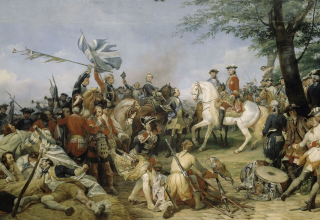
The Irish “Hibernia” regiment and other Irish units of Spain fight at the Battle of Brihuega on December 8, 1710, in the War of the Spanish Succession, during the allied retreat from Madrid to Barcelona. The British rearguard under James Stanhope, 1st Earl Stanhope, is cut off within the town of Brihuega and overwhelmed by a Franco-Spanish army under Louis Joseph de Bourbon, Duke of Vendôme. Brihuega with other events brings an end to the British participation in the war.

The Duke of Vendôme sets out from Talavera de la Reina with his troops and pursues the retreating British army with a speed perhaps never equalled in such a season and in such a country. The middle-aged Frenchman leads his Franco-Spanish army day and night. In typical Vendôme style, he swims, at the head of his cavalry, the flooded Henares and in a few days overtakes Stanhope, who is at Brihuega with the left wing of the Grand Alliance army.

“Nobody with me,” said the British general, “imagined that they had any foot within some days’ march of us and our misfortune is owing to the incredible diligence which their army made.” Stanhope has barely enough time to send off a messenger to the centre of the army, which is some leagues from Brihuega, before Vendôme is upon him on the evening of December 8. The next morning the town is invested on every side.

Blasting the walls of Brihuega with heavy cannon, a mine is sprung under one of the gates. The British keep up a terrible fire until their powder is spent. They then fight desperately against overwhelming odds as Vendôme’s men storm the city with bayonets fixed and begin to take the town by bloody close quarters fighting, street by street. The British set fire to the buildings which their assailants have taken but in vain. The British general sees that further resistance will produce only a useless carnage. He concludes a capitulation and his army becomes prisoners of war on honourable terms.

Scarcely had Vendôme signed the capitulation, when he learns that General Guido Starhemberg is marching to the relief of Stanhope. On December 10 the two meet in the bloody Battle of Villaviciosa, after which Starhemberg continues the allied retreat.

The British troops do not remain in captivity for very long before they are exchanged and sent home in October 1711.

The defeat helps justify the Harley ministry‘s plan to agree to a compromise peace with France at the Treaty of Utrecht. Opponents of the deal protest on the grounds of “No Peace Without Spain.” Nonetheless Allied forces are withdrawn, with the final action taking place at the Siege of Barcelona in 1714.


Leave a comment

Birth of Anthony Malone, Lawyer & Politician

anthony-malone

Anthony Malone, Irish lawyer and politician, is born on December 5, 1700, the eldest son of Richard Malone of Baronston, County Westmeath, and Marcella, daughter of Redmond Molady. Edmund Malone is his nephew, and a younger brother, Richard Malone (1706–1759), is MP for Fore from 1741.

Malone is educated at Mr. Young’s school in Abbey Street, Dublin, and on April 6, 1720 is admitted a gentleman-commoner of Christ Church, Oxford. After two years at university he enters the Middle Temple and is called to the Irish bar in May 1726. In 1737 he is created LL.D. of Trinity College, Dublin.

In 1733, Malone marries Rose, daughter of Sir Ralph Gore, 4th Baronet, speaker of the Irish House of Commons. The marriage results in no children.

Malone makes a successful career as a lawyer. From 1727 to 1760, and again from 1769 to 1776, he represents the county of Westmeath, and from 1761 to 1768 the borough of Castlemartyr, in the Irish parliament. In 1740 he is appointed Serjeant-at-law, but is dismissed from office in 1754 for opposing the claim of the crown to dispose of unappropriated revenue. In 1757 he is made Chancellor of the Exchequer of Ireland, but his attitude in council in regard to the Money Bill of 1761 leads to his again being removed from office. His treatment is regarded as too severe by William Pitt, 1st Earl of Chatham, and Malone, who draws a distinction between advice offered in council and his conduct in parliament, introduces the measure as chairman of the committee of supply. He is shortly afterwards granted a patent of precedence at the bar, but is charged with having sold his political principles for money.

Malone supports John Monck Mason‘s bill for enabling Roman Catholics to invest money in mortgages on land. In 1762 he is appointed, with Sir Richard Aston, to try the Whiteboys of Munster. They agree in ascribing the rural violence to local and individual grievances.

Malone dies at the age of 75 on May 8, 1776. At one time, a marble bust of him adorned Baronston House. By his will, made in July 1774, he leaves all his estates in the counties of Westmeath, Roscommon, Longford, Cavan, and Dublin to his nephew, Richard Malone, 1st Baron Sunderlin as he became, eldest son of his brother Edmund. On his death in 1816 the right of succession is disputed.


Leave a comment

Death of Anglo-Irish Statesman Henry Flood

henry-flood

Henry Flood, Anglo-Irish statesman and founder of the Patriot movement that in 1782 wins legislative independence for Ireland, dies on December 2, 1791.

Flood is born in Dublin in 1732, the illegitimate son of Warden Flood, Lord Chief Justice of the Court of King’s Bench in Ireland. He is educated at Trinity College, Dublin, and afterwards at Christ Church, Oxford, where he becomes proficient in the classics.

Flood enters the Irish Parliament in 1759 as member for Kilkenny County. Irish Protestants are becoming impatient with the British Parliament’s right to legislate for Ireland over the wishes of the Irish Parliament. Moreover, the British government controls a majority in Ireland’s House of Commons through the distribution of crown patronage by the owners of parliamentary boroughs.

Flood’s outstanding oratorical powers soon enable him to create a small but effective opposition inside the Irish Parliament that agitates for political reforms. They demand provisions for new Irish parliamentary elections every eight years, instead of merely at the start of a new British king’s reign. Their long-range goal is legislative independence. In 1768 his Patriots engineer passage of a bill limiting the duration of Parliament to eight years, and in 1769 and 1771 they defeat measures to grant funds for the British administration in Ireland.

Although Flood had become the first independent Irish statesman, he sacrifices this position in 1775 by accepting the office of vice treasurer under the British viceroy, Lord Simon Harcourt, 1st Earl Harcourt. Henry Grattan, an even greater orator than Flood and who describes Flood as a man “with a metaphor in his mouth and a bribe in his pocket,” replaces him as leader of the Patriots.

Flood, however, leaves the Patriot cause at the wrong time. The movement grows rapidly as more and more Irish people are influenced by the North American colonists who are rebelling against the British in the American Revolution. In 1779 he rejoins his old party, and two years later he is officially dismissed from his government post. Although he has lost his following, he helps Grattan force the British government to renounce its restrictions on Irish trade (1779) and grant legislative independence to Ireland (1782).

Flood then decides to challenge Grattan’s leadership. Charging that Grattan has not gone far enough in his reforms, he obtains passage of a measure requiring the British Parliament to renounce all claims to control of Irish legislation. Nevertheless, his newly acquired popularity is destroyed upon the defeat of his attempt to reform the Irish Parliament in 1784.

Flood is a member of both the British and Irish parliaments from 1783 until he loses his seat in both parliaments in 1790, although in England he fails to achieve the kind of political successes that characterize his Irish parliamentary career.

Following the loss of his seats in parliament, Flood retires to Farmley, his residence in County Kilkenny, where he remains until his death on December 2, 1791. He and his wife Lady Frances Beresford, daughter of Marcus Beresford, 1st Earl of Tyrone, who survives until 1815, have no children, and his property passes to a cousin, John Flood. A large bequest to Trinity College Dublin is declared invalid.

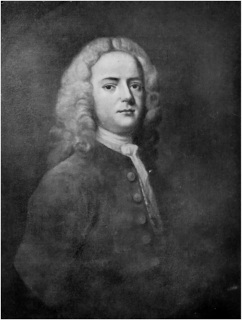
(Pictured: Portrait of Henry Flood (1732 – 1791) by Bartholomew Stoker (1763-1788). John Comerford later makes a sketch of the portrait, from which James Heath makes an engraving.)


Leave a comment

Birth of John Kyan, Inventor in Wood Preservation

kyans-patent

John Howard Kyan, inventor of the ‘kyanising’ process for preserving wood, is born on November 27, 1774, in Dublin. His father, also John Howard Kyan, is the owner of valuable copper mines in County Wicklow. He is educated to take part in the management of the mines, but soon after he enters the company its fortunes decline, and in 1804 his father dies almost penniless.

For a time, Kyan is employed at some vinegar works at Newcastle upon Tyne, but subsequently removes to London. The decay of the timber supports in his father’s copper mines had already directed his attention to the question of preserving wood, and as early as 1812 he begins experiments with a view to discovering a method of preventing the decay. Eventually he finds that bichloride of mercury or corrosive sublimate, as it is commonly called, gives the best results and, without revealing the nature of the process, he submits a block of oak impregnated with the substance to the Admiralty in 1828. It is placed in the ‘fungus pit’ at Woolwich, where it remains for three years exposed to all the conditions favourable to decay. When taken out in 1831, it is found to be perfectly sound, and after further trials it still remains unaffected.

Kyan patents his discovery in 1832 (Nos. 8263 and 6309), extending the application of the invention to the preservation of paper, canvas, cloth, cordage, etc. A further patent is granted in 1836 (No. 7001).

The process attracts great attention. Michael Faraday chooses it as the subject of his inaugural lecture at the Royal Institution on February 22, 1833, on his appointment as Fullerian professor of chemistry. Dr. George Birkbeck gives a lecture upon it at the Royal Society of Arts on December 9, 1834, and in 1835 the Admiralty publishes the report of a committee appointed by the board to inquire into the value of the new method.

In 1836, Kyan sells his rights to the Anti-Dry Rot Company, an Act of Parliament being passed which authorises the raising of a capital of £250,000. Tanks are constructed at Grosvenor Basin, Pimlico, at the Grand Surrey Canal Dock, Rotherhide, and at the City Road Basin.

Among the early applications of the process is the kyanising of the palings around the Inner Circle, Regent’s Park, which is carried out in 1835 as an advertisement with small brass plates being attached to the palings at intervals stating that the wood has been submitted to the new process. The plates soon disappear, but the original palings still remain in good condition.

The timber used in building the Oxford and Cambridge Club, British Museum, Royal College of Surgeons, Westminster Bridewell, the new roof of the Temple Church, and the Ramsgate harbour works is also prepared by Kyan’s process. When wooden railway ties become general, a very profitable business for Kyan’s company is anticipated, and for a time these hopes are realised.

It becomes evident that iron fastenings cannot be used in wood treated with corrosive sublimate, on account of the corrosive action, and it is said that the wood becomes brittle. The salt is somewhat expensive and Sir William Burnett‘s method of preserving timber by zinc chloride, and afterwards the application of creosote for that purpose, proves severe competitors. Doubts begin to be expressed as to the real efficiency of kyanising, and the process gradually ceases to be employed.

John Kyan dies on January 5, 1850, in New York City, where he is engaged on a plan for filtering the water supplied to that city by the Croton Aqueduct.