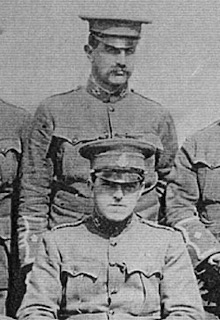
Perceval-Maxwell is born in 1870, the only son of John Perceval-Maxwell, eldest son of Robert Perceval-Maxwell DL (1813–1905), of Finnebrogue House, Downpatrick, County Down.
Perceval-Maxwell is educated at Eton College. He plays a significant part in the raising of the 36th (Ulster) Division on the outbreak of World War I. He is commissioned Major in the 13th (County Down) Battalion, Royal Irish Rifles, which he had raised, in September 1914, and is appointed second-in-command in December 1914. He is promoted to the temporary rank of Lieutenant-Colonel and commands a battalion from November 1916 and commands a battalion of the Royal Munster Fusiliers from May 1918. He is seriously wounded during the war. He resigns his commission in January 1919.
He is appointed to the Privy Council of Ireland in the honours for the opening of the Parliament of Northern Ireland in July 1921, entitling him to the style “The Right Honourable.” He serves in the Northern Ireland Senate from 1921 to 1925.
In 1895, Perceval-Maxwell marries Edith Grace Head. They have five sons: John Robert Perceval-Maxwell (born 1896), Richard Henry (born 1897, killed in action in 1916), Patrick Edward (born 1900), Brian Stephen (born 1908), and David (born 1911).
Perceval-Maxwell dies at the age of 62 on May 24, 1932, in a Belfast nursing home. He is buried in Inch Parish Churchyard, Downpatrick.
The Battle of the Somme ends on November 18, 1916. This dreadful battle claims more Irish lives in combat than any other battle in history.
On the first day of battle alone, July 1, 1916, twenty thousand soldiers of the British Army are killed and forty thousand are wounded. The 36th (Ulster) Division suffers an estimated 5,500 casualties, almost all of whom are drawn from what is now Northern Ireland. Nearly 2,000 Irish soldiers are killed in the first few hours of fighting following a morning mist that poet Siegfried Sassoon references as “of the kind commonly called heavenly.”
The Battle of the Somme, also known as the Somme Offensive, is a battle in World War I fought by the armies of the British Empire and the French Third Republic against the German Empire. It takes place between July 1 and November 18, 1916, on both sides of the upper reaches of the river Somme in France. The battle is intended to hasten a victory for the Allies and is the largest battle of World War I on the Western Front. More than 3 million men fight in this battle and one million men are wounded or killed, making it one of the bloodiest battles in human history.
The French and British commit themselves to an offensive on the Somme during Allied discussions at Chantilly, Oise, in December 1915. The Allies agree upon a strategy of combined offensives against the Central Powers in 1916, by the French, Russian, British and Italian armies, with the Somme offensive as the Franco-British contribution. Initial plans call for the French army to undertake the main part of the Somme offensive, supported on the northern flank by the Fourth Army of the British Expeditionary Force (BEF). When the Imperial German Army begins the Battle of Verdun on the Meuse on February 21, 1916, French commanders divert many of the divisions intended for the Somme and the “supporting” attack by the British becomes the principal effort.
The first day on the Somme, July 1, sees a serious defeat for the German Second Army, which is forced out of its first position by the French Sixth Army, from Foucaucourt-en-Santerre south of the Somme to Maricourt on the north bank and by the Fourth Army from Maricourt to the vicinity of the Albert–Bapaume Road. The first day on the Somme is, in terms of casualties, also the worst day in the history of the British Army, which suffers 57,470 casualties. These occur mainly on the front between the Albert–Bapaume road and Gommecourt, where the attack is defeated, and few British troops reach the German front line. The British troops on the Somme comprise a mixture of the remains of the pre-war standing army, the Territorial Force, and Kitchener’s Army, a force of volunteer recruits including many Pals Battalions, recruited from the same places and occupations.
The battle is notable for the importance of air power and the first use of the tank. At the end of the battle, British and French forces have penetrated 6 miles into German-occupied territory, taking more ground than in any of their offensives since the First Battle of the Marne in 1914. The Anglo-French armies fail to capture Péronne and halt three miles from Bapaume, where the German armies maintain their positions over the winter. British attacks in the Ancre valley resume in January 1917 and force the Germans into local withdrawals to reserve lines in February, before the scheduled retirement to the Siegfriedstellung (Hindenburg Line) begins in March.
Debate continues over the necessity, significance and effect of the battle. David Frum opines that a century later, “‘the Somme’ remains the most harrowing placename” in the history of the British Commonwealth.
(Pictured: Men of the Royal Irish Rifles rest during the opening hours of the Battle of the Somme. July 1, 1916)
Craig is born at Sydenham, Belfast, on January 8, 1871, the seventh of nine children of James Craig (1828–1900), a wealthy whiskey distiller who had entered the firm of Dunville & Co. as a clerk and by age 40 is a millionaire and a partner in the firm. Craig Snr. owns a large house called Craigavon, overlooking Belfast Lough. His mother, Eleanor Gilmore Browne, is the daughter of Robert Browne, a prosperous man who owned property in Belfast and a farm outside Lisburn. Craig is educated at Merchiston Castle School in Edinburgh, Scotland. After school he begins work as a stockbroker, eventually opening his own firm in Belfast.
Craig enlists in the 3rd (Militia) battalion of the Royal Irish Rifles on January 17, 1900, to serve in the Second Boer War. He is seconded to the Imperial Yeomanry, a cavalry force created for service during the war, as a lieutenant in the 13th battalion on February 24, 1900, and leaves Liverpool for South Africa on the SS Cymric in March 1900. After arrival he is soon sent to the front and is taken prisoner in May 1900, but released by the Boers because of a perforated colon. On his recovery he becomes deputy assistant director of the Imperial Military Railways, showing the qualities of organisation that are to mark his involvement in both British and Ulster politics. In June 1901 he is sent home suffering from dysentery, and by the time he is fit for service again the war is over. He is promoted to captain in the 3rd Royal Irish Rifles on September 20, 1902, while still seconded to South Africa.
On June 7, 1921, Craig is appointed the first Prime Minister of Northern Ireland by the Lord Lieutenant of Ireland. The House of Commons of Northern Ireland assembles for the first time later that day.
Craig had made his career in British as well as Northern Irish politics, but his premiership shows little sign of his earlier close acquaintance with the British political world. He becomes intensely parochial and suffers from his loss of intimacy with British politicians in 1938, when the British government concludes agreements with Dublin to end the Anglo-Irish trade war between the two countries. He never tries to persuade Westminster to protect Northern Ireland‘s industries, especially the linen industry, which is central to its economy. He is anxious not to provoke Westminster, given the precarious state of Northern Ireland’s position. In April 1939, and again in May 1940 during World War II, he calls for conscription to be introduced in Northern Ireland (which the British government, fearing a backlash from nationalists, refuses). He also calls for Winston Churchill to invade Ireland using Scottish and Welsh troops in order to seize the valuable ports and install a Governor-General at Dublin.
While still prime minister, Craig dies peacefully at his home at Glencraig, County Down at the age of 69 on November 24, 1940. He is buried on the Stormont Estate on December 5, 1940, and is succeeded as the Prime Minister of Northern Ireland by the Minister of Finance, J. M. Andrews.
(Pictured: James Craig, 1st Viscount Craigavon, bromide print by Olive Edis, National Portrait Gallery, London)
Craig is the seventh of nine children of James Craig (1828–1900), a wealthy whiskey distiller who had entered the firm of Dunville & Co. as a clerk and by age 40 is a millionaire and a partner in the firm. Craig Snr. owns a large house called Craigavon, overlooking Belfast Lough. His mother, Eleanor Gilmore Browne, is the daughter of Robert Browne, a prosperous man who owned property in Belfast and a farm outside Lisburn. Craig is educated at Merchiston Castle School in Edinburgh, Scotland. After school he begins work as a stockbroker, eventually opening his own firm in Belfast.
Craig enlists in the 3rd (Militia) battalion of the Royal Irish Rifles on January 17, 1900, to serve in the Second Boer War. He is seconded to the Imperial Yeomanry, a cavalry force created for service during the war, as a lieutenant in the 13th battalion on February 24, 1900, and leaves Liverpool for South Africa on the SS Cymric in March 1900. After arrival he is soon sent to the front and is taken prisoner in May 1900, but released by the Boers because of a perforated colon. On his recovery he becomes deputy assistant director of the Imperial Military Railways, showing the qualities of organisation that are to mark his involvement in both British and Ulster politics. In June 1901 he is sent home suffering from dysentery, and by the time he is fit for service again the war is over. He is promoted to captain in the 3rd Royal Irish Rifles on September 20, 1902, while still seconded to South Africa.
On June 7, 1921, Craig is appointed the first Prime Minister of Northern Ireland by the Lord Lieutenant of Ireland. The House of Commons of Northern Ireland assembles for the first time later that day.
Craig had made his career in British as well as Northern Irish politics, but his premiership shows little sign of his earlier close acquaintance with the British political world. He becomes intensely parochial and suffers from his loss of intimacy with British politicians in 1938, when the British government concludes agreements with Dublin to end the Anglo-Irish trade war between the two countries. He never tries to persuade Westminster to protect Northern Ireland‘s industries, especially the linen industry, which is central to its economy. He is anxious not to provoke Westminster, given the precarious state of Northern Ireland’s position. In April 1939, and again in May 1940 during World War II, he calls for conscription to be introduced in Northern Ireland (which the British government, fearing a backlash from nationalists, refuses). He also calls for Winston Churchill to invade Ireland using Scottish and Welsh troops in order to seize the valuable ports and install a Governor-General at Dublin.
While still prime minister, Craig dies peacefully at his home at Glencraig, County Down at the age of 69 on November 24, 1940. He is buried on the Stormont Estate on December 5, 1940, and is succeeded as the Prime Minister of Northern Ireland by the Minister of Finance, J. M. Andrews.
(Pictured: James Craig, 1st Viscount Craigavon, bromide print by Olive Edis, National Portrait Gallery, London)
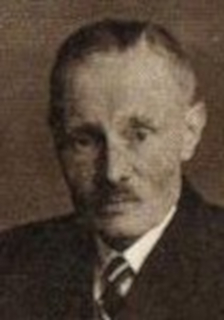
Immediately after leaving the British Army Falls writes a history of one of the Divisions that he had served with during the war, entitled The History of the 36th (Ulster) Division, which is published in 1922.
Falls holds the post of Chichele Professor of Military History at All Souls College, Oxford from 1946 to 1953. From the late 1940s through to the end of his life in the early 1970s he is a productive writer of military histories, publishing in-depth detailed studies as well as general works for the commercial market, his final two titles being published posthumously.
The historian Sir Michael Howard later describes Falls’ work The History of the 36th (Ulster) Division (1922) as “containing some of the finest descriptions of conditions on the Western Front to be found anywhere in the literature of the war.”
The Battle of the Somme, also known as the Somme Offensive, is a battle of the World War I fought by the armies of the British and French empires against the German Empire. It takes place between July 1 and November 18, 1916, on both sides of the upper reaches of the river Somme in France. The battle is intended to hasten a victory for the Allies and is the largest battle of World War I on the Western Front. More than 3 million men fight in this battle and one million men are wounded or killed, making it one of the bloodiest battles in human history.
The French and British commit themselves to an offensive on the Somme during Allied discussions at Chantilly, Oise, in December 1915. The Allies agree upon a strategy of combined offensives against the Central Powers in 1916, by the French, Russian, British and Italian armies, with the Somme offensive as the Franco-British contribution. Initial plans call for the French army to undertake the main part of the Somme offensive, supported on the northern flank by the Fourth Army of the British Expeditionary Force (BEF). When the Imperial German Army begins the Battle of Verdun on the Meuse on February 21, 1916, French commanders divert many of the divisions intended for the Somme and the “supporting” attack by the British becomes the principal effort.
The first day on the Somme, July 1, sees a serious defeat for the German Second Army, which is forced out of its first position by the French Sixth Army, from Foucaucourt-en-Santerre south of the Somme to Maricourt on the north bank and by the Fourth Army from Maricourt to the vicinity of the Albert–Bapaume road. The first day on the Somme is, in terms of casualties, also the worst day in the history of the British army, which suffers 57,470 casualties. These occur mainly on the front between the Albert–Bapaume road and Gommecourt, where the attack is defeated, and few British troops reach the German front line. The British troops on the Somme comprise a mixture of the remains of the pre-war standing army, the Territorial Force, and Kitchener’s Army, a force of volunteer recruits including many Pals Battalions, recruited from the same places and occupations.
The battle is notable for the importance of air power and the first use of the tank. At the end of the battle, British and French forces have penetrated 6 miles into German-occupied territory, taking more ground than in any of their offensives since the First Battle of the Marne in 1914. The Anglo-French armies fail to capture Péronne and halt three miles from Bapaume, where the German armies maintain their positions over the winter. British attacks in the Ancre valley resume in January 1917 and force the Germans into local withdrawals to reserve lines in February, before the scheduled retirement to the Siegfriedstellung (Hindenburg Line) begins in March.
Debate continues over the necessity, significance and effect of the battle. David Frum opines that a century later, “‘the Somme’ remains the most harrowing place-name” in the history of the British Commonwealth.




 seamus dubhghaill