seamus dubhghaill

Promoting Irish Culture and History from Little Rock, Arkansas, USA


1 Comment

Birth of Ivana Bacik, Labour Party Politician

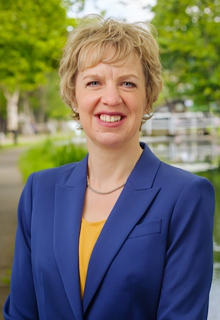
Ivana Catherine Bacik, Irish politician who has been the Leader of the Labour Party since March 24, 2022 and a Teachta Dála (TD) for the Dublin Bay South constituency since winning a by-election on July 9, 2021, is born in Dublin on May 25, 1968. She comes to prominence due to her abortion rights campaigning from the 1980s onward.

Bacik’s paternal grandfather, Charles Bacik, was a Czech factory owner who moved to Ireland in 1946. He eventually settled in Waterford, County Waterford, and in 1947 was involved in the establishment of Waterford Crystal. Her mother’s side of the family are Murphys from County Clare. Her father is an astronomer and is employed in a number of locations. As a result, she lives in London and South Africa, before moving to Crookstown, County Cork, at the age of six, when he becomes a physics lecturer in the Cork Institute of Technology. She attends the nearby national school in Cloughduv. When she is 11 years old, her family moves to the Sunday’s Well area of Cork city. At the age of 14, she moves to Dublin.

Bacik wins a scholarship to board at Alexandra College in Milltown, Dublin, and is awarded a sizarship at Trinity College Dublin. She has an LL.B. from Trinity and an LL.M. from the London School of Economics.

Bacik contests the Seanad Éireann elections in 1997 and 2002 as an independent candidate for the Dublin University constituency but is not successful.

She runs as a Labour Party candidate at the 2004 election to the European Parliament in the Dublin constituency. She runs with sitting MEP Proinsias De Rossa, who is also the party president, on the same ticket. She polls 40,707 first preference votes (9.6%) but is not elected.

In 2004, Bacik’s book Kicking and Screaming: Dragging Ireland into the 21st Century, is published by The O’Brien Press.

In 2007, she contested the Seanad Éireann elections for the third time in the Dublin University constituency, and is elected to the third seat, behind sitting Independent senators Shane Ross and David Norris. She initially sits as an Independent senator.

In February 2009, Bacik is included in an ‘All Star Women’s Cabinet’ in the Irish Independent. In March 2009, she confirmed claims made on a TV programme that she had taken two voluntary pay cuts of 10% in addition to a pension levy. In June 2009, she is the Labour Party candidate for the Dublin Central by-election. She comes in third with 17% of the first preference votes. She joins the Labour Party group in the Seanad in September 2009, and becomes Labour Party Seanad spokesperson for both Justice and Arts, Sports and Tourism. In November 2009, a feature by Mary Kenny of the Irish Independent includes Bacik in a list of women who “well deserved their iconic status.”

In May 2010, Bacik seeks Labour’s nomination to contest the next election in the Dublin South-East constituency but is not selected. In December 2010, she is added to the ticket as the second candidate beside Labour Party leader, Eamon Gilmore, in the Dún Laoghaire constituency for the 2011 Irish general election. Gilmore tops the poll, with Bacik receiving 10.1% of first preference votes but she is not elected. She is re-elected to Seanad Éireann at the subsequent election, after which she becomes Deputy Leader of the Seanad. She holds her seat in the Seanad in 2016 and in 2020.

On April 27, 2021, after the resignation of Eoghan Murphy from his Dáil seat in Dublin Bay South, Bacik announces her intention to stand in the upcoming by-election. She campaigns with an emphasis on providing affordable housing, as well as improving healthcare and childcare, tackling climate change, and achieving “a true republic in which church and state are separated.” During the campaign, she describes herself as having “more bills passed into law than any other Senator, on issues such as workers’ conditions, women’s health rights, and LGBT equality”. She also campaigns on increasing the number of sports amenities for children in the area, calling for unused Defence Forces football fields at the Cathal Brugha Barracks to be freed up for local sports, with the suggestion rejected by Fine Gael Minister for Defence Simon Coveney. Fine Gael complains to RTÉ after she features prominently on National Treasures, a prime-time TV show broadcast by RTÉ during the campaign. RTÉ has strict rules about fair coverage of candidates during campaigns. The national broadcaster blames an “inadvertent error” for the programme being shown three days before the election. A steering group within the broadcaster tells Fine Gael that “the broadcast should not have happened.” Consequentially, RTÉ has to show a special report on the by-election on Prime Time to “ensure fair coverage is given to all candidates.”

Bacik wins this election, receiving 8,131 (30.2%) first-preference votes. It is her fourth attempt as a Labour candidate, and she expresses her delight at the success at the count centre in the RDS. Following the election, she is described by The Irish Times as “a formidable activist and public intellectual” and that Fine Gael’s perceived antipathy towards their former TD, Kate O’Connell, may have contributed to the surge in support to Bacik from women voters. The newspaper claims that her election is “a long overdue morale boost” for Labour.

In August 2021, Bacik apologises for attending Katherine Zappone‘s controversial party in the Merrion Hotel, Dublin, in July of that year. She states that she believed that it took place within existing COVID-19 pandemic restrictions.

In March 2022, Bacik confirms she will run to succeed Alan Kelly as Labour Party leader. Kelly states that he believes that Bacik will succeed him. On March 24, 2022, she is confirmed as Labour Party leader unopposed at a party conference in Dublin. In a speech, she says she will focus on the rising cost of living and the serious and global problems facing the country. She pledges that Labour will fight the next election as a “standalone party” rather than joining any left-wing alliance.

At the 2024 Irish general election, Bacik is re-elected to the Dáil.

Bacik lives with husband Alan Saul and their two daughters in Portobello, Dublin.

Leave a comment

Birth of Ruth Coppinger, Socialist Party TD for Dublin West

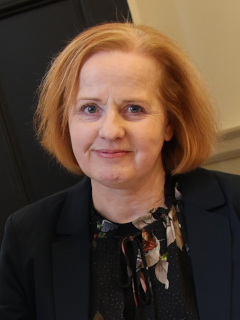
Ruth Coppinger, Irish politician and member of the Socialist Party, and Teachta Dála (TD) for the Dublin West constituency, is born in Dublin on April 18, 1967.

Coppinger is a member of Fingal County Council for the Mulhuddart local electoral area from 2003 to 2014. She is co-opted to the council in 2003, replacing Joe Higgins, and is elected in 2004 and re-elected in 2009. She is an unsuccessful candidate for the Socialist Party at the 2011 Dublin West by-election.

Following victory in the 2014 Dublin West by-election, Coppinger joins her party colleague Joe Higgins in the Dáil. After being elected, she calls for a mass campaign of opposition to water charges being implemented by the Fine GaelLabour Party coalition.

In November 2014, Coppinger calls for the gradual nationalisation of U.S. multinationals to prevent job losses. In response, Fianna Fáil’s jobs spokesperson Dara Calleary calls the idea “reckless and ludicrous,” as it would “place a massive burden on taxpayers and the public finances.”

In September 2015, Coppinger joins homeless families from Blanchardstown, in occupying a NAMA-controlled property as part of a campaign to raise awareness of the housing crisis. In October 2015, she joins families in their occupation of a show house in her constituency, to protest the lack of availability of affordable social housing. She also supports the tenants of Tyrrelstown, who are made homeless when a Goldman Sachs vulture fund sells their houses.

Coppinger is re-elected to the Dáil at the 2016 Irish general election, this time under the Anti-Austerity Alliance–People Before Profit banner. On March 10. 2016, at the first sitting of the 32nd Dáil, she nominates Richard Boyd Barrett for the office of Taoiseach, quoting James Connolly from a hundred years previously when she says, “The day has passed for patching up the capitalist system. It must go,” and declaring, “We will not vote for the identical twin candidates” of Fine Gael and Fianna Fáil after they “imposed austerity.” On April 6, 2016, following the failure of the Dáil to elect a Taoiseach at that first sitting, she is nominated for the role of Taoiseach, becoming the first female nominee in the history of the state.

In 2018 Coppinger praises the MeToo movement for exposing patterns of abuse and systemic inequality. However, she also notes the limitations of achieving justice through traditional channels and calls for a stronger focus on combating intimate partner violence and societal tolerance of such abuse.

In April 2018, in the lead-up to the repeal of the Eighth Amendment, Coppinger, along with her colleague Paul Murphy, holds up a Repeal sign during leader’s questions and is reprimanded by the Ceann Comhairle. She is an advocate for abortion rights in Ireland, and is a founding member of ROSA, a movement for reproductive justice in Ireland. Earlier, in 2016, she tables the private members’ motion to repeal the Eighth Amendment.

In November 2018, Coppinger protests in the Dáil against the conduct of a rape trial in Ireland. During the trial, the defence team, as part of their argument that the sex had been consensual, states that the 17-year-old victim had worn a thong with a lace front. The defendant is subsequently found not guilty. During a sitting of the Dáil, Coppinger holds up a similar pair of underwear and admonishes the conduct of the trial, suggesting victim blaming tactics had been used and suggests this is a routine occurrence in Irish courts. She calls on Taoiseach Leo Varadkar to support her party’s bill that would increase sex education in Irish schools and provide additional training to the Irish judiciary and jurors on how to handle cases of rape. Varadkar responds that victims should not be blamed for what happens to them, irrespective of how they are dressed, where they are or if they have consumed alcohol.

In 2019 Coppinger sponsors a private member’s bill – the Domestic Violence (No-contact order) (Amendment) Bill 2019. The bill lapses with the dissolution of the Dáil and Seanad.

At the general election in February 2020, Coppinger is defeated in the Dublin West constituency. She unsuccessfully contests the 2020 Seanad election for the National University of Ireland constituency.

In June 2024, Coppinger is elected to Fingal County Council for the Castleknock local electoral area on the 7th Count. At the 2024 Irish general election, she is re-elected to the Dáil.

Coppinger is an advocate of secularism and believes in abolishing both the Angelus and the Dáil prayer, viewing them as relics of an outdated intertwining of religion and governance. She supports the separation of Church and State, criticising the Catholic Church‘s historical influence in education and health, as well as its financial privileges, including exemptions from accountability under regulations like SIPO. She has called for the requisitioning of Church lands and property, citing the Church’s failure to meet commitments to abuse victims and the necessity of addressing historical injustices.

On drug policy, Coppinger supports decriminalisation and endorses the Portuguese model, which treats addiction as a health issue rather than a criminal matter. She emphasises the hypocrisy of criminalising drug use while overlooking the societal harm caused by alcohol and advocates for expanding access to medicinal cannabis, criticising the political inertia in addressing this need.

In 2013, during referendum to abolish the Irish senate, Coppinger campaigns for a yes vote, calling the institution elitist and undemocratic. However, in 2020, following the loss of her Dáil seat, she runs unsuccessfully for a seat in the Senate. Challenged by the Irish Examiner on this, she states that so long as the Senate continues to exist, it should be used to further progressive causes.

Coppinger lives in Mulhuddart and is a secondary school teacher. Her eldest brother, Eugene Coppinger, serves on Fingal County Council from 2011 to 2019.


Leave a comment

Birth of Dónal McKeown, Roman Catholic Bishop of Derry

Dónal McKeown, Roman Catholic prelate from Northern Ireland who has served as Bishop of Derry since 2014, is born in Belfast on April 12, 1950.

McKeown is one of four children born to James McKeown and his wife Rose (née McMeel), and is baptised in St. Patrick’s Church, Belfast. He is brought up in Randalstown, County Antrim, where he plays Gaelic football and hurling with Kickhams GAC Creggan.

McKeown attends primary school at Mount St. Michael’s Primary School, Randalstown, and secondary school as a boarder at St. MacNissi’s College, Camlough, between 1961 and 1968, completing his O-Levels and A-Levels with special distinctions in Modern Languages. Two of his teachers at St. MacNissi’s College are his future brother bishops, Anthony Farquhar and Patrick Walsh.

McKeown begins studying for the priesthood at St. Malachy’s College, Belfast, in 1968, and obtains a bachelor’s degree with honours in German and Italian from Queen’s University Belfast (QUB). He teaches English at a school in Dieburg, Germany, between 1970 and 1971, and subsequently works as Northern Ireland correspondent for the Catholic media company Katholische Nachrichten-Agentur between 1971 and 1973.

McKeown completes a licentiate in sacred theology at the Pontifical Gregorian University, Rome, between 1973 and 1978, during which he also works for Vatican Radio and as a correspondent for An Saol Mór, an Irish-language programme on RTÉ.

McKeown is ordained to the priesthood on July 3, 1977.

Following ordination, McKeown’s first pastoral assignment is as chaplain at Mater Infirmorum Hospital, before returning to Rome to complete his licentiate. He returns to the Diocese of Down and Connor in 1978, where he is appointed as a teacher at Our Lady and St. Patrick’s College, Knock, while also serving as assistant priest in Derriaghy. He returns to St. MacNissi’s College in 1983, where he continues his involvement with youth ministry and is given responsibility for organising the annual diocesan pilgrimage to Lourdes.

McKeown subsequently returns to St. Malachy’s College in 1987, where he teaches and serves as dean of the adjoining seminary, before succeeding Canon Noel Conway as president in 1995. During his presidency, he completes a Master of Business Administration at the University of Leicester in 2000, specialising in educational management.

McKeown has completed the Belfast Marathon on two occasions: as a priest with a team of 48 from Derriaghy in 1982, and as a bishop fundraising for a minibus for St. Malachy’s College in 2001.

McKeown is appointed auxiliary bishop-elect for the Diocese of Down and Connor and titular bishop of Cell Ausaille by Pope John Paul II on February 21, 2001, the first Irish bishop to be appointed in the third millennium. He is consecrated by the Bishop of Down and Connor, Patrick Walsh, on April 29 in St. Peter’s Cathedral, Belfast.

In response to a 2007 decision by Amnesty International to campaign for the legalisation of abortion in certain circumstances, McKeown supports the decision of Catholic schools in the diocese to disband their Amnesty International support groups, on the grounds that it is no longer appropriate to promote the organisation in their schools.

It is reported in an article in The Irish News that the mention of McKeown as a possible successor to Walsh as Bishop of Down and Connor is actively opposed by some priests in the diocese, who regard him as being “too soft” on the issue of integrated education. This opposition is branded a “Stop Donal” campaign.

McKeown also serves as a member of the Irish Catholic Bishops’ Conference, with responsibility for the promotion of Catholic education, youth ministry, university chaplaincies and the promotion of vocations. His interests include the interface between faith and the empirical sciences, and working with Catholic schools in Norway, Denmark, Lithuania, Poland and Germany.

McKeown also serves as a member of the Irish Catholic Bishops’ Conference and its committee on education and chairs its committees on vocations and youth. He leads the youth of the diocese to World Youth Day in 2002 and 2005 and also travels to Rome with his brother bishops for their quinquennial visit ad limina in 2006. He is also a regular contributor on Thought for the Day on BBC Radio Ulster.

McKeown is appointed Bishop-elect of Derry by Pope Francis on February 25, 2014. He is installed on April 6 in St. Eugene’s Cathedral, Derry.

Following the appointment of Noël Treanor as Apostolic Nuncio to the European Union on November 26, 2022, McKeown is announced as Apostolic Administrator of Down and Connor on January 21, 2023. He serves in this role until the installation of Alan McGuckian, following his appointment as Bishop of Down and Connor on February 2, 2024.

McKeown starts a 33-day journey of prayer toward the Consecration to Jesus Christ through Mary on January 9, 2025. The prayer takes place online each evening at 7:00 p.m. The 33 days of prayer take place the week following the Baptism of the Lord until the Feast of Our Lady of Lourdes on February 11.


Leave a comment

Birth of Clare Daly, Politician & Member of the European Parliament

Clare Daly, Irish politician who has been a Member of the European Parliament (MEP) from Ireland for the Dublin constituency since July 2019, is born in Newbridge, County Kildare, on April 16, 1968. She is a member of Independents 4 Change, part of The Left in the European Parliament – GUE/NGL.

Daly’s father, Kevin Daly, was a colonel in the Irish Army, where he was Director of Signals. She is an atheist, while her brother and an uncle are Catholic priests. She studies accountancy at Dublin City University (DCU). She is twice elected president of the DCU Students’ Union and is active in the students’ movement as a campaigner for abortion rights and information. On leaving college she takes a job in the catering section of Aer Lingus on a low wage and becomes SIPTU‘s shop steward at Dublin Airport when the airline is engaged in extensive cost-cutting and outsourcing.

In the 1980s Daly is a member of the Labour Party as a teenager. A member of Labour’s Militant Tendency, she is expelled alongside Joe Higgins and other members after being accused of being Trotskyists infiltrating the party using the tactic of entryism. At first calling themselves Militant Labour, in 1996 they form the Socialist Party. In the 1999 Irish local elections she is elected as a Fingal County Councillor for the Swords area, a position she holds for 12 years. She is elected as a Socialist Party TD for the Dublin North constituency at the 2011 Irish general election.

Since 2012, Daly has formed a close political association with Mick Wallace. After Wallace is condemned by left-wing TDs following the revelation his building company had avoided €2.1 million in taxes, she resigns from the Socialist Party in August 2012 in protest and redesignates herself as a United Left Alliance TD, before switching party again in 2015 to her current party, Independents 4 Change.

At the 2019 European Parliament elections, Daly is elected for the Dublin constituency. Since becoming an MEP, she has gained international attention for her foreign policy views, particularly regarding Russia and China, which have been the subject of controversy and criticism.

A report by The Irish Times in April 2022 describes Daly and Wallace’s media profile in China, and discusses how since January 2021, Daly has been featured in more Chinese-language news articles than any other Irish person, while Wallace has the second most Chinese-language news articles. In April 2022, Daly and Wallace initiate defamation proceedings against RTÉ.

On September 15, 2022, Daly is one of sixteen MEPs who vote against condemning President Daniel Ortega of Nicaragua for human rights violations, in particular the arrest of Bishop Rolando José Álvarez Lagos.