seamus dubhghaill

Promoting Irish Culture and History from Little Rock, Arkansas, USA


Leave a comment

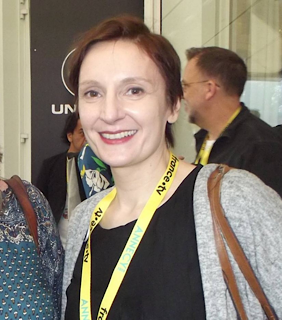
Birth of Nora Twomey, Animator, Director & Screenwriter

Nora Twomey, Irish animator, director, screenwriter, producer and voice actress, is born on October 31, 1971, in Cork, County Cork. She is best known as the co-founder of Cartoon Saloon, alongside Tomm Moore and Paul Young, an animation studio and production company, based in Kilkenny, County Kilkenny.

Twomey is educated at St. Mary’s Secondary School in Midleton, County Cork but leaves before completing the Leaving Certificate at the age of fifteen. She does manual labor at a local factory but continues to draw and briefly studies fine art before she is admitted to Ballyfermot Senior College in Dublin to their School of Animation program on the basis of her portfolio. In the factory she operates a conveyor belt for up to twelve hours on end during the night shift. She credits this period of her life to much of her success, as she wears headphones to drown out the loud noise of machinery, the silence combined with the monotony of the task she performs allows her to ponder concepts and generate ideas, many of which are put to film later in her life.

After graduating from Ballyfermot Senior College in 1995, Twomey begins to work for Brown Bags Film, an animation studio in Dublin. In 1999, she helps found Cartoon Saloon, along with Tomm Moore, Paul Young and Ross Murray. In 2002, she directs the award-winning short animated film From Darkness. The short film has no dialogue and is based on an Inuit folk tale where a man helps a woman with only a skeleton for a body to regenerate. She also works on the successful animated TV series Skunk Fu!.

Twomey goes on to write and direct the animated short Cúilín Dualach (Backwards Boy), released in 2004. Based on a story by Jackie Mac Donacha, a boy with his head on backwards finds only love and acceptance in his mother and has to work to gain that from the rest of his community but most of all his father.

Twomey co-directs, with Tomm Moore, The Secret of Kells, an animated feature film as well as doing additional voice acting for the film. The film is set in 9th century Ireland, at the time when the Book of Kells is written. In it, a 12-year-old orphan boy living at a monastery has the task of finishing a book with the art of illumination. The film premieres at the Berlin International Film Festival in February 2009. The Secret of Kells is nominated in the category of Best Animated Feature Film at the 82nd Academy Awards.

Twomey continues to work on feature films with Cartoon Saloon with 2014’s Song of the Sea directed by Tomm Moore. She works as the film’s head of story and voice director.

Twomey next directs the animated film The Breadwinner, released in 2017. Based on the best-selling young adult novel by Deborah Ellis, an 11-year-old girl named Parvana must dress as a boy and become the titular breadwinner for her family when her father is wrongfully arrested by the Taliban. It premieres at the Toronto International Film Festival in September 2017 with a wide release in November 2017. It is the first feature-length film she has sole director credit on. She works on the project with actress Angelina Jolie, who helps fund the project and works as an executive producer. The project is a huge success for Twomey, as she is recognized as a solo female filmmaker, and given accolades as well as being lauded by many as a source of female empowerment, all while battling cancer during production. During the development of The Breadwinner, she is named in Variety‘s “2017 10 Animators to Watch.”

Twomey is a member of the Academy of Motion Picture Arts and Sciences.

Twomey becomes the seventh graduate of Ballyfermot Senior College to be nominated for an Academy Award with her work on The Breadwinner when it is nominated for Best Animated Feature at the 90th Academy Awards. She is also nominated for an award at the Golden Globe Awards.

The Breadwinner earns ten nominations at the 45th Annie Awards, including Outstanding Achievement for Directing in an Animated Feature Production for Twomey. It wins the award for best animated feature for an independent film. This marks the first time a sole female director directs the film that wins the award. It also wins the Cinema for Peace award for Justice in 2018.

Twomey’s work also has a heavy presence at the Emile Awards, an annual event held by the European Animation Awards Association that honors European creators of animation. During the awards of 2018, which are hosted in Lile, France, her film The Breadwinner wins awards in five categories: Best Direction, Best Storyboarding, Best Character Animation, Best Background, and Best Character Design.

Twomey has won several awards according to the Screen Directors Guild of Ireland (SDGI). These awards include the best New Irish Short Animation at the Galway Film Fleadh (2002), Best Short at the Boston Irish Film Festival (2003), Best Animation at the Kerry Film Festival (2003), and the Silver Award at the Kalamazoo Animation Festival International (2003) for her film From Darkness. Her film Cúilín Dualach (Backwards Boy) also wins the Best Animated Short from the Irish Film & Television Academy (2005), Best Short Film at Cartoons on the Bay (2005), Best Animation for Children at Animadrid (2005) and the Best Animation at the Celtic Film Festival (2005). Among other awards, the 2018 Cinema for Peace Award for Justice for her movie The Breadwinner can be included.

Cartoon Saloon, the studio Twomey co-founds with contemporaries Paul Young and Tom Moore in Kilkenny, has been nominated for five Academy Awards, a British Academy of Film and Television Arts (BAFTA) award and several Emmy Awards.

Leave a comment

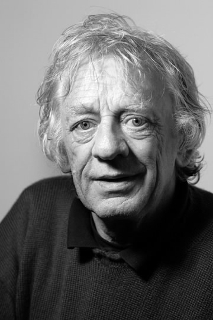
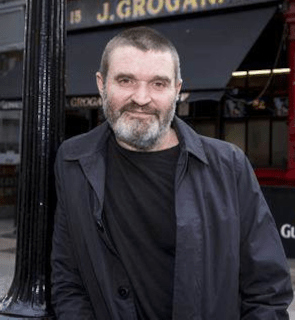
Birth of Brendan Gleeson, Actor & Film Director

Brendan Gleeson, Irish actor and film director, is born in Dublin on March 29, 1955. He is the recipient of three Irish Film & Television Academy (IFTA) Awards, two British Independent Film Awards (BIFA), and a Primetime Emmy Award and has been nominated twice for a BAFTA Award, five times for a Golden Globe Award and once for an Academy Award. In 2020, he is listed at number 18 on The Irish Times list of Ireland’s greatest film actors. He is the father of actors Domhnall Gleeson and Brian Gleeson.

Gleeson is the son of Frank and Pat Gleeson. He has described himself as having been an avid reader as a child. He receives his second-level education at St. Joseph’s CBS in Fairview, Dublin, where he is a member of the school drama group. He receives his Bachelor of Arts at University College Dublin (UCD), majoring in English and Irish. After training as an actor, he works for several years as a secondary school teacher of Irish and English at the now defunct Catholic Belcamp College in north County Dublin. He works simultaneously as an actor while teaching, doing semi-professional and professional productions in Dublin and surrounding areas. He leaves the teaching profession to commit full-time to acting in 1991. In an NPR interview to promote Calvary in 2014, he states he was molested as a child by a Christian Brother in primary school but was in “no way traumatised by the incident.”

As a member of the Dublin-based Passion Machine Theatre company, Gleeson appears in several of the theatre company’s early and highly successful plays such as Brownbread (1987), written by Roddy Doyle and directed by Paul Mercier, Wasters (1985) and Home (1988), written and directed by Paul Mercier. He also writes three plays for Passion Machine: The Birdtable (1987) and Breaking Up (1988), both of which he directs, and Babies and Bathwater (1994) in which he acts. Among his other Dublin theatre work are Patrick Süskind‘s one-man play The Double Bass and John B. Keane‘s The Year of the Hiker.

Gleeson starts his film career at the age of 34. He first comes to prominence in Ireland for his role as Michael Collins in The Treaty, a television film broadcast on RTÉ One, and for which he wins a Jacob’s Award in 1992. He acts in such films as Braveheart, I Went Down, Michael Collins, Gangs of New York, Cold Mountain, 28 Days Later, Troy, Kingdom of Heaven, Lake Placid, A.I. Artificial Intelligence, Mission: Impossible 2, and The Village. He wins critical acclaim for his performance as Irish gangster Martin Cahill in John Boorman‘s 1998 film The General.

In 2003, Gleeson is the voice of Hugh the Miller in an episode of the Channel 4 animated series Wilde Stories. While he portrays Irish statesman Michael Collins in The Treaty, he later portrays Collins’ close collaborator Liam Tobin in the film Michael Collins with Liam Neeson taking the role of Collins. He later goes on to portray Winston Churchill in Into the Storm, winning a Primetime Emmy Award for his performance. He plays Barty Crouch, Jr. impersonating Hogwarts professor Alastor “Mad-Eye” Moody in the fourth, and Alastor Moody himself in fifth and seventh Harry Potter films. His son Domhnall plays Bill Weasley in the seventh and eighth films.

Gleeson provides the voice of Abbot Cellach in The Secret of Kells, an animated film co-directed by Tomm Moore and Nora Twomey of Cartoon Saloon, which premieres in February 2009 at the Jameson Dublin International Film Festival. He stars in the short film Six Shooter in 2006, written and directed by Martin McDonagh, which wins an Academy Award for Best Live Action Short Film. In 2008, he stars in the comedy crime film In Bruges, also written and directed by McDonagh. The film, and his performance, enjoy huge critical acclaim, earning him several award nominations, including his first Golden Globe nomination. In the movie, he plays a mentor-like figure for Colin Farrell‘s hitman. In his review of In Bruges, Roger Ebert describes the elder Gleeson as having a “noble shambles of a face and the heft of a boxer gone to seed.”

In July 2012, Gleeson starts filming The Grand Seduction, with Taylor Kitsch, a remake of Jean-François Pouliot‘s French-Canadian La Grande Séduction (2003) directed by Don McKellar. The film is released in 2013. In 2016, he appears in the video game adaptation Assassin’s Creed and Ben Affleck‘s crime drama Live by Night. In 2017, he finishes Psychic, a short in which he directs and stars. From 2017 to 2019 he stars in the crime series Mr. Mercedes. He receives a Golden Globe Award nomination for his performance as Donald Trump in the Showtime series The Comey Rule (2020). In 2022, he reunites with Martin McDonagh in the tragic comedy The Banshees of Inisherin starring opposite Colin Farrell. For his performance as Colm Doherty, he receives numerous awards nominations, including the Academy Award, Golden Globe, and Critics’ Choice Movie Award for Best Supporting Actor. He receives an Emmy Award nomination for Stephen Frears‘s Sundance TV series State of the Union (2022).

Gleeson is a fiddle and mandolin player, with an interest in Irish folklore. He plays the fiddle during his roles in Cold Mountain, Michael Collins, The Grand Seduction, and The Banshees of Inisherin, and also features on Altan‘s 2009 live album. In the Coen brothersThe Ballad of Buster Scruggs (2018), he sings “The Unfortunate Rake.” He also makes a contribution in 2019 to the album by Irish folk group Dervish with a version of “Rocky Road to Dublin.”

Gleeson has been married to Mary Weldon since 1982. They have four sons: Domhnall, Fergus, Brían, and Rory. Domhnall and Brían are also actors. He speaks fluent Irish and is an advocate of the promotion of the Irish language. He is a fan of the English football club Aston Villa, as is his son Domhnall.


Leave a comment

Birth of Mick Lally, Stage, Film & Television Actor

Michael “Mick” Lally, Irish stage, film and television actor, is born in the Gaeltacht village of Toormakeady, County Mayo, on November 10, 1945. He departs from a teaching career for acting during the 1970s. Though best known in Ireland for his role as Miley Byrne in the television soap Glenroe, his stage career spans several decades, and he is involved in feature films such as Alexander and the Academy Award-nominated The Secret of Kells. Many reports cite him as one of Ireland’s finest and most recognisable actors.

Lally is the eldest of a family of seven children. He goes to the local national school in Toormakeady and then to St. Mary’s College, Galway. After studying at University College Galway, he teaches history and the Irish language for six years in Archbishop McHale College in Tuam from 1969 to 1975 but quits teaching to pursue his career as a stage actor.

Lally begins his acting career with Taibhdhearc na Gaillimhe, Ireland’s national Irish language theatre, and is a founding member of the Druid Theatre Company. He receives an Irish Times/ESB Theatre Award Nomination for Best Actor for his role in Druid’s production of The Dead School. He also becomes a member of the Field Day Theatre Company, and stars in the company’s 1980 premiere of Brian Friel‘s play Translations. He first plays at the Abbey Theatre in 1977 in a production of Wild Oats and goes on to perform in many other Abbey productions.

In 1982, Lally stars in the TV series The Ballroom of Romance alongside Brenda Fricker. From 1983 he plays the role of Miley Byrne in the RTÉ soap Glenroe, reprising the character that he played earlier in Bracken in 1978. In 1979, he wins a Jacob’s Award for his performance as Miley in Bracken. He also has some musical success when “The By-road to Glenroe” goes to the top of the Irish charts in 1990. He is also involved in voice-over work, including a noted advertisement for Kilmeaden Cheese during the 1990s. Other TV appearances include roles in Tales of Kinvarna, The Year of the French and Ballykissangel.

In 1994, Lally plays the character Hugh in The Secret of Roan Inish, and in 1995 portrays Dan Hogan in the film adaptation of Maeve Binchy‘s Circle of Friends. Other film roles included Poitín, Our Boys, The Outcasts, A Man of No Importance and others. In later years, he provides the voice of Brother Aidan in the Academy Award-nominated The Secret of Kells, an animated film directed by Tomm Moore.

Lally appears in several TV advertisements encouraging elderly people to “release the equity tied up in their homes” during the Celtic Tiger.

Mick Lally dies in Dublin on the morning of August 31, 2010, after a short stay in the hospital. The cause of death is reported as heart failure, arising from an underlying emphysema condition. His funeral takes place in Dublin on September 2, 2010. The Irish Examiner comments that the “nation has lost one of its favourite uncles.” Personalities from TV, film, theatre and politics attend, while President of Ireland Mary McAleese sends a letter and Lally receives a standing ovation at the end.


Leave a comment

Birth of Irish Playwright Jimmy Murphy

Irish playwright Jimmy Murphy is born to Irish parents in Salford, Lancashire, England, on September 30, 1962. He is a former writer-in-residence at the National University of Ireland, Maynooth (2000–01), a member of the Abbey Theatre’s Honorary Advisory Council, a recipient of three bursaries in literature from the Arts Council (Irish: An Chomhairle Ealaíon) and is elected a member of Aosdána in 2004.

When Murphy is six, his family returns to Dublin, settling in the South inner-city district of Islandbridge. He first goes to school in nearby Inchicore, attending the Oblate Fathers’ primary school there, then moves to Ballyfermot, a working-class heartland of suburban Dublin, in his teens. There, he attends secondary school at St. John’s De La Salle College. After failing the Irish Intermediate Certificate he leaves school to pursue an apprenticeship in painting and decorating, taking his Junior and Senior Irish Trade Certificates, and the City and Guilds of London exams at the Dublin Institute of Technology, Bolton Street.

Murphy’s stage plays include Brothers of the Brush (Dublin, The Peacock, Dublin Theatre Festival 1993), which is awarded best new Irish play; A Picture of Paradise (The Peacock, 1997); The Muesli Belt (Dublin, The Abbey Theatre, 2000); Aceldama (1998); The Kings of the Kilburn High Road (Waterford, Red Kettle Theatre Company, 2000); The Castlecomer Jukebox (Red Kettle, 2004); and What’s Left of The Flag (Theatre Upstairs at The Plough, 2010), nominated for The Irish Times Best New Play Award. His last play, with an all-female cast, The Hen Night Epiphany, premieres at the Focus Theatre, Dublin, in September 2011 and is published by Oberon Books. It has recently been translated into Hebrew.

Plays for radio include Mandarin Lime (BBC Radio 4, 1995), Peel’s Brimstone (BBC Radio 4, 1995), and The Jangle of the Keys (BBC Radio 4 1997). His awards include the Stewart Parker Trust Award in 1994. The play The Kings of the Kilburn High Road is adapted by Tommy Collins as the Irish language film Kings, and is selected as Ireland’s entry for best foreign-language film for the Academy Awards by the Irish Film & Television Academy.

Three of Murphy’s plays have been presented at the Acting Irish International Theatre Festival: Brothers of the Brush (2001 Festival, presented by the Tara Players of Winnipeg), The Kings of the Kilburn High Road (2005 Festival, first North American production, presented by the Irish Players of Rochester), and The Muesli Belt (2008 Festival, presented by the Toronto Irish Players).

A one act play, Perfida, premieres at Theatre Upstairs in July 2012. In October 2012, The Muesli Belt receives its United States premiere at the Banshee Theater, Burbank, California, and in 2013 The Hen Night Epiphany receives its U.S. premiere at the Wade James Theater, Edmonds, Washington. In June 2013 a new production of Perfidia is staged by Red Kettle Theatre Company at their new theatre in Waterford. In May 2017 his second Verabtim piece for the Abbey, looking at police corruption, A Whisper Anywhere Else, is produced at the Peacock theatre. His first Verbatim play for the Abbey, Of This Brave Time, commissioned to commemorate the 1916 Easter Rising, tours the United Kingdom in 2016 and later returns to the Peacock stage for a short run. A new full length play, The Cartographer’s Pen, commissioned to mark the centenary of the drawing of the Irish border, opens at the Town Hall Theatre, Cavan, in May 2022.

Murphy is currently living in Dublin.


Leave a comment

Death of John Ford, Irish American Film Director

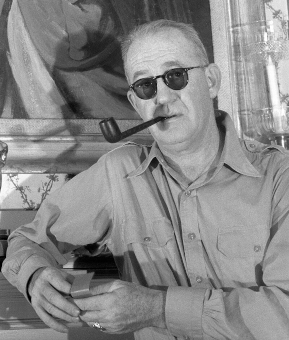
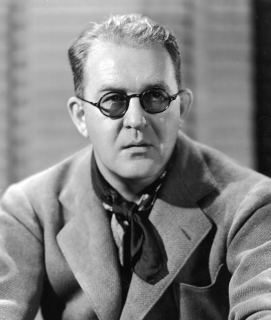
John Ford, American film director of Irish descent and one of the most important and influential filmmakers of his generation, dies in Palm Desert, California, on August 31, 1973.

Ford is born John Martin Feeney on February 1, 1894, at Cape Elizabeth, Maine. He is the fourth son among five sons and six daughters of Seán Feeney, Roman Catholic farmer and saloonkeeper, and Barbara ‘Abby’ Feeney (née Curran). His father had emigrated to the United States from Spiddal, County Galway, and his mother from Kilronan, Inishmore, one of the Aran Islands.

From an early age Ford has an interest in painting and sailing, and in July 1914 moves to California, where his older brother Francis is an actor with a small film company. Adopting the name ‘Jack Ford,’ he learns his trade as a filmmaker and acts in a number of silent films. Reveling in his Irish heritage, he makes his director’s debut with The Tornado (1917) and follows it with more than forty movies over the next six years. On July 3, 1920, he marries Mary McBryde Smith, a former officer in the army medical corps. They meet at a party thrown by the director Rex Ingram and have one son and one daughter.

In 1921 Ford visits Ireland for the first time and later claims to have travelled on the same boat that brought Michael Collins back from the treaty negotiations. He meets his relatives at Spiddal, falls in love with the countryside, and becomes a fervent Irish nationalist. It is later claimed that he brought over funds for his cousin Martin Feeney, a member of an Irish Republican Army (IRA) flying column.

Returning to Hollywood, Ford becomes friends with the retired marshal Wyatt Earp and makes a number of commercially successful films, now as ‘John Ford’. In 1926 he directs The Shamrock Handicap, a horse-racing yarn partly set in Ireland. In 1928 he shoots Mother Machree, a movie about Irish emigration, starring Victor McLaglen, a regular collaborator. McLaglen also stars in Hangman’s House, made the same year, Ford’s first major movie about Ireland.

In 1934 Ford purchases a luxury yacht which he names the Araner after the Aran Islands. He also begins shooting The Informer, a film set in Ireland during the Irish War of Independence and based on a short novel by Liam O’Flaherty. The picture is a major box office success and wins four Academy Awards, including Best Director. O’Flaherty is so impressed with the film that he dedicates his next book, Famine, to Ford.

In 1934 Ford visits Ireland for the second time, and approaches Seán O’Casey about directing a version of The Plough and the Stars. Released in 1936, the film stars Barry Fitzgerald as Fluther, but it is reedited by the studio, much to Ford’s fury, and is a commercial and critical flop.

Stagecoach, shot in 1938, is one of Ford’s masterpieces. It was a western starring his protégé, John Wayne, and marks the beginning of his golden decade. In 1940 and 1941 he wins Best Director Oscars successively for The Grapes of Wrath and How Green Was My Valley. With American entry into World War II, he serves in the U.S. Navy, and makes important documentaries such as The Battle of Midway (1942).

In 1952 Ford returns to Ireland to film The Quiet Man, starring Wayne, McLaglen, and Maureen O’Hara. Shot at Ashford Castle, County Mayo, the picture becomes one of the most popular Irish films of all time. He is immensely proud of the work and is in tears leaving Ireland. The following year he makes Mogambo, with Clark Gable, Grace Kelly and a young English actor, Donald Sinden, who later recalls that Ford berated him personally for all the problems of Ireland from the time of William of Orange. Ford’s strong sense of Irishness is central to his character and is crucial for any understanding of his work. Back in Ireland in 1956, he shoots The Rising of the Moon, a portmanteau film for which he takes no salary, starring Tyrone Power, Cyril Cusack, and Noel Purcell. A minor film, it makes no impact at the box office.

Two of Ford’s finest movies are made in his later years. The Searchers (1956) is a powerful study of vengeance, while The Man Who Shot Liberty Valance (1962) is an elegiac revisionist western which concludes with the famous line, “When the legend becomes fact, print the legend.”

Struck with cancer in his final years, Ford dies on August 31, 1973 at his home in Palm Desert, California, and is buried at Holy Cross Cemetery, Culver City. His will disinherits his son, Michael Patrick Roper, and leaves everything to his wife, daughter, and grandchildren.

When asked to name the finest American directors, Orson Welles replies simply, “John Ford, John Ford, and John Ford.” An alcoholic, Ford is a difficult and often tyrannical director, but he makes films of extraordinary power and vision. He ranks as one of the greatest filmmakers of the twentieth century. As Frank Capra concludes, “John is half-tyrant, half-revolutionary; half-saint, half-Satan; half-possible, half-impossible; half-genius, half-Irish.”

(From: “Ford, John,” contributed by Patrick M. Geoghegan, Dictionary of Irish Biography, http://www.dib.ie)


Leave a comment

Birth of Irish American Writer Cormac McCarthy

Cormac McCarthy, Irish American writer who authors twelve novels, two plays, five screenplays, and three short stories, spanning the Western and post-apocalyptic genres, is born in Providence, Rhode Island, on July 20, 1933. He is known for his graphic depictions of violence and his unique writing style, recognizable by a sparse use of punctuation and attribution. He is widely regarded as one of the greatest American novelists.

McCarthy is one of six children born into the Irish Catholic family of Gladys Christina McGrail and Charles Joseph McCarthy. Although he is born in Rhode Island, he is raised primarily in Tennessee where his father works as a lawyer for the Tennessee Valley Authority. He attends St. Mary’s Parochial School and Knoxville Catholic High School and is an altar boy at Knoxville‘s Church of the Immaculate Conception. In 1951, he enrolls at the University of Tennessee, but drops out to join the United States Air Force.

McCarthy’s debut novel, The Orchard Keeper, is published in 1965. Awarded literary grants, he is able to travel to southern Europe, where he writes his second novel, Outer Dark (1968). Suttree (1979), like his other early novels, receives generally positive reviews, but is not a commercial success. A MacArthur Fellowship enables him to travel to the American Southwest, where he researches and writes his fifth novel, Blood Meridian (1985). Although it initially garners a lukewarm critical and commercial reception, it has since been regarded as his magnum opus, with some labeling it the Great American Novel.

McCarthy first experiences widespread success with All the Pretty Horses (1992), for which he receives both the National Book Award and the National Book Critics Circle Award. It is followed by The Crossing (1994) and Cities of the Plain (1998), completing The Border Trilogy. His 2005 novel No Country for Old Men receives mixed reviews. His 2006 novel The Road wins the 2007 Pulitzer Prize for Fiction and the James Tait Black Memorial Prize for Fiction.

Many of McCarthy’s works have been adapted into film. The 2007 film adaptation of No Country for Old Men is a critical and commercial success, winning four Academy Awards, including Best Picture. The films All the Pretty Horses, The Road, and Child of God are also adapted from his works of the same names, and Outer Dark is turned into a 15-minute short. He has a play adapted into a 2011 film, The Sunset Limited.

McCarthy works with the Santa Fe Institute, a multidisciplinary research center, where he publishes the essay “The Kekulé Problem” (2017), which explores the human unconscious and the origin of language. He is elected to the American Philosophical Society in 2012. His final novels, The Passenger and Stella Maris, are published on October 25, 2022, and December 6, 2022, respectively.

McCarthy dies of natural causes at his home in Santa Fe, New Mexico, on June 13, 2023, aged 89. Stephen King says McCarthy is “maybe the greatest American novelist of my time … He was full of years and created a fine body of work, but I still mourn his passing.”


Leave a comment

Death of Irish Actor Ray McAnally

Ray McAnally, Irish actor and winner of four BAFTA awards in the late 1980s, dies in County Wicklow on June 15, 1989.

McAnally is born on March 30, 1926, in Buncrana, a seaside town located on the Inishowen peninsula of County Donegal. The son of a bank manager, he is educated at Saint Eunan’s College in Letterkenny where he writes, produces and stages a musical called “Madame Screwball” at the age of sixteen. He enters St. Patrick’s College, Maynooth at the age of 18 but leaves after a short time having decided that the priesthood is not his vocation. He joins the Abbey Theatre in 1947 where he meets and marries actress Ronnie Masterson.

The couple later forms Old Quay Productions and present an assortment of classic plays in the 1960s and 1970s. McAnally makes his theatre debut in 1962 with A Nice Bunch of Cheap Flowers and gives a well-received performance as George in Who’s Afraid of Virginia Woolf?, opposite Constance Cummings, at the Piccadilly Theatre.

On television he is a familiar face, often in glossy thriller series like television series The Avengers, Man in a Suitcase, and Strange Report. In 1968 he takes the title role in Spindoe, a series charting the return to power of an English gangster, Alec Spindoe, after a five-year prison term. This is a spin-off from another series, The Fellows (1967) in which McAnally had appeared in several episodes as the Spindoe character. He could render English accents very convincingly.

McAnally regularly acts in the Abbey Theatre and at Irish festivals, but in the last decade of life he achieves award-winning notice on TV and films. His impressive performance as Cardinal Altamirano in the film The Mission (1986) earns him Evening Standard and BAFTA awards. He earns a second BAFTA award for his role in the BBC’s A Perfect Spy (1987). In 1988 he wins the BAFTA for Best Actor for his performance in A Very British Coup, a role that also brings him a Jacob’s Award. In the last year of his life, he portrays the father of Christy Brown, played by Daniel Day-Lewis, in the Academy Award-winning film, My Left Foot (1989).

McAnally dies suddenly of a heart attack on June 15, 1989, at the age of 63, at his home in County Wicklow which he shares with Irish actress Britta Smith. He remains married to actress Ronnie Masterson until his death, although they reside in different homes. He receives a posthumous BAFTA award for Best Supporting Actor for his last film, My Left Foot, in 1990.

At the time of his death, McAnally is due to play “Bull McCabe” in Jim Sheridan‘s film The Field. The part eventually goes to Richard Harris who receives an Academy Award nomination for his performance. McAnally had also been cast in the lead role of First and Last, a drama about a man who walked from Land’s End to John o’ Groats. Filming is almost a third of the way done when he dies, but the whole play has to be re-filmed, with Joss Ackland taking the role instead.


Leave a comment

Neeson & Richardson Donate Libel Payout to Omagh Bombing Victims

On September 27, 1998, film star couple Liam Neeson and Natasha Richardson announce they will donate a five-figure libel payout to a memorial fund for the victims of the Omagh bomb massacre that occurred in Northern Ireland on August 15, 1998, killing 29 people.

Neeson and Richardson win £50,000 ($85,370) in libel damages over newspaper allegations that their marriage is on the rocks. The couple sues the Daily Mirror publishers MGN for libel and malicious falsehood after the tabloid paper claimed Natasha Richardson was filing for divorce behind her husband’s back and that their marriage was a sham.

The story is published in August 1998 in London, Scotland, the Irish Republic and Northern Ireland – where Neeson was born and where his family still live.

A High Court judge in London hears that the actors – married for four years with two young sons – were shocked by the allegations which caused “an explosion of publicity worldwide.”

Neeson, who is nominated for an Academy Award for his role in the film Schindler’s List, is told about the article by his mother. She phones him in great distress from Northern Ireland after seeing the headlines while out shopping.

The actors’ solicitor, Mark Thomson, tells Mr. Justice Gray that the couple then spent several days attempting to deal with the destructive aftermath of the articles denying the allegations to friends and family.

Mirror Group Newspapers accepts “unequivocally” that the story is entirely false and apologises for the embarrassment, hurt and distress caused to the couple. “We entirely accept that there is absolutely no truth in the allegations about Mr. Neeson and Miss Richardson and that the allegations should never have been published. We apologise unreservedly to Mr. and Mrs. Neeson and their family for the distress and embarrassment they have been caused. We have agreed not to repeat the allegations and to pay substantial damages to them, which they are donating to the victims of the Omagh bombing.”

The information came from a source thought to be reliable, but it was clearly a mistake for the reporter to rely on that source, says solicitor Martin Cruddace.


Leave a comment

Death of Clare Boylan, Author, Journalist & Critic

Clare Boylan, Irish author, journalist and critic for newspapers, magazines and many international broadcast media, dies in Dublin at Our Lady’s Hospice, Harold’s Cross, on May 16, 2006.

Boylan is born in Dublin on April 21, 1948, the youngest of three daughters of Patrick Boylan, a clerk, and his wife Evelyn (née Selby). Her mother feels trapped by the limitations that domesticity imposes on women in 1950s Ireland, and had wanted to have a writing career. She encourages her daughter to send off stories and poems to newspapers. The first piece is published when she is 14, and she wins a prize in the national Texaco Children’s Art Competition when she is about 10 years old.

The family lives in the Dublin suburb of Terenure. Boylan goes to school in the Presentation convent, then St. Louis convent in Rathmines, and does her leaving certificate in Rathmines College.

After leaving St. Louis convent, Boylan takes a job as a sales assistant in a bookshop before beginning her career as a journalist at The Irish Press, now defunct. She marries Alan Wilkes, a journalist who is a colleague at The Irish Press, in St. Patrick’s Church in Straffan, County Kildare, on September 18, 1970. In 1974 she wins the Journalist of the Year award when working in the city for the Evening Press. Later in her career she edits the glossy magazine Image, before largely giving up journalism to focus on a career as an author.

Boylan’s novels are Holy Pictures (1983), Last Resorts (1984), Black Baby (1988), Home Rule (1992), Beloved Stranger (1999), Room for a Single Lady (1997), which wins the Spirit of Light Award and is optioned for a film, and Emma Brown (2003). The latter work is a continuation of a 20-page fragment written by Charlotte Brontë before her death.

Boylan’s short stories are collected in A Nail on the Head (1983), Concerning Virgins (1990) and That Bad Woman (1995). The film Making Waves, based on her short story “Some Ladies on a Tour”, is nominated for an Oscar in 1988.

Boylan’s non-fiction includes The Agony and the Ego (1994) and The Literary Companion to Cats (1994). She writes introductions to the novels of Kate O’Brien and Molly Keane and adapts Keane’s novel Good Behaviour as the classic serial for BBC Radio 4 (2004). Her work has been translated as far afield as Russia and Hong Kong.

In later life, Boylan lives in County Wicklow with her husband. When she is diagnosed with ovarian cancer, she faces her illness with characteristic strength. She takes up kickboxing and spends time in France, shopping, cooking and entertaining friends. She succumbs to cancer at the age of 58 on May 16, 2006.


Leave a comment

Birth of John Ford, Award Winning Irish American Film Director

John Ford, film director, is born as John Martin Feeney on February 1, 1894 at Cape Elizabeth, Maine. He is the fourth son among five sons and six daughters of Seán Feeney, Roman Catholic farmer and saloon-keeper, and Barbara ‘Abby’ Feeney (née Curran). His father had emigrated to the United States from Spiddal, County Galway, and his mother from Kilronan, Inishmore, one of the Aran Islands.

From an early age Ford has an interest in painting and sailing, and in July 1914 moves to California, where his older brother Francis is an actor with a small film company. Adopting the name ‘Jack Ford,’ he learns his trade as a filmmaker and acts in a number of silent pictures. Reveling in his Irish heritage, he makes his director’s debut with The Tornado (1917) and follows it with more than forty movies over the next six years. On July 3, 1920, he marries Mary McBryde Smith, a former officer in the army medical corps. They meet at a party thrown by the director Rex Ingram and have one son and one daughter.

In 1921 Ford visits Ireland for the first time and later claims to have travelled on the same boat that brought Michael Collins back from the treaty negotiations. He meets his relatives at Spiddal, falls in love with the countryside, and becomes a fervent Irish nationalist. It is later claimed that he brought over funds for his cousin Martin Feeney, a member of an Irish Republican Army (IRA) flying column.

Returning to Hollywood, Ford becomes friends with the retired marshal Wyatt Earp and makes a number of commercially successful films, now as ‘John Ford’. In 1926 he directs The Shamrock Handicap, a horse-racing yarn partly set in Ireland. In 1928 he shoots Mother Machree, a movie about Irish emigration, starring Victor McLaglen, a regular collaborator. McLaglen also stars in Hangman’s House, made the same year, Ford’s first major movie about Ireland.

In 1934 Ford purchases a luxury yacht which he names the Araner after the Aran Islands. He also begins shooting The Informer, a film set in Ireland during the Irish War of Independence, and based on a short novel by Liam O’Flaherty. The picture is a major box office success and wins four Academy Awards, including Best Director. O’Flaherty is so impressed with the film that he dedicates his next book, Famine, to Ford.

In 1934 Ford visits Ireland for the second time, and approaches Seán O’Casey about directing a version of The Plough and the Stars. Released in 1936, the film stars Barry Fitzgerald as Fluther, but it is reedited by the studio, much to Ford’s fury, and is a commercial and critical flop.

Stagecoach, shot in 1938, is one of Ford’s masterpieces. It was a western starring his protégé, John Wayne, and marks the beginning of his golden decade. In 1940 and 1941 he wins Best Director Oscars successively for The Grapes of Wrath and How Green Was My Valley. With American entry into World War II, he serves in the U.S. Navy, and makes important documentaries such as The Battle of Midway (1942).

In 1952 Ford returns to Ireland to film The Quiet Man, starring Wayne, McLaglen, and Maureen O’Hara. Shot at Ashford Castle, County Mayo, the picture becomes one of the most popular Irish films of all time. He is immensely proud of the work and is in tears leaving Ireland. The following year he makes Mogambo, with Clark Gable, Grace Kelly and a young English actor, Donald Sinden, who later recalls that Ford berated him personally for all the problems of Ireland from the time of William of Orange. Ford’s strong sense of Irishness is central to his character and is crucial for any understanding of his work. Back in Ireland in 1956, he shoots The Rising of the Moon, a portmanteau film for which he takes no salary, starring Tyrone Power, Cyril Cusack, and Noel Purcell. A minor film, it makes no impact at the box office.

Two of Ford’s finest movies are made in his later years. The Searchers (1956) is a powerful study of vengeance, while The Man Who Shot Liberty Valance (1962) is an elegiac revisionist western which concludes with the famous line, “When the legend becomes fact, print the legend.”

Struck with cancer in his final years, Ford dies on August 31, 1973 at his home in Palm Desert, California, and is buried at Holy Cross Cemetery, Culver City. His will disinherits his son, Michael Patrick Roper, and leaves everything to his wife, daughter, and grandchildren.

When asked to name the finest American directors, Orson Welles replies simply, “John Ford, John Ford, and John Ford.” An alcoholic, Ford is a difficult and often tyrannical director, but he makes films of extraordinary power and vision. He ranks as one of the greatest film-makers of the twentieth century. As Frank Capra concludes, “John is half-tyrant, half-revolutionary; half-saint, half-Satan; half-possible, half-impossible; half-genius, half-Irish.”

(From: “Ford, John,” contributed by Patrick M. Geoghegan, Dictionary of Irish Biography, http://www.dib.ie)