seamus dubhghaill

Promoting Irish Culture and History from Little Rock, Arkansas, USA


Leave a comment

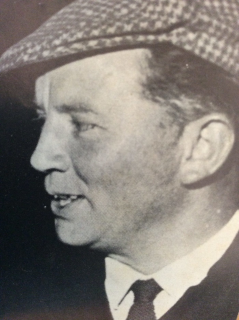
Death of Billy McMillen, Official Irish Republican Army Officer

William McMillen, Irish republican activist and an officer of the Official Irish Republican Army (OIRA) from Belfast, Northern Ireland, is killed during a feud with the Irish National Liberation Army (INLA) on April 28, 1975.

McMillen is born in Belfast on May 19, 1927, and joins the Irish Republican Army (IRA) at age 16 in 1943. During the IRA’s border campaign (1956–62), he is interned and held in Crumlin Road Gaol. In 1964, he runs in the British general election as an Independent Republican candidate. When he places the Irish tricolour in the window of his election office in the lower Falls Road area, this sparks a riot between republicans, loyalists and the Royal Ulster Constabulary (RUC). There have been tensions on the issue since the government of Northern Ireland banned the flying of the tricolour under the Flags and Emblems (Display) Act (Northern Ireland) 1954.

In October 1964, during the general election campaign, a photo of McMillen is placed in the window of the election office in Divis Street flanked on one side by the Starry Plough flag and on the other by the tricolour. His campaign draws national attention after Ian Paisley demands that police remove the tricolour from McMillen’s election offices. The RUC raids the premises and confiscates the flag, sparking several days of rioting during which McMillen leads several thousand protesters in defiantly displaying the tricolour. He recalls the IRA gaining a “couple of dozen recruits” following the election, but he finishes at the bottom of the poll with 3,256 votes (6%). Around this time, he succeeds Billy McKee as the Officer commanding (OC) of the Belfast Brigade.

McMillen is keen to work for the unity of Protestant and Catholic workers. Roy Garland recalls that McMillan’s grandfather was master of an Orange lodge in Edinburgh and McMillan knew of that heritage and the meaning of the colours of the Irish flag. He prominently displays in his election offices a verse of a poem by John Frazier, a Presbyterian from County Offaly: “Till then the Orange lily be your badge my patriot brother. The everlasting green for me and we for one and other.”

In 1967, McMillen is involved in the formation of the Northern Ireland Civil Rights Association (NICRA) and is a member of a three-man committee which draws up the Association’s constitution. The NICRA’s peaceful activities result in violent opposition from many unionists, leading to fears that Catholic areas will come under attack. In May 1969, when asked at an IRA army council meeting by Ruairí Ó Brádaigh how many weapons the Belfast Brigade has for defensive operations, McMillen states they have only one pistol, a machine gun and some ammunition.

By August 14, 1969, serious rioting has broken out in Belfast and Catholic districts come under attack from both civilian unionists and the RUC. McMillen’s IRA command by this point still has only a limited number of weapons because the leadership in Dublin are reluctant to release guns. While he is involved in some armed actions on this day, he is widely blamed by those who established the Provisional IRA for the IRA’s failure to adequately defend Catholic neighbourhoods from Ulster loyalist attack. He is arrested and temporarily detained by the RUC on the morning of August 15 but is released shortly afterward.

McMillen’s role in the 1969 riots is very important within IRA circles, as it is one of the major factors contributing to the split in the movement in late 1969. In a June 1972 lecture organised by Official Sinn Féin in Dublin, he defends his conduct, stating that by 1969 the total membership of the Belfast IRA is approximately 120 men, and their armaments have increased to a grand total of 24 weapons, most of which are short-range pistols.

In September, McMillen calls a meeting of IRA commanders in Belfast. Billy McKee and several other republicans arrive at the meeting armed and demand McMillen’s resignation. He refuses, but many of those unhappy with his leadership break away and refuse to take orders from him or the Dublin IRA leadership. Most of them join the Provisional Irish Republican Army, when this group splits off from the IRA in December 1969. McMillen himself remains loyal to the IRA’s Dublin leadership, which becomes known as the Official IRA. The split rapidly develops into a bitter rivalry between the two groups. In April 1970, he is shot and wounded by Provisional IRA members in the Lower Falls area of Belfast.

In June 1970, McMillen’s Official IRA have their first major confrontation with the British Army, which had been deployed to Belfast in the previous year, in an incident known as the Falls Curfew. The British Army mounts an arms search in the Official IRA stronghold of the Lower Falls, where they are attacked with a grenade by Provisional IRA members. In response, the British flood the area with troops and declare a curfew. This leads to a three-day gun battle between 80 to 90 Official IRA members led by McMillen and up to 3,000 British troops. Five civilians are killed in the fighting and about 60 are wounded. In addition, 35 rifles, 6 machine guns, 14 shotguns, grenades, explosives and 21,000 rounds of ammunition, all belonging to the OIRA, are seized. McMillen blames the Provisionals for instigating the incident and then refusing to help the Officials against the British.

This ill-feeling eventually leads to an all-out feud between the republican factions in Belfast in March 1971. The Provisionals attempt to kill McMillen again, as well as his second-in-command, Jim Sullivan. In retaliation, McMillen has Charlie Hughes, a young PIRA member, killed. Tom Cahill, brother of leading Provisional Joe Cahill, is also shot and wounded. After these deaths, the two IRA factions in Belfast negotiate a ceasefire and direct their attention instead at the British Army.

When the Northern Ireland authorities introduce internment in August 1971, McMillen flees Belfast for Dundalk in the Republic of Ireland, where he remains for several months. During this time, the Official IRA carries out many attacks on the British Army and other targets in Northern Ireland. However, in April 1972, the organisation in Belfast is badly weakened by the death of their commander in the Markets area, Joe McCann. In May of that year, the Dublin leadership of the OIRA calls a ceasefire, a move which McMillen supports. Nevertheless, in the year after the ceasefire, his command kills seven British soldiers in what they term “retaliatory attacks.” McMillen serves on the Ard Chomhairle (leadership council) of Official Sinn Féin.

By 1974, a group of OIRA members around Seamus Costello are unhappy with the ceasefire. In December 1974, they break away from the Official movement, forming the Irish Republican Socialist Party (IRSP) and the Irish National Liberation Army (INLA). Some OIRA members under McMillen’s command, including the entire Divis Flats unit, defect to the new grouping. This provokes another intra-republican feud in Belfast. The feud begins with arms raids on OIRA dumps and beatings of their members by the INLA. McMillen, in response is accused of drawing up a “death list” of IRSP/INLA members and even of handing information on them over to the loyalist Ulster Volunteer Force (UVF).

The first killing comes on February 20, 1975, when the OIRA shoot dead an INLA member named Hugh Ferguson in west Belfast. A spate of shootings follows on both sides.

On April 28, 1975, McMillen is shot dead by INLA member Gerard Steenson, as he is shopping in a hardware shop on Spinner Street with his wife Mary. He is hit in the neck and dies at the scene. His killing is unauthorised and is condemned by INLA/IRSP leader Seamus Costello. Despite this, the OIRA tries to kill Costello on May 9, 1975, and eventually kills him two years later. McMillen’s death is a major blow to the OIRA in Belfast.
Leave a comment

Birth of Billy McKee, Founding Member of the Provisional IRA

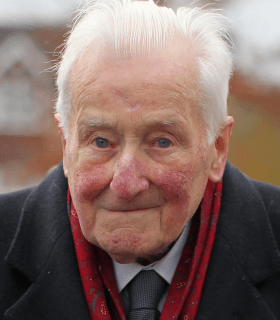
Billy McKee (Irish: Liam Mac Aoidh), Irish republican and a founding member and leader of the Provisional Irish Republican Army, is born on November 12, 1921, in Belfast, Northern Ireland.

McKee joins Fianna Éireann in 1936. He is arrested following a raid on a Gaelic Athletic Association (GAA) club in 1938, being imprisoned in Crumlin Road Gaol for several months. Following his release from prison, he joins the Irish Republican Army (IRA) in 1939. During World War II, the IRA carries out a number of armed actions in Northern Ireland known as the Northern Campaign. He is arrested and imprisoned in Crumlin Road Gaol until 1946 for his role in this campaign. In 1956, the IRA embarks on another armed campaign against partition, known as the Border Campaign. He is again arrested and interned for the duration of the campaign. He is released in 1962.

Upon release, McKee becomes Officer Commanding (OC) of the IRA’s Belfast Brigade. However, he resigns this position in 1963, after a dispute with other republicans due to him acceding to a Royal Ulster Constabulary (RUC) demand that he not fly an Irish tricolour during a republican march. He is succeeded by Billy McMillen.

As the 1960s proceed, McKee drifts away from the IRA. He grows very disillusioned with the organisation’s increasing emphasis on socialism and reformist politics over “armed struggle.” He is a devout Roman Catholic, who attends Mass daily. As a result, he is very uncomfortable with what he feels are “communist” ideas coming into the republican movement.

During the 1969 Northern Ireland riots, severe rioting breaks out in Belfast between Irish Catholic nationalists, Protestant loyalists, and the RUC. McKee is highly critical of the IRA’s failure to defend Catholic areas during these disturbances. On August 14, 1969, McKee, Joe Cahill and a number of other Irish Republican activists occupy houses at Kashmir Street, however, being poorly armed they fail to prevent Irish Catholics in Bombay Street and parts of Cupar Street and Kashmir Street being driven from their homes in the sectarian rioting that engulfs parts of the city. In the aftermath of the riots, he accuses Billy McMillen, the IRA’s Belfast commander, and the Dublin-based IRA leadership, of having failed to direct a clear course of action for the organization in civil disturbances. On September 22, 1969, he and a number of other IRA men arrive with weapons at a meeting called by McMillen and try to oust him as head of the Belfast IRA. They are unsuccessful but announce that they will no longer be taking orders from the IRA leadership in Dublin. In December 1969, the IRA splits into the Provisional IRA which is composed of traditional militarists like McKee, and the Official IRA which is composed of the remnants of the pre-split Marxist leadership and their followers. He sides with the Provisionals and joins the IRA Army Council in September 1970.

McKee becomes the first OC of the Provisional IRA Belfast Brigade. From the start, there is intermittent feuding between McKee’s men and his former comrades in the Official IRA, as they vie for control of nationalist areas. However, the Provisionals rapidly gain the upper hand, due to their projection of themselves as the most reliable defenders of the Catholic community.

McKee himself contributes greatly to this image by an action he undertakes on June 27, 1970, the Battle of St Matthew’s. Rioting breaks out in the Ardoyne area of north Belfast after an Orange Order parade, and three Protestants are killed in gun battles between the Provisional IRA and loyalists. In response, loyalists prepare to attack the vulnerable Catholic enclave of Short Strand in east Belfast. When McKee hears about this, he drives to Short Strand with some men and weapons and takes up position at St Matthew’s Church. In the ensuing five-hour gun battle, he is wounded and one of his men is killed, along with at least four Protestants.

On April 15, 1971, McKee, along with Proinsias Mac Airt, is arrested by the British Army when found in possession of a handgun. He is charged and convicted for possession of the weapon and imprisoned in Crumlin Road Gaol, and Joe Cahill takes over as OC of the Belfast Brigade.

In 1972, McKee leads a hunger strike protest in an effort to win recognition of IRA prisoners as political prisoners. Republicans who are interned already have special status, but those convicted of crimes do not. On June 19, the 35th day of hunger strike, he is close to death, William Whitelaw concedes Special Category Status (SCS) which, although not officially awarding political status, is tacit recognition of the political nature of the incarceration. Prisoners wear their own clothes, have no prison work, can receive one visit and food parcel per week and unlimited letters.

McKee is released on September 4, 1974, and resumes his position as OC of the Belfast Brigade. At this time the Provisional IRA calls a ceasefire, and he is involved, with Ruairí Ó Brádaigh, in secret peace talks in Derry with the Northern Ireland Office. He is also involved in talks with Protestant clergy in Feakle, County Clare, in December 1974, where he voices his desire to end the violence.

However, in the same period, McKee authorises a number of sectarian attacks on Protestants as well as renewed attacks on rival republicans in the Official IRA. For this he is heavily criticised by a group of Provisional IRA activists grouped around Gerry Adams.

A faction led by Adams manages to get McKee voted off the IRA Army Council in 1977, effectively forcing him out of the leadership of the organisation. His health suffers in this period, and he does not resume his IRA activities. He joins Republican Sinn Féin after a split in Sinn Féin in 1986. At age 89, reflecting on his involvement in the Republican cause he says, “From the time I was 15 until 65 I was in some way involved. I have had plenty of time since to think if I was right or I was wrong. I regret nothing.”

In later years McKee, Brendan Hughes and Tommy McKearney are critical of the Belfast Agreement and of the reformist politics of Sinn Féin. In 2016 he sends a message of support to the launch of the hardline new Republican party Saoradh, reportedly the political wing of the New IRA.

McKee dies in Belfast at the age of 97 on June 11, 2019. His funeral takes place on June 15, 2019, in west Belfast. His coffin is carried on a gun carriage. He is buried in Milltown Cemetery.


Leave a comment

Death of Brian Keenan, Member of the Army Council of the Provisional IRA

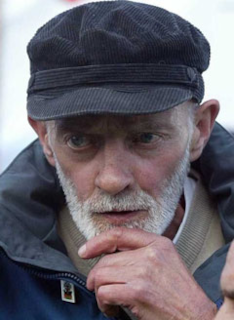
Brian Keenan, a member of the Army Council of the Provisional Irish Republican Army (IRA), dies on May 21, 2008, at Cullyhanna, County Armagh, Northern Ireland, following a battle with colorectal cancer. He receives an 18-year prison sentence in 1980 for conspiring to cause explosions and plays a key role in the Northern Ireland peace process.

The son of a member of the Royal Air Force (RAF), Keenan is born on July 17, 1941, in Swatragh, County Londonderry, Northern Ireland, before his family moves to Belfast. As a teenager, he moves to England to find work, for a time working as a television repairman in partnership with his brother in Corby, Northamptonshire. During this time, he comes to the attention of the police when he damages a cigarette machine, which leads to police having his fingerprints on file. He returns to Northern Ireland when the Troubles begin and starts working at the Grundig factory in the Finaghy area of Belfast where he acquires a reputation as a radical due to his involvement in factory trade union activities.

Despite his family having no history of republicanism, Keenan joins the Provisional Irish Republican Army in 1970 or 1971, and by August 1971 is the quartermaster of the Belfast Brigade. He is an active IRA member, planning bombings in Belfast and travelling abroad to make political contacts and arrange arms smuggling, acquiring contacts in East Germany, Libya, Lebanon and Syria. In 1972, he travels to Tripoli to meet with Libyan leader Muammar Gaddafi in order to acquire arms and finance from his government. In early 1973 he takes over responsibility for control of the IRA’s bombing campaign in England and also becomes IRA Quartermaster General. In late 1973, he is the linchpin of the kidnap of his former employer at Grundig, director Thomas Niedermayer.

In early 1974, Keenan plans to break Gerry Adams and Ivor Bell out of Long Kesh using a helicopter, in a method similar to Seamus Twomey‘s escape from Mountjoy Prison in October 1973, but the plan is vetoed by Billy McKee. He is arrested in the Republic of Ireland in mid-1974 and sentenced to twelve months imprisonment for IRA membership. On March 17, 1975, he is shot and wounded while attempting to lead a mass escape from Portlaoise Prison. While being held in Long Kesh, Gerry Adams helps to devise a blueprint for the reorganisation of the IRA, which includes the use of covert cells and the establishment of a Southern Command and Northern Command. As the architects of the blueprint, Adams, Bell and Brendan Hughes, are still imprisoned, Martin McGuinness and Keenan tour the country trying to convince the IRA Army Council and middle leadership of the benefits of the restructuring plan, with one IRA member remarking “Keenan was a roving ambassador for Adams.” The proposal is accepted after Keenan wins support from the South Derry Brigade, East Tyrone Brigade and South Armagh Brigade, with one IRA member saying, “Keenan was really the John the Baptist to Adams’ Christ.”

In December 1975, members of an IRA unit based in London are arrested following the six-day Balcombe Street siege. The IRA unit had been active in England since late 1974 carrying out a series of bombings, and a few months after his release from prison Keenan visits the unit in Crouch Hill, London, to give it further instructions. In follow-up raids after the siege, police discover crossword puzzles in his handwriting and his fingerprints on a list of bomb parts. A warrant is issued for his arrest.

Garda Síochána informer Sean O’Callaghan claims that Keenan recommended IRA Chief of Staff Seamus Twomey to authorise an attack on Ulster Protestants in retaliation to an increase in sectarian attacks on Catholic civilians by Protestant loyalist paramilitaries, such as the killing of three Catholics in a gun and bomb attack by the Ulster Volunteer Force (UVF) on Donnelly’s Bar in Silverbridge, County Armagh on December 19, 1975. According to O’Callaghan “Keenan believed that the only way, in his words, to put the nonsense out of the Prods [Protestants] was to just hit back much harder and more savagely than them.” Soon after the sectarian Kingsmill massacre occurs, when ten Protestant men returning home from their work are ordered out of a minibus they are travelling in and executed en masse with a machine gun on January 5, 1976.

Keenan is arrested on the basis of the 1975 warrant near Banbridge on March 20, 1979, when the Royal Ulster Constabulary (RUC) stopped two cars travelling north on the main road from Dublin to Belfast and is extradited to England to face charges relating to the Balcombe Street Gang‘s campaign in England. His capture is a blow to the IRA, in particular as he was carrying an address book listing his contacts including Palestinian activists in the United Kingdom. The IRA responds by dispatching Bobby Storey and three other members to break Keenan out of prison using a helicopter, but all four are arrested and remanded to Brixton Prison. Keenan stands trial at the Old Bailey in London in June 1980 defended by Michael Mansfield and is accused of organising the IRA’s bombings in England and being implicated in the deaths of eight people including Ross McWhirter and Gordon Hamilton Fairley. He is sentenced to eighteen years imprisonment after being found guilty on June 25, 1980.

Keenan continues to support Gerry Adams while in prison. In August 1982 Adams is granted permission by the IRA’s Army Council to stand in a forthcoming election to the Northern Ireland Assembly, having been refused permission at a meeting the previous month. In a letter sent from Leicester Prison, Keenan writes that he “emphatically” supports the move and endorses the Army Council’s decision.

Keenan is released from prison in June 1993 and by 1996 is one of seven members of the IRA’s Army Council. Following the events after the IRA’s ceasefire of August 1994, he is openly critical of Gerry Adams and the “tactical use of armed struggle,” or TUAS, strategy employed by the republican movement. After the Northern Ireland peace process becomes deadlocked over the issue of the IRA decommissiong its arms, he and the other members of the Army Council authorise the Docklands bombing which kills two people and marks the end of the IRA’s eighteen-month ceasefire in February 1996.

Keenan outlines the IRA’s public position in May 1996 at a ceremony in memory of hunger striker Seán McCaughey at Milltown Cemetery, where he states, “The IRA will not be defeated…Republicans will have our victory…Do not be confused about decommissioning. The only thing the Republican movement will accept is the decommissioning of the British state in this country.” In the same speech he accuses the British of “double-dealing” and denounces the Irish government as “spineless.”

On February 25, 2001, Keenan addresses a republican rally in Creggan, County Armagh, saying that republicans should not fear “this phase” of “the revolution” collapsing should the Good Friday Agreement fail. He confirms his continued commitment to the Armalite and ballot box strategy, saying that both political negotiations and violence are “legitimate forms of revolution” and that both “have to be prosecuted to the utmost.” He goes on to say, “The revolution can never be over until we have British imperialism where it belongs—in the dustbin of history,” a message aimed at preventing rank-and-file IRA activists defecting to the dissident Real IRA.

Keenan plays a key role in the peace process, acting as the IRA’s go-between with the Independent International Commission on Decommissioning (IICD). Gerry Adams remarks, “There wouldn’t be a peace process if it wasn’t for Brian Keenan.” Keenan resigns from his position on the Army Council in 2005 due to ill-health, and is replaced by Bernard Fox, who had taken part in the 1981 Irish hunger strike. On May 6, 2007, he is guest speaker at a rally in Cappagh, County Tyrone, to commemorate the 20th anniversary of the deaths of the so-called “Loughgall Martyrs,” eight members of the IRA East Tyrone Brigade killed by the Special Air Service (SAS) in 1987.

In July 2002, Keenan is diagnosed as suffering from terminal colorectal cancer. It is alleged by the Irish Independent and The Daily Telegraph that Keenan succeeded Thomas “Slab” Murphy as Chief of Staff of the Provisional IRA at some point between the late 1990s and the mid-2000s before he relinquished the role to deal with his poor health caused by cancer.

Keenan’s last years are spent living with his wife in Cullyhanna, County Armagh, where he dies of cancer on May 21, 2008. He is an atheist and receives a secular funeral, representing a major republican show of strength.


Leave a comment

The Execution of Tom Williams, IRA Volunteer

File source: http://en.wikipedia.org/wiki/File:Vol._Tom_Williams.jpg

Thomas Joseph Williams, a volunteer in C Company, 2nd Battalion of the Belfast Brigade in the Irish Republican Army (IRA), is hanged in the Crumlin Road Gaol on September 2, 1942, for his involvement in the killing of Royal Ulster Constabulary (RUC) police officer Patrick Murphy during the Northern campaign.

Williams is born in the Beechmount area of Belfast on May 12, 1923. He is the third child in a family of six. After the death of his mother, he and his brother go to live with their grandmother at 46 Bombay Street in the Clonard area of Belfast. The Williams family has to leave the small Catholic enclave in the Shore Road area of Belfast after their house is attacked and burned.

As a child, Williams suffers from asthma and as a result is often very ill. He attends St. Gall’s Primary School but leaves at an early age to obtain work, which at the time is difficult due to discrimination. His work therefore consists of labouring and as a delivery boy.

As soon as Williams is old enough, he joins Na Fianna Éireann, the republican Scout Organisation founded by Constance Markievicz in 1909, becoming a member of the Con Colbert slua in the Clonard area. Alfie Hannaway, a friend of Williams, is his OC in Na Fianna, and assigns him to the rank of Quartermaster for the company. He takes his role in Na Fianna very seriously and all who came to know him are struck by his dedication and maturity, even at this early age.

At the age of 17, Williams is old enough to become a volunteer and joins C Company of the IRA in the Clonard area where he lives. Due to his “dedication and his remarkable ability” he is appointed to the role of Adjutant of C Company.

At Easter 1942 the government of Northern Ireland bans all parades to commemorate the anniversary of the Easter Rising. An IRA unit of six men and two women stage a diversionary action against the RUC to allow three parades to take place in West Belfast, but in this clash a RUC officer is killed, and the six IRA men are captured. The RUC officer, Constable Patrick Murphy, a father of nine children, from the Falls Road area of Belfast, is one of a minority of Catholics serving in the RUC.

There is debate over the years about who actually fired the fatal shot. The six IRA members are convicted and sentenced to death for murder under the law of common purpose. Five have their sentences commuted. The sentence of Williams, who acknowledges that he is the leader of the IRA unit involved and takes full responsibility for the actions of his men, is not commuted.

Williams is hanged in Crumlin Road Gaol in Belfast on the morning of September 2, 1942. The executioner is the official English hangman Thomas Pierrepoint, assisted by his nephew Albert Pierrepoint. Afterwards Williams’ body is interred in unhallowed ground in an unmarked grave within the grounds of the prison. His remains are only released in January 2000 after the closure of the prison in 1996 and a lengthy campaign by the National Graves Association, Belfast.

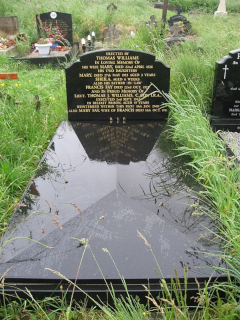
Williams’s funeral is held on January 19, 2000, and is attended by thousands, with burial at Milltown Cemetery. Joe Cahill, Williams’s cell mate, and John Oliver, sentenced to death with Williams but later reprieved, as well as Madge McConville, who had been arrested with Williams, Greta McGlone, Billy McKee, Eddie Keenan and perhaps least known, Nell Morgan, Williams’s girlfriend at the time of his death, are all present. Six senior Sinn Féin members including Gerry Adams are also present in St. Paul’s Church on the Lower Falls Road for the Mass.

Williams is remembered in a ballad Tom Williams. Various recordings have been made, most notably by the Flying Column and Éire Óg, who preamble their version with the story of the campaign to release his body. The now disbanded, Volunteer Tom Williams Republican Flute Band from Glasgow, Scotland is named in his memory as is the Tom Williams Camogie Club in Belfast.

(Pictured: Tom Williams’ headstone at Milltown Cemetery after being reinterred)