seamus dubhghaill

Promoting Irish Culture and History from Little Rock, Arkansas, USA


Leave a comment

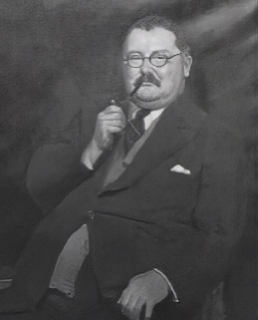
Death of R. M. “Bertie” Smyllie, Editor of “The Irish Times”

Robert Maire Smyllie, known as Bertie Smyllie, editor of The Irish Times for twenty years, dies on September 11, 1954.

Smyllie is born on March 20, 1893, at Hill Street, ShettlestonGlasgowScotland. He is the eldest of four sons and one daughter of Robert Smyllie, a Presbyterian printer originally from Scotland who is working in Sligo, County Sligo, at the time, and Elisabeth Follis, originally from Cork, County Cork. His father marries in Sligo on July 20, 1892, and later becomes proprietor and editor of the unionist Sligo Times. Smyllie attends Sligo Grammar School in 1906 and enrolls at Trinity College Dublin (TCD) in 1911.

After two years at TCD, Smyllie’s desire for adventure leads him to leave university in 1913. Working as a vacation tutor to an American boy in Germany at the start of World War I, he is detained in Ruhleben internment camp, near Berlin, during the war. As an internee, he is involved in drama productions with other internees. Following his release at the end of the war, he witnesses the German revolution of 1918–1919. During this period, he encounters revolutionary sailors from Kiel who temporarily make him a representative of the Workers’ and Soldiers’ Council, and he observes key events including the looting of the Kaiser’s Palace and violent clashes between rival factions in Berlin. It is also during this period that he secures a personal interview with David Lloyd George at the Paris Convention of 1919. This helps Smyllie gain a permanent position with The Irish Times in 1920, where he quickly earns the confidence of editor John Healy. Together, they take part in secret but unsuccessful attempts to resolve the Irish War of Independence.

Smyllie contributes to the Irishman’s Diary column of the paper from 1927. In 1927, he publishes an exclusive report outlining a draft government including both Labour Party and Fianna Fáil TDs, signaling the volatile politics of the early state years.

Smyllie’s knowledge of languages (particularly the German he had learned during his internment) led to numerous foreign assignments. His reports on the rise of National Socialism in 1930s Germany are notably prescient and instill in him a lasting antipathy towards the movement.

When Healy dies in 1934, Smyllie becomes editor of The Irish Times and also takes on the role of Irish correspondent for The Times (London), a position that brings significant additional income. Under Healy’s leadership, The Irish Times shifted from representing the Anglo-Irish ascendancy to becoming an organ of liberal, southern unionism, and eventually becomes a critical legitimising force in the Irish Free State. Smyllie enthusiastically supports this change. He establishes a non-partisan profile and a modern Irish character for the erstwhile ascendancy paper. For example, he drops “Kingstown Harbour” for “Dún Laoghaire.” He also introduces the paper’s first-ever Irish-language columnist. He is assisted by Alec Newman and Lionel Fleming, recruits Patrick Campbell and enlists Flann O’Brien to write his thrice-weekly column “Cruiskeen Lawn” as Myles na gCopaleen. As editor, he introduces a more Bohemian and informal style, establishing a semi-permanent salon in Fleet Street’s Palace Bar. This becomes a hub for journalists and literary figures and a source of material for his weekly column, Nichevo.

One of Smyllie’s early political challenges as editor concerns the Spanish Civil War. At a time when Irish Catholic opinion is strongly pro-Franco, he ensures The Irish Times coverage is balanced and fair, though advertiser pressure eventually forces the withdrawal of the paper’s young reporter, Lionel Fleming, from the conflict. His awareness of the looming European crisis earns him the Order of the White Lion of Czechoslovakia in 1939. However, during World War II, he clashes with Ireland’s censorship authorities, especially under Minister Frank Aiken. He challenges their views both publicly and privately, though his relationship with the editor of the Irish Independent, Frank Geary, is cold, reducing the effectiveness of their joint opposition to censorship.

During the 1943 Irish general election, Smyllie uses the paper to promote the idea of a national government that could represent Ireland with authority in the postwar world. He praises Fine Gael’s proposal for such a government and criticises Éamon de Valera for dismissing it as unrealistic. This leads to a public exchange between de Valera and Smyllie, with the latter defending The Irish Times’s role as a constructive voice for Ireland’s future rather than a partisan interest.

Following the war, Smyllie’s editorial stance shifts toward defending Ireland’s neutrality and diplomatic position. When Winston Churchill accuses de Valera of fraternising with Axis powers, Smyllie counters by revealing Ireland’s covert collaboration with the Allies, such as military and intelligence cooperation, despite official neutrality. In the same period, he continues to oppose censorship, particularly the frequent banning of Irish writers by the Censorship of Publications Board. This opposition features prominently in a controversy on The Irish Times letters page in 1950, later published as the liberal ethic. The paper also adopts a critical stance toward the Catholic Church, notably during the 1951 resignation of Minister for Health Noël Browne amid opposition from bishops and doctors to a national Mother and Child Scheme. His editorials suggest the Catholic Church is effectively the government of Ireland, though he maintains a cordial relationship with Archbishop of DublinJohn Charles McQuaid, who invites him annually for dinner.

Smyllie is also wary of American foreign policy, showing hostility particularly during the Korean War. American diplomats in Dublin allege that Smyllie is “pro-communist“. Despite growing readership among an educated Catholic middle class, The Irish Times’s circulation in 1950 remains under 50,000, far below the Irish Independent and the Fianna Fáil-aligned The Irish Press.

In later years, Smyllie’s health declines, prompting a quieter lifestyle. He moves from his large house in Pembroke Park, Dublin, to DelganyCounty Wicklow. As he does not drive, he becomes less present in the newspaper office in D’Olier Street, contributing to a decline in the paper’s dynamism. His health deteriorates further, resulting in frequent absences from his editorial duties, though he retains his position despite management attempts to limit his authority, especially over finances. He dies of heart failure on September 11, 1954.

In 1925, Smyllie marries Kathlyn Reid, eldest daughter of a County Meath landowner. They have no children.

Smyllie is an eccentric: he hits his tee shots with a nine iron, speaks in a curious mix of Latin phrases and everyday Dublin slang, and weighs 22 stone (308 lbs.; 140 kg) yet still cycles to work wearing a green sombrero.


2 Comments

Birth of Georgie Hyde-Lees Yeats, Wife of Poet W. B. Yeats

Georgie Hyde-Lees Yeats, the wife of the poet William Butler Yeats, is born Bertha Hyde-Lees in Fleet, Hart District, Hampshire, England, on October 16, 1892.

Hyde-Lees is the daughter of militia captain (William) Gilbert Hyde-Lees (1865–1909), of the Manchester Regiment, and Edith “Nelly” Ellen (1868–1942), daughter of barrister and manufacturer Montagu Woodmass, JP. Her father is regarded by her mother’s family as “a most undesirable character, but ‘rolling in money,'” having taken up the life of a “gentleman alcoholic” on resigning his commission after receiving an inheritance from his wealthy uncle Harold Lees, of Pickhill Hall, near Wrexham, then part of Denbighshire. He is “attractive, reckless, witty, and… musical,” and fond of pranks. She has an elder brother, Harold (1890–1963), who becomes a clergyman, with “rigid moral standards” and “a less than joyous existence,” his only indulgence being “a fine collection of drawings and etchings.” When she is only a few years old, her parents’ marriage fails due to her father’s alcoholism. Her father has enough income to support his family, allowing Georgie and her mother to spend “a good deal of their time” travelling in Europe, but his wife is in the awkward social position of being a “married woman without a husband.” The family lives a vaguely bohemian and nomadic lifestyle, travelling frequently to country homes and spending long periods visiting relatives.

Hyde-Lees attends a number of schools in Knightsbridge, London art schools, studies languages and classics, and piano. She becomes a close friend of Dorothy Shakespear, who is fond of Georgie and shares many of her interests despite being six years her senior. After the death of her father in 1909 at the age of 44, her mother marries Dorothy’s uncle, Henry Tucker, Olivia Shakespear‘s brother, and they move to Kensington.

Hyde-Lee’s mother often brings young musicians and artists she has recently met to Olivia Shakespear’s salon, many of whom become well-known modernists, including Ezra Pound, Walter Rummel, and Frederic Manning. She continues to make the rounds of country estates with her mother and Olivia and Dorothy Shakespear. It is in their company in 1910 or 1911, as a seventeen-year-old, that one morning she meets W. B. Yeats at the British Museum and again that afternoon during tea at the Shakespears.

Seven years later, when Hyde-Lees is 25 and Yeats is 52, he asks her to marry him. Only a few weeks earlier, Iseult Gonne, the daughter of Maud Gonne whom Yeats had loved for many years, had rejected his marriage proposal. She and Yeats marry just three weeks later, on October 20, 1917, in a public register office, witnessed by her mother and Ezra Pound. During the honeymoon, while Yeats is still brooding about Iseult’s rejection, she begins the automatic writing which fascinates him. Yeats writes about her psychography days later in what is to be A Vision (1925), and it holds the marriage together for many years. Within a year of marriage, Yeats declares her name of Georgie to be insufferable, and henceforth calls her George.

The couple has two children, Anne and Michael. Hyde-Lees Yeats dies on August 23, 1968, in Rathmines, County Dublin. She is buried at Drumcliff Churchyard, Drumcliff, County Sligo.


Leave a comment

Death of Novelist Richard Dowling

Richard Dowling, Irish novelist, dies on July 28, 1898, at his home in the Tooting district of South London.

Dowling is born on June 3, 1846, in Clonmel, County Tipperary, the only son of David Jeremiah Dowling, schoolmaster, and Margaret Dowling. His father dies when he is nine years old. He is educated in Clonmel, Waterford, and St. Munchin’s College in Corbally, Limerick, before entering the shipping office of his uncle William Downey in Waterford at the age of eighteen. He distinguishes himself in the Waterford Literary and Debating Society and contributes to local newspapers, including the Waterford Citizen and The Waterford Chronicle. In 1870, he joins the staff of The Nation and moves to Dublin. On the outbreak of the Franco–Prussian War, he edits for Alexander Martin Sullivan a war-sheet, The Daily Summary, and subsequently becomes editor and contributor successively to the humorous but short-lived Zozimus and Ireland’s Eye.

Dowling settles in London in 1874, joining the staff of the Illustrated Sporting and Dramatic News, and founds Yorick in 1876, a comic paper with cartoons by Harry Furniss which lasts six months. In 1879, he publishes the first and most successful of his many novels, The Mystery of Killard, a strange tale of a deaf-mute fisherman in County Clare, which is hailed as one of the most striking romances of the year. Though his later novels are intensely realistic, exciting, and clever, they never achieve the same high standard. According to Furniss, who thought Dowling would be a great author, he “drifted into the quicksand of Bohemianism…He sank a wreck, with a rich cargo of genius that was never delivered to the world.” Other writers later mention his unfulfilled promise. Among his other novels of Irish interest are Sweet Inisfail (1882) and Old Corcoran’s Money (1892). A dramatisation of Below Bridge (1895) is staged on April 6, 1896, at the Novelty Theatre, London.

Dowling contributes poetry, short stories, and essays to several magazines, including Belgravia, London Society, and Saturday Journal, and is a frequent contributor to Tinsley’s Magazine, writing its leading serials (1880–82), which are later published as the novels Under St. Paul’s (1881) and The Duke’s Sweetheart (1881). His collections of essays include On Babies and Ladders (1873), which some critics believe to be his best work, Ignorant Essays (1887), Indolent Essays (1889), full of wit and original thought, and descriptive essays London Town (1880). He also edits the Poems (1891) of John Francis O’Donnell. He writes both under his own name and under various pseudonyms, including Peter Mendaciorum, Marcus Fall and Emmanuel Kink. A selection of his letters is published as Some Old Letters (Oct. – Nov. 1919) and More Old Letters (Jan. – Feb. 1920).

According to his daughter, Dowling works erratically, often continuously for several days and nights. An invalid during his later years, he composes his works on a sofa, invariably wearing a cap and with a soup-plate full of pipes beside him, which he enjoys in turn. A mild, kind, and gentle personality, he is an effective raconteur and a witty conversationalist. His cousin, Edmund Downey, who publishes many of his works, is introduced to the publishing world by Dowling. He is an applicant to the British charity for authors, the Royal Literary Fund, and leaves his family ill provided for.

Dowling dies on July 28, 1898, at his home at 2 Foulser Road, Tooting, South London, and is buried in Mortlake Cemetery, London. He is married and has three children, although his wife’s name and the date of their marriage are not known.

(From: “Dowling, Richard” by Helen Andrews, Dictionary of Irish Biography, http://www.dib.ie, October 2009)


Leave a comment

Birth of Landscape Painter Francis Danby

Francis Danby, Irish painter of the Romantic era, is born near Killinick, County Wexford, on November 16, 1793. His imaginative, dramatic landscapes are comparable to those of John Martin. Danby initially develops his imaginative style while he is the central figure in a group of artists who have come to be known as the Bristol School. His period of greatest success is in London in the 1820s.

The death of Danby’s father in 1807 causes the family to move to Dublin. He begins to practice drawing at the Royal Dublin Society‘s schools and, under an erratic young artist named James Arthur O’Connor, he begins painting landscapes. Danby also makes acquaintance with George Petrie.

In 1813 Danby leaves for London together with O’Connor and Petrie. This expedition, undertaken with very inadequate funds, quickly comes to an end, and they have to get home again by walking. At Bristol they make a pause and Danby, finding he can get trifling sums for watercolor drawings, remains there working diligently and sending pictures of importance to the London exhibitions. There his large oil paintings quickly attract attention.

Around 1819, Danby becomes a member of the informal group of artists which become known as the Bristol School, taking part in their evening sketching meetings and sketching excursions visiting local scenery. He remains connected with members of the Bristol School for about a decade, even after leaving Bristol in 1824.

The group initially forms around Edward Bird, and Danby eventually succeeds Bird as its central figure. The Bristol artists, particularly the amateur Francis Gold, are also important in influencing Danby towards a more imaginative and poetical style. George Cumberland, another of the amateurs, has influential London connections. In 1820 when Danby exhibits The Upas Tree of Java at the British Institution, Cumberland uses his influence to promote its favourable reception. Danby’s atmospheric work An Enchanted Island, successfully exhibited in 1825 at the British Institution and then back in Bristol at the Bristol Institution, is in turn particularly influential on other Bristol School artists.

The Upas Tree of Java (1820) and The Delivery of Israel (1825) bring him his election as an Associate Member of the Royal Academy of Arts. He leaves Bristol for London, and in 1828 exhibits his Opening of the Sixth Seal at the British Institution, receiving from that body a prize of 200 guineas.

In 1829 Danby’s wife deserts him, running off with the painter Paul Falconer Poole. Danby leaves London, declaring that he will never live there again. For a decade he lives on the Lake Geneva in Switzerland, becoming a Bohemian with boat-building fancies, painting only occassionaly. He later moves to Paris for a short period of time. He returns to England in 1840.

Francis Danby lives his final years at Exmouth in Devon, where he dies on February 9, 1861. Along with John Martin and J. M. W. Turner, Danby is considered among the leading British artists of the Romantic period.