seamus dubhghaill

Promoting Irish Culture and History from Little Rock, Arkansas, USA


Leave a comment

Death of Rosie Hackett, Trade Union Leader & Insurgent

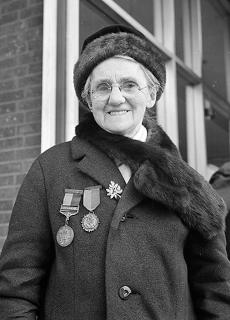
Rosanna “Rosie” Hackett, Irish insurgent and trade union leader, dies on May 4, 1976, at St. Vincent’s Hospital, Fairview, Dublin. She is a founder-member of the Irish Women Workers’ Union (IWWU) and supports strikers during the 1913 Dublin lock-out. She later becomes a member of the Irish Citizen Army and is involved in the 1916 Easter Rising. In the 1970s, the labour movement awards her a gold medal for decades of service, and in 2014 a Dublin city bridge is named in her memory.

Hackett is born into a working-class family in Dublin on July 25, 1893, the daughter of John Hackett, a hairdresser, and Roseanna Dunne. According to the 1901 census, she is living with her widowed mother and five other family members in a tenement building on Bolton Street in Dublin. The available documents suggest that her father dies when she is still very young. She joins the Irish Transport and General Workers’ Union (ITGWU) when it is established in 1909 by James Larkin, which marks the beginning of her lifelong activity in trade unionism. By 1911 she is living with her family in a cottage on Old Abbey Street, and her mother has remarried to Patrick Gray.

Hackett fights for many decades for the rights of workers. Through her affiliation and work with the ITGWU, the IWWU and the Irish Citizen Army, she helps carve out and secure modern-day working conditions. Her career begins as a packer in a paper store, then becoming a messenger for Jacob’s biscuits. At that time the working conditions in the factory are poor.

On August 22, 1911, Hackett helps organise the withdrawal of women’s labour in Jacob’s factory to support their male colleagues who are already on strike. With the women’s help, the men secure better working conditions and a pay rise. Two weeks later, at the age of eighteen, she co-founds the IWWU with Delia Larkin. During the 1913 lock-out she helps mobilise the Jacob’s workers to come out in solidarity with other workers. They, in turn, are locked out by their own employers. This does not stop her work to help others, and she, along with several of her IWWU colleagues, set up soup kitchens in Liberty Hall to help feed the strikers. However, in 1914 her Jacob’s employers sack her over her role in the lock-out.

Hackett begins work as a clerk in the printshop in Liberty Hall, and it is here she becomes involved with the Irish Citizen Army. She is involved in preparations for the 1916 Rising, working in a union shop, helping with printers, and making first-aid kits and knap-sacks.

If other members of the ITGWU were looking for James Connolly, Hackett aids in bringing them to him. She “worked as canvasser and traveler and was called on to carry out many confidential jobs.”

Hackett takes up first aid training provided by Dr. Kathleen Lynn for six months before the Rising and attends night marches organised by the Irish Citizen Army. According to her own account, she says, “A week before Easter, I took part in the ceremony of hoisting the challenge flag over Hall.” Like other girls and women who are involved in the Rising, she carries messages and guns and prepares uniforms and food for Irish Republican Army (IRA) members “and sometimes risky work.”

Three weeks before the Easter Rising, the Royal Irish Constabulary (RIC) raid a shop where Hackett is working. She is alone when they come, and they are looking for a copy of “Gael.” She says to them, “wait until I get the head” and she calls for Connolly. The police are stopped by Connolly and Helena Molony who are armed, and Hackett immediately hides everything, so that when the police come back, they cannot get anything.

Through her experience of working in the printshop, Hackett helps to print the Proclamation of the Irish Republic. She is in the printing room in Liberty Hall as a trusted messenger in 1916 when the Proclamation is printed, and it is the first time she is allowed in. Three men are there when she enters the room and one comes over to her, shakes her hand and congratulates her. It makes her very proud, especially since no one else is allowed to get in. She subsequently tells family members of handing it still wet to James Connolly before it is read by Patrick Pearse outside the entrance to the General Post Office (GPO).

Hackett is an active member of the Irish Citizen Army. On Easter Tuesday, under the command of Constance Markievicz, she takes part in the 1916 Rising and is located in the area of St. Stephen’s Green and the Royal College of Surgeons in Ireland. This position is heavily attacked with guns, short of first aid and “looked like a death trap.” However, after moving from an initially overlooked position in St. Stephen’s Green, it is one of the last positions to surrender. In the Royal College, as a first-aid practitioner, she is allowed entry to the lecture room sanctioned to the Red Cross only. Another first-aider, Aider Nora O’Daily, later reports that during those days, “I have a very kind remembrance of Little Rosie Hackett of the Citizen Army, always cheerful and always willing; to see her face about the place was a tonic itself.”

After surrendering, the rebels are taken to Dublin Castle. Hackett is imprisoned in Kilmainham Gaol for ten days.

In 1917, on the anniversary of Connolly’s death, Hackett, together with Helena Molony, Jennie Shanahan and Brigid Davis, print and hang a poster detailing the anniversary. After the first poster displayed by the ITGWU members is taken down by the police, they work to ensure that their poster will stay on Liberty Hall much longer by staying on top of the roof to defend it. They barricade the door using a ton of coal and nails on the windows. The poster is hanging there until 6:00 p.m. and thousands of people can see it.

After the Rising, Hackett returns to the IWWU which, at its strongest, organises over 70,000 women. After the 1945 laundry strike, they win an extra week of paid holidays for the workers. She attends many important labour union events such as the opening of the new Liberty Hall on May 2, 1965, and Arbour Hill memorial services. Until her retirement, she runs the trade union shops resulting in over five decades of active participation in the Irish trades union movement work to improve conditions for Irish workers. In 1970 she is awarded a gold medal for fifty years of ITGWU membership.

In the 1970s, Walter McFarlane, then branch secretary of the ITGWU, awards an honorary badge for Hackett’s fifty years contribution to the union.

Hackett never marries and lives in Fairview, Dublin, with her brother Tommy until her death on May 4, 1976. She is buried at St. Paul’s plot in Glasnevin Cemetery next to her mother and stepfather. At her burial, she is honoured with a military salute and her coffin is covered with the Irish flag. After her passing, her legacy is remembered in the union’s newspaper, a tale of the strife of Hackett together with the rest of Dublin’s working class, for which she fought to change.

In May 2014, the Rosie Hackett Bridge is officially opened by the Lord Mayor of Dublin. The Hackett Bridge Campaign began in October 2012, led by three women Angelina Cox, an active member of Labour Youth, Jeni Gartland and Lisa Connell. The final shortlist of contending names for the new bridge were Rosie Hackett, Kathleen Mills, Willie Bermingham, Bram Stoker and Frank Duff.

In April 2015, a plaque is unveiled on Foley Street by the North Inner City Folklore Project to commemorate the women of the Irish Citizen Army. The plaque lists Hackett as a member of the St. Stephen’s Green/College of Surgeons garrison during the 1916 Easter Rising.

Leave a comment

Death of Hamilton Deane, Actor, Playwright & Director

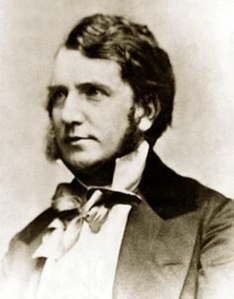
Hamilton Deane, Irish actor, playwright and director, dies on October 25, 1958, in Ealing, London, England. He plays a key role in popularising Bram Stoker‘s 1897 novel Dracula as a 1924 stage play and a 1931 film.

Deane is born on December 2, 1879, in New Ross, County Wexford, and grows up in Clontarf, a suburb of Dublin. His family lives close to the families of both Bram Stoker and his wife, Florence Balcombe, and his mother had been acquainted with Bram Stoker in her youth.

Deane enters the theater as a young man, first appearing in 1899 with the Henry Irving Company, of which Stoker is stage manager for many years. Even before he forms his own troupe in the early 1920s, he has been thinking about bringing Dracula to the stage. Stoker had attempted this in 1897 but the verdict from Irving consigned it to the waste-paper basket. Unable to find a scriptwriter to take on the project, Deane writes the play himself in a four-week period of inactivity while he is suffering with a severe cold. He then contacts Florence Stoker, Bram’s widow, and negotiates a deal for the dramatic rights.

To stage the production, Deane is required to submit the completed script to the Lord Chamberlain for a license under the Theatres Act 1843. The play is censored to limit violence – for example, the count’s death cannot be shown to the audience – but is approved on May 15, 1924.

Deane re-imagines Count Dracula as a more urbane and theatrically acceptable character who could plausibly enter London society. It is Deane’s idea that the count should wear a tuxedo and stand-up collar, and a flowing cape which conceals Dracula while he slips through a trap-door in the stage floor, giving the impression that he has disappeared. He also arranges to have a uniformed nurse available at performances, ready to administer smelling salts should anyone faint.

Deane’s play premieres on August 5, 1924, at the Grand Theatre in Derby, England. Despite critics’ misgivings, the audiences love it. Although he originally intended to play the title role himself, Raymond Huntley plays the role of the Count and Deane fills the role of Van Helsing. It is a huge success and the production tours England for three years before settling in London, where it opens at the Little Theatre in the Adelphi on February 14, 1927. It later transfers to the Duke of York’s Theatre and then the Prince of Wales Theatre to accommodate larger audiences.

When the play crosses the Atlantic in 1927, the role of Dracula is taken by the then-unknown Hungarian-American actor Bela Lugosi. For its United States debut, Dracula is rewritten by the American playwright John L. Balderston. The show runs for a year on Broadway and for two more years on tour, breaking all previous records for any show put on tour in the United States. It is the Deane/Balderston interpretation upon which the classic Tod Browning film Dracula (1931) is based.


Leave a comment

Birth of Rosie Hackett, Trade Union Leader & Insurgent

Rosanna “Rosie” Hackett, Irish insurgent and trade union leader, is born into a working-class family in Dublin on July 25, 1893. She is a founder-member of the Irish Women Workers’ Union (IWWU) and supports strikers during the 1913 Dublin lock-out. She later becomes a member of the Irish Citizen Army and is involved in the 1916 Easter Rising. In the 1970s, the labour movement awards her a gold medal for decades of service, and in 2014 a Dublin city bridge is named in her memory.

Hackett is the daughter of John Hackett, a hairdresser, and Roseanna Dunne. According to the 1901 census, she is living with her widowed mother and five other family members in a tenement building on Bolton Street in Dublin. The available documents suggest that her father dies when she is still very young. She joins the Irish Transport and General Workers’ Union (ITGWU) when it is established in 1909 by James Larkin, which marks the beginning of her lifelong activity in trade unionism. By 1911 she is living with her family in a cottage on Old Abbey Street, and her mother has remarried to Patrick Gray.

Hackett fights for many decades for the rights of workers. Through her affiliation and work with the ITGWU, the IWWU and the Irish Citizen Army, she helps carve out and secure modern-day working conditions. Her career begins as a packer in a paper store, then becoming a messenger for Jacob’s biscuits. At that time the working conditions in the factory are poor.

On August 22, 1911, Hackett helps organise the withdrawal of women’s labour in Jacob’s factory to support their male colleagues who are already on strike. With the women’s help, the men secure better working conditions and a pay rise. Two weeks later, at the age of eighteen, she co-founds the IWWU with Delia Larkin. During the 1913 lock-out she helps mobilise the Jacob’s workers to come out in solidarity with other workers. They, in turn, are locked out by their own employers. This does not stop her work to help others, and she, along with several of her IWWU colleagues, set up soup kitchens in Liberty Hall to help feed the strikers. However, in 1914 her Jacob’s employers sack her over her role in the lock-out.

Hackett begins work as a clerk in the printshop in Liberty Hall, and it is here she becomes involved with the Irish Citizen Army. She is involved in preparations for the 1916 Rising, working in a union shop, helping with printers, and making first-aid kits and knap-sacks.

If other members of the ITGWU were looking for James Connolly, Hackett aids in bringing them to him. She “worked as canvasser and traveller and was called on to carry out many confidential jobs.”

Hackett takes up first aid training provided by Dr. Kathleen Lynn for six months before the Rising and attends night marches organised by the Irish Citizen Army. According to her own account, she says, “A week before Easter, I took part in the ceremony of hoisting the challenge flag over Hall.” Like other girls and women who are involved in the Rising, she carries messages and guns and prepares uniforms and food for Irish Republican Army (IRA) members “and sometimes risky work.”

Three weeks before the Easter Rising, the Royal Irish Constabulary (RIC) raid a shop where Hackett is working. She is alone when they come, and they are looking for a copy of “Gael.” She says to them, “wait until I get the head” and she calls for Connolly. The police are stopped by Connolly and Helena Molony who are armed, and Hackett immediately hides everything, so that when the police come back, they cannot get anything.

Through her experience of working in the printshop, Hackett helps to print the Proclamation of the Irish Republic. She is in the printing room in Liberty Hall as a trusted messenger in 1916 when the Proclamation is printed, and it is the first time she is allowed in. Three men are there when she enters the room and one comes over to her, shakes her hand and congratulates her. It makes her very proud, especially since no one else is allowed to get in. She subsequently tells family members of handing it still wet to James Connolly before it is read by Patrick Pearse outside the entrance to the General Post Office (GPO).

Hackett is an active member of the Irish Citizen Army. On Easter Tuesday, under the command of Constance Markievicz, she takes part in the 1916 Rising and is located in the area of St. Stephen’s Green and the Royal College of Surgeons in Ireland. This position is heavily attacked with guns, short of first aid and “looked like a death trap.” However, after moving from an initially overlooked position in St. Stephen’s Green, it is one of the last positions to surrender. In the Royal College, as a first-aid practitioner, she is allowed entry to the lecture room sanctioned to the Red Cross only. Another first-aider, Aider Nora O’Daily, later reports that during those days, “I have a very kind remembrance of Little Rosie Hackett of the Citizen Army, always cheerful and always willing; to see her face about the place was a tonic itself.”

After surrendering, the rebels are taken to Dublin Castle. Hackett is imprisoned in Kilmainham Gaol for ten days.

In 1917, on the anniversary of Connolly’s death, Hackett, together with Helena Molony, Jennie Shanahan and Brigid Davis, print and hang a poster detailing the anniversary. After the first poster displayed by the ITGWU members is taken down by the police, they work to ensure that their poster will stay on Liberty Hall much longer by staying on top of the roof to defend it. They barricade the door using a ton of coal and nails on the windows. The poster is hanging there until 6:00 p.m. and thousands of people can see it.

After the Rising, Hackett returns to the IWWU which, at its strongest, organises over 70,000 women. After the 1945 laundry strike, they win an extra week of paid holidays for the workers. She attends many important labour union events such as the opening of the new Liberty Hall on May 2, 1965, and Arbour Hill memorial services. Until her retirement, she runs the trade union shops resulting in over five decades of active participation in the Irish trades union movement work to improve conditions for Irish workers. In 1970 she is awarded a gold medal for fifty years of ITGWU membership.

In the 1970s, Walter McFarlane, then branch secretary of the ITGWU, awards an honorary badge for Hackett’s fifty years contribution to the union.

Hackett never marries and lives in Fairview, Dublin, with her brother Tommy until her death on July 4, 1976. She is buried at St. Paul’s plot in Glasnevin Cemetery next to her mother and stepfather. At her burial, she is honoured with a military salute and her coffin is covered with the Irish flag. After her passing, her legacy is remembered in the union’s newspaper, a tale of the strife of Hackett together with the rest of Dublin’s working class, for which she fought to change.

In May 2014, the Rosie Hackett Bridge is officially opened by the Lord Mayor of Dublin. The Hackett Bridge Campaign began in October 2012, led by three women Angelina Cox, an active member of Labour Youth, Jeni Gartland and Lisa Connell. The final shortlist of contending names for the new bridge were Rosie Hackett, Kathleen Mills, Willie Bermingham, Bram Stoker and Frank Duff.

In April 2015, a plaque is unveiled on Foley Street by the North Inner City Folklore Project to commemorate the women of the Irish Citizen Army. The plaque lists Hackett as a member of the St. Stephens Green/College of Surgeons garrison during the 1916 Easter Rising.


Leave a comment

Death of Author Abraham “Bram” Stoker

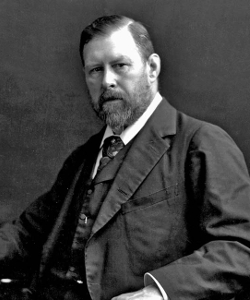
Abraham “Bram” Stoker, Irish author best known today for his 1897 Gothic fiction novel Dracula, dies in London on April 20, 1912.

Stoker is born on November 8, 1847, in Clontarf, Dublin. During his lifetime, he is better known as the personal assistant of actor Henry Irving and business manager of the Lyceum Theatre, London, which Irving owns.

Stoker’s father, Abraham Stoker, is a civil servant and his mother, Charlotte Mathilda Blake Thornley, is a charity worker and writer. Stoker is a sickly child and is bedridden with an unknown illness until he starts school at the age of seven, when he makes a complete recovery. Growing up his mother tells him a lot of horror stories which may have influence on his later writings.

In 1864 Stoker enters Trinity College, Dublin. While attending college he begins working as an Irish civil servant. He also works part time as a free lance journalist and drama critic. In 1876 he meets Henry Irving, a famous actor, and they soon become friends. Not long after that, Stoker meets and falls in love with an aspiring actress named Florence Balcombe whom he marries on December 4, 1878 at St. Anne’s Parish Church, Dublin. In 1878 he accepts a job working in London as Irving’s personal secretary.

On December 9, Stoker and his new wife move to England to join Irving. His first book The Duties of Clerks of Petty Sessions in Ireland, though written while he is still in Dublin, is published in 1879. On December 30, 1879 Stoker and his wife have their only child, a son Noel. While in England Stoker also writes several novels and short stories. His first book of fiction, Under the Sunset, is published in 1881.

Stoker visits the English coastal town of Whitby in 1890, a visit that is said to be part of the inspiration for Dracula. Before writing Dracula, he meets Ármin Vámbéry, a Hungarian writer and traveler. Dracula likely emerges from Vámbéry’s dark stories of the Carpathian Mountains. Stoker then spends several years researching European folklore and mythological stories of vampires.

Dracula is an epistolary novel, written as a collection of realistic but completely fictional diary entries, telegrams, letters, ship’s logs, and newspaper clippings, all of which add a level of detailed realism to the story, a skill which Stoker develops as a newspaper writer. At the time of its publication, Dracula is considered a “straightforward horror novel” based on imaginary creations of supernatural life.

The original 541-page typescript of Dracula is believed to have been lost until it is found in a barn in northwestern Pennsylvania in the early 1980s. It consists of typed sheets with many emendations, plus handwritten on the title page is “THE UN-DEAD.” The author’s name is shown at the bottom as Bram Stoker. The typescript is purchased by Microsoft co-founder Paul Allen.

After suffering a number of strokes, Abraham “Bram” Stoker dies at No. 26 St. George’s Square, London on April 20, 1912. Some biographers attribute the cause of death to tertiary syphilis, others to overwork. He is cremated and his ashes are placed in a display urn at Golders Green Crematorium in north London.


Leave a comment

Birth of Joseph Thomas Sheridan Le Fanu, Journalist & Novelist

joseph-sheridan-le-fanu

Joseph Thomas Sheridan Le Fanu, journalist, novelist, and short story writer, often called the father of the modern ghost story, is born in Dublin on August 28, 1814. He is the leading ghost story writer of the nineteenth century and is central to the development of the genre in the Victorian era. His best-known works include Uncle Silas (1864), a suspense story, and The House by the Churchyard (1863), a murder mystery. His vampire story Carmilla, which influences Bram Stoker’s Dracula, has been filmed several times.

Le Fanu is born at 45 Lower Dominick Street in Dublin to Thomas Philip Le Fanu and Emma Lucretia Dobbin, a literary family of Huguenot, Irish, and English descent. Within a year of his birth the family moves to the Royal Hibernian Military School in Phoenix Park where his father, a Church of Ireland clergyman, is appointed to the chaplaincy of the establishment.

In 1826, the family moves to Abington, County Limerick, where Le Fanu’s father takes up his second rectorship. Le Fanu uses his father’s library to educate himself and by the age of fifteen he was writing poetry.

The disorders of the Tithe War (1831–1836) affect the region in 1832 and the following year the family temporarily moves back to Dublin, where Le Fanu works on a government commission. Although Thomas Le Fanu tries to live as though he is well-off, the family is in constant financial difficulty. At his death, Thomas has almost nothing to leave to his sons and the family has to sell his library to pay off some of his debts.

Le Fanu studies law at Trinity College, Dublin, where he is elected Auditor of the College Historical Society. He is called to the bar in 1839 but never practices and soon abandons law for journalism. In 1838 he begins contributing stories to the Dublin University Magazine, including his first ghost story, The Ghost and the Bone-Setter (1838). He becomes owner of several newspapers from 1840, including the Dublin Evening Mail and the Warder.

In 1847, Le Fanu supports John Mitchel and Thomas Francis Meagher in their campaign against the indifference of the government to the Irish Famine. Others involved in the campaign include Samuel Ferguson and Isaac Butt. Butt writes a forty-page analysis of the national disaster for the Dublin University Magazine in 1847. Le Fanu’s support costs him the nomination as Tory Member of Parliament (MP) for County Carlow in 1852.

In 1856 the family moves from Warrington Place to the house of his wife Susanna’s parents at 18 Merrion Square. His personal life becomes difficult at this time, as his wife suffers from increasing neurotic symptoms. She suffers from anxiety after the deaths of several close relatives, including her father two years previous. In April 1858, Susanna suffers a “hysterical attack” and dies the following day. She is buried in the Bennett family vault in Mount Jerome Cemetery beside her father and brothers. He does not write any fiction from this point until the death of his mother in 1861.

He becomes the editor and proprietor of the Dublin University Magazine in 1861 and begins to take advantage of double publication, first serializing in the Dublin University Magazine, then revising for the English market. He publishes both The House by the Churchyard and Wylder’s Hand in this manner. After lukewarm reviews of The House by the Churchyard, which is set in the Phoenix Park area of Dublin, Le Fanu signs a contract with Richard Bentley, his London publisher, which specifies that future novels be stories “of an English subject and of modern times,” a step Bentley thinks necessary for Le Fanu to satisfy the English audience. Le Fanu succeeds in this aim in 1864, with the publication of Uncle Silas, which is set in Derbyshire. In his very last short stories, however, Le Fanu returns to Irish folklore as an inspiration and encourages his friend Patrick Kennedy to contribute folklore to the Dublin University Magazine.

Le Fanu dies in his native Dublin on February 7, 1873, at the age of 58. Today there is a road and a park in Ballyfermot, near his childhood home in south-west Dublin, named after him.


Leave a comment

Birth of Irish Author Abraham “Bram” Stoker

Abraham “Bram” Stoker, Irish author best known today for his 1897 Gothic fiction novel Dracula, is born on November 8, 1847 in Clontarf, Dublin. During his lifetime, he is better known as the personal assistant of actor Henry Irving and business manager of the Lyceum Theatre, London, which Irving owns.

Stoker’s father, Abraham Stoker, is a civil servant and his mother, Charlotte Mathilda Blake Thornley, is a charity worker and writer. Stoker is a sickly child and is bedridden with an unknown illness until he starts school at the age of seven, when he makes a complete recovery. Growing up his mother tells him a lot of horror stories which may have influence on his later writings.

In 1864 Stoker enters Trinity College, Dublin. While attending college he begins working as an Irish civil servant. He also works part time as a free lance journalist and drama critic. In 1876 he meets Henry Irving, a famous actor, and they soon become friends. Not long after that, Stoker meets and falls in love with an aspiring actress named Florence Balcombe whom he marries on December 4, 1878 at St. Anne’s Parish Church, Dublin. In 1878 he accepts a job working in London as Irving’s personal secretary.

On December 9, Stoker and his new wife move to England to join Irving. His first book The Duties of Clerks of Petty Sessions in Ireland though written while he is still in Dublin, is published in 1879. On December 30, 1879 Stoker and his wife have their only child, a son Noel. While in England Stoker also writes several novels and short stories. His first book of fiction, Under the Sunset, is published in 1881.

Stoker visits the English coastal town of Whitby in 1890, a visit that is said to be part of the inspiration for Dracula. Before writing Dracula, he meets Ármin Vámbéry, a Hungarian writer and traveller. Dracula likely emerges from Vámbéry’s dark stories of the Carpathian Mountains. Stoker then spends several years researching European folklore and mythological stories of vampires.

Dracula is an epistolary novel, written as a collection of realistic but completely fictional diary entries, telegrams, letters, ship’s logs, and newspaper clippings, all of which add a level of detailed realism to the story, a skill which Stoker develops as a newspaper writer. At the time of its publication, Dracula is considered a “straightforward horror novel” based on imaginary creations of supernatural life.

The original 541-page typescript of Dracula is believed to have been lost until it is found in a barn in northwestern Pennsylvania in the early 1980s. It consists of typed sheets with many emendations, plus handwritten on the title page is “THE UN-DEAD.” The author’s name is shown at the bottom as Bram Stoker. The typescript is purchased by Microsoft co-founder Paul Allen.

After suffering a number of strokes, Abraham “Bram” Stoker dies at No. 26 St. George’s Square, London on April 20, 1912. Some biographers attribute the cause of death to tertiary syphilis, others to overwork. He is cremated and his ashes are placed in a display urn at Golders Green Crematorium in north London.


Leave a comment

Birth of Walter Frederick Osborne, Landscape & Portrait Painter

Walter Frederick Osborne, impressionist and Post-Impressionism landscape and portrait painter, is born in Rathmines, Dublin on June 17, 1859.

Most of Osborne’s paintings are figurative and focus on women, children, the elderly, the poor, and the day-to-day life of ordinary people on Dublin streets, as well as series of rural scenes. He also produces city-scapes, which he paints from both sketches and photographs. A prolific artist, he produces oils, watercolours, and numerous pencil sketches. He is best known for his documentary depictions of late 19th century working class life.

Osborne is the second of three sons of William Osborne, a successful animal painter who specialises in portraying horses and dogs for the then prosperous Irish landlords. He is educated at Rathmines School and at the Royal Hibernian Academy school. He learns from his father that there is money to be earned from painting animals. He produces quite a few, including of children with their pets, notably his 1885 A New Arrival, and a series of impressionistic works on cows.

Osborne wins the Taylor Prize in 1881 and 1882, the highest student honour in Ireland of the time, while studying at the Royal Academy of Fine Arts in Antwerp. He is influenced by the Flemish painter Peter Paul Rubens, and the French realist, plein-air painter, Jules Bastien-Lepage, as well as Berthe Morisot.

In 1883, Osborne moves from Antwerp to Brittany where he paints his famous Apple Gathering, Quimperlé, now in the National Gallery of Ireland. Soon after, he moves to England where he works alongside Nathaniel Hill and Augustus Burke at Walberswick. During his period, he often returns to Dublin to make preparatory sketches for what becomes his most renowned series, of the everyday lives of the city’s poor. Although highly regarded today, these documentary street paintings are not commercially successful, and Osborne supplements his income through portrait paintings of the middle class, which are not as artistically satisfying.

In 1886, he is elected to the Royal Hibernian Academy and receives many commissions for portraits. This is an important source of income, as he has no private means of his own. After his sister dies, he is involved in looking after her daughter, and his own parents become increasingly financially dependent on him.

In 1892, he returns to Ireland to live in the family residence, and he also keeps a studio at No. 7 St. Stephen’s Green. He spends a considerable amount of time painting outdoors, in Dublin around St. Patrick’s Cathedral or in the country. He is well liked in social circles and counts the surgeon Sir Thornely Stoker, brother of Bram Stoker, among his best friends.

Osborne’s mother becomes ill in the early 1900s, and Walter spends significant periods caring for her. In 1903, while gardening, he overheats himself and catches a chill, which he neglects, and which develops into pneumonia. He dies prematurely from the illness at the age of 43 on April 24, 1903. He is buried in Mount Jerome Cemetery in Dublin.

Some critics have suggested that at the time of his death he is on the brink of his artistic maturity. His final work Tea in the Garden, a fusion of naturalism and impressionism, remains unfinished at his death and is now in the collection of the Hugh Lane Gallery in Dublin. Today his work is highly sought after by collectors.


Leave a comment

Publication of Bram Stoker’s “Dracula”

dracula-1st-edition

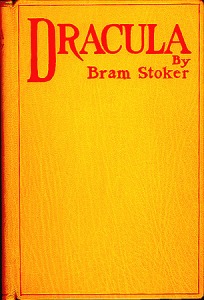
The Gothic horror novel Dracula, written by Bram Stoker of Dublin, is first published on May 26, 1897. The novel tells the story of Dracula’s attempt to move from Transylvania to England so that he may find new blood and spread the undead curse, and of the battle between Dracula and a small group of men and women led by Professor Abraham Van Helsing.

Between 1879 and 1898, Stoker is a business manager for the world-famous Lyceum Theatre in London, where he supplements his income by writing a large number of sensational novels, including the vampire tale Dracula. Parts of the novel are set around the town of Whitby, where he spends summer holidays.

Throughout the 1880s and 1890s, authors such as H. Rider Haggard, Rudyard Kipling, Robert Louis Stevenson, Arthur Conan Doyle, and H. G. Wells write many tales in which fantastic creatures threaten the British Empire. Invasion literature is at a peak, and Stoker’s formula of an invasion of England by continental European influences is very familiar by 1897 to readers of fantastic adventure stories. Victorian readers enjoy Dracula as a good adventure story like many others, but it does not reach its iconic legendary status until later in the 20th century when film versions begin to appear.

Before writing Dracula, Stoker spends seven years researching European folklore and stories of vampires, being most influenced by Emily Gerard‘s 1885 essay Transylvania Superstitions. Later he also claims that he has a nightmare, caused by eating too much crab meat covered with mayonnaise sauce, about a “vampire king” rising from his grave.

Despite being the most widely known vampire novel, Dracula is not the first. It is preceded and partly inspired by Sheridan Le Fanu‘s 1871 Carmilla, about a lesbian vampire who preys on a lonely young woman, and by Varney the Vampire, a lengthy penny dreadful serial from the mid-Victorian period by James Malcolm Rymer. John Polidori creates the image of a vampire portrayed as an aristocratic man, like the character of Dracula, in his tale The Vampyre in 1819.

The Lyceum Theatre where Stoker works between 1878 and 1898 is headed by actor-manager Henry Irving, who is Stoker’s real-life inspiration for Dracula’s mannerisms and who Stoker hopes would play Dracula in a stage version. Irving never does agree to do a stage version, but Dracula’s dramatic sweeping gestures and gentlemanly mannerisms draw their living embodiment from Irving.

The Dead Un-Dead is one of Stoker’s original titles for Dracula, and the manuscript is entitled simply The Un-Dead up until a few weeks before publication. Stoker’s notes for Dracula show that the name of the count is originally “Count Wampyr”, but Stoker becomes intrigued by the name “Dracula” while doing research, after reading William Wilkinson‘s book An Account of the Principalities of Wallachia and Moldavia with Political Observations Relative to Them (London 1820), which he finds in the Whitby Library and consults a number of times during visits to Whitby in the 1890s. The name Dracula is the patronym of the descendants of Vlad II of Wallachia, who takes the name “Dracul” after being invested in the Order of the Dragon in 1431. In the Romanian language, the word dracul can mean either “the dragon” or, especially in the present day, “the devil.”

Dracula is copyrighted in the United States in 1899 with the publication by Doubleday & McClure of New York. However, when Universal Studios purchases the rights, it comes to light that Bram Stoker has not complied with a portion of U.S. copyright law, placing the novel into the public domain. In the United Kingdom and other countries following the Berne Convention on copyrights, the novel is under copyright until April 1962, fifty years after Stoker’s death.

F. W. Murnau‘s unauthorized film adaptation Nosferatu is released in 1922, and the popularity of the novel increases considerably, owing to the controversy caused when Stoker’s widow tries to have the film removed from public circulation. Florence Stoker sues the film company and wins; however, the company is bankrupt, and Stoker only recovers her legal fees and an order by the court for all copies of the film to be destroyed. Some copies survive and find their way into theatres. Eventually, Florence Stoker simply gives up the fight against public displays of the film.

Dracula has been assigned to many literary genres including vampire literature, horror fiction, gothic fiction, and invasion literature. Stoker does not invent the vampire, but he defines its modern form, and the novel has spawned numerous theatrical, film, and television interpretations.


Leave a comment

Novelist Joseph Sheridan Le Fanu Dies In Dublin

joseph-sheridan-le-fanu

Joseph Thomas Sheridan Le Fanu, journalist, novelist, and short story writer, often called the father of the modern ghost story, dies in Dublin on February 7, 1873. He is the leading ghost-story writer of the nineteenth century and is central to the development of the genre in the Victorian era. His best-known works include Uncle Silas (1864), a suspense story, and The House by the Churchyard (1863), a murder mystery. His vampire story Carmilla, which influences Bram Stoker’s Dracula, has been filmed several times.

Le Fanu is born at 45 Lower Dominick Street in Dublin to Thomas Philip Le Fanu and Emma Lucretia Dobbin, a literary family of Huguenot, Irish, and English descent. Within a year of his birth the family moves to the Royal Hibernian Military School in Phoenix Park where his father, a Church of Ireland clergyman, is appointed to the chaplaincy of the establishment.

In 1826, the family moves to Abington, County Limerick, where Le Fanu’s father takes up his second rectorship. Le Fanu uses his father’s library to educate himself and by the age of fifteen he was writing poetry.

The disorders of the Tithe War (1831–1836) affect the region in 1832 and the following year the family temporarily moves back to Dublin, where Le Fanu works on a government commission. Although Thomas Le Fanu tries to live as though he is well-off, the family is in constant financial difficulty. At his death, Thomas has almost nothing to leave to his sons and the family has to sell his library to pay off some of his debts.

Le Fanu studies law at Trinity College, Dublin, where he is elected Auditor of the College Historical Society. He is called to the bar in 1839, but never practices and soon abandons law for journalism. In 1838 he begins contributing stories to the Dublin University Magazine, including his first ghost story, The Ghost and the Bone-Setter (1838). He becomes owner of several newspapers from 1840, including the Dublin Evening Mail and the Warder.

In 1847, Le Fanu supports John Mitchel and Thomas Francis Meagher in their campaign against the indifference of the government to the Irish Famine. Others involved in the campaign include Samuel Ferguson and Isaac Butt. Butt writes a forty-page analysis of the national disaster for the Dublin University Magazine in 1847. Le Fanu’s support costs him the nomination as Tory Member of Parliament (MP) for County Carlow in 1852.

In 1856 the family moves from Warrington Place to the house of his wife Susanna’s parents at 18 Merrion Square. His personal life becomes difficult at this time, as his wife suffers from increasing neurotic symptoms. She suffers from anxiety after the deaths of several close relatives, including her father two years previous. In April 1858, Susanna suffers a “hysterical attack” and dies the following day. She is buried in the Bennett family vault in Mount Jerome Cemetery beside her father and brothers. He does not write any fiction from this point until the death of his mother in 1861.

He becomes the editor and proprietor of the Dublin University Magazine in 1861 and begins to take advantage of double publication, first serializing in the Dublin University Magazine, then revising for the English market. He publishes both The House by the Churchyard and Wylder’s Hand in this manner. After lukewarm reviews of The House by the Churchyard, which is set in the Phoenix Park area of Dublin, Le Fanu signs a contract with Richard Bentley, his London publisher, which specifies that future novels be stories “of an English subject and of modern times,” a step Bentley thinks necessary for Le Fanu to satisfy the English audience. Le Fanu succeeds in this aim in 1864, with the publication of Uncle Silas, which is set in Derbyshire. In his very last short stories, however, Le Fanu returns to Irish folklore as an inspiration and encourages his friend Patrick Kennedy to contribute folklore to the Dublin University Magazine.

Le Fanu dies in his native Dublin on February 7, 1873, at the age of 58. Today there is a road and a park in Ballyfermot, near his childhood home in south-west Dublin, named after him.