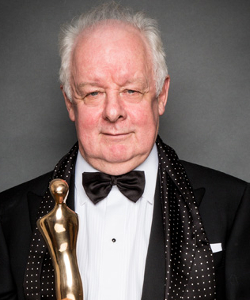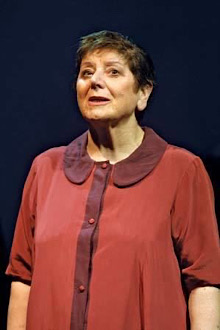
seamus dubhghaill

Promoting Irish Culture and History from Little Rock, Arkansas, USA


Leave a comment

Birth of Anna Manahan, Stage, Film & Television Actress

Anna Maria Manahan, Irish stage, film and television actress, is born on October 18, 1924, in County Waterford in what is at the time the Irish Free State (now the Republic of Ireland).

Manahan receives two Tony Award for Best Featured Actress in a Play nominations for her performances in the 1968 production of Lovers and the 1998 production of The Beauty Queen of Leenane, the latter for which she wins at the 52nd Tony Awards.

Manahan is also nominated for two Drama Desk Awards, a Laurence Olivier Award, and an Outer Critics Circle Award in a career that spans more than 60 years. She interprets the works of, among others, Seán O’CaseyJohn B. KeaneJohn Millington SyngeOscar WildeJames JoyceMartin McDonaghChristy Brown, and Brian Friel.

Manahan’s career begins when, as a young woman, she is recruited by the legendary Irish impresarios and theatrical directors Micheál Mac Liammóir and Hilton Edwards. She later marries stage director Colm O’Kelly, who dies not long afterward of polio, which he contracts after swimming in the Nile during a theatre tour of Egypt. They have no children and she never remarries. She is known professionally by her maiden name. In 1946 she appears in a production by Irish playwright Teresa DeevyThe Wild Goose, where she plays the part of Eileen Connolly. This is performed by Equity Productions in the Theatre Royal, Waterford.

In 1957, Manahan plays Serafina in the first Irish production of Tennessee Williams‘s The Rose Tattoo and achieves unexpected notoriety when she and several other members of the cast are arrested for the possession of a condom on stage.

Manahan plays a minor role in the Irish cult soap opera The Riordans (1960s), and as Mrs. Mary Kenefick in the TV comedy Me Mammy (1970s). She also plays the lead in the Irish comedy series, Leave It To Mrs O’Brien (1980s) and Mrs. Cadogan in The Irish R.M. (1980s). Most recently she plays Ursula in Fair City, for which her niece, Michele Manahan (daughter of Michael Manahan), is a writer.

Manahan has an extensive theatre portfolio having played at theatres throughout Ireland including the Abbey Theatre, the United Kingdom, continental Europe, the United States and Australia. She wins the Tony Award for Best Featured Actress in a Play for her role as Mag in Martin McDonagh’s The Beauty Queen of Leenane on Broadway. She previously receives a Tony nomination in 1969 for Brian Friel’s Lovers.

The Irish playwright John B. Keane writes the play Big Maggie specifically for Manahan. In 2001 she stars in Keane’s The Matchmaker with veteran Irish actor Des Keogh. In 2005 she stars in Sisters, a new play by Declan Hassett that is also written for her and for which she is nominated for a Drama Desk Award in the category of Outstanding Solo Performance. The production tours Ireland and is staged at the International Festival of World Theatre in Colorado and also plays at the 59E59 Theater in New York City in 2006.

Manahan appears in films starring, among others, Laurence OlivierPeter CushingKenneth MoreChristopher WalkenMaggie SmithAlbert Finney and Brenda Fricker, and with John Gielgud in A Portrait of the Artist as a Young Man (1977).

Manahan receives the Gold Medal of the Éire Society of Boston in 1984 and thus joins the company of past recipients such as John F. Kennedy, and film makers John Ford and John Huston. She receives an honorary doctorate in letters from the University of Limerick in 2003. She is granted the freedom of the city of Waterford in 2002 in recognition of her life’s achievement in the arts. She thus becomes the 28th Freeman of Waterford since Isaac Butt in 1877.

In 2004 Manahan starts to play the role of Ursula in Fair CityAll About Anna (2005), a documentary on her life and work is made by Charlie Mc Carthy/Icebox Films for RTÉ Television. In 2008, she becomes the first ever patron of the Active Retirement Ireland organization.

Manahan dies of multiple organ failure on March 8, 2009 in Waterford. She had suffered from a longterm illness.

Her funeral is held on March 11, officiated by her “longtime friend” the psychoanalyst, poet, and priest Bernard Kennedy. “As the final curtain falls, the lights dim, the auditorium becomes silent, we remember her” he says. Describing her as a woman of faith (who “sought to bring the word of God alive”), he says she had brought everyone together to be present at “her last great exit from this great stage of life,” saying her life’s work had drawn people from all over the world. “Anna believed in the empty tomb of the Resurrection and she believed the empty tomb could be filled by hearing the word take the place of the emptiness,” he says. “She knew the bedsits which preceded the Tony nomination.”

Manahan is buried in Ballygunner Cemetery, Knockboy, County Waterford.

Leave a comment

Death of Joan O’Hara, Stage, Film & Television Actress

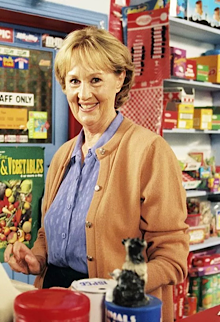
Joan O’Hara, Irish stagefilm and television actress, dies in Dublin on July 23, 2007. She is one of Ireland’s most popular actresses and is, at the time of her death, recognisable to television viewers as Eunice Dunstan, a gossip in Fair City on RTÉ One.

O’Hara is born in Rosses PointCounty Sligo, on October 10, 1930, the daughter of Major John Charles O’Hara, an officer in the British Corps of Royal Engineers and his wife, Mai (née Kirwan). One of her sisters, Mary (born 1935), is a soprano/harpist. Her brother Dermot (born 1934) now lives with his family in Canada. She attends the same Ursuline convent school as fellow actress and friend Pauline Flanagan.

O’Hara lives most of her life in Monkstown, Dublin, with a stay in London, with her husband, the poet and architect Francis J. Barry. The couple has four children: Siubhan, Jane, Guy, and Sebastian, an author/playwright, whose works include The Steward of Christendom, and the Booker-shortlisted novels A Long Long Way and The Secret Scripture. She is also a year-round sea-swimmer.

O’Hara is a member of the renowned Abbey Players and performs in many plays in the Abbey Theatre in Dublin, including those by Seán O’CaseyLady Gregory and W.B. Yeats. She appears as Maurya in the 1988 film The Dawning. She appears in a number of other films, including Ron Howard‘s Far and AwayDaFootfallsHome is the Hero and just before her death, How About You. In this her final film, she stars with Vanessa Redgrave and her friend Brenda Fricker. The strength of her performance and bravery in carrying it out is acknowledged by the cast and crew in a standing ovation.

More recently, O’Hara is best known for appearing in the popular Irish television soap opera Fair City, broadcast on RTÉ One. She joins the soap in 1994, portraying the character Eunice Dunstan until her death in 2007. Thus, she is described as both one of Ireland’s most popular actresses and as one of the finest actors of her generation on her death. She admires in particular Samuel BeckettFederico García Lorca and Ingmar Bergman. While she takes a no-nonsense approach to her craft, famously giving the advice that when in doubt, one should relate to the fireplace, she is educated at the Abbey School of Acting and has a deep appreciation and knowledge of theoretical approaches to acting and is an admirer of the European and American avant-garde. As actor Alan Stanford says after her death, “She had the most amazing energy. She was in the truest sense one of the last of the greats.”

Joan O’Hara Barry (she keeps her maiden name as her stage name) dies in Dublin on July 23, 2007, of complications from heart disease, aged 76. Her death is announced on RTÉ News the following day.


Leave a comment

Birth of Mick Lally, Stage, Film & Television Actor

Michael “Mick” Lally, Irish stage, film and television actor, is born in the Gaeltacht village of Toormakeady, County Mayo, on November 10, 1945. He departs from a teaching career for acting during the 1970s. Though best known in Ireland for his role as Miley Byrne in the television soap Glenroe, his stage career spans several decades, and he is involved in feature films such as Alexander and the Academy Award-nominated The Secret of Kells. Many reports cite him as one of Ireland’s finest and most recognisable actors.

Lally is the eldest of a family of seven children. He goes to the local national school in Toormakeady and then to St. Mary’s College, Galway. After studying at University College Galway, he teaches history and the Irish language for six years in Archbishop McHale College in Tuam from 1969 to 1975 but quits teaching to pursue his career as a stage actor.

Lally begins his acting career with Taibhdhearc na Gaillimhe, Ireland’s national Irish language theatre, and is a founding member of the Druid Theatre Company. He receives an Irish Times/ESB Theatre Award Nomination for Best Actor for his role in Druid’s production of The Dead School. He also becomes a member of the Field Day Theatre Company, and stars in the company’s 1980 premiere of Brian Friel‘s play Translations. He first plays at the Abbey Theatre in 1977 in a production of Wild Oats and goes on to perform in many other Abbey productions.

In 1982, Lally stars in the TV series The Ballroom of Romance alongside Brenda Fricker. From 1983 he plays the role of Miley Byrne in the RTÉ soap Glenroe, reprising the character that he played earlier in Bracken in 1978. In 1979, he wins a Jacob’s Award for his performance as Miley in Bracken. He also has some musical success when “The By-road to Glenroe” goes to the top of the Irish charts in 1990. He is also involved in voice-over work, including a noted advertisement for Kilmeaden Cheese during the 1990s. Other TV appearances include roles in Tales of Kinvarna, The Year of the French and Ballykissangel.

In 1994, Lally plays the character Hugh in The Secret of Roan Inish, and in 1995 portrays Dan Hogan in the film adaptation of Maeve Binchy‘s Circle of Friends. Other film roles included Poitín, Our Boys, The Outcasts, A Man of No Importance and others. In later years, he provides the voice of Brother Aidan in the Academy Award-nominated The Secret of Kells, an animated film directed by Tomm Moore.

Lally appears in several TV advertisements encouraging elderly people to “release the equity tied up in their homes” during the Celtic Tiger.

Mick Lally dies in Dublin on the morning of August 31, 2010, after a short stay in the hospital. The cause of death is reported as heart failure, arising from an underlying emphysema condition. His funeral takes place in Dublin on September 2, 2010. The Irish Examiner comments that the “nation has lost one of its favourite uncles.” Personalities from TV, film, theatre and politics attend, while President of Ireland Mary McAleese sends a letter and Lally receives a standing ovation at the end.


Leave a comment

Birth of Joan O’Hara, Actress of Stage, Film & Television

Joan O’Hara, Irish stage, film and television actress, is born in Rosses Point, County Sligo, on October 10, 1930. She is one of Ireland’s most popular actresses and is, at the time of her death, recognisable to television viewers as Eunice Dunstan, a gossip in Fair City on RTÉ One.

O’Hara is born and raised in Rosses Point, the daughter of Major John Charles O’Hara, an officer in the British Corps of Royal Engineers and his wife, Mai (née Kirwan). One of her sisters, Mary (born 1935), is a soprano/harpist. Her brother Dermot (born 1934) now lives with his family in Canada. She attends the same Ursuline convent school as fellow actress and friend Pauline Flanagan.

O’Hara lives most of her life in Monkstown, County Dublin, with a stay in London, with her husband, the poet and architect Francis J. Barry. The couple has four children: Siubhan, Jane, Guy, and Sebastian, an author/playwright, whose works include The Steward of Christendom, and the Booker-shortlisted novels A Long Long Way and The Secret Scripture. She is also a year-round sea-swimmer.

O’Hara is a member of the renowned Abbey Players and performs in many plays in the Abbey Theatre in Dublin, including those by Seán O’Casey, Lady Gregory and W.B. Yeats. She appears as Maurya in the 1988 film The Dawning. She appears in a number of other films, including Ron Howard‘s Far and Away, Da, Footfalls, Home is the Hero and just before her death, How About You. In this her final film, she stars with Vanessa Redgrave and her friend Brenda Fricker. The strength of her performance and bravery in carrying it out is acknowledged by the cast and crew in a standing ovation.

More recently, O’Hara is best known for appearing in the popular Irish television soap opera Fair City, broadcast on RTÉ One. She joins the soap in 1994, portraying the character Eunice Dunstan until her death in 2007. Thus, she is described as both one of Ireland’s most popular actresses and as one of the finest actors of her generation on her death. She admires in particular Samuel Beckett, Federico García Lorca and Ingmar Bergman. While she takes a no-nonsense approach to her craft, famously giving the advice that when in doubt, one should relate to the fireplace, she is educated at the Abbey School of Acting and has a deep appreciation and knowledge of theoretical approaches to acting and is an admirer of the European and American avant-garde. As actor Alan Stanford said after her death, “She had the most amazing energy. She was in the truest sense one of the last of the greats.”

Joan O’Hara Barry (she keeps her maiden name as her stage name) dies in Dublin on July 23, 2007, of complications from heart disease, aged 76. Her death is announced on RTÉ News the following day.


Leave a comment

Death of Christy Brown, Writer & Painter

christy-brown

Christy Brown, Irish writer and painter who has cerebral palsy and is able to write or type only with the toes of one foot, dies on September 7, 1981, in Parbrook, Somerset, England. His most recognized work is his autobiography, My Left Foot (1954).

Brown is born into a working-class Irish family at the Rotunda Hospital in Dublin on June 5, 1932. He is one of 22 siblings of parents Bridget Fagan and Patrick Brown. After his birth, doctors discover that he has severe cerebral palsy, a neurological disorder which leaves him almost entirely spastic in his limbs. Though urged to commit him to a hospital, his parents are unswayed and subsequently determined to raise him at home with their other children. During his adolescence, social worker Katriona Delahunt becomes aware of his story and begins to visit the Brown family regularly. She brings him books and painting materials as, over the years, he has shown a keen interest in the arts and literature. He has also demonstrated extremely impressive physical dexterity since, soon after discovering several household books, he had learned to both write and draw himself with his left leg, the only limb over which he has unequivocal control.

Brown quickly matures into a serious artist. Although he famously receives almost no formal schooling during his youth, he does attend St. Brendan’s School-Clinic in Sandymount intermittently. At St. Brendan’s he comes in contact with Dr. Robert Collis, a noted author. Collis discovers that Brown is also a natural novelist and, later, helps use his own connections to publish My Left Foot, by then a long-gestating autobiographical account of Brown’s struggle with everyday life amidst the vibrant culture of Dublin.

When My Left Foot becomes a literary sensation, one of the many people who write letters to Brown is married American woman Beth Moore. Brown and Moore become regular correspondents and, in 1960, he holidays in North America and stays with Moore at her home in Connecticut. When they meet again in 1965, they began an affair. Brown journeys to Connecticut once more to finish his magnum opus, which he had been developing for years. He finally does so in 1967 with help from Moore, who introduces and administers a strict working regimen, mostly by denying him alcohol until a day’s work is completed. The book, Down All the Days, is published in 1970. It is an ambitious project drawn largely from a playful expansion of My Left Foot. It becomes an international best-seller, translated into fourteen languages. The Irish Times reviewer Bernard Share claims the work is “the most important Irish novel since Ulysses.”

Down All the Days is followed by a series of other novels, including A Shadow on Summer (1972), Wild Grow the Lilies (1976) and A Promising Career (published posthumously in 1982). He also publishes three poetry collections: Come Softly to My Wake, Background Music and Of Snails and Skylarks. All the poems are included in The Collected Poems of Christy Brown.

Brown’s fame continues to spread internationally, and he becomes a prominent celebrity. Upon his return to Ireland, he is able to use proceeds from the sales of his books to design and move into a specially constructed home outside Dublin with his sister’s family. Though he and Beth had planned to marry and live together at the new home, and though Moore had informed her husband of these plans, it is around this time that he begins an affair with Englishwoman Mary Carr, whom he meets at a party in London. He then terminates his affair with Moore and marries Carr at the Registry Office, Dublin, in 1972. They move to Stoney Lane, Rathcoole, County Dublin, to Ballyheigue, County Kerry and then to Somerset. He continues to paint, write novels, poetry and plays. His 1974 novel, A Shadow on Summer, is based on his relationship with Moore, whom he still considers a friend.

Brown’s health deteriorates after marrying Carr. He becomes mainly a recluse in his last years, which is thought to be a direct result of Carr’s influence and perhaps abusive nature. He dies at the age of 49 on September 7, 1981, after choking during a lamb chop dinner. His body is found to have significant bruising, which leads many to believe that Carr had physically abused him. Further suspicions arise after Georgina Hambleton’s biography, The Life That Inspired My Left Foot, reveals a supposedly more accurate and unhealthier version of their relationship. The book portrays Carr as an abusive alcoholic and habitually unfaithful. He is buried in the Glasnevin Cemetery in Dublin.

A film adaptation of My Left Foot directed by Jim Sheridan is produced in 1989 from a screenplay by Shane Connaughton. Daniel Day-Lewis stars as Brown and Brenda Fricker as his mother. Both win Academy Awards for their performances. The film also receives Academy Award nominations for Best Picture, Best Director, and Best Adapted Screenplay.

The Anglo-Irish rock band The Pogues pay tribute to Christy Brown with a song titled “Down All the Days.” It is the seventh track on their 1989 recording Peace and Love. Similarly, U2 releases a song titled “Down All the Days” with the 20th anniversary edition of Achtung Baby. The Men They Couldn’t Hang also writes a song “Down All the Days” which appears on their Silver Town album also released in 1989.


Leave a comment

Death of Mick Lally, Stage, Film & Television Actor

mick-lally

Michael “Mick” Lally, Irish stage, film and television actor, dies in Dublin on August 31, 2010. He departs from a teaching career for acting during the 1970s. Though best known in Ireland for his role as Miley Byrne in the television soap Glenroe, his stage career spans several decades, and he is involved in feature films such as Alexander and the Academy Award-nominated The Secret of Kells. Many reports cite him as one of Ireland’s finest and most recognisable actors.

Born on November 10, 1945, and reared in the Gaeltacht village of Toormakeady, County Mayo, Lally is the eldest of a family of seven children. He goes to the local national school in Toormakeady and then to St. Mary’s College, Galway. After studying at University College Galway, he teaches history and Irish for six years in Archbishop McHale College in Tuam from 1969 to 1975 but quits teaching to pursue his career as a stage actor.

Lally begins his acting career with Taibhdhearc na Gaillimhe, Ireland’s national Irish language theatre, and is a founding member of the Druid Theatre Company. He receives an Irish Times/ESB Theatre Award Nomination for Best Actor for his role in Druid’s production of The Dead School. He also becomes a member of the Field Day Theatre Company, and stars in the company’s 1980 premiere of Brian Friel‘s play Translations. He first plays at the Abbey Theatre in 1977 in a production of Wild Oats and goes on to perform in many other Abbey productions.

In 1982, Lally stars in the TV series The Ballroom of Romance alongside Brenda Fricker. From 1983 he plays the role of Miley Byrne in the RTÉ soap Glenroe, reprising the character that he played earlier in Bracken in 1978. In 1979, he wins a Jacob’s Award for his performance as Miley in Bracken. He also has some musical success when “The By-road to Glenroe” goes to the top of the Irish charts in 1990. He is also involved in voice-over work, including a noted advertisement for Kilmeaden Cheese during the 1990s. Other TV appearances include roles in Tales of Kinvarna, The Year of the French and Ballykissangel.

In 1994, Lally plays the character Hugh in The Secret of Roan Inish, and in 1995 portrays Dan Hogan in the film adaptation of Maeve Binchy‘s Circle of Friends. Other film roles included Poitín, Our Boys, The Outcasts, A Man of No Importance and others. In later years, he provides the voice of Brother Aidan in the Academy Award-nominated The Secret of Kells, an animated film directed by Tomm Moore.

Lally appears in several TV advertisements encouraging elderly people to “release the equity tied up in their homes” during the Celtic Tiger.

Mick Lally dies on the morning of August 31, 2010, after a short stay in the hospital. The cause of death is reported as heart failure, arising from an underlying emphysema condition. His funeral takes place in Dublin on September 2, 2010. The Irish Examiner comments that the “nation has lost one of its favourite uncles.” Personalities from TV, film, theatre and politics attend, while President of Ireland Mary McAleese sends a letter and Lally receives a standing ovation at the end.


Leave a comment

Birth of Jim Sheridan, Playwright, Director & Producer

jim-sheridan

Jim Sheridan, Irish playwright, screenwriter, film director, and film producer, is born in Dublin on February 6, 1949. In the few years from 1989 to 1993, Sheridan makes three acclaimed films set in Ireland (My Left Foot, The Field, and In the Name of the Father) that between them receive a remarkable 13 Academy Award nominations. Sheridan has personally received six Academy Award nominations. In addition to the above-mentioned films, he is also known for the films The Boxer and In America.

Sheridan is born to Anna and Peter Sheridan Snr and raised in the inner city of Dublin. He is the brother of playwright Peter Sheridan. The family runs a lodging house, while Anna Sheridan works at a hotel and Peter Sheridan Snr is a railway clerk with CIÉ. Sheridan’s early education is at a Christian Brothers school. In 1969 he attends University College Dublin to study English and History. He becomes involved in student theater there, where he meets Neil Jordan, who also is later to become an important Irish film director. After graduating from UCD in 1972, Sheridan and his brother begin writing and staging plays, and together found the Project Theatre Company.

In 1981, Sheridan emigrates to Canada, but eventually settles in the Hell’s Kitchen section of New York City. He enrolls in New York University‘s Tisch School of the Arts and becomes the artistic director of the Irish Arts Center.

Sheridan returns to Ireland in the late 1980s. In 1989, he directs My Left Foot, which becomes a critical and commercial success and wins Daniel Day-Lewis and Brenda Fricker Academy Awards. He follows that with The Field starring Richard Harris in 1990, then with In the Name of the Father in 1993, a fictionalized re-telling of the case of the Guildford Four. The film wins the Golden Bear at the 44th Berlin International Film Festival.

In 1996 he co-writes Some Mother’s Son with Terry George. The Boxer, with Daniel Day-Lewis, is nominated for a Golden Globe Award for best film drama in 1997. In 2003, he releases the semi-autobiographical In America, which tells the story of a family of Irish immigrants trying to succeed in New York. The film receives positive reviews and earns Samantha Morton and Djimon Hounsou Academy Award nominations. In 2005 he releases Get Rich or Die Tryin’, a film starring rap star 50 Cent. He is connected with the upcoming film adaptation of Artemis Fowl and is rumoured to have written the screenplay and been asked to direct it.

Sheridan helms the 2009 film Brothers, starring Tobey Maguire and Jake Gyllenhaal, which is shot in New Mexico. He also directs the thriller Dream House, which stars Daniel Craig, Naomi Watts, and Rachel Weisz.

Sheridan has a wife, Fran, and three daughters, Naomi Sheridan, Kirsten Sheridan, and Tess Sheridan, with whom he has collaborated, most notably with Naomi and Kirsten on the screenplay for In America.


Leave a comment

Birth of Academy Award Winning Actress Brenda Fricker

(Newscom TagID: mrpphotos209322) [Photo via Newscom]

Brenda Fricker, Irish actress of theatre, film, and television, is born in Dublin on February 17, 1945. In 1989, she becomes the first Irish actress to win an Oscar, earning the Academy Award for Best Supporting Actress for My Left Foot.

In her teens, Fricker aspires to follow her parents’ footsteps into journalism. Before becoming an actress, she is assistant to the art editor of The Irish Times, with hopes to become a reporter. At age 19, she becomes an actress “by chance,” as her feature film career begins with a small uncredited part in the 1964 film Of Human Bondage, based on the 1915 novel by W. Somerset Maugham. She also appears in Tolka Row, Ireland’s first ever soap opera.

One of Fricker’s first TV roles is as staff nurse Maloney in Coronation Street, debuting on January 10, 1977. Fricker comes to wider public attention in the United Kingdom in another nursing role, as Megan Roach in the BBC One television drama series Casualty, appearing in 65 episodes. After making cameo appearances in three additional episodes, Fricker’s final appearance as Megan is in August 2010, when her character takes a lethal cocktail of drugs to end her life.

Fricker finds international acclaim after she wins the 1989 Academy Award for Best Supporting Actress for her performance as Christy Brown‘s mother in My Left Foot, becoming the first Irish actress to win an Oscar. The film is a triumph for Irish film making. Daniel Day-Lewis wins best actor for his portrayal of the disabled Brown while director Jim Sheridan receives numerous Best Director nominations at various film festivals.

She rejoins  Sheridan to make the 1990 film The Field, starring alongside Richard Harris as Maggie McCabe. She continues her television work during this period, starring in the Australian-produced short series Brides of Christ (1991). She then co-stars in the 1992 TV miniseries Seekers alongside Josette Simon and produced by Sarah Lawson.

Buoyed by her Oscar win, Fricker goes on to appear in several high profile Hollywood films, most notably in Home Alone 2: Lost in New York. The following year she portrays May Mackenzie in So I Married an Axe Murderer, and next portrayed Joseph Gordon Levitt’s character’s motherly caretaker Maggie in Angels in the Outfield. One of her last Hollywood film roles comes with A Time to Kill, as Ethel Twitty, loyal secretary to Matthew McConaughey‘s Jake Brigance. She then focuses almost exclusively on film and television work in Canada and the British Isles.

In July 2014, Fricker tentatively retires from acting. Previously married to director Barry Davies, Fricker currently lives in the Liberties in Dublin.